In My Hands Today…

The Future of Geography: How Power and Politics in Space Will Change Our World – Tim Marshall

Spy satellites are orbiting the moon. Space metals are worth more than most countries’ GDPs.

People on Mars within the next ten years.

This isn’t science fiction. It’s astropolitics.

Humans are heading up and out, and we’re taking our power struggles with us. Soon, what happens in space will shape human history as much as the mountains, rivers and seas have on Earth. It’s no coincidence that Russia, China and the USA are leading the way. The next fifty years will change the face of global politics.

In this gripping book, bestselling author Tim Marshall lays bare the new geopolitical realities to show how we got here and where we’re going, covering the new space race, great-power rivalry, technology, economics, war, and what it means for all of us down here on Earth. Written with all the insight and wit that have made Marshall the UK’s most popular writer on geopolitics, this is an essential read on power, politics and the future of humanity.

In My Hands Today…

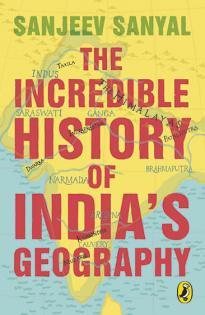
The Incredible History of India’s Geography – Sanjeev Sanyal

Maps and mountains, lions and tigers, rivers and oceans-all sorts of things you didn’t know about India’s geography

Could you be related to a blond Lithuanian? What if ostriches once roamed in India? Did you know that India is the only country that has both lions and tigers? Who found out how tall Mt Everest is?

If you’ve ever wanted to know the answers to questions like these, this is the book for you. In here you will discover various things you never expected, such as the fact that we still greet each other like the Harappans did or that people used to think India was full of one-eyed giants. And sneakily you’ll also know more about India’s history and geography by the end of it. Full of quirky pictures and crazy trivia, this book takes you on a fantastic journey through the incredible history of India’s geography.

In My Hands Today…

Ocean of Churn: How the Indian Ocean Shaped Human History – Sanjeev Sanyal

Much of human history has played itself out along the rim of the Indian Ocean. In a first-of-its-kind attempt, bestselling author Sanjeev Sanyal tells the history of this significant region, which stretches across East Africa, the Middle East and the Indian subcontinent to South East Asia and Australia. He narrates a fascinating tale about the earliest human migrations out of Africa and the great cities of Angkor and Vijayanagar; medieval Arab empires and Chinese ‘treasure fleets’; the rivalries of European colonial powers and a new dawn.

Sanjeev explores remote archaeological sites, ancient inscriptions, maritime trading networks and half-forgotten oral histories, to make exciting revelations. In his inimitable style, he draws upon existing and new evidence to challenge well-established claims about famous historical characters and the flow of history. Adventurers, merchants, explorers, monks, swashbuckling pirates, revolutionaries and warrior princesses populate this colourful and multifaceted narrative.

The Ocean of Churn takes the reader on an amazing journey through medieval geopolitics and eyewitness accounts of long-lost cities to the latest genetic discoveries about human origins, bringing alive a region that has defined civilization from the very beginning.

In My Hands Today…

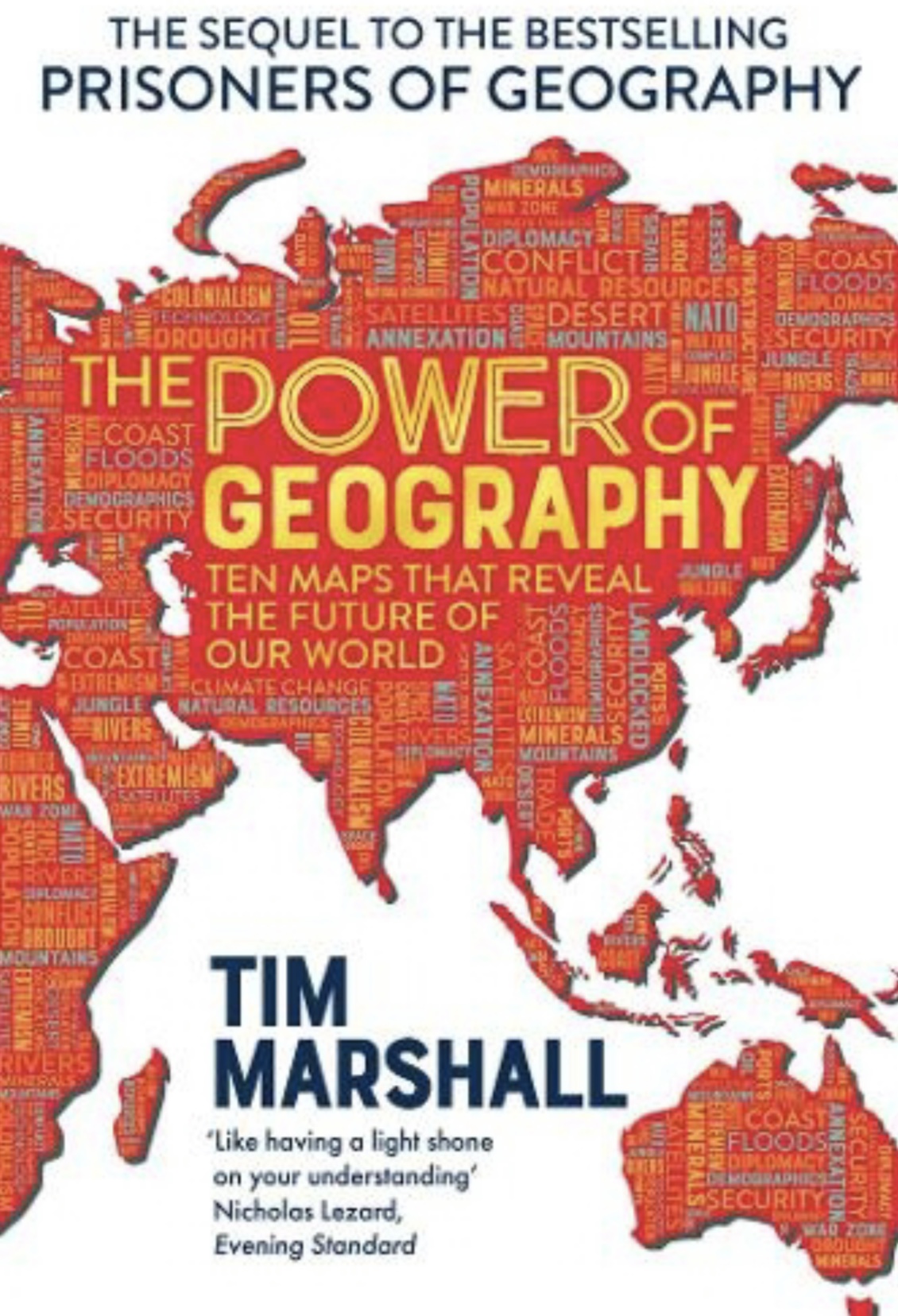
Prisoners of Geography: Ten Maps That Tell You Everything You Need to Know About Global Politics – Tim Marshall

All leaders of nations are constrained by geography. Their choices are limited by mountains, rivers, seas, and concrete. To understand world events, news organizations and other authorities often focus on people, ideas, and political movements, but without geography, we never have the full picture.

Now, seasoned journalist Tim Marshall examines Russia, China, the USA, Latin America, the Middle East, Africa, Europe, Japan and Korea, and Greenland and the Arctic — their weather, seas, mountains, rivers, deserts, and borders — to provide a context often missing from our political reportage: how the physical characteristics of these countries affect their strengths and vulnerabilities and the decisions made by their leaders.

In ten, up-to-date maps of each region, Marshall explains in clear and engaging prose the complex geo-political strategies of these key parts of the globe. What does it mean that Russia must have a navy, but also has frozen ports six months a year? How does this affect Putin’s treatment of Ukraine? How is China’s future constrained by its geography? Why will Europe never be united? Why will America never be invaded? Shining a light on the unavoidable physical realities that shape all of our aspirations and endeavors, Prisoners of Geography is the critical guide to one of the major (and most often overlooked) determining factors in world history.

In My Hands Today…

The Lost River: On The Trail of the Sarasvati – Michel Danino

The Lost River explores the geography, history, and mythology, of the Sarasvati river, drawing from various sources like folklore, the Vedas, archaeology, local practices, history, geology, and meteorology. The book explains that the river, its very existence, and its course have been discussed and speculated over for years. The magnificence of the Sarasvati has been detailed in scriptures like the Rig Veda. Historians and archaeologists could not understand how it mysteriously ceased to exist. Some of the even deem the river a myth.

This book attempts the deduce facts from fable and makes a strong case for the existence of the river. It goes over the upheavals that the Indian subcontinent went through thousands of years ago, explaining the dry weather, erosion, and tectonic events that changed the terrain, altered river courses, and may have made the Sarasvati disappear. The book then chronicles explorations into the river started, which began around the early nineteenth century, when it was rediscovered by British officials doing topographic explorations.

The book also explains the culture around that time, shedding light on the Indus valley civilisation and the rich and flourishing culture of Harappa. The book goes on the show the results of explorations into the river’s origins and course using modern technology like satellite imagery and isotope analysis. The author has also used his proof of the existence of the river to bolster his theory that Aryans were indigenous to India and not foreign invaders.