Every year on 28 July, the world comes together to commemorate World Hepatitis Day, a global health observance that aims to raise awareness about viral hepatitis and its devastating impact on individuals, communities, and healthcare systems worldwide. This day serves as a powerful reminder of the urgent need to address this silent epidemic and work towards a future free from the burden of hepatitis.
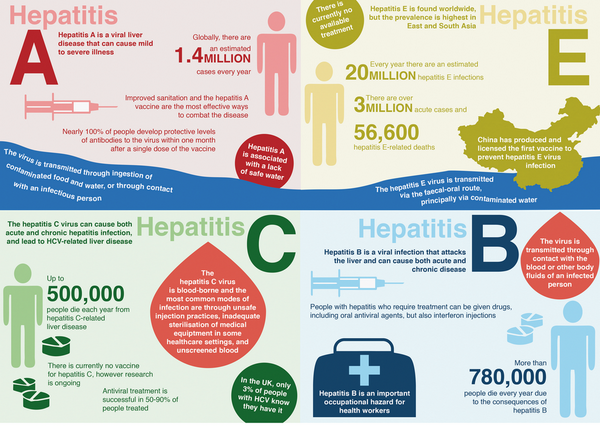
Hepatitis, derived from the Greek words hepar or liver and it is or inflammation, is a term used to describe a group of viral infections that primarily affect the liver. Hepatitis can be caused by viral infections, autoimmune disorders, drugs, alcohol, or other toxins. There are five main hepatitis viruses – hepatitis A, B, C, D, and E – each with its unique mode of transmission, symptoms, and potential for causing chronic liver disease.
Hepatitis A and E are typically spread through contaminated food and water, while hepatitis B, C, and D are transmitted through contact with infected bodily fluids, such as blood, semen, or other body fluids. Hepatitis D virus, HDV is unique in that it can only infect individuals who are already infected with the hepatitis B virus, as HDV requires the HBV to replicate. While some forms of hepatitis, like hepatitis A, are acute and self-limiting, others, like hepatitis B and C, can lead to chronic infections that can progress to life-threatening complications, including liver cirrhosis and liver cancer.
The impact of viral hepatitis on global health is staggering. According to the World Health Organization, WHO, an estimated 354 million people worldwide are living with chronic hepatitis B or C infections. These viral infections are responsible for approximately 1.3 million deaths annually, making them a leading cause of premature mortality worldwide.
A liver silently performs over 500 vital functions every single day to keep us alive. That’s why prioritising liver health is so important. The benefits of a healthy liver include living longer. Viral hepatitis still kills over a million people every year. Combined, hepatitis B and hepatitis C cause 1.1 million deaths and 3 million new infections every year. 350 million people are living with a chronic viral hepatitis infection and 3,000 people die from hepatitis every day. That’s one hepatitis death every thirty seconds. Over 8,000 new hepatitis B and C infections occur each day. That’s over 5 infections every minute. If the current trajectory continues, viral hepatitis will kill more people annually than malaria, tuberculosis and HIV/AIDS combined by 2040.
Every 30 seconds, someone dies from a viral hepatitis-related illness. However, with the existing prevention, testing and treatment services that are available every hepatitis-related death is preventable. Hepatitis can affect anyone, but it has a disproportionate effect on the people and communities most underserved by health systems.
Hepatitis infection is silent and liver health awareness is low. Most symptoms only appear once the disease is advanced, resulting in a huge volume of undiagnosed people living with hepatitis. Even when hepatitis is diagnosed, the number of people who go on to receive treatment is incredibly low. Most people discover they have hepatitis B or C after many years of silent infection, and only when they develop serious liver disease or cancer. Even after diagnosis, the level of treatment and care for people living with hepatitis is astonishingly poor. Only 10% of people with chronic hepatitis B are diagnosed. Only 22% of those receive treatment – that’s just 2% of the total global health burden. Only 21% of people with hepatitis C are diagnosed. 62% of those diagnosed receive treatment to cure them – just 13% of the total global health burden.
The establishment of World Hepatitis Day can be traced back to 2007 when the World Hepatitis Alliance, a non-profit organisation dedicated to addressing the global hepatitis crisis, launched the first-ever global awareness campaign on hepatitis. The date of 28 July was chosen to commemorate the birthday of Dr. Baruch Blumberg, a Nobel Prize-winning scientist who discovered the hepatitis B virus and developed the first hepatitis B vaccine. In 2010, the World Health Assembly, the decision-making body of the WHO, officially designated 28 July as World Hepatitis Day, recognising the urgent need for a coordinated global response to address the growing burden of viral hepatitis.
Since its inception, World Hepatitis Day has served as a platform for governments, healthcare organisations, patient advocacy groups, and individuals to raise awareness, promote prevention, and advocate for improved access to testing, treatment, and care for those affected by viral hepatitis. To eliminate hepatitis and achieve the WHO’s ambitious targets by 2030, simplified primary care services for viral hepatitis should ensure that all pregnant women living with chronic hepatitis B have access to treatment and their infants have access to hepatitis B birth vaccines to prevent infection. 90% of people living with hepatitis B and/or hepatitis C are diagnosed, and 80% of diagnosed people are cured or treated according to newer expanded eligibility criteria. Hepatitis C can be prevented by adequately screening all donated blood and ensuring safe injection practices in health care settings, at home and especially among people who inject drugs.
Key priorities for the future include strengthening immunisation programmes by ensuring universal access to hepatitis B vaccination, particularly the birth dose, which is crucial for preventing mother-to-child transmission and protecting future generations from chronic hepatitis B infection. Scaling up access to affordable and reliable hepatitis testing and treatment services, particularly in resource-limited settings, is essential for reducing the burden of viral hepatitis and preventing its long-term complications. Combating the stigma and discrimination associated with viral hepatitis is critical to encouraging individuals to seek testing and treatment, and promoting their overall well-being and social inclusion. Implementing evidence-based harm reduction strategies, such as needle and syringe exchange programs, is vital for preventing the transmission of hepatitis B and C among people who inject drugs. Achieving a hepatitis-free future requires a coordinated and collaborative effort involving governments, healthcare providers, civil society organisations, and communities, working together to address the multifaceted challenges posed by viral hepatitis. Continued investment in research and innovation is essential for developing new diagnostic tools, more effective treatments, and ultimately, a cure for viral hepatitis.
As we commemorate World Hepatitis Day each year, let us renew our commitment to addressing this global health crisis and work towards a future where no one suffers from the devastating consequences of viral hepatitis. Through collective action, sustained advocacy, and an unwavering dedication to public health, we can turn the dream of a hepatitis-free future into a reality.



:max_bytes(150000):strip_icc()/hepatitis-symptoms-1760105-FINAL-38d3a724b7174e2f9f290e70db88e197.jpg)