Hinglaj Mata Temple, Balochistan, Pakistan
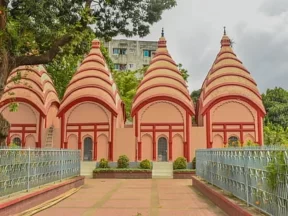
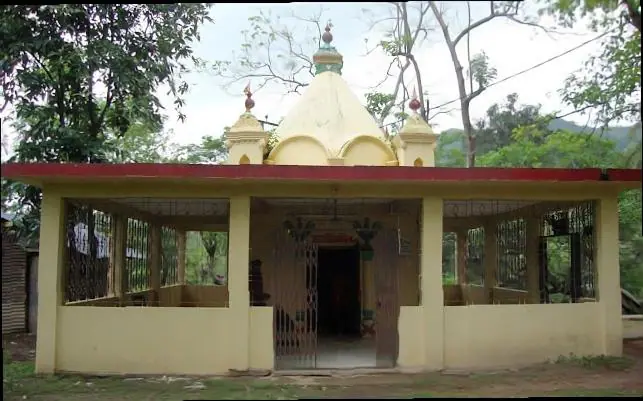
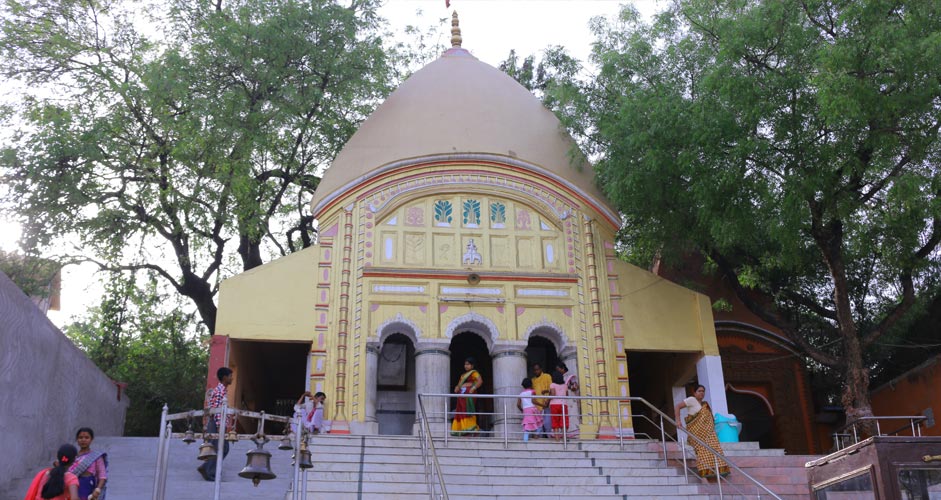
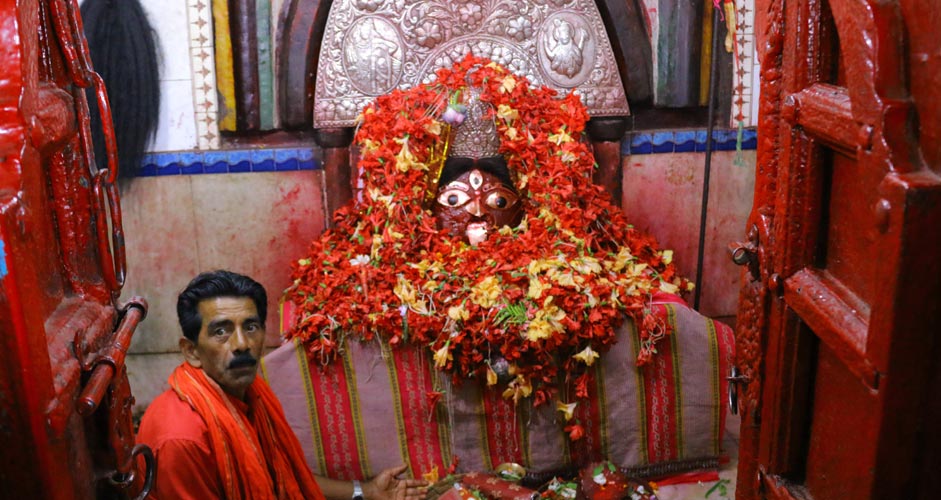
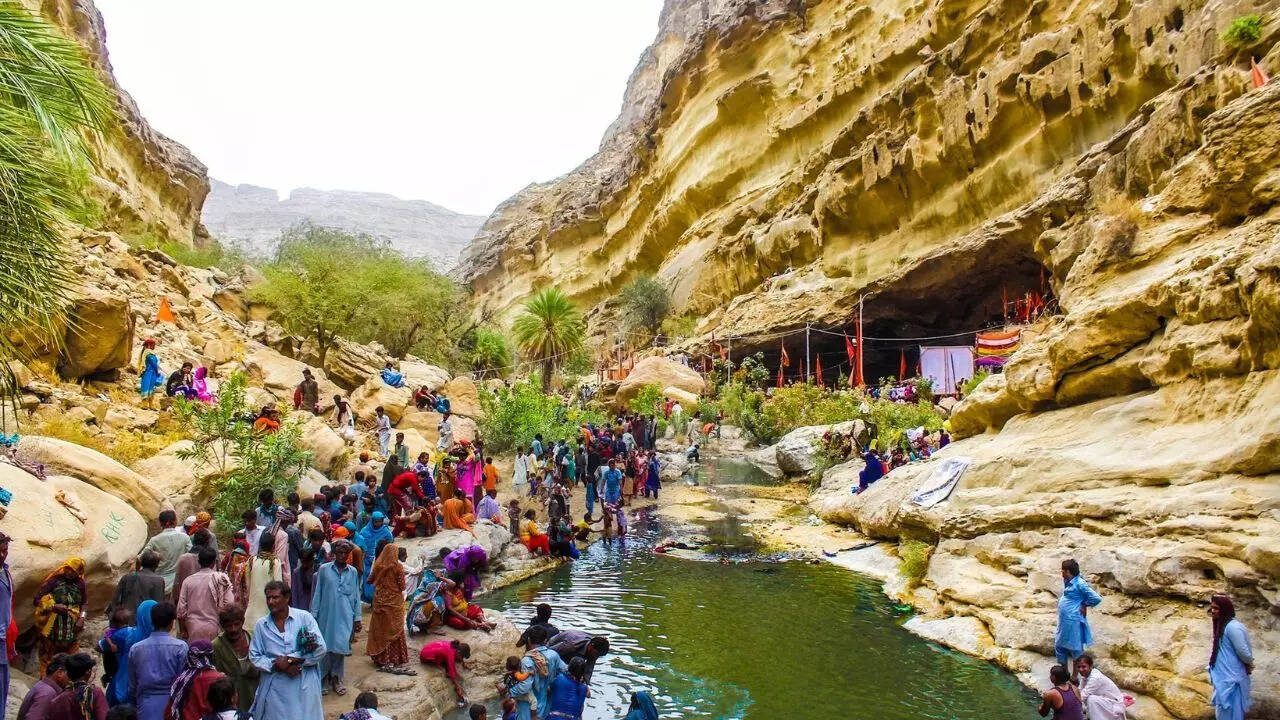
The ancient shrine of the Hinglaj Mata Temple is located in the remote Makran coast of Pakistan’s Balochistan province and is dedicated to Goddess Hinglaj, also known as Hingula Devi or Nani Mandir.
Located inside the Hingol National Park, the cave temple is in a narrow gorge in the remote, hilly area, at the end of a range of Kirthar Mountains, in the Makran desert stretch, on the west bank of the Hingol River. The origins of the Hinglaj Mata Temple stretch back into antiquity, with its spiritual significance predating its current structure. Archaeological evidence and ancient texts suggest that this location has been a place of worship for over two millennia. The temple’s importance is mentioned in several ancient Hindu texts, including the Kularnava Tantra and the Kubjika Tantra, which list Hingula among the most significant Shakti Peethas. The natural cave that houses the shrine is believed to be millions of years old, with some sources claiming it to be 3.2 million years old.

The Hinglaj Mata Temple holds a unique position among the 51 Shakti Peethas scattered across the Indian subcontinent. It is considered one of the most important, if not the most important, of all Shakti Peethas. This elevated status stems from the belief that it is the site where the head of Goddess Sati fell. In some traditions, it is associated with the goddess’s brain or Brahmadreya, her vital essence. It is one of the two Shaktipeeths located in Pakistan, the other being the Sharada Peeth.
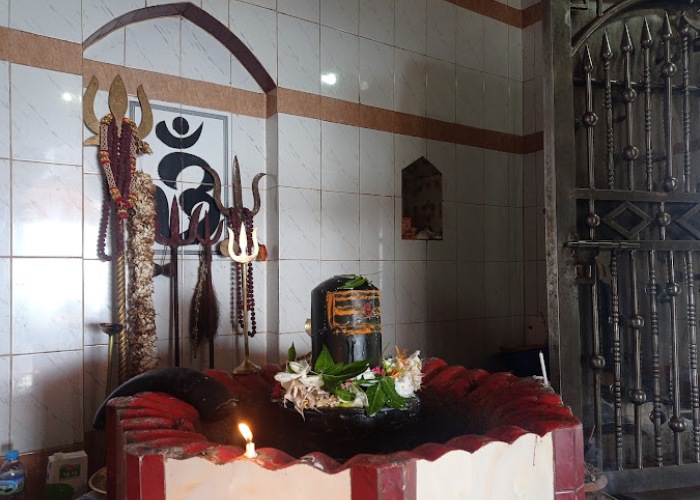
Several features distinguish the Hinglaj Mata Temple from other shrines. Unlike many elaborate Hindu temples, the Hinglaj shrine is housed in a simple natural cave. This simplicity is its defining feature, with the sacred stone inside the cave being worshipped as the manifestation of the goddess. There is no man-made image of the goddess in the temple. Instead, devotees worship the divine form of Hinglaj Mata in its natural state. The temple’s remote location in the mountainous terrain of Balochistan makes the journey to it an integral part of the pilgrimage experience. Despite being in a predominantly Muslim country, the temple has been protected and maintained by the local Baloch Muslim community for centuries, making it a symbol of interfaith harmony. Hinglaj Mata is worshipped as the Kuldevi or the family deity by many Hindu communities, including certain Kshatriya, Bhavsar, Barot, and Rao families in India.
The annual Hinglaj Yatra, also known as Theerth Yatra, is the largest Hindu pilgrimage in Pakistan. This four-day festival typically takes place in April, coinciding with the Chaitra Navaratri festival. Devotees undertake an arduous journey through the desert to reach the temple, symbolising their devotion and commitment. They climb the Chandragup and Khandewari mud volcanoes as part of their spiritual journey and throw coconuts into the craters to make wishes and thank the gods. Before approaching the shrine, pilgrims take a ritual bath in the sacred Hingol River. The primary offering to the deity consists of three coconuts, though other items like rose petals are also used. On the third day of the festival, priests recite mantras to invoke the gods and bless the pilgrims.
The temple follows a schedule of daily worship rituals performed by dedicated priests. Given its historical association with Tantric traditions, the temple continues to be an important centre for certain Tantric rituals. Disciples use broken pieces of earth and stones to build small symbolic houses as part of their devotional practices. Traditionally, devotees are expected to complete the pilgrimage barefoot as a form of penance, though many now use vehicles for the journey.
Over the last three decades, the temple has become a unifying point of reference for Pakistan’s diverse Hindu communities with the temple and its associated pilgrimage playing a crucial role in preserving Hindu cultural practices in Pakistan. The protection and maintenance of the temple by local Muslims serve as a powerful symbol of religious tolerance and coexistence.
The remote location and difficult terrain pose challenges for pilgrims, especially the elderly or differently-abled. The temple’s location within a national park necessitates careful management to balance religious practices with environmental conservation.
In recent years, there have been positive developments regarding the temple’s accessibility and recognition. The construction of the Makran Coastal Highway has made the temple more accessible to pilgrims.

Sharada Peetha, Neelum Valley, Pakistan
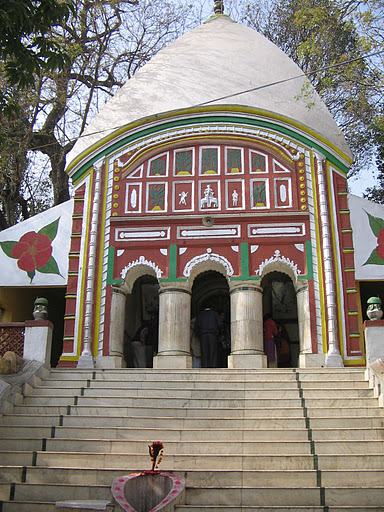
Located in Neelum Valley in Pakistan-administered Azad Kashmir, the Sharada Peeth is one of the most sacred and historically significant Hindu shrines in the Indian subcontinent. This ancient temple is believed to be the site where the right hand of Goddess Sati fell. The temple is dedicated to Goddess Sharada, a form of Goddess Saraswati, and Lord Kapali Bhairava, a manifestation of Lord Shiva. Nestled at an altitude of 6,499 feet above sea level along the Neelum River, Sharada Peeth was not only a place of worship but also a renowned centre of learning that attracted scholars from across the world.
The temple’s name derives from Goddess Sharada, who is regarded as an incarnation of Goddess Saraswati — the goddess of wisdom, learning, and knowledge. The term Sharada also means stream or flow, symbolising the confluence of rivers near the temple. Historically, Sharada Peeth served as a prestigious university and library between the 6th and 12th centuries. It was renowned for its contributions to philosophy, theology, mathematics, linguistics, and Kashmir Shaivism. Scholars from regions as far as Greece, Mesopotamia, Tibet, and China travelled here to study its vast collection of manuscripts.
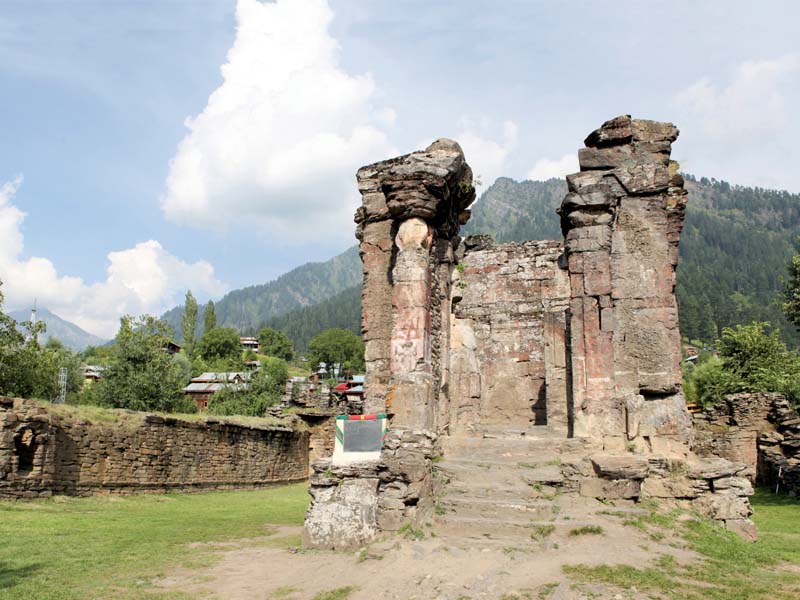
The temple’s history is intertwined with various rulers. It flourished under the Hindu Shahi dynasty and later received patronage during Dogra rule when Maharaja Gulab Singh repaired it in the 19th century. However, following political turmoil during Partition in 1947–48 and subsequent wars between India and Pakistan, the temple fell into disuse.
During its peak between the 6th and 12th centuries, Sharada Peeth was one of the most prominent centres for education in South Asia. It housed thousands of manuscripts on diverse subjects like theology, mathematics, linguistics, and philosophy. The Sharada script used extensively in Kashmir derived its name from this institution. The temple is situated near the confluence of three streams: Madhumati, now Neelum River, Kishenganga River, and the mythical Saraswati River. Bathing at this confluence was considered purifying for pilgrims.
The temple complex includes a roofless structure surrounded by stone walls. While much of it lies in ruins today due to natural disasters and neglect over centuries, remnants indicate its once-majestic design. Stone slabs lead to a vast courtyard that once hosted scholars who meditated or studied under open skies. For Kashmiri Pandits, Sharada Peeth is one of their holiest sites alongside the Amarnath Temple and Martand Sun Temple. Many Kashmiri Pandit theologians would place their manuscripts before Maa Sharada’s idol to seek her blessings. Mount Harmukh nearby is considered an abode of Lord Shiva by Kashmiri Pandits.
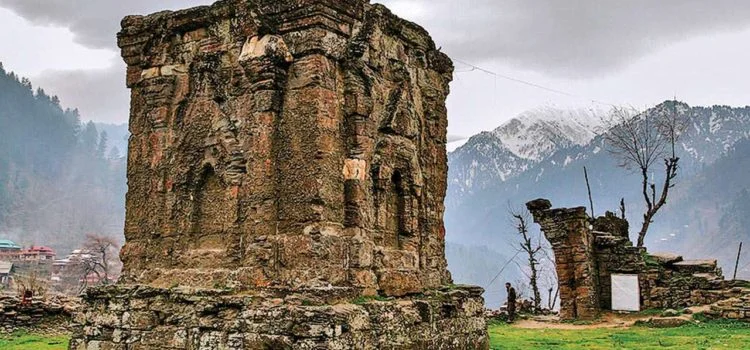
While active worship ceased after Partition in 1947–48 due to migration and political tensions, historical accounts provide insights into rituals once conducted at Sharada Peeth. Kashmiri Pandit theologians would place their manuscripts on covered platters before Maa Sharada’s idol to seek her approval. If pages remained undisturbed overnight, it was seen as divine acceptance; if ruffled or displaced, it indicated disapproval. An annual fair was held at Shardi village near the temple during springtime when pilgrims traveled from across Kashmir to worship Maa Sharada. Devotees bathed at the confluence of rivers before offering prayers.
As part of Kashmir Shaivism traditions, Tantric rituals were performed at Sharada Peeth to invoke Goddess Sharada’s blessings for wisdom and spiritual enlightenment. Devotees offered flowers, especially lotus, fruits, incense sticks, rice, and ghee during pujas dedicated to the goddess.
According to legend, Goddess Saraswati or Sharada chose this site as her earthly abode because it offered serenity conducive to learning. She blessed scholars who traveled here with wisdom and insight. Kashmiri Pandits believe that their pilgrimage to Sharada parallels Sage Shandilya’s journey to attain divine knowledge from Maa Saraswati herself. Local lore suggests that attempts by invaders or rulers to move Maa Sharada’s idol failed due to divine intervention. It is believed that any disturbance caused natural calamities like earthquakes or floods in the region.
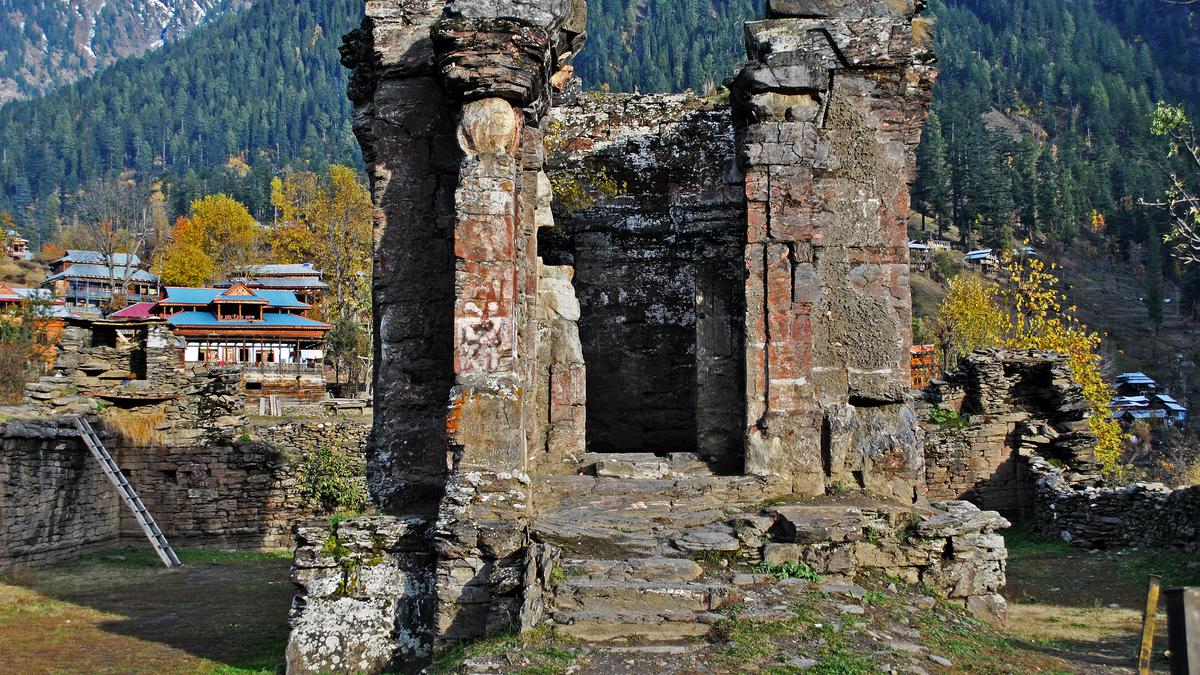
An alternative account holds that Shandilya prayed to the goddess Sharada with great devotion, and was rewarded when she appeared to him and promised to show him her real, divine form. She advised him to look for the Sharada forest, and his journey was filled with miraculous experiences. On his way, he had a vision of the god Ganesha on the eastern side of a hill. When he reached the Neelum river, he bathed in it and saw half his body turn golden. Eventually, the goddess revealed herself to him in her triple form of Sharada, Saraswati and Vagdevi, and invited him to her abode. As he was preparing for a ritual, he drew water from the Mahāsindhu. Half of this water transformed into honey, and became a stream, now known as the Madhumati stream.
Today, Sharada Peeth continues to figure in South Indian Brahmin traditions. At the beginning of formal education, some sects of Brahmins ritually prostrate in the direction of Sharada Peeth. Saraswat Brahmin communities in Karnataka are also said to perform a ritual of moving seven steps towards Kashmir before retracing their steps during the Yagnopavit ceremony and include the Sharada stotram in their morning prayers.