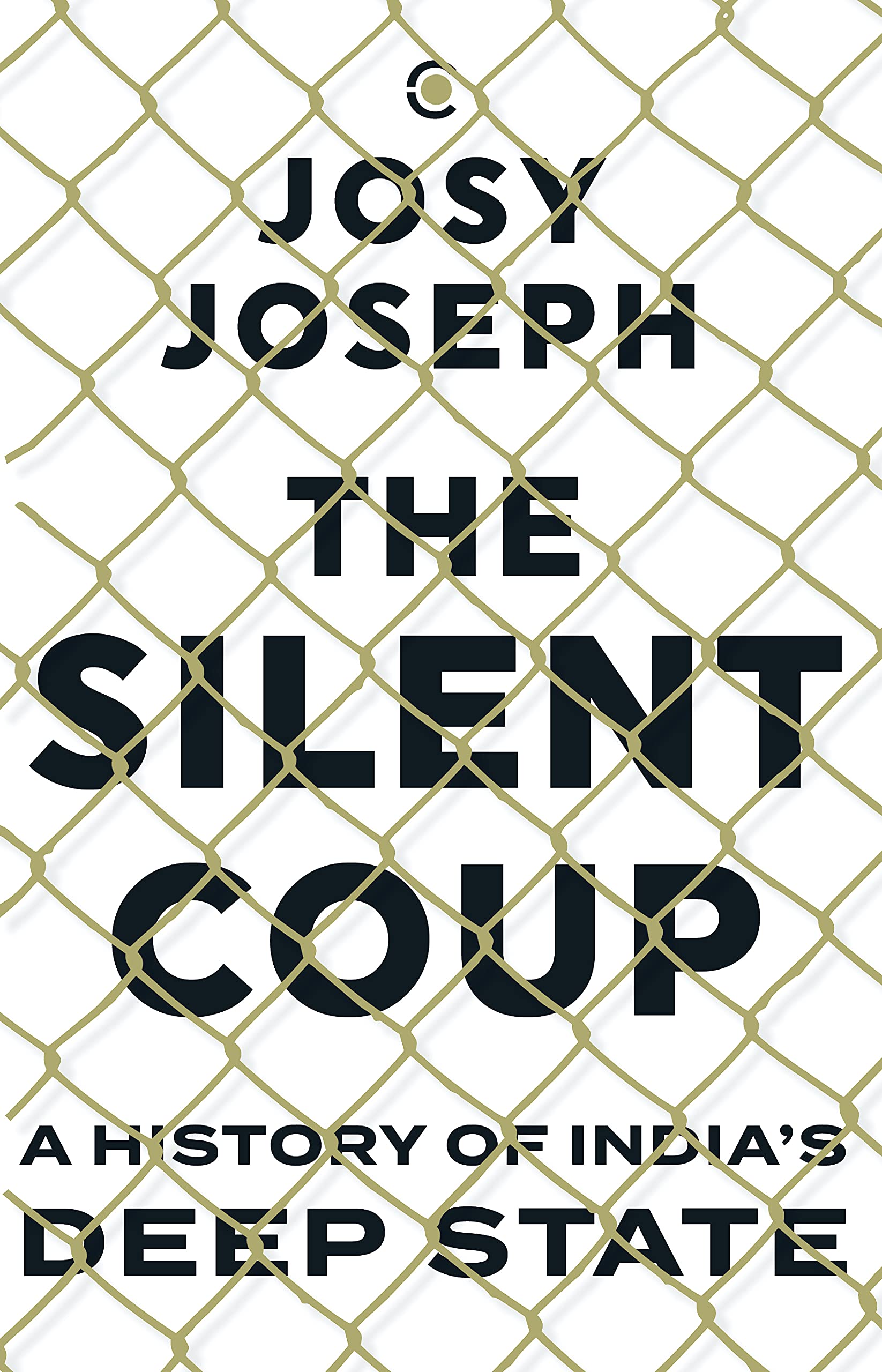
Last Among Equals: Power, Caste & Politics in Bihar’s Villages – M.R. Sharan
Sanjay Sahni was living an ‘araam zindagi’ in Delhi, working as an electrician, until a chance encounter with a computer sent him hurtling into the labyrinth that is the NREGA—one of the world’s largest rural poverty alleviation programmes—and the corruption within. It led him back to his village, where eventually, he and his comrades (primarily women from the Dalit and most backward castes) formed the anti-corruption group Manrega Watch. Their tale is one strand of village politics, a story of resilience among citizens, those outside the system.
But what of the ‘insiders’? The complex local-state unit of the village has at the top a mukhiya, who, like the one in Sanjay’s village, wields great power, even to do harm. Ward members—closest to their constituents and the most socially representative group in the panchayati raj system—are at the bottom of this structure.
Development economist M.R. Sharan brings these two interweaving strands of insiders and outsiders together to tell a tale of hope: that those on the margins can challenge entrenched hierarchies. Through government action—reservation, decentralisation, transparency measures—and through citizen engagement, social movements and elections, change is possible, if not necessarily easy. Take the resourceful ward member, Kamal Manjhi, who repurposed the grievance redressal system to complain against the state: this was essentially a member of the local state, using a state mechanism to arm-twist another part of the state to do its job.
Last Among Equals eschews the usual sweeping narratives of national and state politics, reaching instead for the ‘swirling, vivid sub-narratives that escape easy categorisations’, the darkness of the material leavened with deep empathy. The result is a captivating, often searing narrative of how lives are lived in the villages of Bihar—and indeed in much of India.
Desperately Seeking Shah Rukh: India’s Lonely Young Women and the Search for Intimacy and Independence – Shrayana Bhattacharya
In this pathbreaking work, Shrayana Bhattacharya maps the economic and personal trajectories—the jobs, desires, prayers, love affairs, and rivalries–of a diverse group of women. Divided by class but united in fandom, they remain steadfast in their search for intimacy, independence, and fun. Embracing Hindi film idol Shah Rukh Khan allows them a small respite from an oppressive culture, a fillip to their fantasies of a friendlier masculinity in Indian men. Most struggle to find the freedom—or income—to follow their favourite actor.
Bobbing along in this stream of multiple lives for more than a decade—from Manju’s boredom in ‘rurban’ Rampur and Gold’s anger at having to compete with Western women for male attention in Delhi’s nightclubs to Zahira’s break from domestic abuse in Ahmedabad—Bhattacharya gleans the details on what Indian women think about men, money, movies, beauty, helplessness, agency, and love. A most unusual and compelling book on the female gaze, this is the story of how women have experienced post-liberalization India.
Growing up in Mumbai, there was always this sense of rivalry between my city and India’s commercial capital, Mumbai and India’s capital, New Delhi. Introduction. This rivalry is age-old, one that has sparked countless debates, friendly banter, and good-natured arguments across India—the rivalry between Delhi, the nation’s capital, and Mumbai, its bustling commercial hub.
A city steeped in history and heritage, Delhi, because it is the nation’s capital, carries the weight of the nation’s past, present, and future on its broad shoulders. Delhi’s historical significance is undeniable. From the grandeur of the Mughal Empire to the colonial legacy of the British Raj, the city’s architecture and monuments reflect a rich and diverse tapestry of history. The Red Fort, Humayun’s Tomb, and Qutub Minar stand as testaments to Delhi’s regal past.
Delhi’s cultural diversity is another hallmark of the city. With residents hailing from all corners of India, Delhi is a melting pot of languages, cuisines, and traditions. The street food here is legendary, from mouthwatering chaats to the delectable kebabs of Old Delhi.
As the political heart of the nation, Delhi houses India’s key government institutions, including the Parliament and the Rashtrapati Bhavan (Presidential Residence). The city’s grand boulevards and iconic landmarks serve as symbols of India’s democratic ideals and governance.
Now, let’s make our way to western India, to India’s commercial and financial capital, Mumbai. This city is synonymous with opportunity, dreams, and an unstoppable spirit. Often dubbed as “Mayanagari” or the “City of Illusions” and “Maximum City”, Mumbai is home to India’s Hindi film industry or Bollywood, where dreams come to life on the silver screen. The Indian Hindi film industry, centred in Mumbai, produces thousands of films each year, enchanting audiences across the globe. It’s a city where stars are born and legends are made.
Mumbai is the economic powerhouse of India. The city’s thriving financial district houses the Bombay Stock Exchange (BSE), the Reserve Bank of India (RBI), and numerous multinational corporations. Its bustling streets and markets are a testament to India’s entrepreneurial spirit.
One of Mumbai’s defining features is its stunning coastline, overlooking the Arabian Sea. The Marine Drive, often referred to as the “Queen’s Necklace,” is a breathtaking promenade offering panoramic views of the city’s iconic skyline.
Delhiites, known for their love of history and tradition, often think that Mumbai is all about glamour and showbiz, lacking the depth of Delhi’s cultural heritage. On the other hand, Mumbaikars argue that their city’s cultural diversity and open-mindedness make it a true melting pot of ideas and creativity. I think this point goes to Mumbai because of the sheer diversity found in the city, where people mind their own business and no one cares where the other is from.
Delhi’s residents often pride themselves on their city’s measured pace of life, where history is savoured at every turn. In contrast, Mumbaikars, famous for their fast-paced lifestyle, appreciate the efficiency and dynamism of their city. This point could go either way, depending on what kind of lifestyle one prefers.
Delhiites claim their city as the culinary capital of India, with its rich array of traditional dishes and street food. Mumbaikars, on the other hand, tout their street food scene as unmatched, with delectable vada pavs and pav bhajis. This one belongs to Delhi. The food scene in Delhi is unmatched elsewhere in India and even Mumbai’s famed street food can’t beat the food and ambience in the capital.
The rivalry even extends to the monsoon season. While Delhi welcomes the rain with open arms, appreciating the respite from scorching summers, Mumbaikars are known for their resilience during the annual deluge, continuing with their daily lives regardless of the downpour. This point belongs to Mumbai. The entire state of Maharashtra becomes lush and green during the monsoon season and the Mumbai monsoon is a thing of beauty (but not when the streets get flooded and life stops). A stroll at the Gateway of India or on Marine Drive during the rains is something that must be done while visiting the city during this season.
In the grand tapestry of India’s cultural diversity, the rivalry between Delhi and Mumbai holds a special place. It’s a lighthearted competition that keeps both cities striving for excellence. It sparks creativity, encourages healthy debate, and celebrates the unique identities of each city. Ultimately, the rivalry between Delhi and Mumbai is a microcosm of India’s broader cultural diversity and unity. These two cities, though different in many ways, represent the essence of India’s motto, “Unity in Diversity.” They coexist, thrive, and contribute to the nation’s progress in their unique ways.
Delhi, with its regal heritage and political prominence, stands as a testament to India’s storied past. Mumbai, the bustling metropolis of dreams and commerce, symbolizes India’s entrepreneurial spirit and dynamism.
So, here’s to Delhi and Mumbai, two cities that may have their differences, but together, they represent the vibrant and diverse spirit of India. In the end, it’s not a matter of which city is better; it’s about celebrating the unique charms, contributions, and friendly rivalry that make both Delhi and Mumbai exceptional in their own right.
Lalchand Gupta takes you on an exciting journey through Dalal Street in this brief history of the Indian stock market post liberalization.
From tech booms and tax evasion to banks and money laundering; scams and crashes to fixers and investors, Lala has seen it all.
A comprehensive account of the stock market over the last 25 years, it tells you what to watch out for while investing. It also looks at policies that the government needs to revise if the country is to harness domestic capital more effectively.
This is a must-read for all interested in the financial health of the country as well as those who want to know about the sensational events that led up to the far more sterile stock-market operations of the present day.
Rooted in some parts of Karnataka and Northern Kerala’s folklore and traditions, Theyyam is an ancient ritualistic dance form that transcends the boundaries between the divine and the earthly and is performed to honour the heroes and ancestral spirits. Also known as Kaliyattam or Tira, the dance is performed in various places in North Malabar annually between December and April. In Kerala, Theyyam is performed predominantly in the North Malabar region, consisting of present-day Kasargod, Kannur Districts, Mananthavady Taluk of Wayanad and Vadakara and Koyilandy Taluks of Kozhikode. A similar custom known as Bhuta Kola is followed in the Tulunadu region of neighbouring Karnataka. It is also performed each day at the Parassini Kadava Sri Muthappan Temple in Kannur. The people of the region consider Theyyam itself a channel to a god and they thus seek blessings from Theyyam.
Theyyam, believed to have been derived from the word Daivam, meaning God, is based on the belief that immortal spirits enter mortal bodies to perform a ritual dance of divine revelation. Theyyam may have its origins from ancestor worship. It has been observed that a vast majority of the Theyyam deities have their origin from people who were in the backward castes of the Kerala’s caste system. The ancestor worship ritual was later evolved into the elaborate dance ritual that is seen nowadays. Incorporating many other local beliefs. The spectacular varieties of Theyyam performances are possible using elaborate facial make-up, captivating headgear, special costumes, and unique ornaments. Theyyams are staged in various temples of Malabar, usually in front of the village shrine, with regularity each year. As performances are on an open stage, they can also be showcased in traditional Malabar households during festive or special occasions.
One fascinating aspect of Theyyam is its year-round occurrence, with different deities taking center stage during specific seasons. The festival follows a cyclical pattern, aligning with the agricultural calendar and reflecting the symbiotic relationship between nature and culture. This perpetual celebration ensures that the spirit of Theyyam is woven into the fabric of daily life. Theyyam season starts from the tenth day of the Malayalam month of Thulam that usually falls during October, and known as paththaam-udayam and lasts up to seven months till the middle of Edavam month, typically late May and June. The last Kaliyaattam for the season is performed at Madayi Kavu and Kalarivathukkal Bhagavathy Temple, both being the family shrines of the Kolathiri royal family. The performers, known as Theyyam artists or Vellattam, transform into deities, donning elaborate costumes, vibrant makeup, and intricate headgear. Through their mesmerizing movements, the artists channel the spirit of the gods, embodying them for a brief yet profound interaction with the community.
The dance form incorporates dance, music, and mime and is believed to be distinguished into 400 forms, each with its own unique style, make-up, costumes, songs, and choreography. The most prominent Theyyams are the Pottan, Gulikan, Bhagavati, Kari Chamundi, and Raktha Chamundi. The ornamental decorations, size, and appearance of the performers are also worth noticing. The festival dates to the Dravidian age and is said to be part of the ancient tribal culture of Kerala.
There are about 456 types of Theyyams documented. Theyyam is mainly performed by males, except for the Devakkoothu Theyyam; the Devakkoothu is the only Theyyam ritual performed by women. Devakoothu is performed only in the Thekkumbad Kulom temple. In Kasaragod and Kannur districts, this ritual art is mainly performed in the kavus, or temples or ancestral houses, of the Thiyyar, Nambiar, Vaniyar, and Maniyani communities.
The preparation for a Theyyam performance is an elaborate process that involves various rituals and ceremonies. The artists, traditionally belonging to specific communities, undergo a period of purification and isolation before embodying the deity. The ritual begins with the invocation of the divine, accompanied by traditional music and chanting. As the rhythm intensifies, the Theyyam artist enters a trance-like state, connecting with the deity’s spirit. This transformative process is a sacred and highly respected undertaking, emphasizing the spiritual essence of Theyyam. The makeup, a vital aspect of Theyyam, transforms the artists into divine beings. The striking red and black hues, coupled with bold facial expressions, bring the gods to life in a way that captivates the audience and communicates the deity’s energy and character.
According to some experts, all the prominent characteristics of primitive, tribal, and religious worship had widened the stream of Theyyam, where even the followers of Islam are associated with the cult in its functional aspect and made it a deep-rooted folk religion of millions. Besides this, practices like spirit worship, ancestor worship, hero worship, masathi worship, tree worship, animal worship, serpent worship, the worship of the goddesses of disease and the worship of Gramadevata or the village deity, are included in the mainstream of the Theyyam. Along with these gods and goddesses, there exist innumerable folk gods and goddesses. Most of these goddesses are known as Bhagavathy. Theyyam showcases a diverse pantheon of deities, each with its own unique attributes, stories, and rituals. Some of the prominent deities include Vishnumoorthy, Muchilottu Bhagavathi, Raktha Chamundi, and Kari Chamundi, among many others. Each deity represents different aspects of the divine, from benevolence and protection to power and ferocity. Different branches of mainstream Hindu religion, such as Shaktism, Vaishnavism and Shaivism, now dominate Theyyam. However, the forms of propitiation and other rituals are continuations of a very ancient tradition.
Music is an integral part of the Theyyam performance, enhancing the immersive experience for both the artists and the audience. Traditional instruments like Chenda, Elathalam, and Kuzhal contribute to the rhythmic and melodic accompaniment, creating an atmosphere charged with spiritual energy. The beats of the chenda resonate deeply, complementing the dancers’ movements and adding a layer of intensity to the ritual.
Out of devotion, ruling clans established their own shrines and Kavus for Theyyam deities, where non-Sattvic rituals and customs are observed. The goddesses like Rakteshwari, Chamundi, Someshwari, and Kurathi, and the gods like Vishnumoorthi, are propitiated in these household shrines. There, the Theyyam dancers appear during the annual festivals of gods and goddesses. The rituals in such shrines are different from those of the Brahmanical temples. The impact of this cultural fusion could be traced to social organisation based on the caste system and agrarian relations. The invitation of Brahmin Thanthri to consecrate the idols of Kavu is a recent development.
The dance or invocation is generally performed in front of the village shrine. It is also performed in the houses as ancestor-worship with elaborate rites and rituals. There is no stage or curtain or other such arrangements for the performance. The devotees would be standing or some of them would be sitting on a sacred tree in front of the shrine. In short, it is an open theatre. Performance of a particular deity according to its significance and hierarchy in the shrine continues for 12 to 24 hours with intervals. The chief dancer who propitiates the central deity of the shrine must reside in the rituals. After sunset, this dancer would not eat anything for the remainder of that day. His make-up is done by specialists and other dancers.
The first part of the performance is usually known as Vellattam or Thottam. It is performed without proper make-up or any decorative costume. Only a small, red headdress is worn on this occasion. The dancer along with the drummers recites the ritual song, which describes the myths and legends, of the deity of the shrine or the folk deity to be propitiated. This is accompanied by the playing of folk musical instruments. After finishing this primary ritualistic part of the invocation, the dancer returns to the green room. Again, after a short interval, he appears with proper make-up and costumes. There are different patterns of face painting. Some of these patterns are called vairadelam, kattaram, kozhipuspam, kottumpurikam, and prakkezhuthu. Mostly primary and secondary colours are applied with contrast for face painting. The dancer comes in front of the shrine and gradually metamorphoses into the deity of the shrine. The performance signifies the transitional inversion, reversal, and elevation of status denoting the anti-structural homogeneity of Theyyam. He, after observation of certain rituals places the head-dress on his head and starts dancing.
In the background, folk musical instruments like chenda, tudi, kuzhal and veekni are played in a certain rhythm. All the dancers take a shield and kadthala or sword, in their hands as a continuation of the weapons. The dancer then circumambulates the shrine, runs into the courtyard and continues dancing there. The Theyyam dance has different steps known as akalaasamsms. Each Kalasam is repeated systematically from the first to the eighth step of footwork. A performance is a combination of playing of musical instruments, vocal recitations, dance, and peculiar makeup, usually predominantly orange, and costumes. The Kathivanoor Veeran Theyyam is one of the most famous Theyyams in Kerala.
As with many traditional art forms, Theyyam faces challenges in the modern era. Economic pressures, changing social dynamics, and the impact of globalisation pose threats to the sustainability of this ancient ritual. However, efforts are underway to preserve and promote Theyyam, both within India and on the global stage. Cultural enthusiasts, scholars, and artists collaborate to ensure that Theyyam’s flame continues to burn brightly.