I was initially planning to do Ladakh along with Jammu, but now that Ladakh is a Union Territory, I thought it deserved a blog post all of its own. So from Jammu, we travel eastwards towards Ladakh.
A contentious region disputed by India, Pakistam and China, the erstwhile Buddhist Kingdom of Ladakh will now become a Union Territory of India. It extends from the Siachen Glacier in the Karakoram range to the main Great Himalayas to the south and is one of the most sparsely populated regions in India. The culture and history of Ladakh is closely related to that of Tibet, who is its neighbour to the east. Ladakh is renowned for its remote mountain beauty and culture.
Leh
The former capital of the Himalayan kingdom of Ladakh, the seat of which was in the Leh Palace, Leh is the starting point for adventures in the region. The Leh Palace, which was the former mansion of the royal family of Ladakh, was built in the same style and about the same time as the Potala Palace in Tibet. Leh is at an altitude of 3,524 metres and is connected via National Highway 1 to Srinagar in the southwest and to Manali in the south via the Leh-Manali Highway.
The old town of Leh was added to the World Monuments Fund’s list of 100 most endangered sites due to increased rainfall from climate change and other reasons. Neglect and changing settlement patterns within the old town have threatened the long-term preservation of this unique site
Leh Palace
Bearing a passing similarity to the Potala Palace in Lhasa, Tibet, the nine-storey sand-coloured Leh Palace also known as ‘Lhachen Palkhar’ is Leh’s dominant structure and architectural icon. It took shape under 17th-century king Singge Namgyal but has been essentially unoccupied since the Ladakhi royals were stripped of power and shuffled off to Stok in 1846. The palace offers marvellous panoramic views of the entire town of Leh as well as that pf the Stok Kangri and Zanskar mountains of the Himalayan ranges.
Even though a considerable part of the Leh Palace is now in ruins due to the Kashmiri invasion that took place in the 19th century, the stately palace continues to remain a stunning place to explore. The stunning statue of Buddha at the back of this palace adds more to the charm of this place. Today the sturdy walls enclose some photo exhibition spaces and a small prayer room, but the most enjoyable part of a visit is venturing to the uppermost rooftops for the view.
Interesting structures ranged around the palace’s base include the prominent Namgyal Stupa, the colourfully muralled Chandazik Gompa and Soma Gompa, once home to the monastic printing press. Also nearby is the 1430 Chamba Lhakhang, with its colourful three-storey Buddha and medieval mural fragments. Don’t count on any of these being open though.
The majestic palace is presently under the Archaeological Survey of India, which is working on renovating the ancient structures of that era and striving to keep intact the history of the Namgyal dynasty in Leh.
Thiksey Gompa
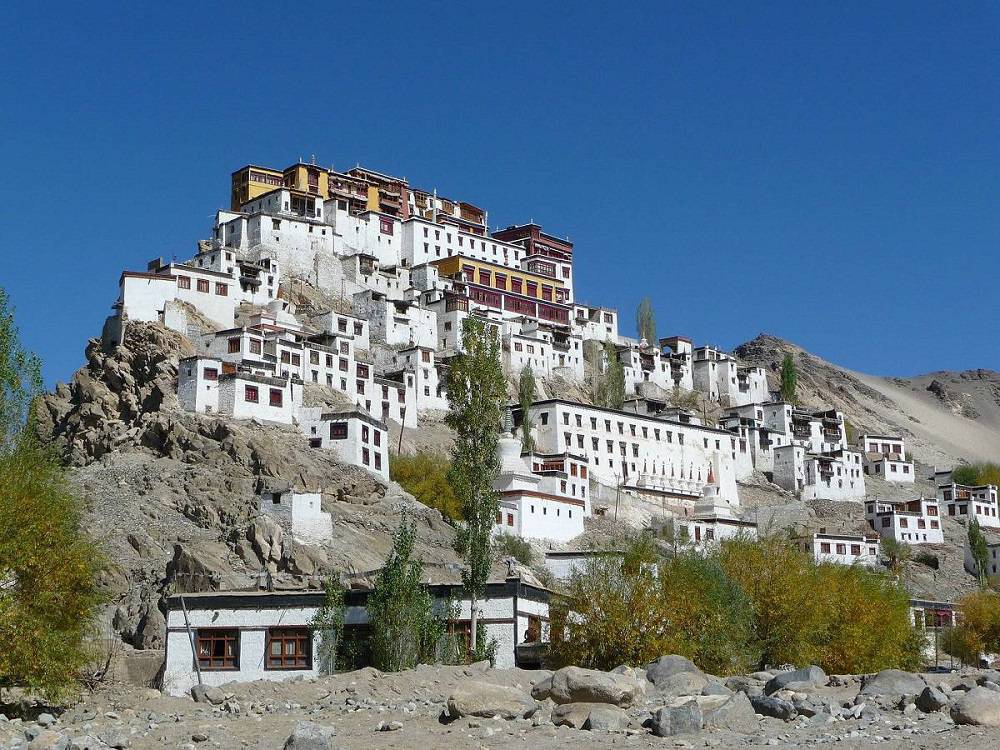
Glorious Thiksey Gompa is one of Ladakh’s biggest and most recognisable monasteries, photogenically cascading down a raised rocky promontory. Snuggled at an altitude of 11,800 feet, this monastery is looked after by the people of Yellow Hat (Gelugpa) sect. It comprises a 12-story building complex and houses more than 500 monks. Thiksey has a large and precious collection of Buddhist books, journals, statues, scripts, stupas, swords, and Thangka paintings.
At its heart, the main dukhang (prayer hall) oozes atmosphere, and a Maitreya temple contains a giant future Buddha who wears an exquisitely ornate crown. More obviously ancient is the gonkhang and the tiny old library up on the rooftop (often closed).
The Thiksey entrance ticket includes entry to a fascinating museum – it’s hidden beneath the monastery restaurant so ask the manager for the key. Prayers take place in the assembly hall between 6am and 7.30am most days and visitors are welcome.
Pangong Lake
The famous and sparkling blue Pangong lake is situated approximately at the height of 4350 meters. This endorheic lake is 12 kilometres long and extends from India to Tibet, with two-thirds of it lying in the latter. Owing to its altitude, the Pangong Lake temperature ranges from -5°C to 10°C as a result of which it freezes completely during winters in spite of its salinity. A unique feature of the lake is that it does not remain blue throughout the year or even the day, rather it changes colours from azure to light blue to green and grey too!
Also known as Pangong Tso, the sublime beauty, crystal waters and gentle hills are example of the beautiful landscape of the region. There are two streams from the Indian side that form the wetlands and marshes at the edges.
Magnetic Hill
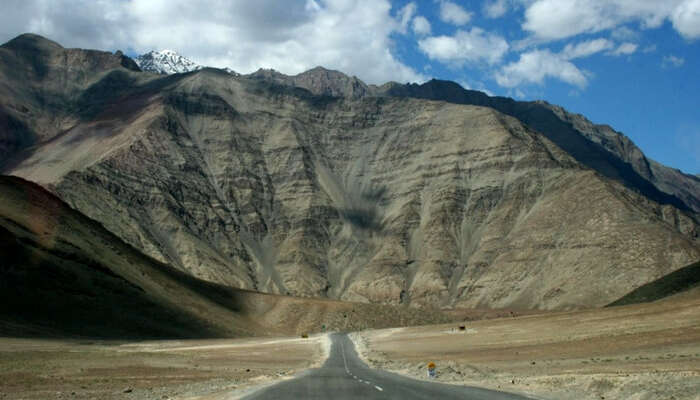
The popular Magnetic Hill of Ladakh is said to be a gravity hill where vehicles defy the force of gravity and move upwards on the hill when parked at the marked location. The hill lies at a distance of 30 km from the town of Leh, at an elevation of around 14,000 feet above sea level. To the eastern side of the hill flows the Sindhu River, originating in Tibet and is an almost essential stopover for all those who travel to Ladakh. An optical illusion or actuality, the Magnetic Hill in Ladakh has mysterious magnetic properties that draw tourists from across the globe.
The science behind the phenomenon is unknown but it has been observed that if you leave your vehicle at the base of the hill with the brakes unlocked, it will start moving uphill slowly on its own. Many theories have emerged as to why Magnetic Hill may be a simple illusion or how it may actually be a great discovery and one of the Earth’s many geological wonders. It is believed that the absence of a visible horizon and the backdrop scenery make a faint downwards sloping stretch appear to be an upward slope, creating the illusion of the vehicles moving upwards.
Nubra Valley and Khardung La Pass
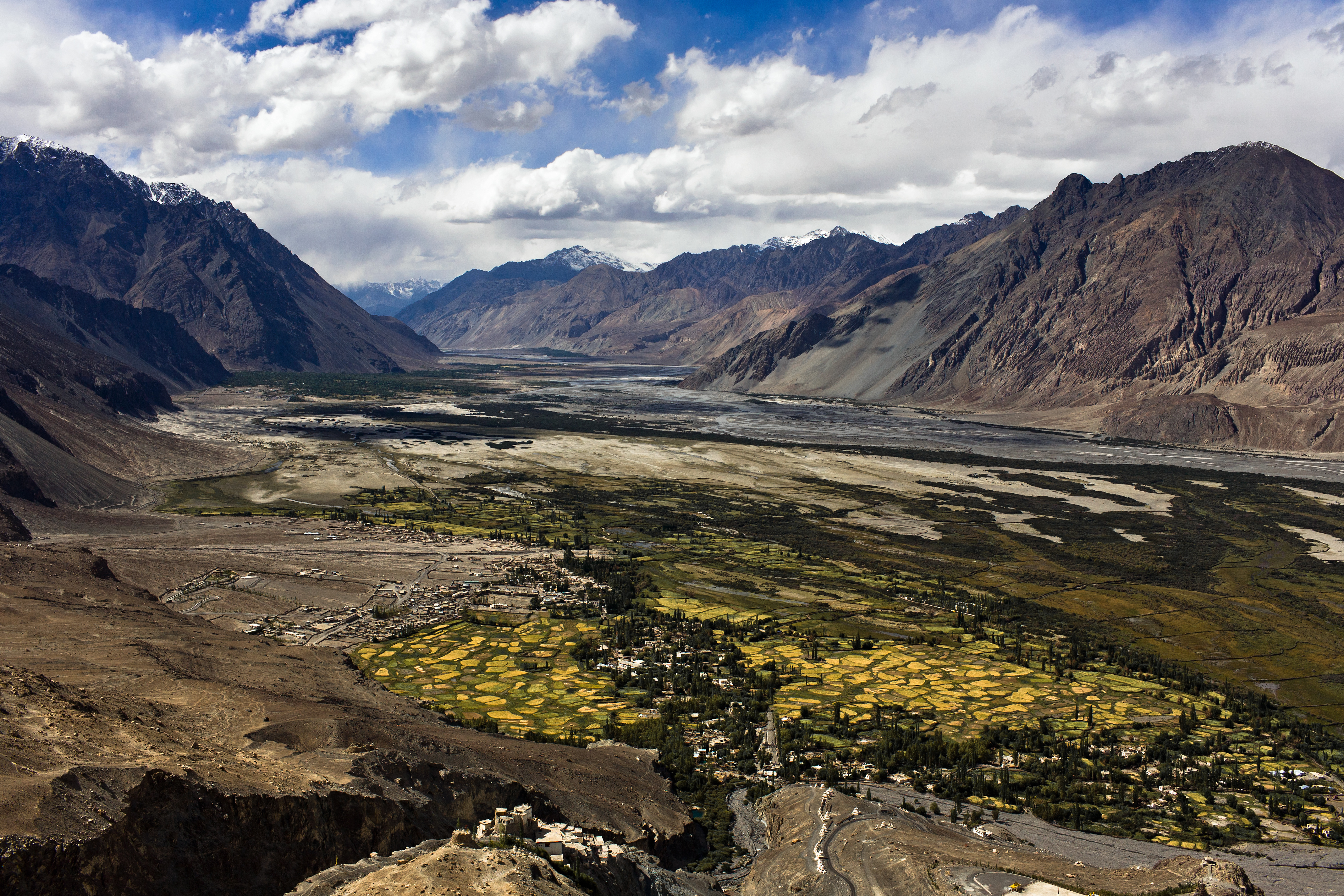
Located in the Silk Route, the Nubra Valley, a tri-armed valley with sand dunes in the middle of the Himalayas lies towards the northeast, around 140 km from Leh. The valley is situated where River Shyok and River Siachen meet. The area is also famous for its two-humped Bactarian camels.
In order to enter the Nubra valley, you need to pass through Khardung La, which is one of the highest motorable roads in the world and hand over the photocopies of your travel permits to the soldiers in the Khardung la pass, as the region is currently under military supervision because the road further leads to the Siachen base camp which happens to be the highest battlefield in the world.
Kargil
Known for the India-Pakistan war of 1999, Kargil, located at an altitude of approximately 2,800 m above sea level has now become a very peaceful tourist destination with historical importance. It is the second largest town in Ladakh, situated on the banks of Indus River. Connected to the Zojila Pass, Kargil holds important place in the history of India. A number of monasteries and the Kargil War Memorial are worth a visit. If by any chance you get the opportunity, do take a night’s break in one of the military camps and listen to those amazing war stories from the army people themselves.
Excursion can be made to Drass and see features like Tolo-ling, Mushkoh Valley and Tiger Hill. A short walk to Goma Kargil provides breathtaking views. Mulbekh Gompa, Shergol, Urgyen Dzong and Wakha Rgyal are prime attractions of Kargil.
Drass
Reckoned to be India’s coldest and world’s second coldest place, Drass is situated 60kms away from Kargil. Located at the base of Zojila Pass, which connect Kashmir and Ladakh, Drass is also dubbed as the Gateway to Ladakh. The best time to visit here is during spring and summers, when the snow melts and the greenery returns. Visit the Drass war memorial, which is also known as Kargil war memorial. Drass is also a base for a trek to beautiful Suru Valley.
Hemis High Altitude Wildlife Sanctuary
Located about 45kms away from Leh and situated on the western bank of River Indus, the Hermis Wildlife Sanctuary extends in a 600 sq km of area and provides shelter to many rare species like the snow leopards and bharals. At an altitude ranging from 3,300 m to 6,000 m above sea level, this sanctuary is known to be the highest in the world as well as the largest park of South Asia. It is also a habitat to the rare Snow Leopards. Other than these, also spot here, Ibex, shapu, bharal and amongst various others. With several alpine and steppe trees along with shrubs spreading over the valley bottoms, and 73 varieties of registered birds residing in this place, it tends to be a tempting landscape for forest and nature walks.
You can also visit the spectacular Hemis Monastery, which is the largest monastery in Ladakh which lies in the town of Hermis.
Lamayuru
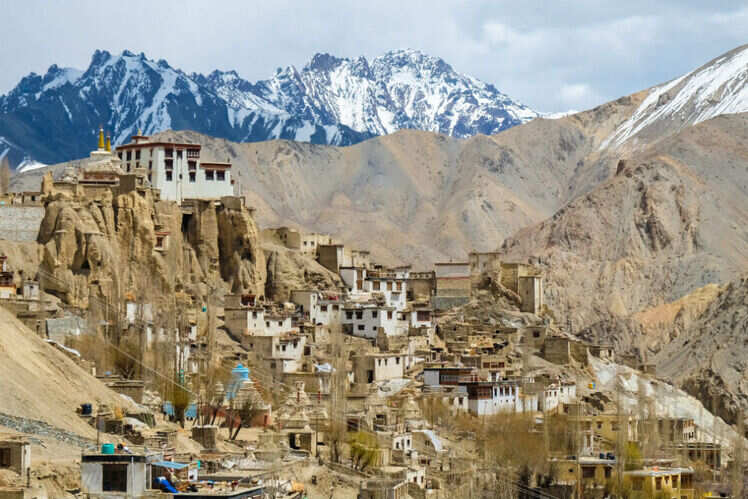
Lamayuru is a small village situated midway between Kargil and Leh on NH1-D also known as the Srinagar- Leh Highway. It is situated 100 km ahead of Leh, after Fotu La- the highest pass on the Srinagar-Leh Highway. Known as the ‘place of freedom’ and housing the oldest and one of the largest monasteries in Ladakh region, Lamayuru is immensely famous for a Tibetan Buddhist Monastery located nearby. However, its claim to fame is accredited to the surreal breathtaking view of moonlike landscapes carved into the mountains. A large lake long ago dried up and the protrusions looked like the surface of the moon. Also take a look at the aesthetic fresco paintings which are also found in the houses of the locals.
Lake Tso Moriri
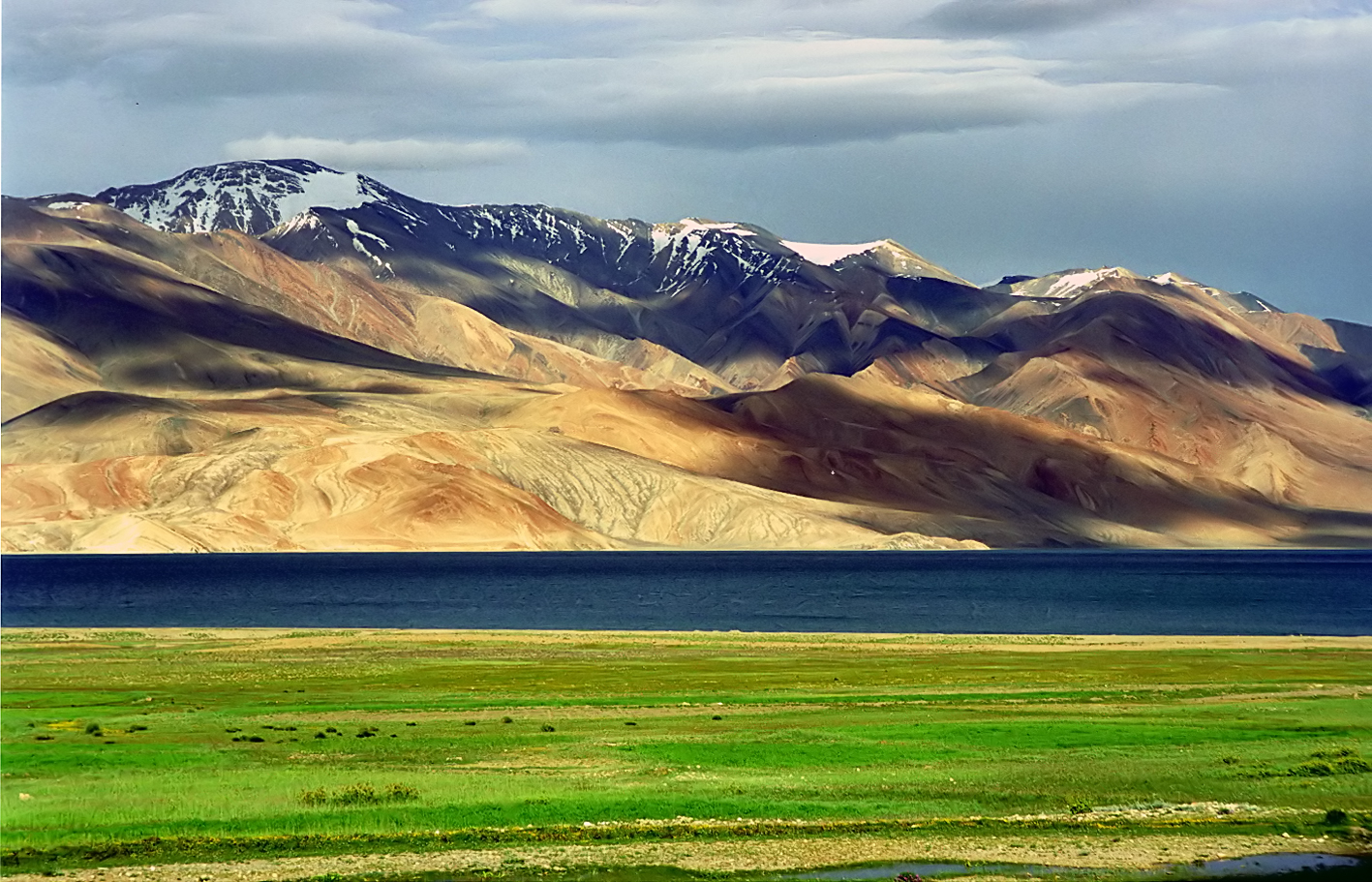
The lesser known of the many lakes within the Changtang Wildlife sanctuary, Tso Moriri lake is a twin to the Pangong Lake. This lake offers a scenic place of peace and tranquillity, measuring about 28 km in length from north to south, and about 100 feet average in depth. The enchanting Tso Moriri lake is surrounded by barren hills, with the backdrop of beautiful snow-covered mountains. Since this is the lesser known of the two lakes, the crowd is less too. Tucked away in the remotest parts of the country makes Tsi Moriri a perfect star gazing sight rendering a complete mind-stirring site.
Tso Moriri has been declared as a wetland reserve. A number of species of birds included bare-headed goose, the great-crested grebe, the Brahmin duck and the brown-headed gull. Himalayan hares are abundantly found here. Moriri Tso is also called the ‘mountain lake’, owing to the peaks that surround it, towering at a height of 2000 meters, shutting it off from the outside world.
I hope you liked reading this series on Jammu, Kashmir and Ladakh as much as I loved writing it. This are real bucket list places for me and I do hope I make it there before I die!