Family Footprints: An Unforgettable Italian Adventure – Part 4

First view of Venice

Venice
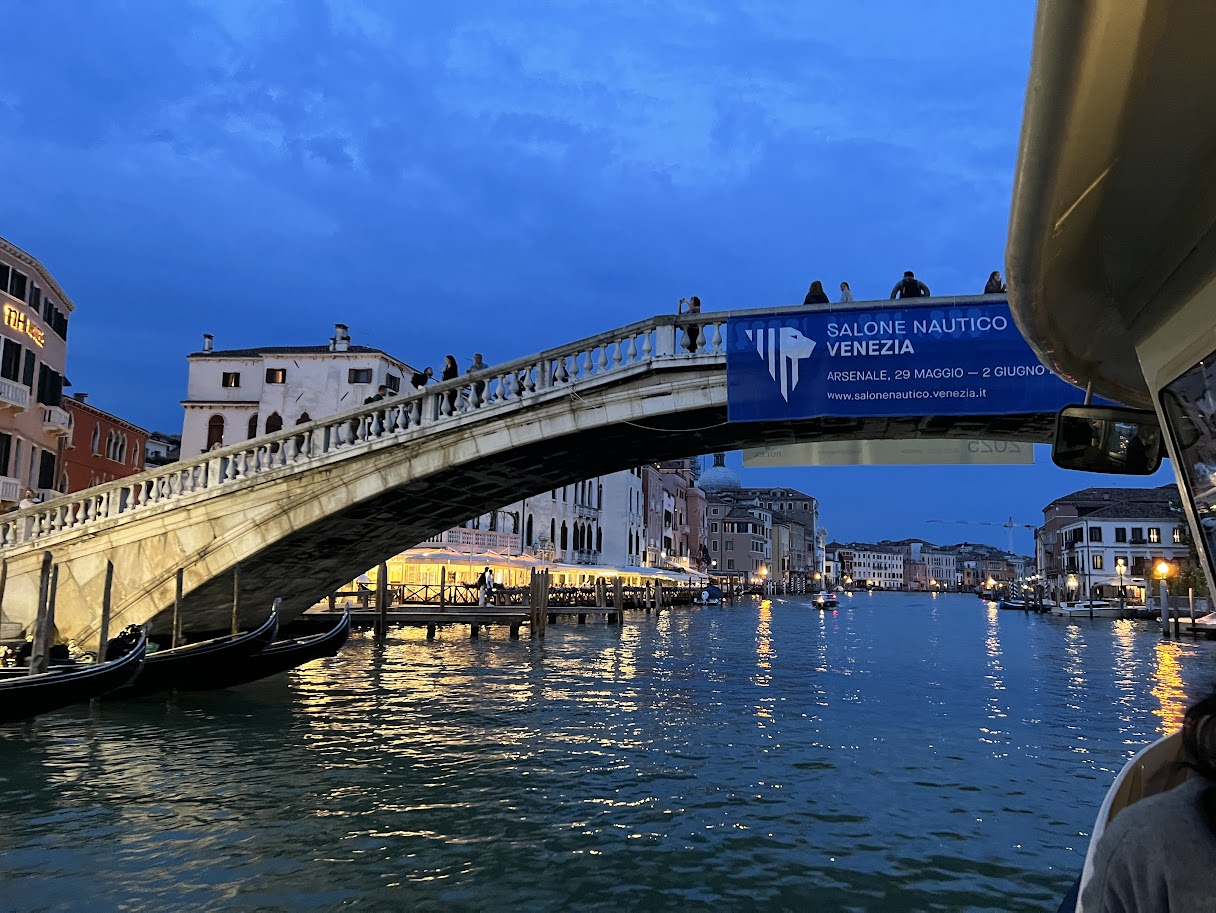
We reached Venice around 8 pm, and my god, the first view of the city by the water completely blew me away! We reached just around sunset, and the city was so beautiful! We took a water taxi to the stop closest to our Airbnb, which was the Rialto Bridge, and walked to the house. Venice is full of cobbled streets and lots of bridges, so we had a slightly hard time walking to the house. The flat was on the second floor and didn’t have an elevator, so again I had to climb with the luggage. We went and brought back food, had a nice dinner with wine, and slept after a tiring day.
St Mark’s Square

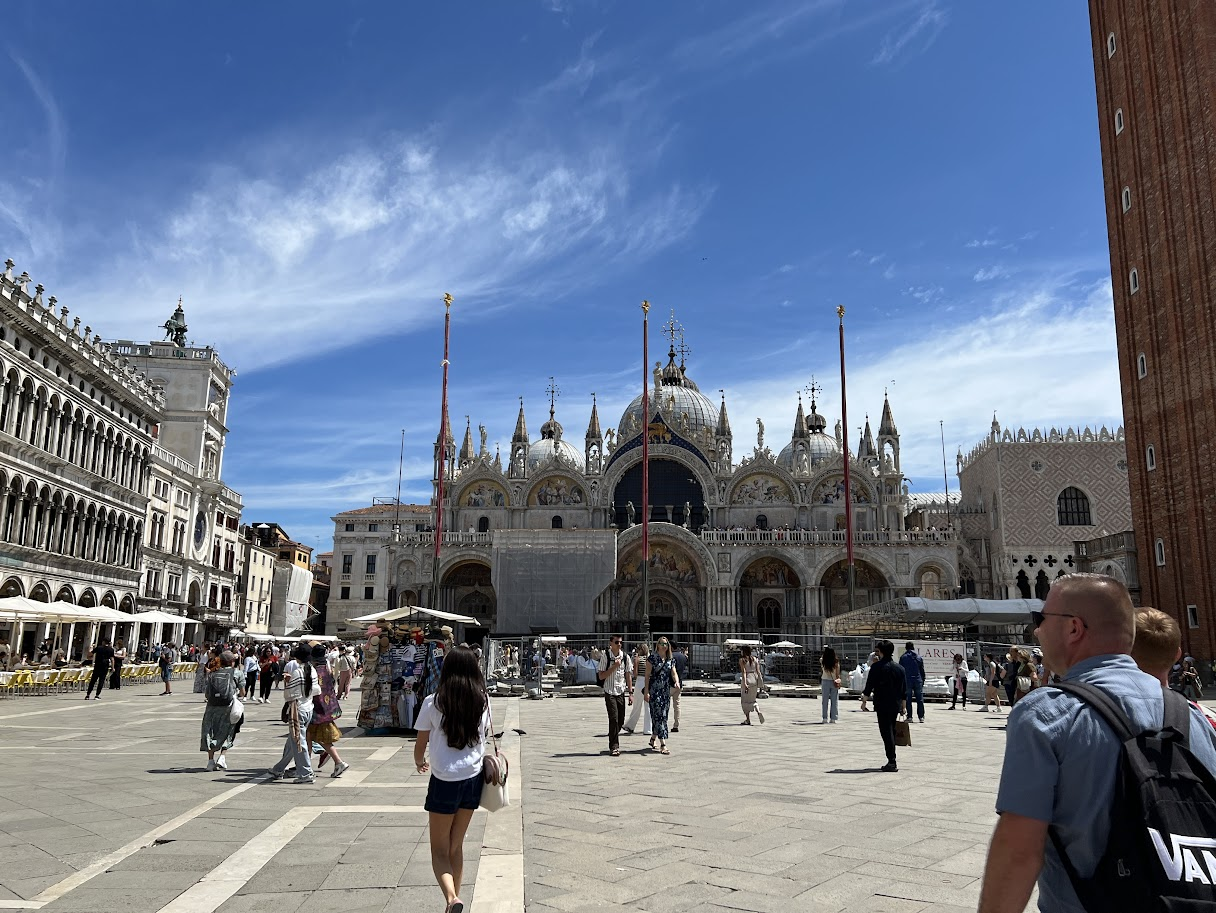
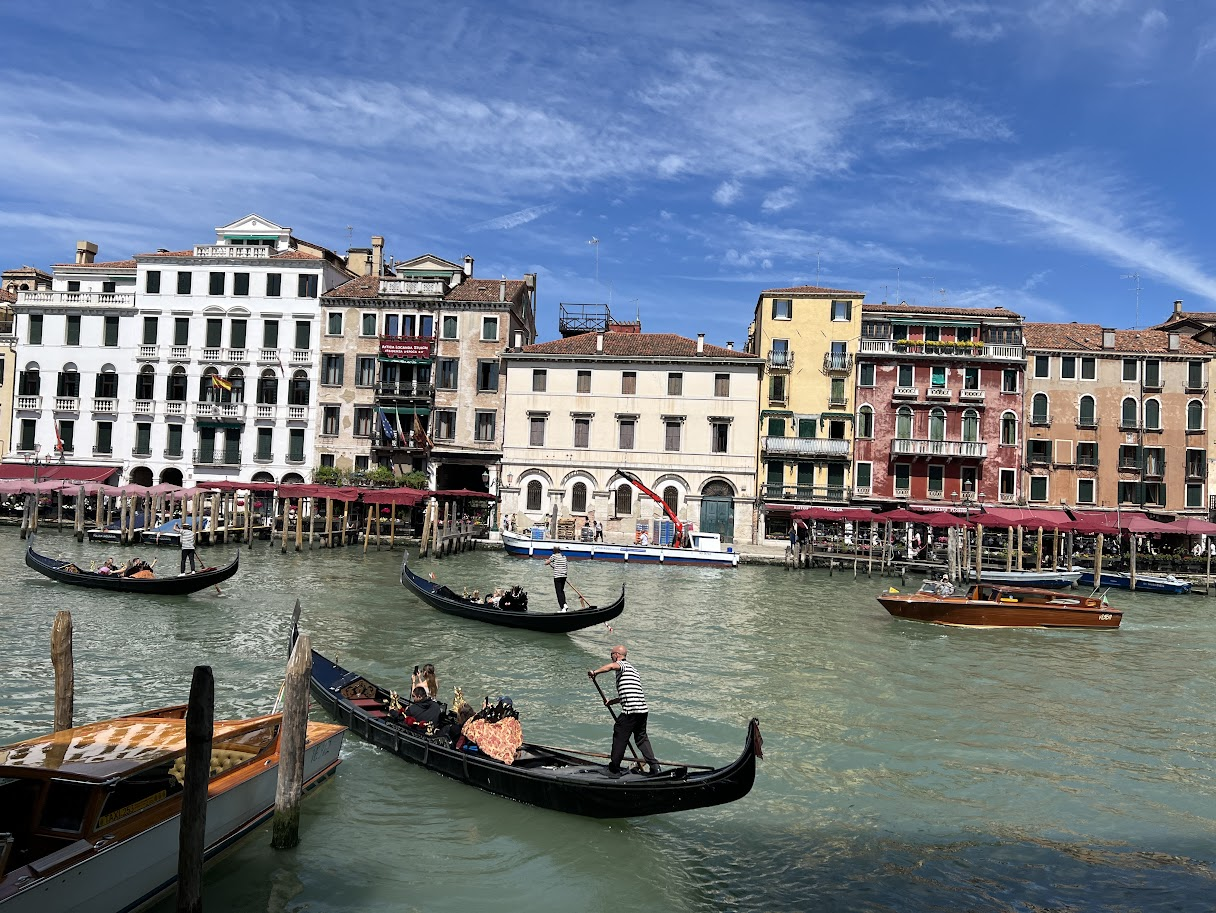
The next day, our last day of the trip, we woke up slightly late, and then after getting ready and checking out, we left our luggage at a luggage storage place. There are lots around, and we found one midway between our house and the water taxi point. We also booked tickets for a water taxi to get to the airport before leaving the house. After coffee, we walked to St. Mark’s Square, where we took in the beauty of the square and the Doge’s Palace. Then it was time to tick off a bucket list item—a gondola ride. We negotiated and got two gondolas and took the one-hour ride. After that, it was time for a quick lunch before one of us had to leave for the train station, as she was continuing her trip in Italy. The rest of us wandered around and finally picked up our luggage before heading to the water taxi embarkation point at Rialto. The taxi took about an hour to get to the airport, which is also connected to a jetty. It was super hot at this point, and it was the only time I had to put my hair up! Then a two-hour flight back to London before we took a taxi back to my sister’s house.
Another view of the Venice Grand Canal

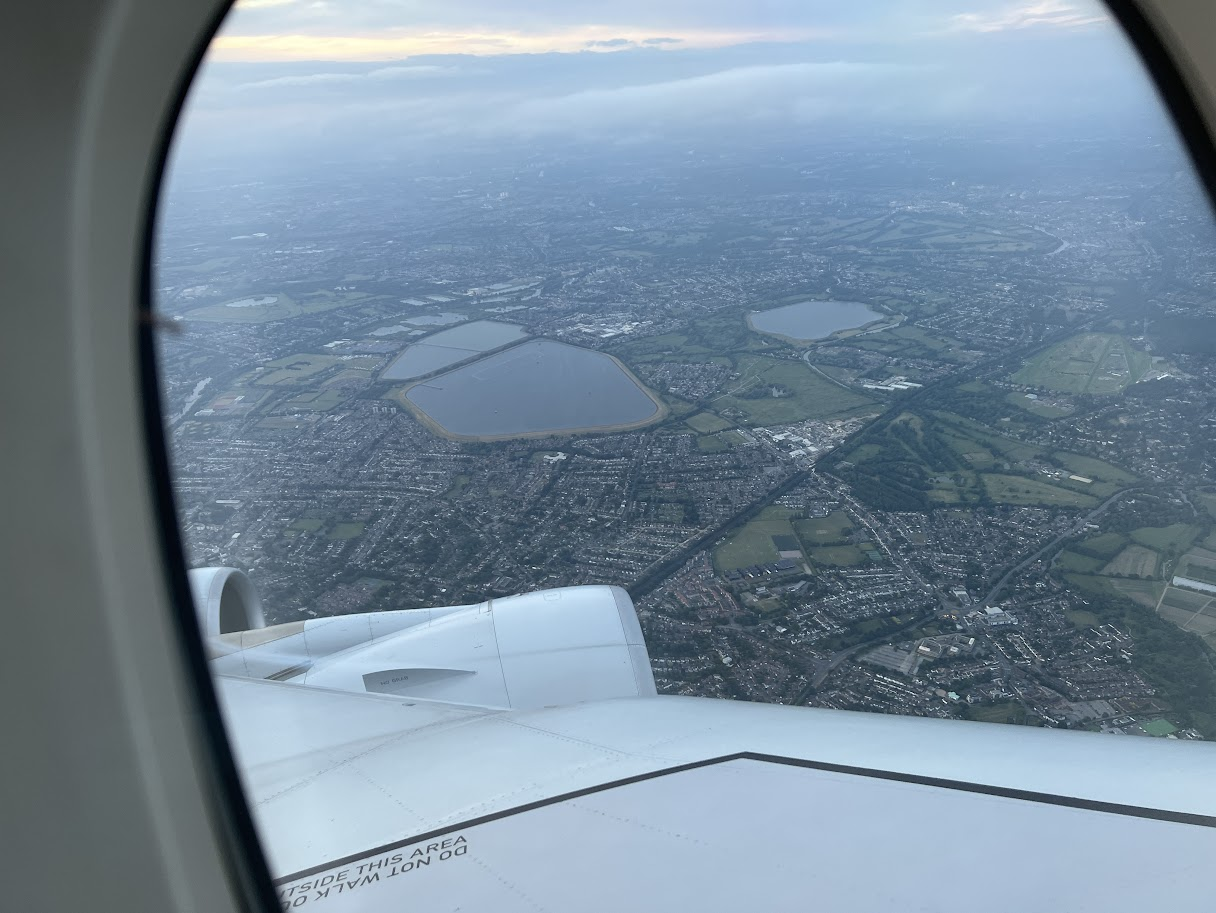
The next day, the day I was flying back to Singapore, we all woke up late, after being exhausted the previous six days. After getting ready, I got my sister to take me food shopping. I had a list of some cheese, tea, and oils to buy, which I was not able to purchase in Italy because of the rules in the UK. Then we went to lunch at this amazing West African restaurant. We had the tasting menu, which lasted for about 2 hours. After that, we dropped the sister, who also lives in London, at the train station, which was the easiest way for her to get home, and then rushed home because it was late for me to get to the airport. I was stressed at this point because I had heard so much about how long it would take to clear check-in and passport control at London Heathrow that I was constantly refreshing all the apps I had checking about the times it would take me. After quickly changing and putting my things in my bag, we left for the airport. Check-in was smooth, as was passport control and customs, and I was finally on the other side. Then it was another 13 hours to Singapore, which I spent more or less sleeping, and then I was reunited with my family!

And that was our epic trip in spring!
Taking off from London Heathrow

Some last thoughts:

We packed too much into the trip – if I have to redo it, I would only do one main activity or attraction in a day and let us flow through the day. Since this was the first trip to Italy for most of us, we wanted to maximise our time there. What we forgot was that if you have six women trying to get out of the door, things will be delayed! Also, maybe we should not have gone to Venice and had an additional day in Florence. But this just means I have to go back to see all that I missed.

We used the Frecciarossa high-speed train from the Italian Rail, and I was impressed. We decided to spend a bit more and booked business class tickets on both journeys. The trains left and arrived on time on both trips. On the trip from Rome to Florence, other than us, there were two other people in the cabin, while we were the only ones in the cabin on the trip from Florence to Venice. The ticket also included a drink and a cookie. There is a small storage area above the seats, and bigger bags can be stored in a dedicated space at the entrance of the cabin. It was safe, as this was a nonstop trip and we were in eye contact with our luggage at all times. During the Rome to Florence trip, we did have some police asking to see our passports, but this didn’t happen on the second trip.

We also used Rome’s metro almost exclusively during our time there and didn’t have any issues. We all had contactless cards and used them. Rome’s metro has a fixed charge, and we paid €1.5 for each trip, irrespective of the distance, and you only need to tap your card when you enter, not when you exit. We did see a couple jump fare when we were coming back from dinner near Piazza Popolo, so that took us by surprise.

I was also worried about pickpockets in Italy and especially in Rome and had taken the precaution of having my phone on a lanyard around my neck at all times, but we didn’t see anything, and touch wood, nothing happened to us. I guess, growing up in India, we unconsciously were careful, or maybe we didn’t look like it was worth pickpocketing us. I also never had my passport with me; instead, I had a photo and my digital copy on hand.
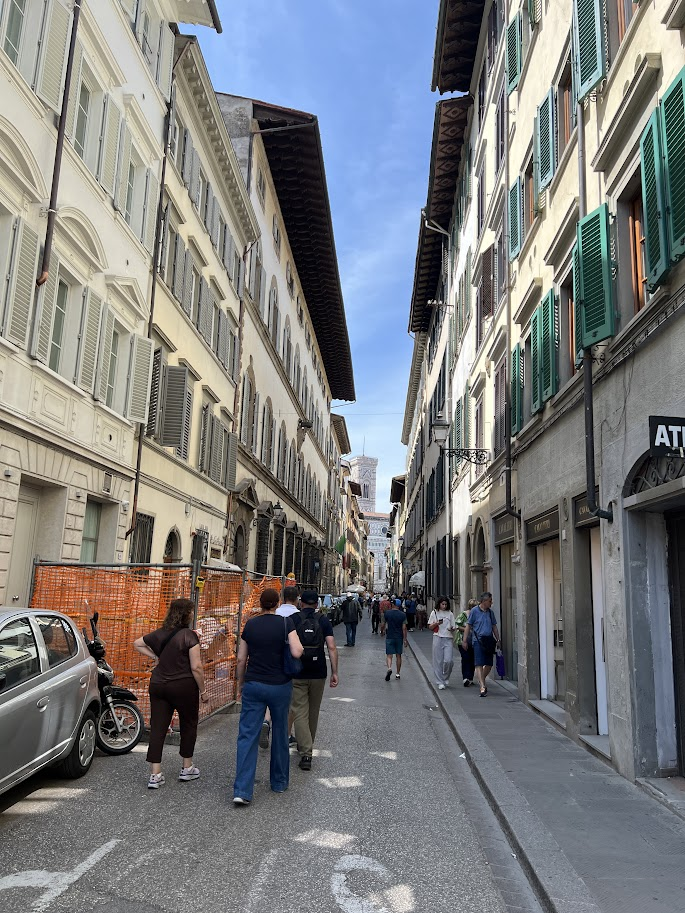
Somewhere in Florence

Some tips and tricks that may help future travellers:

Overall Italy:

  • The streets are cobbled, and most older buildings don’t have lifts or elevators. So, before you pack that extra piece of clothing, think about whether you will be able to carry it up. My knowledge is from Airbnb, so if you are staying in a hotel, it may be different.
  • When visiting churches, shoulders and knees must be covered (men too), hats off, and no sleeveless tops. Both Florence’s Duomo and St Mark’s Basilica are strict and actively turning people away. Pack a light scarf for instant compliance.
  • Reserve, screenshot, repeat. Timed tickets for hot spots (Colosseum arena, Brunelleschi’s Dome, Accademia, Uffizi) open ~90 days out and often live only in a QR code. Save it offline: Italian turnstiles frequently lose signal, and email apps can lag. Florence’s Dome is now gated by the Brunelleschi Pass, so no pass, no climb.
  • Stamp (or check in) your regional train ticket. Paper regional tickets must be time-stamped in the green/white machines; digital tickets need the Trenitalia/Italo “check-in” tap before departure. Fines start around €50 if the conductor catches an unstamped fare.
  • Historic centres in pretty much all Italian cities are camera-policed limited-traffic zones; a rental car that strays inside can trigger an €80–€120 ticket months after you’re home, plus the agency’s admin fee. Park outside the walls and ride public transport instead.
  • Carry a small cross-body and stay alert.
  • Keep phones zipped away during crowd surges and ignore “helpful” strangers who bump or offer petitions.
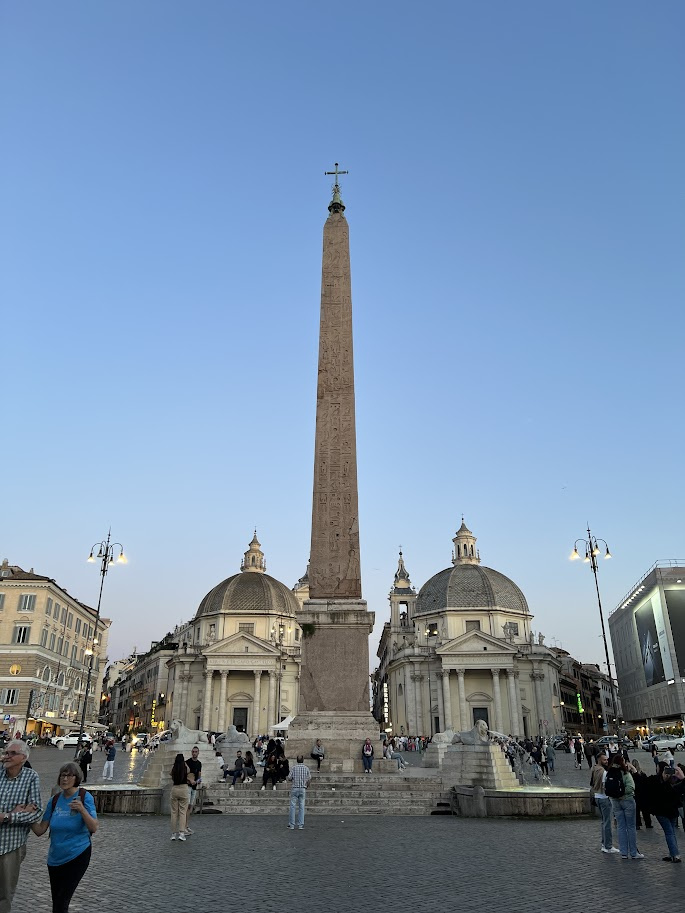
Piazza del Popolo

Rome:

  • Book tickets early for major sites like the Colosseum and the Vatican. We booked almost 2 months out and still could not get the dates/times we wanted. Hence, the big miss when we went to Vatican City.
  • Use contactless cards on Rome’s public transit system. We used the same card for both the metro and the bus and, in both cases, paid €1.50 for each ride, irrespective of its length.
  • Hydrate from the street. Rome’s 2,500 nasoni fountains pour free, safe water 24/7. Carry a bottle and skip pricey kiosks. Look for “acqua non potabile” signs before sipping.
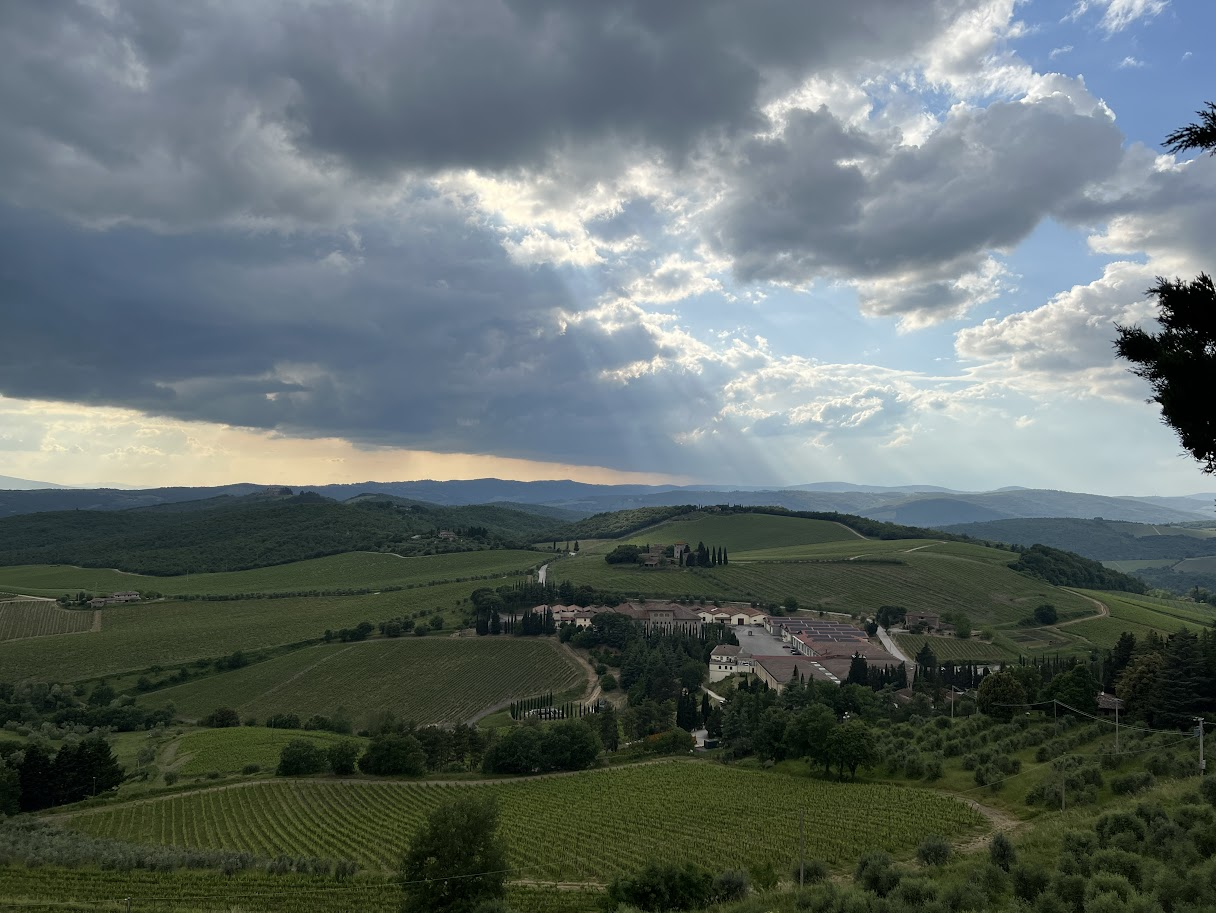
Views from Castello di Brolio

Florence:

  • Book Brunelleschi Pass tickets in advance for timed entry.
  • The Uffizi is free on the first Sunday of the month, but expect crowds.
  • Avoid driving in ZTL zones; you will be liable for heavy fines otherwise.
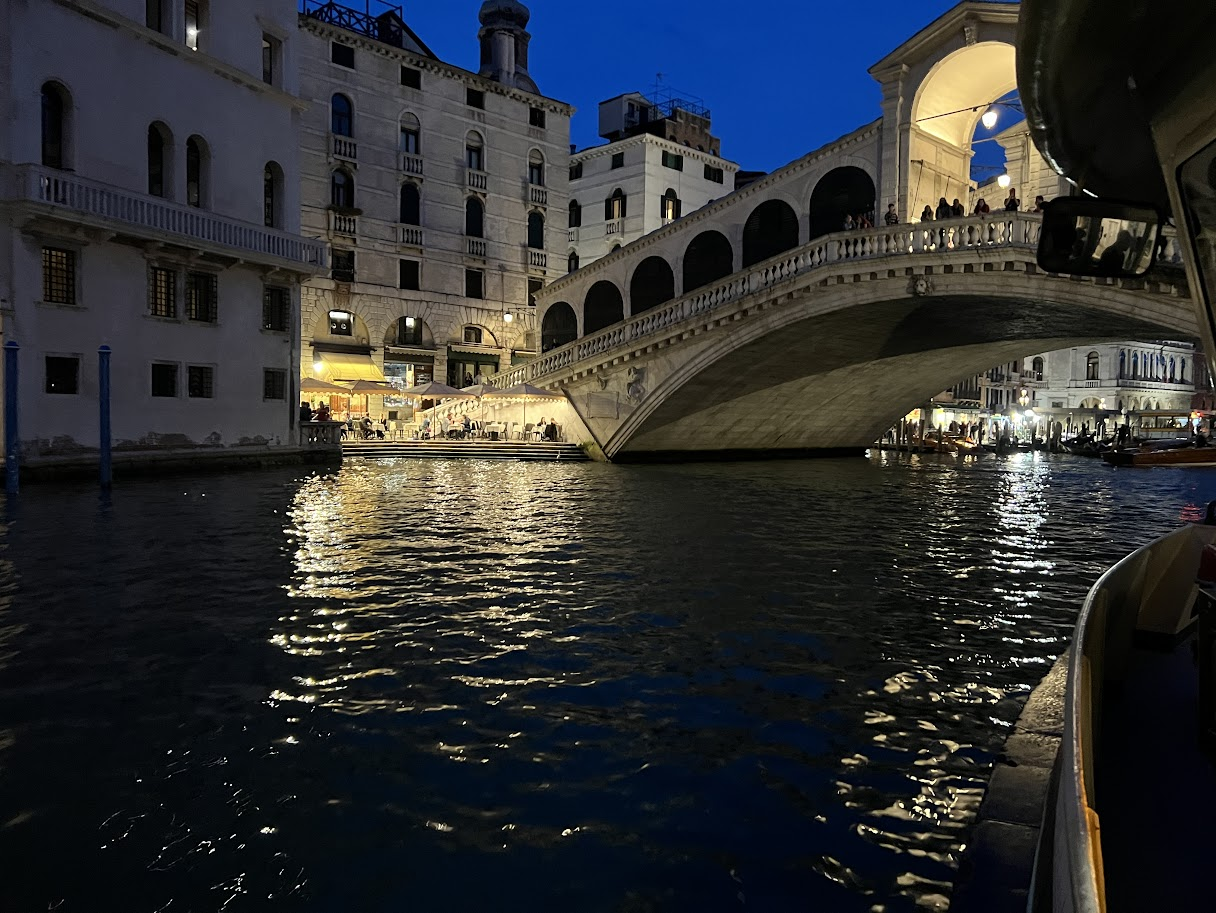
Grand Canal, Venice

Venice:

  • Budget for the “invisible” fees. Venice now charges day-trippers €5 (€10 if you book within 4 days of arrival) on 54 peak-season dates; carry the downloaded QR or risk a €50–€300 fine at the causeways.
  • Take the skip-the-line queue for St. Mark’s Basilica; watch for acqua alta.
  • The vaporetto pass is cheaper, but avoid large luggage. Though when we did use it from the station to our Airbnb, one of us had a large luggage, it was ok, but manageable.
  • There are fines for feeding pigeons or sitting on the Rialto Bridge steps.

Family Footprints: An Unforgettable Italian Adventure – Part 3

View from the train on the way to Florence

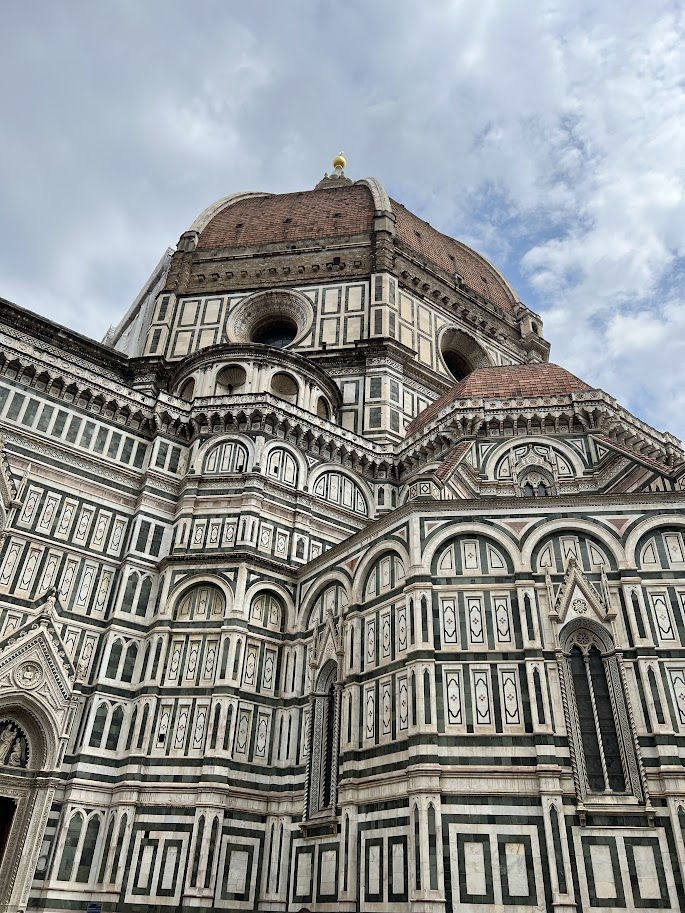
Early the next day, we checked out of our Airbnb and made our way to the Roma Termini station for our Frecciarossa train to Florence. We had booked business class tickets, and other than two other people in the carriage, we had the carriage to ourselves. We reached Florence around 10:30 am and took a taxi to our next Airbnb. Our Florence host had graciously allowed us to leave our luggage in the Airbnb while it was being cleaned. So after dropping our luggage, we started our short Florence trip. We walked to the Duomo, and I had a jaw-dropping moment there. It dominates the landscape and made me think of St. Paul’s Cathedral in London.

The Duomo

Construction of Florence’s Duomo complex began in 1296 under Arnolfo di Cambio; Filippo Brunelleschi crowned it with his revolutionary double-shell dome in 1436, still the world’s largest in masonry at 43 m wide. We did not go inside and climb the dome, but the next time, I will climb all 463 steps in Brunelleschi’s Dome and brush past Vasari’s Last Judgment fresco before stepping onto a 91 m-high lantern terrace for city-wide views. One can also climb the 414 steps up Giotto’s Campanile for a front-row view of the dome’s herringbone brickwork. At the Museo dell’Opera del Duomo, one can stand inches from Ghiberti’s original Gates of Paradise and Michelangelo’s Pietà Bandini before they return outdoors.

Piazza della Signoria, Time Unfolding

After lunch in the shadow of Brunelleschi’s Dome, we walked to Piazza della Signoria, which has anchored Florentine civic life since 1330. Its irregular “w-shaped” stones still front the crenellated Palazzo Vecchio, the seat of government from the medieval Republic to today’s city council. Under the tower’s shadow, the square doubles as an open-air sculpture gallery. A copy of Michelangelo’s David guards the palace door; the neighbouring Loggia dei Lanzi frames masterpieces from Cellini’s Perseus to Giambologna’s Sabine Women. Ammannati’s marble-and-bronze Fountain of Neptune returned to full sparkle in 2019 after a €1.5 million Ferragamo-funded overhaul that replaced long-silent pumps and cleaned centuries of grime. I loved the sculpture of the young woman holding a smartphone. Apparently, it is a four-metre contemporary bronze by Thomas J. Price called Time Unfolding, which will remain until 14 September 2025. Beyond statuary, one can climb the Arnolfo Tower for 360° city views or follow the freshly reopened Vasari Corridor from Palazzo Vecchio toward the Uffizi and Ponte Vecchio, walking the same secret Medici passage first built in 1565.

While we were relaxing amidst the statues, we were told our Airbnb was ready for us. So we quickly gathered our things and checked in. After resting for a while, we decided to head out, this time just walking and taking in Florence. We split up initially and then met up and did some shopping before heading out for dinner. After dinner, it was time for some gelato and then bed before our Tuscan road trip the next day.

The beautiful Tuscan countryside

We woke up early, and two of us went out to get the car we had reserved. Here is where we hit the first of the many snags of the day. Our plan was to be out of Florence by 8:30 am, but when we reached the car rental place by 8 am, it was still shut, and there was a queue of about 10ish people ahead of us. By the time we collected the car, it was almost 10 am, and our ticket at Pisa was for 10:30 am. The distance between Florence and Pisa is between 60 and 90 minutes, and so we were late even before we started the drive.

Leaning Tower of Pisa

The Leaning Tower of Pisa looms improbably over the Campo dei Miracoli, tilting 3.97° off-plumb because the alluvial clay beneath its foundations started to give way soon after work began in 1173; the bell tower was finally completed in 1372. A decade-long engineering rescue from 1990 to 2001 removed 70 tonnes of soil, nudged the structure upright by 45 cm, and reopened it to visitors; a web of fibre-optic sensors now feeds live data to engineers who forecast at least 200 years of stability. Climbing the 251 spiral steps is a disorienting thrill; the gradient alternately steepens and eases as the tilt shifts underfoot before one steps onto the belfry terrace for wide-angle views of Tuscany and a close-up of the seven medieval bells. Back on the lawn, look for the delicate reliefs at ground level and indulge in the obligatory “holding-up-the-tower” photo.

We reached Pisa and the Leaning Tower around noon, and after parking the rented car close to the complex, we walked over. We tried going inside but were not allowed and were told to purchase new tickets. Since we were getting late, we left the Leaning Tower complex and had a quick meal before making our way to the next stop on our itinerary.

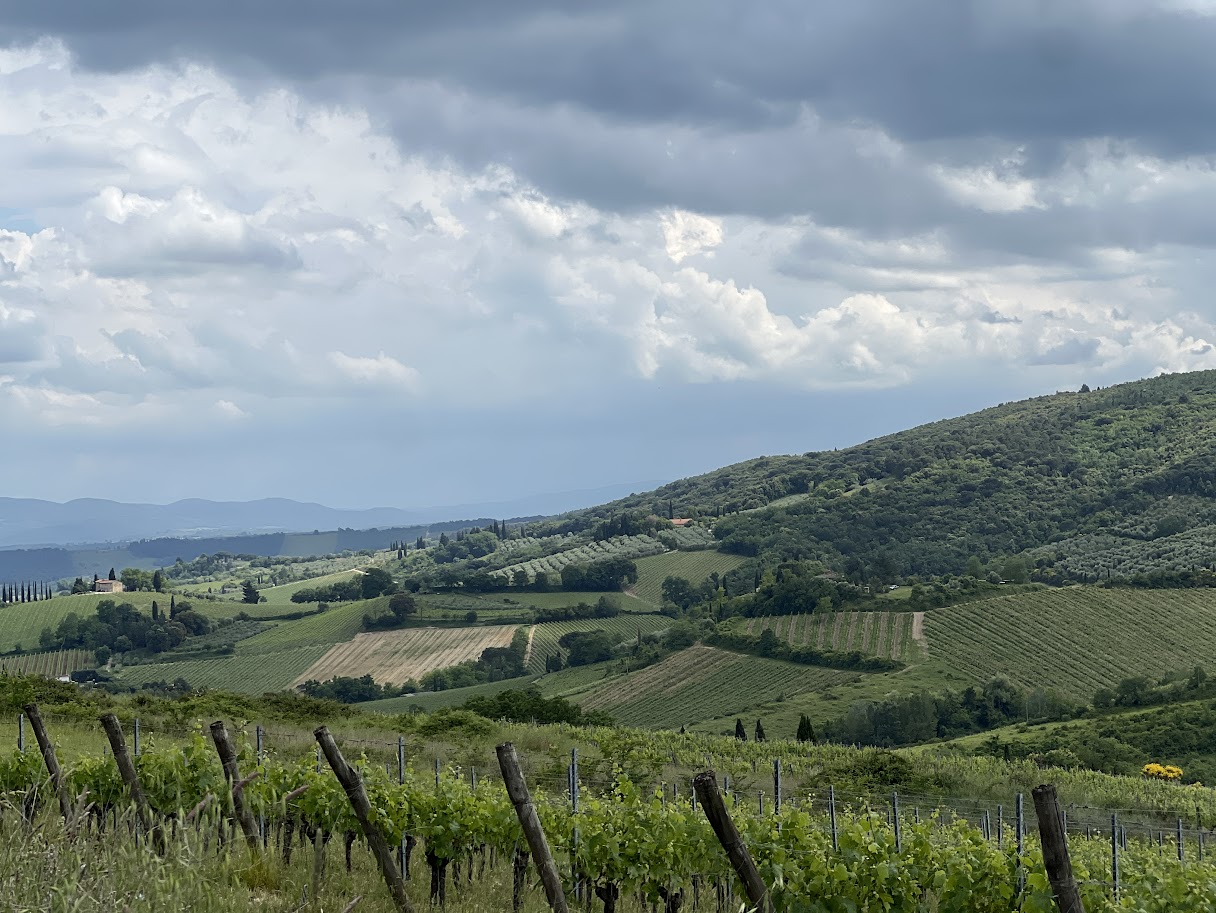
The beautiful Tuscan countryside

Perched on a ridge of Tuscan vineyards, San Gimignano still thrusts 14 medieval tower-houses skyward, remnants of more than 70 that once broadcast family pride and rivalries. Their unmistakable skyline, intact walls, and 14th-century fresco cycles earned the town UNESCO World Heritage status in 1990. At the Piazza del Duomo, you begin at the Torre Grossa, where one can climb 218 wooden steps for sweeping views of the Apuan Alps and Siena’s dome. Inside the adjoining Palazzo Comunale, Benozzo Gozzoli’s pastoral frescoes frame a camera-ready civic courtyard. Steps away, the Romanesque Collegiata cathedral dazzles with a near-complete Old and New Testament cycle by the 14th-century Sienese school. But we didn’t make it into the town. By the time we reached the town’s car park, we realised we had to leave if we were to make it to our wine tasting session at the Castello di Brolio on time. Reluctantly, we left and took the route passing through Siena, which we wanted to come back to.

Castello di Brolio

Driving through the Tuscan countryside is amazing! We took the long route and stopped frequently to take in the views and photos. And we finally made it to the Castello di Brolio just in time for the wine tasting session. Castello di Brolio has belonged to the Ricasoli family since 1141, making it Italy’s oldest continuously run wine estate. The brick-red battlements you see today are a 19th-century neo-Gothic rebuild commissioned by Baron Bettino Ricasoli, the statesman who also penned the original Chianti Classico formula. We circled the ramparts for postcard vistas that sweep across 240 hectares of vineyards to Siena and distant Monte Amiata, then wandered Renaissance box gardens and the family chapel. We had the Classic wine tasting with three wines, and after the session, some of my sisters brought bottles of wine to take home. I am not a drinker, but even I loved the wines we tasted.

After the wine tasting, it was time for dinner. As I mentioned, some of my sisters are big foodies, and one of them found a Michelin-starred vegetarian restaurant in Siena, so we decided to go there because they were not picking up the phone to make a reservation. Another sister wanted to visit Siena, so this worked for everyone.

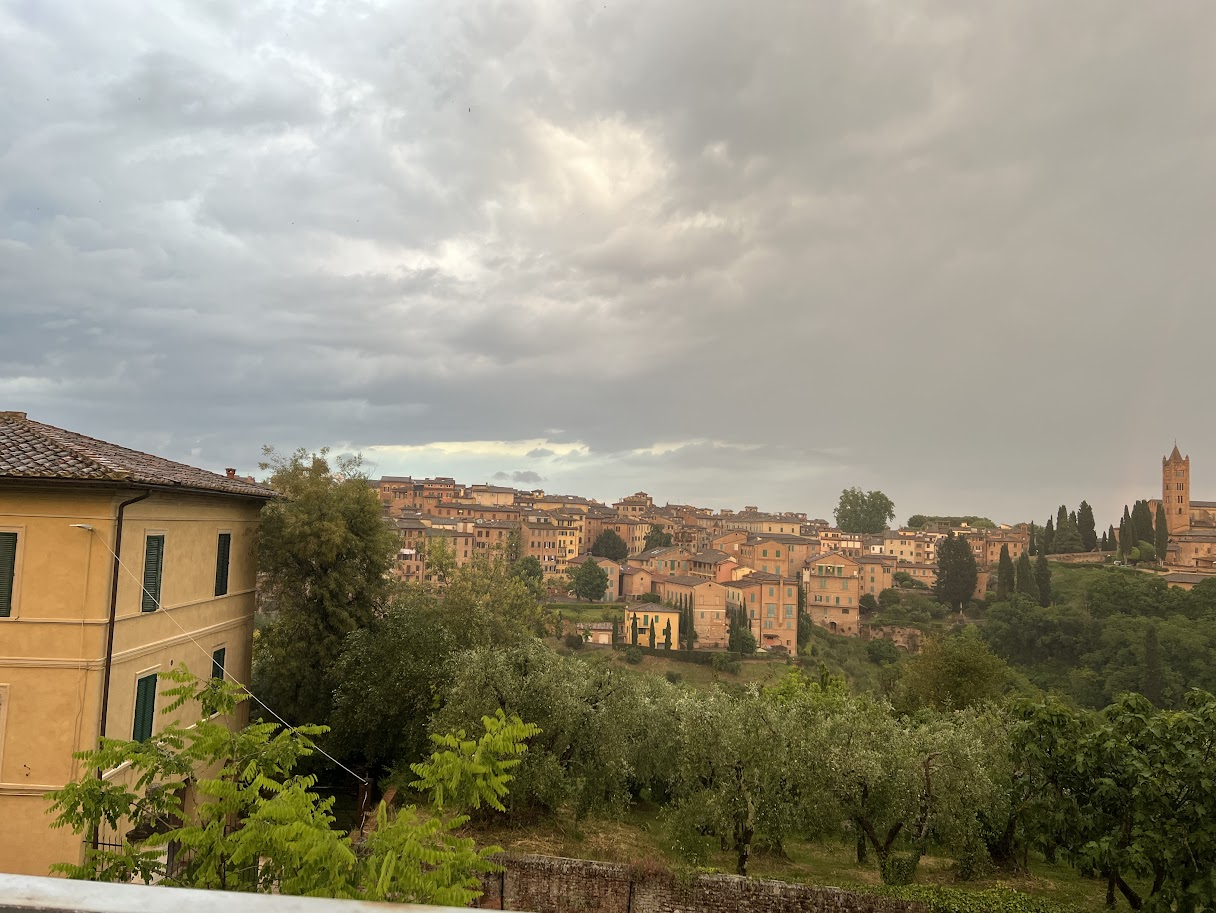
Siena

We reached Siena around 7 pm. Set atop three converging ridges in southern Tuscany, Siena preserves one of Europe’s purest Gothic cityscapes; UNESCO inscribed the entire historic centre in 1995 for the way its 13th- and 14th-century street plan and ochre-brick facades survive almost intact. The fan-shaped Piazza del Campo is still the civic stage: twice a year it morphs into the thundering Palio horse race. Just above the square, the zebra-striped Cathedral of Santa Maria Assunta dazzles. Climb the 102-m Torre del Mangia for vineyard-striped horizons.

The restaurant was completely booked, and they turned us away. So we frantically googled alternatives. And then it started raining. We went back to the car park and tried alternatives. But it was decided unanimously that we would walk to Piazza del Campo for dinner. The streets of this part of Siena are extremely hilly and winding. But after walking to the Piazza, the views were worth it. We had dinner at one of the restaurants in the Piazza before making our way back to the car park and then the drive back to Florence.

Piazza del Campo

Piazza del Campo is the red-brick heart of Siena. Its distinctive shell unfurls in nine cream-travertine wedges, a permanent tribute to the “Nine” oligarchs who guided the city’s 14th-century heyday, and a key reason UNESCO protected the entire historic centre in 1995. On the square’s lower rim rises the Palazzo Pubblico with its soaring Torre del Mangia. While the belfry’s 400-step climb rewards you with views over Chianti hills, the palace itself offers a rarer thrill: scaffold-level tours of Ambrogio Lorenzetti’s Allegory of Good and Bad Government frescoes. Opposite, Jacopo della Quercia’s marble Fonte Gaia gleams again after a laser cleaning completed in February 2024; its wolves and Genesis reliefs now sparkle against the Sienese brick.

We left Siena around 10 pm for the 1-hour-plus drive back to Florence. I had a headache because of the rain, and so I pretty much slept the drive. I think in the entire trip, this road trip would stand out as a highlight because of all the fun we had. We stored the car in a local garage to be returned the next day.

David at the Galleria dell’Accademia

The next day was our last in Florence, and we had tickets to see David at the Academia. Our original plan was to take a 2 pm train to Venice, but because we wanted to spend more time in the city, we moved our ticket to about 6 pm. Our slot to the Academia was at noon, so after a good breakfast, a couple of us went to return the car while the rest of us worked on clearing the house and getting ready to leave. Our host very graciously offered to let us keep our luggage at a restaurant they co-owned close by, so after checking out and leaving the luggage, we walked to the Academia. We had to wait in a queue for about 15-20 minutes before we could enter.

The Galleria dell’Accademia was founded in 1784 as a teaching museum; today its seven rooms orbit Michelangelo’s David: the five-metre marble hero carved 1501-1504 and installed here in 1873 to shield him from the elements. Every two months, restorers vacuum dust from his curls and scan for micro-cracks, a ritual that keeps the icon in “remarkable health” despite drawing more than two million visitors a year.

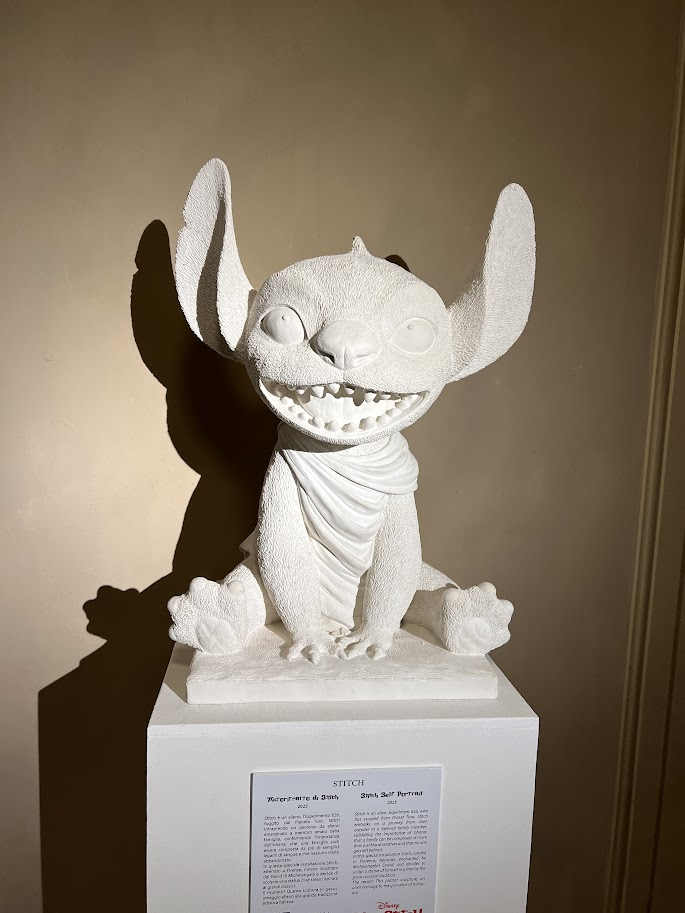
Sculpture of Stitch at the Galleria dell’Accademia

The Hall of the Prisoners, where four unfinished slaves wrestle with their marble bonds, comes first before a long hallway with David at the very end. It was not very crowded, and we could walk around the statue, taking in the sculpture’s beauty. Then we walked into the Hall of the Colossus to see Giambologna’s life-size plaster for The Rape of the Sabines flanked by early-Renaissance altarpieces. The luminous Gipsoteca Bartolini showcases 19th-century plaster casts under skylights restored in 2021, while the adjoining Museum of Musical Instruments, home to a Stradivari “Medici” violin and one of Cristofori’s earliest pianos, was amazing. Towards the exit, unexpectedly, I came across a sculpture of Stitch from the film, Lilo and Stitch, draped in a toga. The project is a three-way partnership between Disney Italy, the Italian Ministry of Culture and the museum, timed to promote the live-action Lilo & Stitch remake and to pull new, younger audiences into Florence’s most visited art space. I enjoyed this ode to modern art amidst all the classical and Renaissance art and sculptures.

After visiting the Academia, we decided to have Indian for lunch and walked to one about 10 minutes away. After lunch, we each wandered away, to do our own thing before agreeing to meet at the place where we had stored our luggage around 4 pm. Then it was time to go back to the station to catch another high-speed train to the last stop of our holiday.

Our last stop, Venice, comes up next, along with lessons learned and some tips.

Family Footprints: An Unforgettable Italian Adventure – Part 2

First glimpse of Italy from the air

Rome
We reached the airport about 2.5 hours before our flight because we had heard all sorts of horror stories about the airport. But we were pleasantly surprised and checked in and were sent on our way in less than 10 minutes. After breakfast at the airport, we started our journey. We landed in Rome in the afternoon, and there was a bit of a rush in Italian immigration. We could have taken the train to Roma Termini, but because there were six of us, a taxi was cheaper. Though Italy has Uber, only the premium taxis can be hired. Instead, the FreeNow app is more widely used, from which we got our taxi. We used Airbnb all through the trip, and our Airbnb in Rome was close to the Colosseum.

After checking in and freshening up, we headed out to go to the Vatican. We had a 5:30 slot at the Vatican Museum and a slightly earlier slot at St. Peter’s Basilica. We missed the basilica slot but made it to the Vatican Museum. Because it is a Jubilee year and a new Pope has just been selected, the crowds were crazy in all the Italian cities we visited. The Vatican Museum was no exception. But what a museum!

Courtyard of Vatican Museum

Founded in 1506 by Pope Julius II and expanded by successive pontiffs, the Vatican Museums form a 7-km labyrinth of galleries that chart 3,000 years of human creativity. The Sistine Chapel is the last but probably the most visited part of the museum, where Michelangelo’s ceiling and Last Judgment remain the undisputed stars of the collection. The recently restored four Raphael Rooms are gorgeous, their luminous frescoes now glowing as they did for Leo X’s court. In the Pio-Clementine Museum, the newly restored Apollo of the Belvedere once again commands the Octagonal Courtyard, its marble surface revealing subtle details lost for generations. At the Anima Mundi, the reimagined ethnographic wing, the freshly installed Africa and Americas galleries place sacred masks, bark-cloths, and Inuit carvings on equal footing with the Western canon. I loved the Gallery of Maps with its intricate illustrative maps, the jewel-like Pinacoteca, and the vertiginous modern Bramante/Momo spiral ramp. When you are finally exhausted, you reach the Sistine Chapel, where photography is prohibited, and just find space in the benches in the perimeter of the room to sit and take in the beauty of the room and the ceiling!

After this assault on the senses, it was time for dinner. Our group was comprised of foodies, so we ate really well during this trip. The first evening, we had a fancy dinner at the Raphael hotel. We could not get the rooftop dining experience, but the food was so, so good. I was practically falling asleep at my plate, so around 10 pm, we finally called it a day.

Colosseum

The next day was for the Colosseum. Our timed entry was for 9:30 am, but since we were less than 10 minutes away on foot, we took our time in the morning. Carved into the heart of ancient Rome, the Colosseum and neighbouring Palatine Hill form a single archaeological park that distils two millennia of power, spectacle, and imperial luxury into a walkable circuit. We began with the Colosseum, inaugurated in AD 80 by Emperor Titus. We only had the normal ticket, so we only went to the main area. But if you purchase the full experience ticket, you cam go onto the partly reconstructed arena floor, gaze down into the fully accessible hypogeum with its maze of lifts, cages, and service corridors reopened to visitors after a recent restoration campaign, and then climb to the upper ring for skyline views stretching from the Capitoline to the distant dome of St. Peter’s. We spent quite a bit of time at the Colosseum, marvelling at its grandeur. After a quick lunch nearby, we walked back to tackle Palatine Hill, mythical birthplace of Romulus and later the postcode of choice for Rome’s emperors. We walked around and caught the vividly painted private rooms of Augustus and Livia that survive in remarkable condition. We last headed to the Farnese Gardens, Europe’s first botanical garden, which offers fragrant terraces with postcard views over the Circus Maximus. After spending a couple of hours here, we headed back to our Airbnb to freshen up before dinner near Piazza del Popolo.

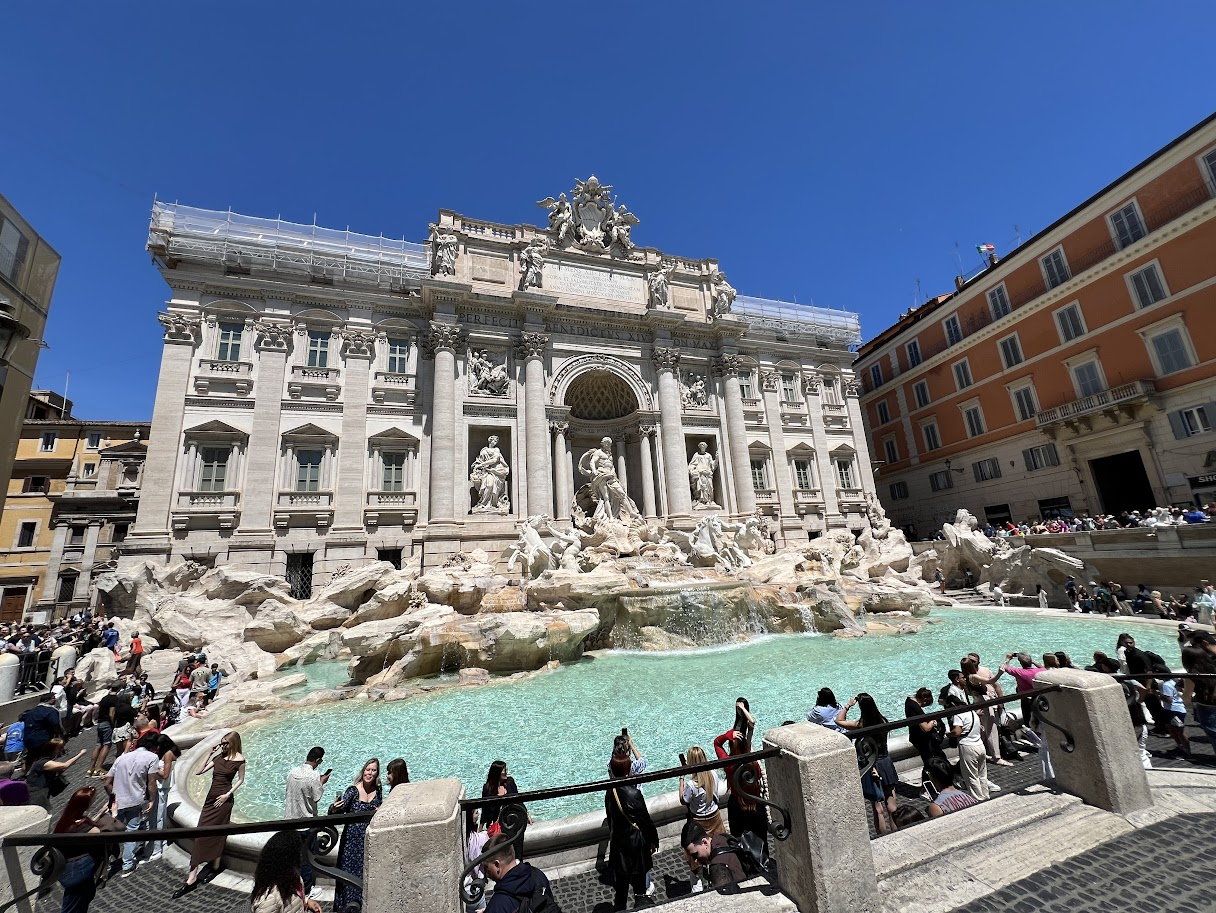
Trevi Fountain

On our last full day in Rome, we decided to head to the Trevi Fountain first. The Trevi Fountain is carved into a palace façade at the junction of “tre vie,” channels the 1st-century BCE Aqua Virgo aqueduct, and crowns Rome’s Baroque age. Pope Clement XII commissioned Nicola Salvi in 1732; after Salvi’s death, Giuseppe Pannini finished the marble theatrics in 1762, centring Oceanus in a shell chariot that surges from craggy rocks toward the city’s ancient heart. A 16-month restoration funded by Fendi in 2014-15 scrubbed the travertine, replaced hidden pumps, and relit the basin, ensuring its moonlit shimmer endures.

We walked about 25-30 minutes from our Airbnb to get to the fountain. It was so crowded, but we managed to get up close in front to take photos and do the coin toss. It is believed that if you stand facing away from the fountain and toss a coin over your left shoulder, you will return to Rome. And for those who are seeking love, it is believed that tossing three coins will get you the love of an Italian!

Source

From the Trevi Fountain, we walked to the Pantheon, but not before a gelato. As with every other attraction in Rome, the Pantheon was also crowded, and so we just saw it from the outside before making our way to Piazza Navona.

Rebuilt by Emperor Hadrian around AD 118–125 atop Agrippa’s earlier temple, the Pantheon still boasts the world’s largest unreinforced concrete dome and an oculus that rains sunlight, and, each Pentecost, rose petals into the marble rotunda. Converted to the church of Santa Maria ad Martyres in 609, it shelters the tombs of Raphael and Italy’s first kings. A €5 timed-entry system introduced in July 2023 now funds ongoing conservation, including 2025 dome reinforcement and portico cleaning backed by Tod’s. One should not miss the noon sunbeam illuminating the floor, the original bronze door leaves, and the Latin portico inscription (“M·AGRIPPA·L·F·COS TERTIVM·FECIT”) linking two Roman ages.

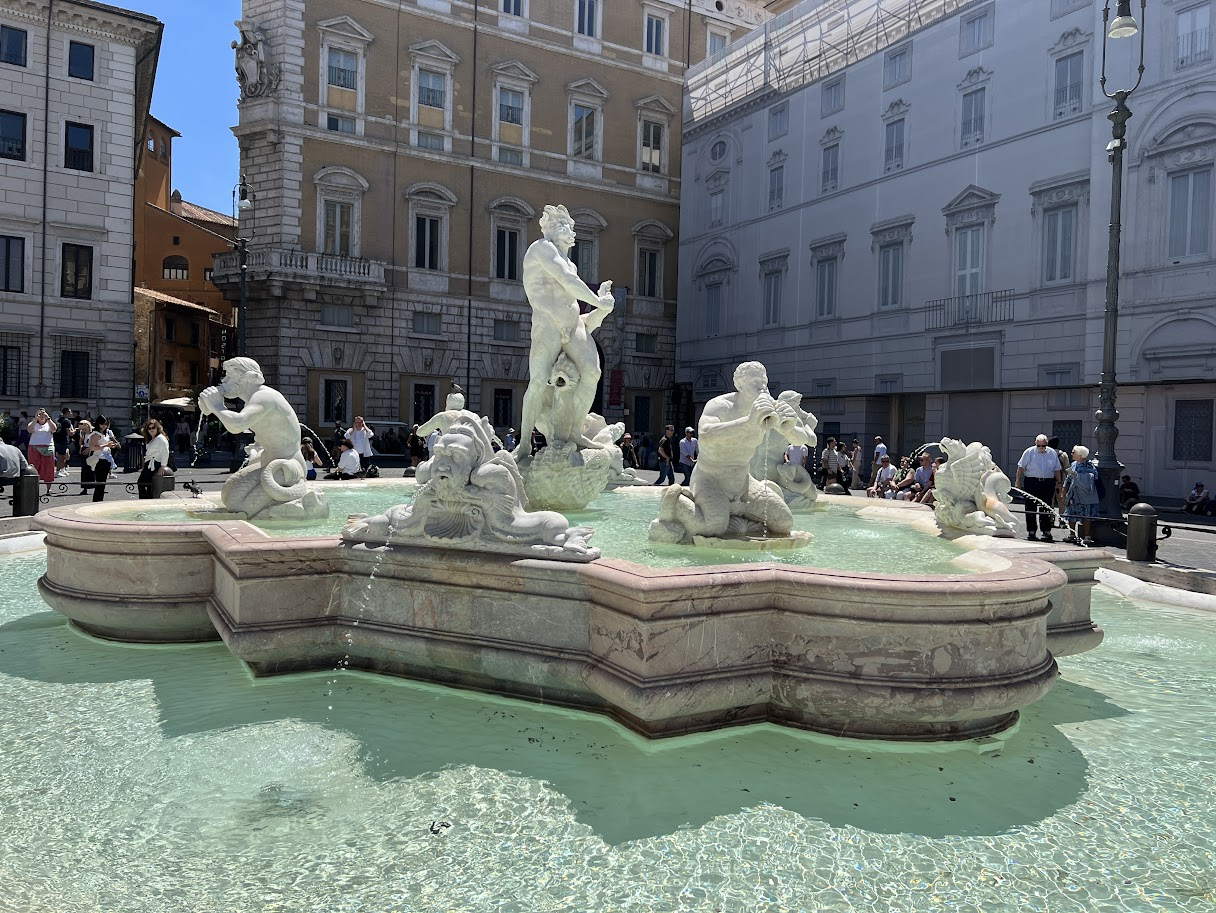
Piazza Navona

Occupying the footprint of Domitian’s first-century athletics stadium, Piazza Navona is an elongated “living room” and is Rome’s Baroque set piece. At its heart lies Bernini’s Fontana dei Quattro Fiumi, personifying the Nile, Danube, Ganges, and Río de la Plata. Framing it are Giacomo della Porta’s Neptune and Moor fountains and Borromini’s undulating façade of Sant’Agnese in Agone.

After spending some time admiring the gorgeous sculptures, we made our way for lunch, after which we did a spot of shopping, and then two of my sisters decided they wanted a break. The rest of us decided to walk to the Spanish Steps, which took us about 20 minutes of walking. We also stopped for coffee on the way.

Spanish Steps

One of Rome’s iconic sights, the Spanish Steps, is fashioned from creamy travertine and was built between 1723 and 1726. With 138 steps, it was financed by France to link its embassy-church above with Spanish diplomatic territory below. A €1.5 million Bulgari-backed restoration scrubbed the balustrades in 2016, and since 2019, anyone who sits or rolls a suitcase on the monument risks fines of €250-€400, preserving the marble for posterity. Crowning the staircase is the Church of Trinità dei Monti, a French-Gothic twin-tower basilica whose nave shelters delicate 16th-century frescoes and an 1864 Cavaillé-Coll organ. While we didn’t go inside the church, we were impressed with the views from the porch of the church.

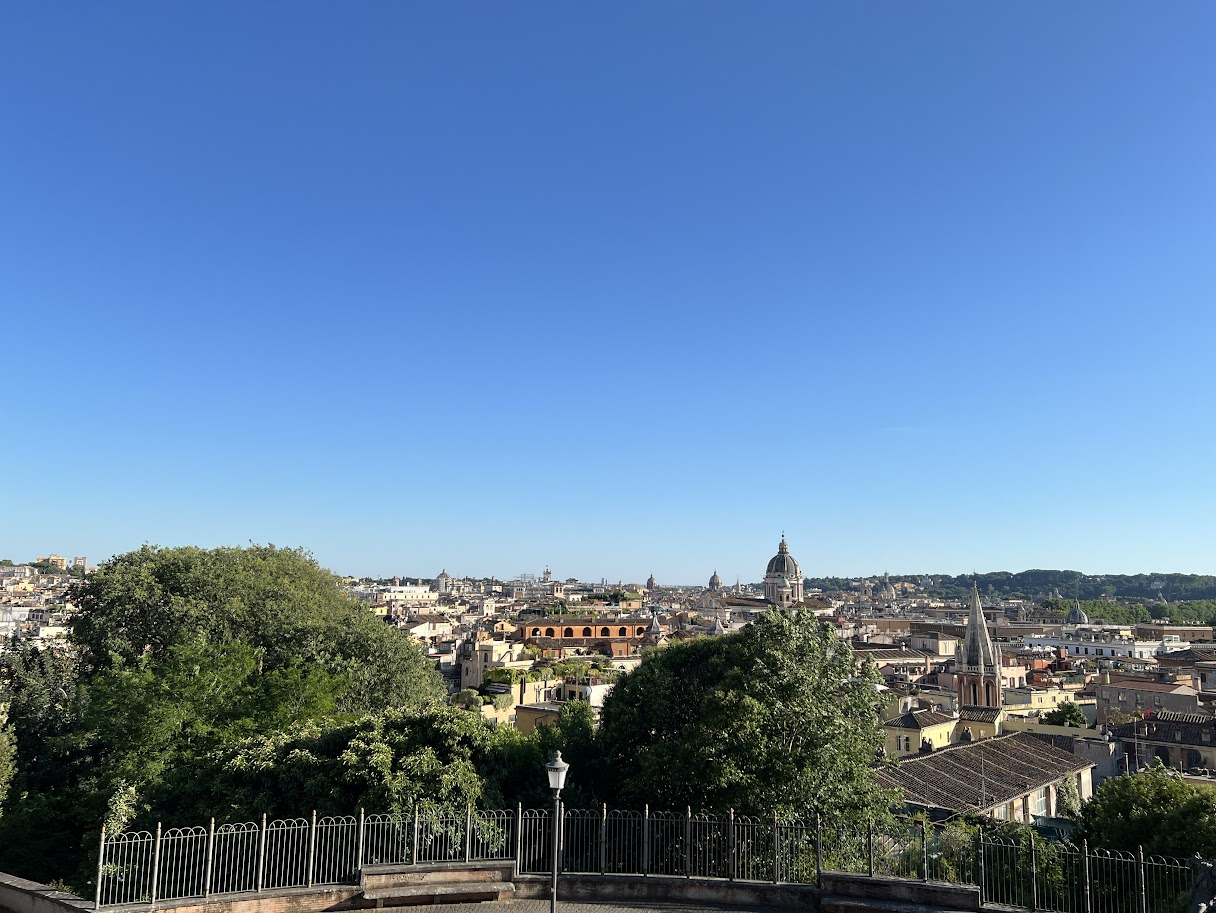
View from outside the Pincio Terrace

A few minutes’ stroll farther up Viale Trinità dei Monti leads to the pine-fringed Pincio Terrace, the southern gateway to Villa Borghese’s gardens. We walked to the gardens and took in the atmosphere. Then, tired, we sat down at a lake in the garden to chit-chat for a while and take a break. While there, I was entranced by a young Roman family with their toddler. All this while, my bag had been strapped crossbody with my phone on a strap around my neck. I was so engrossed with the toddler’s antics that when it was time to leave, I forgot that I had removed my bag from my shoulder and kept it aside. So, I just got up and started walking. We left the garden and walked across the street, and were contemplating whether we should take a taxi or the metro to get back to our Airbnb. It was then I realised that I didn’t have my bag with me! I immediately started running back to where we were sitting, and during those five minutes, my mind was frantically cataloguing the contents of my bag and wondering which cards I should cancel and how. It was one of the longest five minutes of my life. I reached the lake where we were sitting, and in a huge miracle, my bag was exactly where I had left it. With all that I had read about Rome, this was my Roman miracle, and I thanked all the gods, Indian and Roman, for my good fortune! We then walked to the nearest metro station, which happened to be in Piazza Poppolo. Our time in Rome had come to an end as we were going to have a quiet night with a cheese board, wine, and gossip.

Our next destination, Florence, is coming up soon.

In My Hands Today…

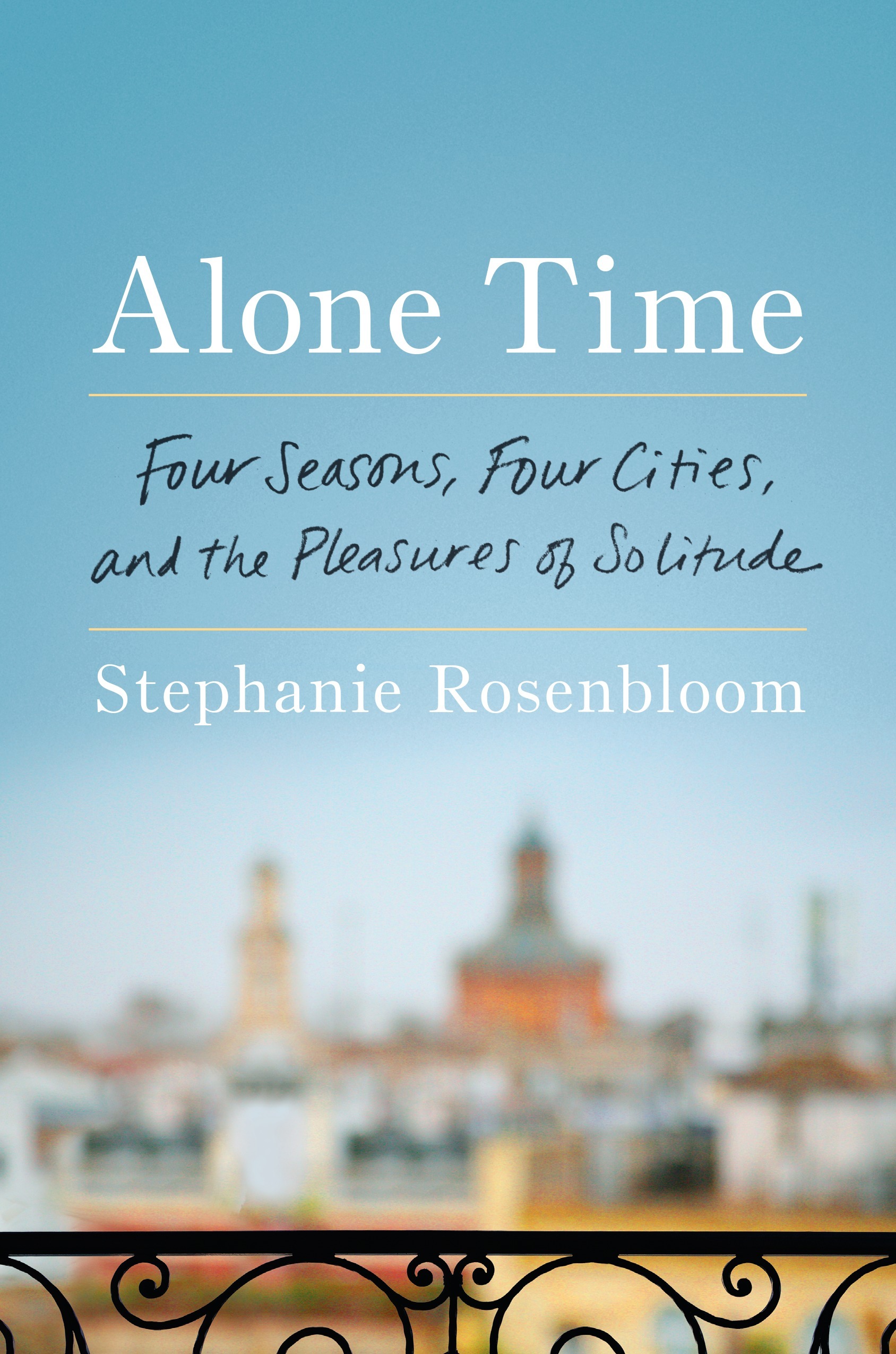
Alone Time: Four Seasons, Four Cities, and the Pleasures of Solitude – Stephanie Rosenbloom

In our increasingly frantic daily lives, many people are genuinely fearful of the prospect of solitude, but time alone can be both rich and restorative, especially when travelling.

Through on-the-ground reporting and recounting the experiences of artists, writers, and innovators who cherished solitude, Stephanie Rosenbloom considers how being alone as a traveller–and even in one’s own city–is conducive to becoming acutely aware of the sensual details of the world–patterns, textures, colours, tastes, sounds–in ways that are difficult to do in the company of others.

Alone Time is divided into four parts, each set in a different city, in a different season, in a single year. The destinations–Paris, Istanbul, Florence, New York–are all pedestrian-friendly, allowing travellers to slow down and appreciate casual pleasures instead of hurtling through museums and posting photos to Instagram.

Each section spotlights a different theme associated with the joys and benefits of time alone and how it can enable people to enrich their lives–facilitating creativity, learning, self-reliance, as well as the ability to experiment and change. Rosenbloom incorporates insights from psychologists and sociologists who have studied solitude and happiness and explores such topics as dining alone, learning to savour, discovering interests and passions, and finding or creating silent spaces. Her engaging and elegant prose makes Alone Time as warmly intimate an account as the details of a trip shared by a beloved friend–and will have its many readers eager to set off on their own solo adventures.

In My Hands Today…

From Sand and Ash – Amy Harmon

27343696Italy, 1943—Germany occupies much of the country, placing the Jewish population in grave danger during World War II.

As children, Eva Rosselli and Angelo Bianco were raised like family but divided by circumstance and religion. As the years go by, the two find themselves falling in love. But the church calls to Angelo and, despite his deep feelings for Eva, he chooses the priesthood.

Now, more than a decade later, Angelo is a Catholic priest and Eva is a woman with nowhere to turn. With the Gestapo closing in, Angelo hides Eva within the walls of a convent, where Eva discovers she is just one of many Jews being sheltered by the Catholic Church.

But Eva can’t quietly hide, waiting for deliverance, while Angelo risks everything to keep her safe. With the world at war and so many in need, Angelo and Eva face trial after trial, choice after agonising choice, until fate and fortune finally collide, leaving them with the most difficult decision of all.