

A couple of weeks back, I was having a conversation with GG & BB about their future and what they want to achieve in life. The conversation then turned to leadership and we started talking about what makes a good leader.
A leader is defined as someone who who leads or commands a group, organisation, or country and leadership is seen as both a research and a practical skill encompassing the ability of an individual, group or organization to lead, influence or guide other individuals, teams, or entire organisations. Leadeship is the act of motivating other people toward a common goal. And good leaders are essential, to drive communities, organisations and countries and to make the large scale decisions to keep our worlds, be them big or small moving. People that have leadership skills showcase a strong personality and interpersonal skills to lead others in their direction.So what makes a good leader?

A successful leader is one who is the power and intellect behind their organisation. They are the visionaries charged with steering their brand around pitfalls and must know when to seize opportunities and how to rally those under them to work hard toward their common goals. An effective leader is one who transcends the leadership title they have and find ways to achieve the right combination of charisma, enthusiasm and self-assurance, probably with a healthy dose of luck and timing. Most of us think and feel that some people are just gifted with these skills, but the truth is most leadership traits can be learned and sharpened with time and practice.
Before we go into what are the traits of a good leader, what should a leader not do? Leaders should act a certain way and there are some negative qualities that leaders should never exhibit. Some of these include failure to set clear goals for their teams, insult or degrade people, give praise too easily, act inappropriately or exhibit behavior that one wouldn’t expect from others, not hold regular meetings with their subordinates, fail to take decisive actions and act tough or lack empathy.
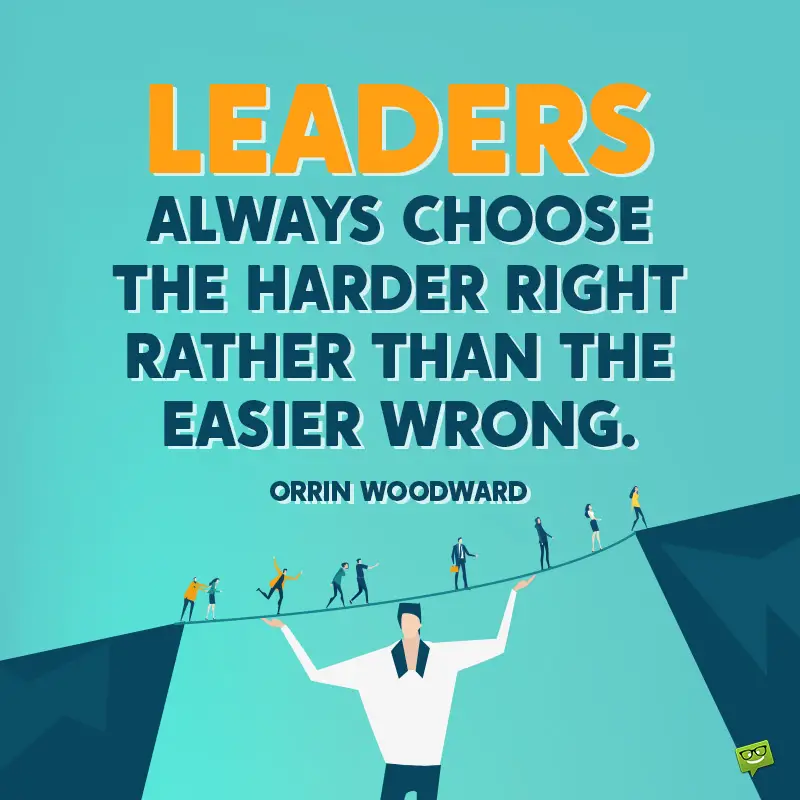
A good leader is one who has most, if not all of the following character traits:
Integrity: A good leader has integrity and the importance of this trait is obvious. Integrity is essential for an individual and an organisation and especially important for top-level executives who are charting an organisation’s course and making many significant decisions.
Delegation: A good leader is able to delegate. Delegating is one of the core responsibilities of a leader and the goal of delegating is not just free up time, but to enable direct reports, facilitate teamwork, provide autonomy, lead to better decision-making, and help direct reports grow. In order to delegate well, one needs to build trust with their team.
Communication: An effective leader is one who is able to communicate their ideas, be able to coach their people and since communication is a two way process, the leader is one who should be able to listen to and communicate with a wide range of people. Powerful leaders know when to talk and when to listen. They are effective communicators and are able to clearly and succinctly explain to those under them everything from goals to specific tasks. They will need to be able to communicate on all levels, be it one on one, or to many, as well as via phone, email and social media.C ommunication is built on a steady flow of verbal and nonverbal exchanges of ideas and information, so to be a good leader one needs to work on being approachable and involving people from different levels.
Gratitude: Being thankful can make one a better leader. Gratitude can lead to higher self-esteem, reduced depression and anxiety, and even better sleep. Few people regularly say thank you, even though most people say they’d be willing to work harder for an appreciative leader.
Learning Agility: This is the ability to know what to do when one don’t know what to do. If one is a quick study or is able to excel in unfamiliar circumstances, they might already be learning agile, but this is a learned skill and anybody can foster learning agility through practice, experience, and effort. Truly great leaders know that the strength of their leadership is built on their ability to adapt to suddenly changing circumstances and to know how and when to seize on opportunities amid a changing landscape. Having an insatiable curiosity will fuel the desire to constantly learn and grow. Learning agility hinges on developing critical thinking skills, being accepting of uncertainty, having social and emotional intelligence and always having the desire and determination to push forward.
Influence and Relationships: To some influence and influencers may have negative connotations, but the ability to convince people through logical, emotional, or cooperative appeals is a component of being an inspiring, effective leader. Influence is quite different from manipulation, and it needs to be done authentically and transparently and requires emotional intelligence and trust-building. A compelling leader does more than just inspire others to follow them; they know how to motivate the people under them to strive wholeheartedly for common goals. Subordinates who feel valued and appreciated, who feel like what they do makes a difference, will feel invigorated to push harder to achieve success. Outstanding leaders also understand that they need to be effective at networking, not just to advance their own careers, but for the benefit of what they are leading. By creating a vast and varied network of people, leaders establish impactful relationships with everyone.
Empathy: Correlated with job performance, empathy is a critical part of emotional intelligence and leadership effectiveness. If you show more empathy towards your direct reports, our research shows you’re more likely to be viewed as a better performer by your boss. Empathy can be learned, and in addition to making you more effective, it will also improve work for you and those around you.
Courage: This is self-explanatory because without courage, it can be hard to speak up at work, whether to voice a new idea, provide feedback, or flag concerns and this is a key skill for good leaders. Rather than avoiding problems or allowing conflicts to fester, courage enables leaders to step up and move things in the right direction and it has been proven that a psychologically safe workplace culture encourages speaking the truth.
Respect: Treating people with respect on a daily basis is one of the most important things a leader can do. It will ease tensions and conflict, create trust, and improve effectiveness. Respect is more than the absence of disrespect, and it can be shown in many different ways. Explore how you can cultivate a climate of respect at work.
Self-Managing: A good leader is someone who is able to manage himself well as it is hard to manage others effectively if they can’t manage themself. Self-managing means being able to prioritise their goals and being responsible for accomplishing those objectives. An effective leader is able to regulate their time, attention and emotions, while remaining aware of others’ strengths, weaknesses and potential sources of bias. They are adept at handling stress and balancing their personal and professional lives, maintaining self-control and discipline in their actions, without becoming overly reserved or inflexible.
Act Strategically: A forward-thinking, open-minded approach is necessary for today’s leaders. Leaders must always be prepared to adjust their strategies to capture emerging opportunities or tackle unexpected challenges. Thinking strategically is an ongoing process that involves assessing the environment which can be cultivated by being curious and genuinely interested in the environment around them, being flexible in their mindset and trying new approaches and ideas, focusing on the future and maintaining a positive outlook.
Accountable and Responsible: A successful leader is one who know how to use the power and authority they have appropriately without overwhelming or overpowering those under them. Effective leaders hold themselves accountable and take responsibility for their own mistakes, and expect others to do the same. They can work within established procedures, and be productive and efficient in their decisions. They appreciate the importance of supporting and encouraging individuality while also understanding organisational structures and the need to follow rules and policies and are able to balance different perspectives while taking appropriate action.
Goal Setting: To be a successful and effective leader, set clear goals and be determined and purposeful in achieving them. Back it all up with unshakable self-confidence. If one radiates enthusiasm and are truly excited about what they’re doing, people will be naturally drawn to them. Also something to remember is that writing down goals is key to the success, but accomplishing those goals takes time. If one give up, so will everyone around them. So to be a successful leader, one must be willing to keep going when others are tempted to throw in the towel.
Future Vision: An exceptional leader is one who has the ability to look into the future and make clear, concrete goals that will benefit them and the people under them. They are confident and optimistic, inspiring enthusiasm in those around them. Being a visionary is about managing change while striking a balance between stability and growth and incorporating new approaches without getting distracted from the main goals. Being a visionary means understanding that continuous change is occurring all around, so what worked in the past may not always work now. Practicing being adaptable and agile as new strategies are implemented is what makes strategies evolve over time.
Problem Solving: A good leader must be a problem solver who can make decisions under rapidly shifting circumstances with learning to lead in a complex environment a vital skill for any leader. Even before any definitive information is available, effective leaders must assess a situation’s complexity and choose appropriate courses of action. This means being able to scan the environment in search of subtle trends and indicators of disruptive change, and establish practices that allow you and what you are leading to respond swiftly.
Creativity And Innovation: A great leader is one with the courage to risk experimentation and encourage creativity. The key is to always be persistent in pursuing the goals set, and be open minded and flexible in how to get there. A good leader will encourage the people around them to spend at least 15 percent of their time exploring new ideas through brainstorming and prototyping.
Teamwork: Successful leadership is built on the people around them. Team building is essential to leading a diverse and unique group of people with distinct personalities, motivations and skills. Strong teams and teamwork are key to achieving many of things above, such as fostering innovation, effective communication and achieving goals. With the right kind of people under them, recruited, developed and nutured carefully, they can create an unstoppable force that will drive success.

So there you have it, the traits that one needs to nuture to become an effective and successful leader. It is also essential to realise that leadership is a social process and if one demonstrates several of the characteristics of a good leader but fail to grasp this, chances are they won’t get very far on their own. One may be well-liked and respected, but it will be challenging to accomplish team or organisational goals. And it’s worth remembering that leadership isn’t a destination, it’s something that one will have to work at regularly throughout their career, regardless of the level they are in. Leadership is less about a strong or charismatic individual and more about a group of people working together to achieve results. That’s why leadership is a journey, with different teams, projects, situations, and organisations that will require one to apply these skills in different ways.


 Memories and Such