Continuing on my London theme…

Continuing on my London theme…
When I was planning my content calendar for the year, I realised I had not shared photos from my epic trip to Europe last year. So this year, be prepared for a deluge of photos, at least one a month, until I run out of photos to share!
I’ll start at the very beginning, a very good place to start…aka, where I started my trip, in London!
It’s been a couple of months since I came back from my epic spring trip. So, it’s high time I wrote a trip report, and that’s what this, along with a few more posts, will be all about.
To recap, six of us cousins and sisters planned on a trip together this spring. We’d been planning this trip for a long time, and it finally came together in May. How are we related? We’re all first cousins, our mums are sisters, and we’ve been quite close all our lives. When we were younger, because of the age gap, maybe we could not be as close as we wanted to, but as adults, we have maintained a closeness and know all the highs and lows of each other’s lives.
The Planning
After going back and forth on locations, we finally zeroed in on Italy. Mainly because it checked all boxes, including being vegetarian and vegan-friendly. Our base would be London, where two of my cousins lived, and the others would travel to Europe. We flew in from North America and Asia. Once the location was decided, I decided to spend some days before the trip in London. I decided to travel about five days before we were supposed to fly out to continental Europe, and I was the first to arrive.
I flew Singapore’s flagship airline, Singapore Airlines. My options were nonstop flights to London or transiting in the Middle East. I decided to go the nonstop route since it was a 13-hour flight, and this would be my first long-haul flight, and I don’t do very well during flights. Even on flights to India, after about two hours, I start getting impatient and just want to land. So I rationalised that a nonstop flight would be faster, hence, it would be easier on me. Next came the choice of the airline. My choices were Singapore Airlines, which, at the time I booked my tickets, had four daily flights to Singapore, British Airways, which had two daily flights and Qantas Airlines, which had one daily flight, all flying into London Heathrow. I think Singapore Airlines also had one flight to London Gatwick, but since Heathrow was closer to my sister’s house, I didn’t look at this option. I next looked at ticket prices and all three airlines had similar prices, within $100-150 of each other. Since I have been a KrisFlyer member, and this trip would give me miles, it was a no-brainer for me to choose SIA. I booked a day flight out to London, which meant I took the flight that left Singapore around 9 am and landed in London around 3:45 pm, local time. My return flight was a late evening flight which left London at 8:30 pm, landing in Singapore the next day around 5 pm. This meant I reached London late enough that I don’t crash with jetlag and can sleep after an early dinner to be able to sightsee the next day, and the return flight meant I had almost the entire day after landing from Italy to spend more time with my sisters.
I also offered to plan the itinerary of the trip. The cousin I was staying with is an intrepid traveller, and between her practical know-how and my planning skills, we were able to plan the trip. We decided to go to three cities, Rome, Florence and Venice. We stayed in Rome for three nights, spent two nights in Florence and stayed overnight in Venice. All travel between Italian cities was conducted using their high-speed trains. We flew out of London Gatwick to Rome and from Venice into London Heathrow.
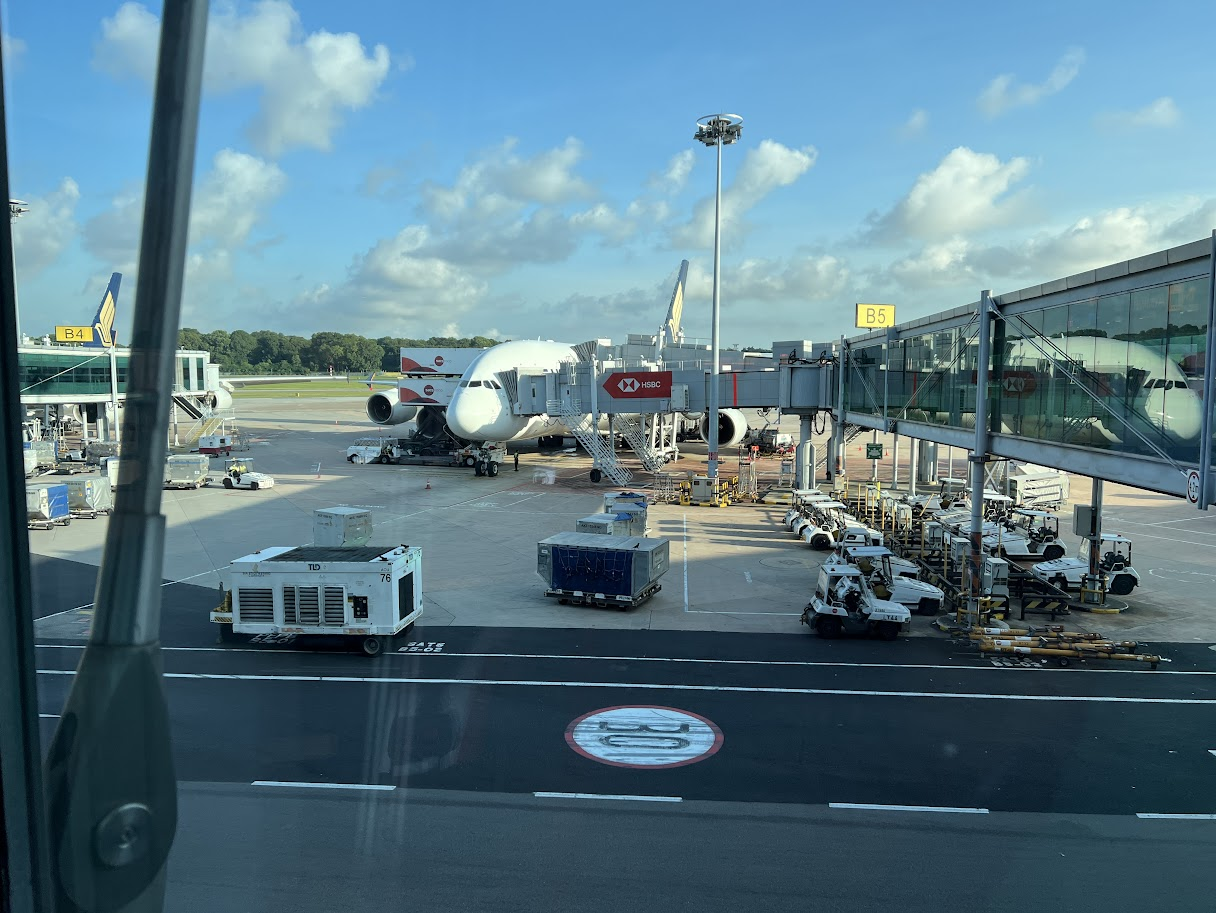
My almost 14-hour flight from Singapore to London Heathrow was uneventful. The aircraft was an A380, which meant about 500 people across multiple classes were flying together on two levels. I had booked the cheapest ticket, which came with 25 kg of checked-in baggage and 7 kg of carry-on luggage. While booking the ticket, I wanted to book the exit row seat, which came in at SGD 150 per seat per leg, but was dissuaded by my sister, who said this would open up during check-in. She was wrong. A month or so after I booked my ticket, those seats were snapped up, and I regretted not purchasing them when I could. Since I was a solo passenger and maybe because of my frequent flyer membership, I got an aisle seat (thank god) next to a lovely couple who were travelling from New Zealand to London. So at least I was able to move around during the flight. Since my flight was a day flight and we were flying west, chasing the sun, I felt the flight was boring!
I had pre-loaded my phone and tablet with entertainment and books, and also used the in-flight entertainment system, but as I mentioned earlier, I get bored easily onboard. So the walking around really helped. I could not sleep because I was well-rested and also excited, though I think I did take a couple of small naps during the flight.

London
We landed in London on time, and immigration was a breeze. Singapore citizens need an ETA or Electronic Travel Authorisation instead of a visa, which I had gotten a week before my trip. I needed to download the UK ETA app on my phone and apply for the ETA by scanning my passport’s biometrics into it. It cost about GBP 16 or SGD 30, and approval came in less than five minutes after the application. The ETA is valid for two years, and I can stay in the UK for tourism purposes for six months at a time. So, because I had the ETA, all I needed to do was scan my passport at border control, and I was officially in the UK!
My sister picked me up from the airport, and after meeting her family, we went for a walk around 8 pm, and the sun was still shining! I laboured on till dinner and bedtime because I wanted to be fresh for the next day, my first day in London. I had about 2.5 days to explore London, after which the others would land and our trip would officially begin.
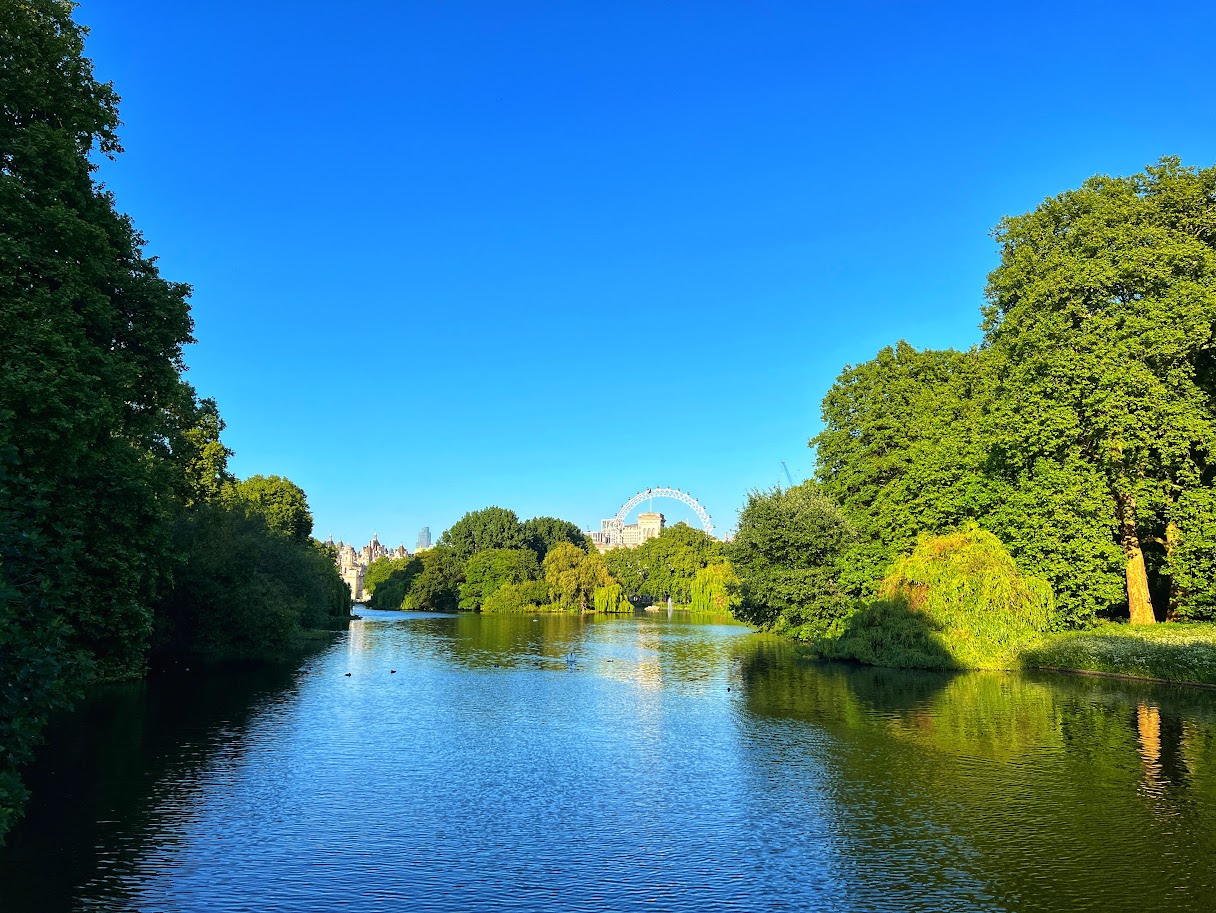
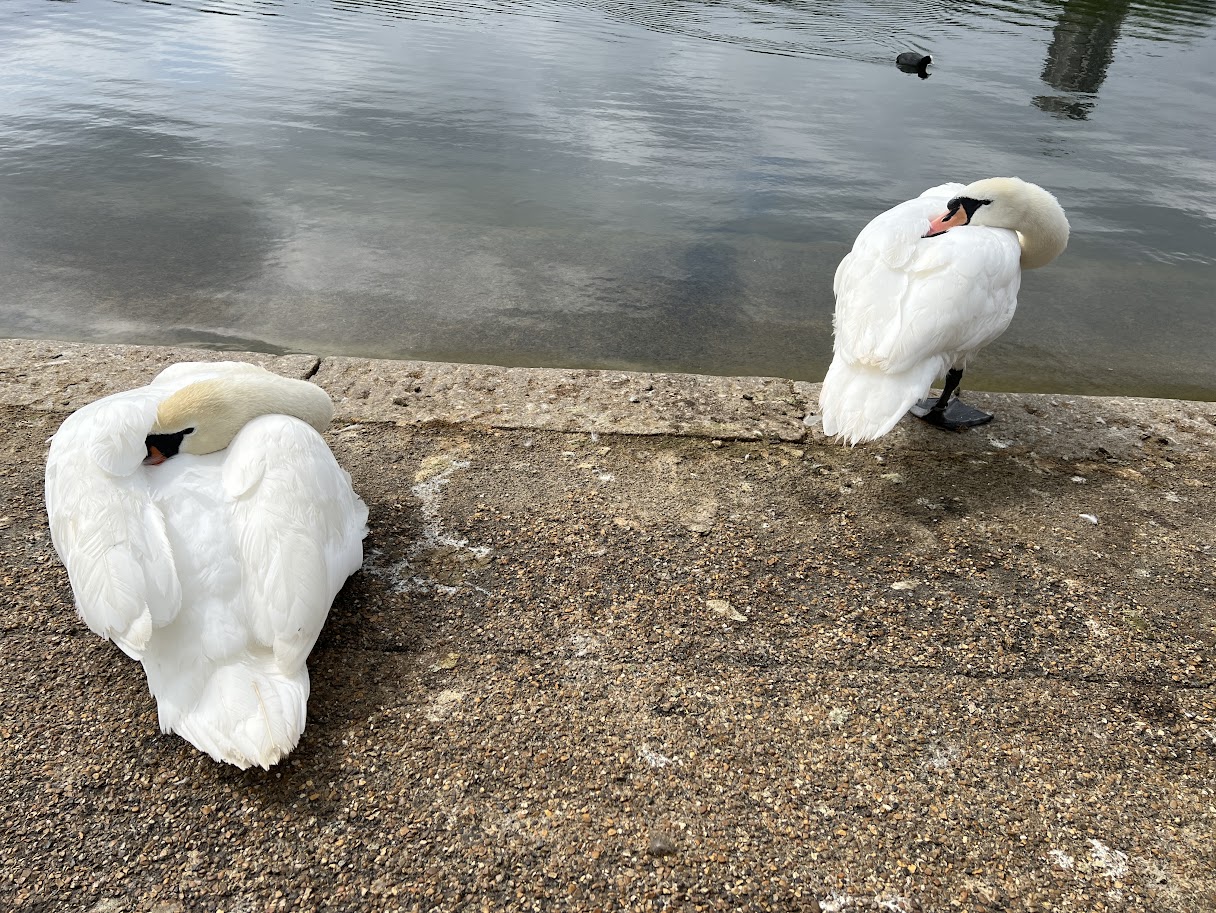
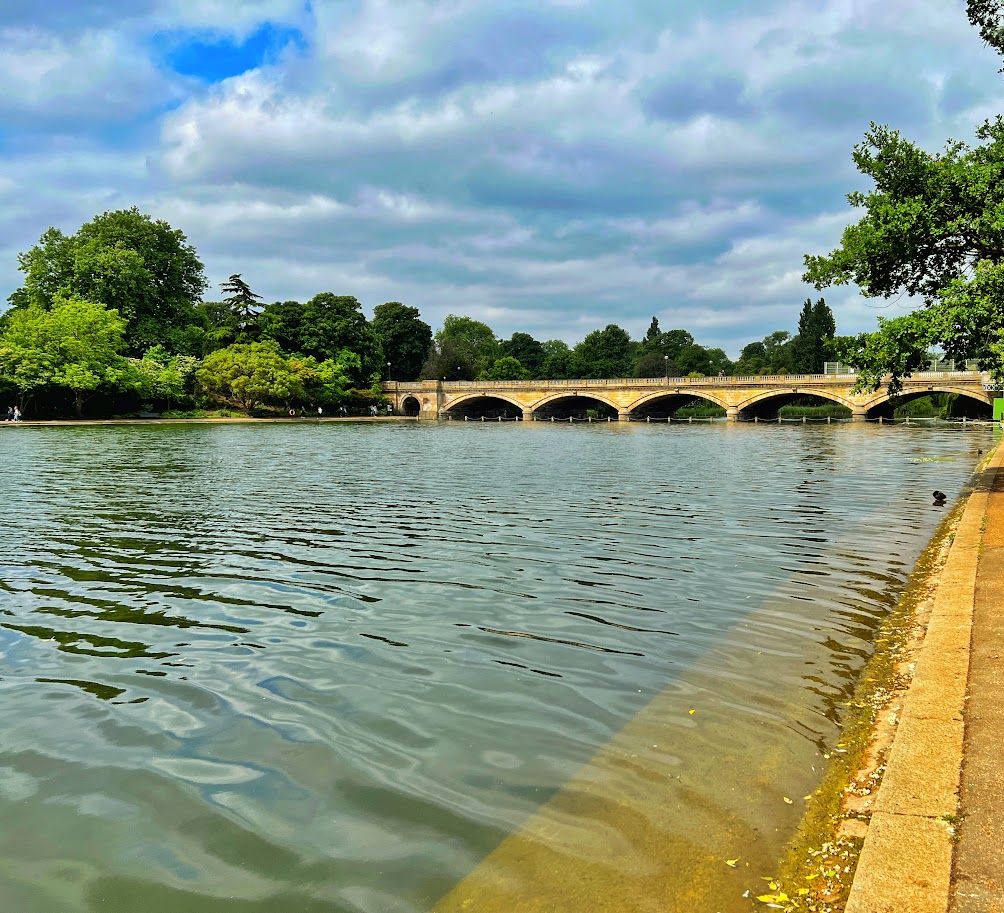
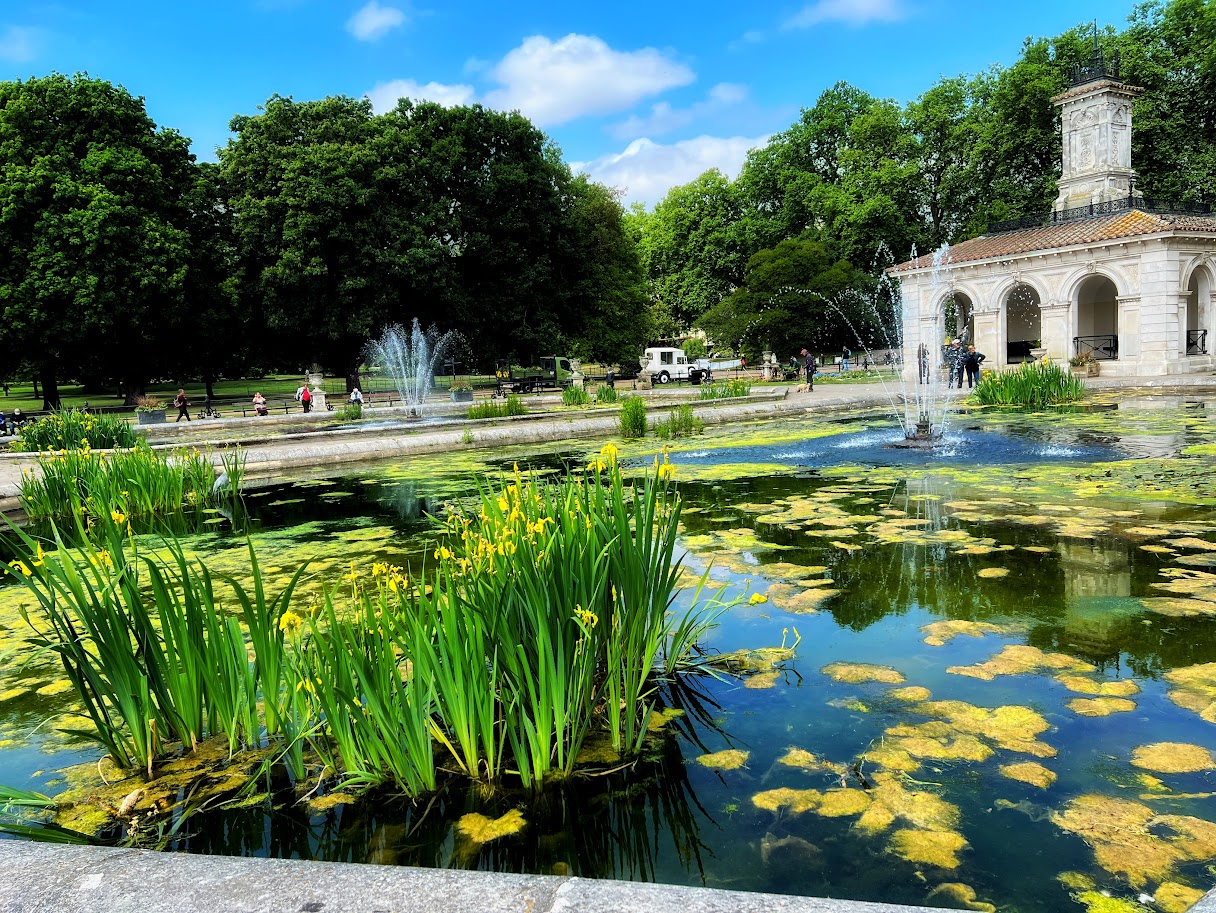
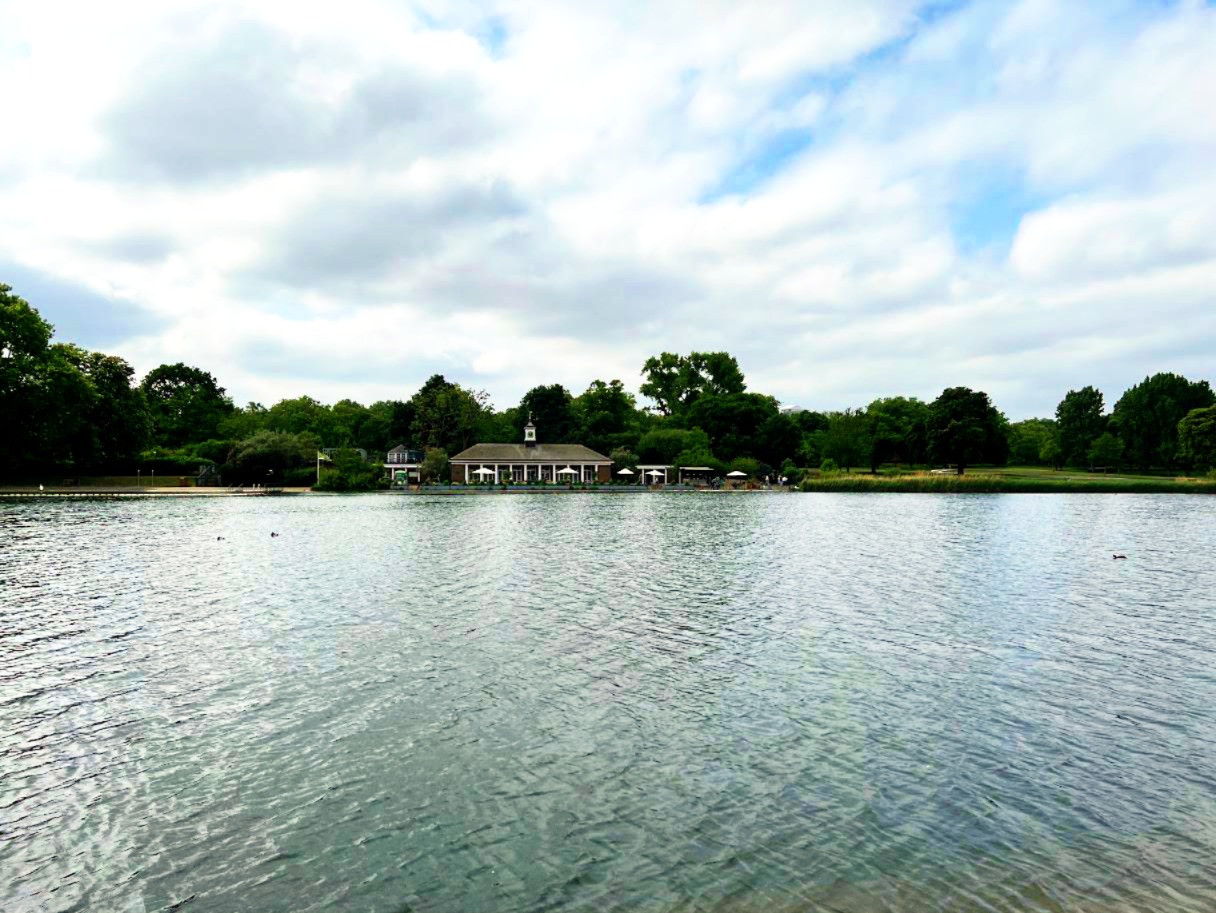
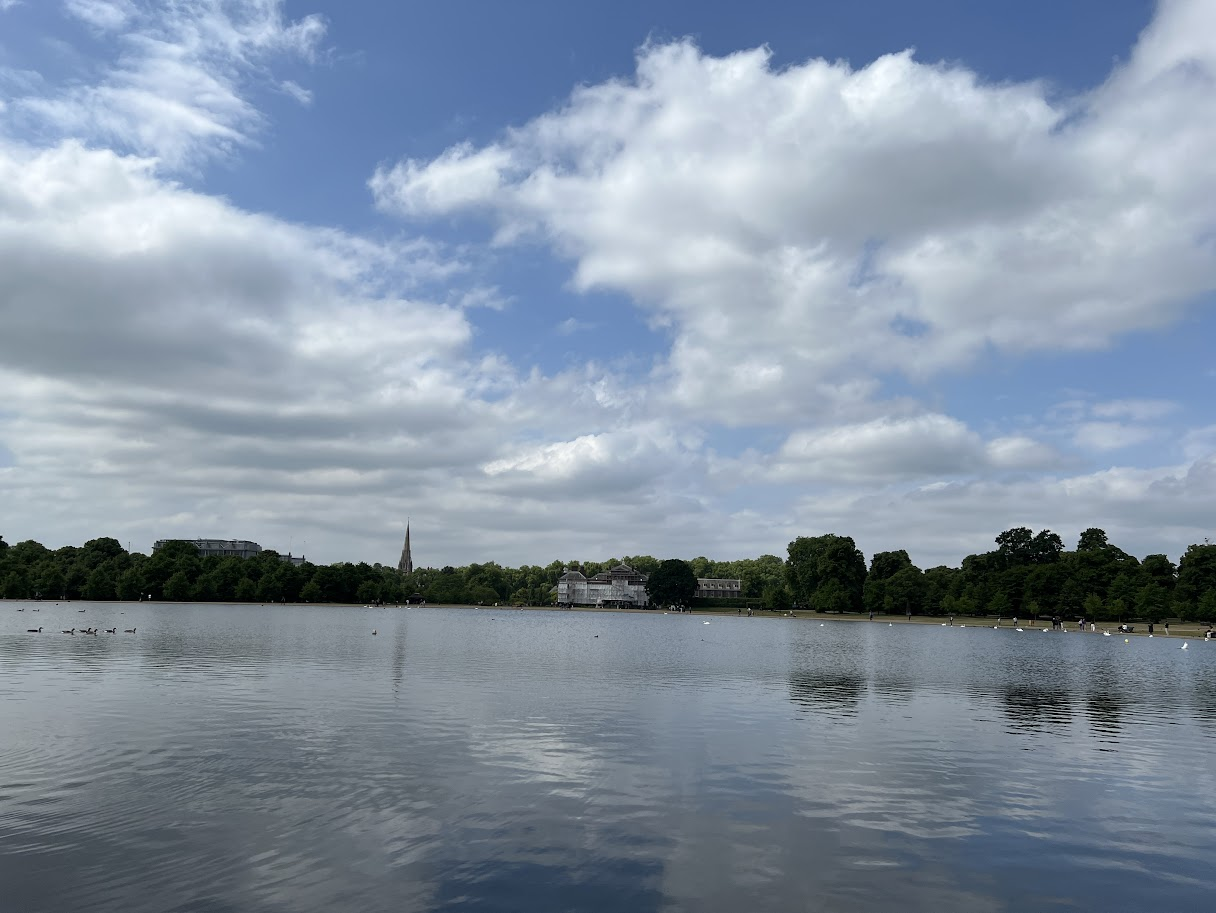
On my first full day in London, we left the house early and headed to Hyde Park. My sister lives on the outer edge of zone 1, walking distance from a tube station, so that was our mode of transport. After walking across Hyde Park, I checked out the Serpentine lake and saw Kensington Palace from outside, and then sat for a while in Kensington Gardens before walking out of the park.
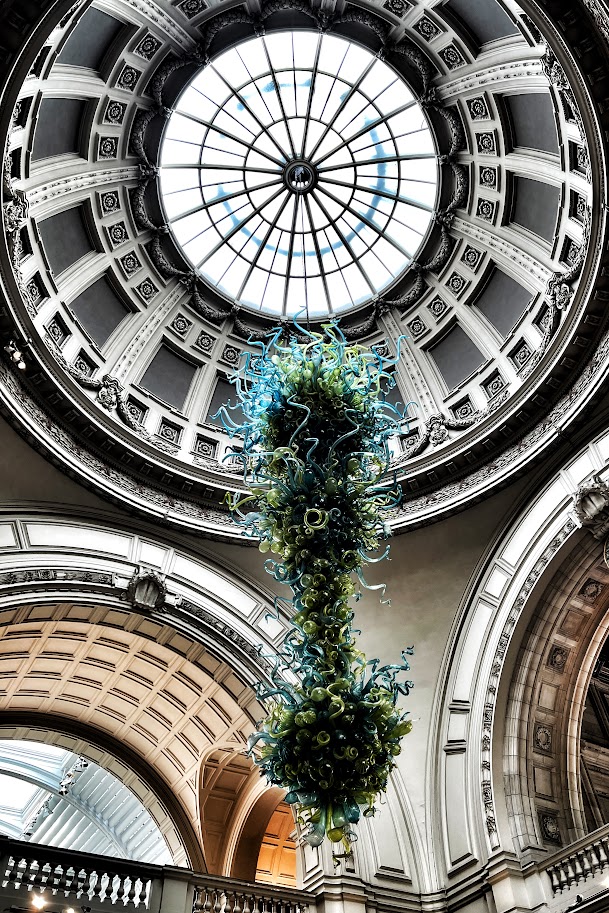
Our next stop was the Victoria & Albert Museum. This museum has been on my visit list for years. When I was in my late teens or early twenties, the V&A Museum had a travelling show they took to many cities around the world, including Mumbai. I think this was to celebrate a milestone year in the museum’s history. I went to the museum twice, once alone and once with my sister, and this cousin and her sister. I was entranced and knew whenever I go to London, I had to visit the museum. And to my good fortune, my sister also enjoys museums and just the week before she had gotten membership to the V&A. This meant, in addition to the free exhibits, we could also check out their special exhibit, which was an exhibit showcasing Cartier’s jewellery over the years, which was out of the world.
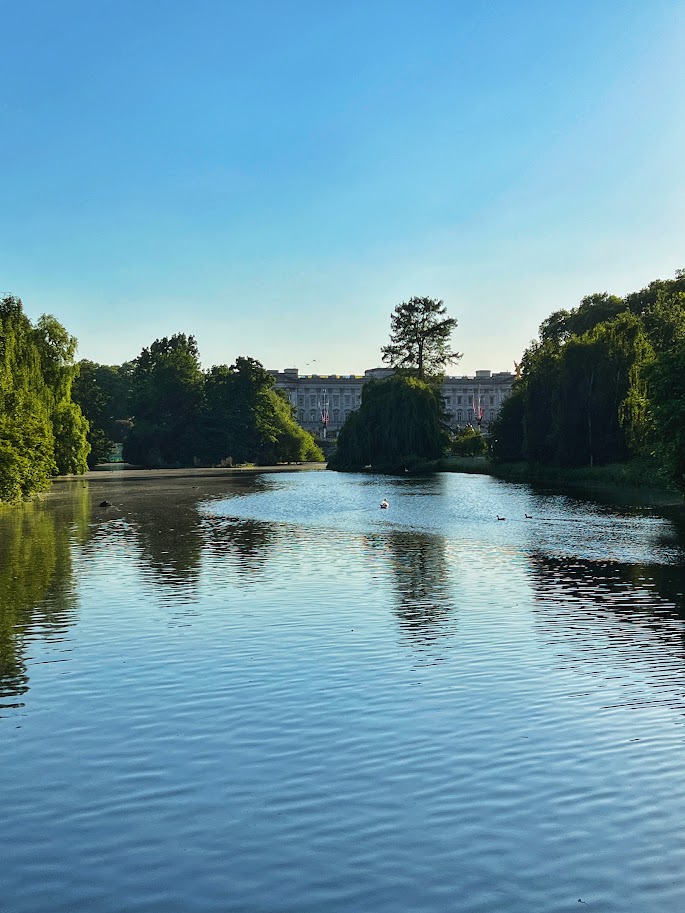
After spending a few delightful hours at the museum, we went back to Hyde Park because my sister had to run some errands. We then walked to Buckingham Palace and saw it from the outside. Then walked across St James’ Park, where we spent some time admiring the views and then home. I had walked more than 23,000 steps and was feeling jet lagged at this point.
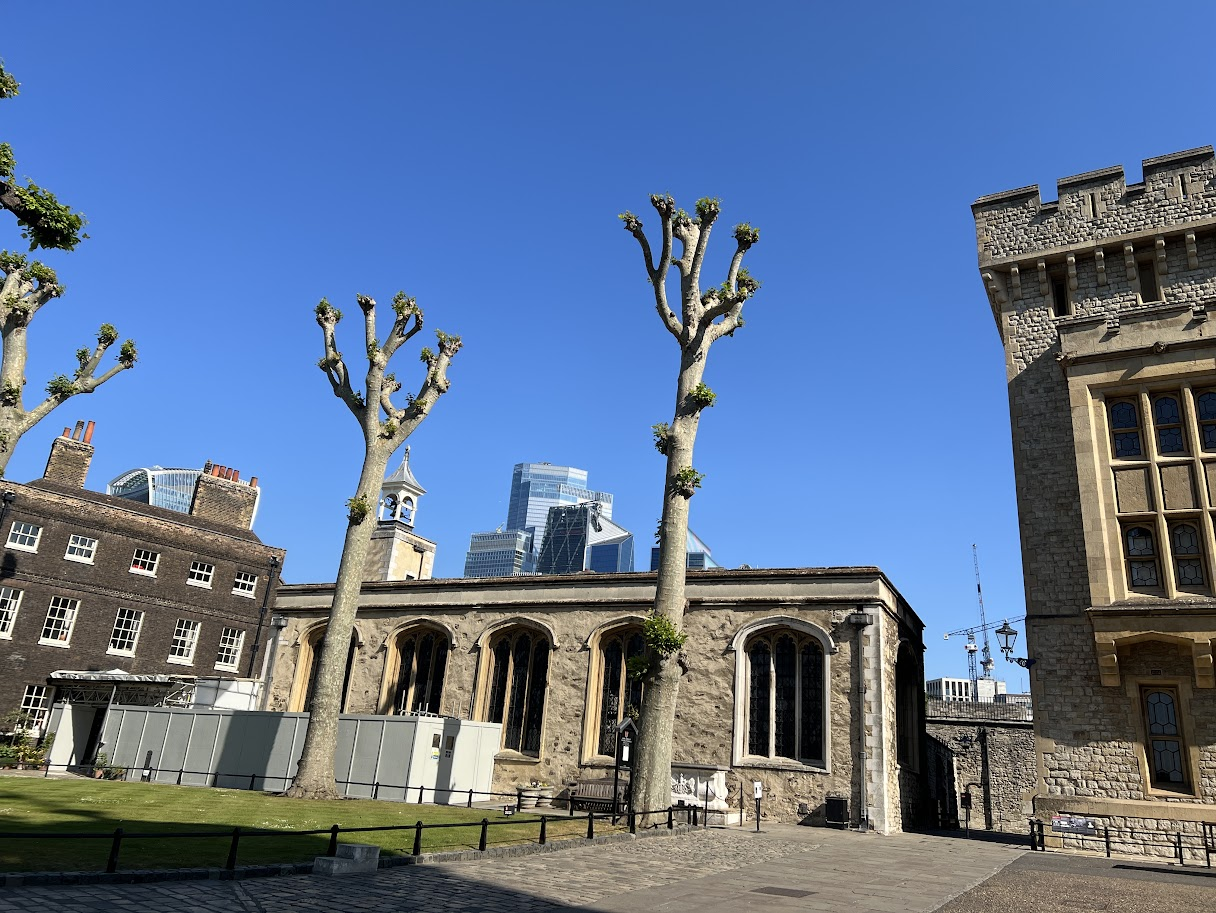
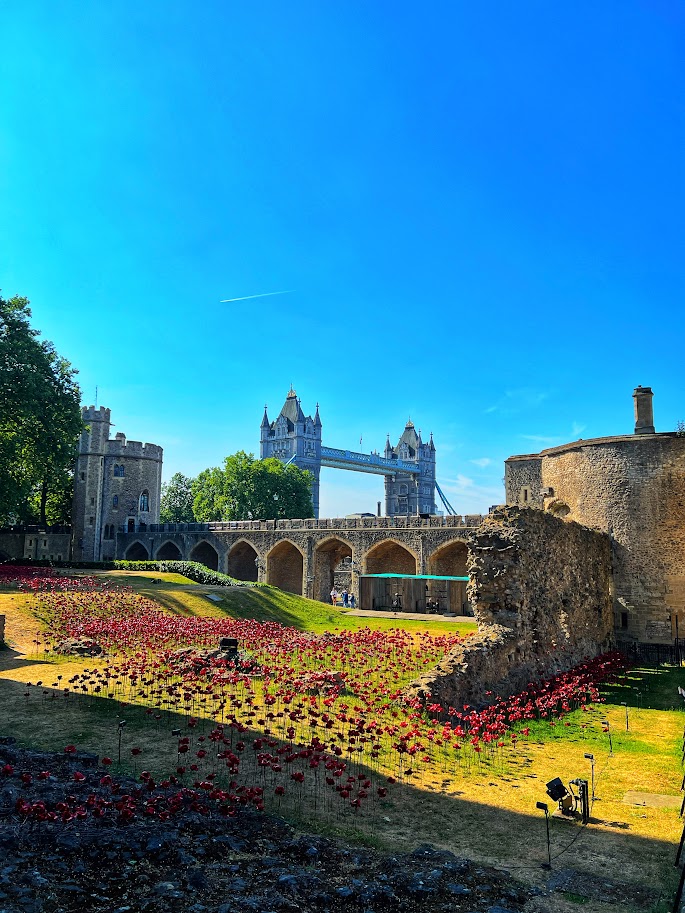
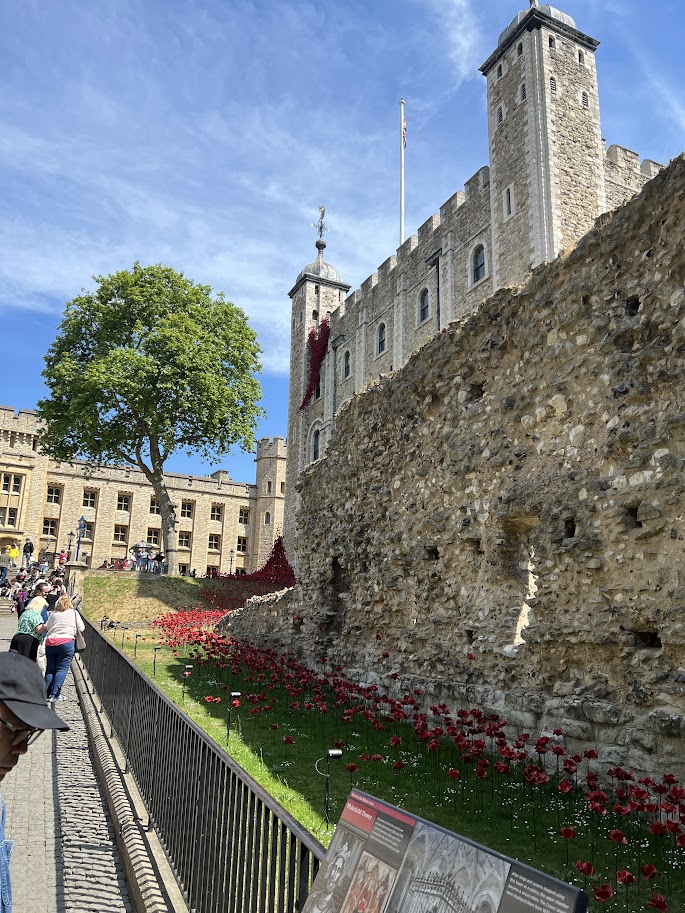
On the next day, we left home bright and early to go and visit the Tower of London. I had prebooked a slot for us for 9:30 am. The Tower of London is phenomenal. If there is only one attraction you want to pay for in London, it should be this. Rising on the north bank of the Thames, the Tower of London began in 1078 when William the Conqueror ordered the White Tower, a stark stone keep meant to cow newly conquered Londoners and guard the capital. Over nine tumultuous centuries, it expanded into a concentric fortress, royal palace, menagerie, mint, and, most famously, a high-security prison. Its walls echo with tales of intrigue and tragedy: Anne Boleyn’s final walk, Guy Fawkes’s interrogation, and the mysterious disappearance of the “Princes in the Tower.” The Tower is a UNESCO World Heritage Site today and one of Britain’s most popular museums and tourist attractions.
I wanted to see the crown jewels and especially the Koh-i-Noor diamond, but to be honest, the diamond felt a bit underwhelming to me. Maybe because of the diamond’s history, I expected it to be much more, but it didn’t speak to me like I thought it would. We also joined a Yeoman Warder’s tour, but because of the crowd, we couldn’t hear much, so left the tour less than 10 minutes after joining it.

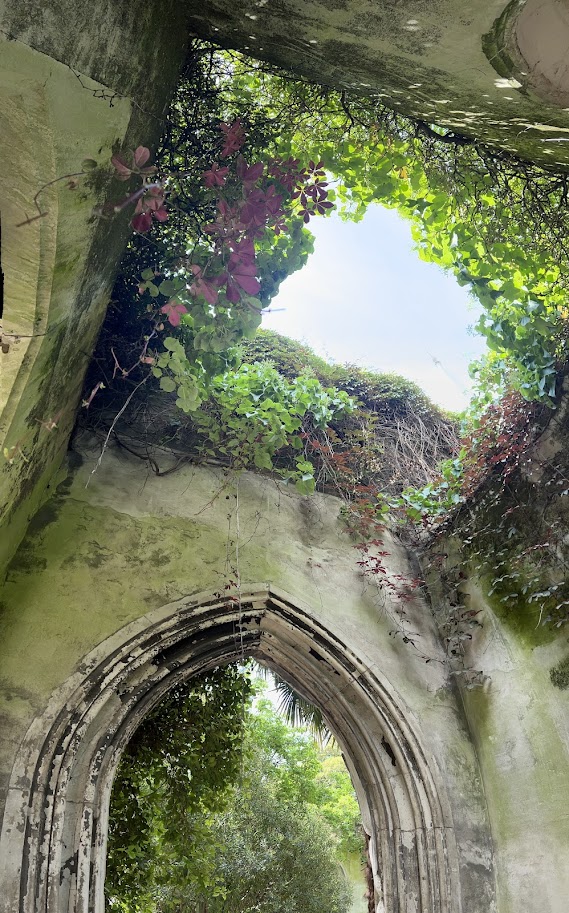
After the Tower of London, we walked to the Tower Bridge and took some photos before our next destination, a quaint church close to the Tower Bridge called St Dubstan of the East. Set within the ruins of a Wren church, St Dunstan in the East Church Garden is a green oasis with benches and a fountain with greenery draping the historic walls. The church was originally built around 1100, a new south aisle was added in 1391 and it was repaired in 1631. It was severely damaged in 1666 by the Great Fire of London. The Church was again severely damaged in the Blitz of 1941. Wren’s tower and steeple survived the bombing. During the reorganisation of the Anglican Church after World War II, it was decided not to rebuild St Dunstan’s. In 1967, the City of London decided to turn the remains into a public garden, which opened in 1970. When we were there, it was lunchtime and we found many office workers having lunch there. I wish there were someplace like this when I worked full-time, so I could also have a breather during lunch in cool and sylvan surroundings.

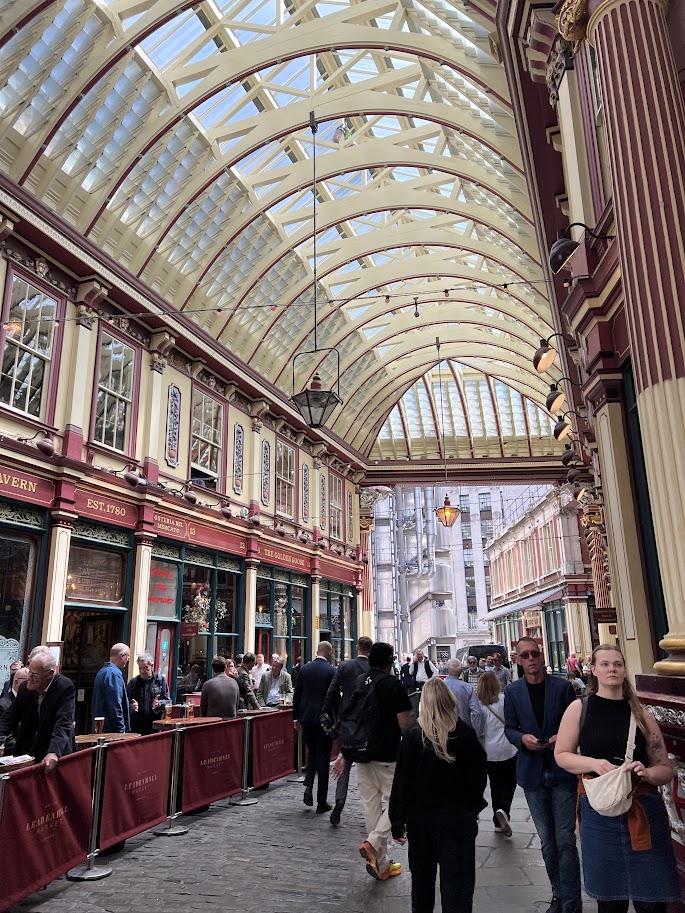
Our next destination was a place that was GG’s wish, Leadenhall Market. A huge Harry Potter fan, Leadenhall Market is where the first film of the series, Harry Potter and the Philosopher’s Stone, was partly filmed. Leadenhall Market was used to represent the area of London leading to the popular wizarding pub The Leaky Cauldron and was the inspiration for the magical shopping street Diagon Alley. It’s a charming, airy market in the heart of the city with shops, boutiques and restaurants with stunning architecture dating back to the 14th century.

We were hungry at this point, and our next stop was perfect for lunch. We went to London’s highest public garden, the Sky Garden, to take in 360-degree views of the city’s iconic skyline as well as have lunch at one of the restaurants in the space. Access to the Sky Garden is free of charge, but spaces are limited and visits must be booked in advance. Here we were joined by others in the family, and it was lovely to see all the sights in the city centre with the Thames flowing past, and then have a yummy lunch.
Post lunch, we wandered across the London Bridge and walked to Borough Market. This is one of the largest and oldest food markets in London, with a market on the site dating back to at least the 12th century. The present buildings were built in the 1850s, and today the market mainly sells speciality foods to the general public. After having some dessert here, we hopped into the tube to Greenwich to take an uber for an exciting trip.

At Greenwich, we walked down to the pier to take an Uber boat down the Thames. The only option available at that point was a boat to the Westminster Pier, so we hopped into that. It was a nice way to see London by the river, and I enjoyed the trip, soaking in the sights that I would otherwise not see. The trip took about 30-40 minutes, and we were able to pay using the same cards that we used on the tube and bus. After disembarking from the boat, we wandered around Westminster and then took the tube home.

On my third day in London, the first thing we did was to return to the airport to pick up my sister. After she came home and freshened up, we went out. Our destination was the St Paul’s Cathedral. Dominating the skyline with its gleaming dome, St Paul’s Cathedral is the masterpiece Sir Christopher Wren raised after the Great Fire of 1666, and was completed in 1710. Outside, its soaring 365-ft silhouette draws the eye, while inside, a serene Baroque nave draws the eye up to a coffered dome inspired by St Peter’s in Rome. Whisper along the interior of the Whispering Gallery to test the acoustics, then climb to the Golden Gallery for panoramic views of the Thames, the Shard and Tower Bridge. In the crypt, Admiral Nelson, the Duke of Wellington and Sir Winston Churchill lie. The cathedral hosted the funerals of Diana’s maternal grandmother, state services after the Blitz, and the wedding of Prince Charles and Lady Diana in 1981. The stairs going up are a killer to the knees, but the views from the top are spectacular.
After lunch at a Greek restaurant, my first time, we took the tube to Covent Garden, walked around the theatre district a bit, and then went to Europe’s largest shopping centre, Westfield, for some retail therapy and dinner. And that was pretty much the end of my London sojourn.
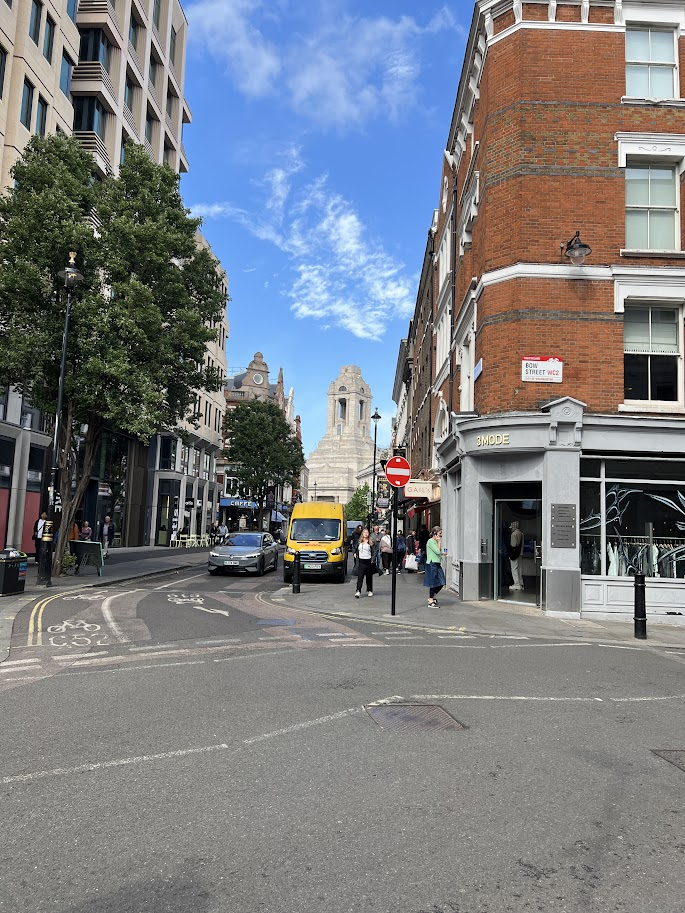
The next day was spent travelling to both London Heathrow and Gatwick to pick up the last two who landed almost at the same time. So we had a mini road trip before our big trip. In the evening, we all trooped to the last sister’s place, who lived a bit further away, but closer to Gatwick which was from where we were supposed to board our flight to Rome. After a scrumptious dinner, we woke up early on flight day. The taxi to drop us at the airport was supposed to pick us up at 5:30 am, so we had an early start.
The next three parts will be all about our Italian adventure, so keep watching this space!
After I blogged about Part 1 of my UK bucket list, I spoke about it to GG. She immediately got excited and wanted to visit London immediately! Since S and to an extent BB had less interest in the historical sites we would want to see, she suggested that they stay back while we explore these places. I had to curb her enthusiasm a bit and promised her we would very soon go there. On to some more places in London and the UK that I would definitely want to visit.
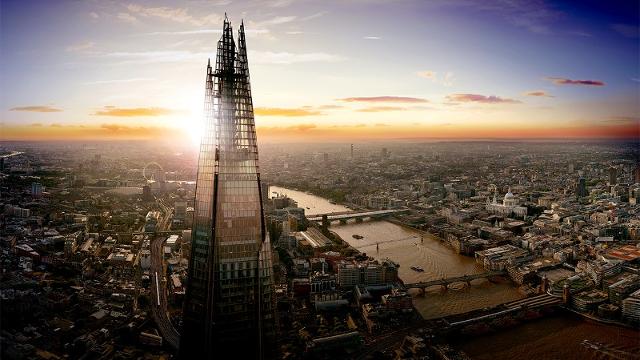
The Shard: In 2012, Italian architect Renzo Piano transformed London’s skyline with a strange but striking structure. Despite its glassy, futuristic look, the huge pyramid that is The Shard (now the capital’s tallest tower) was in fact influenced by the London of old. Piano took inspiration from the eighteenth-century spires he’d seen in artworks by Venetian landscape painter Canaletto. Reaching 244 metres from the ground, The Shard was built with everything in mind: offices, homes, hotels, bars, restaurants and, of course, the alluring viewing platform. From the highest point, the public is allowed access (floors 69-72) you get stunning 360° views of the city.
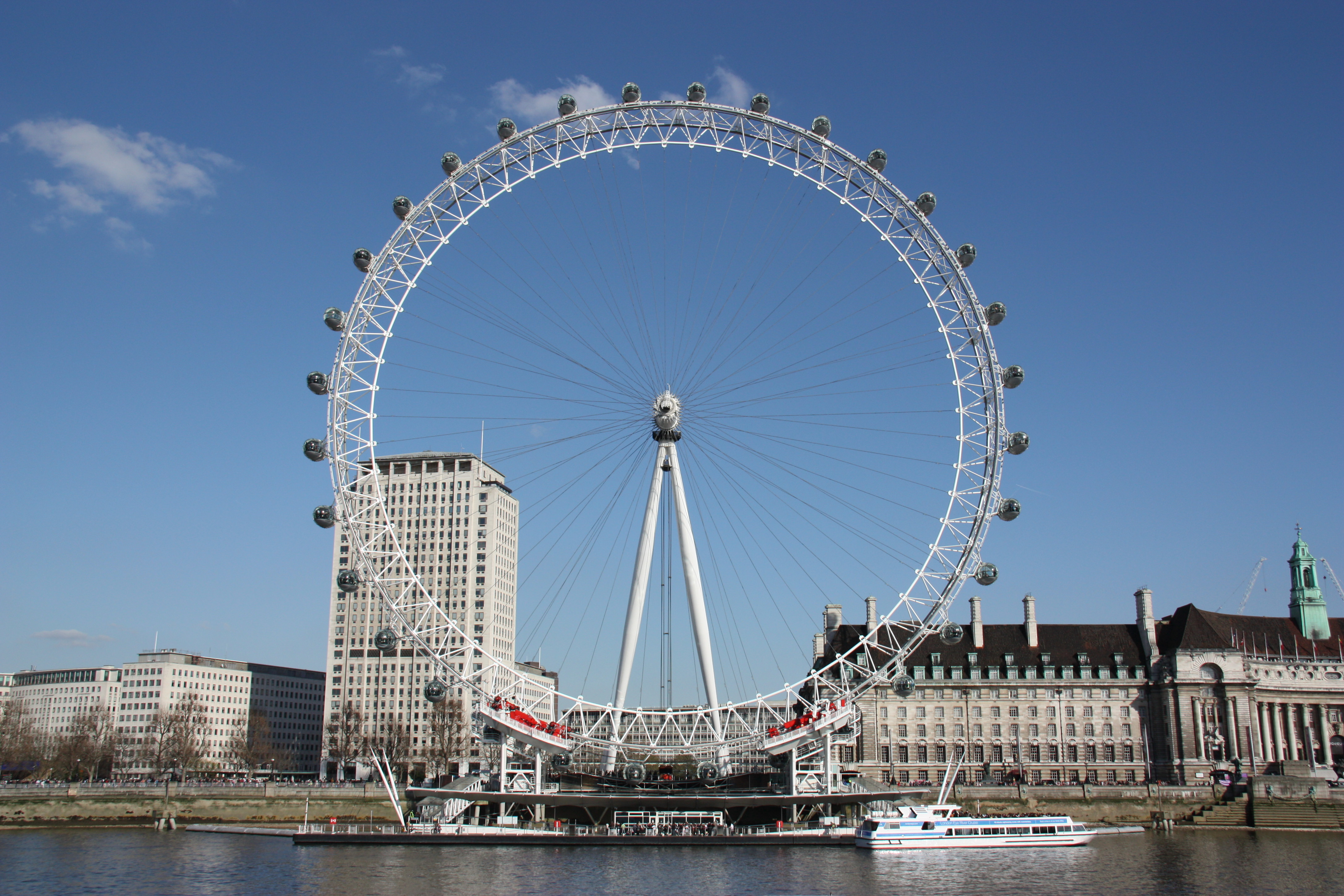
The London Eye: The London Eye is a gigantic Ferris wheel located on the south bank of the River Thames. It was completed at the beginning of the 2000s, which is why it bears the nickname The Millennium Wheel. The wheel stands tall at 443 feet and has a diameter of 120 meters. A complete wheel turn takes about 30 minutes and the capsules provide visitors with a stunning 360° view of London. It’s recorded as the world’s tallest Ferris wheel and is a true beauty at night when it comes alive with bright neon colours. Tourists are entertained with a glass of royal champagne as they enjoy a sweet ride.
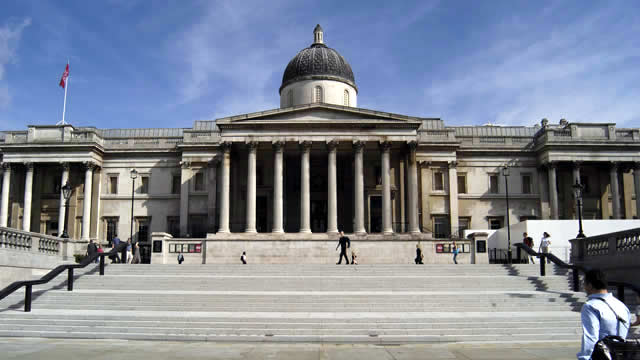
Museums and Galleries: As I have mentioned previously, GG and me and to an extent BB are history buffs and so visits to the various museums and galleries in London like the British Museum, National Gallery, Tate Modern, Natural History Museum, Museum of London, Science Museum, Victoria and Albert Museum and the British Library will be a must. I understand quite a few of these are free and this will be a huge boon to tourists on a budget.
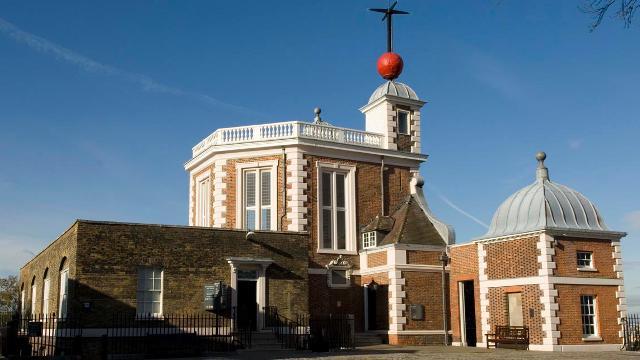
Royal Observatory Greenwich: Visit the Royal Observatory Greenwich and stand on the world-famous Meridian Line with one foot in the west and one foot in the east. With your complimentary audio guide, learn about the discoveries of great scientists and inventors based at or associated with the Royal Observatory. Explore how great scientists first mapped the seas and the stars in Charles II’s magnificent Christopher Wren-designed Octagon Room – dating from 1675. Marvel at the Great Equatorial Telescope, the UK’s largest historic telescope which gave astronomers new views of the universe over 100 years ago. From the Royal Observatory, you will enjoy one of the most loved views of London across Greenwich Royal Park and the river Thames.

Bath: One of the most beautiful cities in the whole of the UK, with a rich and varied history stretching back thousands of years, it’s easy to see why Bath welcomes hundreds of thousands of visitors every year. First established by the Romans who built temples around the hot springs here in 76BC, Bath has been welcoming weekenders for almost 2,000 years. This pretty spa town is oozing with history, from the Roman baths (of course) to its grand Georgian houses, parks and sweeping crescents, timeless attractions and Victorian gothic structures. Bath’s natural hot springs are what the city is most famous for, but it also has a fantastic cultural scene, with plenty of theatre, music, comedy, art and more.

Stonehenge: One of the most important survivals of prehistoric England, Stonehenge consists of a group of huge rough-cut stones, some more than 20 feet high, arranged in two concentric circles. Located 10 miles north of Salisbury on Salisbury Plain, Stonehenge is Europe’s best-known prehistoric monument (the site is so popular that visitors need to purchase a timed ticket in advance to guarantee entry). Exhibitions at the excellent visitor centre set the stage for a visit, explaining through audio-visual experiences and more than 250 ancient objects how the megaliths were erected and telling about life when they were placed here, between 3000 and 1500 BC. After walking around the enormous stones, visit the authentic replicas of Neolithic Houses to see the tools and implements of everyday Neolithic life as volunteers demonstrate skills from 4,500 years ago.
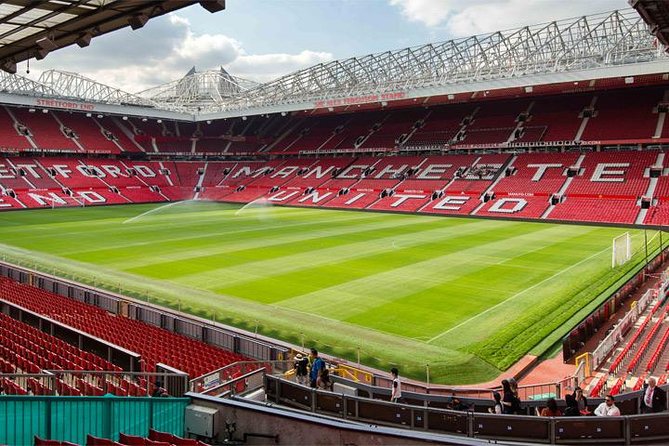
Manchester: S is a huge fan of the English Premier League and the team he supports is Manchester United. So for him, a trip to the industrial town is a must if we are in England. A visit to the Theatre of Dreams, Old Trafford where he can pay homage to his favourite players plus a visit to the National Football Museum and we should be done here.
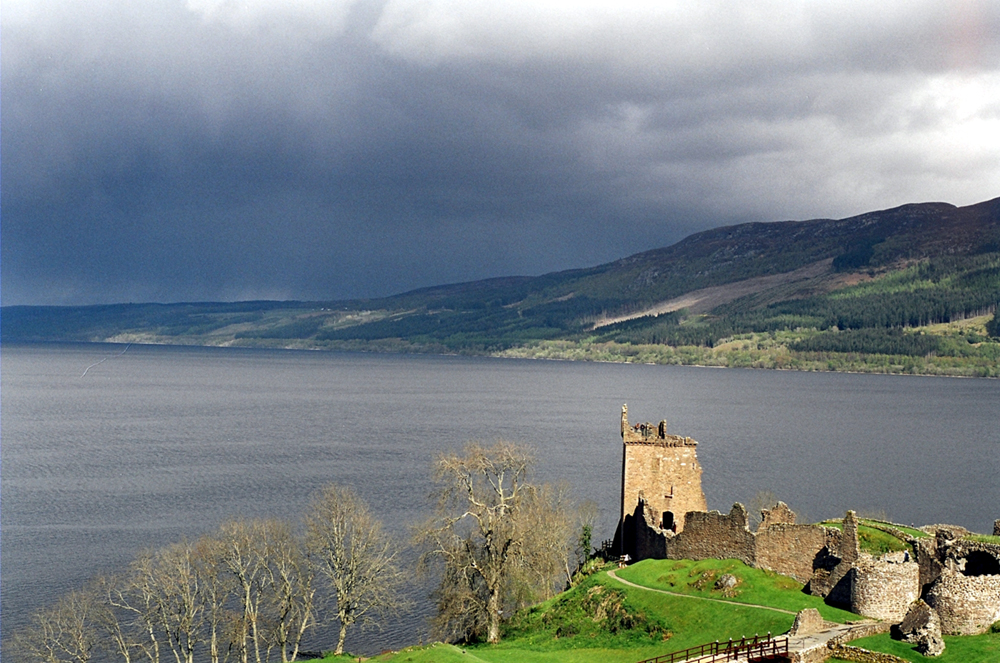
Loch Ness and Inverness: Nessie is Loch Ness’s oldest resident, first sighted back in the sixth century. Over the years, a host of hunters and hoaxers have followed in her wake, but we’ve yet to get a clear shot of the monster. If you fancy your luck, Jacobite offer a range of tours on the water, from sedate cruises to the high speed ‘Beastie Boats’. Even if Nessie is feeling shy during your visit, the loch (never pronounced ‘lock’ with a hard ‘k’ sound) remains a prime example of austere Scottish beauty. Gazing into that deep, murky water, it’s hard to shake the feeling that something is staring back.

Stratford on Avon: This market town in England was the birthplace of Shakespeare and so the best things to do in Stratford-upon-Avon includes plenty of attractions related to its most famous inhabitant. Catch a show by the eminent Royal Shakespeare Company at one of its theatres or visit some of the well-preserved buildings whose very walls tell the story of the Bard’s life and death.
I am sure there are many attractions and places I have missed on this list. I am going to do some more research and see if I can come up with part 3. Are there any attractions or places you feel need to be included? Would love to hear from you.
Today’s travel bucket list is slightly farther than usual and unlike previous entries where I spoke about specific countries, this time it’s an entire continent!
GG and I are history buffs while BB also enjoys history, but not to the extent we do. So it’s only natural that Europe, which is the cradle of western civilization is definitely on my bucket list. I am going to break down Europe into countries and places I want to visit and will post periodically on this.
The starting point for our Europe adventures will most likely be England and more specifically London. I have family there and so this is the best way to combine meeting them and starting our journey of discovery.
The United Kingdom which is made up of England, Scotland, Wales and Northern Ireland has been colonial masters of both India and Singapore and we have all learnt a fair bit of British history, especially the parts which intersect with our own country’s history. In addition, I love reading Victorian and Regency historicals and GG loves the history of the country, especially that of the various kings and queens. I am not going to bore you with the country’s recorded history which is long, varied and certainly interesting, but will go down straight to the sights I definitely want to visit.
Since we will be flying into London and keep the city as our base, I will start with the capital and then move outward to other places in the country. I would start with historic monuments and then move to other sights in the city. GG and BB are huge fans of Harry Potter and GG is a self-proclaimed Potterhead, so of course, a visit to the Warner Bros Studio and to Kings Cross Station is a must!

Buckingham Palace: This is the London residence and administrative headquarters of the monarch of the United Kingdom. Located in the City of Westminster, the palace is often at the centre of state occasions and royal hospitality. It has been a focal point for the British people at times of national rejoicing and mourning. One thing not to miss is the Changing of the Guards Ceremony.
Tower of London: Throughout its history, the Tower of London has served many purposes, including royal residence, barracks, armoury, prison and museum. The Tower of London is a 900-year-old castle and fortress in central London that is notable for housing the crown jewels and for holding many famous and infamous prisoners.
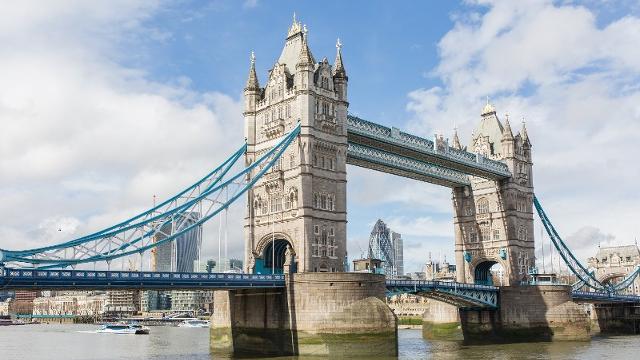
Tower Bridge: Tower Bridge is a combined bascule and suspension bridge in London built between 1886 and 1894. The bridge crosses the River Thames close to the Tower of London and has become an iconic symbol of London. Because of this, Tower Bridge is sometimes confused with London Bridge, situated some 0.5 mi upstream.
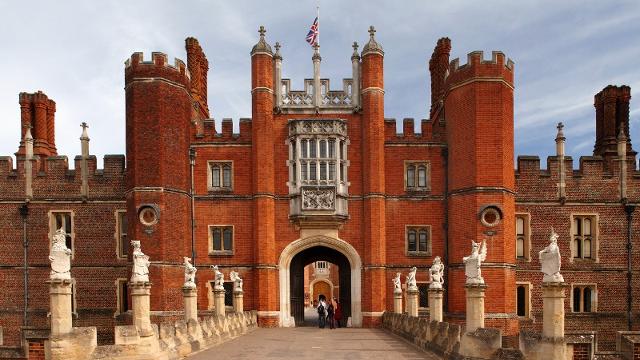
Hampton Court Palace: The magnificent and favourite royal residence of Henry VIII, the Hampton Court Palace bustles with the sights and sounds of the Base Court and the breath-taking grandeur of Henry’s State Rooms. Wander around the vast Tudor kitchens, stroll through over 60 acres of enchanting gardens, lose yourself in the famous maze and appreciate the beauty of one of the greatest palaces on earth. You can also creep along the Haunted Gallery and discover the Baroque Palace, full of intrigue and gossip from the Stuart and Georgian era.
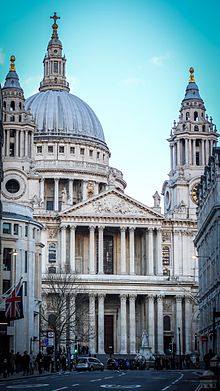
St. Paul’s Cathedral: St Paul’s, with its world-famous dome, is an iconic feature of the London skyline. It is the seat of the Bishop of London and the mother church of the Diocese of London and is 1,400 years old. Step inside and you can enjoy the Cathedral’s awe-inspiring interior. You can also venture down to the crypt and discover the tombs and memorials of some of the nation’s greatest heroes such as Admiral Lord Nelson and the Duke of Wellington. You can also try out the acoustic quirks of the Whispering Gallery and continue on to the Golden Gallery to enjoy breathtaking panoramic views across London.
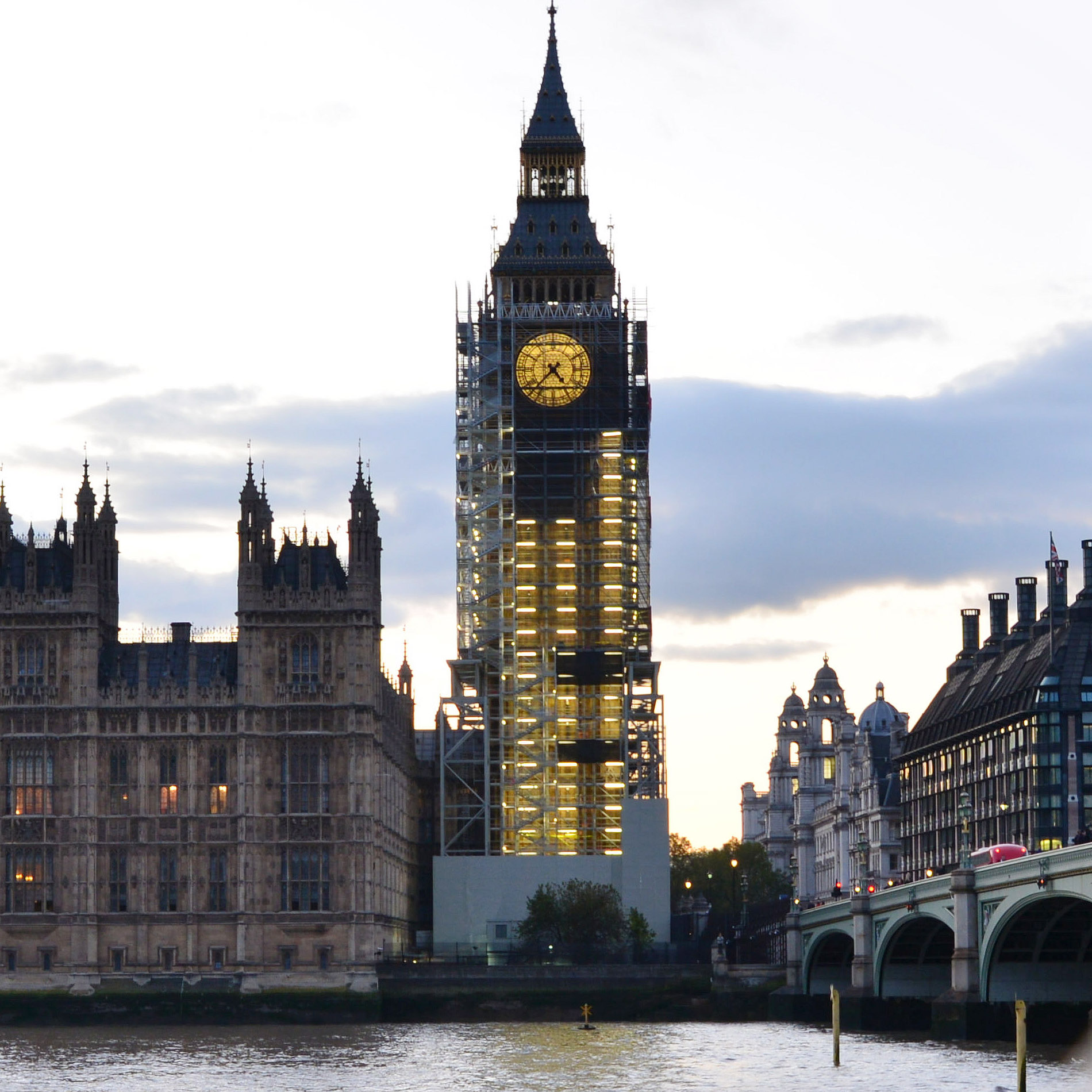
Big Ben: Technically, Big Ben is the name given to the massive bell inside the clock tower at the houses of parliament and Elizabeth Tower, which weighs more than 13 tons (13,760 kg). The clock tower looks spectacular at night when the four clock faces are illuminated. Unfortunately, only UK residents can visit the inside of the clock by writing into their Member of Parliament. Foreign visitors can view it from outside and tour the houses of the Parliament.

Houses of Parliament: The Palace of Westminster is the meeting place of the House of Commons and the House of Lords, the two houses of the Parliament of the United Kingdom. Most of this iconic building was built in the mid-19th century following a devastating fire in 1834. Westminster Hall survived the fire and dates from 1097. Visitors can book tours through the House of Commons and the House of Lords, and are welcome to watch debates and committees when the Houses are sitting.
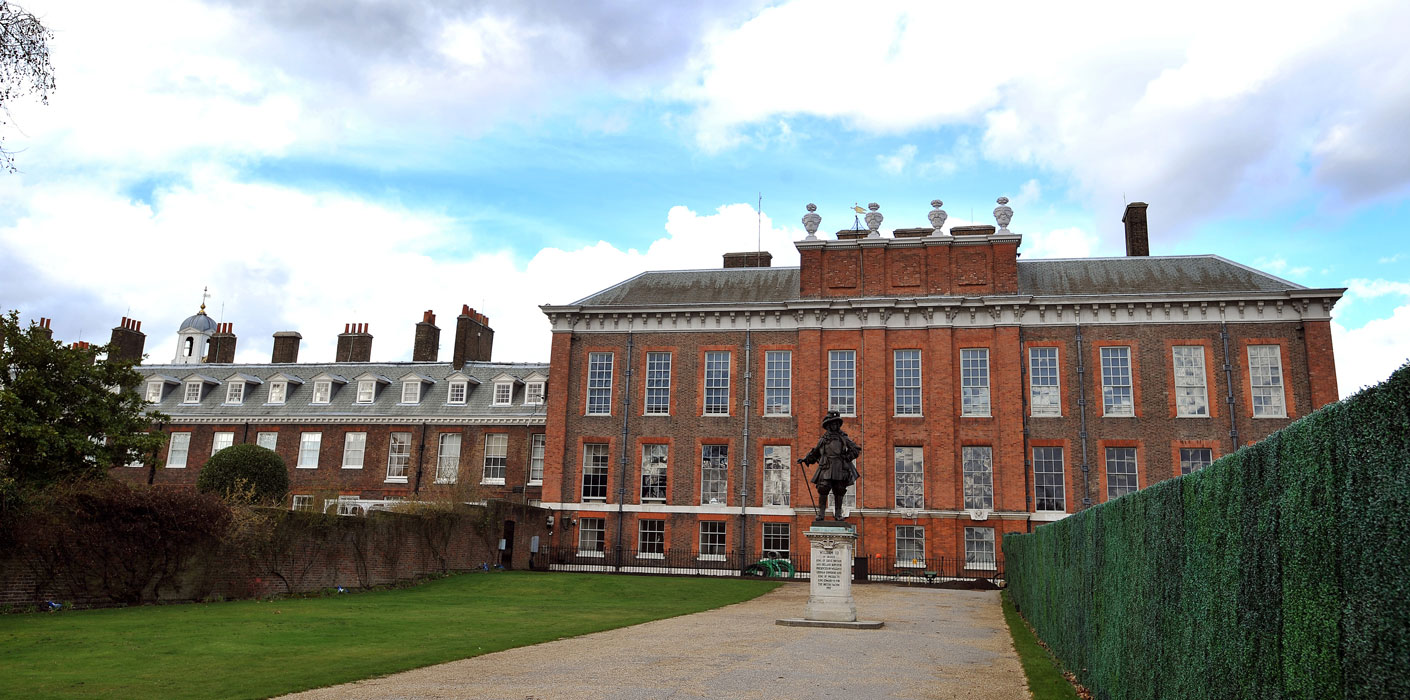
Kensington Palace: Kensington Palace is a working Royal residence. Of great historical importance, Kensington Palace was the favourite residence of successive sovereigns until 1760. It was also the birthplace and childhood home of Queen Victoria. Experience life as an 18th-century royal courtier whilst making your way through the magnificent King’s and Queen’s State Apartments adorned with remarkable paintings from the Royal Collection.

10 Downing Street: 10 Downing Street is home to the British Prime Minister. Look through the gates from Whitehall, and see the famous 10 Downing Street door which can only be opened from the inside. There is no access to the house or street for the general public, and it is not possible to do a 10 Downing Street tour. You can’t visit 10 Downing Street; but you can still head to 10 Adam Street, only 800 metres (2,624 ft) away, where you’ll find a very similar door, now a hotspot for tourists wanting to take a souvenir photo.

Warner Bros. Studio The Making of Harry Potter: This is something we all are really looking forward to. This studio tour provides an amazing opportunity to explore the magic of the Harry Potter franchise. The unique walking tour will take you behind-the-scenes and showcases a huge array of beautiful sets, costumes and props as well as reveal some closely guarded secrets, including facts about the special effects and animatronics that made these films so hugely popular all over the world. You can also step inside and discover the actual Great Hall and explore Dumbledore’s office and discover never-before-seen treasures. Another must-see attraction in the studio is the famous cobbles of Diagon Alley, featuring the shop fronts of Ollivanders wand shop, Flourish and Blotts, the Weasleys’ Wizard Wheezes, Gringotts Wizarding Bank and Eeylops Owl Emporium and also see iconic props from the films, including Harry’s Nimbus 2000 and Hagrid’s motorcycle. You can also learn how creatures were brought to life with green screen effects, animatronics and life-sized models. Other sets available include the Gryffindor common room, the boys’ dormitory, Hagrid’s hut, Potion’s classroom and Professor Umbridge’s office at the Ministry of Magic.

Kings Cross Station: The iconic station where students to Hogwarts are sent off. Students to Hogwarts enter platform 93/4 by dashing through a brick wall between platforms 9 and 10. Meanwhile, in the real King’s Cross, platforms 9 and 10 are separated by tracks, but you can find a platform 9¾ on the wall in the station concourse. There’s a luggage trolley embedded in the wall, and you can pretend you are off to start on your magical Hogwarts journey.
This post is becoming very long and I am going to stop now and do the rest of London plus outside of London very soon. And the way I am adding attractions, it looks like we will need a couple of weeks just in London and then another few weeks just for the UK! How on earth am I going to do a full Europe holiday in just a month or so? Watch this space! And
 Memories and Such