The Night of Terror – An Unforgettable Day!

I woke up, excited and happy on the morning of November 26, 2008. I was going to Mumbai later that evening on a Jet Airways flight, flying with BB & GG alone for the first time since they were born. They were 5 years old and were equally excited to be seeing their grandparents that evening.

Everything changed around 7 am when I got a message from my sister, who was in the States at that point, asking me if I was still going to Mumbai. I had no clue what was happening in Mumbai. I waited impatiently till a decent time to call my parents to find out more, and in the meantime rushed to work as I was supposed to be working half day that day. I went online and was shocked by what I read. Twitter, which was around two years old then had exploded with tweets on the situation!

What had happened was that 10 Pakistani members of Lashkar-e-Taiba, an Islamic militant organisation, carried out a series of 12 coordinated shooting and bombing attacks lasting four days across Mumbai. The attacks, which drew widespread global condemnation, began on Wednesday, 26 November and lasted until Saturday, 29 November 2008, killing 164 people and wounding at least 308.

Eight of the attacks occurred in South Mumbai: at Chhatrapati Shivaji Terminus (VT train station), the Oberoi Trident, the Taj Mahal Palace & Tower, (one of the worst places of the killings), Leopold Cafe, Cama Hospital, the Nariman House Jewish community centre, the Metro Cinema, and in a lane behind the Times of India building and St. Xavier’s College. There was also an explosion at Mazagaon, in Mumbai’s port area, and in a taxi at Vile Parle (close to the domestic airport). By the early morning of 28 November, all sites except for the Taj hotel had been secured by Mumbai Police and security forces. On 29 November, India’s National Security Guards (NSG) conducted ‘Operation Black Tornado’ to flush out the remaining attackers; it resulted in the deaths of the last remaining attackers at the Taj hotel and ending all fighting in the attacks.
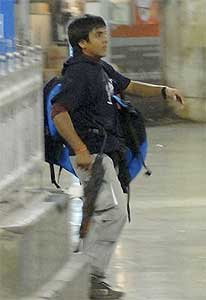
Ajmal Kasab, the only attacker who was captured alive, later confessed upon interrogation that the attacks were conducted with the support of the Pakistan government’s intelligence agency, the ISI. Kasab was tried and later hanged in Yerwada jail in 2012.

S was on leave that day as he gets more leave than me. I quickly called him and spoke to him. My inlaws were scared of us travelling that evening and asked me to cancel the trip. I was torn – on one hand I didn’t want to risk the trip, on the other hand, I so desperately wanted to go home and meet my parents (I think at that point, it was a year since I had met them). I called the airline office in Singapore and was met with indifference. They seemed not to have any idea of what was happening in their head office city and told me they didn’t have directive from Mumbai (the head quarters of the airline). The flight will take off as scheduled was what I was told. My mother-in-law didn’t want me to travel, but I didn’t listen to her, saying since the flight was scheduled, we’ll go to the airport and decide then. I spent the whole day glued to the internet for any scraps of news that I could get. I told my parents that we are making the trip and to come to the airport to pick us up. Now that was a new problem – due to the trouble, the city was on curfew and there was no one willing to drive them to the airport. Finally around the time we left for the airport, my dad messaged me that they had finally found someone brave enough to drive his taxi to the airport and pick us up. One problem solved, loads more to go…

Praying to the entire pantheon of Gods in Indian Mythology, we left for the airport. We were one of the first ones to check-in. The mood was quite somber. There was a Channel News Asia crew near the check-in counter interviewing passengers brave (or mad) enough to fly to Mumbai. They were looking for Singaporeans against Indians and approached me to ask if I was willing to be interviewed. I did mention that I am not a local, but was told that I spoke like one, so could pass off as one! I was asked if I was scared of going to Mumbai while the shootings were going on and I remember replying that this was very far from the airport, and so the airport area should be safeish (is this even a word?)!

We flew into Mumbai and the airport was very somber and dull! Everyone working the shift was glued to the television screens which were showing live the places where the terrorists had held the hostages. None of the customs officers were really interested in looking at our luggage and we were out in record time. I was so relived to meet my parents and we quickly got into the taxi and drove home. At that point in time (this was before the new flyover which has dramatically shortened travel time from the airport to my home), the normal travel time between the airport to home was 45 – 60 mins. That day, we did the journey in 20 minutes! Once home, I heaved a big sigh of relief and then spent the next few days glued to the television….

This was the most unforgettable day in my life and a flight to remember…..

My Name is My Own

“What’s in a name? That which we call a rose by any other name would smell as sweet” – William Shakespeare in Romeo and Juliet

Once upon a time…..actually this start has nothing to do with my post today, but since this is something I’ve thought over a long time, I decided to use it!

I’ve been a feminist for a long time, even before I knew what the word meant. I guess, growing up without any brothers meant that my sister and I were given a more liberal upbringing than most girls we knew. That might have been the starting of my innate feminism I guess!

Growing up, I always wondered why a woman should change her name to reflect that of her husband when she got married. I didn’t really do anything about this because this was the norm in India when I was growing up and I didn’t see anyone bucking this. However, this changed when I started working. One of my first supervisors, a wonderful woman, got married when we were working together and didn’t change her name. However, HR assumed she would do so and I remember the first day she came back after her honeymoon, she got a note and in the envelope was her married name: Mrs. XXX

She was furious and sent out a note to HR letting them know that unless she officially sent them intimation about her name change, they could not arbitrarily change her name without her permission. I witnessed the whole drama and asked her why. She replied that she is a person in her own right and is not an extension of her husband and so is not planning to change her name, now or ever. This got me thinking and I also started looking at the possibility of not changing my name when I got married.

When I got married later in life, there was not much time to do anything except get to Singapore after the wedding. In this hustle and bustle, the whole process of changing names just got left over. My passport was in my maiden name and changing names (Indian bureaucracy is to be seen to be believed) would mean I could not fly to Singapore with S. In fact, if I remember correctly, this topic didn’t appear in anyone’s consciousness and I flew to Singapore in my maiden name.

Then I decided, I will not change me name. My whole life, prior to my wedding, was as important to me as my life after it, and so a name change will probably mean starting a new life from zero. Also all school and work records are in my maiden name, so this will mean a big explanation each time I show these records to potential employers. I also thought that since my parents raised me to be the person I am today, it is only right I honour them by continuing to keep my maiden name.

S was cool about this since most women do not change names after marriage in Singapore. This is because they get their National Registration Identity Card (NRIC) at the age of 15, when no-one is married and so girls continue with this name through their lives.

I sometimes wonder if this would have been a bigger issue if I lived elsewhere than Singapore, but c’st la vie!

Isn’t it unfair that guys don’t have to do anything like this? What do you think?

Navroze Mubarak

Saal Mubarak! With these words, Parsis across the world would have greeted each other tomorrow as they heralded the arrival of their new year. Another greeting heard across the agiaries (Fire Temples) would have been Navroze Mubarak!

I studied for 12 years in a Parsi school and so this community holds a special place in my heart. This small, minority community comprises of the followers of Zarathustra. The Parsis in India are those who fled Persia (modern day Iran) due to religious persecution and arrived in western India (modern day Gujarat, Kutch in India and Sindh in Pakistan).

There’s a very sweet story that was told to me in school about the Parsis’ arrival in India. When they arrived in Gujarat, the leader of the Parsis, the head priest or Dastoorji, sent a messanger to the local king asking for his permission to stay in his land as refugees. The king sent back a bowl full of milk. The Dastoorji looked at the bowl of milk his messenger brought back, added a spoon of sugar to it and sent it back to the king. The King understood the message and gave them permission. Soon one of the people in the Parsi group asked the Dastoorji what just happened and he replied that the bowl of milk the king sent over indicated that the land was currently occupied and full and he didn’t want to do anything to disrupt the lives of his people. By mixing sugar in the milk, the Priest sent a message that the Parsis will do nothing to disrupt the land and it’s people and instead, like how sugar adds sweetness to the milk, they will assimilate into the land and only add to the sweetness of this land and not take away anything. And this is how the Parsis adapted the Gujarati way of life – in their language or dialect as well as the dress. Parsis speak a dialect of Gujarati, which we call Parsi Gujarati and women also adopted the saree as their main form of dress.

The more recent arrivals of Parsis, those who arrived in late 19th and early 20th centuries, fleeing from the repressions of the Qajar dynasty in Iran are differentiated from the original Parsi settlers and are called Iranis. This Irani community is smaller than the Parsi community, though both profess the same religion, but religious customs may be slightly different.

In the centuries that they have lived in India, the Parsis, have integrated themselves into the Indian society, while at the same time, maintaining their ethnic individuality.

This community has been faced with dwindling numbers for a while now, the most significant being childlessness or having less than two numbers (which is basically the total fertility rate) or migration. Demographic trends project that by the year 2020 the Parsis will number only 23,000 (less than 0.002% of the 2001 population of India). The Parsis will then cease to be called a community and will be labeled a ‘tribe’.

During the British rule of India, because this community was highly literate and extremely fluent in English, they occupied many important places in the East India Company.

One interesting aspect of the Parsis is that instead of burying or cremating their dead, they place their dead in a Tower of Death where vultures peck the body and pick it clean. Once the bones are bleached by the sun, they are pushed into the circular opening in the tower. They believe, this way is the most ecological way, where even the dead are used as food by vultures and no part of the polluted human body is pushed back into the earth (by burying it) or into the atmosphere (by cremating it).

The Parsi place pf worship is called an Agiary in the Parsi dialect or a Fire Temple in English. The most holy place for Parsis in India is a place called Udwada in Gujarat. Legend says that one of the groups of refugees brought with them the ash of one of sacred fires from Iran and this ash serves, even today, as the bed for the fire in the Udwada Agiary. I remember friends from school going to the Agiary which used to be opposite our school before important exams. Unfortunately, as a non-Parsi I can’t enter the Agiary.

The Parsis have made considerable contributions to the history and development of India, all the more remarkable considering their small numbers. As the maxim “Parsi, thy name is charity” reveals, their greatest contribution, literally and figuratively, is their philanthropy.

Happy Independence Day India

Tomorrow is India’s 68th Independence Day.

I have really mixed feeling about India – one on hand, it’s the land of my birth and there’s so much to love there, but the way people are literally destroying the country, makes me very sad. There’s so much potential there, but most people, especially the politicians seem to have made a game of “What can destroy India faster”!

An ancient civilization, which has given so much to the world, Indians are, in my opinion, more inward looking than outward looking. We are so much in love with our past that we tend to brush aside our present and give little or no thought to our future. We get so caught up in little and silly things, that we miss the forest for the trees!

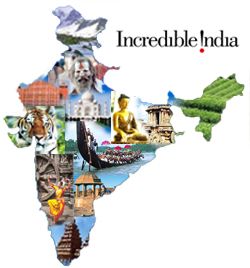
The country is so rich and diverse, both geogrphically and culturally starting with the Himalayas in the north to the Indian Ocean to the south, the deserts of the Thar and the Rann of Kutch in the west to the hilly terrain of the exotic north-east. There are 25 states, 7 Union Territories and is the second most populous country in the world, after China with an estimated population of 1.21 billion who speak more than 1365 rationalised mother tongues with 29 languages having more than a million native speakers each!

India’s cultural history spans over 4,500 years and the foundations of India’s main religion, Hinduism was laid down as between 3500 to 2500 years ago, when most of the western world was probably cavemen! Probably this is why India was the rich bird, ripe for plucking through the ages – from the Persians, Greeks, Mongols, Mughals, to finally the English, Portuguese and the French. A lot of India’s historically rich treasures were plundered and taken away by the conquerors (and never returned till date)

According to the International Monetary Fund (IMF), as of April 2015, the Indian economy is nominally worth US$2.306 trillion; it is the 7th-largest economy by market exchange rates, and is, at US$7.996 trillion, the third-largest by purchasing power parity, or PPP.

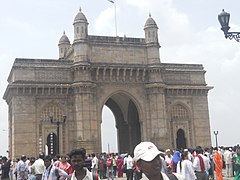
All this talk about India has now made me super nostalgic. I remember reading how the last of the British soldiers left India from the shores of the Gateway of India in Bombay, an edifice, which ironically was constructed in 1911 to commemorate the visit of King George V and Queen Mary

Ok, going to stop with this nostalgia with a tune that many of us, especially those who grew up in a certain era will recognize…..Mile Sur Tera Mera….the original plus the new version

Happy Birthday Singapore

Today Singapore celebrates 50 years of being independent. The festivities are all over the country and the Straits Times headlines yesterday was “The Celebrations Begin”!

In 1965, when Singapore was kicked out of the Federation of Malaya, mostly over political and economic differences, many wondered how Singapore would make it alone – a land with almost no natural resources, facing problems of severe unemployment, sanitation and housing, among others.

But Singapore has overcome all this and achieved so much in the last 50 years, it’s zoomed from first world to third world. We in Singapore, take this affluence for granted, sometimes being accused of being arrogant by our neighbours!

Singapore wanted to avoid the racial tensions of it’s neighbours and so racial harmony is something that’s pretty much enshrined in the way of life – so much that we take racial harmony for granted. Everything in Singapore is done in the four official languages of English, Chinese, Malay and Tamil. The national anthem is in Malay though as the Malays were the original inhabitants of the land.

To a lot of people, Singapore is seen as a part of China, and while3 it irritates residents, you can’t blame them, as the government policies seem to me to be a tad pro-China!

Also the Michael Fay caning incident makes a lot of Westerners think Singapore’s laws are draconian, but as a parent with young children, I guess I am happy to live in such a country where I don’t have to worry that my children will return home safe from school. Crime rates are low here and I can walk home late at night, using public transport, which is kind of impossible in many countries, both in the region and beyond!

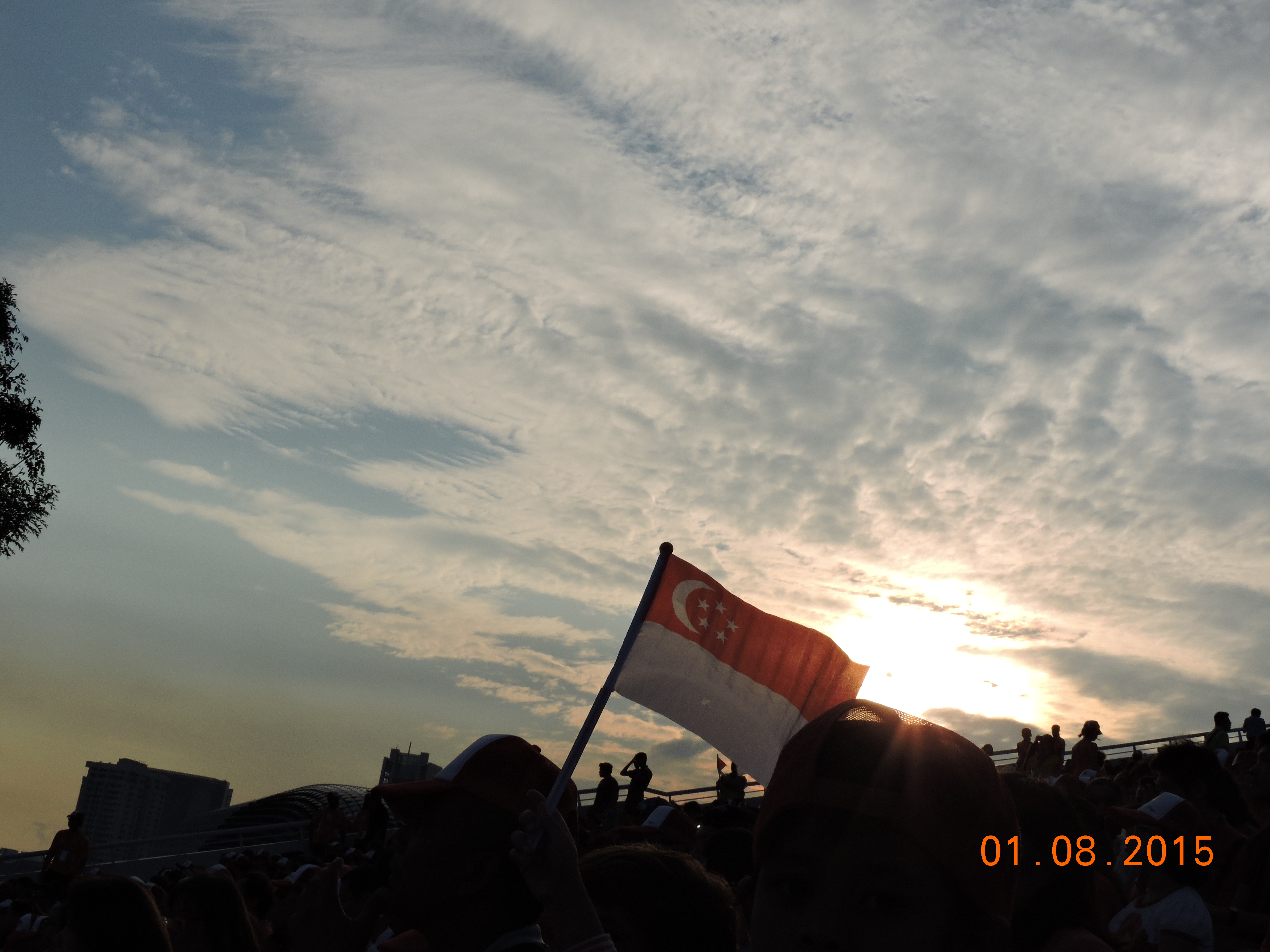
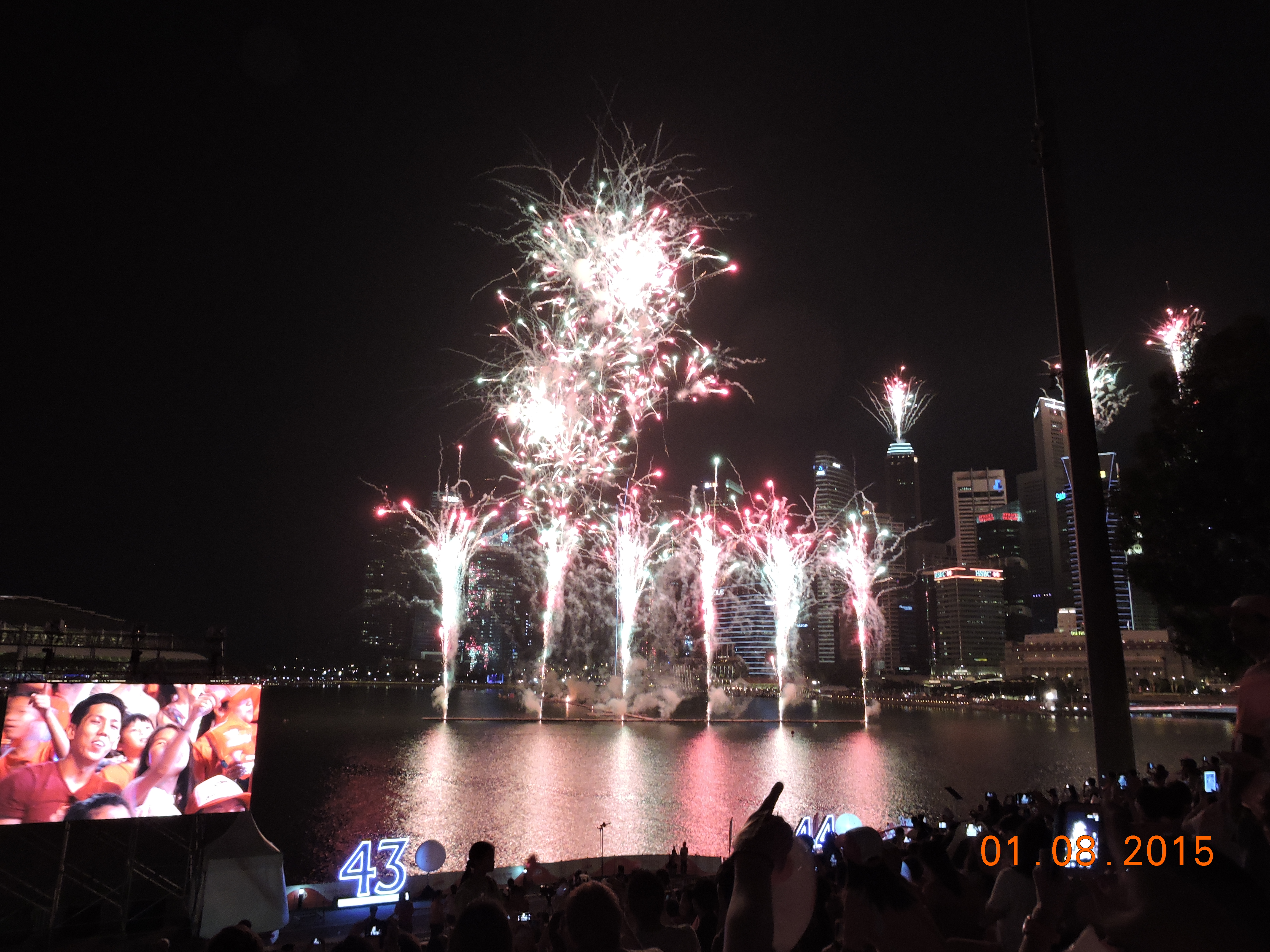
Ok, enough of talking, I am going to spam some more pictures which I took last week when we saw the National Day Preview.

DSCN3300 DSCN3314 DSCN3341 DSCN3378 DSCN3389

Leaving you with the national anthem of Singapore called Majulah Singapura or Onward Singapore. Singing it with everyone was electrifying!!

Happy Birthday Singapore! May you have many more like this….