In My Hands Today…

The Ride: Paul Revere and the Night That Saved America – Kostya Kennedy
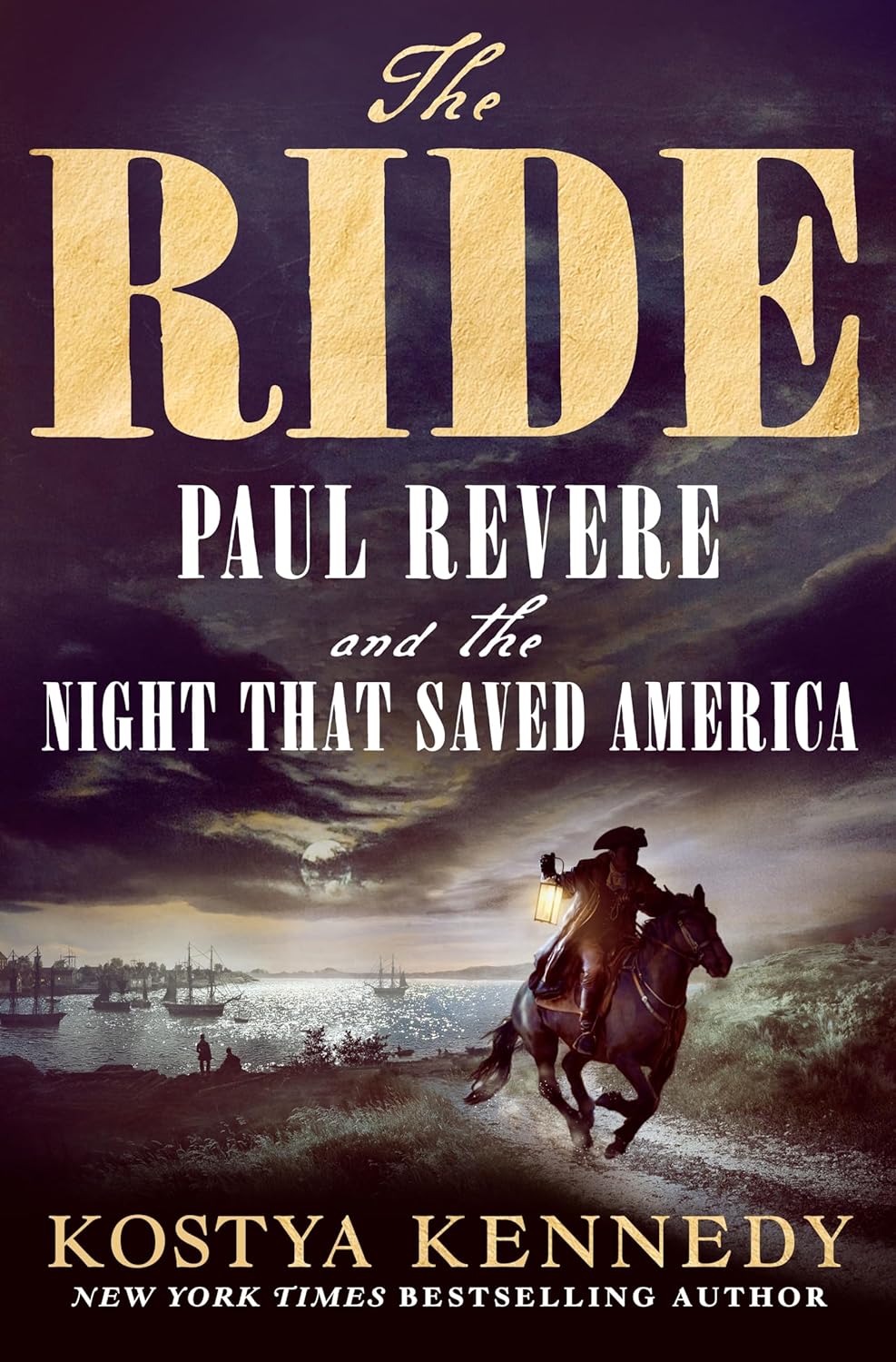
On April 18, 1775, a Boston-based silversmith, engraver, and anti-British political operative named Paul Revere set out on a borrowed horse to fulfill a dangerous but crucial task to alert American colonists of advancing British troops, which would seek to crush their nascent revolt. Revere was not the only rider that night, and indeed, he had completed at least 18 previous rides throughout New England, disseminating intelligence about British movements. But this ride was like no other, and its consequences in the months and years to come—as the American Revolution morphed from isolated skirmishes to a full-fledged war—became one of our founding legends.

In The Ride, Kostya Kennedy presents a dramatic new narrative of the events of April 18 and 19, 1775, informed by fresh primary and secondary source research into archives, family letters and diaries, contemporary accounts, and more. Kennedy reveals Revere’s ride to be more complex than it is usually portrayed—a coordinated series of rides by numerous men, near-disaster, capture by British forces, and finally success. While Revere was central to the ride and its plotting, Kennedy reveals the other men (and, perhaps, a woman with information about the movement of British forces) who helped to set in motion the events that would lead to America’s independence.

In My Hands Today…

Waste Wars: The Wild Afterlife of Your Trash – Alexander Clapp

Dumps and landfills around the world are overflowing. Disputes about what to do with the millions of tons of garbage generated every day have given rise to waste wars waged almost everywhere you look. Some are border skirmishes. Others hustle trash across thousands of miles and multiple oceans. But no matter the scale, one thing is true about almost all of few people have any idea they’re happening.

Journalist Alexander Clapp spent two years roaming five continents to report deep inside the world of Javanese recycling gangsters, cruise ship dismantlers in the Aegean, Tanzanian plastic pickers, whistle-blowing environmentalists throughout the jungles of Guatemala, and a community of Ghanaian boys who burn Western cellphones and televisions for cents an hour, to tell listeners what he has figured out: While some trash gets tossed onto roadsides or buried underground, much of it actually lives a secret hot potato second life, getting shipped, sold, re-sold, or smuggled from one country to another, often with devastating consequences for the poorest nations of the world.

Waste Wars is a jaw-dropping exposé of how and why, for the last forty years, our garbage—the stuff we deem so worthless we think nothing of throwing it away—has spawned a massive, globe-spanning, multi-billion-dollar economy, one that offloads our consumption footprints onto distant continents, pristine landscapes, and unsuspecting populations. If the handling of our trash reveals deeper truths about our Western society, what does the globalized business of garbage say about our world today? And what does it say about us?

In My Hands Today…

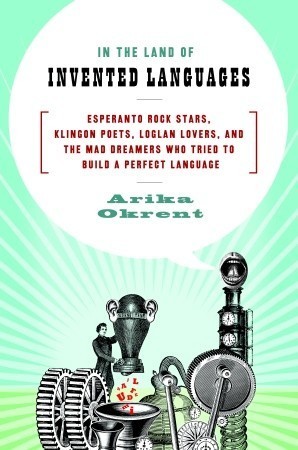
In the Land of Invented Languages: Esperanto Rock Stars, Klingon Poets, Loglan Lovers, and the Mad Dreamers Who Tried to Build a Perfect Language – Arika Okrent

Just about everyone has heard of Esperanto, which was nothing less than one man’s attempt to bring about world peace by means of linguistic solidarity. And every Star Trek fan knows about Klingon, which was nothing more than a television show’s attempt to create a tough-sounding language befitting a warrior race with ridged foreheads. But few people have heard of Babm, Blissymbolics, and the nearly nine hundred other invented languages that represent the hard work, high hopes, and full-blown delusions of so many misguided souls over the centuries.

In In The Land of Invented Languages, author Arika Okrent tells the fascinating and highly entertaining history of man’s enduring quest to build a better language. Peopled with charming eccentrics and exasperating megalomaniacs, the land of invented languages is a place where you can recite the Lord’s Prayer in John Wilkins’s Philosophical Language, say your wedding vows in Loglan, and read Alice’s Adventures in Wonderland in Lojban.

In My Hands Today…

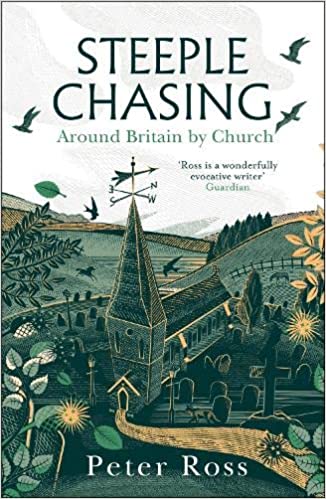
Steeple Chasing: Around Britain by Church – Peter Ross

Churches are all around us. Their steeples remain landmarks in our towns, villages and cities, even as their influence and authority has waned. They contain art and architectural wonders – one huge gallery scattered, like a handful of jewels, across these isles.

Award-winning writer Peter Ross sets out to tell their stories, and through them a story of Britain. Join him as he visits the unassuming Norfolk church which contains a disturbing secret, and London’s mighty cathedrals with their histories of fire and love. Meet cats and bats, monks and druids, angels of oak and steel.

Steeple Chasing, though it sometimes strikes an elegiac note, is a song of praise. It celebrates churches for their beauty and meaning, and for the tales they tell. It is about people as much as place, flesh and bone not just flint and stone. From the painted hells of Surrey to the holy wells of Wales, consider this a travel book . . . with bells on.

In My Hands Today…

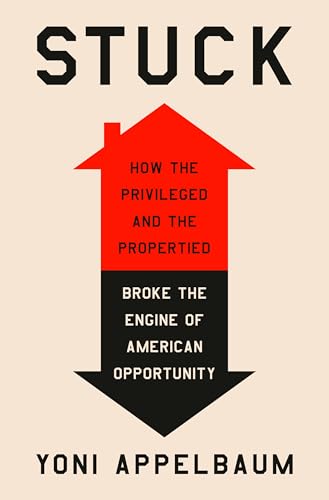
Stuck: How the Privileged and the Propertied Broke the Engine of American Opportunity – Yoni Appelbaum

How did America cease to be the land of opportunity?

We take it for granted that good neighbourhoods—with good schools and good housing—are only accessible to the wealthy. But in America, this wasn’t always the case.

Though for most of world history, your prospects were tied to where you were born, Americans came up with a revolutionary If you didn’t like your lot in life, you could find a better location and reinvent yourself there. Americans moved to new places with unprecedented frequency, and, for two hundred years, that remarkable mobility was the linchpin of American economic and social opportunity.

In this illuminating debut, Yoni Appelbaum, historian and journalist for The Atlantic, shows us that this idea has been under attack since reformers first developed zoning laws to ghettoize Chinese Americans in nineteenth-century Modesto, California. The century of legal segregation that ensued—from the zoning laws enacted to force Jewish workers back into New York’s Lower East Side to the private-sector discrimination and racist public policy that trapped Black families in Flint, Michigan to Jane Jacobs’ efforts to protect her vision of the West Village—has raised housing prices, deepened political divides, emboldened bigots, and trapped generations of people in poverty. Appelbaum shows us that these problems have a common people can’t move as readily as they used to. They are, in a word, stuck.

Cutting through more than a century of mythmaking, Stuck tells a vivid, surprising story of the people and ideas that caused our economic and social sclerosis and lays out common-sense ways to get Americans moving again.