

Yesterday marked the last day of the fasting month of Ramadan and today, billions of Muslims worldwide celebrate the festival of Eid al-Fitr.
Eid al-Fitr or the Feast of Breaking the Fast, is the earlier of the two official holidays celebrated within Islam, with the other being Eid al-Adha. This festival marks the end of the month-long dawn-to-sunset fasting of Ramadan and falls on the first day of Shawwal in the Islamic calendar. Because the Islamic calendar is lunar, the date of the festival changes every year. The start of the Hijri month varies based on when the new moon is sighted by local religious authorities. Also known as Ramzan Eid, the Lesser Eid, or simply Eid, Eid al-Fitr commemorates the end of the fasting month of Ramadan. An occasion for special prayers, family visits, gift-giving and charity, it takes place over one to three days, beginning on the first day of Shawwal, the 10th month in the Islamic calendar and is a day of joy as families get together after a month of austerity and fasting.
One of the five pillars of Islam, during the ninth month of the Islamic calendar, Ramadan, nearly all Muslims are required to fast from sunrise to sundown and abstain from smoking, drinking, including water and sexual activity during the daylight hours. Ramadan is the month in which the Prophet Muhammad received the teachings of the Quran, the Islamic holy book, as a guide for mankind and a means for judging between right and wrong. Fasting during Ramadan, known as Sawm, is one of the five pillars, the basic principles that are essential to the Islamic faith. Muslims observe Ramadan by reading the Quran, emphasising charity or zakat, abstaining from food and drink during daylight hours, and concentrating on prayer and study to increase their taqwa, or sacred consciousness. Fasting during Ramadan takes people out of their normal lifestyles and requires them to engage in solemn contemplation and examination. Experiencing hunger and thirst is supposed to heighten people’s awareness of the sufferings of the poor, and gain a greater appreciation for what they have.

After a month of prayer, devotion and self-control, Muslims celebrate the accomplishment of their sacred duties during Ramadan with the beginning of Eid al-Fitr, or the Festival of Breaking the Fast. The festival is a national holiday in many countries with large Muslim populations. Celebrations of Eid al-Fitr typically last for three days, one day fewer than those of Eid al-Adha. For this reason, Eid al-Fitr is often called Lesser or Smaller Eid. Eid al-Adha, known as Greater Eid, is seen as the more important holiday of the two.
Eid al-Fitr was originated by the Islamic prophet Muhammad. According to certain traditions, these festivals were initiated in Medina after the migration of Muhammad from Mecca. Anas, a well-known companion of the Islamic prophet, narrated that, when Muhammad arrived in Medina, he found people celebrating two specific days in which they entertained themselves with recreation and merriment. At this, Muhammad remarked that Allah had fixed two days of festivity: Eid al-Fitr and Eid al-Adha.
During Eid al-Fitr, Muslims take part in special morning prayers, greet each other with formal embraces and offer each other greetings of Eid Mubarak or Have a blessed Eid. They gather with family and friends, give games and gifts to children and prepare and eat special meals, including sweet dishes like baklava or Turkish delight in Turkey, date-filled pastries and cookies in Saudi Arabia and Iraq and bint al sahn or honey cake in Yemen.

Another of the five pillars of Islam is Zakat or giving to those in need. Muslims often prepare for Eid al-Fitr by giving money to charity so that less fortunate families can enjoy the festivities as well. In addition to charity, Muslims are also encouraged to give and seek forgiveness during Eid al-Fitr and look forward to the opportunity to fast again during Ramadan the following year.
Traditionally, Eid al-Fitr begins at sunset on the night of the first sighting of the crescent moon. If the moon is not observed immediately after the 29th day of the previous lunar month, either because clouds block its view or because the western sky is still too bright when the moon sets, then the holiday is celebrated the following day. Eid is celebrated for one to three days, depending on the country and it is forbidden to fast on the day of Eid, and a specific prayer is nominated for this day. As an obligatory act of charity, money is paid to the poor and the needy known as Zakat-ul-Fitr before performing the Eid prayer which is performed by the congregation in an open area such as a field, a community centre or a mosque. No call to prayer is given for this Eid prayer, and it consists of only two units of prayer, with a variable amount of Takbirs and other prayer elements depending on the branch of Islam observed. The Eid prayer is followed by the sermon and then a supplication asking for Allah’s forgiveness, mercy, peace and blessings for all living beings across the world. The sermon also instructs Muslims as to the performance of rituals of Eid, such as the zakat. The sermon of Eid takes place after the Eid prayer, unlike the Friday prayer which comes first before prayer with some imams believing that listening to the sermon at Eid is optional. After the prayers, Muslims visit their relatives, friends, and acquaintances or hold large communal celebrations in homes, community centres, or rented halls.
In India, Eid is a public holiday and the holiday begins after the sighting of the new moon on Chand Raat. On that evening, people head to markets to finish their shopping for Eid, for clothing and gifts and begin preparing their food for the next day. Traditional Eid food often includes biriyani, sheer khurma, and sevvaiyyan, a dish of fine, toasted sweet vermicelli noodles with milk and dried fruit, among other regionally-specific dishes. Women and girls also put henna in each others’ hands and the next morning, Muslims go to their local mosque for the Eid Namaz and give Eid zakat before returning home. Afterwards, children are given Eidi or cash gifts and friends and relatives visit each other’s homes to eat and celebrate. In Pakistan, this Eid is also known as Chhoti or Lesser Eid and is celebrated more or less like in India. At home, family members enjoy a special Eid breakfast with various types of sweets and desserts, including Kheer and the traditional dessert Sheer Khurma, which is made of vermicelli, milk, butter, dry fruits, and dates. Children also get cash gifts known as Eidi with the State Bank of Pakistan issuing fresh currency notes every year for this purpose.
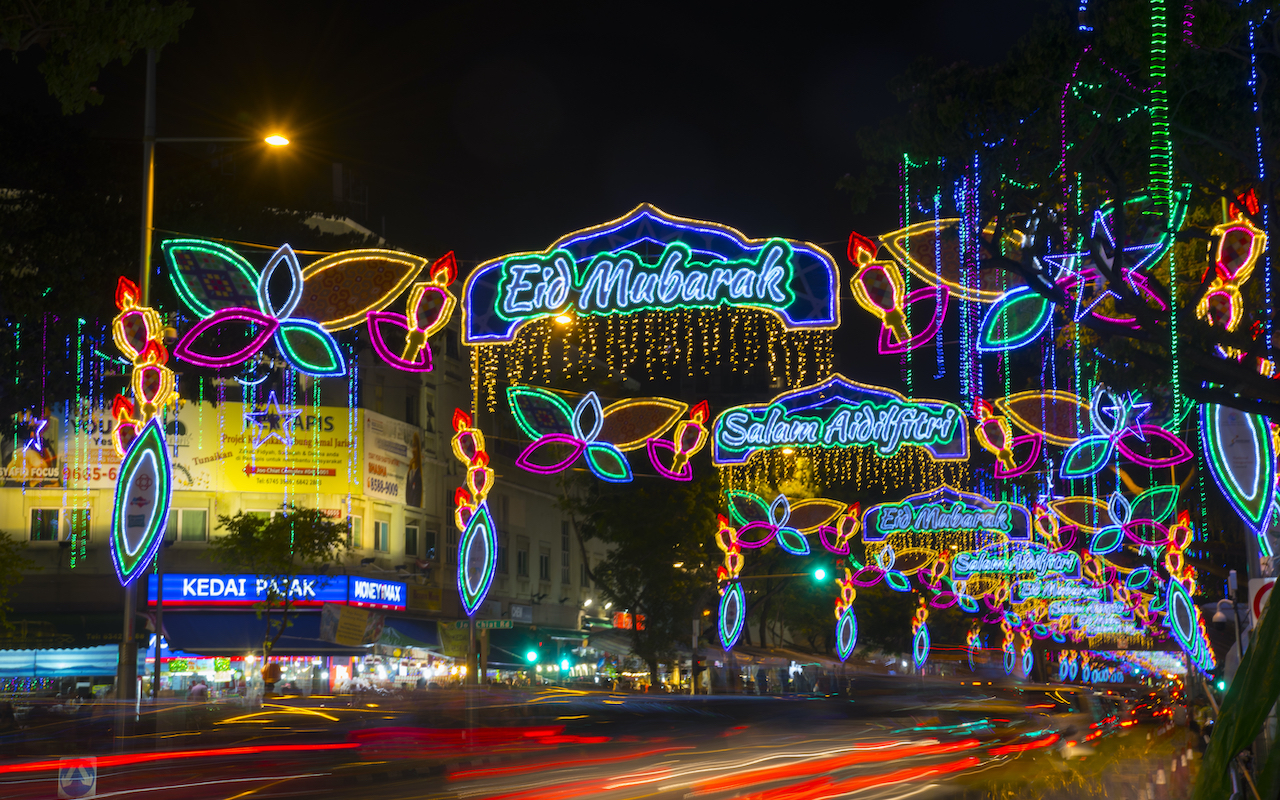
In Malaysia, Singapore, and Brunei, Eid is more commonly known as Hari Raya Aidilfitri, Hari Raya Idul Fitri, Hari Raya Puasa, Hari Raya Fitrah or Hari Lebaran where Hari Raya means a celebration day. It is customary for workers in the city to return to their home town to celebrate with their families and to ask forgiveness from parents, in-laws, and other elders. This is known in Malaysia as balik kampung or homecoming. The night before Hari Raya is filled with the sounds of takbir in the mosques or musallahs. In many parts of Malaysia, especially in the rural areas, pelita, panjut or lampu colok which are oil lamps, similar to tiki torches are lit up and placed outside and around homes. Special dishes like ketupat, rendang, lemang which is a type of glutinous rice cooked in bamboo and other Malay delicacies such as various kuih-muih are served during this day. It is common to greet people with Salam Aidilfitri or Selamat Hari Raya which means Happy Eid. Muslims also greet one another with maaf zahir dan batin, which asks to forgive their physical and emotional wrongdoings. In Singapore and Malaysia, especially in the major cities, people take turns to set aside a time for an open house when they stay at home to receive and entertain neighbours, family and other visitors. It is common to see non-Muslims made welcome during Eid at these open houses. Children are given token sums of money, also known as Duit Raya, from their parents or elders.
To everyone celebrating Eid, Eid Mubarak and Selamat Hari Raya Adilfitri!


 Memories and Such