STFU: The Power of Keeping Your Mouth Shut in an Endlessly Noisy World – Dan Lyons
Our noisy world has trained us to think that those who get in the last word win, when in fact it’s those who know how to stay silent who really hold the power.
STFU is a book that unlocks this power and will change your life, freeing you to focus on what matters. Lyons combines leading behavioral science with actionable advice on how to communicate with intent, think critically, and open your mind and ears to the world around you. Talk less, get more.
That’s what STFU is all about. Prescriptive, informative, and addictively readable, STFU gives you the tools to become your better self, whether that’s in the office, at home, online, or in your most treasured relationships. Because, after all, what you say is who you are.
Sickened: The Memoir of a Munchausen by Proxy Childhood – Julie Gregory
A young girl is perched on the cold chrome of yet another doctor’s examining table, missing yet another day of school. Just twelve, she’s tall, skinny, and weak. It’s four o’clock, and she hasn’t been allowed to eat anything all day. Her mother, on the other hand, seems curiously excited. She’s about to suggest open-heart surgery on her child to “get to the bottom of this.” She checks her teeth for lipstick and, as the doctor enters, shoots the girl a warning glance. This child will not ruin her plans.
From early childhood, Julie Gregory was continually X-rayed, medicated, and operated on—in the vain pursuit of an illness that was created in her mother’s mind. Munchausen by proxy (MBP) is the world’s most hidden and dangerous form of child abuse, in which the caretaker—almost always the mother—invents or induces symptoms in her child because she craves the attention of medical professionals. Many MBP children die, but Julie Gregory not only survived, she escaped the powerful orbit of her mother’s madness and rebuilt her identity as a vibrant, healthy young woman.
Sickened is a remarkable memoir that speaks in an original and distinctive Midwestern voice, rising to indelible scenes in prose of scathing beauty and fierce humor. Punctuated with Julie’s actual medical records, it re-creates the bizarre cocoon of her family’s isolated double-wide trailer, their wild shopping sprees and gun-waving confrontations, the astonishing naïveté of medical professionals and social workers. It also exposes the twisted bonds of terror and love that roped Julie’s family together—including the love that made a child willing to sacrifice herself to win her mother’s happiness.
The realization that the sickness lay in her mother, not in herself, would not come to Julie until adulthood. But when it did, it would strike like lightning. Through her painful metamorphosis, she discovered the courage to save her own life—and, ultimately, the life of the girl her mother had found to replace her. Sickened takes us to new places in the human heart and spirit. It is an unforgettable story, unforgettably told.
Stolen Focus: Why You Can’t Pay Attention- and How to Think Deeply Again – Johann Hari
In the United States, teenagers can focus on one task for only sixty-five seconds at a time, and office workers average only three minutes. Like so many of us, Johann Hari was finding that constantly switching from device to device and tab to tab was a diminishing and depressing way to live. He tried all sorts of self-help solutions–even abandoning his phone for three months–but nothing seemed to work. So Hari went on an epic journey across the world to interview the leading experts on human attention–and he discovered that everything we think we know about this crisis is wrong.
We think our inability to focus is a personal failure to exert enough willpower over our devices. The truth is even more disturbing: our focus has been stolen by powerful external forces that have left us uniquely vulnerable to corporations determined to raid our attention for profit. Hari found that there are twelve deep causes of this crisis, from the decline of mind-wandering to rising pollution, all of which have robbed some of our attention. In Stolen Focus, he introduces readers to Silicon Valley dissidents who learned to hack human attention, and veterinarians who diagnose dogs with ADHD. He explores a favela in Rio de Janeiro where everyone lost their attention in a particularly surreal way, and an office in New Zealand that discovered a remarkable technique to restore workers’ productivity.
Crucially, Hari learned how we can reclaim our focus–as individuals, and as a society–if we are determined to fight for it. Stolen Focus will transform the debate about attention and finally show us how to get it back.
After my poem on the same topic, I became inspired to write more about Self Discovery.
Self-discovery is the process of understanding one’s true self and is a journey that we all undertake at some point in our lives. It’s the process of getting to know oneself, including values, beliefs, strengths, weaknesses, and one’s purpose in life. Self-discovery can be a difficult process, but it’s worth taking because it can lead to a more fulfilling and purposeful life. Going deeper into self-discovery can transform your life. True self-discovery starts when one evaluates their life and thinks about what’s energising and what’s not, what will bring more joy into their life and probably the most important question, what inspires one to jump out of bed each morning.
So what exactly is Self-Discovery? Self-discovery is the process of exploring and understanding who one is as a person. It involves gaining insight into their thoughts, emotions, behaviours, and motivations. It’s a process of introspection that can help one understand what makes them unique, what drives them, and what they want to achieve in life.
Self-discovery is not a one-time event. It’s an ongoing process that can continue throughout their life. As one grows and evolves, their understanding of themselves will also change. Self-discovery is about staying curious and open to learning about oneself and the world around them. Self-discovery needs courage and resilience to stick with the process and in the process of looking inward, one may learn things about themselves that one finds hard to accept. Discovering the inner self also requires lots of self-awareness, otherwise known as self-knowledge. Self-knowledge usually refers to their knowledge of their feelings, beliefs, and desires. If one has more of this in their life, they’ll have better emotional regulation and this helps them better their personal and work relationships and improve stress management. Knowing more about the way the mind works also improves empathy, helps exercise better self-control, be more creative, and have higher self-esteem. One also becomes more honest as a result.
Why is Self-Discovery Important? Self-discovery is important for several reasons. Firstly, it can help understand one’s own needs and desires. When one knows themselves well, one can make decisions that are aligned with their values and goals, leading to greater fulfilment and happiness in life. Secondly, self-discovery can help to develop a sense of purpose. When one understands their strengths and weaknesses, one can identify areas where one can make a meaningful contribution, giving life direction and meaning. Lastly, self-discovery can help build better relationships. When one understands themself, one can also understand others better. This can lead to more empathy, better communication, and stronger connections with the people around them.
When one cannot live in alignment with their true self, one must spend energy attempting to deny and distort one’s experiences to make sense of a pervasive lack of happiness and personal fulfilment. According to experts, this ongoing effort can go so far as to produce psychological states and conditions such as depression. The goal in life should not be to pursue imagined or externally derived ideals, but rather to develop a more realistic understanding of one’s strengths and limitations. By doing so, one can avoid negative psychological states and self-actualise, feel contentment, and make better contributions to the world. This is why self-discovery is so important.
How to Embark on a Self-Discovery Journey? Embarking on a self-discovery journey can be a daunting task, but it’s worth taking. Here are some steps one can take to get started:
Reflect on life experiences: The first step in self-discovery is to reflect on one’s life experiences. Think about the things that have shaped one as a person. What were the defining moments? What were the biggest challenges and what did one learn from these experiences? Reflecting on one’s life experiences can help one understand their values and beliefs. It can also help identify patterns in their behaviour that may be holding them back.
Identify strengths and weaknesses: Identifying one’s strengths and weaknesses is an important part of self-discovery. One’s strengths are the things that come naturally, while weaknesses are the areas where one needs to improve. Understanding one’s strengths and weaknesses can help one identify areas where one can excel. It can also help identify areas where one needs to work on themself.
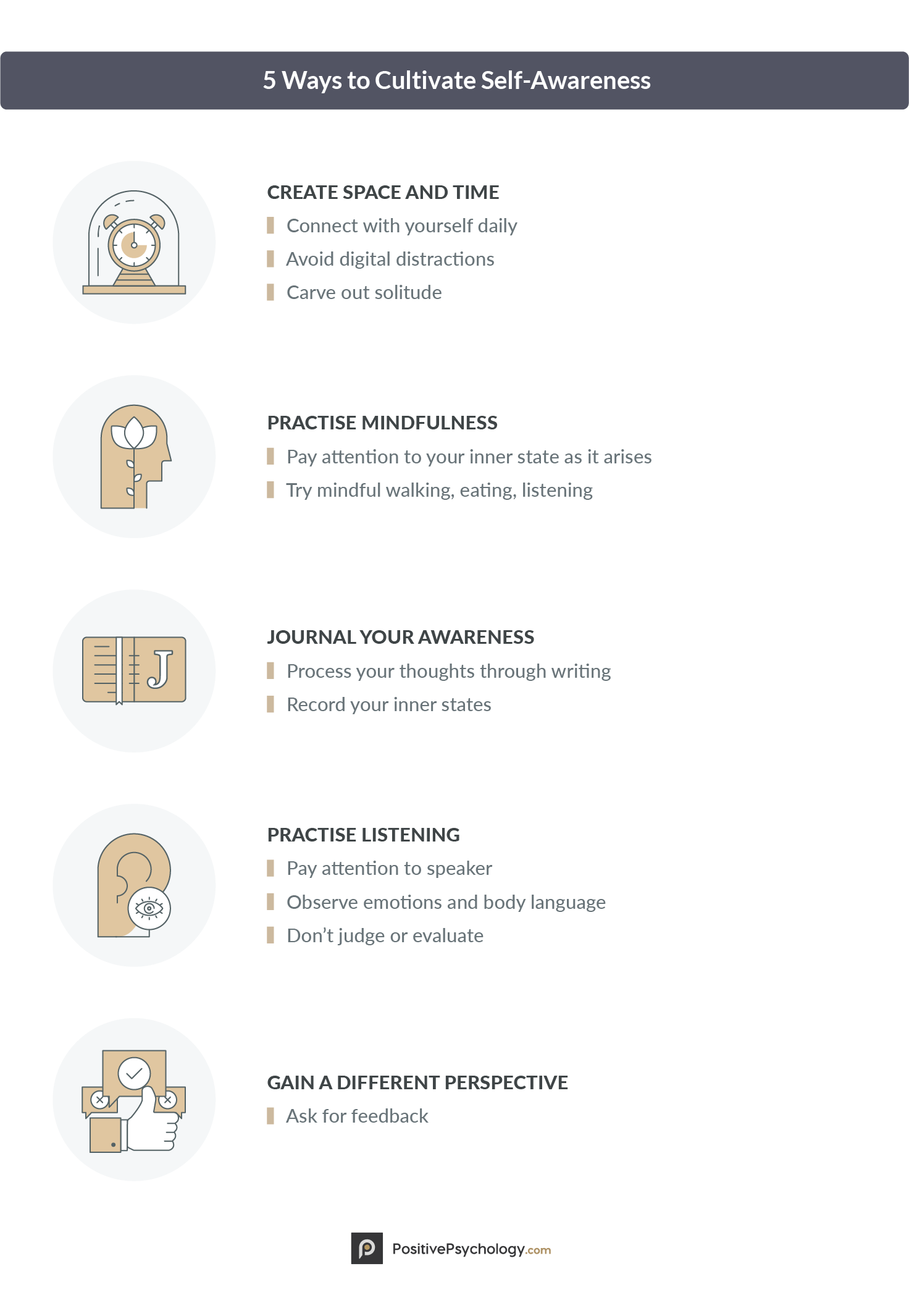
Practice mindfulness: Mindfulness is the practice of being present and aware of the moment. It involves paying attention to thoughts, emotions, and physical sensations without judgment. Practising mindfulness can help one become more aware of their thoughts and emotions. This can help identify patterns in one’s behaviour that may be holding one back.
Try new things: Trying new things is an important part of self-discovery. It can help one step out of their comfort zone and discover new things about themself. Trying new things can be as simple as taking a different route to work or trying a new hobby. It can also involve travelling to a new place or learning a new skill.
Seek feedback from others: Seeking feedback from others can be a valuable part of self-discovery. Other people can often see things that they can’t see in themselves. One can ask friends, family, or colleagues for feedback on their strengths.
So, start working on the road to self-discovery and work to be the best self each day, no matter what. Take risks and try new things. Self-discovery is a journey that can lead to a more fulfilling and purposeful life. It involves gaining insight into one’s thoughts, emotions, behaviours, and motivations. The process of self-discovery is ongoing and can continue throughout one’s entire life. It’s important to reflect on one’s life experiences, identify one’s strengths and weaknesses, practice mindfulness, try new things, and seek feedback from others. By taking these steps, one can gain a better understanding of themselves, their values, and purpose in life. Remember, self-discovery is a process that requires patience, curiosity, and openness to learning. The journey may be difficult, but it’s worth taking because it can lead to a more fulfilling and meaningful life.
You Are a Badass: How to Stop Doubting Your Greatness and Start Living an Awesome Life – Jen Sincero
In this refreshingly entertaining how-to guide, #1 New York Times Bestselling Author and world-traveling success coach, Jen Sincero, serves up 27 bite-sized chapters full of hilariously inspiring stories, sage advice, easy exercises, and the occasional swear word. If you’re ready to make some serious changes around here, You Are a Badass will help you: Identify and change the self-sabotaging beliefs and behaviors that stop you from getting what you want, blast past your fears so you can take big exciting risks, figure out how to make some damn money already, learn to love yourself and others, set big goals and reach them – it will basically show you how to create a life you totally love, and how to create it now.
By the end of You Are a Badass, you’ll understand why you are how you are, how to love what you can’t change, how to change what you don’t love, and how to use The Force to kick some serious ass.