You’re Not Listening: What You’re Missing and Why It Matters – Kate Murphy
At work, we’re taught to lead the conversation. On social media, we shape our personal narratives. At parties, we talk over one another. So do our politicians. We’re not listening. And no one is listening to us.
Despite living in a world where technology allows constant digital communication and opportunities to connect, it seems no one is really listening or even knows how. And it’s making us lonelier, more isolated, and less tolerant than ever before. A listener by trade, New York Times contributor Kate Murphy wanted to know how we got here.
In this always illuminating and often humorous deep dive, Murphy explains why we’re not listening, what it’s doing to us, and how we can reverse the trend. She makes accessible the psychology, neuroscience, and sociology of listening while also introducing us to some of the best listeners out there (including a CIA agent, focus group moderator, bartender, radio producer, and top furniture salesman). It’s time to stop talking and start listening.
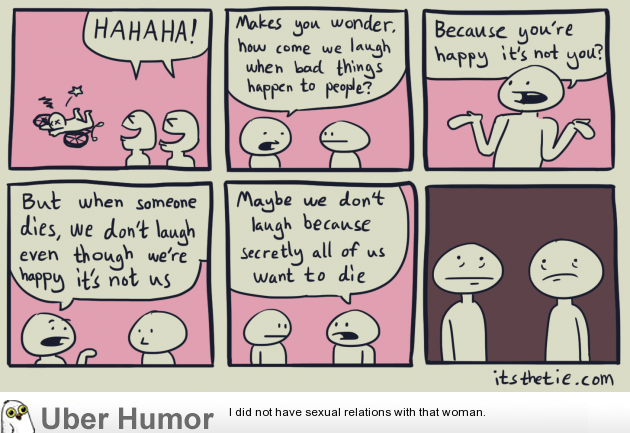
The Japanese have a saying: “The misfortune of others tastes like honey.” The philosopher Arthur Schopenhauer called schadenfreude “an infallible sign of a thoroughly bad heart and profound moral worthlessness”, the worst trait in human nature.
We all feel happy when our favourite team wins and gloat at the other team. In an India-Pakistan cricket match, when India wins, you usually get to hear and see crackers burst with loats of gloating and I am sure it is pretty much the same on the other side when India loses a match.
There is a word for this feeling – a German word, schadenfreude which literally translates to harm-joy and is the experience of pleasure, joy, or self-satisfaction that comes from learning of or witnessing the troubles, failures, or humiliation of another. Schadenfreude is a complex emotion where, rather than feeling sympathy, one takes pleasure from watching someone’s misfortune. This emotion is displayed more in children than adults, but adults also experience schadenfreude, although generally we are able to conceal it.
I read about this word and was absolutely fascinated by it. So I decided to read up more about and the meaning behind the word.
As human beings, we know how to enjoy failures. Enjoying other people’s misfortunes might sound simple – a mere glint of malice, a flick of spite. But look closer and you’ll glimpse some of the most hidden yet important parts of our lives. We feel a sense of glee at someone’s incompetence, a self-righteous satisfaction when hypocrites are exposed and the inner triumph of seeing a rival falter. Sometimes it is easy to share our delight, but far harder to acknowledge are those spasms of relief which accompany the bad news of our successful friends and relatives. They come involuntarily, these confusing bursts of pleasure, swirled through with shame. And they worry us – not just because we fear that our lack of compassion says something terrible about us – because they point so clearly to our envy and inferiority, and how we clutch at the disappointments of others in order to feel better about our own.
Researchers have found that there are three driving forces behind schadenfreude: aggression, rivalry, and social justice. Self-esteem has a negative relationship with the frequency and intensity of schadenfreude experienced by an individual; individuals with less self-esteem tend to experience schadenfreude more frequently and intensely. The reverse also holds true—those with higher self-esteem experience schadenfreude less frequently or with less emotional intensity. It is hypothesised that this inverse relationship is mediated through the human psychological inclination to define and protect their self – and in-group identity or self-conception.
Specifically, for someone with high self-esteem, seeing another person fail may still bring them a small, but effectively negligible surge of confidence because the observer’s high self-esteem significantly lowers the threat they believe the visibly-failing human poses to their status or identity. Since this confident individual perceives that, regardless of circumstances, the successes and failures of the other person will have little impact on their own status or well-being, they have very little emotional investment in how the other person fares, be it positive or negative. Conversely, for someone with low self-esteem, someone who is more successful poses a threat to their sense of self, and seeing this mighty person fall can be a source of comfort because they perceive a relative improvement in their internal or in-group standing.
Aggression-based schadenfreude primarily involves group identity. The joy of observing the suffering of others comes from the observer’s feeling that the other’s failure represents an improvement or validation of their own group’s (in-group) status in relation to external (out-groups) groups. This is, essentially, schadenfreude based on group versus group status. Rivalry-based schadenfreude is individualistic and related to interpersonal competition and arises from a desire to stand out from and out-perform one’s peers. This is schadenfreude based on another person’s misfortune eliciting pleasure because the observer now feels better about their personal identity and self-worth, instead of their group identity. Justice-based schadenfreude comes from seeing that behavior seen as immoral or bad is punished. It is the pleasure associated with seeing a bad person being harmed or receiving retribution and schadenfreude is experienced because it makes people feel that fairness has been restored for a previously un-punished wrong.
Today schadenfreude is all around us. It’s there in the way we do and view politics, how we treat celebrities, in online fail videos. Today it is probably easily felt and shared compared to earlier times. Most of us have a sense of unease while experiencing schadenfreude, but we squash it down firmly while enjoying yet another article or video about the failure of someone else, and if it is someone we don’t know, like a politician or celebrity, it somehow makes it ok. And if the suffering is because of something they said or did and is a comeuppance, it makes us feel justified as if they deserved whatever happened to them. But what about when we misjudge people? Those are the times our schadenfreude leaves feeling ackward and slightly upset at ourselves.
There has been an explosion of research. Before 2000, barely any academic articles were published with the word schadenfreude in their title, but now even a cursory search throws up hundreds, from neuroscience to philosophy to management studies. What is driving all this interest? No doubt it is partly motivated by our attempts to understand life in the internet age, where sniggering at other people, once often socially inappropriate, now comes with less risk. But could it also be that we are becoming more empathic? The capacity to attune ourselves to other people’s suffering is highly prized today, and rightly so. Putting ourselves in another’s shoes impacts on our ability to lead others, to parent, to be a decent partner and friend. And the more important empathy becomes, the more obnoxious schadenfreude seems. Schadenfreude has been called empathy’s shadow, casting the two as fundamentally incompatible. According to psychologist Simon Baron-Cohen, psychopaths are not only detached from other people’s suffering but even enjoy it. Yet schadenfreude has its benefits – a quick win which alleviates inferiority or envy; a way of bonding over the failure of a smug colleague. But it is also a testament to our capacity for emotional flexibility, our ability to hold apparently contradictory thoughts and feelings in mind simultaneously.
Living in an age of schadenfreude, we fear that this emotion can lead us astray and we really need to think with a different perspective about what this much-maligned emotion does for us, and what it tells us about our relationships with ourselves and each other.
Exquisite, evocative and judgemental, schadenfreude is an inherent flaw in the human psyche, but it is a flaw we all must face up to and learn to live with if we truly want to understand life in the modern world.
The secret of health for both mind and body is not to mourn for the past, worry about the future, or anticipate troubles, but to live in the present moment wisely and earnestly. – The Buddha
We’ve heard this before that instead of looking backwards or forwards, we should live in today. But is that something that is easy to do, especially in today’s fast-paced world, where you have so many demands on your life and time? There’s always something coming up that we need to prepare for or anticipate, and our lives are so well-documented that it’s never been easier to get lost in the past. Given the fast pace and hectic schedules most of us keep, a base level of anxiety, stress, and unhappiness is the new norm. We may not even realise it, but this tendency to get sucked into the past and the future can leave us perpetually worn out and feeling out of touch with ourselves.
The cure for this condition is what so many people have been saying all along – conscious awareness and a commitment to staying in the “now.” Living in the present moment is the solution to a problem we may not have known we had. But what does it actually mean to “live in the present moment?” How could we be living in anything but the present?
Living in the present is not just an arbitrary term or a popular phrase—it’s a recognised and evidence-backed lifestyle that psychologists are quick to recommend for those struggling with anxiety and stress in their day-to-day life. Being in the present moment, or the “here and now,” means that we are aware and mindful of what is happening at this very moment. We are not distracted by ruminations on the past or worries about the future, but centered in the here and now. All of our attention is focused on the present moment.
Why is being present minded so important? Being present minded is the key to staying healthy and happy. It helps us fight anxiety, cut down on our worrying and rumination, and keeps us grounded and connected to ourselves and everything around us. Although it has become a popular topic in recent years, living in the present is not just a fad or trendy lifestyle tip, it is a way of life that is backed up by good science. Being present and exerting our ability to be mindful not only makes us happier, it can also help us deal with pain more effectively, reduce our stress and decrease its impact on our health, and improve our ability to cope with negative emotions like fear and anger.
Living in the now is so difficult because we are always encouraged to think about the future or dwell on our past. Advertisements, reminders, notifications, messages, and alerts are all so often geared towards the past or the future. Think about how often we are busy doing something else, perhaps even fully engrossed in it, when we are jolted out of our flow by our phone’s sudden “ding!” Our phones are incredible pieces of technology that allow us to do so much more and do it so much more efficiently than ever before, but we really need to take a break from our phones at least once in a while. Other factors that contribute to our inability to live in the now include the fact that we often edit out the bad parts of our experiences, making our past seem more enjoyable than it really was, we face a lot of uncertainty when we live in the present, which can cause anxiety and our minds simply tend to wander! It can be tough fighting these factors, but luckily we are not slaves to the tendencies of our brains and it is possible to overcome our more destructive or harmful urges and make better choices.
We need to have a balancing act between the past, present, and the future. We need to look back over our past successes and mistakes and learn from them and be planned for the future or prepare ourselves for what is to come.
It’s essential when we want to a healthy life to spend some time thinking about the past and the future, but it’s rare that we don’t think enough about the past or the future—usually our problem is focusing too intently, or even obsessively on the past or the future.
One of the aims of mindfulness and a key factor in living a healthy life is to balance your thoughts of the past, the present, and the future. Thinking about any of them too much can have serious negative effects on our lives, but keeping the three in balance will help us to be happy and healthy people. It’s hard to say what the exact right balance is, but we will know we’ve hit that when we worry less, experience less stress on a regular basis, and find ourselves living the majority of our life in the present. So how do we ensure we get to this healthy balance? Here are some guidelines to keep in mind. Think about the past in small doses, and make sure we are focusing on the past for a reason, perhaps to relive a pleasant experience, or maybe identify where we went wrong, or figure out the key to a past success. We should think about the future in small doses, and make sure we are focusing on the future in a healthy, low-anxiety way which means we don’t spend time worrying about the future and think about the future just long enough to prepare for it and then move on. And lastly, we need to stay in the present moment for the vast majority of our time. It’s easy for me put these down here and I also struggle, but if we keep doing this, we will get better with practice.
So how can we live in the moment, but also plan for our future? It may seem complicated to figure out this delicate balance, but it’s not as complex as it seems. When we engage in mindfulness or present moment meditation, we are not ignoring or denying thoughts of the past or future, we are simply choosing not to dwell on them. It’s okay to acknowledge and label our past and future-focused thoughts, categorise them, and be aware of their importance. The important point is to not allow yourself to get swept up in thinking about the past or future. When we are aware and present, we don’t need to worry about getting caught up in thoughts of our past or anxiety about our future—we can revisit our past and anticipate what is to come without losing ourselves.
Present moment awareness is a great way to cut down on how much you worry. The following six steps will help us become more attuned to the present and rid ourselves of excess anxiety. We should cultivate unselfconsciousness and let go and stop thinking about our performance. We must practice the art of savouring which means avoid worrying about the future by fully experiencing the present. Another step is to focus on our breath and allow mindfulness to make us more peaceful and smooth our interactions with others. And then find our flow and make the most of our time by losing track of it. We should also improve our ability to accept, move toward what is bothering us rather than denying or running away from it. Lastly we should enhance our engagement and work on reducing moments of mindlessness and noticing new things to improve our mindfulness.
For yoga practitioner, it is an excellent way to get connected to the present and stay in the moment. Yoga has many reasons that it is helpful for mindfulness, but one of the biggest is certainly the focus on the breath. However, for people like me, who are yoga-challenged, I believe that breath control and meditation helps in the pretty much the same way. Set aside some time every day, preferably in the mornings and meditate. It is not an instant cure, I will be honest. I used to meditate on and off previously, but since about April this year, I have start meditating seriously and it has taken me about six months for me to actually see results. I feel I am now more aware and also less stressed and things that used to cause me anxiety and stress have actually reduced. The best thing, I have started not worrying about things that don’t really matter and have started to beome non-judgemental and disengage myself from stressful situations which earlier used to make me spend hours worrying about.
I have found five execises which help to strengthen present moment awareness. The first is a mindful body scan, which I love and try to do at least twice a day, once in the morning to energise me and the second in the evening to help me relax. So how do we do a body scan? Sit or lie down and take a few deep, mindful breaths. Notice the way the breath enters and exits our lungs. Starting with your toes, focus the attention on one part of the body at a time. Pay attention to how that area is feeling and notice any sensations that are being experienced. After a few moments of focused attention, move up to the next part of your body, so from the toes to the feet to the calves, abdomen etc. If you are doing a body scan to relax, start from the top of your head and work your way downwards. Not only is a good method for putting you in a mindful state right off the bat, it can also help you notice when your body is feeling differently than normal. You might catch an injury or illness that you wouldn’t normally notice, just by taking a few minutes each morning to scan your body.
Another good exercise that can help set the right mindful tone for the day is to write in a journal. I have spoken about this previously and I like to use Google Docs for this as this allows me to sync the page across my different digital devices. For a more mindful day, when you start your day, take a few minutes and make an entry and write what is in your mind and clear it. Journaling like this allows us to remove all the thoughts from our heads and allow us to relax. The best thing, at least for me, is that these pages are very confidential and nobody other than me can access it. A physical book on the other hand, may land in hands you would rather not read what you have written. You can also visualise your goals which will make it more likely that they will be followed through and become mindful on a more regular basis. I like using project management tools to track my tasks for a week and when I check them off, it is a wonderful feeling. And when I finish my weekly tasks before Sunday, it is a serious high! People also say that taking a mindful walk among nature is a good way to cultivate mindfulness. Just engage all your senses and stay aware of what’s happening both around you and within you, be intentional with your awareness; notice your feet hitting the ground with each step, see everything there is to see around you, open your ears to all the sounds surrounding you, feel each inhale and exhale, and just generally be aware of what is happening in each moment. Lastly before you end your day, take a few minutes and review your day. Think back to the start of the day and remember your mindfulness exercise that kicked it all off. Think about how it made you feel. Think through the rest of your day, being sure to note any particularly mindful moments or memorable events. Take stock of your mood as you moved through your daily routine and end your day on the right note.
You can become mindful at any moment just by paying attention to your immediate experience. You can do it right now. What’s happening this instant? Think of yourself as an eternal witness, and just observe the moment. What do you see, hear, smell? It doesn’t matter how it feels—pleasant or unpleasant, good or bad—you roll with it because it’s what’s present; you’re not judging it. And if you notice your mind wandering, bring yourself back. Just say to yourself, “Now. Now. Now.”
Here’s the most fundamental paradox of all: Mindfulness isn’t a goal, because goals are about the future, but you do have to set the intention of paying attention to what’s happening at the present moment. Become aware of being alive. And breathe. As you draw your next breath, focus on the rise of your abdomen on the in-breath, the stream of heat through your nostrils on the out-breath. If you’re aware of that feeling right now, as you’re reading this, you’re living in the moment. Nothing happens next. It’s not a destination. This is it. You’re already there.
Negativity bias, also known as the negativity effect, is the notion that, even when of equal intensity, things of a more negative nature such as unpleasant thoughts, emotions, or social interactions and harmful or traumatic events have a greater effect on one’s psychological state and processes than neutral or positive things. In other words, something very positive will generally have less of an impact on a person’s behavior and cognition than something equally emotional but negative. We even tend to focus on the negative even when the negative experiences are insignificant or inconsequential. This is why we remember more of the bad or negative things that happened in your life rather than the good or positive things.
Negative experiences tend to affect people more than positive ones. A 2010 article published by the University of California, Berkeley quotes psychologist Rick Hanson, “The mind is like Velcro for negative experiences and Teflon for positive ones.” According to Hanson, a negativity bias has been built into our brains based on millions of years of evolution when it comes to dealing with threats. Our ancestors lived in difficult environments. They had to gather food while avoiding deadly obstacles. Noticing, reacting to, and remembering predators and natural hazards (negative) became more important than finding food (positive). Those who avoided the negative situations passed on their genes.
The negative bias is our tendency not only to register negative stimuli more readily but also to dwell on these events. Also known as positive-negative asymmetry, this negativity bias means that we feel the sting of a rebuke more powerfully than we feel the joy of praise.
This psychological phenomenon explains why bad first impressions can be so difficult to overcome and why past traumas can have such long lingering effects. In almost any interaction, we are more likely to notice negative things and later remember them more vividly. As humans, we tend to remember traumatic experiences better than positive ones, recall insults better than praise, react more strongly to negative stimuli, think about negative things more frequently than positive ones and respond more strongly to negative events than to equally positive ones.
Psychologists Paul Rozin and Edward Royzman proposed four elements of the negativity bias in order to explain its manifestation: negative potency, steeper negative gradients, negativity dominance, and negative differentiation. Negative potency refers to the notion that, while possibly of equal magnitude or emotionality, negative and positive items/events/etc. are not equally salient. With respect to positive and negative gradients, it appears to be the case that negative events are thought to be perceived as increasingly more negative than positive events are increasingly positive the closer one gets to the affective event itself. In other words, there is a steeper negative gradient than positive gradient. Negativity dominance describes the tendency for the combination of positive and negative events to skew towards an overall more negative interpretation than would be suggested by the summation of the individual positive and negative components. Phrasing in more Gestalt-friendly terms, the whole is more negative than the sum of its parts. Negative differentiation is consistent with evidence suggesting that the conceptualization of negativity is more elaborate and complex than that of positivity.
One of the ways negativity bias is evident is that people are risk averse. People tend to guard against losses by giving greater significance to even small probabilities. The negative feelings from losing $50 are stronger than the positive feelings of finding $50. In fact, people will commonly work harder to avoid losing $50 than they will to gain $50. While humans may not need to be on constant high alert for survival like our ancestors, negative bias can still affect how we act, react, feel, and think. For example, an older research points out that when people make decisions, they put greater importance on the negative event aspects than on the positive. This can affect choices and willingness to take risks.
According to a 2014 article, negativity bias can also be found in political ideology. Conservatives tend to have stronger physiological responses and devote more psychological resources to negatives than liberals do. Also, in an election, voters are more likely to cast their vote for a candidate based on negative information about their opponent as opposed to their candidate’s personal merits.
Psychological research suggests that the negative bias influences motivation to complete a task. People have less motivation when an incentive is framed as a means to gain something than when the same incentive will help them avoid the loss of something. This can play a role in your motivation to pursue a goal. Rather than focusing on what you will gain if you keep working toward something, you’re more likely to dwell on what you might have to give up in order to achieve that goal.
Additionally, studies have shown that negative news is more likely to be perceived as truthful. Since negative information draws greater attention, it also may be seen as having greater validity. This might be why bad news seems to garner more attention.
Such differences in the negativity bias might explain why some people are more likely to value things such as tradition and security while others are more open to embracing ambiguity and change.
Even though it appears that negativity is a default setting, we can override it.
Overcoming our negativity bias is not easy to do. You can increase positivity by being mindful of what is and isn’t important in your life and focus on valuing and appreciating the positive aspects. It’s also recommended that you break the pattern of negative reactions and allow positive experiences to register deeply. You can focus on eliminating the negative rather than cultivating the positive. While both cultivating the positive and eliminating the negative are good, priority should be given to eliminating the negative. But what’s more important is to not do the bad things, but to ride it out and be positive and not fall into the trap of turning negative yourself.
When giving criticism, most of us make the mistake of starting with the good, followed by the bad and then wrap it up with some positive words. But most people would rather just get the bad news out of the way. And, once you give people the bad news, they respond so strongly to criticism that the brain basically forgets the first part and people walk out focusing on that criticism, with all the good stuff forgotten. It’s better to give the bad news early; then the good news can sink in after that. People have got to hear the criticism to know what the problem is, but then you can tell them what they’re good at and let them know how they can improve.
You can also overcome any negativity bias learning to just witness it and not react to it, expand your awareness by spending time with yourself in nature or cultivating a regular spiritual practice. You can also counteract your negativity bias soon as you notice the painful thought. Identify your painful thought and then interrupt the negative momentum with a new better-feeling thought or action and repeat positive affirmations to yourself. You should also avoid the negative stimuli around you which triggers your own negativity bias and appreciate even the smallest pleasures in your life and constantly notice and amplify all that is good there.
Start paying attention to the type of thoughts that run through your mind. After an event takes place, you might find yourself thinking things like “I shouldn’t have done that.” This negative self-talk shapes how you think about yourself and others. A better tactic is to stop those thoughts whenever they begin. Instead of fixating on past mistakes that cannot be changed, consider what you have learned and how you might apply that in the future. How you talk to yourself about events, experiences, and people plays a large role in shaping how you interpret events. When you find yourself interpreting something in a negative way, or only focusing on the bad aspect of the situation, look for ways to reframe the events in a more positive light. This doesn’t mean ignoring potential dangers or wearing rose-colored glasses—it simply means refocusing so that you give fair and equal weight to good events.
When you find yourself ruminating on things, look for an uplifting activity to pull yourself out of this negative mindset. For example, if you find yourself mentally reviewing some unpleasant event or outcome, consciously try to redirect your attention elsewhere and engage in an activity that brings you joy. You can go for a walk, listen to upbeat music, read a good book and savour positive moments in your life
Because it takes more for positive experiences to be remembered, it is important to give extra attention to good things that happen. Where negative things might be quickly transferred and stored in your long-term memory, you need to make more of an effort to get the same effect from happy moments. So when something great happens, take a moment to really focus on it. Replay the moment several times in your memory and focus on the wonderful feelings the memory evokes.
By checking up on yourself throughout the day, you can start to recognize any thoughts that are running through your mind – both helpful and unhelpful ones. You can also look at your own behaviors too, for a better understanding of what’s serving you and what isn’t. From here, you can start to tackle these head-on, challenging them and replacing them with more useful ones. Albert Ellis’ ABC technique is one useful framework you can apply here where once you become aware of your behaviours or its consequences (where B stands for behabiour and C for consciousness in the model, respectively), then you can work backward to think about what led to them which brings you to the A standing for Antecedents. What were you thinking before experiencing anger, resentment, or frustration? Was it negativity bias in action, perhaps? And how can you replace those thoughts with more positive ones?
Practice mindfulness, breathing and meditation where through guided meditations, reflection, and other mindfulness interventions, you can start to observe your feelings and thoughts more objectively. Even more promising evidence comes from a 2011 study by authors Kiken and Shook, who found an increase in positive judgments and higher levels of optimism when participants practiced mindful breathing. Compared to control groups, these participants performed better at tests where they were required to categorize positive stimuli, leading the researchers to suggest that mindfulness practice can have a significant positive impact on the bias.
Negativity biases have also been linked to numerous psychological disorders, such as depression and anxiety and so when you catch yourself taking a negative view of situations, it often helps to practice cognitive restructuring by reframing the event or experience.
In conclusion, it would appear that humans are hardwired with a negativity bias, or the tendency to put greater weight on negative experiences than on positive experiences. In general, there are ways to alter your negativity bias by focusing on the positive aspects of your life. So the next time you experience or create a positive moment, take a little longer than you usually would to enjoy it. Engage fully in the good sensations, happy thoughts, and pleasant emotions that you feel and make a note of what you enjoyed about it. When you go home, why not reflect on what just happened and turn the savoring skill into a habit?
This link from Positive Psychology has about 15 positive psychology Ted talks, so do look at them. And another Ted Talk which gives us a simple tip on how we can improve positive thinking
“Synchronicity is an ever present reality for those who have eyes to see”
– Carl Jung
There are times in your life when suddenly you see something popping up repeatedly in your life. For me this is in the form of multiple numbers. In any given week, I see numbers being repeated. This will be in the form of time where I will see time like 11:11 or 1:11 or 4:44 or even 5:55. Or maybe when I am reading book, online or offline and when I glance at the page number, it will show a double number like 44, 55 or even 77 or 99! I got curious about these coincidences and this is what I learnt.
When you notice the same coincidence happening more than once and it begins to take on meaning, then it becomes a Synchronicity. This type of serendipity can seem startling and mysterious when it happens often enough. Everyone has experienced these ‘meaningful coincidences’ in their life, but many don’t always pay attention to the meaning of the synchronicity itself, or realize how it came about in the first place. It is believed by many that this continued coincidence is a nudge from the universe telling you to go in a certain direction or maybe reassuring you that you on the right track, perhaps you are grappling with a decision and such coincidences show you the path to take?
A growing number of people believe that synchronicity is like a powerful ‘wink’ from the Universe telling us that yes, we’re on the right track. Synchronicity is also believed to be a form of guidance from the Higher Self; a way of showing you where to go and what to do next in your life as you proceed through your spiritual awakening.
Synchrocity is different from Serendipity. Serendipity is defined as the occurrence and development of events by chance in a happy or beneficial way, while synchrocity is a series of events which are symbolic in nature and which point out to something happening or going to happen in your life.
A concept first introduced by the analytical psychologist Carl Jung, synchronicity is defined as “the simultaneous occurrence of events which appear significantly related but have no discernible causal connection”. He says such events are “meaningful coincidences” if they occur with no causal relationship yet seem to be meaningfully related. According to Jung, synchronicity is an “acausal connecting (togetherness) principle,” “meaningful coincidence”, “acausal parallelism” or “meaningful coincidence of two or more events where something other than the probability of chance is involved”. He introduced the concept as early as the 1920s but gave a full statement of it only in 1951 in an Eranos lecture.
Synchronicity is considered pseudoscience because it is neither testable nor falsifiable. Mainstream science explains synchronicities as mere coincidences or spurious correlations which can be described by laws of statistics and confirmation biases.
According to Jung’s 1960 book, “Résumé”, Synchronicity: An Acausal Connecting Principle, the occurrence of a meaningful coincidence in time can take three forms: a) The coincidence of a certain psychic content with a corresponding objective process which is perceived to take place simultaneously. b) The coincidence of a subjective psychic state with a phantasm (dream or vision) which later turns out to be a more or less faithful reflection of a “synchronistic,” objective event that took place more or less simultaneously, but at a distance. c) The same, except that the event perceived takes place in the future and is represented in the present only by a phantasm that corresponds to it.
For subjects like synchronicity, there will be skepctics who say that it’s all coincidence, chalking it up to what’s called “confirmation bias,” which is our very real tendency to remember our ‘hits,’ and forget our ‘misses’. They also point out to the fact that all experiences you hear from people about synchronicity are anecdotal, which means it’s a personal experience, something that happened only to them and can’t be replicated. But if you think about it, most of our experiences in life, spiritual or material are personal and what you experience and undergo may not be the same as someone in the same situation.
It is not very difficult to develop the ability to have synchronicity in your life. You need to be aware and have an open and receptive mind which pays attention to the now and present. Also be humble and don’t impose your desires on your experiences. Trust in yourself and the fact the universe will show synchronicity in your life. Lastly, listen to what your instincts tell you. Sometimes, and this is something I struggle with all the time, we tend to dismiss what our instincts tell us and instead use our mind and practicalities to make a decision. When this happens, when I have a disconnect between my mind and my heart and I let my mind win, I always regret it because my instincts were spot on. Our unconscious mind is vast and very wise and when we listen to our instincts, doors open and things happen for the better.
So the next time such coincidences happen in your life, don’t dismiss them. Stop and think and if you have a battle between your practical mind and your instincts, give the instinct a chance, you will be pleasantly surprised!
Have you had instances of synchronicity happen to you? Do comment and share it with me, I’d love to hear all about it!







:max_bytes(150000):strip_icc()/negative-bias-45896182-74ad5d5a46ea4e15b205531a457926ff.png)




 Memories and Such