The Half Known Life: In Search of Paradise – Pico Iyer
Paradise: that elusive place where the anxieties, struggles, and burdens of life fall away. Most of us dream of it, but each of us has very different ideas about where it is to be found. For some it can be enjoyed only after death; for others, it’s in our midst–or just across the ocean–if only we can find eyes to see it.
Traveling from Iran to North Korea, from the Dalai Lama’s Himalayas to the ghostly temples of Japan, Pico Iyer brings together a lifetime of explorations to upend our ideas of utopia and ask how we might find peace in the midst of difficulty and suffering. Does religion lead us back to Eden or only into constant contention? Why do so many seeming paradises turn into warzones? And does paradise exist only in the afterworld – or can it be found in the here and now?
For almost fifty years Iyer has been roaming the world, mixing a global soul’s delight in observing cultures with a pilgrim’s readiness to be transformed. In this culminating work, he brings together the outer world and the inner to offer us a surprising, original, often beautiful exploration of how we might come upon paradise in the midst of our very real lives.
I Was Told to Come Alone: My Journey Behind the Lines of Jihad – Souad Mekhennet
“I was told to come alone. I was not to carry any identification, and would have to leave my cell phone, audio recorder, watch, and purse at my hotel. . . .”
For her whole life, Souad Mekhennet, a reporter for The Washington Post who was born and educated in Germany, has had to balance the two sides of her upbringing – Muslim and Western. She has also sought to provide a mediating voice between these cultures, which too often misunderstand each other.
In this compelling and evocative memoir, we accompany Mekhennet as she journeys behind the lines of jihad, starting in the German neighborhoods where the 9/11 plotters were radicalized and the Iraqi neighborhoods where Sunnis and Shia turned against one another, and culminating on the Turkish/Syrian border region where ISIS is a daily presence. In her travels across the Middle East and North Africa, she documents her chilling run-ins with various intelligence services and shows why the Arab Spring never lived up to its promise. She then returns to Europe, first in London, where she uncovers the identity of the notorious ISIS executioner “Jihadi John,” and then in France, Belgium, and her native Germany, where terror has come to the heart of Western civilization.
Mekhennet’s background has given her unique access to some of the world’s most wanted men, who generally refuse to speak to Western journalists. She is not afraid to face personal danger to reach out to individuals in the inner circles of Al Qaeda, the Taliban, ISIS, and their affiliates; when she is told to come alone to an interview, she never knows what awaits at her destination.
Being Different: An Indian Challenge to Western Universalism – Rajiv Malhotra
India is more than a nation state. It is also a unique civilization with philosophies and cosmologies that are markedly distinct from the dominant culture of our times – the West. India’s spiritual traditions spring from dharma which has no exact equivalent in western frameworks. Unfortunately, in the rush to celebrate the growing popularity of India on the world stage, its civilizational matrix is being digested into western universalism, thereby diluting its distinctiveness and potential.
This book addresses the challenge of direct and honest engagement on differences, by reversing the gaze, repositioning India from being the observed to the observer and looking at the West from the dharmic point of view. In doing so it challenges many hitherto unexamined beliefs that both sides hold about themselves and each other. It highlights that unique historical revelations are the basis for western religions, as opposed to dharma’s emphasis on self-realization in the body here and now. It describes the integral unity that underpins dharma’s metaphysics and contrasts this with western thought and history as a synthetic unity. The west’s anxiety over difference and fixation for order runs in contrast with the creative role of chaos in dharma. The book critiques fashionable reductive translations and argues for preserving certain non-translatable words of Sanskrit. It concludes with a rebuttal against western claims of universalism and recommends a multi-civilizational worldview.
The discussions and debate within the book employ the venerable tradition of purva-paksha, an ancient dharmic technique where a debater must first authentically understand in the opponent’s perspective, test the merits of that point of view and only then engage in debate using his own position. Purva-paksha encourages individuals to become truly knowledgeable about all perspectives, to approach the other side with respect and to forego the desire to simply win the contest. Purva-paksha also demands that all sides be willing to embrace the shifts in thinking, disruptive and controversial as they may be, that emerge from such a dialectical process.
“I’ve told you before, and I will tell you again, if you are unable to read the Holy Book you will be punished.” The teacher’s face was a mask of anger. “Understand?”
Born in 1975 in the UK to a Pakistani father and an English mother, Alexander Khan spent his early years as a Muslim in the north of England. But at the age of three, his family was torn apart when his father took him to Pakistan. Despite his desperate cries, that was the last he saw of his mother – he was told she had walked out and abandoned them; many years later he learned she was told he’d died in a car crash in Pakistan.
Three years on Alex is brought back to England, but kept hidden at all times. His father disappears to Pakistan again, leaving Alex in the care of a stepmother and her cruel brother. And it is then that his troubles really begin. Seen as an outsider by both the white kids and the Pakistani kids, Alex is lost and alone.
When his father dies unexpectedly, Alex is sent back to Pakistan to stay with his ‘family’ and learn to behave like a ‘good Muslim’. Now alone in a strange, hostile country, with nobody to protect him, Alex realises what it is to be truly orphaned. No one would listen. No one would help. And no one cared when he was kidnapped by men from his own family and sent to a fundamentalist Madrassa on the Afghanistan border.
A fascinating and compelling account of a young boy caught between two cultures, this book tells the true story of a child desperately searching for his place in the world; the tale of a boy, lost and alone, trying to find a way to repair a life shattered by the shocking event he witnessed through a crack in the door of a house in an isolated village in Pakistan.
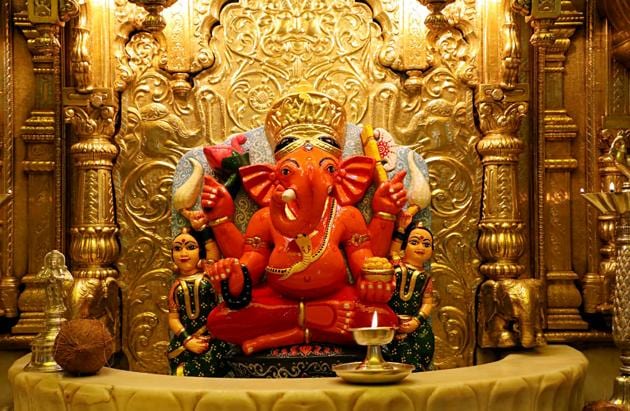
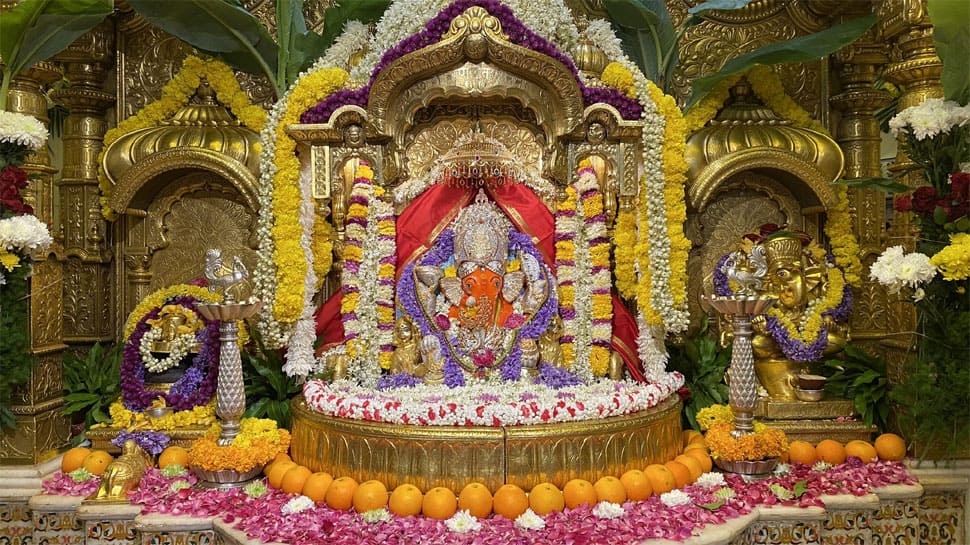
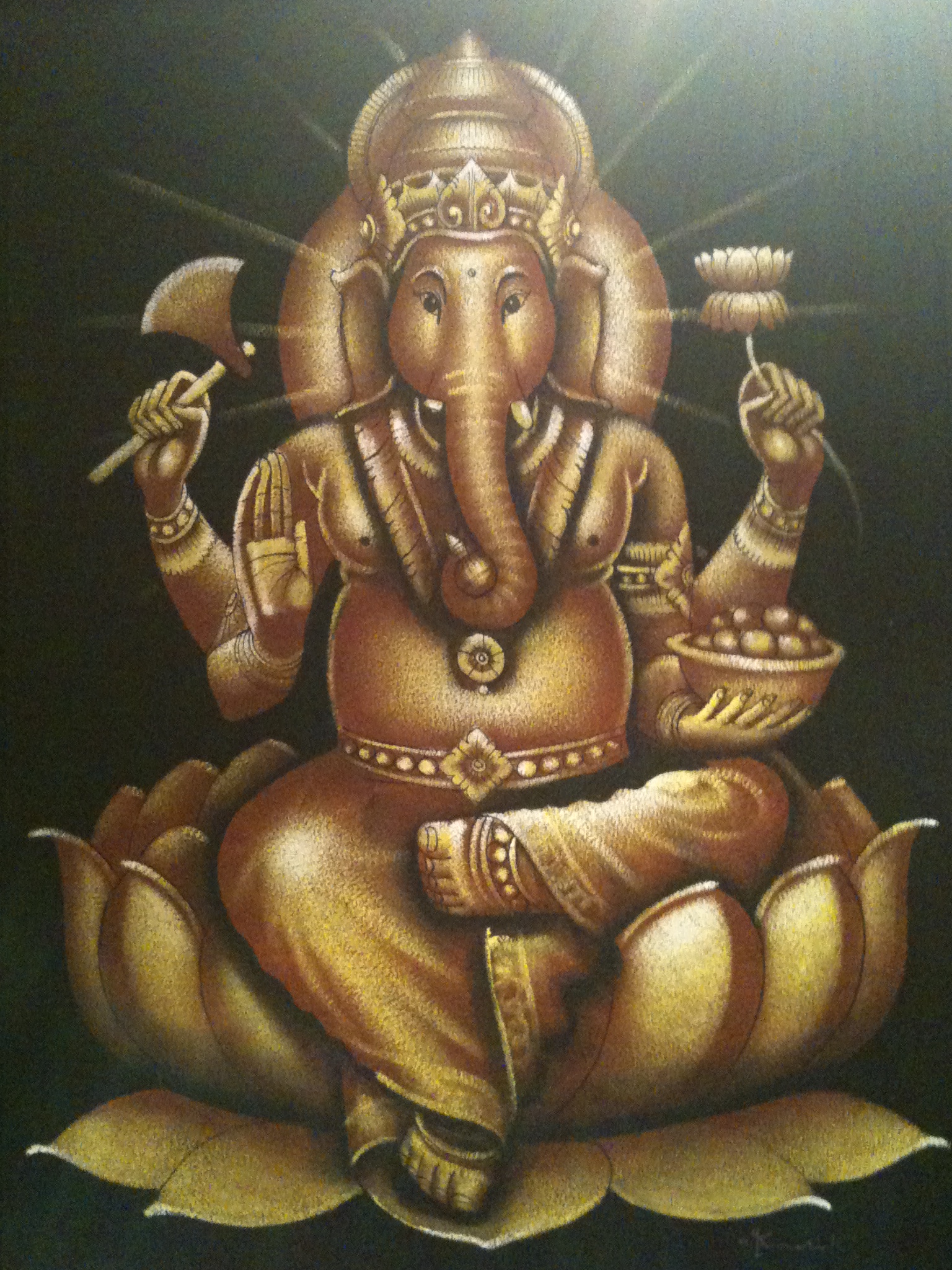
Lord Ganesh is my favourite God, my Ishtadev and I love going to his temples to seek his blessings. My favourite Ganesh temple is the Siddhi Vinayak temple in Mumbai. When I first started work, the temple was an eight to ten-minute walking distance from the office. So every Tuesday, before I went to work, I would leave home early, and go to the temple to pay my respects to the Lord before going to work. Since Tuesdays are considered to be very special to Lord Ganesh, especially in Maharashtra and so there would be a line to enter the temple. It would usually take about an hour to line up and take the darshan, so I was never too worried about going in to the office late.
But one year, my mother also wanted to go to the temple on the occasion of Angarak Ganesh Sankashti and so we decided to leave about two hours earlier. I reasoned that it usually took me an hour and since it was the Angarak Sankashti, it will take double that time and so we left home around 6 am. When we reached the temple, nay, even before we reached the temple, we saw the huge line snaking out and into the road behind the temple. We got into the line and stood and stood and stood. We stood in line for almost six hours before we finally managed to see the Lord. I was super late for work and my mum had to still go home and make lunch. But we managed it that day and it was the first and last time I stood in a line that long to see the Lord.
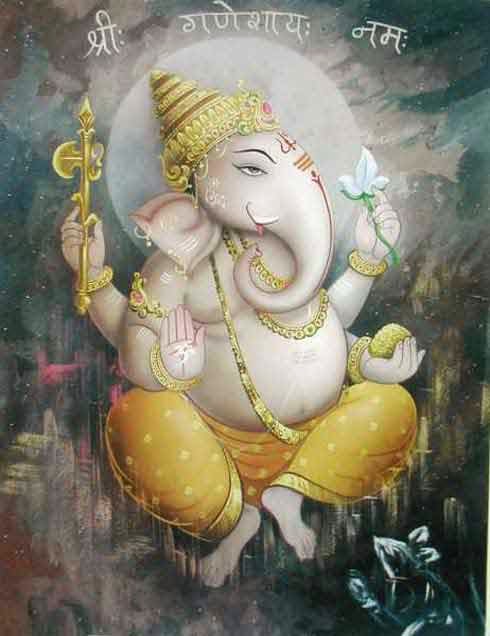
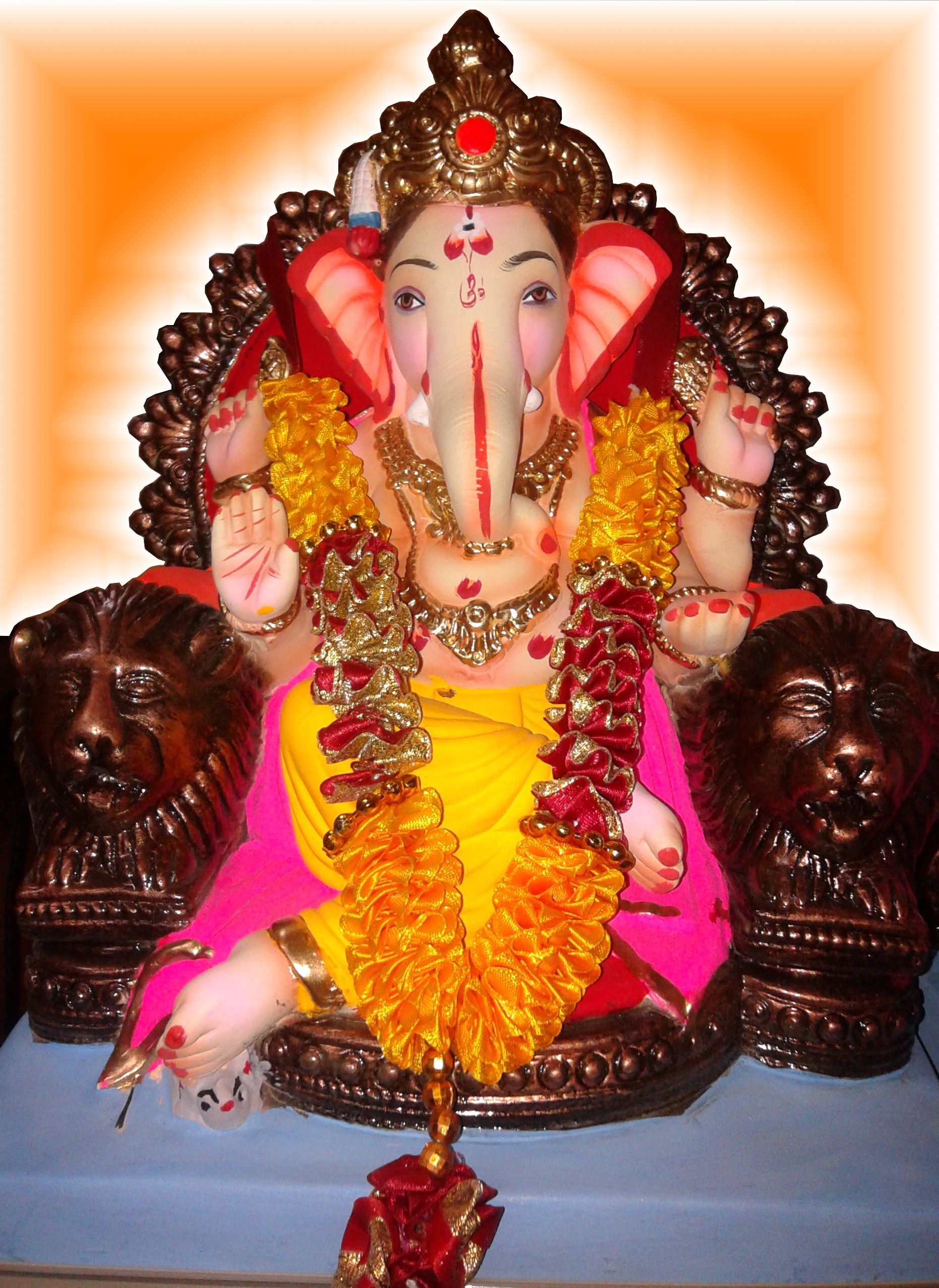
So what makes this day so special that people spend hours waiting in line just for a glimpse of the Lord’s visage? The Angarika Chaturthi is a Sankashti Chaturthi falling on Tuesday and is considered highly auspicious among all Sankashti Chaturthi days. Sankashti Chaturthi, also known as Sankatahara Chaturthi, is an auspicious day dedicated to Lord Ganesha. This day is celebrated in every lunar Hindu calendar month on the fourth day of the Krishna Paksha which is the dark lunar phase or the waning fortnight of the moon.
According to Hindu teachings, Angarak, the son of Mother Earth and Bharadwaj Rishi, was an accomplished rishi and a great devotee of Lord Ganesha. He worshipped Lord Ganesha and sought his blessings. On Magh Krishna Chaturthi which fell on a Tuesday, Lord Ganesha blessed him and asked him for a wish. Angarak expressed that his only wish was to be associated with Lord Ganesha’s name forever. The Lord granted his wish and proclaimed that whoever worships Lord Ganesha on Angarika Chaturthi will be granted all that he or she prays for. From that day onwards, Magh Krishna Chaturthi came to be known as Angarak Chaturthi. Angarak in Sanskrit means red like burning coal embers and is also so known because Tuesdays are governed by the planet Mars or Mangal in Hinduism. Tomorrow is also an Angarak Sankhasthi Chaturthi and is the second one this year, after the one on April 19.
Another story is that the planet Mars or Mangal performed intense austerities and pleased Lord Ganesha. A happy Ganpati gave the boon to the planet that whenever Chaturthi falls on Tuesday it will be known as Angaraki Chaturthi. He also promised Mangal that those performing pujas on the day will have their wishes fulfilled. Mars who had got a bad reputation for creating trouble in people’s horoscopes was happy with the blessings.
On the day of Angarika Sankashti Chaturthi, devotees observe a strict fast from morning till evening. They break the fast at night after having a darshan or the auspicious sighting of the moon, preceded by prayers and a pooja for Lord Ganesha. The Angarika Chaturthi devotees believe their wishes will be fulfilled if they pray on this auspicious day. The fast of Sankashti Chaturthi is generally started from the day of Angarika Sankashti Chaturthi. Also, Angarika Sankashti means deliverance during troubled times, hence observing this fast is believed to reduce a person’s problems, as Lord Ganesha is the remover of all obstacles and the supreme Lord of intelligence. Before moonlight, the Ganapati Atharvashesha is recited to summon the blessings of Lord Ganesha.
The Brahmavaivarat Purana states that Lord Ganesha is a manifestation of the supreme consciousness and was destined to manifest as the remover of obstacles for men and gods, and he became the God of intellect and wisdom. According to Sage Vyasa, those performing puja, prayers, japa or chanting, and charity performed on this day will be blessed with peace and prosperity. They will never face any problems as the strength of the puja performed on this day is 10 million times stronger than those performed on ordinary days. Thus the benefits too are manifold. It is widely believed by Lord Ganesha devotees that observing the vrat or fast will bring material progress, happiness, and the fulfilment of desires. There is a huge rush to temples dedicated to Lord Ganesh on Angarak Ganesh Chaturthi, especially in Maharashtra. It is believed that those suffering Mangal dosh or blight of Mars in their Kundli or horoscope will get relief after offering prayers and charity on the day. Those who have financial problems will also find solutions to their issues and find relief from debt.
I used to fast for many years on Ganesh Sankhastha Chaturthi and used to break my fast only after praying to the moon and Lord Ganesha after moonrise, but after getting diagnosed with diabetes, I stopped my fasts. After this post, I am very tempted to start fasting again and will explore if this is feasible now.




 Memories and Such