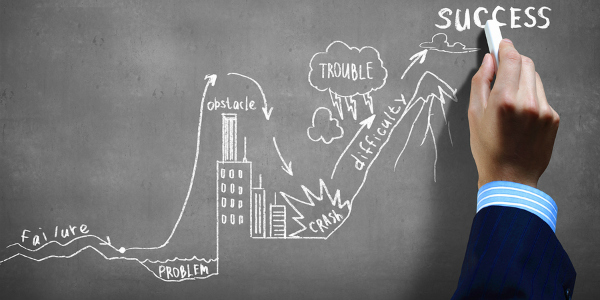
What Does Success Look Like?

Success, the very word conjures up images of someone who is wealthy or famous or maybe someone who does very well in school or work. Or maybe it is someone who has a wonderful relationship with their spouse, parents or children. Or it could be someone in a combination of the above.

We live in a consumer-driven society and the culture we live in places a big emphasis on making money and defines success by how much we own. Advertising messages communicate that having certain luxury brands is the definition of success. So what makes one successful in this society? Is it hitting a specific income bracket or living in a specific zip code or driving a particular car model? But the question then arises is if success is only an outward manifestation or is it something deeper, something that is intrinsic to what is most important to us?

Every individual has their definition of success and what is important to them. While we need to do some things for the sake of earning an income, it is important to balance responsibilities with activities we enjoy doing. That means having enough free time to spend with people we love as well as time for practising self-care. For this to happen, we need to check if we can balance our lives to do what we enjoy doing and if not, what steps we can take to achieve a more balanced lifestyle.

One thing to be able to achieve that balance is to be secure and stable financially because while one need not be excessively wealthy to be happy, having a healthy bank balance will allow us to design our life in ways we want and a healthy bank balance will give financial stability that can mean success. What this means is that you need to figure out exactly how much you need to live a comfortable lifestyle and use that number to hit your financial goals.

Success is not all about what you do or don’t have. Someone who wants to live a life caring for others without being financially successful and achieves that is successful in their definition of success. Success is also not about big achievements, getting that ultimate promotion which will change all the time. Instead, think of success as small goals which are the ladders to the main big goal. These goals can be small, short-term wins which also give you the impetus to get to the larger goals.

Our definitions of success will change over time because our priorities change and what seemed important back then may become trivial now. Our values and needs evolve and with this, the definition of success will be revised and adjusted.

What is my version of success? It’s pretty simple actually. To me, I will consider myself successful if I am financially stable so that S and I can retire in peace, give my children a good upbringing and education and inculcate in them the values and character that make them excellent human beings and good citizens.

At the end of the day, success is being able to look at yourself in the mirror and feel good about the choices you’ve made. No person is without their mistakes, but you learn and grow through the process. Your version of success doesn’t have to look like anyone else’s, but it must be a definition you feel good about and that is meaningful to you. Ultimately, the way that you define success will lead you toward living a more contented life that is aligned with your values.

What is your definition of success?

In My Hands Today…

Deep Work: Rules for Focused Success in a Distracted World – Cal Newport

One of the most valuable skills in our economy is becoming increasingly rare. If you master this skill, you’ll achieve extraordinary results.

Deep work is the ability to focus without distraction on a cognitively demanding task. It’s a skill that allows you to quickly master complicated information and produce better results in less time. Deep work will make you better at what you do and provide the sense of true fulfillment that comes from craftsmanship. In short, deep work is like a super power in our increasingly competitive twenty-first century economy. And yet, most people have lost the ability to go deep-spending their days instead in a frantic blur of e-mail and social media, not even realizing there’s a better way.

In Deep Work, author and professor Cal Newport flips the narrative on impact in a connected age. Instead of arguing distraction is bad, he instead celebrates the power of its opposite. Dividing this book into two parts, he first makes the case that in almost any profession, cultivating a deep work ethic will produce massive benefits. He then presents a rigorous training regimen, presented as a series of four “rules,” for transforming your mind and habits to support this skill.

A mix of cultural criticism and actionable advice, Deep Work takes the reader on a journey through memorable stories-from Carl Jung building a stone tower in the woods to focus his mind, to a social media pioneer buying a round-trip business class ticket to Tokyo to write a book free from distraction in the air-and no-nonsense advice, such as the claim that most serious professionals should quit social media and that you should practice being bored. Deep Work is an indispensable guide to anyone seeking focused success in a distracted world.

In My Hands Today…

Don’t Overthink It – Anne Bogel

We’ve all been there: stuck in a cycle of what-ifs, plagued by indecision, paralyzed by the fear of getting it wrong. Nobody wants to live a life of constant overthinking, but it doesn’t feel like something we can choose to stop doing. It feels like something we’re wired to do, something we just can’t escape. But is it?

Anne Bogel’s answer is no. Not only can you overcome negative thought patterns that are repetitive, unhealthy, and unhelpful, you can replace them with positive thought patterns that will bring more peace, joy, and love into your life. In Don’t Overthink It, you’ll find actionable strategies that can make an immediate and lasting difference in how you deal with questions both small–Should I buy these flowers?–and large–What am I doing with my life? More than a book about making good decisions, Don’t Overthink It offers you a framework for making choices you’ll be comfortable with, using an appropriate amount of energy, freeing you to focus on all the other stuff that matters in life.

In My Hands Today…

The Obesity Code: Unlocking the Secrets of Weight Loss – Jason Fung

Everything you believe about how to lose weight is wrong. Weight gain and obesity are driven by hormones—in everyone—and only by understanding the effects of insulin and insulin resistance can we achieve lasting weight loss.

In this highly readable and provocative book, Dr. Jason Fung sets out an original, robust theory of obesity that provides startling insights into proper nutrition. In addition to his five basic steps, a set of lifelong habits that will improve your health and control your insulin levels, Dr. Fung explains how to use intermittent fasting to break the cycle of insulin resistance and reach a healthy weight—for good.

In My Hands Today…

Burnout: The Secret to Unlocking the Stress Cycle – Emily Nagoski and Amelia Nagoski

This groundbreaking book explains why women experience burnout differently than men—and provides a simple, science-based plan to help women minimize stress, manage emotions, and live a more joyful life.

Burnout. Many women in America have experienced it. What’s expected of women and what it’s really like to be a woman in today’s world are two very different things—and women exhaust themselves trying to close the gap between them. How can you “love your body” when every magazine cover has ten diet tips for becoming “your best self”? How do you “lean in” at work when you’re already operating at 110 percent and aren’t recognized for it? How can you live happily and healthily in a sexist world that is constantly telling you you’re too fat, too needy, too noisy, and too selfish?

Sisters Emily Nagoski, PhD, and Amelia Nagoski, DMA, are here to help end the cycle of feeling overwhelmed and exhausted. Instead of asking us to ignore the very real obstacles and societal pressures that stand between women and well-being, they explain with compassion and optimism what we’re up against—and show us how to fight back. In these pages you’ll learn

• what you can do to complete the biological stress cycle—and return your body to a state of relaxation
• how to manage the “monitor” in your brain that regulates the emotion of frustration
• how the Bikini Industrial Complex makes it difficult for women to love their bodies—and how to defend yourself against it
• why rest, human connection, and befriending your inner critic are keys to recovering and preventing burnout

With the help of eye-opening science, prescriptive advice, and helpful worksheets and exercises, all women will find something transformative in these pages—and will be empowered to create positive change. Emily and Amelia aren’t here to preach the broad platitudes of expensive self-care or insist that we strive for the impossible goal of “having it all.” Instead, they tell us that we are enough, just as we are—and that wellness, true wellness, is within our reach.