Short Story: The Silent Murder

As the plane started its descent into Fuzhou, Mei Li peered excitedly out of the window. “Almost home now”, she muttered to herself. Her seatmate, an older man, smiled at her and asked her if she was back from a holiday in Singapore or if she was working there. “Working”, Mei Li smiled. “I am going back home after two years”. She tried to curb her impatience as she cleared immigration and customs and walked outside to get into a bus for the next part of her journey home. She slipped into the seat, suddenly exhausted as she thought of her life, both past and present, as the bus hurtled through the Chinese countryside, the bus, her home for the next six hours until her village.

Leaning back in her seat, Mei Li tried to sleep but found that sleep eluded her. She smiled and whispered, “I did it. That woman is dead, and no one knows I did it!”. As she said this, a wave of sadness hit her, and tears started streaming down her eyes. Unbidden, her mind went back 20 years when she first saw her husband Ah Fu. They were matchmade, and she saw him the day they were wed. She was a shy girl of 18, and he was a strapping man of 20 when they wed. The first two years were sheer bliss, but soon the reality of life hit them in the form of two miscarriages. When they saw a doctor, they were told Mei Li’s womb was weak and treatment for this required money they did not have. So Ah Fu took the difficult decision to work for a few years in the bustling metropolis of Singapore.

Ah Fu and Mei Li were apart for more than a decade while Ah Fu tried to earn money so that Mei Li could get the treatment she needed. But unfortunately, even with treatment, Ah Fu and Mei Li were unable to have children, and after a few years, Mei Li decided to live with this fact. She spent her days looking after Ah Fu’s parents and lived for the one month every year when he would spend a month with her. She looked forward to the time when Ah Fu would earn the money they needed for the rest of their lives, and they will start living together again.

Life moved, the seasons changed, and Ah Fu’s parents soon passed away. One day, Mei Li suddenly realised something. “It’s been a month since Ah Fu has called or sent money. I wonder why he does not pick up my phone. I hope everything is fine”. Six months soon passed with no contact with her husband, and Mei Li was sick with worry. As time passed, her worry turned into fear and fear into grief. Her worry was confirmed one day when Ah Fu’s friend Li Wei came to her house. She was happy to meet him and wanted to ask him about her husband, but stopped as soon as she saw him. Li Wei’s eyes were red with tears, and he had an urn in his hands. “No, no, Li Wei, please tell me what I am thinking is not true” Mei Li was almost prostrate with grief, but she was not to be comforted. Her worst fears came true. Ah Fu was dead, and Li Wei had brought her husband’s remains with him. But this was not all that was what was giving her grief.

Ah Fu stopped sending her money because he was involved with another woman, Jenny. Jenny was a domestic helper from the Philippines, and both of them were involved in a raging affair. The money that Ah Fu used to send to Mei Li was now used to wine and dine Jenny. He also started dipping into his savings until he had no money and debts of over $100,000. Once Jenny realised that there was nothing more to get from Ah Fu, she dumped him like yesterday’s leftovers.

Distraught, Ah Fu tried everything in his control to win over Jenny but could not. He also lost his job, and the thought that he would have to go back to China, a broken and bankrupt man, made him take his life because he could not face Mei Li. With these words, Li Wei passed Mei Li Ah Fu’s belongings along with a diary and disappeared into the darkness, leaving Mei Li bewildered and desperate for answers. She knew deep within her soul that the truth had been whispered into her ears, but it remained just out of reach. Questions swirled in her mind, each one intertwining with the next. She saw his diary and started to read, hoping the questions in her head would have some answers. As she read the diary, Mei Li’s sorrow turned into anger. The woman who had taken her husband away from her, who had shattered their lives, needed to face the consequences of her actions.

She learnt more about Jenny, along with a photo that Ah Fu had taken sneakily. Shattered, she threw the diary away and tried to move on with her life. But Mei Li could not forget either the photo or Jenny and tried as much as she could; she wanted answers, and she wanted to know what was so special about Jenny that her Ah Fu was unfaithful. A plan began to form in Mei Li’s mind, fueled by a burning desire for revenge. She decided to find out for herself and made plans to move to Singapore. She had one very useful skill – she belonged to a small clan that was famous as masseurs. She knew acupressure and could massage any point in the body to relieve aches and pains. Soon, Mei Li was in Singapore.

She used the knowledge she had gleaned from Ah Fu’s dairy to stalk Jenny and find out about her. She came to know that Jenny went to a church near Chinatown on Sundays, and after service and before she went back to her employer’s home, she frequented a reflexology parlour to get rid of the aches and pains of the week. After a couple of months, Mei Li started working in the same massage parlour that Jenny frequented and tried hard to make sure she was the one who gave Jenny her massages. She would go overboard with her and give her more than she paid for. Slowly, over the next few months, Jenny came more frequently to the parlour to get massaged by Mei Li, who now had become a friend.

Mei Li now started to put her plan into action. With her knowledge of acupressure, she slowly started pressing a point in the sole of her feet as well as another point at the base of her neck, which, if pressed in a certain way, would put pressure on the spleen and slowly, over time, would cause the spleen to rupture. At the same time, while making conversation, Mei Li would recommend certain Chinese herbs to Jenny for strength. She was careful not to recommend overtly poisonous herbs but a combination which, with the massage, would be fatal.

This carried on for about a year, and while massaging Jenny, Mei Li knew her end was near. She soon stepped up her massages and, at the same time, resigned from her job, citing the need to go back home to look after an ailing mother. Jenny was sad that her friend was leaving, but this was the life of a migrant worker, and there was nothing that could be done. On her last weekend, Mei Li was waiting for Jenny to come to the massage parlour for her usual massage but didn’t see her. She tried calling her, but her calls went unanswered. Finally, someone picked up the phone, and when she asked about Jenny, she was told Jenny had passed away two days back from a ruptured spleen, and they were too late in taking her to the hospital. Her wake was being conducted in a nearby funeral parlour, and Mei Li decided to make her way there just to ensure that the woman she hated with every fibre of her being was where she put her beloved Ah Fu.

The bus suddenly jolted, and Mei Li came back to the present. She smiled a small smile of satisfaction and knew somewhere up there, Ah Fu probably approved. She knew she would never have a good night’s sleep because she had knowingly and willingly taken a life, but that was a trade-off she was willing to make. The bus had stopped, and when she looked out of the window, she realised she had reached her destination. As she got down and started walking home, she walked with a newfound sense of peace. The weight of her grief had lessened, and the wounds in her heart had begun to heal. Ah Fu will always remain in her heart, and the memories of the man she loved and married will be enough to live on as a beacon of love and resilience.
In My Hands Today…

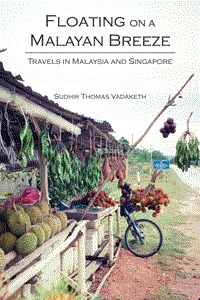
Floating on a Malayan Breeze: Travels in Malaysia and Singapore – Sudhir Thomas Vadaketh

What happens when a country splits apart?

Forty-five years ago, Singapore separated from Malaysia. Since then, the two countries have developed along their own paths.

Malaysia has given preference to the majority of Malay Muslims – the Bumiputera, or sons of the soil.

Singapore, meanwhile, has tried to build a meritocracy – ostensibly colour-blind, yet more encouraging perhaps to some Singaporeans than to others.

How have these policies affected ordinary people? How do these two divergent nations and their peoples now see each other and the world around them?

Racial Harmony Day Singapore

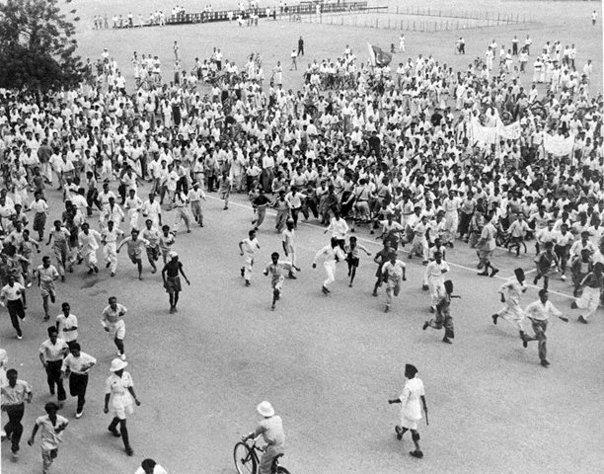
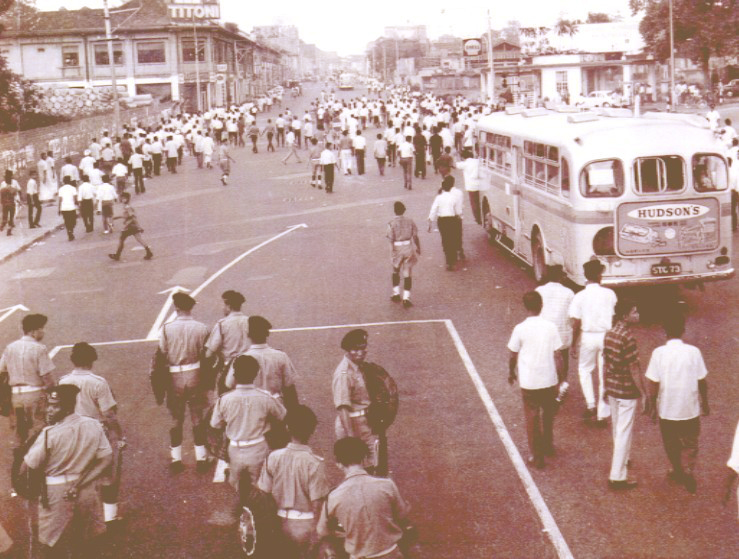
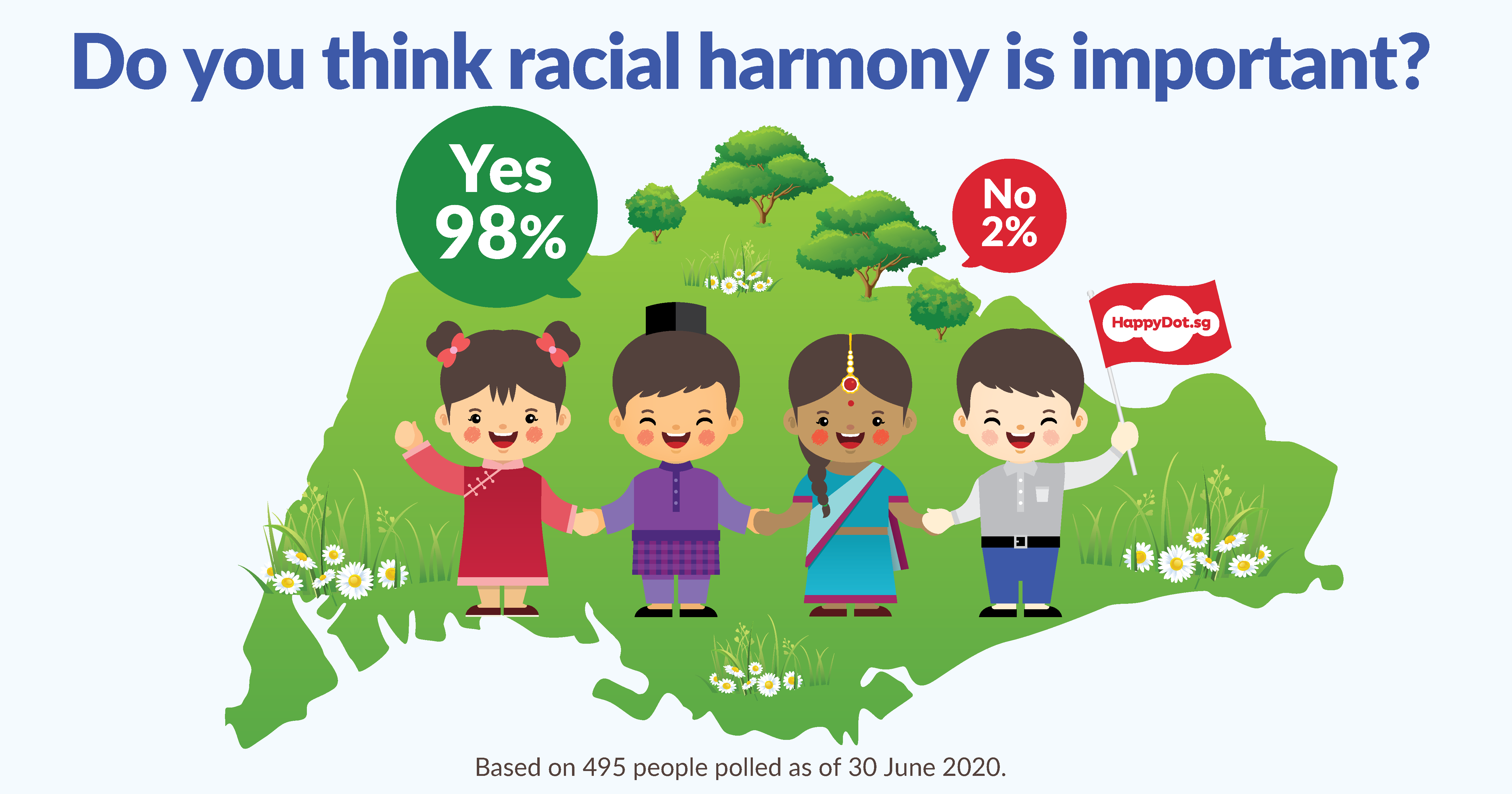
Today in Singapore, we celebrate Racial Harmony Day. The day is celebrated to commemorate the country’s success as a racially harmonious nation and is mostly celebrated in schools and other educational institutions. First launched in 1997 by the Ministry of Education in schools, the event commemorates the 1964 race riots which took place on 21 July 1964 when Singapore was still part of Malaysia, in which 22 people lost their lives and hundreds were severely injured. There were numerous other communal riots and incidents throughout the 50s and 60s leading to and after Singapore’s independence in August 1965.

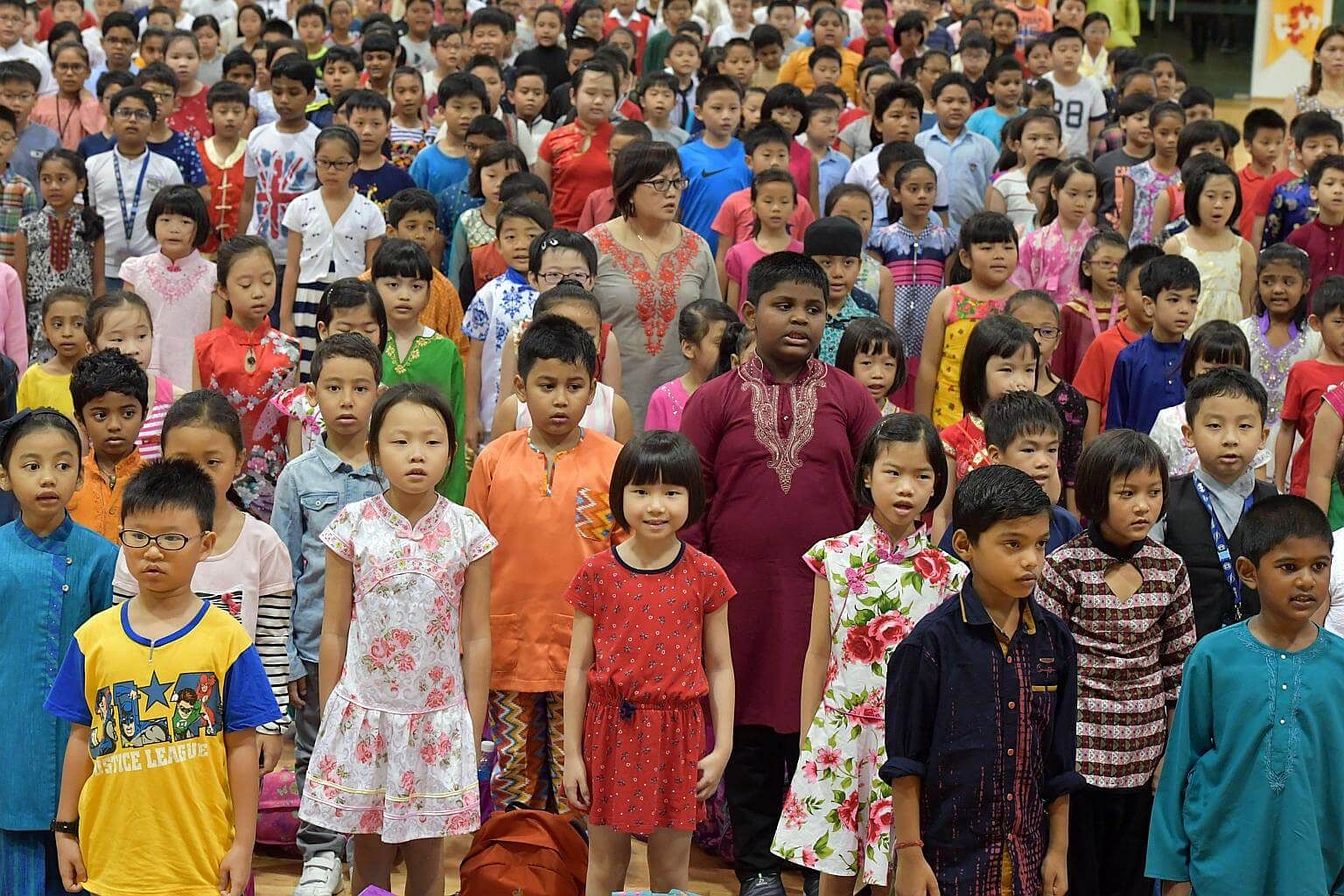
On this day, students in schools across the nation are encouraged to be dressed in other cultures’ traditional costumes such as the Cheongsam, the Baju Kurung and the Saree. Traditional delicacies are a feature of the celebration with traditional games such as five stones, zero points, and hopscotch played and students are encouraged to try out foods from other cultures. Schools are also encouraged to recite a Declaration of Religious Harmony during the celebrations. During this week, representatives from the Inter-Religious Harmony Circle or IRHC comprising various religious groups also get together to pledge their support and to promote the Declaration.

The 1964 race riots in Singapore involved a series of communal race-based civil disturbances between the Malays and Chinese in Singapore following its merger with Malaysia in 1963 and were considered to be the worst and most prolonged in Singapore’s postwar history. The term is also used to refer specifically to two riots on 21 July 1964 and 2 September 1964, particularly the former, during which 23 people died and 454 others suffered severe injuries. The riots are seen as pivotal in leading up to the independence of Singapore in 1965, its policies of multiracialism and multiculturalism, and justifying laws such as the Internal Security Act.

This riot occurred during the procession to celebrate Mawlid, the birthday of the Islamic prophet Muhammad. 25,000 Muslim Malay people had gathered at the Padang. Aside from the recital of some prayers and engagement in some religious activities, a series of fiery speeches were also made by the organisers, instigating racial tensions. During the procession, clashes occurred between the Malays and the Chinese which eventually led to a riot spreading to other areas.  There are multiple accounts and reports on how the riots began. The dominant narration of the July 1964 Racial riot on public forums and history textbooks is simplified and remembered as a riot that involved 20,000 Chinese throwing bottles and rocks at the Malays at the Padang. In reality, some scholars argue that the bottles and rocks being thrown and the clash with a Malay policeman who tried to restrain the Malays were not the reasons for the cause of the riots. But rather, part of the reasons could be also attributed to the distribution of leaflets to the Malay community before the start of the procession by a group named Pertobohan Perjuangan Kebangsaan Melayu Singapore.

The official Malaysian state narrative on the cause of 21 July 1964 characterises the UMNO and Malay-language newspaper Utusan Melayu controlled by UMNO as playing an instigating role. It points to the publishing of anti-PAP headlines and incitement of the Malays against the PAP. To address the grievances of the Malays, PM Lee Kwan Yew held a meeting with various Malay organisations on 19 July. This angered UMNO, as it was not invited to attend this meeting. In that meeting, Lee assured the Malays that they would be given ample opportunities in education, employment and skill training for them to compete effectively with the non-Malays in the country. However, PM Lee refused to promise the granting of special rights to the Malays. This meeting satisfied some Malay community leaders and agitated some, who had the view that the needs and pleas of the Malays were not being heard. To rally the support of the Malays to go against the PAP government, leaflets containing rumours of the Chinese in Singapore trying to kill the Malays were published and distributed throughout the island on 20 July 1964. The spread of such information was also carried out during the procession of Muhammad’s birthday celebration, triggering the riots.

From the Malaysian government’s point of view, Lee Kuan Yew and the PAP were responsible for instigating the series of riots and discontent among the Malay community in Singapore. UMNO and Tun Razak had attributed to the Malay’s anger and hostility towards the Chinese and Lee Kuan Yew’s former speech made on 30 June 1964 for passing inflammatory remarks of the UMNO’s communal politics. Whereas the PAP and Lee Kuan Yew strongly believed that the 1964 July riot was not a spontaneous one, as UNMO had always tried to stir anti-PAP sentiments and communal politics among the Singapore Malays. They often used fiery speeches and Utusan Melayu as a tool to propagate pro-Malay sentiments and to sway their support towards UMNO.

The riots occurred around 5 pm, when a few Malay youths were seen to be hitting a Chinese cyclist along Victoria Street, which was intervened against by a Chinese constable. The riots which occurred around Victoria and Geylang had spread to other parts of Singapore such as Palmer Road and Madras Street. The police force, military and the Gurkha battalion were activated to curb the violence and at 9:30 pm, a curfew was imposed whereby everyone was ordered to stay at home. The riot saw serious damage to private properties, loss of lives, and injuries sustained. According to reports, a total of 220 incidents were recorded with 4 being killed and 178 sustaining some injuries. Close to 20 shophouses owned by the Chinese around Geylang and Jalan Eunos were burnt down. The curfew was lifted at 6 am on 22 July 1964, but clashes and tensions between the Malays and Chinese re-arose, so the curfew was re-imposed at 11:30 am. The racial riots subsided by 24 July 1964, as the number of communal clashes reported was reduced to seven cases. On 2 August, the imposition of the curfew since 21 July was completely lifted and the high police and military supervision was removed.

After the July riots, a period of peace was broken by another riot on 2 September 1964. This riot was triggered by the murder of a Malay trishaw rider along Geylang Serai and this incident sparked attempts of stabbings and heightened violence. 13 people were killed, 106 sustained injuries and 1,439 were arrested.

Following the July riots, the Singapore government requested that the Malaysian federal government appoint a commission of inquiry to investigate the causes of the riots, but this was declined by the Malaysian government. Following the September riots, the Malaysian government finally agreed to form such a commission, with closed-door hearings beginning in April 1965, but the findings of the report have remained confidential.

The racial riots in July 1964, triggered and intensified the political rift between PAP and UMNO, which led to the separation between Malaysia and Singapore in 1965.

The July 1964 racial riots played a significant role in shaping some of Singapore’s fundamental principles such as multiculturalism and multiracialism after independence from Malaysia. The Singapore Constitution emphasised the need to adopt non-discriminatory policies based on race or religion by guaranteeing the grant of minority rights and ensuring that the minorities in Singapore are not mistreated. During Racial Harmony Day, schools recall the racial riots that occurred but the emphasis on the event is focused on the tension between the Malays and the Chinese rather than on the political and ideological differences between UMNO and PAP.

Instagram Interludes

Now that things are more or less back to normal, we’re all excited to travel again. A trip we are all looking forward to is our India trip sometime next year before BB enlists for his National Service and GG starts university. So in honour of that upcoming trip, here are some photos while in flight.

Somewhere before Bengaluru
Early Morning Sunrise above the Bay of Bengal
Mumbai from the Air
A lit-up Mumbai – See the spakling Queen’s Necklace
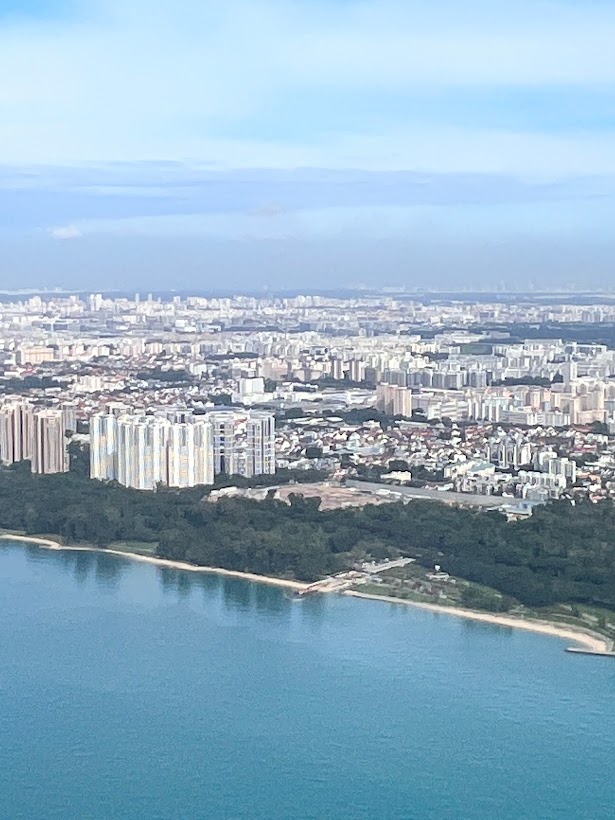
Singapore looming as we prepare to land

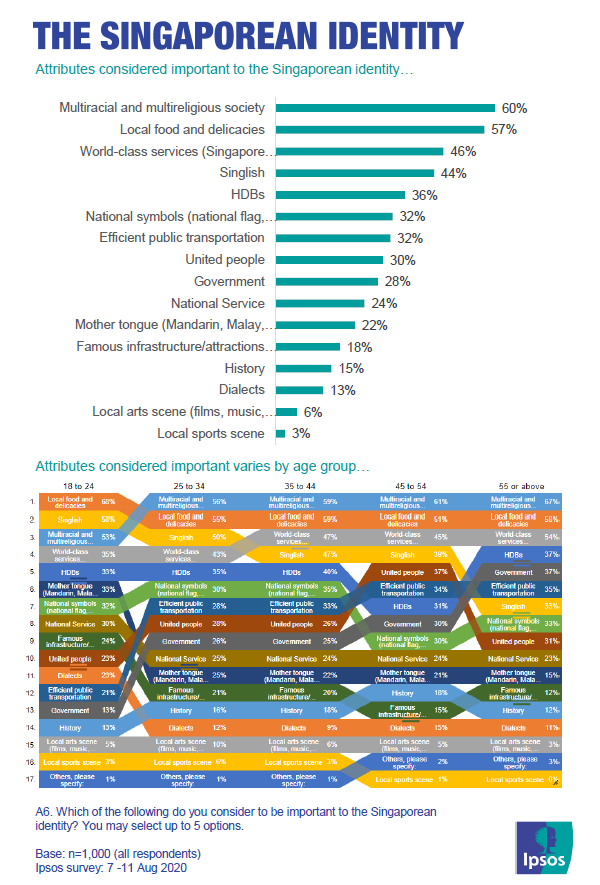
What makes one a Singaporean

Yesterday was Singapore’s 57th National Day and as I was wondering what to write about the day, I started thinking about what makes one a Singaporean? Birth is one of course, but why do those who consciously become one do it? I know why I did it and you can read my story and journey here and here. While I was undergoing my process, I came across many who didn’t have any connection to the country and probably became a citizen only because of the privileges accorded by the red Singapore passport was far superior to their own birth country. They were not interested in the language of the country and by that I mean not making an effort to integrate and speak English which is the working language and one that brings together all the races, not interested in learning about the history and not even interested in its people.

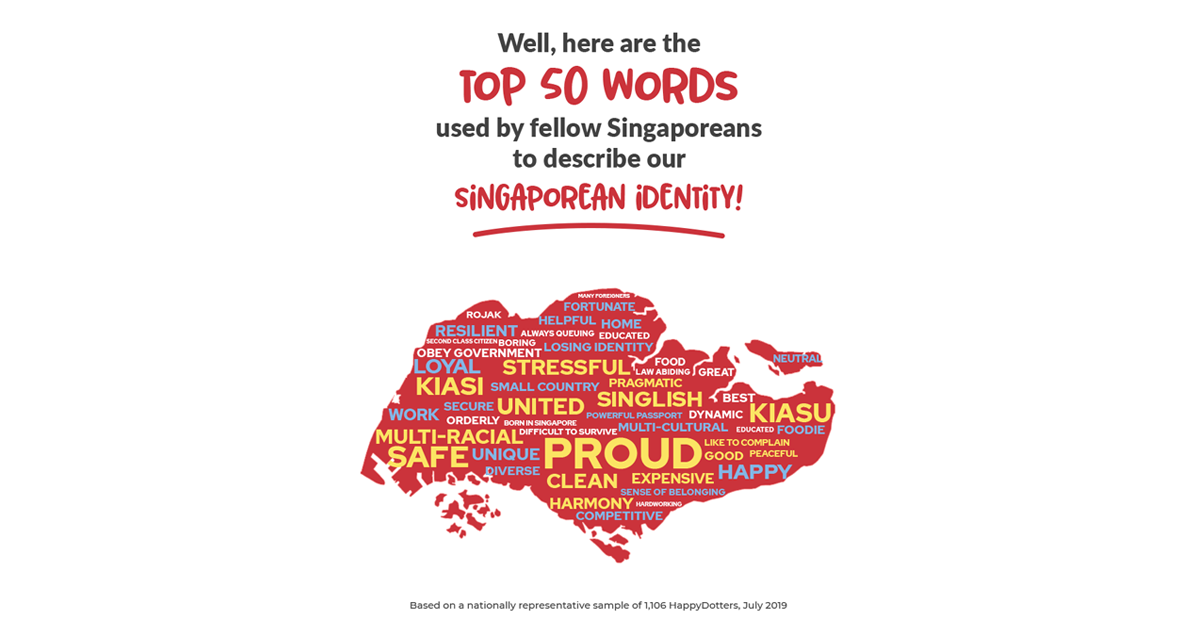
So what makes one a Singaporean?

The first thing that comes to my mind would probably be words like obedient, hardworking and kiasu. These are words which probably describe a nation in which a competitive citizenry is obsessed with being number one in all that it does. A word that probably describes the Singaporean core perfectly is kiasu. A word that is Hokkien in origin, kaisu means being afraid to lose out and is Singapore in a nutshell. We need to win and be the first in everything, coming second is the equivalent of losing. This also translates to parents being tiger mums and dads who want their children only to get As in school and the only careers worth exploring are as bankers, doctors and lawyers.

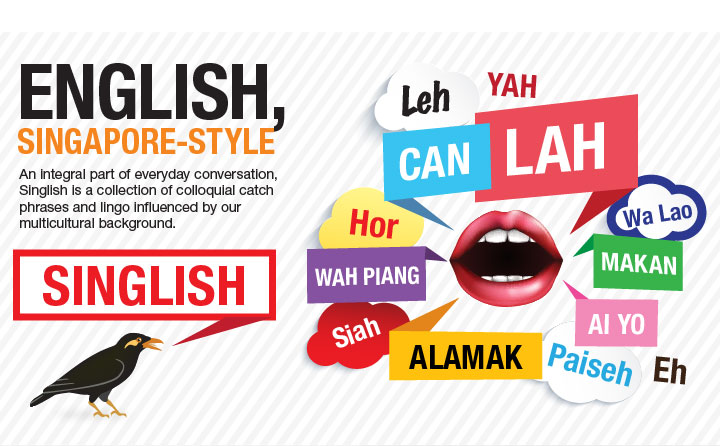
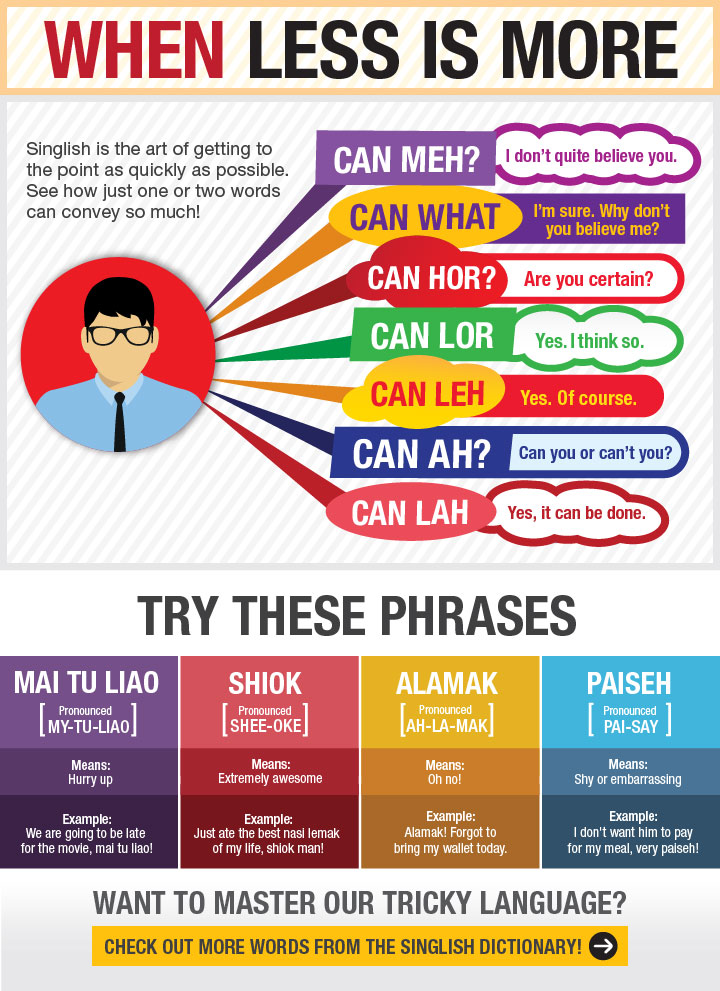
The Singapore accent and Singlish are other Singaporean identifiers. When we travel, especially in the region, hearing the accent and Singlish being spoken takes you back home immediately and makes a connection in a foreign land.

Singaporeans are also very dedicated, especially when it comes to getting their favourite meal at the hawker centre or the latest Happy Meal toy, the biggest discount or the latest trend. We can stand in a line for hours just to reach the thing we want.

We are complain kings and queens and that’s probably a national hobby. With smartphone usage at a high, we love taking photos of those who we feel are breaking rules and post them on social media to complain. We blow stuff completely out of proportion just for the sake of our daily dosage of entertainment. Then after we’re done, we move on to the next better topic. But woe toward others, especially foreigners who complain about us or our nation. Then we get together to bash them up.

Singapore is a very safe place. As a woman, I can walk around the country even late at night, something I can’t think of doing in India. When we are out and want to save our seat or chope it as it we call it, we use our belongings to save the seat. So anything from a packet of tissue to an umbrella or even our office name tag or laptop can be left on the table and nobody will dare to dream to pick it up. It may be annoying to get your food and see empty tables, but all filled with tissue packets, but we put up with it and get on with life.

We are also a wonderful blend of old and new as well as traditional and modern. Old heritage buildings lie cheek in jowl with modern glass skyscrapers and it’s not unusual to see people wearing the latest fashions walking alongside those in a traditional kebaya or saree.

And of course, no post about Singapore can end without a note about Singlish and the fact that we can speak an entire sentence incorporating all four of Singapore’s languages. Our need for speed in everything and being first also means we speak so fast that outsiders need a translator when listening to us.

But all said and done, Singapore has its imperfections, but no country is perfect. We have to accept the good and the bad and make it even better together. So let’s get together and be grateful to this little red dot. Happy Birthday, Singapore! May you continue to prosper.

And as I always share, here’s this year’s National Day song. Enjoy…