Unshackling the Human Spirit: Envisioning a World Without Societal Expectations

From the moment we take our first breath, we are enveloped in a web of societal expectations. These unwritten rules and norms dictate how we should think, behave, and live our lives, often without us even realising it. They shape our choices, our aspirations, and our very identities. But what if we could break free from these invisible chains? What if we could live in a world where societal expectations didn’t exist? Imagine the possibilities that would unfold, the boundless potential that could be unleashed, and the profound impact it could have on our individual and collective well-being.

In our current reality, societal expectations permeate every aspect of our lives. From the careers we choose to the relationships we pursue, from the way we dress to the hobbies we enjoy, we are constantly bombarded with messages about what is “normal” or “acceptable.” These expectations are often rooted in outdated traditions, cultural biases, and societal norms that may no longer serve us in the modern world.

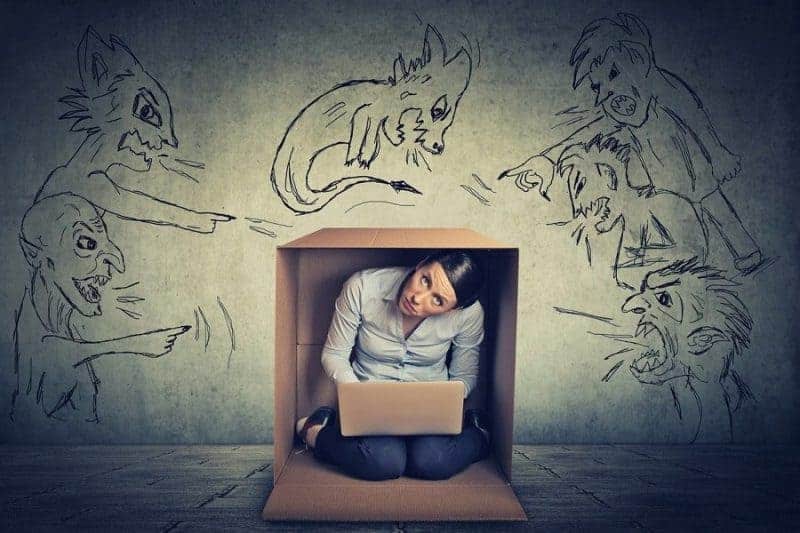
The pressure to conform can be overwhelming, leading many individuals to suppress their true selves, stifle their passions, and settle for lives that feel inauthentic and unfulfilling. This burden of conformity not only stifles personal growth and self-expression but also perpetuates systemic inequalities and limits the diversity of human experiences.

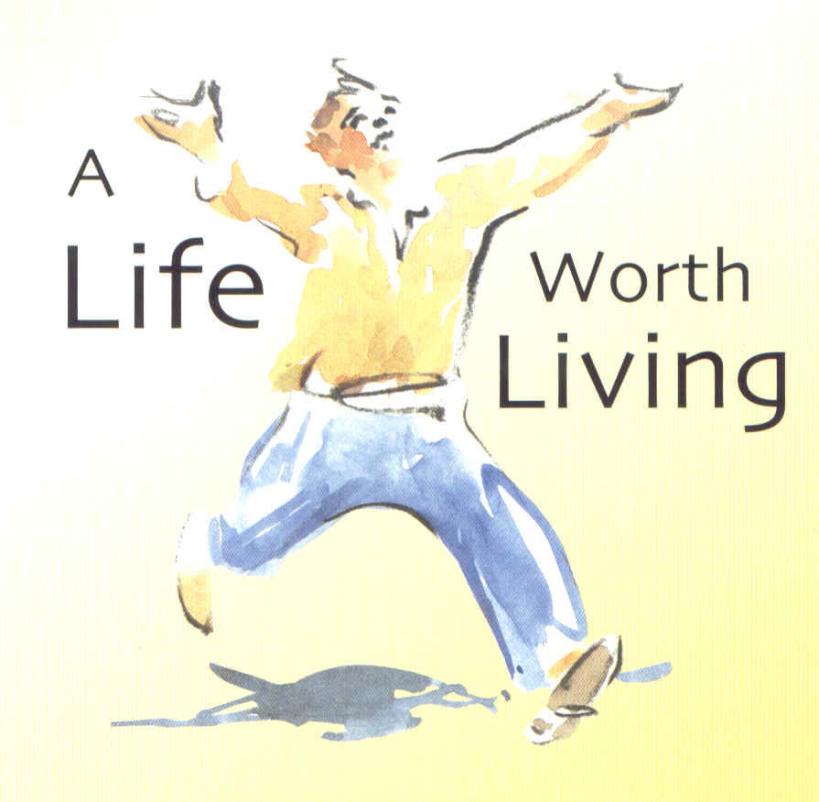
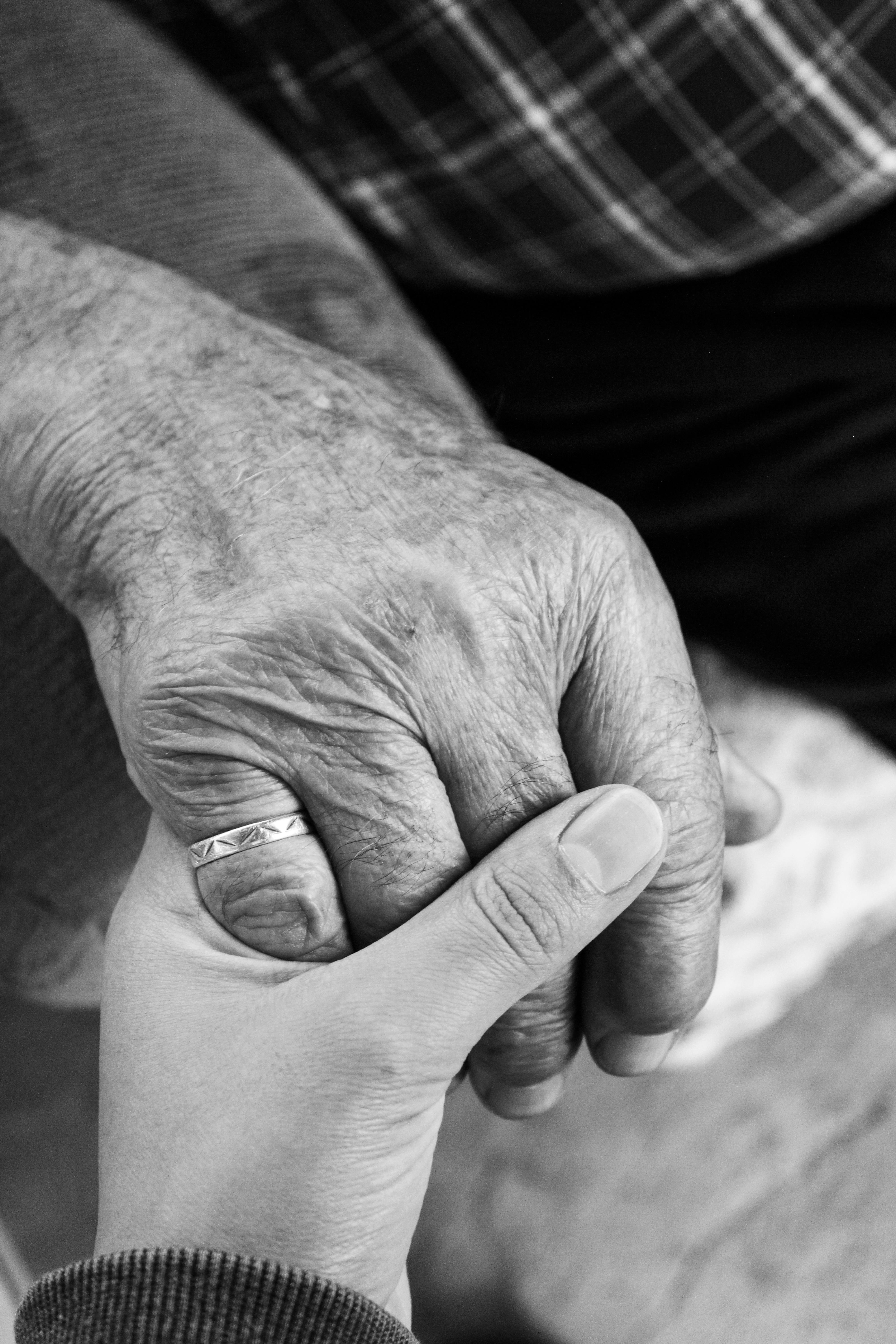
In a world without societal expectations, the shackles that bind us would be broken, and the human spirit would be free to soar. Imagine the vast array of talents, passions, and perspectives that could flourish when individuals are liberated from the constraints of societal norms.

Artists could create without fear of judgment or censorship, allowing their unique visions to take shape and challenge the boundaries of what is considered “art.” Scientists and researchers could pursue their curiosities without the limitations imposed by funding priorities or societal biases, potentially unlocking groundbreaking discoveries that could benefit humanity. Entrepreneurs and innovators could dream without limits, unencumbered by the expectations of what a “successful” business should look like.

In this world, individuals would be free to explore their identities, embrace their authentic selves, and forge their paths without the weight of societal expectations holding them back. The diversity of human experiences would be celebrated, and the richness of our collective tapestry would be woven with vibrant threads of individuality and self-expression.

One of the most profound impacts of a world without societal expectations would be the redefinition of success and fulfilment. In our current society, these concepts are often narrowly defined by external markers such as wealth, status, and material possessions. However, in a world free from societal expectations, success and fulfilment could take on entirely new meanings.

Success might be measured by the depth of one’s personal growth, the positive impact one has on their community, or the sense of inner peace and contentment one cultivates. Fulfilment could be found in the pursuit of passions, the cultivation of meaningful relationships, or the simple joy of living an authentic life.

Without the pressure to conform to societal norms, individuals would be free to define their paths to happiness and self-actualisation. The traditional markers of success, such as prestigious careers or lavish lifestyles, would hold no more weight than the unconventional choices of those who prioritize simplicity, creativity, or spiritual growth.

In a world without societal expectations, the barriers that divide us based on gender, race, sexuality, or any other aspect of our identities would crumble. The biases and prejudices that stem from societal norms would have no place in this liberated reality.

Imagine a world where individuals are celebrated for their unique perspectives and experiences, rather than being judged or marginalised for their differences. A world where gender roles and stereotypes no longer dictate the opportunities available to individuals, and where everyone is free to pursue their dreams without the constraints of societal expectations.

In this world, diversity would be embraced as a strength, and inclusion would be the norm. Communities would thrive on the richness of different cultures, beliefs, and ways of life, fostering a deeper understanding and appreciation for the tapestry of human experience.

Without the weight of societal expectations, individuals would be free to walk in each other’s shoes, cultivating a deeper sense of empathy and compassion. When we are no longer bound by the need to conform, we can truly see and appreciate the unique journeys and perspectives of those around us.

Imagine a world where we could openly share our struggles, our fears, and our vulnerabilities without fear of judgment or rejection. A world where we could truly listen to one another’s stories and experiences, without the filter of societal expectations clouding our understanding.

In this world, compassion would flourish, as we would be able to connect on a deeper level, recognizing our shared humanity and the universal desire for acceptance and belonging. Empathy would become the foundation upon which we build our relationships, our communities, and our societies, fostering a more inclusive and understanding world.

Perhaps the most profound impact of a world without societal expectations would be the opportunity for true self-discovery and authenticity. Without the pressure to conform, individuals would be free to explore their identities, their passions, and their unique paths in life.

Imagine a world where children are encouraged to follow their curiosities and passions from a young age, without the limitations imposed by societal expectations or predetermined career paths. A world where individuals can embrace their true selves without fear of judgment or rejection, and where self-expression is celebrated as a fundamental aspect of the human experience.

In this world, authenticity would be the norm, and self-discovery would be a lifelong journey of growth and exploration. Individuals would be free to reinvent themselves, to change course, and to embrace new passions and perspectives without the weight of societal expectations holding them back.

While the prospect of a world without societal expectations may seem idyllic, it is important to acknowledge the potential challenges and considerations that would arise in such a reality.

One concern might be the potential for chaos or a lack of structure in society. Without the guiding principles and norms that societal expectations provide, there could be a risk of social fragmentation or a breakdown in the systems and institutions that govern our daily lives.

However, it is important to recognize that societal expectations are not inherently necessary for the functioning of society. In a world without these expectations, new frameworks and systems could emerge, rooted in principles of individual autonomy, mutual respect, and collective well-being.

Another consideration is the potential for individuals to feel adrift or overwhelmed by the sheer breadth of choices and possibilities available to them. Without the familiar boundaries and expectations of society, some may struggle to navigate the vast expanse of self-discovery and self-expression.

However, this challenge could also be seen as an opportunity for personal growth and the development of self-awareness and self-determination. In a world without societal expectations, individuals would have the freedom to explore their identities and passions at their own pace, with the support of communities built on empathy and understanding.

Ultimately, envisioning a world without societal expectations requires us to embrace the unknown and let go of the familiar structures and norms that have shaped our lives for generations. It is a bold and audacious vision, one that challenges us to reimagine the very fabric of our societies and the way we relate to one another.

Yet, in this unknown lies the potential for profound transformation and the unleashing of the human spirit in ways we can scarcely imagine. It is a world where individuality is celebrated, where authenticity is the norm, and where the boundaries that once confined us are shattered, allowing us to soar to new heights of self-expression, creativity, and personal fulfillment.

While the path to such a world may be uncertain and fraught with challenges, the rewards of living in a society free from the shackles of societal expectations are immeasurable. It is a world where we can truly embrace our authentic selves, where our dreams and passions are limited only by the boundaries of our own imagination, and where the richness of human diversity is celebrated and cherished.

So, let us dare to dream of a world without societal expectations, a world where the human spirit is unshackled and free to soar. Let us embrace the unknown and the boundless possibilities that await us, for in doing so, we may just unlock the key to a more authentic, fulfilling, and compassionate existence for all.

In My Hands Today…

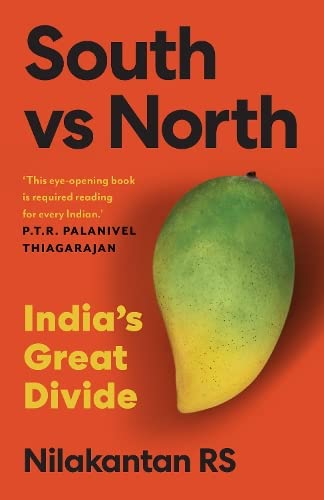
South vs North: India’s Great Divide – Nilakantan RS

Compare two children—one born in north India, the other in the south.

The child from south India is far less likely to die in the first year of her life or lose her mother during childbirth. She will also receive better nutrition, go to school, and stay in school longer; she is more likely to attend college and secure employment that pays her more. This child will also go on to have fewer children, who in turn will be healthier and more educated than her. In a nutshell, the average child born in south India will live a healthier, wealthier, and more secure life than one born in north India.

Why is south India doing so much better than the north? And what does that mean?

In this superbly argued book, data scientist Nilakantan RS shows us how and why the southern states are outperforming the rest of the country and its consequences in an increasingly centralized India. He reveals how south India deals with a particularly tough set of issues: its triumphs in areas of health, education, and economic growth are met with a policy regime that penalizes it; its success in population control will be met with a possible loss of political representation. How will the region manage such an assault? Hard-hitting, troubling, and full of fascinating data points, South vs. North is an essential book about one of the biggest challenges that India faces today.

In My Hands Today…

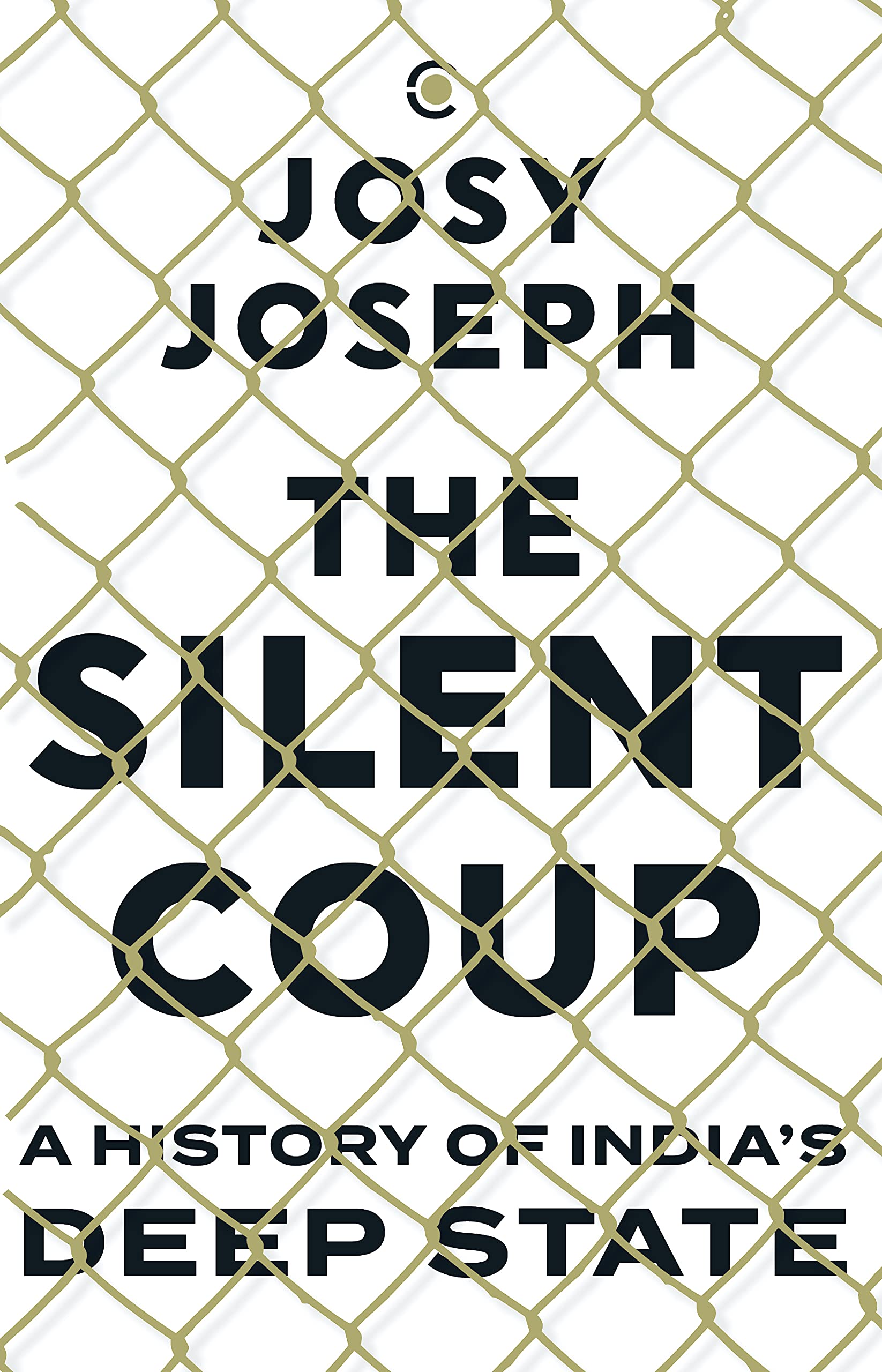
The Silent Coup: A History of India’s Deep State – Josy Joseph

‘They were not expected to behave like the terrorists they were hunting. Even in the thickest fog of war, the law-abider and the law-breaker must be distinguished.’

India is justly proud of a parliamentary democracy that has never been threatened by a military coup. This is no mean feat in a neighbourhood where coups are common and notions of constitutionality are shaky. However, for decades now, India’s democratic standing has been steadily declining. An international analysis recently rated the country as only ‘partly free’, while another deemed it an ‘electoral autocracy’.

Josy Joseph investigates this decline and comes away with a key insight: that the process of confronting militancy has warped the system. As insurgencies erupted across India and grew increasingly sophisticated in the 1980s and ’90s, the security establishment struggled to keep up. Increasingly overwhelmed, the police forces, intelligence agencies, federal investigation agencies, tax departments, and the like came up with ingenious—at times sinister—solutions, from faking and framing evidence to staging massive terror attacks and even creating terrorist organisations. Over time, militancy became a flourishing, multi-faceted business enterprise.

From the Kashmiri militancy to the Sri Lankan civil war, from the attack on Mumbai to the long-term unrest in the Northeast, India’s ‘war on terror’ has made its security institutions more nationalistic and chauvinistic and, inevitably, more corrupt. Most dangerously, there is a near-complete capture of the security apparatus, whether investigative agencies, police, or intelligence, by the political executive—serving as stormtroopers with no accountability rather than as defenders of the Constitution.

The result of more than two decades of reporting on insurgencies, terrorism, and the security establishment, The Silent Coup is a wake-up call to the nation. You do not need a military coup to subvert democracy, Joseph says—in India, it has already been subverted.

In My Hands Today…

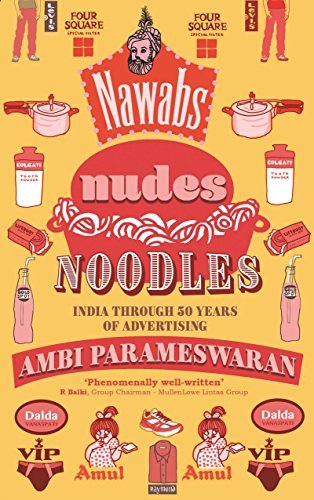
Nawabs, Nudes, Noodles: India through 50 Years of Advertising — Ambi Parameswaran

This is as much the story of Indian advertising as it is about India. Ad veteran Ambi Parameswaran looks at how advertising has evolved, reflecting the country’s culture, politics, and economy in the last fifty years.

From sartorial taste and food habits to marriage and old age, music and language to celebrities and censorship, Ambi examines over a hundred ads to study how the Indian consumer has changed in the past five decades and how advertising and society have shaped each other.

Combining anecdotes and analyses to give us a slice of modern history, Ambi evaluates the relationship between affluence, aspiration, and desire in India. Exploring trends and impacts, he covers the ads that captured the imagination of the entire country. From ‘Only Vimal’ and ‘Jai Jawan Jai Kisan’ to ‘Jo biwi se kare pyaar’ and the controversial Tuffs Shoes campaign, the book is a memorable journey through brands, consumers, and the world of advertising.

In My Hands Today…

The Ugly History of Beautiful Things: Essays on Desire and Consumption – Katy Kelleher

Katy Kelleher has spent much of her life chasing beauty. As a child, she uprooted handfuls of purple, fragrant little flowers from the earth, plucked iridescent seashells from the beach, and dug for turquoise stones in her backyard. As a teenager she applied glittery shimmer to her eyelids after religiously dabbing on her signature scent of orange blossoms and jasmine. And as an adult, she coveted gleaming marble countertops and delicate porcelain to beautify her home. This obsession with beauty led her to become a home, garden, and design writer, where she studied how beautiful things are mined, grown, made, and enhanced. In researching these objects, Kelleher concluded that most of us are blind to the true cost of our desires. Because whenever you find something unbearably beautiful, look closer, and you’ll inevitably find a shadow of decay lurking underneath.

In these dazzling and deeply researched essays, Katy Kelleher blends science, history, and memoir to uncover the dark underbellies of our favorite goods. She reveals the crushed beetle shells in our lipstick, the musk of rodents in our perfume, and the burnt cow bones baked into our dishware. She untangles the secret history of silk and muses on her problematic prom dress. She tells the story of countless workers dying in their efforts to bring us shiny rocks from unsafe mines that shatter and wound the earth, all because a diamond company created a compelling ad. She examines the enduring appeal of the beautiful dead girl and the sad fate of the ugly mollusk. With prose as stunning as the objects she describes, Kelleher invites readers to examine their own relationships with the beautiful objects that adorn their body and grace their homes.

And yet, Kelleher argues that while we have a moral imperative to understand our relationship to desire, we are not evil or weak for desiring beauty. The Ugly History of Beautiful Things opens our eyes to beauty that surrounds us, helps us understand how that beauty came to be, what price was paid and by whom, and how we can most ethically partake in the beauty of the world.