
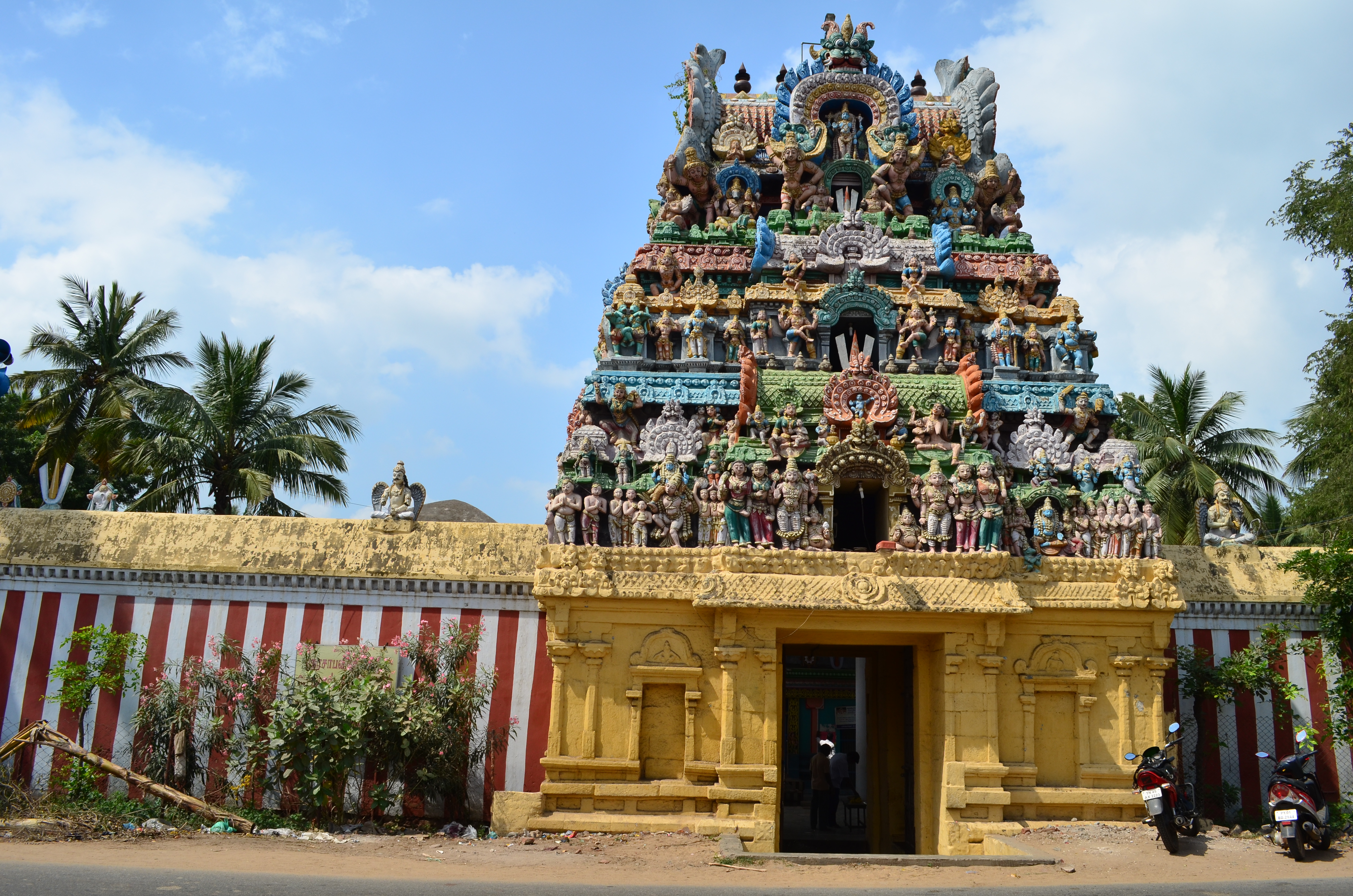
Hara Saabha Vimocchana Perumal Temple, Kandiyur, Tamil Nadu
The Hara Saabha Vimocchana Perumal Temple stands at Kandiyur, near Thiruvaiyaru in Tamil Nadu, not far from the banks of the Kaveri. Here, Vishnu is worshipped as Hara Saabha Vimocchana Perumal, “the one who freed Hara (Shiva) from his curse,” and Lakshmi as Kamalavalli Nachiyar. Unusually, this is also one of the rare temples where the Trimurti: Brahma, Vishnu, and Shiva, are all present within the same sacred space.
The main legend starts with a mistake that even a god cannot easily undo. In an earlier time, both Brahma and Shiva had five heads. One day, Parvati came to worship her husband, but seeing two five-headed forms, she confused Brahma for Shiva and performed pada puja to him. Shiva was furious. In anger, he cut off one of Brahma’s heads. Because creation itself had been attacked, the severed head stuck to Shiva’s hand as a curse. He became Kapali, the one bearing the skull.
To shed this sin, Shiva wandered as Bhikshatana, the begging ascetic, going from place to place. At Thirukarambanoor (Uthamarkoil), part of the curse was removed. But it was only at Kandiyur, after worshipping Vishnu and taking a dip in the temple tank, that the skull finally fell from his hand. The water became Kapala Theertham, skull tank, and the lord here took the name Hara Saabha Vimocchana Perumal or Vishnu, who removed the curse of Hara (Shiva). In this story, Shiva actually builds a temple for Vishnu as thanks, and also establishes a Shiva temple nearby.
Other stories pile on the same theme of ego, mistake, and atonement. Sage Bhrigu once wanted to test which of the three: Brahma, Vishnu, or Shiva, was supreme. He insulted each. When he reached Vishnu, he kicked the lord in the chest. Instead of reacting in anger, Vishnu apologised for any pain the sage might have felt in his foot. Later, Bhrigu regretted his act and came here to seek forgiveness. King Mahabali, known from the Vamana avatar story, and Chandra, the moon god who seduced his guru’s wife, are also said to have expiated their sins at Kandiyur.
Historically, the temple is traced to the Medieval Cholas, around the late 8th century CE. Stone inscriptions point to early Chola patronage, with later additions by Vijayanagara rulers and the Madurai Nayaks, who left their mark on many Kaveri-side temples. These records mention land grants, donations for lamps and festivals, and support for temple staff; signs that Kandiyur held a steady role in the religious and economic life of the region.
There is a common local claim that Kandiyur is older than Srirangam and goes back to the Treta Yuga. From a historian’s view, that is more devotional rhetoric than evidence. What can be grounded is the Chola-period base, with continuous use and renovation over more than a thousand years. The site’s identity as a place to clear brahmahatti dosha and similar sins also shows up in texts and oral traditions, which is why it is counted among specific “sin-clearing” kshetras.
An unusual modern footnote is the link to Tipu Sultan. Some accounts say Tipu fought and won a battle near Kandiyur and later became a devotee of this temple. Whether that devotion was deep or diplomatic, the detail again undercuts rigid lines: a Muslim ruler connecting to a Vishnu shrine known for helping even Shiva out of trouble.
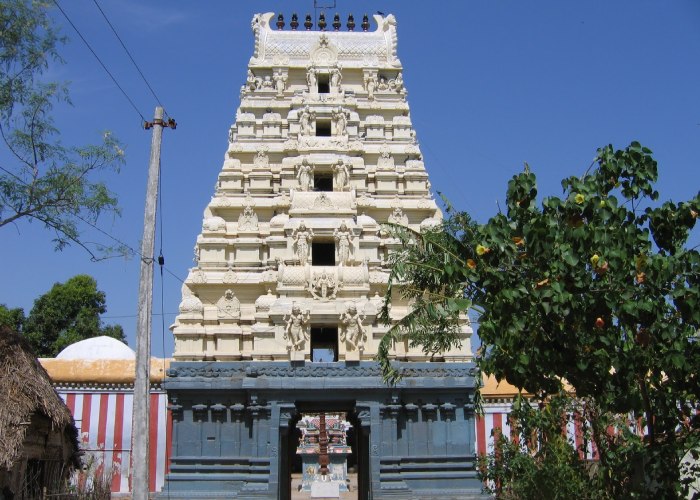
Architecturally, Hara Saabha Vimocchana Perumal Temple is a compact but classical Dravidian complex. A granite wall surrounds the campus, enclosing the shrines and temple tanks. The main Rajagopuram is a five-tiered gateway tower that faces east, leading into the prakaram. The overall layout is proportionate rather than massive, which fits its setting near Thiruvaiyaru rather than in a bustling town centre.
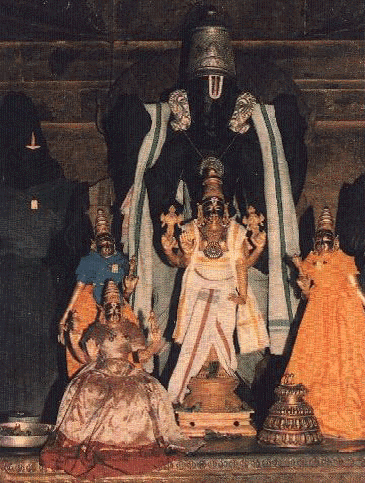
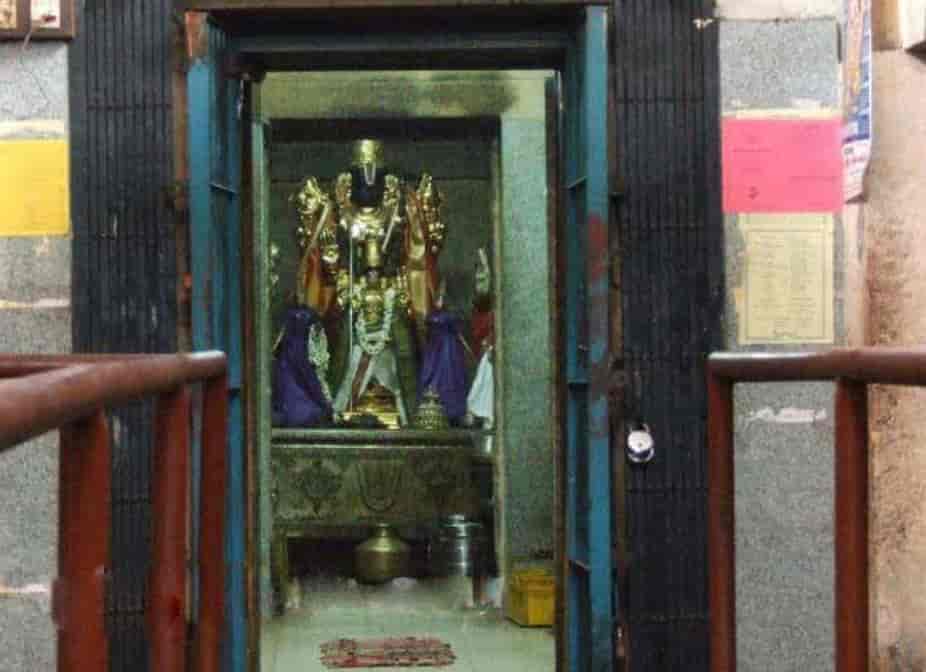
Inside, Vishnu stands as Hara Saabha Vimocchana Perumal, facing east, with his consort Kamalavalli Nachiyar enshrined separately. The moolavar is in a standing posture rather than reclining, which matches the temple’s theme of active intervention and relief. Surrounding shrines include those for Brahma and Saraswati (though these have suffered damage over time), as well as a nearby Shiva temple associated with the same myth cycle.
The usual set of mandapams, pillared halls, and circumambulatory paths is present. Pillars carry carvings of deities, guardians, and small narrative scenes. The tank, known as Kapala Theertham or Kamala Pushkarani, is central to the legend; this is where Shiva’s skull-hand curse finally falls away. The architecture isn’t experimental, but it is consistent with Chola-Vijayanagara-Nayak layering: solid granite, functional courtyards, and a clear axial path from gopuram to sanctum.
Worship here follows the standard Vaishnava agamic pattern, with a local accent. There are six daily pujas, from early morning to night. Each round involves alangaram (decoration and adornment), neivedyam (food offering), and deepa aradanai (waving of lamps), accompanied by nagaswaram, tavil, and chanting of Vedic mantras. The deity is treated not as an abstract idea but as a living presence who must be woken, bathed, fed, and put to rest.
Four main annual festivals mark the temple calendar. The biggest is the Panguni Brahmotsavam in the Tamil month of Panguni (March–April), when the utsava murti is taken in procession across the streets, with vahanams, music, and crowds of devotees. Other festivals include Vaikunta Ekadashi and special days linked to Shiva and Brahma because of the shared myth. The underlying theme in many observances is release from curses and sins, so devotees often perform specific sankalpa pujas here when they feel stuck in life, especially with guilt, family rifts, or long-standing problems.
Local participation is strong. Families sponsor parts of the Brahmotsavam or take responsibility for alankaram on certain days. People come not just to “get something” but to keep alive a bond their parents and grandparents had with the place. That continuity is one of the temple’s hidden strengths.
Reaching Kandiyur is usually done from Thanjavur or Thiruvaiyaru. The temple lies a short drive from Thiruvaiyaru, along roads that run past green fields and close to the Kaveri and its branches. The approach feels more like entering a large village than a town. There are a few shops selling flowers, coconuts, and prasadam, but it is not a noisy bazaar like you see at big pilgrimage hubs. On ordinary days, the temple is calm. After leaving your footwear outside, you pass under the Rajagopuram into a quiet prakaram. There is usually enough time to stand in front of the main sanctum without being hurried. Many people also make a point of visiting the tank, even if they do not bathe in it. They at least touch the water or sit for a while at the edge, remembering the story of Shiva’s curse breaking there.
Pilgrims who care about both Shiva and Vishnu often visit the nearby Shiva temple on the same trip. For them, the whole experience is about healing a split that later polemics created—if Shiva himself came here seeking help from Vishnu, then maybe it is silly for humans to fight over which god is “higher.” In that sense, the geography of the place, the Vishnu shrine, the Shiva shrine, and the tank, gently pushes people to think in terms of connection, not competition.

The temple is mentioned in the Divya Prabandham and sits within the Kumbakonam–Thanjavur belt, an area thick with temples, music, and ritual culture. Its distinctive theme: Vishnu freeing Shiva from a curse, has given it a special place in local storytelling and in the way priests explain doctrine to laypeople. If you grow up hearing that even Shiva had to apologise and seek help, it becomes harder to justify a stubborn ego in your own life. There is also a long-standing belief that worship here helps relieve brahmahatti dosha and other serious karmic burdens. That has shaped how people talk about the temple: not as a place to ask for quick material gain, but as somewhere you go for deeper cleansing when you know you have gone badly wrong. At the same time, it is fair to say that Hara Saabha Vimocchana Perumal Temple has not had the same broad cultural reach as Srirangam or Chidambaram. Its impact is more focused: it speaks strongly to those who move in both Shaiva and Vaishnava worlds, and to those who think seriously about fault, repair, and responsibility.
Today, the temple is administered by the Hindu Religious and Endowment Board of the Tamil Nadu government. Recent renovations, including work on the gateway tower and key shrines, were taken up in the early 2000s under the guidance of traditional acharyas. Efforts continue to maintain the stone structures, clean the tank, and manage festival crowds without turning the place into a tourist circus. Visitor traffic is moderate. Devotees mostly come from Tamil Nadu and neighbouring states, often combining Kandiyur with other Kumbakonam-area Divya Desams or with the Sapta Sthana Shiva temples around Thiruvaiyaru. A smaller number of history and architecture enthusiasts also visit, interested in the Chola-Nayak fabric and the Trimurti aspect of the site.
Within the Divya Desam circuit, Hara Saabha Vimocchana Perumal Temple at Kandiyur stands out for one clear reason: this is where Shiva came to seek help and was forgiven. The temple’s very name encodes that story of curse and release. Its history as a Chola-era Vishnu shrine, later shaped by Vijayanagara and Nayak hands, shows how a theological idea gets anchored in stone and kept alive through ritual and community. Here is a place that quietly undercuts religious one-upmanship. Brahma, Vishnu, and Shiva all appear. All make mistakes, all grant or receive grace. The geography of tank, sanctum, and nearby Shiva shrine pushes a simple point: no one stands alone, and no one is above accountability. For the wider Indian spiritual heritage, Kandiyur adds a necessary note. It says that power without self-correction is dangerous, even for gods. It asks you to see confession, apology, and seeking help not as weakness, but as the turning point. In a time when religious identity often hardens into rivalry, a temple built on the story of one god freeing another from his worst act is worth taking seriously.
Thirukoodalur Temple, Aduthurai, Tamil Nadu
Also known as Aduthurai Perumal Koil or Jagath Rakshaka Perumal Temple, the Thirukoodalur temple stands on the banks of the Kaveri near Aduthurai in Thanjavur district. The presiding deity is Jagath Rakshaka Perumal, “the one who protects the world,” with his consort Pushpavalli Thayar. This temple is closely linked to the Varaha avatar story and to King Ambarisha. The name “Thirukoodalur” itself hints at its character: a place where beings “koodal” come together for help, cleansing, and reunion.
The temple’s core myth connects it to the Varaha avatar. In the well-known story, the asura Hiranyaksha drags Bhudevi, the earth goddess, down into the netherworld. Vishnu takes the form of Varaha, the boar, dives into the depths, slays the demon, and lifts the earth back up on his tusks. Many places claim a piece of this story. Here, the local version says that the devas gathered at this spot on the Kaveri, pleading with Vishnu to rescue the earth. Because they “koodiya” or assembled here before the rescue, the place is called Thirukoodalur, and the lord is Jagath Rakshaka, the protector of the world.
Another strong legend centres on King Ambarisha. He became so absorbed in devotion to Vishnu that he neglected his duties and let his army weaken. He also failed to properly receive Sage Durvasa when the sage passed by. Durvasa, known for his short fuse, cursed him. Ambarisha turned to Vishnu. The lord sent his discus, the Sudarshana Chakra, to chase the sage. When the discus bore down on him, Durvasa panicked, ran to all the other gods, and finally fell at Vishnu’s feet, asking for mercy. The curse was withdrawn, and the grateful king is said to have built this temple. That is why the deity here is also called Ambarisha Varadar.

More stories push the same “gathering” theme. One says all the rivers come regularly to the Kaveri to wash away the sins of those who bathed in them. Kaveri herself then felt burdened and went to Brahma for cleansing. He sent her to worship Vishnu at Thirukoodalur, where she was purified. Another legend tells of a parrot devoted to Vishnu that was shot down in a nearby forest. Vishnu appeared, restored it, and freed it from the karma of a previous birth. Yet another says that sages like Nandaka and many rishis assembled here to worship, and that a human couple, separated by social pressure, were reunited here by the lord’s grace.
Historically, the structural temple dates to the medieval Cholas in the late 8th century, before they rose as a major imperial power. Inscriptions and architectural style point to early Chola work, with later additions from the Vijayanagara kings and the Madurai Nayaks. A brick wall surrounds the complex, which is typical of many Kaveri-side temples from that era. Over the centuries, the temple has seen both growth and damage. Being close to the river has always been a risk. At some point, severe floods damaged large portions of the temple and even washed away some idols. According to tradition, Rani Mangammal, the Nayak queen-regent of Madurai in the 17th century, dreamt of the lord asking her to restore the shrine. She funded major renovations, recovered lost idols from the river, and even commissioned the temple chariot, known as the Ambarisha Ratham. The chariot was used in festivals at least into the mid-20th century. Later, Vijayanagara and Nayak patrons strengthened the temple’s defences, adding a bulwark to protect it from the Kaveri’s floods. Through all this, the spiritual identity of Thirukoodalur remained rooted in the idea of protection; both of the world and of this specific, vulnerable site.
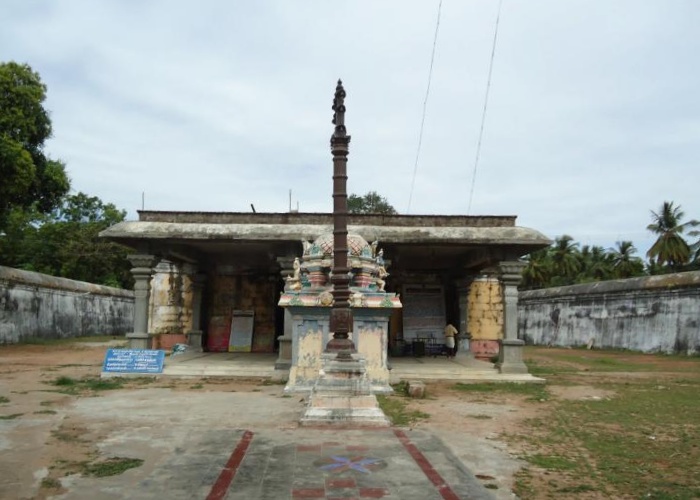
Thirukoodalur is a classic but compact Dravidian temple. A brick wall encloses the shrines and the temple tank, giving a sense of clear boundary between temple space and the surrounding village. The Rajagopuram is a five-tier gateway that leads into the main prakaram, setting a vertical accent without overwhelming the rest of the site. In the central sanctum, the main deity, Jagath Rakshaka Perumal, stands facing east. He holds the usual Vishnu symbols: conch and discus, and his presence is calm but alert, which fits the “protector of the world” title. His consort, Pushpavalli Thayar, also known as Padmasani, has a separate shrine, facing south. The layout respects the standard east–west axis but keeps the overall footprint modest. This is not a sprawling temple-city like Srirangam; it feels like an intimate shrine with depth.
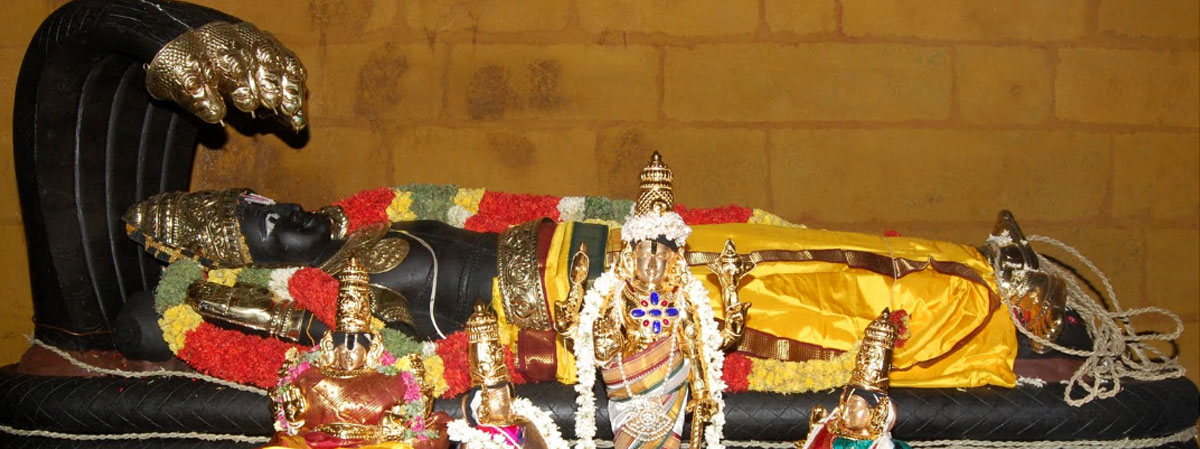
Architectural details include carved pillars, simple mandapams, and a temple tank linked to the Kaveri. The space near the sanctum includes a gap or feature that local belief identifies as a “centre point of the earth,” connecting back to the Varaha story. Some sources also mention a jackfruit tree behind the sanctum where the conch is believed to have manifested, tying into the Durvasa–Ambarisha story and the emphasis on Vishnu’s weapons as protectors. The style is not experimental. It is Chola-Vijayanagara-Nayak layering: granite bases, brick superstructures, and plastered gopurams. But the stories attached to each feature: the tank, the gap, the tree, give the architecture a lot more meaning than a quick glance reveals.
Daily worship follows the usual Vaishnava agamic routine, with six main pujas conducted through the day. Each includes alangaram, neivedyam, and deepa aradanai, accompanied by nagaswaram and tavil, with priests reciting Vedic texts and Divya Prabandham hymns. The emphasis, not surprisingly, is on protection and relief from burdens. The temple’s annual Brahmotsavam is a major event. The festival, held over several days, brings out the processional deity in different vahanams around the streets. The Ambarisha Ratham, though not used as often today, has a strong memory in the community and symbolizes the king’s gratitude for rescue. Vaikunta Ekadasi is also important, as in most Vishnu temples, and special pujas are performed on days connected with the Varaha avatar and with the Navagraha Ketu, since the temple is associated with Ketu in some traditions. People come here with specific hopes: to be freed from stubborn problems, to see family reconciled, to feel cleansed of long-standing guilt or confusion. Local practice includes bathing in the Kaveri and the temple tank before certain rites, echoing the story of the rivers coming to Kaveri and Kaveri then coming here for cleansing. The community participates strongly, funding decorations, cooking prasadam, and organising annadhanam during major festivals.
Reaching Thirukoodalur is relatively easy if you are in the Kumbakonam–Thanjavur belt. The temple lies roughly between Kumbakonam and Thiruvaiyaru, a short detour off the main road, about 25 km from Kumbakonam according to many guides. The drive usually takes you past fertile fields and close to the Kaveri. As with many Kaveri-side temples, the approach shifts your mood even before you arrive; the landscape itself helps you slow down. The village is quiet. There are a few shops near the temple gate selling flowers, lamps, and simple offerings. Once you leave your footwear and step under the gopuram, the space feels calm and contained. On normal days, Darshan is unhurried. You can stand and actually take in the standing figure of Jagath Rakshaka, the separate goddess shrine, and the modest inner mandapam. Pilgrims often walk down to the river or the tank, not just to perform rituals but to sit and reflect. If you are doing the nearby Divya Desam circuit, Thirukoodalur tends to slip in as a surprisingly “sticky” stop, a place that feels more personal than you might expect from a temple that does not have huge crowds or global fame.
In terms of classical literature, Thirukoodalur appears in the Nalayira Divya Prabandham. Thirumangai Alvar is said to have sung of the lord here, calling the place Pugunthaan Oor, the place where Vishnu went “into” the earth, tying back to the Varaha story. This textual mention secures its Divya Desam status and places it firmly in the spiritual geography of Sri Vaishnavism. Locally, the temple’s impact shows up more in practice than in big cultural products. The idea that this is a “Sangama Kshetram,” a confluence and gathering place, shapes how people speak about it. Families come to pray for reunion after conflict. Those carrying heavy regrets see it as a place to start over. Farmers and villagers link it strongly with the Kaveri’s cycles and with the hope that the “protector of the world” will also protect their crops and livelihoods.
Today, Thirukoodalur functions as an active temple under the usual state-managed framework, with daily pujas, regular festivals, and periodic renovation works. The flood risk is still there, but the old bulwark and more recent maintenance have made things more stable. Visitor numbers are moderate. Many are pilgrims doing multiple Kaveri-side temples in one trip, especially those interested in the nine Navagraha-linked temples, the Divya Desams in the Kumbakonam belt, or in Varaha-related sites.
Within the Divya Desam circuit, Thirukoodalur stands for gathering and protection. Devas gather to ask for the earth’s rescue. Rivers gather to cleanse themselves. A king and a sage clash and then reconcile. A separated couple comes back together. A queen centuries later steps in to restore a half-ruined shrine. The pattern repeats: things fall apart, and then, in this place, they are drawn back together. Historically, it is a late-8th-century Chola temple strengthened by later dynasties and by a queen who listened to her dream. Spiritually, it marks a point where Varaha, Ambarisha, Durvasa, Nandaka, Kaveri, and anonymous villagers all meet. In the broader map of Indian spiritual heritage, Thirukoodalur shows that deep ideas don’t only live in the big-name sites. They also live in quieter temples on riverbanks, where a standing Vishnu is remembered less as a judge and more as a protector who gathers scattered pieces: of land, of community, of personal life, and holds them together, at least for a while.

