

Thirunagari Temple, Thirunagari, Tamil Nadu
Thirunagari in Tamil Nadu is one of the most emotionally powerful Divya Desams because it represents the culmination of Thirumangai Alvar’s journey. Where Thiruvali marks the moment of awakening, Thirunagari represents fulfilment, where a devotee finally stands steady in devotion after struggle, confusion and transformation. The temple here is dedicated to Adhi Jagannatha Perumal, with Thiruvaragunamangai Thayar as the goddess. Together, they form a presence that is gentle, grounding and complete. This temple embodies the feeling of coming home after a long internal journey.
In the Vaishnavite tradition, Thirunagari cannot be separated from Thiruvali. The two temples form a pair, representing the start and end of Thirumangai Alvar’s spiritual path. Thiruvali is the moment of awakening, while Thirunagari is the moment of surrender. The mythology of Thirunagari centres around what happened after Thirumangai Alvar received the Ashtakshara Mantra from Vishnu.
After the divine whisper changed him, Thirumangai Alvar travelled to Thirunagari. Here, he began composing hymns, surrendering completely to Vishnu and taking on the role of a servant of the Lord. It is said that he wept in gratitude here, sang his deepest devotional verses here, and completed his transformation from warrior to saint here. In many ways, Thirunagari symbolises the moment the heart settles.
Adhi Jagannatha is worshipped as the ancient form of Vishnu who receives devotees without hesitation or judgment. The name Adhi Jagannatha comes from Adhi, the original, the first, and Jagannatha, the Lord of the universe. The myth conveys a simple idea: the one who created you welcomes you back, no matter the path you took.

In Thirunagari, the utsavar idol of Thirumangai Alvar is significant. This is the place most connected to his emotional life, where he lived, taught, composed and finally reached complete surrender. Some traditions say his final breath was taken in this region, though accounts differ. But spiritually, this is the place where his journey found its destination.
The temple carries strong historical resonance because of its connection to the Alvar. Even if the structure is modest compared to Chola giants, its devotional weight is immense. Architectural and historical influences include early structures likely dating to the Pallava or early Chola period. The Cholas supported the temple and ensured regular worship, while the Nayaks added mandapams, pillars and protective walls. Local chieftains gave land grants for lamps, pujas and annadhanam. Inscriptions in the region speak of donations from families to keep annual festivals and daily rituals running. Thirunagari’s importance comes not from kings, but from poetry, stories and the devotion of ordinary people. It is one of the few Divya Desams whose emotional weight outweighs its physical size.
Thirunagari Temple is built in a simple, traditional Tamil style. It does not try to overwhelm with scale. Its strength lies in its quietness. Key architectural features include a small gopuram marking the entrance, a courtyard with the open sky, stone mandapams with simple carvings, a compact sanctum housing Adhi Jagannatha, a shrine for Thiruvaragunamangai Thayar, shrines for Thirumangai Alvar and other Alvars, and space for annual festival processions. Adhi Jagannatha Perumal stands facing east. The posture is calm, firm and steady. Devotees often describe the idol as “still but alive,” carrying a sense of quiet protection. Thiruvaragunamangai Thayar’s shrine softens the atmosphere. Her presence adds warmth, compassion and reassurance. The temple tank nearby is used for ritual purposes. The pradakshina path is narrow but meaningful, and the floors are cool and worn smooth by generations of footsteps. Nothing here distracts you, nothing demands attention, and everything supports reflection. This fits the emotional theme of the temple: completion without drama.
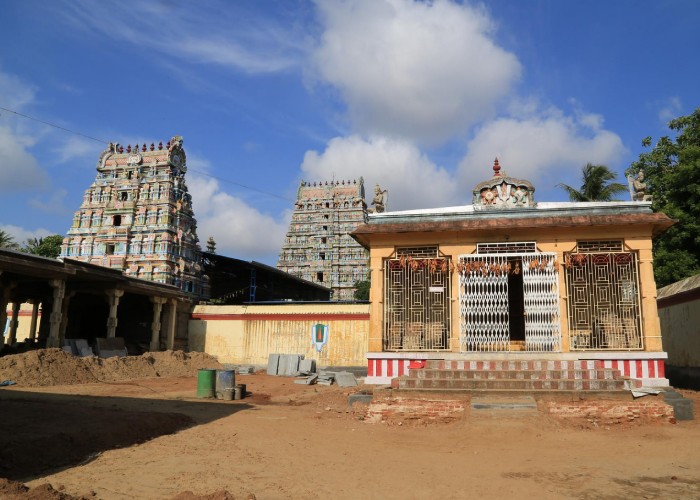
Daily worship here follows the Vaishnavite tradition of Suprabhatam, Thirumanjanam, Alankaram, Neivedyam, and evening worship. The rituals are performed gently, without hurry. This temple is not a busy hub. It is a place of inwardness. Major festivals include the temple Brahmotsavam, which is Thirumangai Alvar’s Birth Festival, Thirumangai Alvar Garuda Sevai, *Vaikunta Ekadasi, Brahmotsavam for the Perumal, and Purattasi Saturdays. The Alvar festivals dominate the temple calendar. The region comes alive during these days. Garuda Sevai is the most important festival for the Thirunangur temples. Eleven Vishnu deities are brought on Garuda vahanams. Thirunagari becomes the central gathering space. The festival re-enacts the Alvar’s connection with Vishnu. Devotees chant his verses, carry offerings, and move between Thiruvali and Thirunagari. This event keeps the temple alive in the cultural memory of Tamil Nadu.
Travelling to Thirunagari means entering a region where devotion is woven into village life. The landscape is modest: fields, trees, simple homes, quiet roads. On first impression, the temple does not impress with height or ornamentation; instead, it feels familiar, like returning to a place you’ve known before. Inside, the sanctum is close, the space is cool, the lighting is soft, the chanting echoes lightly, and the deity feels accessible. Pilgrims often sit quietly in the mandapam after darshan. There is no rush; this temple invites slow breathing. The village community supports the temple in simple ways with flower stalls, tea shops, and small offerings sold outside homes. There is no commercial pressure, and pilgrims often say this temple feels honest and approachable.
Thirunagari sits at the heart of Tamil devotional culture because of Thirumangai Alvar. This temple is where he composed his deepest hymns, surrendered fully to Vishnu, and established the spiritual identity of the Thirunangur region. The Divya Prabandham frequently references the landscape around Thiruvali and Thirunagari. Local families retell the story of the thief who became a saint. The message is simple: grace doesn’t wait for perfection. This story shapes identity, culture and the emotional tone of the entire region. People come to Thirunagari when they seek closure, completion, peace after difficulty, acceptance, and a sense of belonging. The temple represents emotional settling, the moment where struggle becomes surrender.
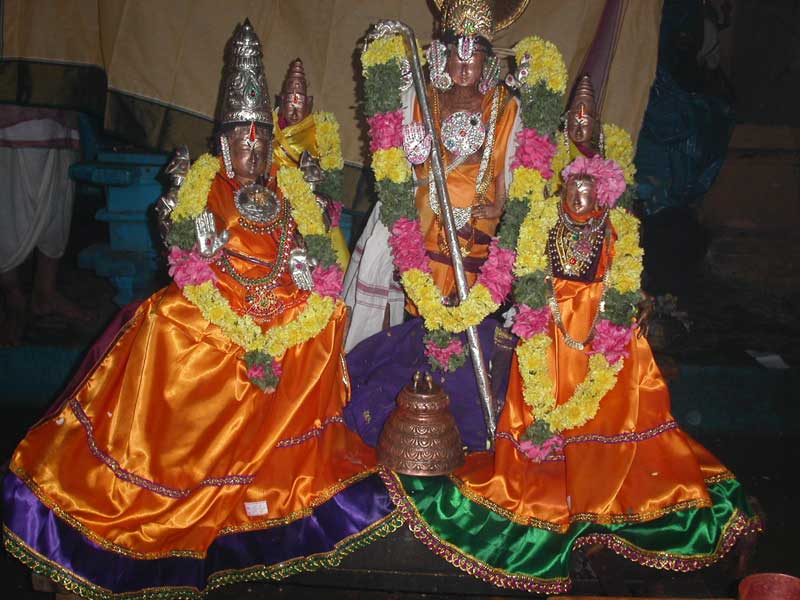
The temple is well-maintained through a mix of administrative oversight and local support. Daily pujas continue without interruption. Recent improvements include repainting inner walls, strengthening the mandapam, repairing stone floors, enhancing lighting around the sanctum, and maintaining the temple tank. The temple has gained more visibility through social media and Divya Desam travel blogs. Younger pilgrims, especially those tracing the Alvars’ lives, make it a priority stop. Despite this increased attention, the temple remains modest and quiet. Its emotional power lies in stillness, not in activity.
Thirunagari is one of the most meaningful Divya Desams because it represents completion: the moment a devotee finally settles into devotion after a lifetime of searching. Adhi Jagannatha Perumal stands as a calm, welcoming presence, while Thiruvaragunamangai Thayar adds softness and grace. Together, they embody acceptance. The temple’s simplicity, mythology and connection to Thirumangai Alvar make it a landmark of the heart rather than architecture. In the Divya Desam circuit, Thirunagari is understated but profound. It teaches that devotion is not about perfection. It is about turning back toward the divine, even after wandering far. Here, ends become beginnings. And the journey that started in struggle finds its resting place.

Thiruthevanarthogai Temple, Thirunangur, Tamil Nadu
Thiruthevanarthogai, located in the quiet lanes of Thirunangur near Sirkazhi in Tamil Nadu, is one of the eleven Divya Desams tied to the dramatic legend of Shiva’s grief and Vishnu’s steadying grace. The presiding deity here is Devanayaka Perumal, with Kadalmagal Nachiyar as the goddess. The name Thevanarthogai roughly means the place where the gods assemble. Local belief says that many celestial beings gathered here to seek Vishnu’s reassurance after Shiva’s fierce dance shook the universe. The temple carries that tone even today: a sense of calm after intensity, gathering after scattering, grounding after upheaval. Thiruthevanarthogai is a temple of belonging. It feels like a place where you can bring whatever you are carrying, set it down quietly and feel held.
All eleven Thirunangur Divya Desams are tied to the same legend. After the death of Sati, Shiva was devastated. His grief triggered the Rudra Tandava, a cosmic dance that created powerful tremors across the region. From each strike of his matted locks, eleven forms of Shiva emerged. To calm this overwhelming energy, Vishnu appeared in eleven forms, one for each manifestation of Shiva. Thiruthevanarthogai represents one of these balancing forms.
Local lore says that after Shiva’s dance, the gods felt deeply unsettled. Unsure of how to restore balance, they assembled at this very spot to pray to Vishnu. Vishnu took the form of Devanayaka Perumal, meaning leader of the gods. This form represents steadiness, authority without aggression, gentle leadership, and reassurance. The idea is simple: when beings of all kinds feel shaken, they gather here and stand before the one who guides without force. The goddess here, Kadalmagal Nachiyar, is associated with the ocean (Lakshmi). Her presence adds emotional depth. The ocean is calm at times, rough at others, much like life. Here, she stands as a soothing balance to Perumal’s steady posture. Thirumangai Alvar composed verses about this temple, praising Perumal as the one who stands firm when the world trembles. His hymn places this temple within the Divya Prabandham, ensuring its status as a sacred Vaishnavite shrine.

Thiruthevanarthogai is part of a close-knit group of temples in Thirunangur that date back many centuries. Though modest today, the temple likely has early Chola origins, visible in its stone base and simple structural style. Historical patterns include local chieftains and families supporting daily worship, land grants for lamps, offerings and festivals, renovations during the Nayak era, especially strengthening pillars and mandapams, and festivals shaped by community participation rather than royal patronage. Because of its connection to the eleven-temple circuit, the temple has remained active even when political attention shifted to larger towns. Thirunangur’s identity is tightly woven with the mythology of Shiva and Vishnu, and all eleven temples, including Thiruthevanarthogai, survived largely through the devotion of local people.
Thiruthevanarthogai follows the architectural tone of the Thirunangur Divya Desams, simple, small and spiritually focused. The temple’s layout is clean, without unnecessary ornamentation. Key architectural elements include a modest entrance gopuram, a small courtyard, a stone mandapam with plain granite pillars, a compact sanctum, a separate shrine for the goddess, and a pradakshina path that hugs the sanctum walls. The temple tank lies close by, used mainly during annual festivals.
Devanayaka Perumal stands facing east. His posture is upright, composed, and quietly authoritative. This is not a dramatic form of Vishnu. It is a steadying one, fitting for the temple’s theme of divine assembly and reassurance. Kadalmagal Nachiyar’s shrine has a gentle, grounding presence. Many devotees spend time here seeking emotional balance, especially during phases of uncertainty. Unlike larger Vaishnavite temples, this one carries no grand towers or heavy sculptures. It reflects the quiet rural setting with cool stone floors, soft lighting, simple flower garlands, and murmurs of daily chanting. The simplicity allows the mythology and atmosphere to lead the experience.

Daily worship follows the Vaishnavite tradition, carried out in a steady and unhurried manner. Daily pujas include the morning suprabhatam, Thirumanjanam, Alankaram, Neivedyam, and the evening lamp worship. Major festivals include the Thirunangur Garuda Sevai, the most important, Vaikunta Ekadasi, Brahmotsavam, Purattasi Saturdays, Sri Krishna Jayanthi and Rama Navami. The Garuda Sevai festival defines the cultural identity of the region. Eleven deities from the Thirunangur temples gather on Garuda vahanams. Thousands of devotees walk between temples, singing the Alvar’s hymns. Thiruthevanarthogai plays a key role because of its theme of divine assembly. During Garuda Sevai, the temple becomes a living reenactment of its own mythology. People come to this temple when they feel emotionally scattered, need grounding, seek reassurance during turbulent times, want to feel belonging again, and need calm after conflict or stress. The temple reinforces the idea that even gods once gathered here for steadiness, and that humans can too.
The journey to Thiruthevanarthogai is peaceful. Pilgrims travel through narrow village roads lined with paddy fields and coconut trees. The temple blends naturally into the landscape. Stepping inside, the tone shifts. The sanctum is close and intimate, the air smells of sandalwood and flowers. The chanting echoes softly and the lighting brings a sense of stillness. It is the kind of temple where you instinctively lower your voice. Because the mythology emphasises gathering, the atmosphere often feels communal even when the temple is quiet. Small groups sit in corners chanting, and families come for calm. Older villagers share stories about the temple’s legends. Pilgrims often visit Thiruthevanarthogai as part of the larger Thirunangur circuit. But the emotional tone here stands out; it feels like a place of coming together, internally and externally. A few small shops outside sell flowers and snacks. The temple retains its rural simplicity.
Thiruthevanarthogai holds a strong place in Tamil Vaishnavite memory. Thirumangai Alvar’s hymns give the temple cultural identity. His verses describe Perumal as the leader of the gods, steadying them during cosmic disturbance. These hymns are central during festivals and community gatherings. Because the temple symbolises the gathering of gods, it influences local customs. Families pray here before major decisions, community groups meet here for blessings, and elders encourage people to visit when life feels scattered. The temple reinforces the idea that strength lies in unity. During Garuda Sevai, villagers decorate the streets, musicians recite the Prabandham, devotees from across Tamil Nadu participate, and the eleven deities converge symbolically as they once did mythologically. This festival keeps the temple’s stories alive in the cultural fabric of the region.

The temple continues to operate with daily pujas, supported by the administration and local devotees. Renovations occur periodically, mainly to strengthen structural elements without altering the original tone. Recent updates include repainting inner walls, reinforcing stone pillars, cleaning the temple tank, and maintaining the outer prakaram. The temple has gained visibility on Divya Desam travel routes and social media, drawing younger pilgrims who want to explore lesser-known temples. Despite this increase in visitors, the temple remains quiet and uncluttered. Its primary identity, as a place of grounding and gathering, remains unchanged. The temple’s message feels especially relevant in modern times. People today often feel isolated or overwhelmed. Thiruthevanarthogai offers a space where scattered thoughts and emotions can settle.
Thiruthevanarthogai stands as one of the gentlest yet most meaningful Divya Desams in the Thirunangur region. Its mythology of divine assembly, its steady deity, and its quiet architecture all point toward the same idea: you don’t have to carry everything alone. Devanayaka Perumal embodies guidance without pressure and authority without force. Kadalmagal Nachiyar adds the emotional softness that completes the temple’s tone. As part of the eleven temples formed to calm Shiva’s grief, Thiruthevanarthogai represents coming together, both emotionally and spiritually. It reminds devotees that gathering, grounding and reassurance are forms of grace too. And that sometimes, simply standing in a quiet place with the divine is enough.
 Memories and Such