In My Hands Today…

On the Map: A Mind-Expanding Exploration of the Way the World Looks – Simon Garfield

Simon Garfield’s Just My Type illuminated the world of fonts and made everyone take a stand on Comic Sans and care about kerning. Now Garfield takes on a subject even dearer to our fanatical human hearts: maps.

Imagine a world without maps. How would we travel? Could we own land? What would men and women argue about in cars? Scientists have even suggested that mapping—not language—is what elevated our prehistoric ancestors from ape-dom. Follow the history of maps from the early explorers’ maps and the awe-inspiring medieval Mappa Mundi to Google Maps and the satellite renderings on our smartphones, Garfield explores the unique way that maps relate and realign our history—and reflect the best and worst of what makes us human.

Featuring a foreword by Dava Sobel and packed with fascinating tales of cartographic intrigue, outsize personalities, and amusing “pocket maps” on an array of subjects from how to fold a map to the strangest maps on the Internet, On the Map is a rich historical tapestry infused with Garfield’s signature narrative flair. Map-obsessives and everyone who loved Just My Type will be lining up to join Garfield on his audacious journey through time and around the globe.

Travel Bucket List: Malaysia Part 49 – Sarawak Part 6

Bako National Park
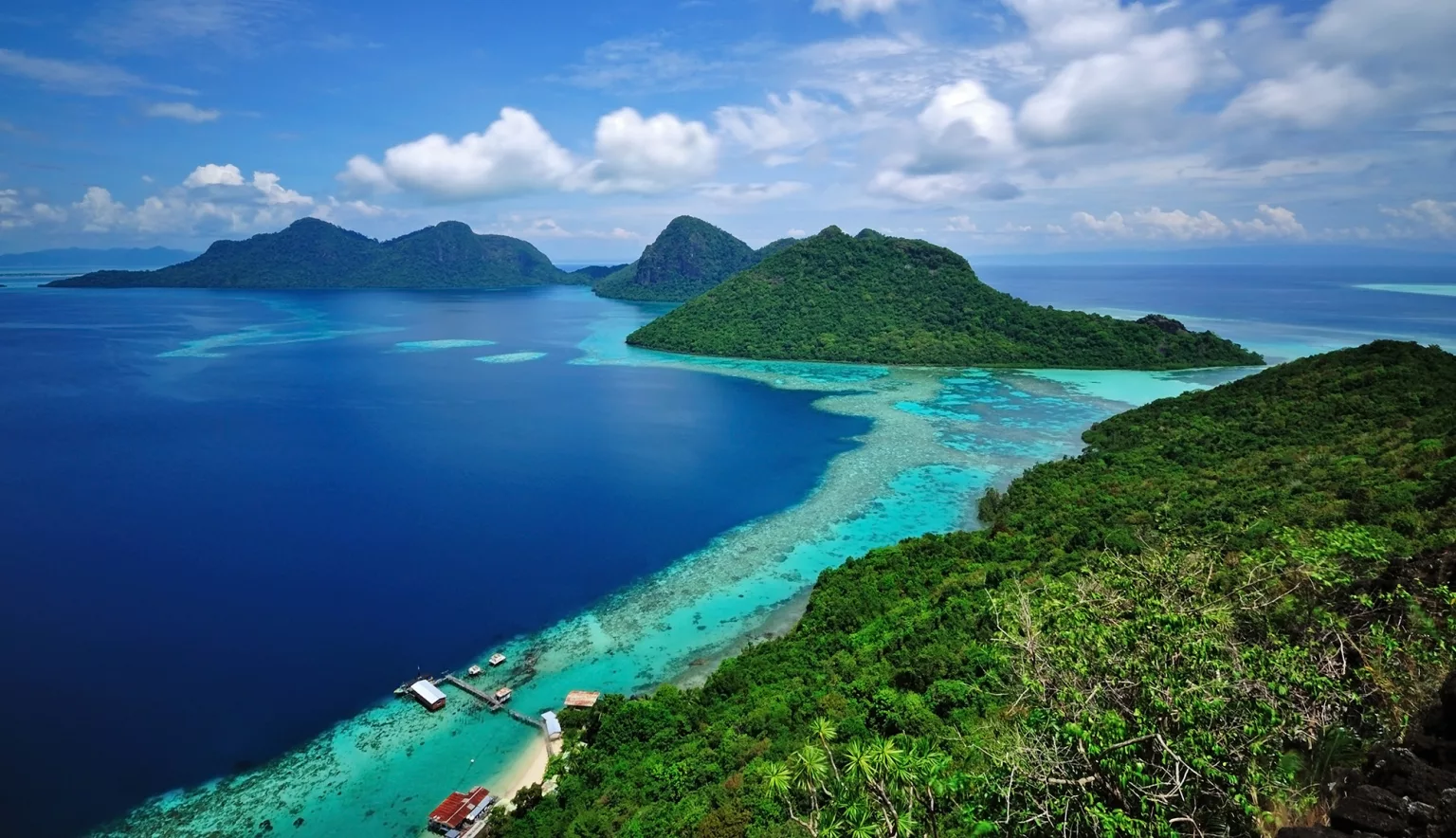
Malaysia’s oldest national park, Bako National Park has beaches, cliffs and rock formations. Covering an area of 27 sq km, it envelops the peninsula of Muara Tebas. The wildlife of the park is exceptional with long-tailed macaque monkeys, proboscis monkeys, squirrels and monitor lizards. Proboscis monkeys, unique to Borneo, are a major highlight of this park. It is said that one can witness all the Borneo’s vegetation at Bako.

Bako is one of the smallest national parks in Sarawak. However, it features multiple biomes (including rainforest), abundant wildlife, jungle streams and waterfalls, secluded beaches, and trekking trails. A network of 16 marked walking trails of different lengths allows visitors access. In addition, various beaches are accessible by boat from Kampung Bako or Teluk Assam, as well as a geologically interesting sea stack rock formation. The range of attractions and activities in a compact area has made Bako one of the most popular parks in Sarawak.

A distinctive feature of Bako National Park is its picturesque coastlines and bays offering a unique combination of forest by the beach. The sea stack rock formations at the beaches are also among the most visited and renowned places in Bako. Trek by the well-marked trails, wildlife sighting, birding and overnight camping expeditions are some of the most popular activities here, though if one is attempting the longer trails, they have to inform the Park Headquarters before setting out.

Early mornings and just before dusk are the best times for bird sightings at Bako. Guided night walks cost RM 10 per person and let the visitors witness the incredible nocturnal wildlife of the park. Pulau Lakei is a small beautiful island located at the northern tip of the park on the Muara Tebas Peninsula and can be reached by a short boat ride from Kampung Bako.

Bako is famous for the rarely found, but endangered Proboscis monkeys which can be spotted along a few trails like Telok Paku and Telok Delima. It has an incredible variety of birds, with about 150 recorded species. Bako consists of mainly dipterocarp trees and mangrove forests. Carnivores pitcher plants along the Lintang trail are also a major component of the forest.

The Telok Pandan Kecil Trail is a one-hour trail to the Telok Pandan Kecil beach. The beach has several limestone and sandstone cliffs including the geologically famous Sea Stack. Most tourists spend their time in the cool waters at the beach after a tiring walk. However, saltwater crocodiles have been spotted in the waters lately, and swimming on the beach is not recommended. Located near the park headquarters, Telok Assam Beach is very famous among its visitors for its tranquillity and the sight of the swifts that it offers at sunset. These two beaches are also accessible by the boat service provided at the Bako village market.

Proboscis monkeys can be sighted on the Telok Paku and Telok Delima Trails. Several tourists visit the park to spot the rare and indigenous Proboscis monkey. The mangroves of Teluk Assam and the trails of Telok Paku and Telok Delima are the famous trails where these are spotted. The best time to go to these places is early morning or late afternoon. Telok Paku is an 800-meter trail that takes about 45 minutes while Telok Delima is a 250-meter trail taking about 30 minutes. The Tanjung Sapi Trail is a 30-minute 800-meter steep trek through the cliff vegetation which gives a mesmerising view of Teluk Assam and the South China Sea. The Ulu Assam Trail is about 1.4 km long from the headquarters which takes about 90 to 120 minutes to trek. The trail passes through the swamp forests and gets steep towards the end. At the end, witness a picturesque view of Bako’s Coastline. Serait is a secluded trail that is 1.2 km long and takes more than an hour to reach the end of the park’s boundary. Bukit Gondol is a 2 km long semi-circular trail that passes through the highest point of Bako, Bukit Gondol hill at 2660 meters. The Ulu Serait Trail connects the Serait Trail and the Bukit Gondol Trail and covers the area consisting of swamp forests and scrub vegetation. To take a shortcut and not climb the Bukit Gondol, switch to Paya Jelutong which consists of several softwood Jelutong trees that are used to make pencils. Lintang is one of the most famous and longest trails covering a distance of 5.5 km in about 3 to 4 hours. The trail passes through the forest, letting the visitors witness all the vegetation in one trail itself. Tajor Trail is a 2.75 km that can be covered in 2 to 3 hours. It covers the Tajor Waterfall and ends at a steep climb to a small beach. Telok Pandan Besar is a 750-meter trail that can be covered in 45 minutes, that ends at a cliff top with a hypnotising view of the beaches. Tanjung Rhu is a 1.8 km trail that diverges from the Tajor Trail towards the Rocky Formations of the Rhu peninsula. Bukit Keruing is a 2.25 km long trail that connects Bukit Gondol to Tajor Waterfalls passing through the slope of the second-highest peak in Bako, Bukit Keruing. Telok Sibur is a 5.3 km trail from the park headquarters, this trail ends at the longest beach of Bako. It passes through the Tajor Waterfall and is very steep at the end. Telok Limau is the longest trail of Bako covering around 6 km one way and 10 km from the headquarters. This trail has incredible vegetation passing through the scrubland, swamp vegetation, small hills and rainforest. Camping is allowed at Telok Limau Beach with prior permission. The Telok Keruin trail is 1.5 km but from the headquarters, it is 10 km. It is one of the rarely taken trails as it is further away from other trails. It is known for scrub vegetation and pitcher plants that come through its way. It also leads to a deserted beach which is secluded and peaceful.

After reaching Bako, tickets to the park and the boat ride have to be purchased. The boat ride from Bako Village to Bako National Park takes about 20 minutes. The Boat Service is open from 9 am to 3 pm and return from the Park has to be planned accordingly. The boat ride costs RM 40 for a return fare for foreigners and RM 30 for Malaysians. It’s RM 200 for a chartered boat return fare. The park is open daily from 8 am to 5 pm and non-Malaysian adults pay RM 20 while children pay RM 7 and Malaysian adults pay RM 10 and children pay RM 3. A permit is required for professional photography or filming.

Batang Ai National Park
A national park that can be accessed by the largest man-made lake, Batang Ai, the Batang Ai National Park is where the Iban made their first settlements. The park covers an area of 24 sq km of extensive tropical rainforest with many rare and protected animals surrounding the 24 sq km artificial lake created by the Batang Ai hydroelectric reservoir. The park was proclaimed in 1991 and has become increasingly popular with locals and tourists despite the lack of facilities with the Iban longhouses a big draw here that gives an insight into the life and history of Iban.

Access is possible by chartering a boat, a traditional boat called a Longboat, as water is the main method of transportation in the area. The ride takes approximately about 40 minutes to the Batang Ai National Park headquarters. The lush dipterocarp forests are home to the orangutan, gibbons, and hornbills. The lake creates a beautiful environment and gives a sense of peace and tranquillity. The local inhabitants are mostly Iban, and tours to nearby Iban longhouses are also a tourist diversion. This national park takes strong steps in having the local communities involved in its management. The communities have formed a cooperative called Kooperasi Serbaguna Ulu Batang Ai and are helping to conserve the park.

The Padlai Trail starts at the Nanga Lubang Baya Longhouse. It follows a 30-m climb to an old burial ground which is referred to as Pendam Sepetang. Then, it passes through the ridge between Nanga Lubang Baya, a crocodile pool, and pig wallows to reach the highest point of the Batang Ai River. Then the trail descends to the Wong Padalai Rapids reaching the picnic spot. The Bilitong Trail is a difficult trail that goes through the Tuchong Bilitong Iban burial site where six tribal leaders are buried. Then it follows the Ulu Sengai Serekong, a 320 m elevated platform. From there, Tuchong Inggai at an elevation of 420 m is an optional climb said to be protected by the spirit of Tugang. It ends at Batang Ai and Lelayang stream where boats pick up trekkers. The Sium Trail is the most difficult in Batang Ai National Park. It is a steady trek for 2.5 km followed by a ridge climb of 415 m. It crosses the Iban burial ground to reach Bukit Sium Ukap, with an elevation of 704 m. On a clear day, the Indonesian lake of Sentarum can be seen. On the way back, one can follow the Berikut River to reach the Tapang tree which is respected among the Iban for its height, white wood and broad branches. The Iban do not cut it as it is believed that cutting Tapan brings bad luck and death. A must-do is the boating in the lake to longhouses. When visiting Batang Ai National Park, one can stay at the Iban longhouse.

Though Batang Ai National Park is famous for Orangutan sightings, there are many more species of wildlife to be found. Several trails pass through the Orangutan habitation area and ensure an Orangutan sighting. Other than orangutans, one gets to witness Gibbons, Bearded Pigs, Langurs and Hornbills.

A permit is required for professional photography and filmmaking. It is to be arranged in advance from the National Park’s Booking Office. The park is open from 8 am to 5 pm on all days, including Sundays and public holidays.

Similajau National Park
Similajau National Park or Samalaju National Park is located about 30 km from Bintulu. The national park, facing the South China Sea, contains rainforests, beaches, and rocky shores. Initially, the park covered an area of 70.64 sq km, extending from Sungai Likau in the south to Sungai Similajau in the north over a distance of 30 km. On February 17, 2000, an additional 19.32 sq km was incorporated into the park, expanding its total size to 89.96 sq km along a narrow coastal stretch.

The park’s flora consists of three main types: beach, kerangas, and mixed dipterocarpaceae forest. The park has 24 recorded species of mammals, including primates such as gibbons, banded langurs, and long-tailed macaques. A total of 185 species have been identified in the park including hornbills and migratory water birds like the Storm’s stork. There are 8 species of hornbill recorded in Sarawak including the rhinoceros hornbill and the black hornbill, which can be found in the park. Occasionally, green sea turtles come ashore to lay their eggs.

12 out of the 20 marine mammals recorded in Malaysia can be found in Sarawak. These include whales, dugongs, and dolphins. Five species of dolphin have been recorded in Bintulu waters: the Irrawaddy dolphin, bottlenose dolphin, Indo-Pacific humpback dolphin, finless porpoise, and pantropical spotted dolphin. Dolphins can be seen in the park from March to September every year. They are often spotted in groups of four or more during the early morning.

The crocodiles in the Likau River consist of two species of riverine crocodiles in the park: the false gharial and saltwater crocodile. The saltwater crocodile is very dangerous and has been responsible for many fatal attacks in Sarawak. The false gharial is generally shy and passive, but on rare occasions, fatal attacks have been confirmed in Central Kalimantan and Sumatra.

The horseshoe crab often appears during the dry season from early May to October. They usually appear in pairs. The males are smaller in size compared to the females, who come to the shore to lay eggs. During the breeding season, Sagor catfishesSagor Catfishes can be seen feeding on the eggs.

Batu Mandi lies about 4 km off the shore of Kuala Sungai Likau and can be reached only by boat. It is noticeable from the park only during low tide. Batu Anchau is a black rock surface situated at the end of the Batu Anchau trail about 2 km from the park office. The Selunsur Rapids can be found at the end of the Selunsur Rapid trail, about 6.8 km from the park office. They can be seen clearly after a heavy downpour. There are two units of Turtle Beach, Turtle Beach I and II. They are located about 6 and 7 km from the park office. They are where turtles go to lay eggs from March to September annually. Sebubong Pool is a natural pool at the Sebubong River that can only be reached by boat.

The Main Trail which is marked in red covers 9.8 km and is towards Golden Beach, and can be reached by hiking or boat. The Education Trail, marked in green consists of two parts: one is a 450 m plank along the mangrove forest and another is a 600 m jungle trail. Here, park office staff teach about the various tree species. The white/red trail, the Circular Trail starts from the end of the mangrove plank walk and meets the main trail at 0.5 km with a total distance of 1.7 km. The Batu Anchau Trail marked in white has a total distance of 2.1 km and ends up at the Batu Anchau rock surface.

Miri-Sibuti Coral Reef National Park
The Miri-Sibuti Coral Reefs National Park is a protected area of coral reefs, off the island of Borneo and a popular dive destination. The Miri-Sibuti Coral Reefs National Park, lying at depths ranging from 7 to 50 metres at the seaward edge, has an average visibility of 10 to 30 metres. The best time to dive is from late March through November each year. Popular diving sites include Anemone Garden, Grouper Patch Reef, Atago Maru Wreck and Seafan Garden. There are also some wreck dives. It is one of Malaysia’s most recently discovered diving locations and the largest offshore national park created in the state.

The reefs house a wide diversity of marine creatures including soft corals like leather corals, sea whips, Bubble corals, staghorn corals, Dendronephthya and Gorgonia sea fans, as well as sponges including elephant ear sponges. Fish species include clownfish, yellow and blueback fusiliers, angelfish, butterflyfish, sea perch, lizardfish, batfish, jackfish, barracudas, Napoleon wrasse and sharks. Other creatures include feather stars, giant clams, nudibranchs, sea anemones and sea horses.

Usun Apau National Park
Usun Apau National Park was designated in 2005 and covers the Usun Apau Plateau in the highlands of central Borneo. Usun Apau is a volcanic plateau covering an area of approximately 1,550 sq km, and averaging 1000 meters in elevation. There are three extinct volcanoes in the centre of the plateau – Selidang at 1,370 m, Kenawang at 1,280 m, and Mabun at 1,280 m. The northern, eastern, and western edges of the plateau end in steep escarpments nearly 300 meters high. Three rivers drop from the northern edge of the escarpment, including the Julan River, which forms the Julan waterfall almost 245 meters high. Streams from the plateau form the headwaters of the Rajang and Baram rivers.

The plateau is covered by montane rain forests, including kerapa, a stunted forest of small trees with gnarled trunks which forms on poor soil with bad drainage, and kerangas forest, made up of tall trees with thin trunks growing on infertile volcanic soil.[2] Hill dipterocarp forest covers the lower slopes of the plateau. The plateau is home to several vulnerable and near-threatened bird species and is designated an Important Bird Area. The gracile slender toad or Ansonia teneritas is known only from the plateau and one other locality. The plateau is relatively inaccessible, with access to the base of the plateau on logging roads, and only trails and no roads on the plateau itself.

In August 2022, Sarawak’s premier announced that the Government of Sarawak would improve road access to the national park, and Julan Waterfall in particular, to open it to tourism, as part of the state’s Post-COVID-19 Development Strategy through 2030.

Bukit Tiban National Park
Bukit Tiban National Park is a national park near Bintulu that encloses the headwaters of the Sungai Nyalau and Sungai Timong Rivers in Miri and Sungai Sigrok, a tributary of Sungai Similajau in the Bintulu. While the forest in the park was logged before 1985, most of the surrounding land has been converted to palm oil plantations, making the area an important refuge for remaining wildlife. Much of the eastern half of the park has however been converted to palm oil in the years since the park was established.

Loagan Bunut National Park
Loagan Bunut National Park is located in Miri. The park was named after the Loagan Bunut Lake nearby, which is connected to the Sungai Bunut, the Sungai Baram and the Sungai Tinjar. This park occupies a space of 100 sq km and is well known for its rich biodiversity and unique aquatic ecosystem. The national park was gazetted on January 1, 1990, and was opened to the public on August 29, 1991

Santubong National Park
Santubong National Park is located 35 km north of Kuching. It contains the 810 m peak of Mount Santubong and the surrounding rainforested slopes. There are several jungle treks in the park, including to the peak. Wildlife in the park include proboscis monkeys and rhinoceros hornbills. This is one of the best places in Sarawak where one can observe the rare Irrawaddy dolphin, which chooses rivers, estuaries and shallow coastal areas as its habitat.

Rajang Mangroves National Park
Located in Sarikei, Rajang Mangroves National Park is home to species such as proboscis monkeys, silvered langurs, lesser adjutant storks, Irrawaddy dolphins and hornbills. It has a very important role in preserving the coast, from the occurrence of erosion, tidal floods and salt intrusions.

In My Hands Today…

The Lunatic Express: Discovering the World… via Its Most Dangerous Buses, Boats, Trains, and Planes – Carl Hoffman

Indonesian Ferry Sinks. Peruvian Bus Plunges Off Cliff. African Train Attacked by Mobs. Whenever he picked up the newspaper, Carl Hoffman noticed those short news bulletins, which seemed about as far from the idea of tourism, travel as the pursuit of pleasure, as it was possible to get. So off he went, spending six months circumnavigating the globe on the world’s worst conveyances: the statistically most dangerous airlines, the most crowded and dangerous ferries, the slowest buses, and the most rickety trains. The Lunatic Express takes us into the heart of the world, to some its most teeming cities and remotest places: from Havana to Bogotá on the perilous Cuban Airways. Lima to the Amazon on crowded night buses where the road is a washed-out track. Across Indonesia and Bangladesh by overcrowded ferries that kill 1,000 passengers a year. On commuter trains in Mumbai so crowded that dozens perish daily, across Afghanistan as the Taliban closes in, and, scariest of all, Los Angeles to Washington, D.C., by Greyhound.

The Lunatic Express is the story of traveling with seatmates and deckmates who have left home without American Express cards on conveyances that don’t take Visa, and seldom take you anywhere you’d want to go. But it’s also the story of traveling as it used to be — a sometimes harrowing trial, of finding adventure in a modern, rapidly urbanizing world and the generosity of poor strangers, from ear cleaners to urban bus drivers to itinerant roughnecks, who make up most of the world’s population. More than just an adventure story, The Lunatic Express is a funny, harrowing and insightful look at the world as it is, a planet full of hundreds of millions of people, mostly poor, on the move and seeking their fortunes.

Travel Bucket List: Malaysia Part 48 – Sarawak Part 5

Sarawak has about 30 national parks, each of which is different and extraordinary, although not all are accessible. Here are some of them.

Gunung Gading National Park
Often referred to as the home of the elusive Giant Flower, Gunung Gading National Park is located near the town of Lundu. The park is considered the best place in Asia to witness the rare Rafflesia plant which produces the world’s largest flower. This parasitic plant is 1 meter huge and blooms for a few days only. Other attractive features that draw attention are its colour-coded well-marked trails where tourists can trek and hike to the waterfalls or the peaks by these trails to picturesque views for a tranquil experience. Gunung Gading National Park also has several war remnants which makes it a place of historical importance. The Summit Trail and the Rafflesia Trail require the company of a professional guide provided by the Park. The tour can be arranged through travel agents who arrange for everything including the travel and guide.

Several tourists visit the park to see the rare Rafflesia flower which flowers only for a few days. Most of the flowers are found on the lower slopes of the mountains. This trail has a plank walk which follows the way where Rafflesia can be found. The best time to witness these flowers in bloom is November, December and January. Information about blooming flowers can be acquired from the Park’s headquarters or the National Park Booking Center in Kuching. The Waterfall Trail is one of the shortest trails leading to a series of seven waterfalls, though not all the waterfalls are accessible. Tourists are allowed to dip into the waters of Waterfall 1, 3 and 7. The trek is easy with a few steep slopes on the way. A trek to the 7th waterfall takes about an hour. The last waterfall is surrounded by fig trees and has a rocky valley with a crystal-clear water pool. This is the most taken trail and perfect for a day picnic.

The Gunung Gading Summit Trail is the longest and the most difficult trail at the park. The hike to the Gading Hill summit at the height of 965 m takes about 3 to 4 hours and is worth the picturesque view. One may get to see the Rafflesia flowers at the lower slopes of the hill while trekking. However, tourists are not allowed to camp or stay overnight, so it is recommended that people set off early and return to the headquarters on time.

The summit of Gunung Gading served as the British Army Camp in the 1960s and to date has preserved remnants of the war including a water tank, helipad and barbed wire fencing. The trek to Batu Bakubu is an extension of the Gunung Gading trail towards Baku Bakubu which was where the communist camp was located during the insurgency in the 1960s. This trail takes an additional 2.5 to 3.5 hours round trip from Gunung Gading.

There is very limited wildlife to be found at the Gunung Gading National Park. However, several reptiles and insects in the park can be spotted. Millipedes and lizards are the most common sightings. Incredible species of lizards can be spotted like the blue eye Borneo angle-head lizards. Gunung Gading is known for the rarely spotted Rafflesia flower which is the biggest flower that blooms with a diameter of 1 meter. The flower blooms in the monsoon season. It takes about 9 months for it to grow and get mature and then blooms for only 4 to 5 days. Other than Rafflesia, the park is majorly composed of Dipterocarp trees and Fig trees. The vegetation includes longer trees at the base of the mountains but the height decreases with the increasing altitude. The higher peaks are majorly low shrubs and trees.

There is no cafeteria inside the park and one should carry food and snacks from the town of Lundu which is 10 minutes away. Another alternative is to get supplies and cook food in the Lodge Kitchen for those staying at the Lodge. There are a few accommodation options at the park. One can spend a night at the Forest Lodge, Forest Hostel, or at the campsite. The Forest Lodge Type 5 cost RM 150 pr unit, while the Forest Hostel costs RM 40 per room or RM 15 per bed. Camping will set visitors RM 5 per person.

Tourists are not allowed to stay overnight during the long hard seven-hour treks to the summit. The treks should be planned accordingly such that one leaves early in the morning and returns to the park headquarters by late afternoon. The only accommodations are the Lodge, Hostel and Campsite and tourists are expected to return to these by evening.

Entry fees can be purchased at the entrance of the park only. Malaysian adults pay RM 10 while children pay RM 3 and those under the age of 6 get in for free. For non-Malaysians, adults pay RM 20 while children pay RM 7. The park is open daily from 8 am to 5 pm.

Kubah National Park
Located 20 km from Kuching, against the scenic backdrop of the Matang Range, the Kubah National Park covers an area of 2230 hectares on a plateau and offers its visitors clear streams with cascading waterfalls and bathing pools. Even though the park beholds a myriad of fauna, it is famed for its flora, especially the wide range of palm species.

The park has several well-marked trails ideal for trekking. The Waterfall Trail is the most famed as it provides a wonderful time in the cool bathing pools. Over the past few years, Kubah National Park has also come to be well known for its nocturnal frogs. The Matang Wildlife Center also forms a part of Kubah National Park.

The Gunung Serapi Summit which leads to the Serapi Summit is a 5-6 hour return trip. From the Summit, one can witness the picturesque panoramic view of Mount Santubong, the coastline and the mountain range which serves as a natural border with Indonesia. The Palmetum Trail is known for the different varieties of palm trees. The Selang Trail is one of the difficult trails as the last 500 m get steep. The climb is to be done with rope which ends at Bukit Selang. The view from the top is delightful and comprehensive with the Matang range in the backdrop and Santubong peninsula beneath. The most popular trail, the Waterfall Trail ends at a dipterocarp forest with streams and swamps, and the cascading waterfall with 10 meters depth is a perfect place to rest and relax after a long trek. The Rayu trail leads towards Matang Wildlife Center passing through Bintangor trees on the way. The trail crosses through Swampy lands and clear streams finally reaching the riverside picnic spot at the wildlife center.

Kubah National Park is very diverse in terms of fauna being one of the most diverse areas comprising more than 60 species of frogs. Often referred to as the world of Palms, Kubah National Park has more than 93 recorded species of Palms. The forest is mainly dipterocarp trees with patches of Kerangas forest and shrubs. Orchids and Pitcher Plants are a common sight.

The park is famed among birdwatchers due to the diverse birds inhabiting the area. Early in the morning and the evening are considered best for bird watching. Some indigenous Borneon birds include owls and Blyth’s frogmouth, Borneon black magpie, red-bearded bee-eater, Borneon blue flycatcher and blue banded pitta can be found here.
The park has an overnight accommodation facility which can be booked online or from the Kuching office in advance. There are Chalets, Rest houses and Hotels with limited bedding which require a pre-booking.

The park is open from 8 am to 5 pm, Monday to Friday and on weekends and public holidays is open from 7:30 am to 4:30 pm. On weekdays, the cut-off time for hiking is 11 am while it is 10 am on weekends and public holidays. Entry fees for foreigners are RM 20 for adults and RM 7 for children between 7 and 18. For Malaysians, entry fees are EM 10 for adults and RM 5 for children. Children under 6 years enter for free. A permit is required for professional photography and can be arranged in advance through the National Park’s booking office.

Semenggoh Nature Reserve
Located about 20 km from Kuching, Semenggoh Nature Reserve is one of the most diverse nature reserves serving as a rehabilitation centre for the primate orangutans and several bird species. The major highlights are orangutans feeding and bird watching.

The natural reserve was initially developed to protect animals who were injured or who were previously captivated to maintain an ecological balance. Semenggoh not only allows tourists to experience surprisingly extraordinary flora and fauna but also to communicate with the animals, especially through feeding them.

The Orangutans Gallery has been created to educate visitors about the similarities between orangutans and humans and also their feeding habits. The gallery comprises graphics which illustrate the DNA structure of orangutans, their mating season and their life cycle. The park has made significant efforts in protecting orangutans that were held captive earlier or the ones that were injured. Over the years the natural reserve has provided a healthy environment and a natural habitat for the orangutans to grow and multiply considerably. The orangutan feeding hours are from 9 to 10 am and between 3 and 4 pm. Tourists can feed the orangutans. However, when the trees are full of fruits, orangutans may refuse to eat from tourists.

The Botanical Research Centre is a nursery which protects different native and international species of flora from orchids to many fruits. The research centre also comprises a bamboo garden and a pond with a floating pavilion. One can easily spot many exotic species of birds including the Hooded Pitta, the Banded Broadbill, the Green Broadbill, the Blue-winged Leafbird, the Asian Paradise Flycatcher, the Crested Jay, and the Reddish Scops Owl. The most striking feature of Semenggoh is that the birds are not caged like in most zoos or natural parks. These are mostly migratory birds which one can easily spot either on the trees or the ponds inside the natural reserve.

The Wildlife Rehabilitation Centre aims at protecting injured, weak and endangered animals. This rehabilitation centre even trains orangutans once held captive to live and fetch food for themselves in the jungles. The Semenggoh Nature Reserve makes it a point to protect several species of animals that have lost their natural habitat.

The best time to visit the reserve is between April to October to see the maximum number of orangutans. Orangutans are comparatively less visible in other months because of the fruiting season. One should also visit during the feeding time of the day so that they get to feed the orangutans. The reserve is open from 8 am to 10 am and again from 2 to 4 pm. Entry fees are RM 10 for adults, RM 5 for senior citizens and those with disabilities as well as children between the ages of 7 and 18 while children below the age of 6 enter for free.

Kuching Wetlands National Park
One of the last remains of the former Sarawak Mangrove Forest Reserve, the Kuching Wetlands National Park or Taman Negara Tanah Lembap Kuching is located about 30 km from Kuching. The park is filled with saline mangrove plantations and tourists can explore the lush greenery and vegetation of the park on a river cruise. It also houses some endangered species. The Wetlands National Park was gazetted in 1992 and covers an area of 66.1 sq km on the estuarine reaches of the Sibu Laut and Salak rivers. The park is composed of coastal, marine and freshwater ecosystems. The predominantly saline and deltaic mangrove system includes an extensive network of marine waterways and tidal creeks, formed by the interconnecting rivers of Sungei Sibu-Laut, Batang Salak and Sungei Santubong that form the boundary of the park. Some small patches of heath forest are found within the park.

The park is the home of at least three predominantly arboreal primates; the endangered proboscis monkey or Nasalis larvatus, the long-tailed macaques and the silvered langurs. White-bellied sea eagles, mudskippers and horseshoe crabs are also present. Hairy-nosed otters, Irrawaddy dolphins, and saltwater crocodiles can also be sighted. On nearby Mount Santubong, hornbills can be seen.

In the 12th century, the area was an important trading post between the interior peoples for their jungle produce predominantly animal parts valuable in Chinese medicine traded with the Chinese for their pottery and earthenwares. Past and existing excavations have unearthed remains of the former Iron smelting industries active hundreds of years past. The Impressive Mt. Santubong acted as a clear navigational point for these traders no doubt.

One should not miss the day tour spent cruising through the Salak River, passing through a Malay fishing village, catching glimpses of wild animals like crocodiles and trying to spot the infamous snub-nosed Irrawaddy dolphins. When one visits the park in the evening, it is just in time to catch the magical and romantic sunset on the water and the firefly tree known as the api-api tree which lies amidst shimmering green lights. The cruise begins at the mouth of the Santubong and Salak Rivers, the point which is known as Santubong Boat Club. The boat takes the tourists from the village of Santubong to the park through the meandering rivers of Salak and Sibu Laut. Tour operators provide pick-up options from the hotel as well, which can be availed for convenience.

Many jobs depend upon this habitat for the rich abundance of fish that are spawned and grow amongst the protection of the root systems. Timber is extracted for construction and several charcoal factories. The tourism industry is starting to grow offering wildlife cruises. The heavy decline in the proboscis monkey population caused by hunting was largely arrested by the educational efforts of the Sarawak Forestry Department protecting and banning the trade of these animals. Mangroves serve as important coastal defences absorbing strong waves and reputably up to 95% of the waves’ energy in extreme cases, such as a tsunami or king tide limiting damage. This attribute alone should be cause to justify their existence. Extensive development predominantly housing but including quarrying and retail premises is occurring outside the park boundary. These habitats are used by the many animals found in the park, thus increasing the pressure on this small reserve. As future development increases surrounding the park the existing gene pool will have to suffice since breeding between animals outside the park will no longer be possible. The park is open from 9 am to 8 pm, Mondays to Saturdays and closed on Sundays.

Talang Satang National Park
Malaysia’s first Marine National Park, Talang Satang National Park is home to an array of marine life including the endangered Green and Hawksbill Turtle. Talang Satang is the first site in the world to emphasise turtle research and management and covers the four islands Pulau Talang-Talang Besar, Pulau Talang-Talang Kecil, Pulau Satang Besar and Pulau Satang Kecil and surrounding coral reefs.. The park also has rich coral reefs and underwater life.

Talang Satang is open to nature tourism although its primary purpose is nature conservation. The park was established to protect marine turtles; four species of marine turtles are known to nest in the park, including green turtles and hawksbill turtles. Although turtles come ashore all year round, the main nesting season is from April to October.

The main attraction at the park is the Sarawak Turtle Volunteer Programme. Other activities include diving and snorkelling in the clean waters which are the ideal way to spot the rare turtles and graceful corals. Only day trips are allowed at the Park. Tourists are allowed to visit Satang Island only with restricted visits. Only volunteers are allowed at Talang Talang Kecil and Talang Talang Besar. A permit is to be arranged in advance by those who want to do professional photography or filmmaking.

The Turtle Hatchery located on the Pulau Satang Besar is a major land attraction visited by tourists. The tourist group is accompanied by a warden. The hatchery is more like a natural hatchery where one can witness the eggs and hatchlings, if lucky! The best time to visit June to August as several turtles visit the shore to lay eggs. Scuba Diving is allowed in the designated zone only. The booking for the same has to be done in advance. Diving equipment can be rented from the Sarawak Forestry Operations Office. It is compulsory to have a dive guide while engaging in this activity. The visibility in the waters is 3 meters to 10 meters. The area has several colorful coral reefs and a diverse marine life which makes it worth diving. Snorkelling is also restricted to the designated areas. While diving and snorkelling, one can witness the magnificent small and hard coral, feather stars and Gorgonian Sea Fans along with small fishes and Green Turtles.

Sarawak Forestry has a unique volunteering programme, the Sarawak Sea Turtle Programme which allows volunteers to stay and help with the work for four days. During the programme, volunteers are expected to help with the basic chores like cooking, cleaning and the accommodation is very basic. In terms of experience, volunteers get to learn new information about the turtles. The duties allotted to the volunteers include beach patrolling to locate turtle arrivals, measuring the turtles, shifting the eggs to the hatchery and then releasing the hatchlings, monitoring the nesting activities of turtles and data management. The Park mainly comprises underwater marine life with colourful coral reefs. Two major underwater vegetation include Gregorian sea fans and feather stars.

Talang Satang can be reached by a 30-minute boat ride from Sarawak Boat Club Jetty, Damai Beach, or Telaga Air Jetty. However, these boat services do not operate regularly. The tourists are only allowed to travel as organised groups with pre-booking. The park is open from 8 am to 5 pm every day, including public holidays.

In My Hands Today…

India Moving: A History of Migration – Chinmay Tumbe

From adventure to indenture, martyrs to merchants, partition to plantation, from Kashmir to Kerala, Japan to Jamaica, and beyond, the many facets of the great migrations of India and the world are mapped in India Moving, the first book of its kind.

To understand how millions of people have moved-from, to and within India—the book embarks on a journey laced with evidence, argument, and wit, providing insights into topics like the slave trade and migration of workers, travelling business communities such as the Marwaris, Gujaratis, and Chettiars, refugee crises, and the roots of contemporary mass migration from Bihar and Kerala, covering terrain that often includes diverse items such as mangoes, dosas, and pressure cookers.

India Moving shows the scale and variety of Indian migration and argues that greater mobility is a prerequisite for maintaining the country’s pluralistic traditions.