World Press Freedom Day 2024: Empowering Journalists to Uphold Truth and Accountability

World Press Freedom Day is an annual observance celebrated on May 3rd to highlight the fundamental principles of press freedom and honour journalists who have lost their lives in the line of duty.

A free and independent press is the cornerstone of a healthy democracy. Journalists play a crucial watchdog role, holding those in power accountable and shedding light on issues that impact the public. When press freedom is restricted, it erodes the public’s access to accurate, unbiased information and enables the spread of misinformation and propaganda.

As the world grapples with the proliferation of “fake news” and the erosion of trust in media institutions, the need for robust, ethical journalism has never been greater. World Press Freedom Day serves as a reminder that press freedom is a fundamental human right and a necessary condition for sustainable development, peace, and justice.

World Press Freedom Day was established by the United Nations General Assembly in December 1993, following a recommendation from UNESCO’s General Conference. The day is observed annually on May 3rd to celebrate the fundamental principles of press freedom, evaluate press freedom around the world, defend the media from attacks on their independence, and pay tribute to journalists who have lost their lives in the line of duty.

The origins of World Press Freedom Day can be traced back to the “Windhoek Declaration,” a statement of free press principles put together by African newspaper journalists in Windhoek, Namibia, in 1991. This declaration affirmed that “a free press is essential to the development and maintenance of democracy in a nation and for economic development.”.

In 1993, the United Nations General Assembly declared May 3 as World Press Freedom Day, based on a recommendation from UNESCO. The first World Press Freedom Day was celebrated in 1994. Since then, UNESCO has taken the lead in organising the global commemoration of World Press Freedom Day each year, bringing together media professionals, press freedom organisations, and UN agencies to assess the state of press freedom worldwide and discuss solutions to the challenges facing journalists. The annual observance has featured a different theme related to press freedom.

World Press Freedom Day also serves as an occasion to honour journalists who have lost their lives in the line of duty, through the UNESCO/Guillermo Cano World Press Freedom Prize, named after the Colombian journalist who was assassinated in 1986. This is awarded annually to an individual or organization that has made an outstanding contribution to the defence and promotion of press freedom. In 2024, the prize will be an opportunity to honour the memory of the journalists who have made the ultimate sacrifice in their pursuit of the truth and to reaffirm the global commitment to protecting media professionals and ensuring their safety.

This year’s theme, “Empowering Journalists to Uphold Truth and Accountability,” underscores the critical role of journalists in promoting transparency, exposing corruption, and holding those in power accountable. In an era of increasing digital threats, misinformation, and political interference, journalists must be equipped with the resources, skills, and legal protections to fulfil their vital function in society. The UNESCO World Press Freedom Day conference will be hosted in Santiago, Chile.
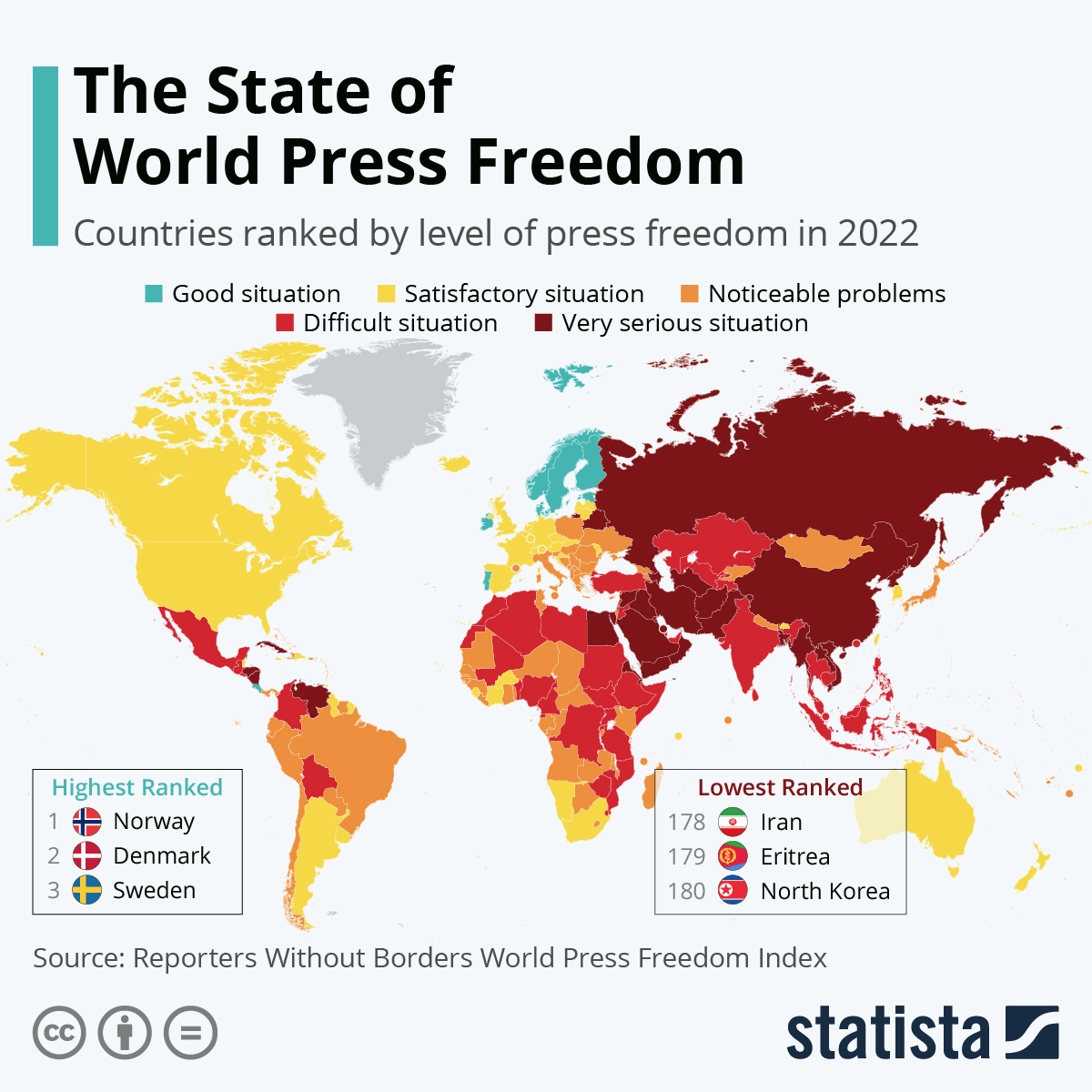
The World Press Freedom Index, published annually by Reporters Without Borders (RSF), provides a comprehensive assessment of the state of press freedom globally. In the 2023 edition, the top-ranked countries for press freedom were Norway, Finland, Sweden, Denmark, and Costa Rica, while the bottom-ranked countries included Eritrea, Turkmenistan, North Korea, and China.

The index measures factors such as media pluralism, media independence, the quality of the legal framework, and the safety of journalists. It highlights the alarming trend of increasing restrictions on press freedom, with more than 73% of the 180 countries assessed as having “problematic,” “difficult,” or “very serious” situations for journalists.

One of the most pressing challenges to press freedom is the ongoing persecution and targeting of journalists around the world. According to the Committee to Protect Journalists (CPJ), at least 67 journalists were killed in 2022 while carrying out their work. Countries with the highest numbers of journalist fatalities include Mexico, Ukraine, and Haiti.

In addition to physical violence, journalists also face other forms of repression, such as arbitrary arrests, imprisonment, and online harassment. The 2023 World Press Freedom Index found that journalism is completely or partly blocked in 73% of the countries assessed, with the COVID-19 pandemic further exacerbating the challenges faced by reporters in the field.
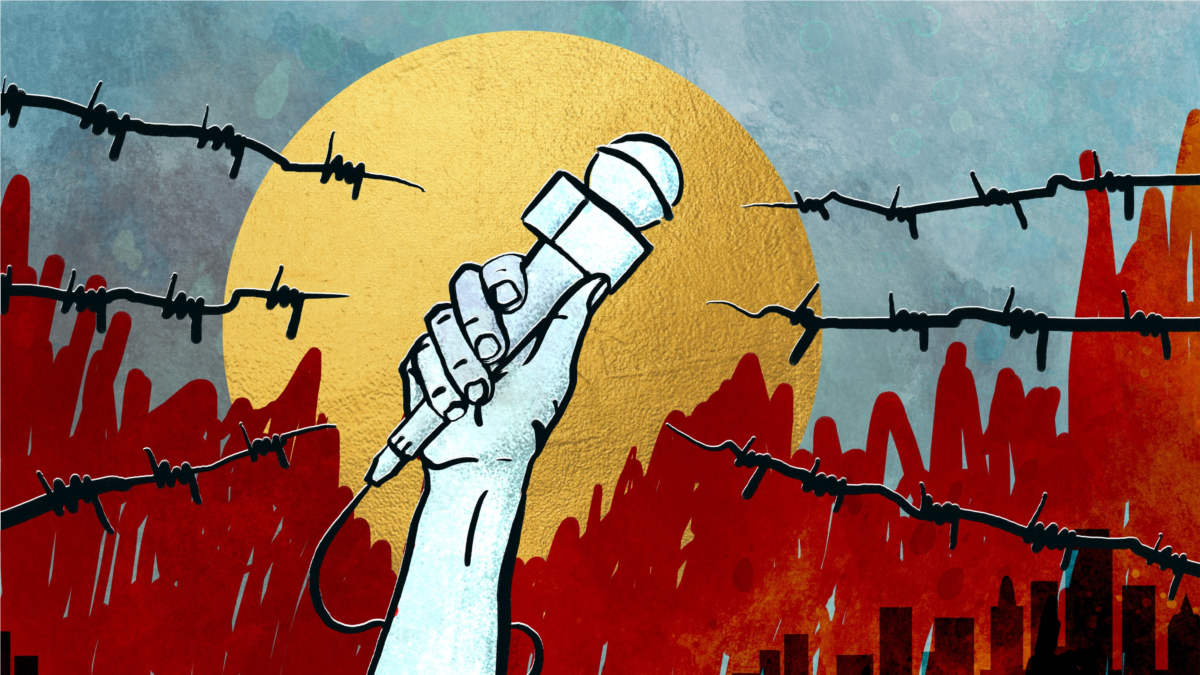
World Press Freedom Day 2024 serves as a critical reminder of the vital role that a free and independent press plays in upholding the principles of democracy, transparency, and accountability. The day is not just a celebration for media professionals; it is also an opportunity to engage the broader public and raise awareness about the importance of press freedom. UNESCO encourages the organisation of events, workshops, and discussions to educate the public about the role of the media in a democratic society and the challenges faced by journalists worldwide.

By participating in World Press Freedom Day activities, citizens can learn to identify and combat the spread of misinformation, support ethical journalism, and advocate for the protection of press freedom in their communities and around the world.

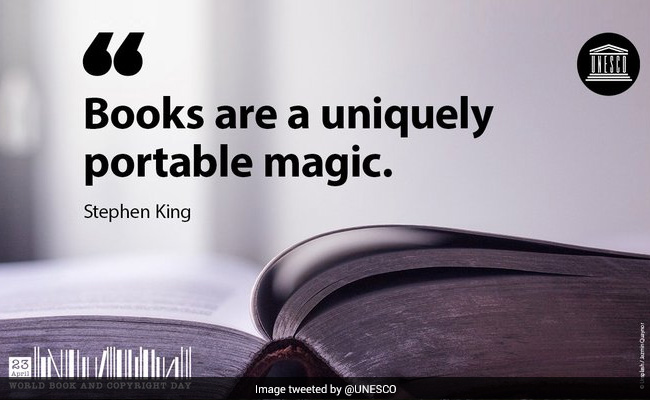
World Book and Copyright Day

Tomorrow is World Book and Copyright Day. Celebrated annually on April 23rd, the day celebrates the joy of books and reading. It serves as a bridge between the past and the future, connecting generations and cultures. On this day, people across the globe come together to appreciate the role of books in shaping our lives and understanding the world around us.

World Book and Copyright Day was first established by UNESCO in 1995 to be celebrated on April 23rd each year. The date was chosen to honour the passing of prominent authors such as William Shakespeare, Miguel de Cervantes, and Inca Garcilaso de la Vega. This day highlights the importance of books as a source of knowledge, creativity, and cultural enrichment, as well as to promote the publishing industry and protect intellectual property through copyright. It is seen as a link between the past and the future, a bridge between generations and across cultures. While UNESCO coordinates the global celebration, some countries observe World Book Day on different dates, such as the UK and Ireland, which celebrate it on March 2nd.

In the 2024 edition, amidst global challenges and technological advancements, the celebration takes on a renewed significance, emphasising the resilience of literature, the promotion of reading, and the preservation of cultural diversity.

The theme for World Book and Copyright Day 2024 is “Read Your Way.”. This theme emphasises the importance of choice and enjoyment in fostering a love of reading. It encourages both children and adults to find ways to engage with books that resonate with them, regardless of format or genre.

Last year marked the start of the International Decade of Indigenous Languages (2022-2032), where UNESCO prioritises the upholding and promoting linguistic diversity and multilingualism. For the 2024 edition, UNESCO will spotlight indigenous languages. Of the nearly 7,000 existing languages, many are spoken by indigenous peoples who represent the world’s cultural diversity. Recognising oral traditions and various forms of literature, UNESCO aims to celebrate and preserve these languages through books. Literary sessions amplify the Sustainable Development Goals. SDG 5, or gender equality, happens when literature amplifies the voices of countless women, and SDG 10, or reduced inequality, can be fought when books serve as tools to fight against inequalities.

The 2024 edition places a special emphasis on the role of digital innovation in democratizing access to literature. With the proliferation of e-books, audiobooks, and online libraries, readers can now engage with literary content in more accessible and interactive ways. This year’s celebration highlights the opportunities presented by digital platforms to reach broader audiences and promote literacy worldwide. Amidst the digital age, protecting copyright remains crucial for sustaining creativity and ensuring fair compensation for authors and creators. World Book and Copyright Day 2024 reaffirms the importance of copyright laws in safeguarding intellectual property rights and fostering a conducive environment for literary production. It encourages dialogue on copyright issues, piracy prevention, and the equitable distribution of royalties in the digital era. Recognizing the enduring value of reading in fostering imagination, critical thinking, and lifelong learning, World Book and Copyright Day 2024 advocates for initiatives that promote reading culture at all levels of society. From literacy programs in schools to community libraries and book clubs, efforts are underway to cultivate a passion for reading and empower individuals with the skills necessary to navigate the complexities of the modern world.

UNESCO, along with international organizations representing publishers, booksellers, and libraries, selects a World Book Capital each year. The chosen city which holds the title for a year, hosts initiatives and events to promote books, literary culture and reading throughout the year. Strasbourg, in France, has been designated as the World Book Capital for 2024. Strasbourg impressed UNESCO and the World Book Capital Advisory Committee with its strong focus on books to address social tensions and climate change. The city’s program “Reading for the Planet” emphasises books’ role in encouraging discussions about environmental concerns and scientific knowledge, particularly among young people. Strasbourg’s literary heritage and its diverse artistic activities, spanning music, theatre, and illustration, were also commendable. As the twenty-fourth city to bear this title since 2001, Strasbourg follows a distinguished lineage of previous World Book Capitals, including Madrid, Alexandria, Buenos Aires, Kuala Lumpur, and Accra.

Many countries and organisations around the world will organise events and activities to promote reading, publishing, and the protection of intellectual property through copyright. These may include book fairs, author talks, reading challenges, and book donation drives. In Spain, the traditional celebration of Diada de Sant Jordi or Saint Jordi’s Day on April 23rd will coincide with World Book and Copyright Day. This involves the gifting of books and roses. The National Literacy Trust in the UK will provide a range of teaching resources, booklists, and activity ideas to help schools and communities celebrate a love of books and reading. World Book Day is working with 20 libraries in high-deprivation areas to create a legacy around reading, including events to inspire local families.

As we commemorate World Book and Copyright Day 2024, let us reaffirm our commitment to literature as a catalyst for positive change. By embracing diversity, promoting equity, and safeguarding intellectual property rights, we can harness the full potential of literature to build a more inclusive and enlightened society. Through reading, writing, and sharing stories, we contribute to a global culture of creativity, empathy, and mutual understanding.

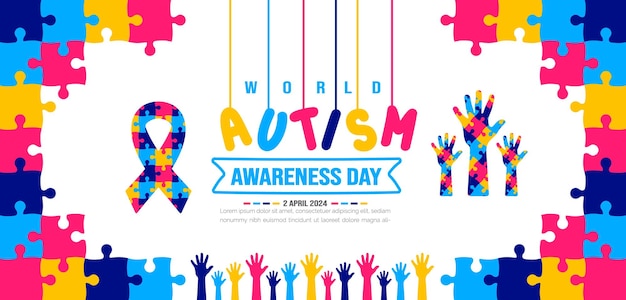
World Autism Awareness Day 2024: Advocating for Inclusion, Understanding, and Acceptance

In the mosaic of human diversity, each individual possesses a unique constellation of strengths, challenges, and perspectives that enrich the fabric of society. Yet, for individuals on the autism spectrum, navigating a world designed for neurotypical norms can pose significant barriers to acceptance, inclusion, and understanding.

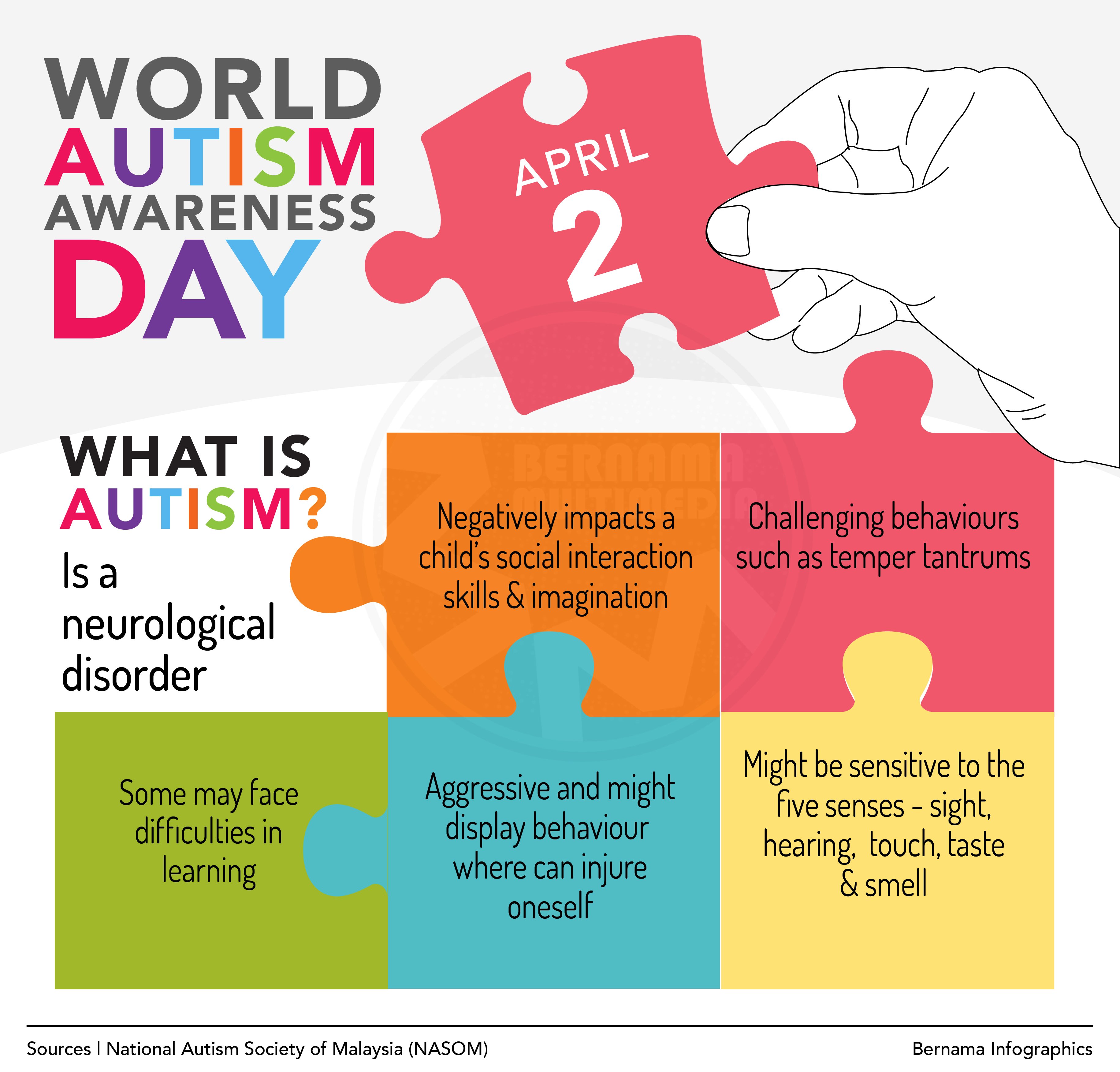
World Autism Awareness Day, or WAAD, is a global observance dedicated to raising awareness about autism spectrum disorder, ASD and promoting early diagnosis, intervention, and support for individuals with autism and their families. Established by the United Nations General Assembly in 2007, WAAD is celebrated annually on April 2nd. Its mission extends beyond mere awareness—it aims to foster understanding, acceptance, and inclusion of autistic individuals worldwide.

In recent years, significant progress has been made in increasing awareness and acceptance of autism. Much credit goes to the tireless efforts of autistic advocates who have amplified the lived experiences of autistic people. Additionally, medical professionals and researchers have embraced the neurodiversity paradigm, a concept coined by sociologist Judy Singer in the late 1990s.

The neurodiversity paradigm shifts the narrative away from seeking a cure or conversion for autistic individuals. Instead, it emphasizes acceptance, support, and inclusion. Autistic people, like anyone else, deserve dignity, self-esteem, and full integration into their families and societies.

Since its inception, World Autism Awareness Day has grown into a global movement, with individuals, organizations, and governments around the world coming together to organize events, initiatives, and campaigns to promote autism awareness and acceptance.

Autistic advocates play pivotal roles in shaping policies that affect their community. Their lived experiences inform legislation, education, and healthcare. Policymakers must listen to their voices and prioritize their needs.

The theme for World Autism Awareness Day 2024, “Embracing Neurodiversity: Building Inclusive Communities,” underscores the importance of creating environments that recognise and celebrate the unique strengths, perspectives, and contributions of individuals with autism. The theme highlights the need for accessible and supportive services, resources, and opportunities that empower individuals with autism to fully participate in all aspects of society, from education and employment to social and recreational activities.

Autistic individuals enrich their families’ lives in unique ways. Their perspectives, creativity, and love contribute to the rich tapestry of family dynamics. By recognizing their value, we create a more compassionate and understanding home environment. Autistic employees bring diverse talents and perspectives to the workplace. Companies that embrace neurodiversity benefit from increased innovation, problem-solving abilities, and fresh insights. Accommodations and understanding lead to a more inclusive workforce. Artistic expression knows no bounds. Autistic artists create captivating paintings, music, poetry, and performances. Their unique viewpoints challenge conventions and inspire audiences. Let us celebrate their creativity and amplify their voices.

World Autism Awareness Day provides a platform to challenge misconceptions and stereotypes surrounding autism, fostering greater understanding, empathy, and acceptance among the general public. Through educational initiatives, workshops, and awareness campaigns, World Autism Awareness Day equips individuals, families, and communities with the knowledge and tools to support and advocate for individuals with autism.

World Autism Awareness Day highlights the importance of early intervention and access to specialized services and therapies that can help individuals with autism reach their full potential and lead fulfilling lives. The day also recognizes the critical role of families as advocates, caregivers, and allies in the journey of individuals with autism, providing them with the support, resources, and encouragement they need to thrive.

World Autism Awareness Day celebrates the diverse talents, interests, and achievements of individuals with autism, from artistic expression and academic success to technological innovation and advocacy. The day advocates for inclusive employment practices and opportunities that enable individuals with autism to contribute their unique skills and perspectives to the workforce, fostering diversity and innovation in the workplace.

World Autism Awareness Day catalyzes policy change and advocacy efforts aimed at promoting the rights, dignity, and well-being of individuals with autism at the national and international levels. By advocating for greater social justice and equity for individuals with autism, World Autism Awareness Day advances the principles of inclusion, equality, and human rights for all members of society.

As we mark World Autism Awareness Day 2024, let us reaffirm our commitment to building a world that embraces and celebrates the diversity of the human experience. Through education, advocacy, and compassionate action, let us create communities that honour the inherent worth and dignity of every individual, regardless of neurotype Together, let us strive for a future where individuals with autism are valued, respected, and empowered to live their lives to the fullest, enriching our world with their unique perspectives, talents, and gifts.

International Day of Nowruz

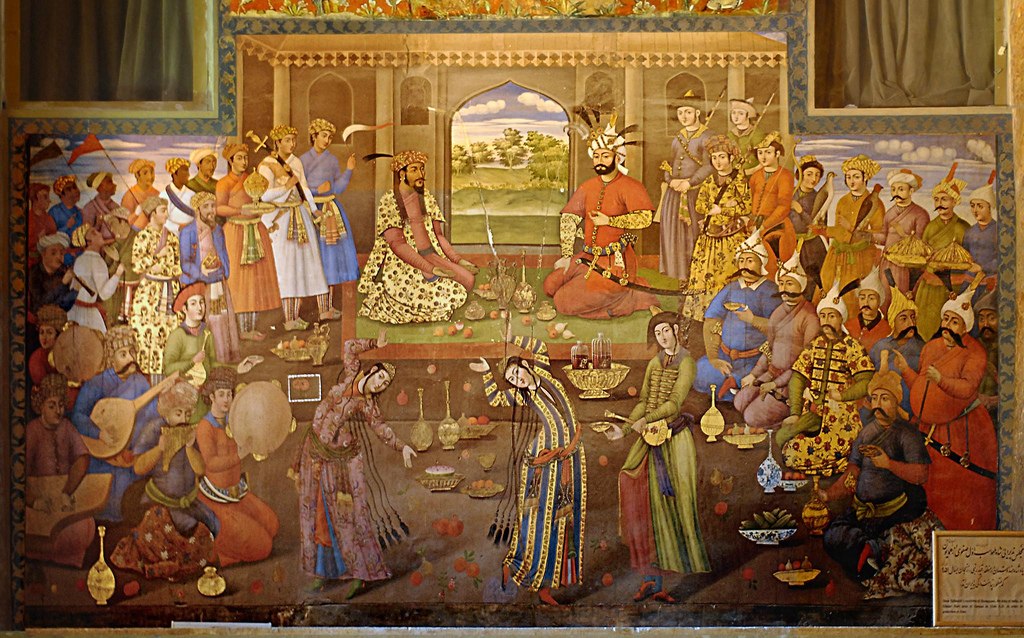
Tomorrow is the International Day of Nowroz, a celebration of the first day of spring and the new year in the Solar Hijri calendar, which is based on the astronomical vernal equinox. It is observed by more than 300 million people around the world, especially in Iran and the Persian diaspora, as well as in Central Asia, the Caucasus, the Balkans, and South Asia. It has been celebrated for over 3,000 years and has its roots in the ancient Iranian religion of Zoroastrianism, which viewed the arrival of spring as a victory of light over darkness.

The Solar Hijri calendar is a solar calendar that is used in Iran and Afghanistan. It is based on the astronomical observation of the March equinox, which marks the beginning of the new year, called Nowruz. The calendar has 12 months, with the first six months having 31 days, the next five having 30 days, and the last month having 29 or 30 days depending on the leap year. The calendar counts the years from the migration of the Islamic prophet Muhammad in 622 CE, but it is not related to the Islamic Hijri calendar, which is a lunar calendar. The Solar Hijri calendar is also known as the Persian calendar, the Iranian calendar, and the SH calendar.

The history of Nowruz is very ancient and rich. Nowruz which means a new day in Persian, is the celebration of the first day of spring and the new year in the Solar Hijri calendar, which is based on the astronomical vernal equinox. Nowruz survived the Islamic conquest of Persia in the seventh century and the decline of Zoroastrianism’s popularity, and it spread across the globe through the diaspora of Persian people throughout history. It is also a holy day for Zoroastrians, Baháʼís, and some Muslim communities.

The International Day of Nowroz was proclaimed by the United Nations General Assembly in 2010, at the initiative of several countries that share this holiday, to promote the values of peace, solidarity, reconciliation, neighbourliness, and mutual respect among peoples and communities. It is also inscribed on the UNESCO Representative List of the Intangible Cultural Heritage of Humanity, as a cultural tradition observed by numerous peoples.

The 2024 theme of the International Day of Nowroz is “To protect the planet and live in harmony with nature”. This theme reflects the message of the UN Secretary-General António Guterres, who urged the world to choose hope and compassion, embrace the opportunities that lie ahead, and work together to build a more peaceful, more sustainable and more inclusive world for all. He also highlighted the importance of celebrating humanity’s rich cultural heritage and diversity and being guided by the values of peace, dialogue and solidarity.

The theme also resonates with the spirit of Nowruz, which means “new day” in Persian and symbolises the renewal of nature and life. Celebrating Nowruz means the affirmation of life in harmony with nature, awareness of the inseparable link between constructive labour and natural cycles of renewal, and a solicitous and respectful attitude towards natural sources of life.

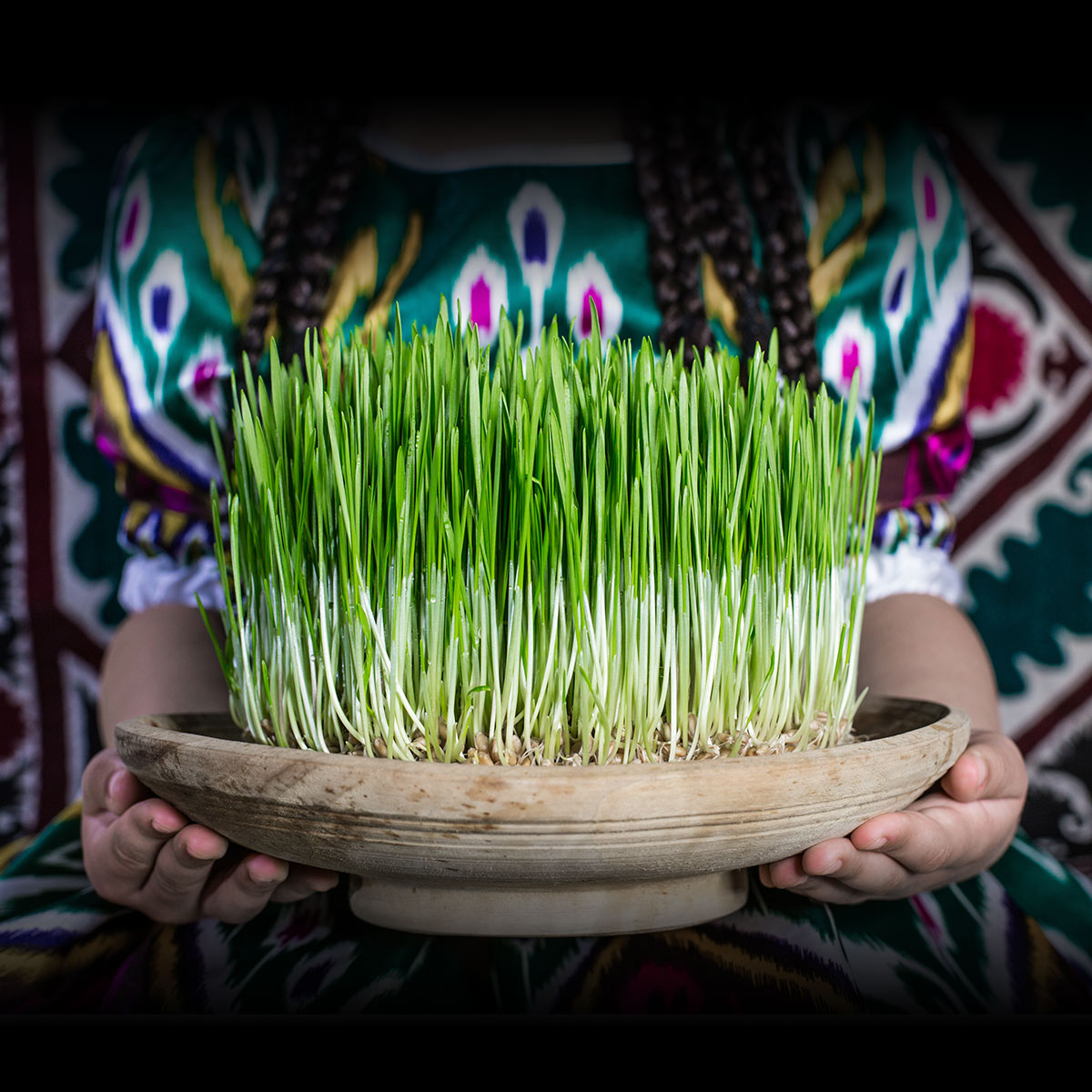
Some of the traditions and rituals of Nowruz include preparing for the holiday by cleaning the house, buying new clothes, and visiting family and friends. The haft-seen table is also set up. This is a display of seven symbolic items that start with the letter “s” in Farsi, such as seed sprouts, garlic, apple, vinegar, sumac, and a pudding made of sprouted wheat. The table may also include other items, such as a mirror, eggs, coins, candles, a book of poetry, and a Koran. Charshanbe Suri, which is the last Wednesday before Nowruz, is celebrated by jumping over fire, banging spoons on doors, and visiting cemeteries. These activities are meant to scare away bad luck, bring happiness, and honour the dead. Gifts are exchanged, especially for children, and charity is given to the poor and needy. Celebrants enjoy a special meal with loved ones, usually consisting of rice, fish, herbs, and other dishes and participate in various festivities, such as music, dance, sports, games, and nature outings. The 13th of Nowruz, known as Sizdah Bedar is celebrated by spending the day outdoors, picnicking, and throwing away the seed sprouts from the haft-seen table. This is believed to ward off evil and bring good fortune.

Different countries celebrate Nowruz in their way. In Iran, people light up the streets and skies for Chaharshanbe Suri, or Red Celebration, in honour of fire, an element Zoroastrians believe to be a symbol of purity. They also set up a haft-seen table, which is a display of seven symbolic items that start with the letter “s” in Farsi, such as seed sprouts, garlic, apple, vinegar, sumac, and a pudding made of sprouted wheat. In Azerbaijan, people celebrate Novruz by making bonfires and jumping over them, which is believed to burn away the troubles of the past year. They also visit the graves of their ancestors, plant trees, and cook special dishes, such as samani halva, a sweet paste made from wheat germ and nuts. In Afghanistan, people celebrate Nowroz by flying kites, playing games, and watching buzkashi, a traditional sport involving horsemen competing for a goat carcass. They also prepare a special dish called haft mewa, which is a mixture of seven dried fruits and nuts soaked in water. In Central Asia, people celebrate Nawruz by wearing new clothes, visiting relatives and friends, and exchanging gifts. They also enjoy various festivities, such as music, dance, sports, and nature outings. Some of the traditional foods include sumalak, a porridge made from wheat sprouts and flour, and naan, a flatbread baked in a clay oven. In Kurdish regions, people celebrate Newroz by wearing colourful clothes, dancing in circles, and singing folk songs. They also light bonfires and jump over them, symbolising the resistance and freedom of the Kurdish people. Some of the traditional foods include dolma, stuffed grape leaves, and kofta, minced meatballs.

Nowruz is a celebration of life, hope, and renewal that transcends borders, religions, and cultures. It is a reminder of our common humanity and our shared responsibility to care for our planet and each other. As the world faces unprecedented challenges and uncertainties, Nowruz offers us a message of hope and resilience. It invites us to appreciate the beauty of nature, the diversity of cultures, and the bonds of friendship. It also urges us to reflect on our actions, our values, and our goals. It is a time to express our love and gratitude to our families and friends and to extend our generosity and compassion to those in need. Let us join the millions of people around the world who celebrate Nowruz, and let us share the blessings of this new day.

International Women’s Day 2024

Celebrated annually on March 8, International Women’s Day, or IWD, recognises the social, economic, cultural, and political achievements of women. It also serves as a powerful reminder of the ongoing fight for gender equality.

The roots of International Women’s Day can be traced back to the early 20th century. In 1908, 15,000 women marched through the streets of New York City, demanding shorter hours, better pay, and voting rights — a testament to the growing momentum of the women’s suffrage movement in the United States. The idea of an international day to honour women’s achievements gained traction at the second International Conference of Working Women in Copenhagen in 1910. Inspired by the courage and resolve of their American counterparts, delegates from across the globe unanimously agreed to establish a day dedicated to advancing women’s rights and promoting gender equality. In 1911, International Women’s Day was officially celebrated for the first time in Austria, Denmark, Germany, and Switzerland, with rallies, marches, and public gatherings calling for women’s suffrage, improved working conditions, and an end to discrimination and inequality. Over the years, International Women’s Day has evolved into a global phenomenon, celebrated in countries and communities around the world. From grassroots initiatives to high-profile events, the day serves as a platform to recognize and celebrate the achievements, contributions, and resilience of women from all walks of life.

At its core, International Women’s Day is a rallying cry for gender equality and women’s empowerment. It serves as a reminder of the progress made in advancing women’s rights, while also shining a spotlight on the persistent barriers and challenges that women continue to face in achieving full equality and justice. International Women’s Day is a catalyst for change—a call to action for individuals, communities, and governments to redouble their efforts in promoting gender equality and women’s rights. It sparks conversations, ignites movements, and fosters solidarity among women and allies worldwide.

The theme for IWD 2024 is Inspire Inclusion. But what does it truly entail? When we inspire others to understand and value women’s inclusion, we forge a better world. When women themselves are inspired to be included, there’s a sense of belonging, relevance, and empowerment. As world-renowned feminist, journalist, and activist Gloria Steinem once said, “The story of women’s struggle for equality belongs to no single feminist nor to any one organization but to the collective efforts of all who care about human rights.” IWD transcends borders, organisations, and groups—it’s a day of collective global activism and celebration. To inspire inclusion, we must act consistently. When women aren’t present, we must question why. When discrimination occurs, we must call it out. When treatment isn’t equitable, we must act. This commitment applies each and every time.

So how can we inspire inclusion? On an individual basis, we should understand, value, and seek out the inclusion of women and girls; share knowledge, support, and encouragement with others; and embrace diversity, be it race, age, ability, faith, body image, and identity. As a group or on an organisational level, we must forge women’s economic empowerment; recruit, retain, and develop female talent; support women and girls in leadership, decision-making, business, and STEM; design and build infrastructure that meets women’s needs; help women and girls make informed decisions about their health; provide access to quality education and training; elevate women and girls’ participation and achievement in sports; and promote the creative and artistic talents of women and girls.

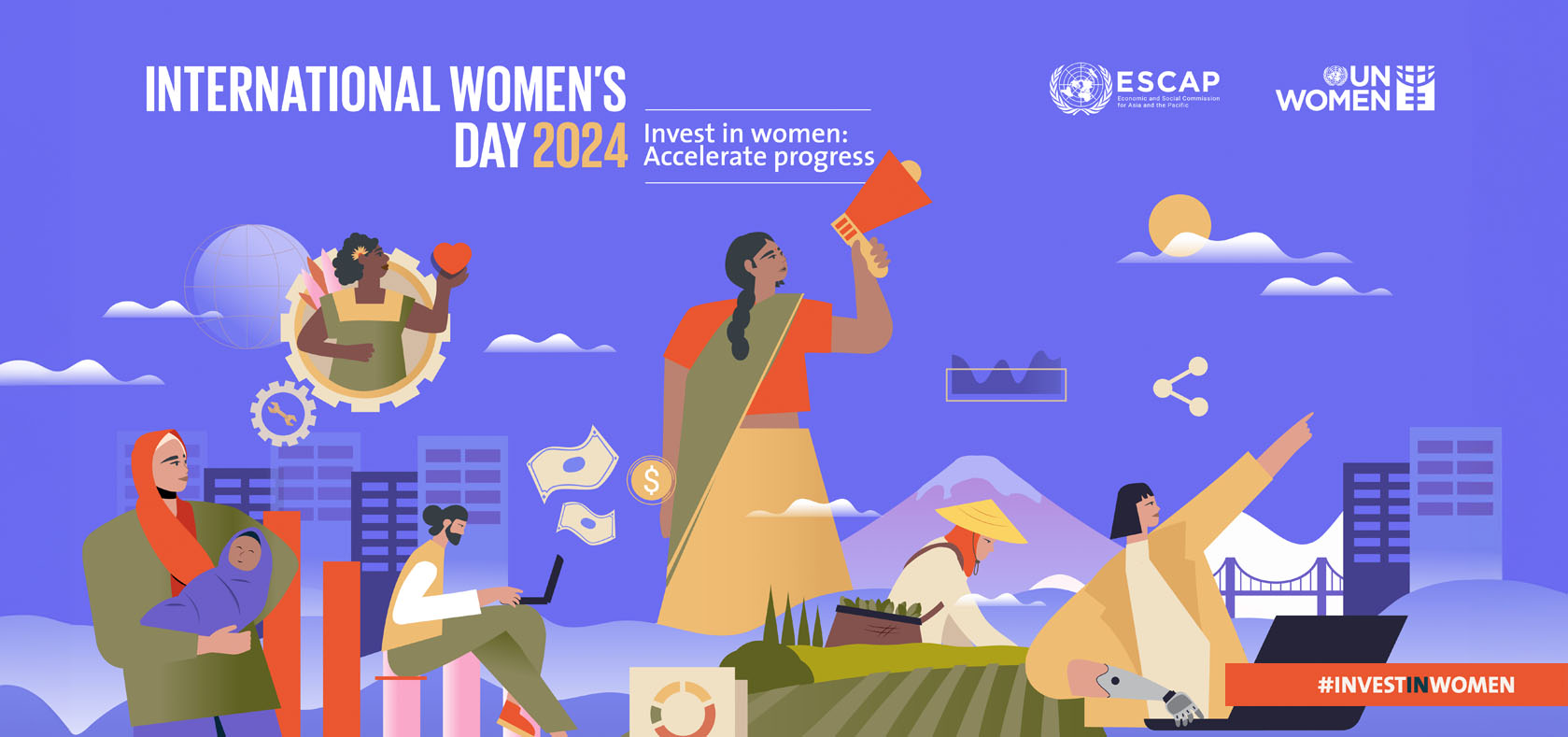
Over at the United Nations, the theme for IWD 2024 is Invest in Women: Accelerate Progress. In a world grappling with geopolitical conflicts, poverty, and climate change, empowering women becomes paramount. We can invest in women through:

  • Economic Empowerment: By economically empowering women, we advance women’s rights and gender equality globally. Financial independence opens doors to education, healthcare, and self-determination.
  • Technology and Education: Leverage technology and education in the digital age to empower women and girls. Bridging the digital divide ensures equal access to opportunities.
  • Collective Solutions: These crises demand collective solutions. When we invest in women, we invest in progress for all.

As we celebrate International Women’s Day, let us commit to inspiring inclusion, championing economic empowerment, and investing in women. Together, we can create a world where every woman’s voice is heard, every dream is achievable, and every barrier is dismantled.