2026 Week 10 Update

Happy Women’s Day to all the women who read this page! Today is a moment to recognise the strength, resilience, and quiet determination of women everywhere. It is a day to celebrate the progress that has been made, while also acknowledging the work that still lies ahead in building a more equal and inclusive world. It is also a day to honour the countless ways women shape our lives: as leaders, caregivers, creators, thinkers, and changemakers. Many of these contributions happen quietly, without recognition, yet they form the very fabric of our families, communities, and societies. May today be a reminder to uplift one another, to listen more deeply to women’s voices, and to continue creating spaces where every woman and girl has the freedom to grow, dream, and thrive.

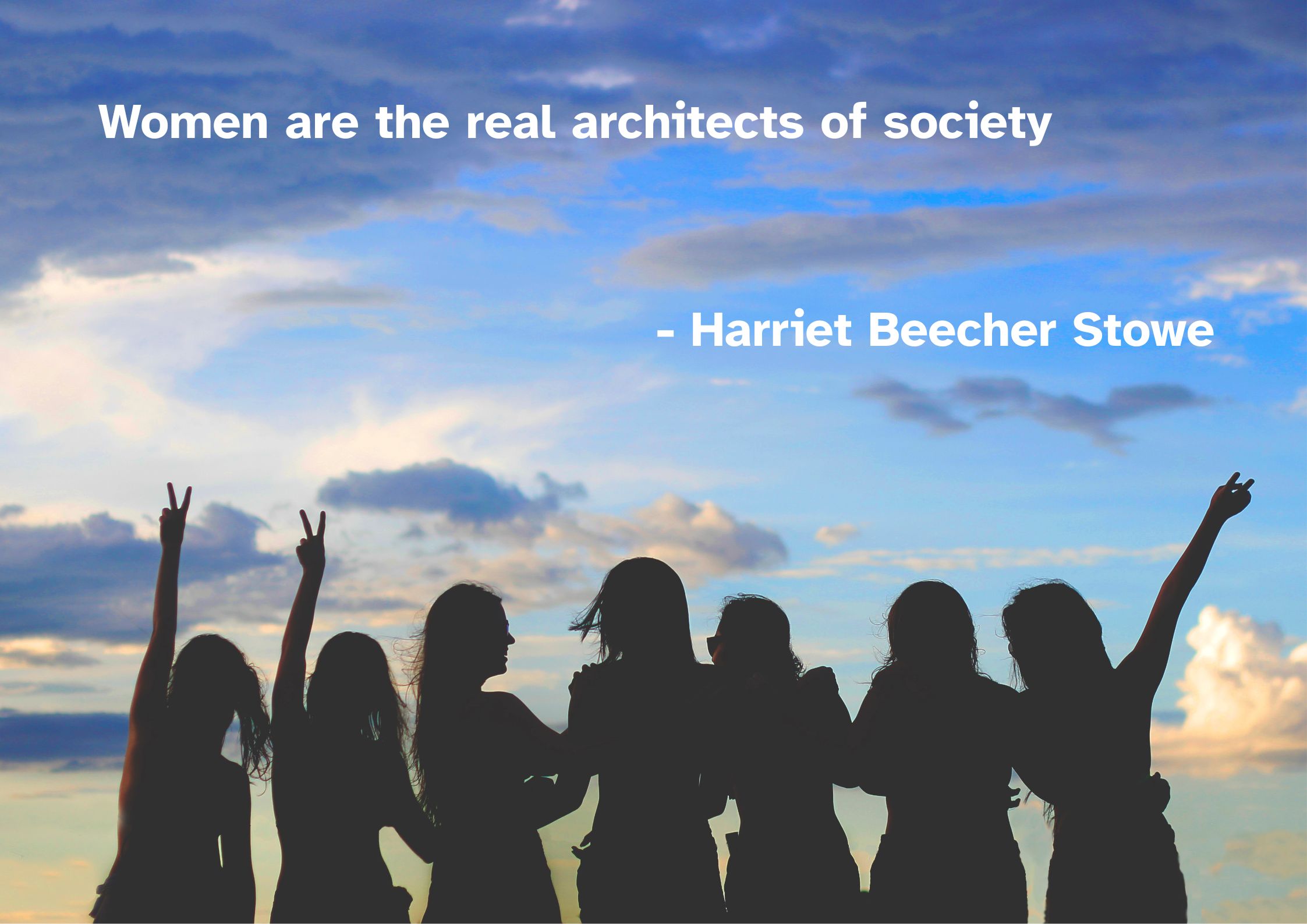
And fittingly, today’s quote by American author and abolitionist Harriet Beecher Stowe, best known for her influential novel Uncle Tom’s Cabin, highlights the profound but often understated role women play in shaping communities, values, and future generations. An architect designs the structure of a building, carefully shaping its foundation and form. By using this metaphor, Stowe suggests that women help design the moral, emotional, and social foundations of society itself. Much of this influence happens quietly. Women often shape the earliest environments in which children grow and learn. Through nurturing, teaching, and guiding values such as empathy, responsibility, and resilience, they influence the character of future citizens and leaders. In families and communities, women frequently act as caregivers, educators, and cultural transmitters, passing down traditions, beliefs, and wisdom that help define a society’s identity.

Stowe’s statement also points to the broader contributions of women beyond the home. Throughout history, women have been instrumental in social reform, education, healthcare, and community building. Even when their contributions were not always formally recognised, their influence has been fundamental in shaping ethical standards and collective progress. The quote, therefore, challenges the tendency to underestimate or overlook women’s impact. It reminds us that the true structure of society is not built only through political power or economic systems but through relationships, values, and everyday acts of care and leadership. By acknowledging women as architects, Stowe emphasises that societies are strengthened when the contributions, voices, and leadership of women are recognised and valued.

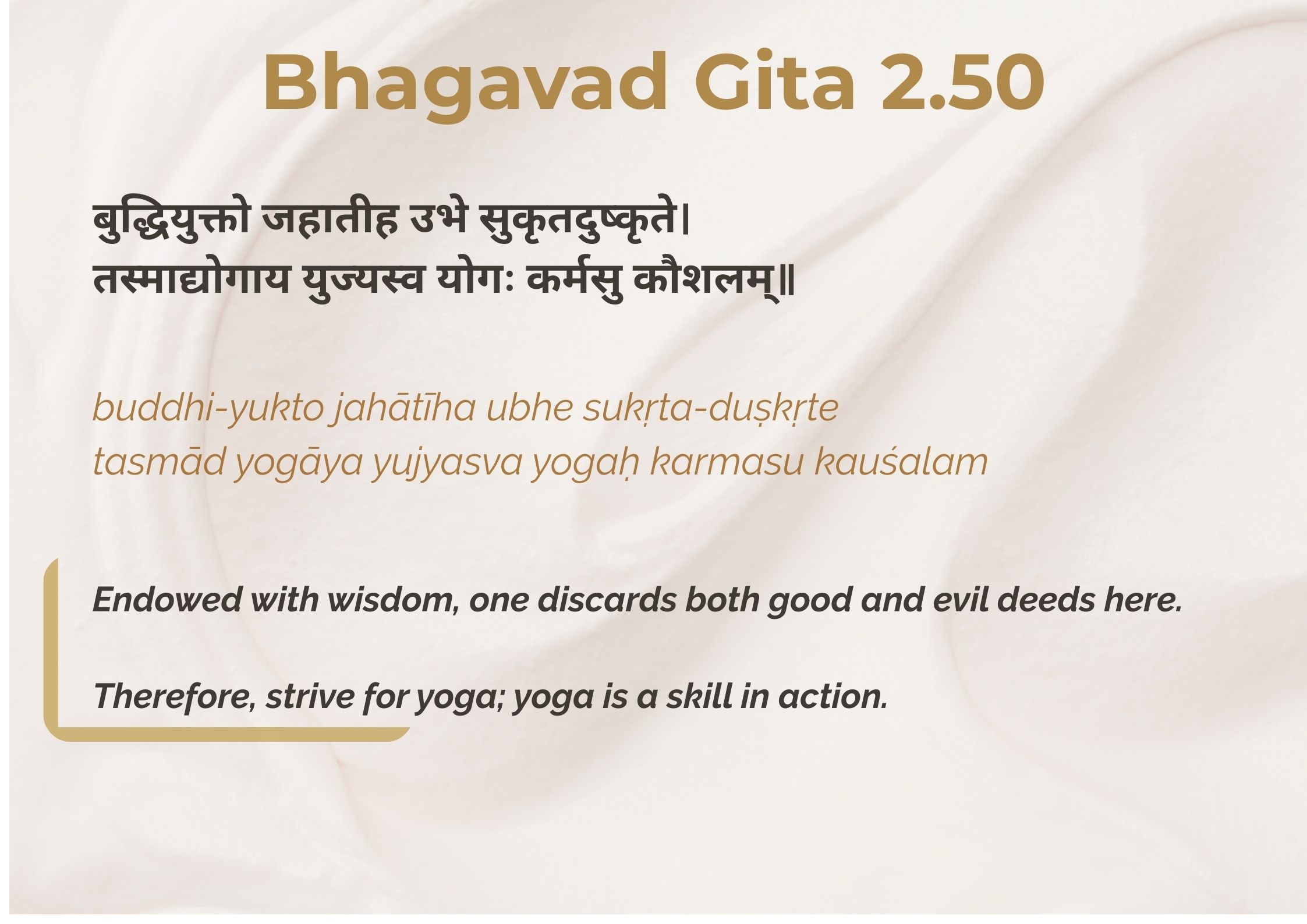
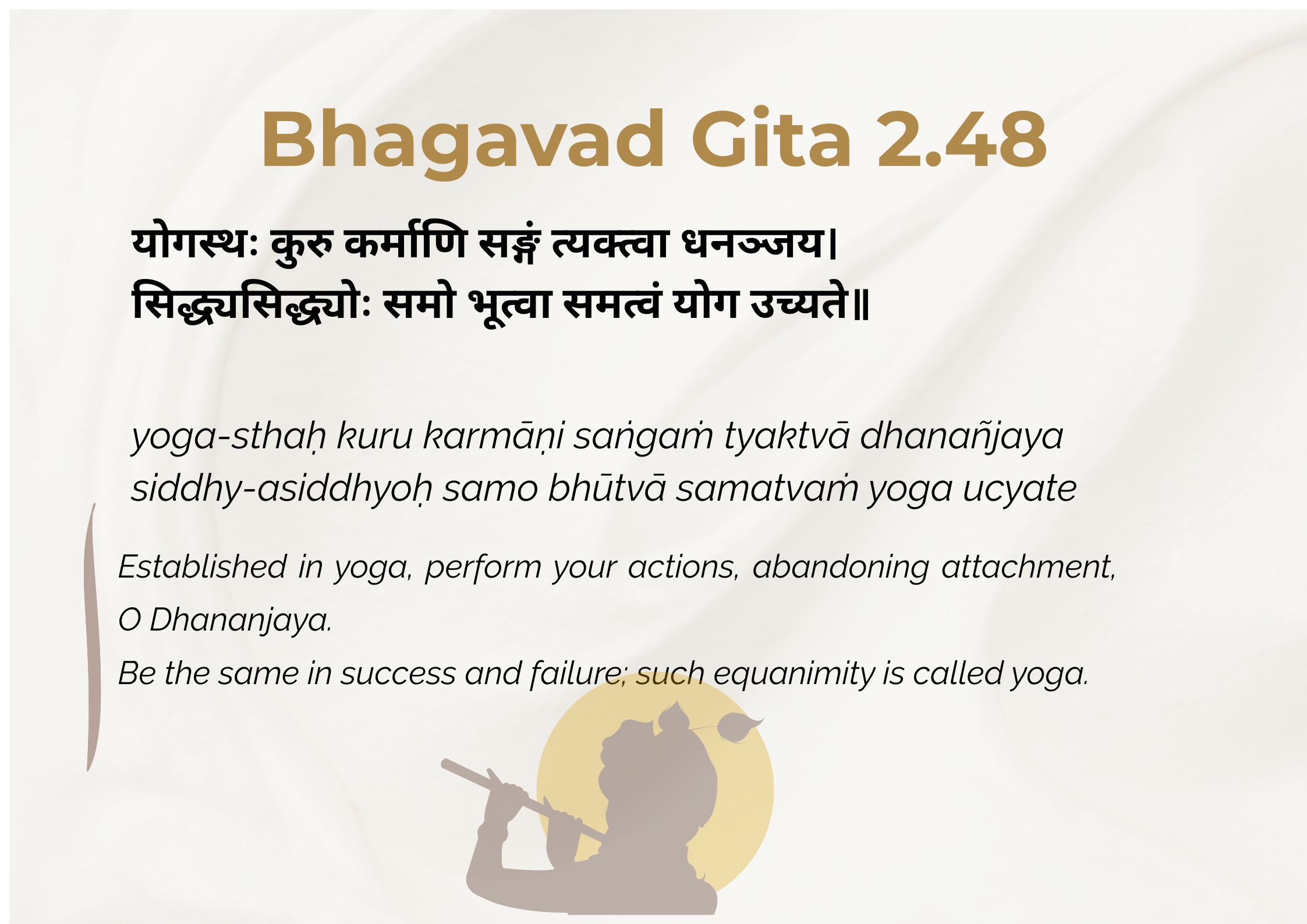
Today’s Bhagavad Gita verse is about yoga as a skill in action. Not perfection in action, not speed in action, not applause in action, but skill. There is something deeply steady about that word. Skill implies attention. Presence. A kind of quiet refinement that grows over time. The verse suggests that when action is guided by awareness rather than impulse, it becomes something more than output. It becomes alignment. You are no longer reacting; you are responding. In modern life, action is often measured by visibility. But the Gita measures it by consciousness. Are you awake while you act? Are you anchored? Are you attentive to intention? Skill in action means knowing when to move and when to pause. When to speak and when to remain silent. When to persist and when to release. This is discipline without harshness. Structure without rigidity. Action, when shaped by awareness, becomes its own form of balance. I’m letting this one shape how I move this week.

This week’s motivation is about change. Things are always moving, changing and evolving. This underlying movement makes our lives dynamic. By embracing this fact, you can get better at coping with endings. Life will always continue to bring us surprises. It can feel like life is hard to navigate when you’re at the threshold of transformation. You’re taken out of your comfort zone. You lose touch with what’s familiar. And you’re forced to let go of what no longer works. Remember, a lot of things end so that new doors can open up and something better can come along. Life happens at its own pace. Open your heart to new beginnings.

Life is moving on, as usual. I had a mild health issue this week, a stomach flu, courtesy of BB! But we are fine now. On the work front, I managed to secure a new client for an initial period, with the hope that it will go on for a longer time. Fingers crossed.

That’s all I have for this week. Be positive and keep smiling!

2026 Week 09 Update

Hello, March! A new month, a quiet reset. The first stretch of the year is already behind us, and here we are, offering another chance to begin again, refine what’s not working, and build gently on what is. March feels like a bridge month. Not quite the rush of January, not yet the fullness of mid-year. Just enough space to recalibrate. May this month bring steadier energy, clearer focus, and little but meaningful progress. No dramatic reinvention required. Just consistency, intention, and a little courage to keep going.

And that’s exactly what I am feeling. Everything will work out way better than you thought it would. Once you let go of the need to control every outcome, you automatically align with the flow of life. And this unlocks a level of abundance beyond anything you could have planned. Free yourself from the burden of analysing every twist and turn; it was never yours to carry anyway. Support can come from unexpected places, and opportunities that seem ordinary at first may hold more potential than you realise. Trust in what’s to come. A positive belief is what transforms uncertainty into a space full of possibilities.

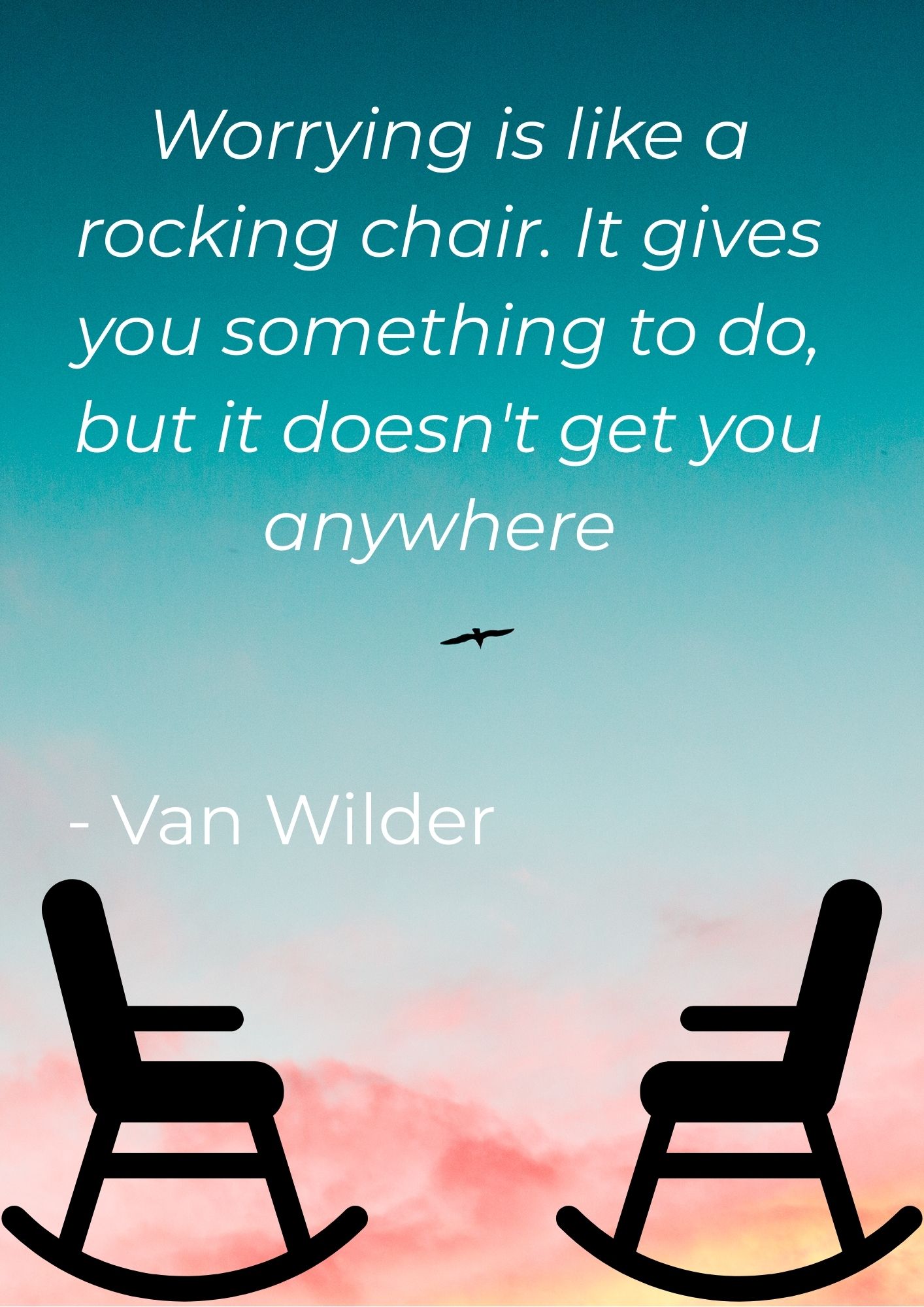
Attributed to a fictional character from the 2002 comedy film National Lampoon’s Van Wilder, Van Wilder, portrayed by actor Ryan Reynolds, the character was known for his laid-back attitude and humorous observations about life, often delivering lighthearted lines that carry surprisingly relatable wisdom beneath the comedy.

Today’s quote uses humour to deliver a practical truth. A rocking chair moves constantly, but it never actually changes location. In the same way, worrying can feel active and productive. Your mind is busy. You’re thinking through scenarios, replaying conversations, predicting outcomes. It feels like you’re addressing the problem. But in reality, you’re staying in the same place. Worry often masquerades as preparation. We tell ourselves that if we think about an issue long enough, we’ll prevent it or solve it. But most worry is repetitive rather than constructive. It circles the same fears without leading to clear decisions or action. Instead of moving forward, we expend emotional energy and remain stuck.

The quote doesn’t suggest ignoring problems. There’s a difference between thoughtful planning and unproductive worrying. Planning identifies specific steps you can take. Worry, on the other hand, tends to focus on what might go wrong without identifying what can be done. The key shift is from rumination to action. Once you ask, “What can I actually control here?” the rocking chair stops, and real movement begins. There’s also a gentle reminder about perspective. Much of what we worry about never happens, and when challenges do arise, we’re often more capable of handling them than we expected. Worry drains the present moment for the sake of a future that hasn’t arrived.

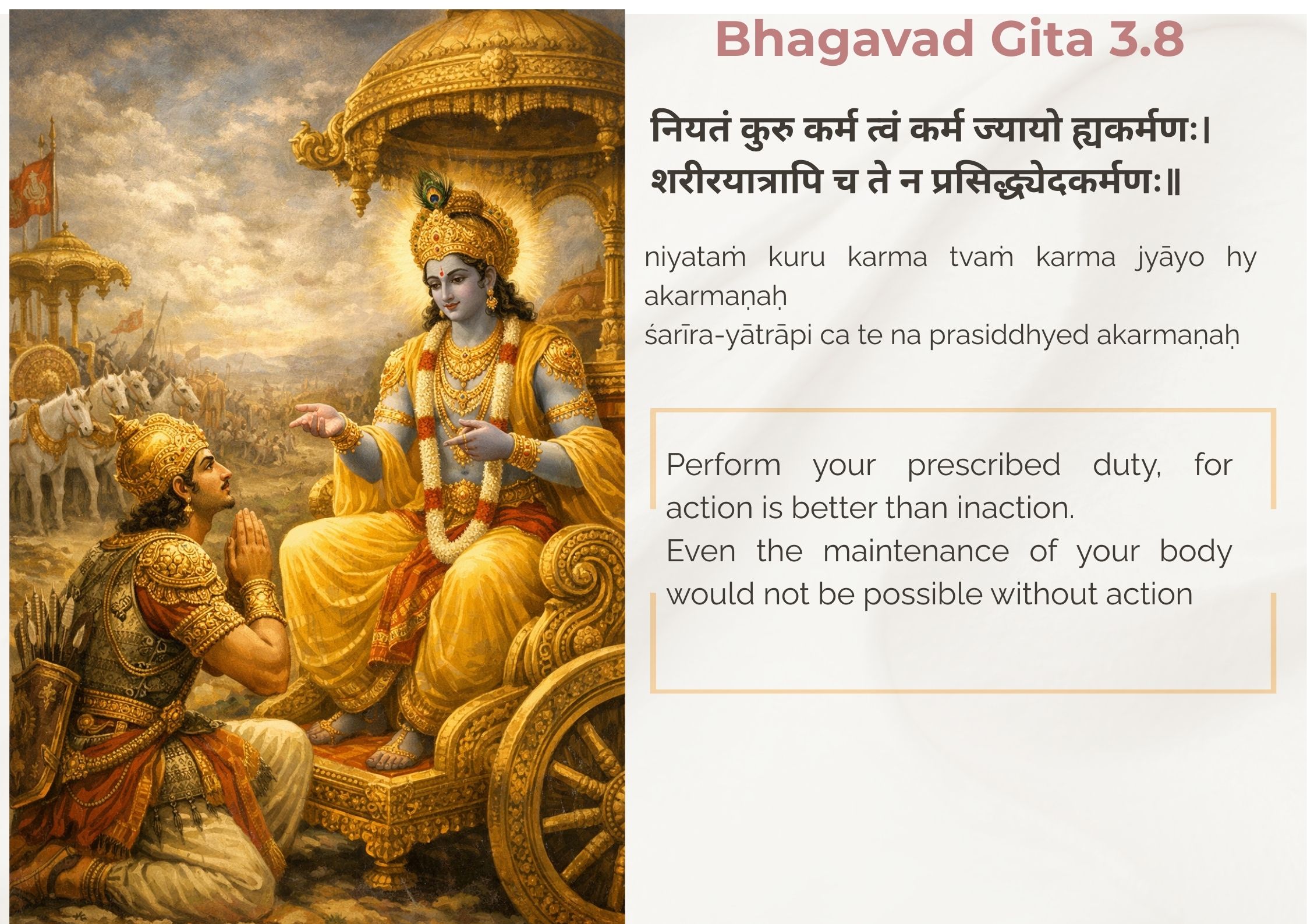
Today’s verse from the Bhagavad Gita is about clarity. There are seasons when clarity feels distant. When the next step is unclear. When motivation is thin. This verse doesn’t ask for brilliance. It asks for movement. Action, Krishna says, is better than inaction. Not because action guarantees success, but because stillness born of avoidance slowly erodes confidence. When we delay too long, doubt grows heavier than effort ever was. We sometimes imagine that we must wait for the perfect plan, the perfect mood, the perfect assurance. But life rarely arranges itself so neatly. Often, clarity arrives after the first step, not before it. Even survival, the verse reminds us gently, depends on action. To eat, to work, to care, to show up—these are not grand gestures. They are daily acts of participation in life. This is not a call to frantic productivity. It is a reminder that engagement, however small, keeps us aligned with purpose. Sometimes the bravest thing is simply to begin. Just something to carry into the week ahead.

I am super excited for this month and wish you all the same! Sending all of you loads of positive energy, positivity, and good fortune! Here’s to an exciting month and the rest of 2026!

2026 Week 08 Update

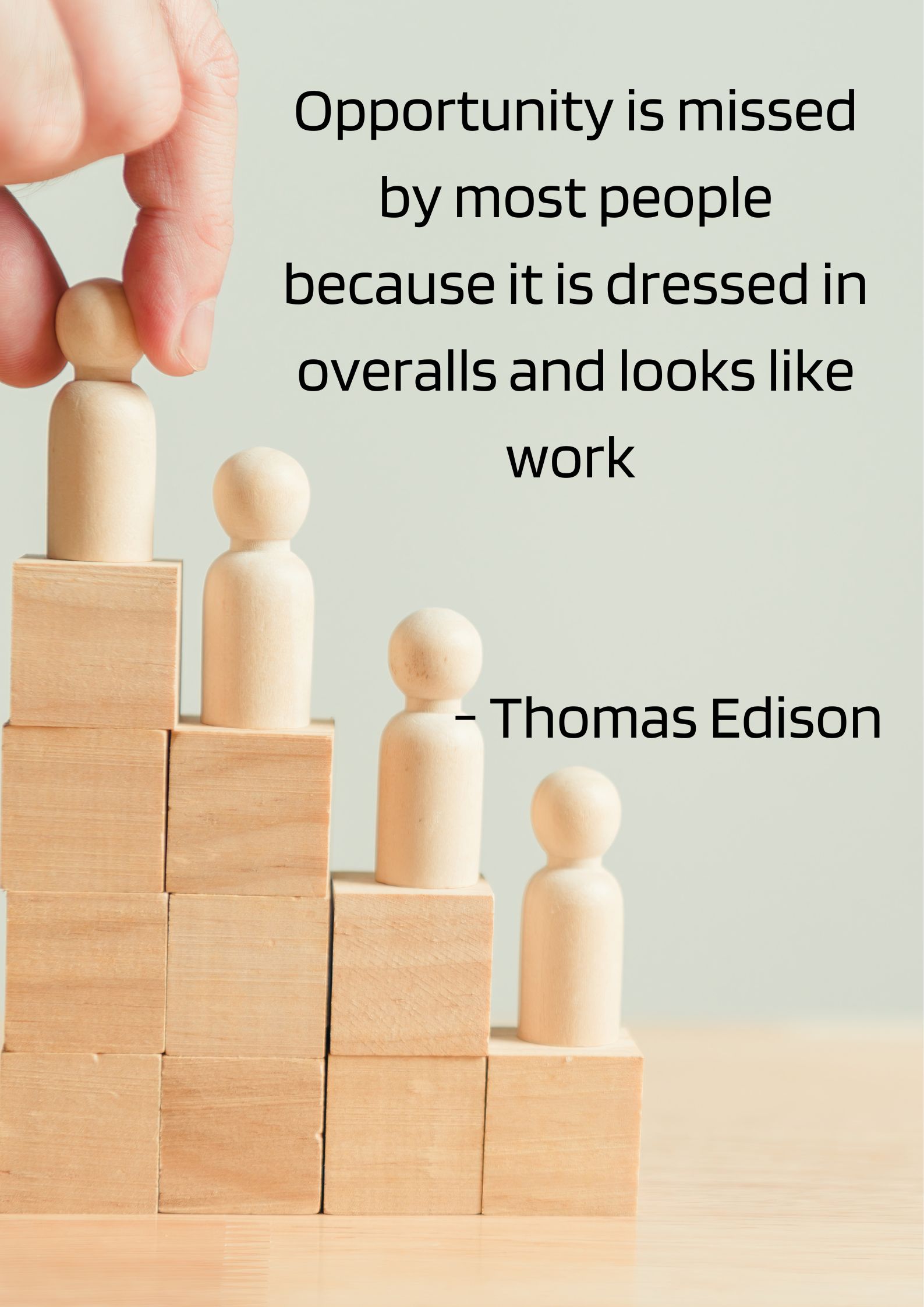
Today’s quote is by one of the most prolific inventors in history, Thomas Edison, who holds over 1,000 patents and is best known for developing the practical electric light bulb, the phonograph, and advancements in motion pictures. Edison famously believed that genius was “one percent inspiration and ninety-nine percent perspiration,” a philosophy clearly reflected in this quote that is a sharp reminder that real opportunity rarely arrives looking glamorous. We tend to imagine opportunity as a breakthrough moment: a sudden promotion, a lucky break, or a dramatic turning point. But more often, it shows up quietly, disguised as effort, repetition, and responsibility.

Edison is pointing to a simple truth: most worthwhile outcomes are built through labour. The “overalls” symbolise hard work, the unexciting, consistent, sometimes tedious actions that lay the foundation for success. Many people overlook these moments because they’re waiting for something easier or more obvious. They want the reward without the grind. This quote also challenges the idea of luck. While timing and circumstance matter, preparation and persistence matter more. What looks like a burden—an extra task, a difficult project, or a skill that takes time to learn—may actually be the doorway to growth. The people who recognise opportunity in effort are the ones willing to invest energy before results are guaranteed. There’s also a psychological insight here. We often resist work because it requires discipline and delayed gratification. But if we shift perspective and see effort itself as an opportunity, motivation changes. The work becomes the path, not the obstacle.

This week was very relaxed because of the Lunar New Year (Chinese New Year) holidays. We stayed home, cooked food that we would otherwise not make during the week, caught up on sleep and Netflix, and just enjoyed the week. The coming week is about hustle and bustle and the start of more work.

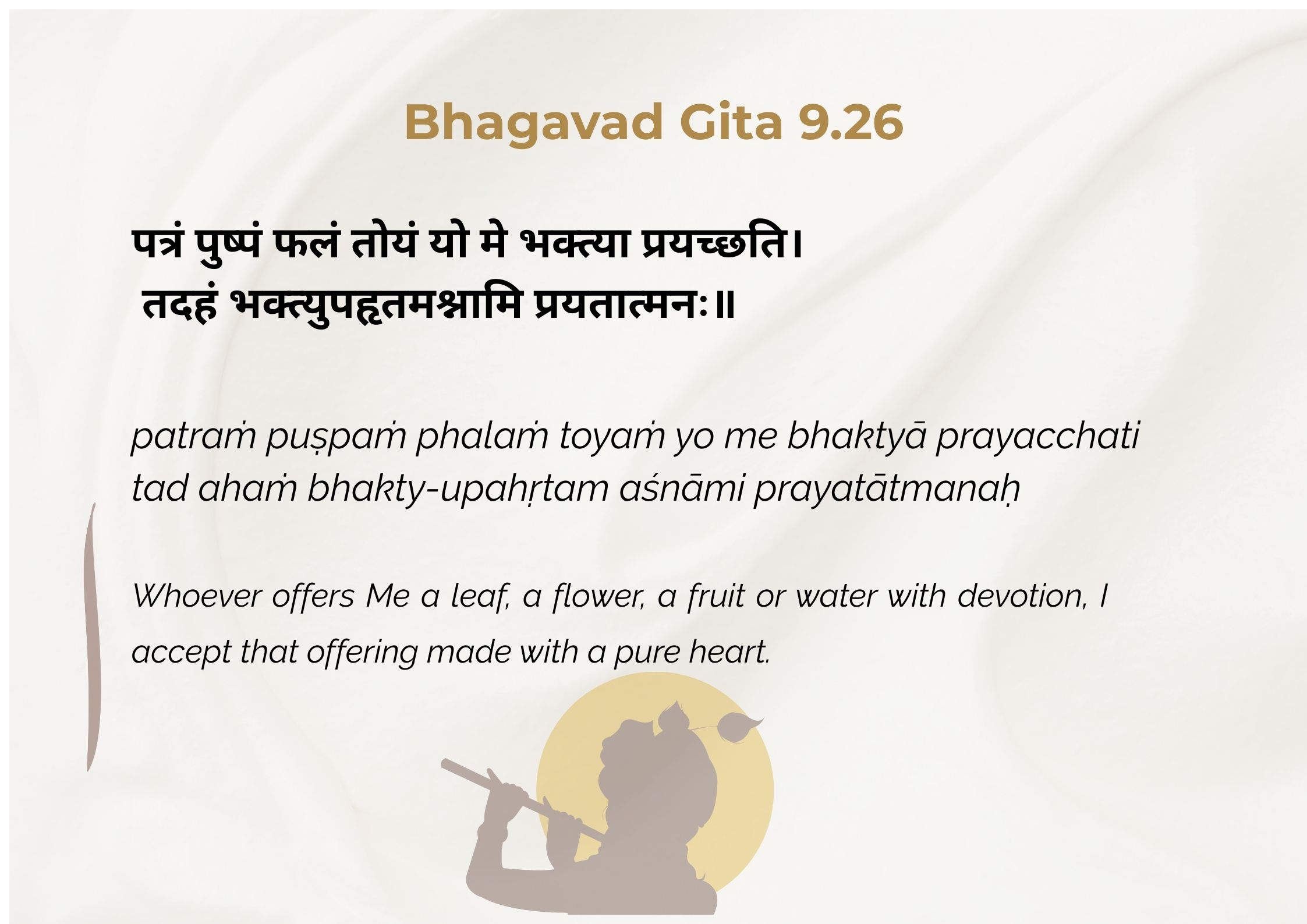
Today’s verse from the Bhagavad Gita is a gentle reminder that spirituality isn’t measured by the size of the offering but by the sincerity behind it. The Gita cuts through the idea that devotion must be grand, expensive, or elaborate. Instead, Krishna says even the simplest gift—a leaf, a flower, a fruit, or water—becomes meaningful when offered with intention and purity. Devotion is a quality of the heart, not of wealth or performance. What matters is the spirit behind the action. When your heart is present, even small gestures carry immense power. This verse also reflects the democratic nature of bhakti: anyone can participate. You don’t need status, money, or ritual knowledge. You just need sincerity. It’s also a lesson in relationships: people feel the truth of your intention, not the size of your gesture. Genuine connection thrives on authenticity, not showmanship. Ultimately, this verse reminds you that what you bring to life—your time, your attention, your kindness—is sacred when offered wholeheartedly.

This week’s motivation is about relaxation. Give yourself grace. You’re doing your best, and that’s enough. Do not let unhelpful thoughts take control of your experience. Take a few deep, intentional breaths to quiet the noise in your mind. In this moment, you are allowed to be at peace. There’s nothing to prove, nothing to overcome. Accept this present moment, rather than attaching a story to it. Allow yourself to rest in a space of pure awareness. This space is always naturally available to you. You can return to it anytime you choose.

That’s all I have for you this week. Stay safe, stay blessed, and remember that you are doing your best, and that’s enough!

2026 Week 07 Update

Wishing all my readers a very Happy Chinese New Year; may this new year bring renewal, abundance, good health, and meaningful moments with the people who matter most. As homes fill with reunion dinners, red packets, and the hopeful energy of fresh beginnings, may the year ahead unfold with steady progress and quiet joy. As we welcome the Year of the Fire Horse, may it bring courage to chase what excites you, momentum to move past what holds you back, and the confidence to trust your instincts. The Fire Horse is known for passion and drive, a reminder that growth sometimes requires both bravery and motion.

At the same time, this week also marks the beginning of the holy month of Ramadan, a sacred period of reflection, discipline, generosity, and spiritual renewal for Muslims around the world. May this month bring peace, clarity, and strength to those observing it, and may the spirit of compassion and community it nurtures ripple outward to all of us. The month of Ramadan is rooted in reflection, discipline, compassion, and spiritual renewal; it’s a month that asks us to slow down inwardly even as life continues outwardly.

In Singapore, where cultures and faiths stand side by side, it feels especially meaningful to honour both occasions together. May this season remind us of the beauty of shared spaces, mutual respect, and the richness that diversity brings to our lives. One festival calls us to gather, celebrate, and step boldly into a new year; the other calls us to turn inward, reset, and deepen our faith and empathy. May this season, shaped by both fire and reflection, bring renewal, resilience, and meaningful connection to us all.

Today’s quote is a Chinese proverb that is a practical lesson about preparation, patience, and strategic effort. At first glance, it sounds counterintuitive. If your goal is speed, why would you spend extra time not chopping at all? But that’s precisely the point. Rushing into action without preparation often leads to wasted energy, frustration, and slower results in the long run. Sharpening the axe represents planning, learning, practising, and refining your tools, whether those tools are literal skills, knowledge, systems, or even your mindset. When you invest time in preparation, your work becomes more efficient and effective. Each strike counts. Without preparation, you may swing repeatedly with little impact, exhausting yourself while making minimal progress.

The proverb also challenges our obsession with constant activity. Busyness can feel productive, but activity without clarity or readiness can be ineffective. Taking time to think, strategise, or improve your approach isn’t laziness; it’s wisdom. The person who pauses to sharpen the axe understands that thoughtful preparation saves far more time than impulsive action ever could. Beyond work, the proverb applies to personal growth as well. Strengthening your discipline, emotional resilience, or communication skills is like sharpening your inner tools. When challenges arise, you are better equipped to handle them calmly and decisively. Ultimately, the message is simple: slow down to move faster. Invest in preparation so that when it’s time to act, you do so with precision and power. Effort matters, but prepared effort matters more.

This week, if I’m honest, I’ve felt a little like I’m underwater. Not drowning, not in crisis, just submerged. I can see everything I’m supposed to be doing. The tasks are clear, the plans are mapped out, but there’s a strange heaviness, as though every movement requires more effort than usual. It’s been a week since I got back from India, and my body seems to still be catching up. I’m tired in that lingering way that sleep doesn’t immediately fix. Sleepy at odd hours, and slower than I’d like to be. There’s also that quiet frustration of knowing what needs to be done and not quite having the spark to begin. It’s not confusion, it’s not avoidance; it’s simply low energy. Like trying to move through water, possible, but resistant. Maybe this is just a transition. Travel has a way of stretching you emotionally, physically, and socially, and perhaps I’m still recalibrating. Instead of fighting the fog, I’m trying to observe it. To give myself a little grace. To trust that the surface is there, and I will rise back into full momentum soon. For now, I’m allowing this slower rhythm. Even underwater, you’re still moving.

Today’s Bhagavad Gita quote gives one of the most beautiful and comprehensive portraits of a spiritually evolved person. Notice how the qualities Krishna lists are emotional and relational, not intellectual brilliance, ritualistic perfection, or strict asceticism. The emphasis is on how we show up in the world: without hostility, with kindness, with generosity of heart, and the ability to stay balanced when life swings between sorrow and joy. Compassion is not sentimental softness here; it’s the strength to stay open even when life gets messy. Forgiveness is not naïveté; it’s choosing not to poison your own heart. Being nirmama, or free from possessiveness, and nirahaṅkāra, or free from ego, means you don’t cling to people or outcomes. You appreciate, you love, and you care, but you don’t bind others or yourself with expectations. Krishna teaches that devotion is a way of being. When your mind is guided by inner clarity rather than ego, every interaction becomes gentler, wiser, and more peaceful.

Today’s weekly motivation is about the weight of unmet dreams. The longer you carry the weight of unmet dreams, the harder it becomes to tap into the new possibilities life is constantly offering you. Honour what those old dreams once meant to you, acknowledge their place in your journey, and then let them go. Make space for something even more aligned to take their place. No matter how difficult letting go may seem at first, trust that eventually a positive outcome will come out of it. Make the most of what you have now, and allow yourself to enjoy the natural flow of events. The unexpected turns will still lead you exactly where you need to be. Life has a funny way of surprising you in the best possible ways.

On that note, here’s to a wonderful Lunar New Year to all those who celebrate and to those fasting and praying during the holy month of Ramadan, wishing you a month filled with prayers, reflection, discipline, compassion, and spiritual renewal. and

2026 Week 06 Update

I’m back in Singapore, landed early this morning and after three weeks of being with my parents, I am happy to be back home. It’s times like these that I realise that yes, Singapore is now home. I have a deep, almost spiritual connection to India, but after being away for so long, I realise I can’t live in the country anymore. It’s noisy, chaotic, and rushed, and I can take it in small doses. But back in Singapore, I do miss the family connections, the food, and the shopping. 

Today’s quote is by one of the greatest English novelists of the Victorian era, known for works such as A Christmas Carol, Great Expectations, and Oliver Twist: Charles Dickens. His writing combined sharp social criticism with deep compassion for the poor, the vulnerable, and the overlooked. Dickens believed strongly in moral responsibility, human kindness, and the redemptive power of empathy, values that echo clearly in this quote. 

This quote gently challenges how we usually define intelligence and success. In a world that often prizes logic, achievement, and sharp thinking above all else, Dickens reminds us that wisdom is not just something we learn with the mind, but something we live through the heart. A loving heart reflects empathy, compassion, and the ability to see beyond one’s own concerns. It understands people not as problems to be solved, but as human beings shaped by circumstance, pain, and hope. This kind of wisdom allows us to respond with kindness rather than judgment, patience rather than anger. It doesn’t deny reason, but it balances it with humanity. Without love, intelligence can become cold or self-serving. With love, even a simple understanding becomes powerful.

Dickens suggests that love helps us grasp truths that logic alone cannot. A loving heart recognises suffering quickly and responds instinctively. It knows when to forgive, when to listen, and when to act with gentleness instead of force. This wisdom often shows itself quietly; in everyday choices, in generosity, and in moral courage. It is less about being right and more about being humane. The quote also implies that love deepens perspective. When we care, we learn. When we open ourselves to others, we gain insight into life’s complexity. True wisdom, then, is not detached cleverness but engaged understanding, the ability to live well with others, not just think well about things.

Today’s verse from the Bhagavad Gita describes a person who moves through the world with emotional steadiness. Not detached in a cold way, but centred, grounded, and balanced. Such a person doesn’t provoke unnecessary conflict, nor do they crumble when the world is chaotic. Krishna isn’t asking us to suppress emotions. He’s showing us a higher way to relate to them. Instead of being pushed around by praise, blame, fear, or envy, the wise person remains anchored in inner clarity. That anchor creates a calm presence that others instinctively trust. This verse also flips a common belief: spirituality isn’t about escaping the world. It’s about living fully in it without losing yourself. People who are internally stable uplift others simply by existing; they create safety. Their calm doesn’t shrink the world; it softens it. The goal isn’t perfection. It’s awareness and balance. When you know who you are and what matters, you don’t get pulled into every storm. You become the still point in your own life.

Today’s motivation is about loving oneself. Love yourself so deeply that you don’t need to rely on others to feel complete. You’re a beautiful soul. You have so much tenderness and compassion within you. You do everything with so much sincerity. Remember, you always have yourself. You deserve your own love more than anyone else. When you truly love yourself, you naturally attract people who are good for you. There’s mutual respect and genuine admiration, rather than a constant need for approval or reassurance. Those who can’t see your worth don’t deserve to hold any power over you.

And that’s all I have for you this week. Stay strong, stay positive, and remember to love yourself so much you don’t need anyone else to feel complete. As I wrote some time back, be your own best friend!