In My Hands Today…

Women Money Power: The Rise and Fall of Economic Equality – Josie Cox

For centuries, women were denied equal access to money and the freedom and power that came with it. They were restricted from owning property or transacting in real estate. Even well into the 20th century, women could not take out their own loans or own bank accounts without their husband’s permission. They could be fired for getting married or pregnant, and if they still had a job, they could be kept from certain roles, restricted from working longer hours, and paid less than men for equal work.

It was a raw deal, and women weren’t happy with it. So they pushed back. In Women Money Power , financial journalist Josie Cox tells the story of women’s fight for financial freedom. This is an inspirational account of brave pioneers who took on social mores and the law, including the “Rosies” who filled industrial jobs vacated by men and helped win WWII, the heiress whose fortune helped create the birth control pill, the brassy investor who broke into the boys’ club of the New York Stock Exchange, and the namesake of landmark equal pay legislation who refused to accept discrimination.

But as any woman can tell you, the battle for equality—for money and power—is far from over. Cox delves deep into the challenges women face today and the culture and systems that hold them back. This is a fascinating narrative account of progress, women’s lives, and the work still to be done.

In My Hands Today…

All in Her Head: The Truth and Lies Early Medicine Taught Us About Women’s Bodies and Why It Matters Today – Elizabeth Comen

For as long as medicine has been a practice, women’s bodies have been treated like objects to be practiced on: examined and ignored, idealized and sexualized, shamed, subjugated, mutilated, and dismissed. The history of women’s healthcare is a story in which women themselves have too often been voiceless—a narrative instead written from the perspective of men who styled themselves as authorities on the female of the species, yet uninformed by women’s own voices, thoughts, fears, pain and experiences. The result is a cultural and societal legacy that continues to shape the (mis)treatment and care of women.

While the modern age has seen significant advancements in the medical field, the notion that female bodies are flawed inversions of the male ideal lingers on—as do the pervasive societal stigmas and lingering ignorance that shape women’s health and relationships with their own bodies.

Memorial Sloan Kettering oncologist and medical historian Dr. Elizabeth Comen peels back the curtain on the collective medical history of women to reintroduce us to our whole bodies—how they work, the actual doctors and patients whose perspectives and experiences laid the foundation for today’s medical thought, and the many oversights that still remain unaddressed. With a physician’s knowledge and empathy, Dr. Comen follows the road map of the eleven organ systems to share unique and untold stories, drawing upon medical texts and journals, interviews with expert physicians, as well as her own experience treating thousands of women.

Empowering women to better understand ourselves and advocate for care that prioritizes healthy and joyful lives—for us and generations to come—All in Her Head is written with humor, wisdom, and deep scientific and cultural insight. Eye-opening, sometimes enraging, yet always captivating, this shared memoir of women’s medical history is an essential contribution to a holistic understanding and much-needed reclaiming of women’s history and bodies.

In My Hands Today…

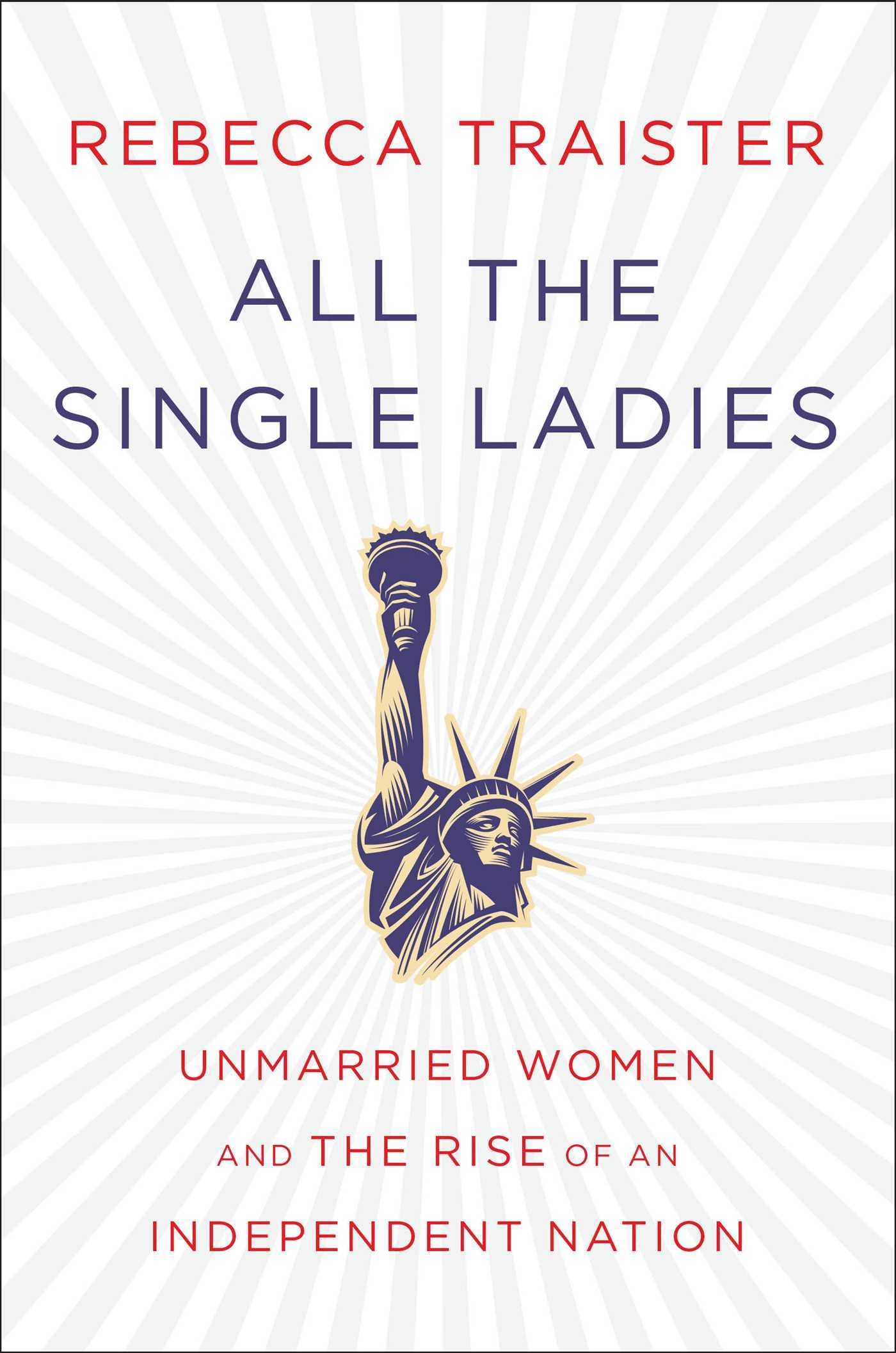
All the Single Ladies – Rebecca Traister

In 2009, award-winning journalist Rebecca Traister started All the Single Ladies about the twenty-first century phenomenon of the American single woman. It was the year the proportion of American women who were married dropped below fifty percent; and the median age of first marriages, which had remained between twenty and twenty-two years old for nearly a century (1890–1980), had risen dramatically to twenty-seven.

But over the course of her vast research and more than a hundred interviews with academics and social scientists and prominent single women, Traister discovered a startling truth: the phenomenon of the single woman in America is not a new one. And historically, when women were given options beyond early heterosexual marriage, the results were massive social change—temperance, abolition, secondary education, and more. Today, only twenty percent of Americans are married by age twenty-nine, compared to nearly sixty percent in 1960.

Short Story: Celebrating Women – The Circle of Life

In a quaint village nestled between rolling hills and whispering forests, the rhythm of life flowed gently, like the melody of a timeless lullaby. Here, amid the cobblestone streets and rustic cottages, lived women whose stories wove together to create a tapestry of resilience, strength, and sisterhood.

In the heart of the village, beneath the sprawling branches of an ancient banyan tree, sat young Lila, her eyes alight with wonder as she listened to her grandmother’s tales. Sitamma, with her silver hair and twinkling eyes, spoke of a time long past, when women were the keepers of tradition and wisdom.

Lila hung on her grandmother’s every word, her imagination ignited by stories of brave heroines and fierce warriors who had defied the odds and changed the course of history. As the sun dipped below the horizon, casting a golden glow upon the village, Sitamma whispered words of encouragement to her granddaughter.

“Remember, my dear,” she said, her voice a gentle breeze that stirred the air, “you carry within you the strength of generations past. Let your heart be your guide, and never forget the power of your voice.”

With those words echoing in her heart, Lila embarked on her journey, her spirit ablaze with the fire of possibility. She knew that she was but a bud, waiting to bloom into the fullness of her potential. And so, with each passing day, she embraced the challenges and triumphs that awaited her, knowing that her story was just beginning.

In a cottage nestled on the edge of the village, lived Kaveri, a mother whose love knew no bounds. With her gentle touch and nurturing spirit, she tended to the needs of her children, weaving a tapestry of love and warmth that enveloped their home like a cosy blanket.

Kaveri’s days were filled with laughter and chaos, the music of her children’s laughter a melody that danced through the halls. From dawn until dusk, she juggled the demands of motherhood with grace and poise, her heart overflowing with the joy of watching her children grow. But amidst the laughter, Sarah carried with her the weight of responsibility, the knowledge that she was the guiding light in her children’s lives. Through sleepless nights and tear-stained cheeks, she held their hands and whispered words of comfort, knowing that her love would carry them through even the darkest of days.

As she watched her children grow, Kaveri marvelled at the beauty of motherhood – the highs and lows, the triumphs and challenges, all woven together in a tapestry of love. She knew that her role was sacred, a privilege bestowed upon her by the universe, and she embraced it with open arms, knowing that she was fulfilling her purpose with every beat of her heart.

In the heart of the village square, beneath the shade of a blossoming cherry tree, sat Gowri Patti, an elderly woman whose wisdom was as deep as the ocean and as vast as the sky. With her weathered hands and kind eyes, she watched over the village like a guardian angel, her presence a source of comfort and guidance to all who sought her counsel.

Gowri Patti had lived a life rich with experience, her journey marked by triumphs and tribulations, victories and defeats. But through it all, she had remained steadfast in her belief in the power of sisterhood, the unbreakable bond that connected women of all ages and walks of life.

As the village gathered around her, eager to hear her tales of wisdom, Gowri Patti spoke of the importance of embracing one’s true self, of standing tall in the face of adversity, and of cherishing the bonds of friendship and sisterhood that bound them together. Her words were like poetry, weaving a tapestry of hope and inspiration that enveloped the village like a warm embrace. For in the wisdom of age, she found the courage to speak her truth, knowing that her voice held the power to ignite the flames of change and transformation.

And so, as the sun set on another day in the village, the women gathered beneath the banyan tree, their hearts intertwined like the branches above. They knew that their stories were but threads in the tapestry of sisterhood, each one unique and precious, yet connected by the unbreakable bonds of love and solidarity.

As the seasons turned and time marched onward, the women of the village continued to weave the threads of their lives together, creating a tapestry of strength, resilience, and sisterhood. From the blossoming innocence of youth to the quiet wisdom of age, each stage of life brought with it its joys and challenges, its triumphs and tribulations.

But through it all, the women remained united in their shared journey, their stories intertwined like the branches of the banyan tree, rooted deep in the soil of tradition and love. For in the heart of the village, amid the laughter and tears, the triumphs and defeats, there beat the timeless rhythm of sisterhood, a melody that echoed through the ages, celebrating the resilience and beauty of women everywhere.

International Women’s Day 2024

Celebrated annually on March 8, International Women’s Day, or IWD, recognises the social, economic, cultural, and political achievements of women. It also serves as a powerful reminder of the ongoing fight for gender equality.

The roots of International Women’s Day can be traced back to the early 20th century. In 1908, 15,000 women marched through the streets of New York City, demanding shorter hours, better pay, and voting rights — a testament to the growing momentum of the women’s suffrage movement in the United States. The idea of an international day to honour women’s achievements gained traction at the second International Conference of Working Women in Copenhagen in 1910. Inspired by the courage and resolve of their American counterparts, delegates from across the globe unanimously agreed to establish a day dedicated to advancing women’s rights and promoting gender equality. In 1911, International Women’s Day was officially celebrated for the first time in Austria, Denmark, Germany, and Switzerland, with rallies, marches, and public gatherings calling for women’s suffrage, improved working conditions, and an end to discrimination and inequality. Over the years, International Women’s Day has evolved into a global phenomenon, celebrated in countries and communities around the world. From grassroots initiatives to high-profile events, the day serves as a platform to recognize and celebrate the achievements, contributions, and resilience of women from all walks of life.

At its core, International Women’s Day is a rallying cry for gender equality and women’s empowerment. It serves as a reminder of the progress made in advancing women’s rights, while also shining a spotlight on the persistent barriers and challenges that women continue to face in achieving full equality and justice. International Women’s Day is a catalyst for change—a call to action for individuals, communities, and governments to redouble their efforts in promoting gender equality and women’s rights. It sparks conversations, ignites movements, and fosters solidarity among women and allies worldwide.

The theme for IWD 2024 is Inspire Inclusion. But what does it truly entail? When we inspire others to understand and value women’s inclusion, we forge a better world. When women themselves are inspired to be included, there’s a sense of belonging, relevance, and empowerment. As world-renowned feminist, journalist, and activist Gloria Steinem once said, “The story of women’s struggle for equality belongs to no single feminist nor to any one organization but to the collective efforts of all who care about human rights.” IWD transcends borders, organisations, and groups—it’s a day of collective global activism and celebration. To inspire inclusion, we must act consistently. When women aren’t present, we must question why. When discrimination occurs, we must call it out. When treatment isn’t equitable, we must act. This commitment applies each and every time.

So how can we inspire inclusion? On an individual basis, we should understand, value, and seek out the inclusion of women and girls; share knowledge, support, and encouragement with others; and embrace diversity, be it race, age, ability, faith, body image, and identity. As a group or on an organisational level, we must forge women’s economic empowerment; recruit, retain, and develop female talent; support women and girls in leadership, decision-making, business, and STEM; design and build infrastructure that meets women’s needs; help women and girls make informed decisions about their health; provide access to quality education and training; elevate women and girls’ participation and achievement in sports; and promote the creative and artistic talents of women and girls.

Over at the United Nations, the theme for IWD 2024 is Invest in Women: Accelerate Progress. In a world grappling with geopolitical conflicts, poverty, and climate change, empowering women becomes paramount. We can invest in women through:

  • Economic Empowerment: By economically empowering women, we advance women’s rights and gender equality globally. Financial independence opens doors to education, healthcare, and self-determination.
  • Technology and Education: Leverage technology and education in the digital age to empower women and girls. Bridging the digital divide ensures equal access to opportunities.
  • Collective Solutions: These crises demand collective solutions. When we invest in women, we invest in progress for all.

As we celebrate International Women’s Day, let us commit to inspiring inclusion, championing economic empowerment, and investing in women. Together, we can create a world where every woman’s voice is heard, every dream is achievable, and every barrier is dismantled.