Today is the International Women’s Day. And while I do wonder why we do need one single day to celebrate women, when every day should be a celebration of what women are and can do, in today’s world where millions of girls and women are still downtrodden, perhaps it is for them we should have this one day when they are celebrated, honoured and venerated.
87,000 women are killed every year just because they are women. 111 countries have no repercussions for husbands who rape their wives. 2.7 billion women are legally restricted from having the same choice of jobs as men. 45 countries do not have specific laws against domestic violence and 35% of women globally have experienced sexual or physical violence
The International Women’s Day is a day to join with people around the world and shout the message for equal rights loud and clear and to say with emphasis that women’s rights are human rights! Today is the day to celebrate all women, in all their diversities, to embrace their facets and intersections of faith, race, ethnicity, gender or sexual identity, or disability, to celebrate those who came before us, those who stand beside us now, and those who will come after. Today is the day to celebrate the achievements of women, whether social, political, economic or cultural.
International Women’s Day is a day which celebrates on a global scale the social, economic, cultural and political achievements of women. The day also marks a call to action for accelerating gender parity. Significant activity is witnessed worldwide as groups come together to celebrate women’s achievements or rally for women’s equality. The day is important because worldwide celebrations are held to celebrate women’s achievements, raise awareness about women’s equality, lobby for accelerated gender parity and fundraise for female-focused charities
While reading about the IWD, I found two separate themes for the day. The theme from the UN is Women in leadership: Achieving an equal future in a COVID-19 world. This theme celebrates the tremendous efforts by women and girls around the world in shaping a more equal future and recovery from the COVID-19 pandemic. which calls for women’s right to decision-making in all areas of life, equal pay, equal sharing of unpaid care and domestic work, an end all forms of violence against women and girls, and health-care services that respond to their needs. Women stand at the front lines of the COVID-19 crisis, as health care workers, caregivers, innovators, community organizers and as some of the most exemplary and effective national leaders in combating the pandemic. The crisis has highlighted both the centrality of their contributions and the disproportionate burdens that women carry.
Women leaders and women’s organizations have demonstrated their skills, knowledge and networks to effectively lead in COVID-19 response and recovery efforts. Today there is more acceptance than ever before that women bring different experiences, perspectives and skills to the table, and make irreplaceable contributions to decisions, policies and laws that work better for all. Majority of the countries that have been more successful in stemming the tide of the COVID-19 pandemic and responding to its health and broader socio-economic impacts are headed by women. For instance, Heads of Government in Denmark, Ethiopia, Finland, Germany, Iceland, New Zealand and Slovakia have been widely recognized for the rapidity, decisiveness and effectiveness of their national response to COVID-19, as well as the compassionate communication of fact-based public health information.
Yet, women are Heads of State and Government in only 20 countries worldwide. In addition to persistent pre-existing social and systemic barriers to women’s participation and leadership, new barriers have emerged with the COVID-19 pandemic. Across the world, women are facing increased domestic violence, unpaid care duties, unemployment and poverty. Despite women making up a majority of front-line workers, there is a disproportionate and inadequate representation of women in national and global COVID-19 policy spaces. To uphold women’s rights and fully leverage the potential of women’s leadership in pandemic preparedness and response, the perspectives of women and girls in all of their diversity must be integrated into the formulation and implementation of policies and programmes in all spheres and at all stages of pandemic response and recovery.
The second theme is from the official IWD website whose theme is Choose To Challenge. A challenged world is an alert world, and from challenge comes change. Individually, we’re all responsible for our thoughts and actions – all day, every day. We can choose to challenge and call out gender bias and inequality and can choose to seek out and celebrate women’s achievements. Collectively, all of us can help create an inclusive world.
So why does the International Women’s Day matter? It matters because we’re still not there yet! Today is a day to recognise how far we’ve come towards gender equality, and also how far we have left to go. It may seem strange today, but back in 1911, only eight countries allowed women to vote, equal pay for equal work was unheard of – if women were allowed to work at all – and reproductive rights were non-existent. Even supposedly western and first world countries like Switzerland only allowed women to vote in 1971 at the federal level! And middle-eastern countries like Bahrain, Kuwait, Saudi Arabia, the United Arab Emirates have only allowed women to vote in the 21st century with Saudi Arabia only allowing women to vote just six years back in 2015!
Today the world has come a long way. Where once women couldn’t vote, they are now leading countries, where women faced restrictions on working, they’re running corporations now. Even though in many countries, women have rights their grandmothers could only have dreamt about, there is still no complete equality. And the majority of the world’s women are still treated as second or third-class citizens.
More than 100 years ago, when women marched for the first time, that first march was about ending harmful workplace conditions, equal rights, equal pay, and an end to exploitation. But in all these years, nothing has changed much and the reasons women march are still relevant today. Because the rights of women are not secure. When rights for women take two steps forward, more often than not, it’s accompanied by a step back and even if laws and rights are established, in many countries these rights are ignored.
The International Women’s Day is a yearly chance to remind those in charge and everyone else that progress has not been equal. This day is an opportunity to acknowledge the compounded challenges faced by women everywhere, be it women of colour, women with disabilities, and queer or trans women, and stand in partnership with them.
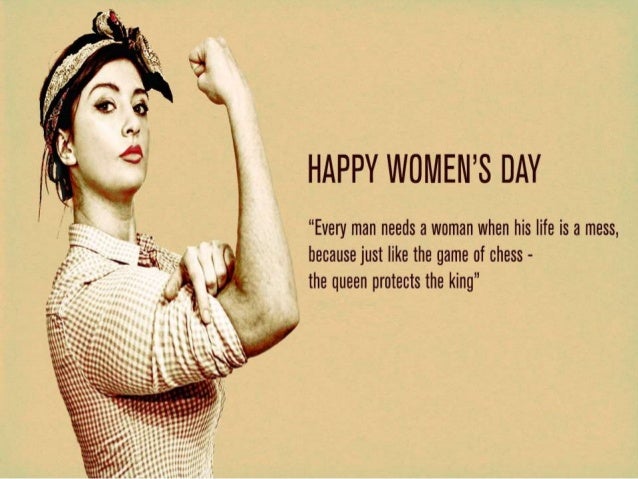
Because sometimes we need to remember we’re not alone. Happy International Women’s Day to all the lovely women and the men who support and motivate their women!




 Memories and Such