Adulting 101: Understanding and Overcoming Imposter Syndrome

As young adults transition into the workforce or pursue higher education, many experience a psychological phenomenon known as imposter syndrome. This feeling of self-doubt and inadequacy can hinder personal and professional growth, making it essential to understand its nature and learn how to overcome it.

What is Imposter Syndrome?
Imposter syndrome, often referred to as the imposter phenomenon, is characterised by persistent feelings of self-doubt, insecurity, and a sense of being a fraud despite evident success or accomplishments. Individuals experiencing imposter syndrome often attribute their achievements to luck or external factors rather than their abilities or hard work. This phenomenon can lead to anxiety, stress, and a fear of being exposed as a fraud.

Some common characteristics characterise someone with imposter syndrome.

  • Self-doubt: Individuals frequently question their skills and qualifications, feeling unworthy of their achievements.
  • Fear of exposure: There is a constant fear that others will discover their perceived inadequacies.
  • Perfectionism: Many individuals set excessively high standards for themselves and feel disappointed when they do not meet these expectations.
  • Attributing success to external factors: People often believe that their successes are due to luck or timing rather than their efforts.
  • Overworking: To compensate for feelings of inadequacy, individuals may over-prepare or work excessively hard to prove their worth.

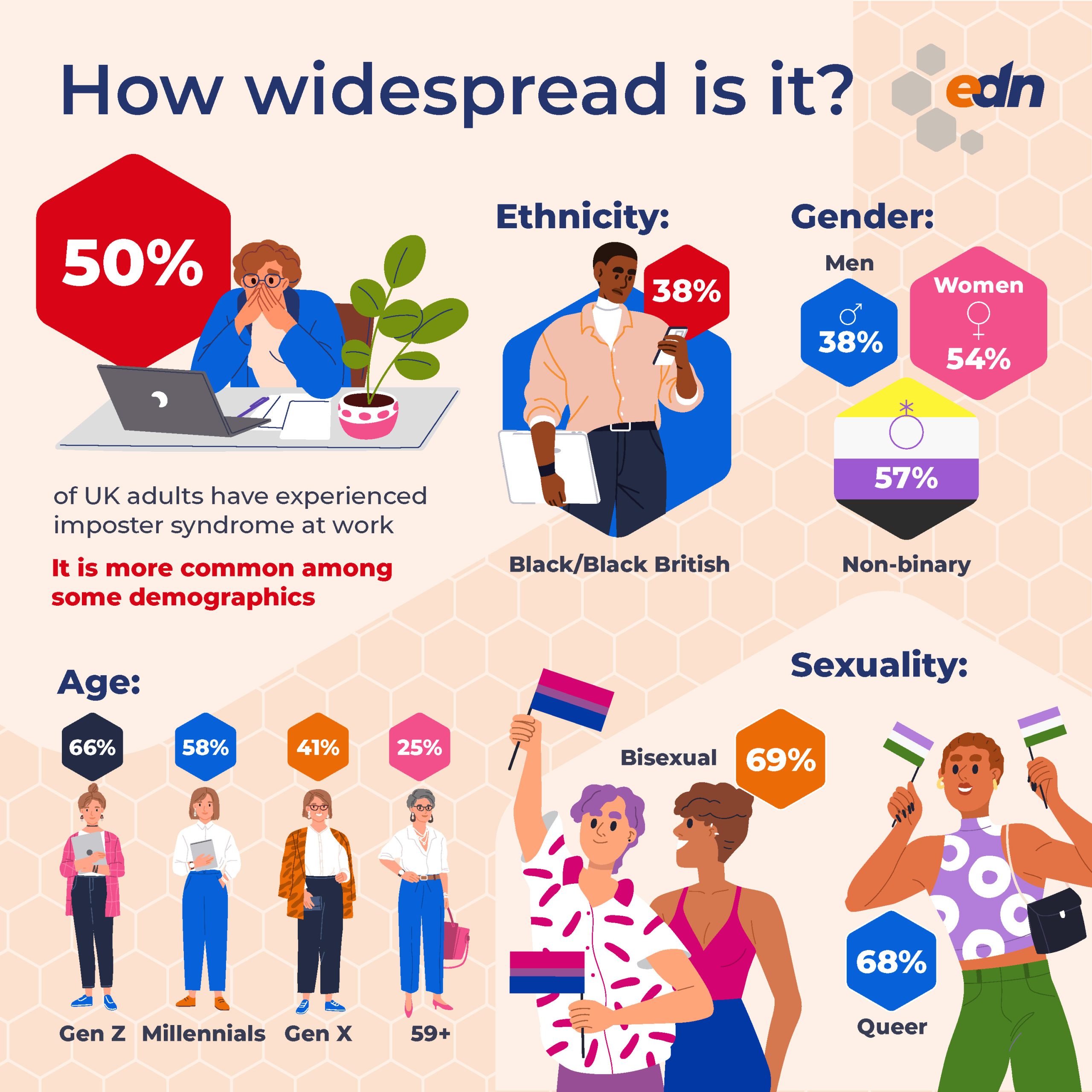
Imposter syndrome is surprisingly common. Research indicates that approximately 70% of people experience imposter feelings at some point in their lives. It can affect anyone, regardless of their background, education level, or professional success.

Many young adults experience imposter syndrome. Young adults often face significant transitions in their lives, such as moving from high school to university or entering the workforce for the first time. These changes can trigger feelings of uncertainty and self-doubt. Societal pressures and expectations can exacerbate feelings of inadequacy. Young adults may feel compelled to achieve success quickly or meet unrealistic standards set by themselves or others.

In the age of social media, young adults are constantly exposed to curated representations of others’ lives and achievements. This can lead to unhealthy comparisons and feelings of inferiority. Entering a new environment—whether it’s a university setting or a workplace—can amplify feelings of being an imposter. Young adults may feel they lack the experience necessary to succeed in these new roles.
The Impact of Imposter Syndrome on Young Adults
Imposter syndrome can have significant consequences for young adults, affecting various aspects of their lives. Feelings of inadequacy can lead to increased anxiety, depression, and stress levels. The constant pressure to prove oneself can take a toll on mental well-being. Imposter syndrome can hinder career growth by preventing individuals from pursuing opportunities or taking on new challenges due to fear of failure. When individuals feel like imposters in their roles, it can lead to decreased job satisfaction and motivation. They may struggle to appreciate their accomplishments or contributions. Young adults may avoid situations that could lead to exposure as an imposter, such as networking events or public speaking opportunities, limiting their professional development.
Strategies for Overcoming Imposter Syndrome
While overcoming imposter syndrome is not an overnight process, there are several strategies that young adults can employ to manage these feelings effectively:

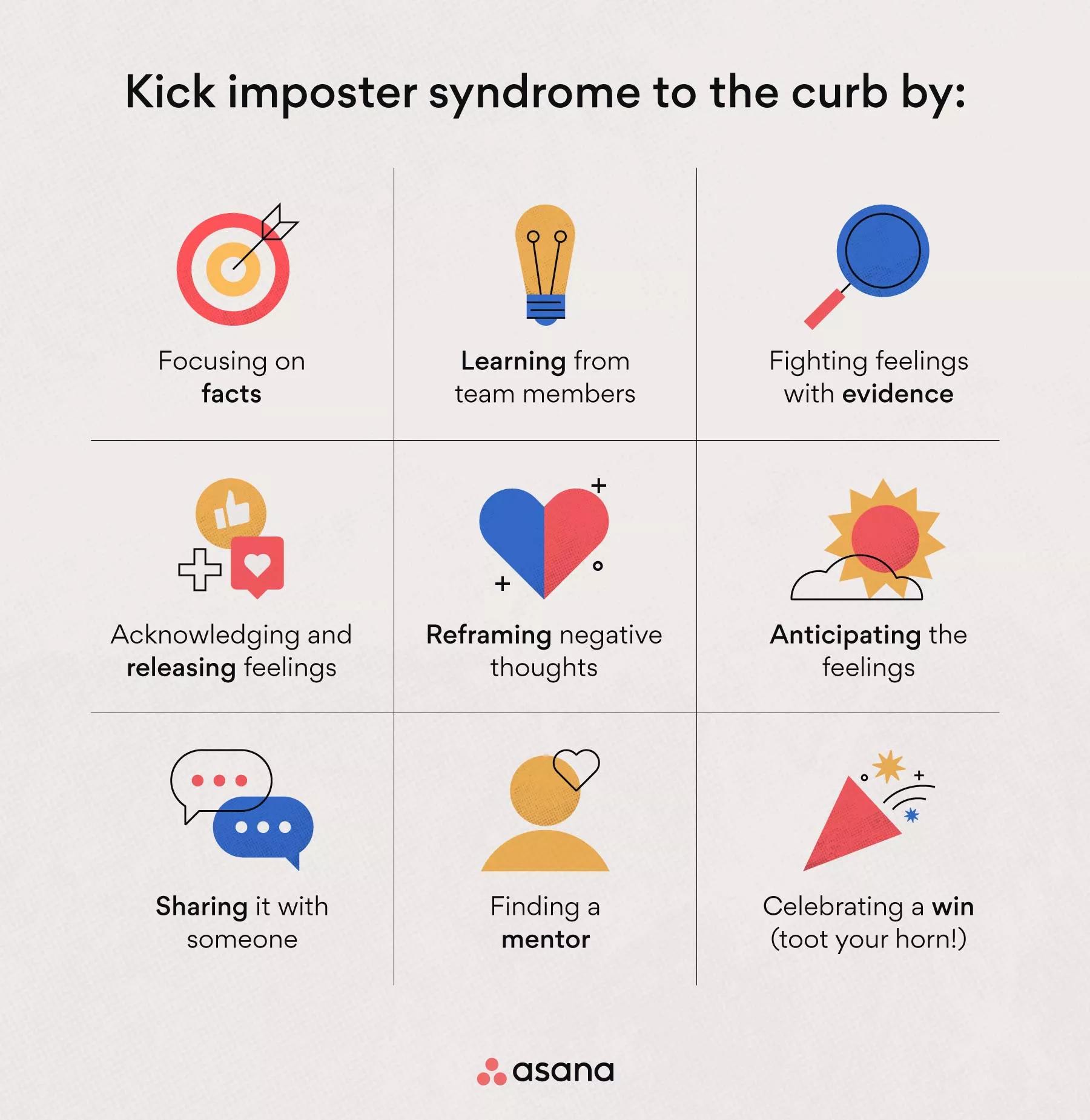
  • Acknowledge your feelings: The first step in overcoming imposter syndrome is recognizing and acknowledging your feelings. Understand that experiencing self-doubt is normal and that many others share similar experiences. Write down your thoughts and feelings related to imposter syndrome when they arise. This practice can help you gain clarity about your emotions and identify triggers.
  • Challenge negative self-talk: Imposter syndrome often manifests through negative self-talk that reinforces feelings of inadequacy. To combat this, pay attention to your inner dialogue and identify negative thoughts that contribute to self-doubt. Reframe thoughts and replace negative thoughts with positive affirmations or balanced perspectives. For example, instead of thinking “I don’t deserve this promotion,” reframe it as “I have worked hard for this opportunity.”
  • Recognise accomplishments: Recognising your accomplishments is crucial in combating imposter syndrome. Keep a success journal and document achievements, no matter how small they may seem. Reflecting on your successes can help reinforce your capabilities. Don’t hesitate to share accomplishments with friends, family, or mentors who can celebrate with you.
  • Seek support from others: Talking about feelings with trusted friends or mentors can provide valuable perspective and support. Find a mentor as connecting with someone who has navigated similar challenges can offer guidance and reassurance. Join support groups where individuals share experiences related to imposter syndrome; this fosters a sense of community and understanding.
  • Embrace lifelong learning: Understanding that everyone has areas for growth can help alleviate pressure. Pursue professional development and engage in training sessions, workshops, or courses that enhance your skills and knowledge in your field. Accept mistakes as learning opportunities and recognise that making mistakes is part of growth; use them as opportunities for improvement rather than evidence of inadequacy.
  • Practice mindfulness: Practice mindfulness techniques that can help ground you in the present moment and reduce anxiety related to imposter feelings. Regular meditation practice can help calm the mind and promote self-awareness. Incorporate deep breathing exercises into your daily routine to manage stress levels effectively.
  • Set realistic goals: Setting achievable goals helps mitigate perfectionism associated with imposter syndrome. Divide larger goals into smaller, manageable tasks that allow you to track progress without overwhelming yourself. Shift your mindset from striving for perfection to celebrating progress along the way.
  • Limit social media exposure: Social media can exacerbate feelings of inadequacy through constant comparisons. Get rid of negative influences and curate your feed by unfollowing accounts that trigger negative thoughts about yourself. Engage with positive content and follow accounts that inspire you or provide educational content relevant to your interests.
Source

In addition to the strategies mentioned above, here are some practical tips that young adults can implement in their daily lives:

  • Develop a personal brand: Creating a personal brand involves defining who you are professionally and what you stand for in your career. Take time to reflect on your skills and strengths; knowing what you bring to the table can enhance confidence. Develop a personal narrative that highlights your journey—this helps reinforce your identity beyond just accomplishments.
  • Engage in networking: Building connections with others in your field not only opens doors but also provides reassurance through shared experiences. Participate in conferences, workshops, or networking events where you can meet others facing similar challenges. Utilise platforms like LinkedIn to connect with professionals in your industry; and engage in discussions around shared interests.
  • Practice self-compassion: Being kind to yourself during moments of doubt is crucial. Understand that everyone makes mistakes; self-compassion allows you room for growth without harsh judgment. When experiencing self-doubt, consider how you would respond if a friend expressed similar feelings—offer yourself the same kindness!
  • Focus on contribution rather than comparison: Shift focus from comparing yourself with others towards how you can contribute positively within your environment. Consider how sharing knowledge or supporting colleagues enhances collaboration rather than competition.

Imposter syndrome is a common experience among young adults navigating new environments in university and the workforce; however, it doesn’t have to define one’s journey! By understanding its nature while implementing effective strategies—such as acknowledging feelings, challenging negative self-talk, celebrating achievements, seeking support from others, and embracing lifelong learning practices—young adults can combat these feelings successfully.

Ultimately, recognising that experiencing self-doubt does not diminish one’s abilities is key; instead of allowing imposter syndrome to hold you back from seizing growth opportunities, embrace it as part of the journey! With patience combined with supportive practices, young adults will find themselves equipped not only with skills but also the confidence needed for future success! By fostering resilience against imposter syndrome while building meaningful connections along the way, young professionals are sure to not only thrive but also create fulfilling careers ahead!
Poem: In Every Shade of Love

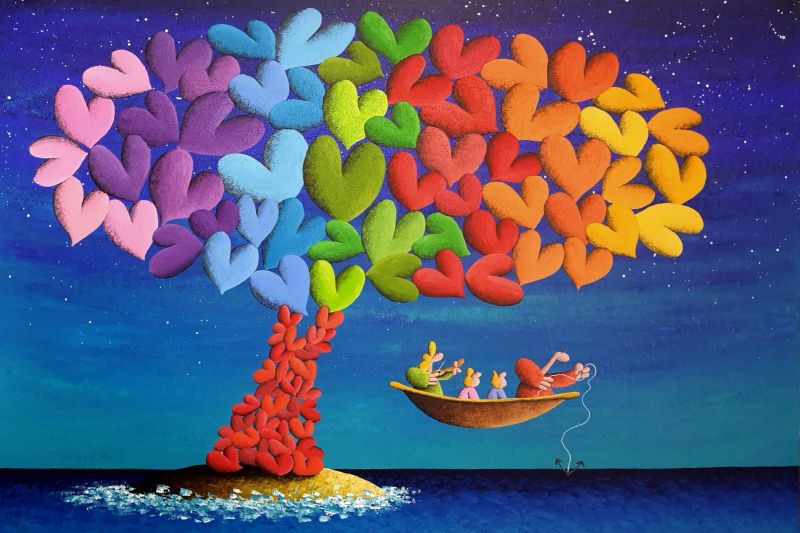
February, often called the month of love, brings with it not just the celebration of romantic affection but a reminder of the many shades of love that colour our lives. While Valentine’s Day shines a spotlight on romance, this time of year can also be a beautiful reflection of the love that surrounds us in different forms—love for family, friends, our community, and even our roots. It’s a time to appreciate the quiet acts of care and kindness, the bonds that shape who we are, and the love that continues to grow within us and around us. As we step into this month, let us celebrate love in all its shades, for it is what binds us, lifts us, and fills our lives with meaning. Today’s poem captures this essence — reminding us that love goes beyond the romantic, touching every corner of our hearts.

In Every Shade of Love

Love is a whisper, a shout, and a song,
An unspoken bond that carries us along.
It grows in the silence; it thrives in the light,
In every heart’s corner, love shines so bright.

It’s the warmth of a mother’s embrace at night,
A father’s quiet strength, steady and tight.
It’s the laughter shared among siblings and friends,
A love that endures, that never quite ends.

It’s the hands that lift you when you fall down,
The joy in a smile that chases a frown.
It’s the pride in your homeland, the place you belong,
The land that sings to you in its own song.

Love is in sacrifice, in moments of care,
In giving and sharing, in always being there.
It’s the solace you find in familiar sights,
The love for your roots is where your spirit ignites.

It’s the tenderness held in a passing glance,
In the heart’s secret language, in every chance.
It lives in the quiet; it roars in the wild,
From the love of a country to that of a child.

In every shade, from soft to bold,
Love is the treasure, the story untold.
For love is a bridge, a light from above.
Uniting our worlds in every shade of love.

Mindful Eating: Nourishing the Body and Mind

In a world increasingly dominated by fast-paced lifestyles and processed foods, mindful eating has emerged as a powerful antidote. This practice encourages individuals to cultivate awareness around their food choices, fostering a deeper connection between the mind and body.

What is mindful eating?
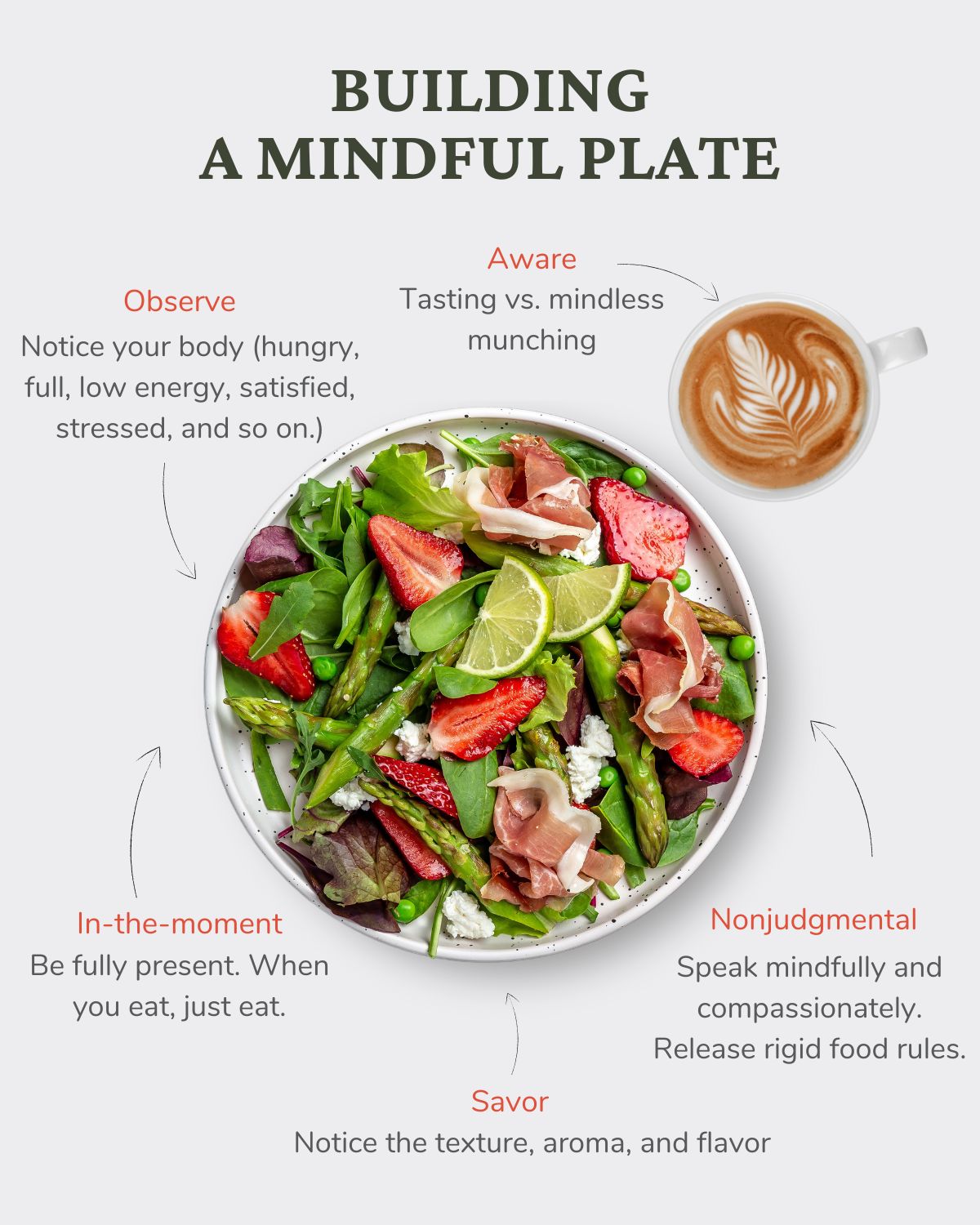
Mindful eating is the practice of being fully present and aware during the eating process. It involves paying attention to the sensory experience of eating, including the taste, texture, aroma, and appearance of food. This approach encourages individuals to slow down, savour each bite, and listen to their body’s hunger and satiety cues.

The core principles of mindful eating include being aware and conscious of the food one eats and the sensations associated with it; being non-judgmental and accepting one’s eating experiences without criticism or guilt; savouring and taking the time to enjoy one’s food, enhancing the pleasure of eating; and listening to the body and recognising and responding to hunger and fullness signals.

Origin of Mindful Eating
The term “mindful eating” is rooted in the broader concept of mindfulness, which has its origins in Buddhist meditation practices. Mindfulness emphasises living in the present moment and being aware of one’s thoughts, feelings, and surroundings. In the late 20th century, the application of mindfulness to eating began to gain traction, particularly through the work of researchers and dietitians.

A pioneer in the field of mindfulness, Jon Kabat-Zinn developed the Mindfulness-Based Stress Reduction (MBSR) program in the late 1970s, which helped popularise mindfulness in the West. In her book, “Mindful Eating,” Dr. Jan Chozen Bays outlines practical strategies for incorporating mindfulness into eating habits, emphasising awareness and compassion.

Benefits of Mindful Eating
Mindful eating offers a wide range of benefits for both physical and mental health. Here are some key advantages:

  • Improved Digestion: Eating slowly and mindfully allows one’s body to properly digest food. When one eats quickly, they may swallow air and have difficulty recognising when they’re full, leading to overeating. Mindful eating encourages thorough chewing and salivation, aiding digestion.
  • Enhanced Relationship with Food: Mindful eating fosters a positive relationship with food. By eliminating guilt and judgment, individuals can enjoy their meals without anxiety. This can lead to a more balanced and healthy attitude toward food choices.
  • Weight Management: Research indicates that mindful eating can contribute to weight loss and management. By being aware of portion sizes and listening to hunger cues, individuals are less likely to overeat and more likely to make healthier food choices.
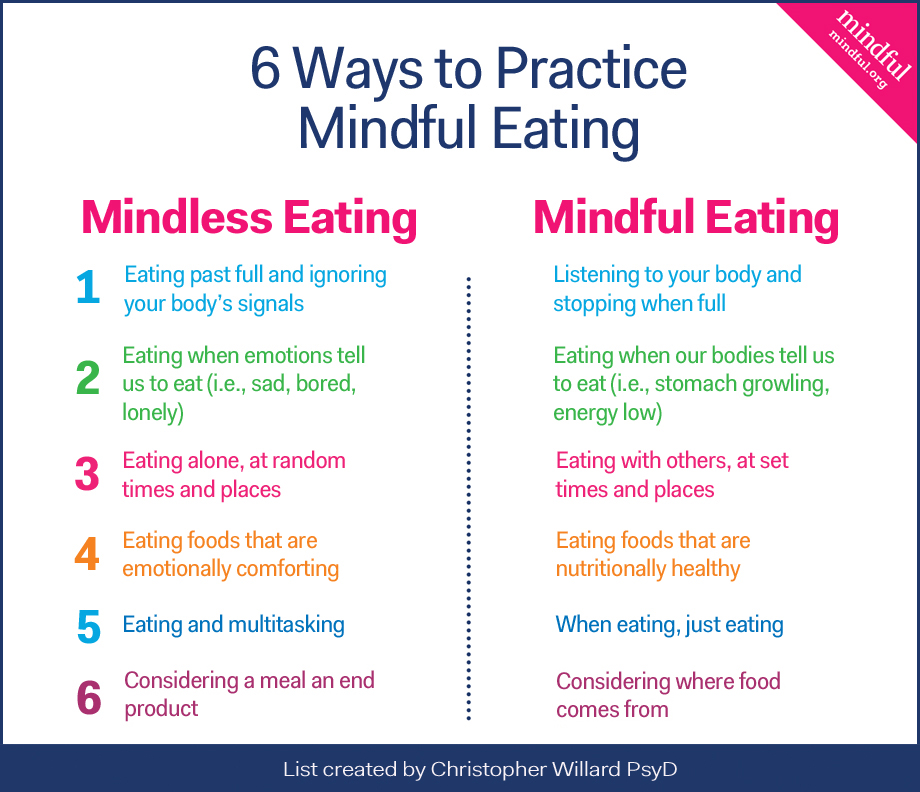
  • Reduced Emotional Eating: Mindful eating helps individuals recognise emotional triggers that lead to overeating. By developing awareness around these feelings, people can address emotions in healthier ways rather than turning to food for comfort.
  • Increased Satisfaction: Taking the time to savour food can lead to greater satisfaction with smaller portions. When one truly enjoys their food, they may find that one needs less to feel full and satisfied.

How to Practice Mindful Eating?
Incorporating mindful eating into one’s daily routine doesn’t have to be daunting. Here are some practical steps to get started:

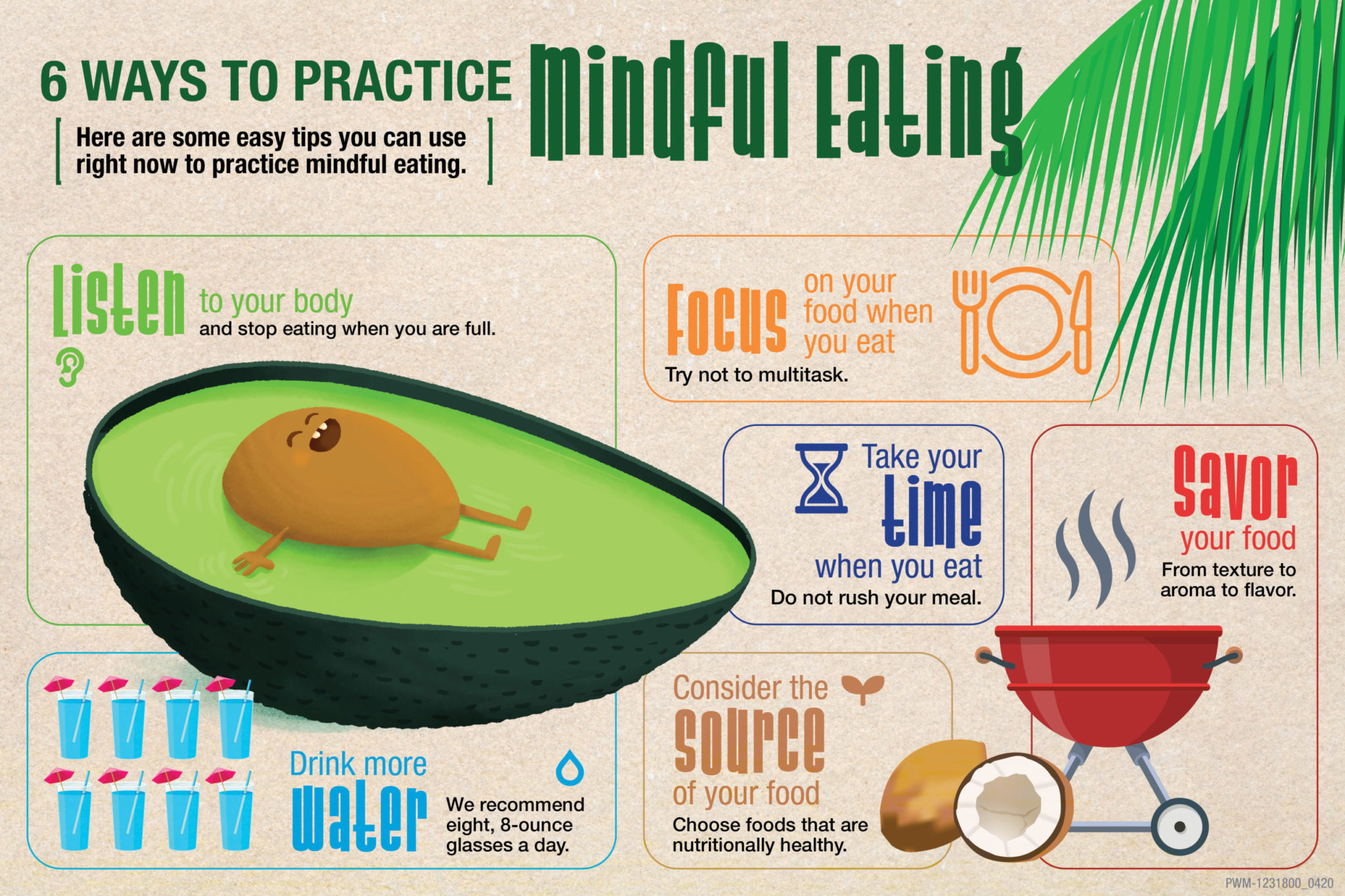
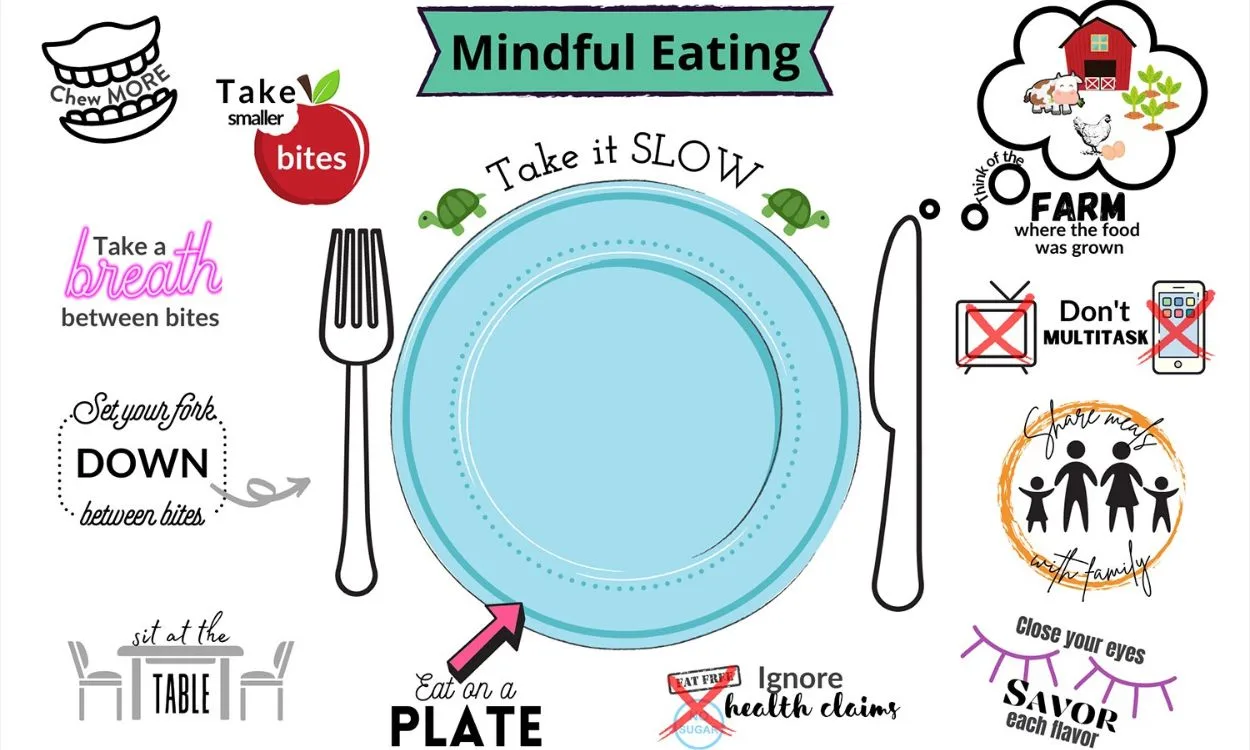
  • Create a Mindful Eating Environment: Set the stage for mindful eating by minimising distractions. Turn off electronic devices, find a quiet space, and focus solely on the meal.
  • Engage the Senses: Before one eats, take a moment to observe one’s food. Notice its colours, textures, and aromas. As one eats, one should pay attention to the sensations of taste and the feeling of each bite in one’s mouth.
  • Slow Down: Take time while eating. Chew each bite thoroughly and place the utensils down between bites. This not only enhances the eating experience but also gives the brain time to register fullness.
  • Listen to the Body: Tune in to the body’s signals. Ask oneself if one is truly hungry before reaching for food. During the meal, check in with one’s hunger and fullness levels, and stop eating when one feels satisfied.
  • Practice Gratitude: Before meals, take a moment to express gratitude for the food. Acknowledging the effort that went into preparing the meal can enhance the enjoyment and appreciation of it.
  • Keep a Mindful Eating Journal: Consider keeping a journal where one can reflect on one’s eating experiences. Note how certain foods make one feel, any emotional triggers one notices, and one’s hunger levels throughout the day.

Mindful Eating and Weight Loss
For those looking to lose weight, mindful eating can be an effective strategy. Here’s how it can help:

  • Awareness of Portions: Mindful eating encourages portion control. By paying attention to how much one eats and recognising when one is full, one can avoid overeating, which is often a major barrier to weight loss.
  • Better Food Choices: When one practices mindful eating, one is more likely to choose foods that nourish one’s body. One may find oneself gravitating toward whole, unprocessed foods that provide better nutrition compared to processed options.
  • Reduced Cravings: By understanding one’s body’s hunger signals, one can better distinguish between physical hunger and emotional cravings. This awareness can help reduce mindless snacking and emotional eating.
  • Sustainable Habits: Mindful eating fosters a long-term, sustainable approach to health and weight management. It promotes a balanced relationship with food rather than a cycle of restrictive dieting and bingeing.

Mindful eating is more than just a method for losing weight; it is a holistic approach to nourishing the body and mind. By fostering awareness, reducing emotional eating, and cultivating a positive relationship with food, individuals can experience profound benefits that extend beyond the dining table. As one embarks on their journey toward mindful eating, remember that it is a practice—one that requires patience and self-compassion. By taking small steps to incorporate mindfulness into one’s meals, one can transform their eating habits and, ultimately, their relationship with food. Whether one aims to lose weight, improve one’s digestion, or simply savour the joy of eating, mindful eating can help achieve their health goals while enhancing their overall well-being. Embrace the journey, and enjoy each bite!

International Day of Education

Education is the most powerful weapon which you can use to change the world — Nelson Mandela

Education is not just a privilege; it’s a fundamental human right and a foundation for peace and development. Every year, the world comes together on January 24 to celebrate the International Day of Education. This day is a reminder of the power of education to transform lives, strengthen communities, and promote equity across generations. In 2025, the focus of the International Day of Education is set on a critical issue of our time: “Fostering Digital Literacy for All.” As digital technology increasingly shapes every facet of our lives, the emphasis on digital literacy reflects the need to equip individuals worldwide with the skills they need to thrive in a connected world.

The International Day of Education was established in 2018 by the United Nations General Assembly in recognition of education’s role in promoting global peace and sustainable development. Education is enshrined in Article 26 of the Universal Declaration of Human Rights, which calls for free and compulsory elementary education for all. The UN’s Sustainable Development Goal 4 (SDG 4) specifically seeks to “ensure inclusive and equitable quality education and promote lifelong learning opportunities for all” by 2030.

The UN dedicated January 24 as a day to emphasise education’s impact on economic growth, poverty alleviation, gender equality, and social mobility. It calls on governments, civil society, educators, and citizens worldwide to recognize and act on the critical role of education in solving some of the world’s greatest challenges. By shining a spotlight on education, the UN aims to drive attention and resources toward ensuring that everyone has access to quality education, regardless of where they live or their socioeconomic status.

Each year, the International Day of Education adopts a new theme that highlights a pressing global education issue. These themes reflect emerging challenges and underscore education’s vital role in addressing them. For instance, in 2021, amid the COVID-19 pandemic, the theme was Recover and Revitalize Education for the COVID-19 Generation, which focused on restoring learning opportunities disrupted by the pandemic. In 2022, the theme Changing Course, Transforming Education highlighted the need for innovation in education to keep pace with a rapidly changing world. These themes provide a framework for international organisations, policymakers, educators, and advocates to focus their efforts, raise awareness, and implement changes in educational policies and practices that align with global needs. The day serves as a global rallying call to prioritise education at all levels, address inequalities, and close the gaps in access, quality, and inclusivity in education systems worldwide. By raising awareness, the day encourages nations to make policy commitments, increase funding for education, and work towards equitable, high-quality education for all.

Education is central to the achievement of many of the UN’s Sustainable Development Goals (SDGs). In particular, SDG 4 aims to ensure inclusive and equitable quality education, which supports several other goals such as reducing poverty, achieving gender equality, and promoting decent work. Through initiatives linked to the International Day of Education, communities worldwide are empowered to take concrete steps toward these objectives. The celebration has inspired countries and organisations worldwide to take action. For instance, in some regions, governments have used the day to announce new educational initiatives, while NGOs have leveraged the platform to secure funding for education projects. These examples demonstrate the day’s potential as a catalyst for real change, mobilizing support for increased educational access and improvements across the globe.

In today’s digital era, literacy is no longer limited to reading, writing, and arithmetic. Digital literacy has become essential for participating fully in society, accessing economic opportunities, and engaging in lifelong learning. In 2025, the theme “Fostering Digital Literacy for All” addresses the pressing need to bridge the digital divide and equip people worldwide with the digital skills necessary to thrive in an increasingly digital world.

Digital literacy includes skills that allow individuals to use digital devices, communicate online, and critically evaluate digital content. It’s essential for success in the modern workforce, where most jobs require some level of digital proficiency. Moreover, digital literacy empowers individuals to access valuable information, navigate online services, and engage with society safely and responsibly. This is especially important in a post-pandemic world where education, work, and social interactions increasingly rely on digital platforms. The focus on digital literacy aligns with SDG 4’s goal of promoting equitable education, as it seeks to ensure that everyone, regardless of location or economic status, can gain the skills they need to engage in and benefit from the digital economy.

UNESCO, along with organizations such as UNICEF and the International Telecommunication Union (ITU), has been at the forefront of promoting digital literacy. Through initiatives like the Global Education Coalition, UNESCO partners with governments, private sector companies, and non-profits to provide digital learning resources, improve connectivity, and ensure that students and teachers in underserved regions have access to the tools they need for digital learning.

Some innovative initiatives have made significant strides in advancing digital literacy. For instance, in certain rural areas, mobile tech schools provide digital devices and internet access to students who lack these resources at home. In parts of Africa, mobile learning platforms bring educational content to students via cell phones, allowing for flexible learning in areas with limited internet connectivity. Government programs in countries like India have launched digital literacy campaigns that train adults and young people alike in essential digital skills. These programs highlight the transformative potential of digital literacy and serve as models that can be adapted and implemented worldwide.

While the benefits of digital literacy are clear, achieving universal digital literacy remains challenging due to barriers related to infrastructure, teacher training, and economic disparities. In many developing countries, access to digital devices and reliable internet remains limited. For digital literacy to become a reality, infrastructure investments are crucial. Expanding internet access to remote areas, providing affordable devices, and creating digital hubs in underserved communities are essential steps toward bridging the digital divide. Teachers play a vital role in imparting digital skills. However, many educators lack the necessary training to incorporate digital literacy into their lessons effectively. Ensuring that teachers are equipped with both digital skills and teaching strategies for digital literacy is essential for preparing students for a digital future.

Socioeconomic factors also play a major role in access to digital resources. Families with limited financial means may struggle to afford internet access or digital devices for their children. Addressing these disparities requires policy interventions and funding that prioritize affordable access to technology for all. Digital literacy cannot be achieved by governments alone. Collaboration with the private sector, community organizations, and local governments is essential. Many tech companies, for example, partner with schools to donate devices, offer training programs, and fund digital literacy initiatives. Community organizations also play a significant role by providing free or low-cost digital training programs, creating community tech hubs, and offering mentorship to individuals in need. For instance, in countries with limited educational resources, corporations like Google and Microsoft have partnered with local schools to provide teacher training in digital tools. Community-based initiatives, such as public internet hubs and volunteer-led tech literacy workshops, further contribute to building digital skills in underserved areas. Such collaborations demonstrate how partnerships can help make digital literacy accessible to all.

Anyone can support the cause of digital literacy. Individuals can volunteer with local literacy programs, mentor students in digital skills, or donate digital devices to schools and community centers. Raising awareness through social media or community outreach can also help amplify the need for digital literacy. Schools, non-profits, and companies can contribute by launching digital literacy programs, donating resources, or partnering with government agencies to expand access to digital education. Advocacy for policies that support digital literacy as a core educational component can also create lasting change.

The 2025 International Day of Education theme emphasises that digital skills are not a luxury but a necessity. For individuals to thrive in today’s world, they need to understand and utilise digital tools responsibly and effectively. Ensuring that everyone has access to digital literacy is essential for promoting equality, economic opportunity, and social inclusion. By supporting initiatives that promote digital literacy, each of us can contribute to a future where everyone has the skills they need to succeed in a digital world.

Short Story: The Emerald Legacy

The sun hung low in the sky over Mumbai, casting a golden hue over the bustling city. Inside the Chhatrapati Shivaji Maharaj Vastu Sangrahalaya, excitement buzzed through the air. The museum was hosting an exclusive exhibition featuring the legendary emerald necklace known as the “Vishakha Necklace,” said to be one of the finest pieces of jewellery in India.

Detective Arjun Mehta stood outside the museum, eyes scanning the crowd. He had been called in to investigate what was supposed to be a routine security detail for the exhibition. But as he entered the grand hall, he felt an unsettling tension in the air.

The necklace was displayed under glass, surrounded by security personnel and museum staff. As Arjun approached, he overheard whispers among the guests, their excitement palpable. “Did you hear about the necklace? They say it’s cursed,” one woman said to her friend. “Cursed? What do you mean?” her friend replied, intrigued. “The legend goes that every emerald represents a life lost in a tragic love triangle centuries ago,” the woman explained. “It’s said that anyone who possesses it will face misfortune.”

Arjun raised an eyebrow at this. Superstitions were common in India, but he had always believed that crime had more tangible roots than curses. As he continued to observe, a sudden commotion erupted near the display case. A guard shouted, “Stop! Thief!”

Arjun’s instincts kicked in as he rushed towards the scene. He pushed through the crowd just in time to see a figure dart away from the display, clutching a bag that bulged with stolen goods. “After him!” Arjun shouted, sprinting after the thief.

The chase led them through the museum’s labyrinthine corridors and out into the streets of Mumbai. Arjun was determined; he had trained for moments like this. But just as he was gaining ground on the thief, a sharp turn into an alleyway caused him to lose sight of his target. Breathless and frustrated, Arjun stopped to catch his breath and assess the situation. He pulled out his phone and called for backup while scanning the area for any sign of the thief.

Back at the museum, chaos reigned as security personnel secured the area. Arjun met with Inspector Rao, who had arrived on the scene. “What do we know?” Arjun asked, his mind racing. “The necklace is gone,” Rao replied grimly. “The thief managed to evade capture. We’re reviewing security footage now.”

Arjun nodded and turned his attention to the display case. The glass was shattered, and shards lay scattered on the floor. He crouched down to examine it closely when he noticed something glimmering amidst the debris—a small emerald pendant that had fallen from the necklace. “Interesting,” he murmured, picking it up carefully. “This could be a clue.” As they reviewed security footage, they saw a hooded figure slip into view just before the theft occurred. The thief moved with agility and purpose, but their face remained obscured.

“Any leads on who this might be?” Arjun asked. “Not yet,” Rao replied. “But we’ll track down any known criminals in this area.” Arjun felt a growing sense of urgency. The Vishakha Necklace wasn’t just valuable; it held historical significance tied to an ancient tale of love and betrayal that had captivated him since childhood. That evening, as Arjun sat at his desk poring over old records about the necklace’s history, he found himself drawn into its tragic past.

The Vishakha Necklace was said to have been crafted centuries ago for a beautiful princess named Vishakha, who lived in a grand palace overlooking a lush valley. She was known for her beauty and kindness but found herself caught in a tumultuous love triangle between two brothers—Rajendra and Vikram—both noble warriors vying for her affection.

Their rivalry escalated into jealousy and betrayal, leading to tragic consequences that would haunt their families for generations. It was said that each emerald represented one of their lost lives—each stone holding within it a fragment of their sorrow. Arjun leaned back in his chair, contemplating how this dark history intertwined with present events. He needed to dig deeper into both the theft and its connection to this ancient tale.

The next day, Arjun visited local historians and jewellers who specialised in antique jewellery. He learned more about Vishakha’s story—how her love had led to heartbreak and how her spirit was said to linger around her beloved necklace. One historian shared an intriguing detail: “The necklace is rumoured to have been hidden away during times of strife but always returns when true love is threatened.”

Arjun couldn’t shake off the feeling that there was more to this story than met the eye. He decided to visit Vishakha’s palace ruins located outside Mumbai, hoping to uncover any additional clues about its legacy. Upon arriving at the site, he marvelled at what remained of the once-magnificent structure. As he wandered through crumbling walls adorned with intricate carvings depicting scenes from Vishakha’s life, he felt an inexplicable connection to her story.

As dusk fell over the ruins, Arjun noticed something glimmering among some stones—a small locket engraved with initials matching Rajendra and Vikram’s initials. His heart raced as he realised this could be another key piece of evidence linking to history and present events. With newfound determination, Arjun returned home and began piecing together everything he had learned about Vishakha’s story and its connection to modern-day events surrounding her necklace.

He reached out to local police departments across India to track any known criminals who might have connections to stolen artefacts or historical jewellery thefts. Days turned into weeks as he followed leads across Mumbai and neighbouring states but found nothing solid. Just when he thought he might hit a dead end, Arjun received an anonymous tip about an underground auction happening in Goa where stolen artefacts were rumoured to be sold. Excitement coursed through him; this could be his chance not only to recover the necklace but also to uncover more about its dark legacy.

Arriving in Goa under cover of nightfall, Arjun found himself at an old warehouse by the beach, where whispers of illicit dealings filled every corner. He blended into the crowd as bidders gathered around tables laden with stolen treasures from across India—artefacts that should have been preserved in museums instead of sold for profit. As he scanned through items on display, his eyes landed on something familiar—a velvet cloth covering what appeared to be an ornate box adorned with emeralds.

Heart pounding with anticipation, Arjun approached cautiously while keeping an eye on potential threats around him—the last thing he needed was to be discovered while pursuing justice for Vishakha’s legacy. “Ladies and gentlemen,” announced an auctioneer with flair as he unveiled several items before them—including what seemed like pieces from ancient royal families—before revealing what everyone had been waiting for: “And now we present…the legendary Vishakha Necklace!” Gasps filled the room as people leaned forward eagerly; this was it—the moment Arjun had been waiting for!

As bids began flying around him like confetti at a wedding celebration—Arjun knew time was running out before someone would walk away with not just history but also tragedy wrapped around those emeralds forevermore! He stepped forward boldly amidst shouts of excitement until finally raising his hand high above everyone else’s heads: “I’ll take it!” Silence fell over everyone present; eyes widened in disbelief at seeing someone challenge their intent on acquiring such valuable heritage without hesitation!

“What do you think you’re doing?” demanded one man from across whom Arjun recognized immediately—an infamous dealer known for trafficking stolen artefacts throughout India! “I’m here for justice,” Arjun replied firmly, meeting his gaze head-on while feeling adrenaline surge through him like fire igniting passion within!

Before anyone could react further—the lights suddenly flickered, ominously plunging them all into darkness! Panic erupted among bidders scrambling towards exits while others sought refuge wherever possible! Seizing this opportunity—Arjun dashed towards where he’d seen earlier glimpses of light shining through cracks, revealing hidden passageways leading deeper inside warehouse walls.

After navigating through narrow corridors illuminated only by faint glimmers reflecting off dusty surfaces, Arjun finally stumbled upon another room filled with artefacts piled haphazardly against walls; among them lay several boxes containing remnants from centuries past! In one corner stood what appeared like remnants belonging specifically connected back towards Vishakha herself—a small altar adorned with beautifully crafted sculptures depicting moments captured between love triangles long forgotten yet still haunting those connected forevermore…

Suddenly footsteps echoed behind him, causing an adrenaline rush once again, forcing him into action! Turning swiftly—he confronted none other than Rajesh—the dealer whose greed knew no bounds! “You think you can just take what isn’t yours?” Rajesh sneered menacingly while brandishing a weapon threateningly towards Arjun’s direction! “I’m here not only reclaiming history but also restoring hope,” Arjun declared defiantly, standing tall despite fear coursing through his veins, knowing well the consequences if failed today!

With quick thinking—he lunged forward, knocking the weapon aside and sending Rajesh sprawling backwards, crashing against shelves spilling artefacts everywhere, creating chaos around them both! Amidst the confusion, Arjun seized the opportunity to grab hold tightly of the necklace clasped firmly within grasp before fleeing towards the exit, where sirens blared outside, signalling police arrival nearby!

Back at police headquarters after recovering stolen items, including the Vishakha Necklace itself—Arjun felt the immense weight lift off his shoulders, knowing justice prevailed today, restoring honour—not just the family name but the entire legacy entwined within emeralds representing lives lost long ago.

As news spread throughout the community regarding recovery efforts made by local authorities alongside brave detectives working tirelessly behind the scenes, people began gathering outside, celebrating triumph over darkness bringing light back into lives affected deeply by the loss suffered throughout generations past…

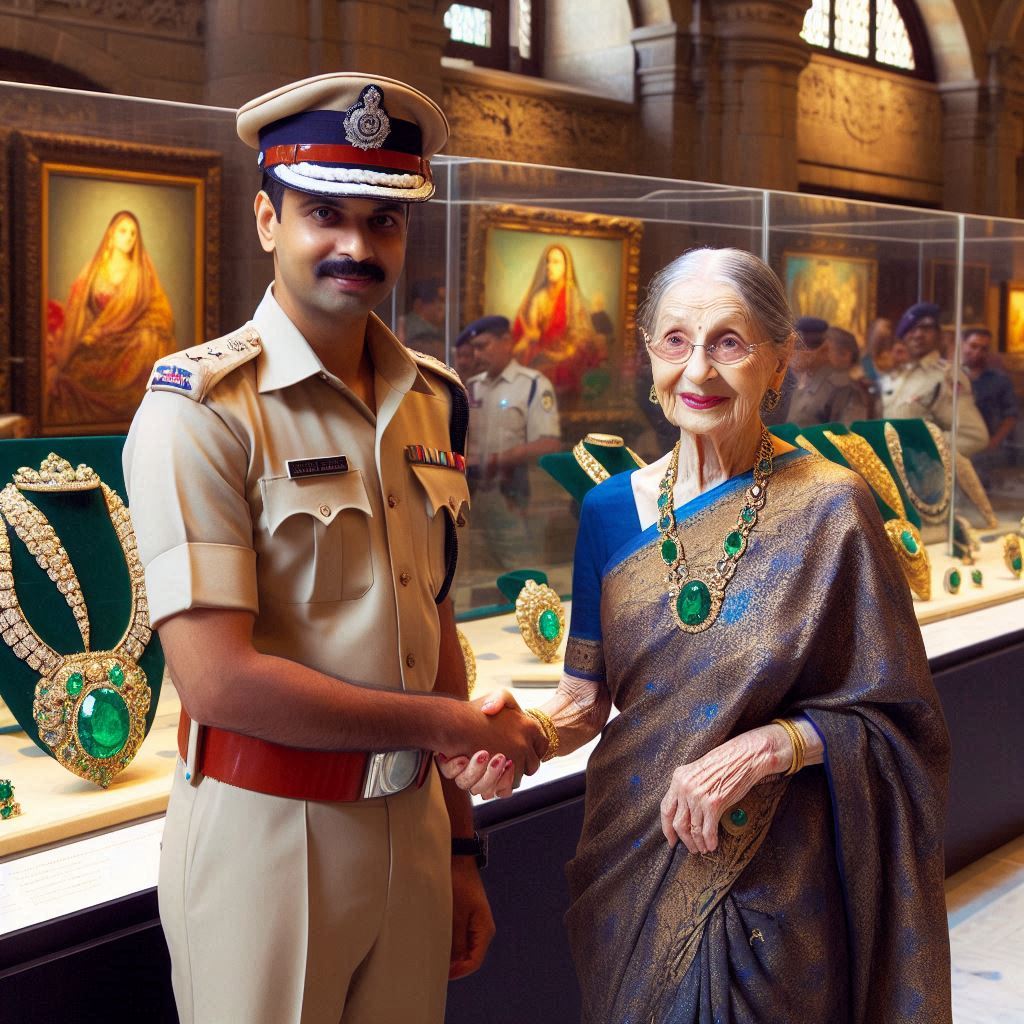
Among those celebrating stood an elderly woman dressed elegantly, wearing traditional attire adorned beautifully, resembling designs reminiscent of ancient times; she approached slowly, reaching out towards Arjun and grasping hands tightly, expressing gratitude beyond words could convey…

“You’ve done what many thought impossible, young man,” she whispered softly, tears glistening in her eyes reflecting hope restored once again, reminding everyone present of the importance of preserving heritage passed down generations, ensuring future generations would never forget stories woven intricately together through time itself.

Weeks later, after successful recovery efforts concluded, the Vishakha Necklace returned to its rightful place within the museum, showcasing not only beauty craftsmanship but also tales woven throughout centuries, capturing hearts and minds alike and reminding all visitors of the importance of cherishing love and enduring even amidst trials faced along the way.

Arjun stood proudly beside an elderly woman who’d come forth earlier, expressing gratitude and witnessing firsthand the impact made through perseverance and resilience displayed throughout the journey taken together, restoring faith lost long ago.

“I’m honoured you chose me to help restore legacy,” Arjun said, sincerely looking deep into her eyes, feeling warmth radiate between them both, knowing the connection forged transcended beyond mere physicality, embracing unity shared amongst souls intertwined forevermore.

As they gazed upon stunning emeralds glistening brightly under lights, illuminating a room filled with laughter and joy, celebrating triumph over adversity—it became clear the journey didn’t end here, but rather a new chapter unfolding, inviting everyone to partake in discovering beauty lies within stories shared, connecting generations past, present, and future alike, reminding all hope remains alive, even in the darkest moments faced along the way.

And so they stood together united by purpose, celebrating life, love, and resilience, knowing together they’d overcome challenges faced, paving a path forward, ensuring light would always shine bright, illuminating hearts and souls alike guiding them homeward bound forevermore…