Festivals of India: Varalakshmi Vratam

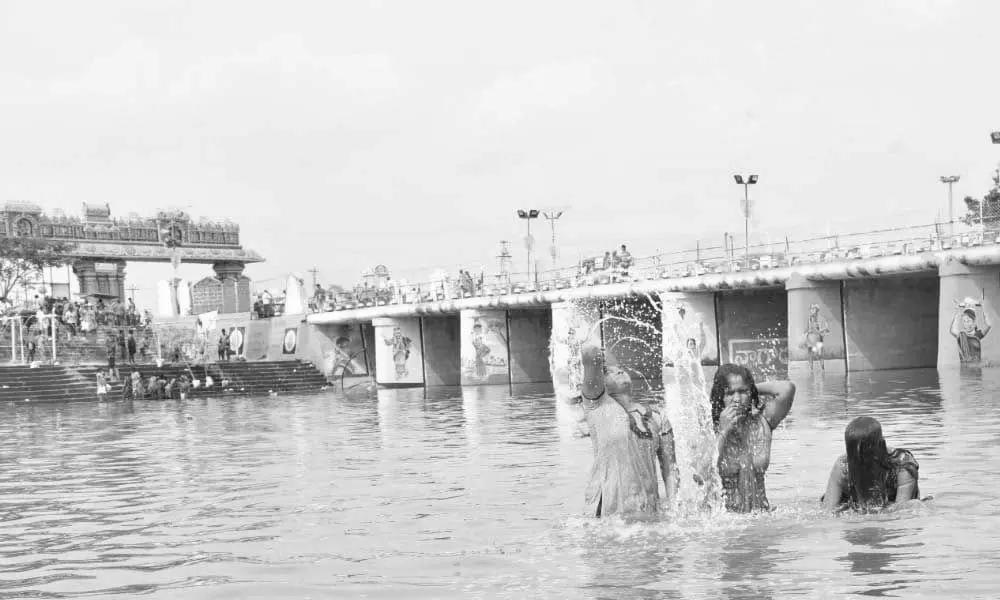
Last week was the Varalakshmi Vratam, also called Varalakshmi Puja, an observance to propitiate the goddess of prosperity, Goddess Lakshmi. Varalakshmi is the manifestation of Goddess Lakshmi who grants boons or varams and is the embodiment of wealth, prosperity, and auspiciousness.

It is a puja primarily performed by married Hindu women in South India, particularly in the states of Tamil Nadu, Karnataka, Andhra Pradesh, and Telangana on the Friday before the day of the full moon in the Hindu month of Shravana, which corresponds to the Gregorian months of July – August. The vratam or fast is performed by sumangalis or married women for their well-being, and to ask the Goddess to bless their husbands with health and longevity. Many believe that worshipping the aspect of Varalakshmi on this day is equivalent to worshipping the Ashtalakshmi or the eight aspects of Lakshmi, all of whom represent different forms of wealth.

On this occasion, women worship the goddess Lakshmi by offering fruits, sweets and flowers and a kalasham which represents the deity is decorated with a sari, flowers and gold jewellery, with offerings placed in front of it. The puja begins with the formal welcome of Goddess Lakshmi into one’s house. A wooden tray or a stand is placed outside the house’s threshold. Rangoli is drawn in the puja room. A kalasham which is usually made of brass or silver is placed on the tray outside the house. The pot is decorated with mango leaves as well as flowers. Auspicious items such as rice, betel leaves, turmeric sticks, bananas, and coins are placed inside the pot. A thread dipped in turmeric is tied around the neck of the pot. A coconut scrubbed with turmeric is placed on top of it. In some traditions, the face of the goddess may be drawn on the coconut, or a brass or silver face may be kept on the pot and decorated with kumkum, turmeric, and sandalwood powder. During an auspicious hour, the women sing a song of greeting to Goddess Lakshmi and carry the tray and kalasham into the puja room. After lighting the lamp and performing the arati, shlokas, songs dedicated to the goddess are sung. The yellow thread is untied, and a piece is given to each girl or woman to tie around her right wrist. This is symbolic of the conclusion of the auspicious puja, as well as receiving the blessings of the deity. This is also worn to signify protection and piety, and several articles are given as gifts and charity in good faith.

In Tamil Nadu, as offerings, four varieties of kozhakattai, payasam, and vadai are prepared as naivedyam or offerings. The next day, the Lakshmi puja is performed. Cooked rice, chickpeas, fruit, and betel leaves are offered to all the women who participated. The face of the goddess is turned towards the west, and the kalasham with its contents is placed inside a drum of rice, symbolically keeping the goddess safely inside the house until the next year. The festivities of this occasion often end with the recitation of the vrata katha, the story of the vow that offers it its religious significance.

According to one story, a Brahmin woman named Padmavati, known to be pious and dutiful to her husband, as well as reputed to assist the sick, poor, and the needy, was observed by Goddess Lakshmi in the kingdom of Kosala. Greatly pleased, the goddess instructed her to perform the festival on the given date in the month of Shravana so that she could achieve salvation. In a similar story, a virtuous and honest woman named Charumati, devoted to her husband and in-laws, receives a dream from Lord Vishnu. The deity tells her to worship the Goddess Lakshmi every year during the month of Shravana, which would give her blessings of his consort, as well as wealth.

Some of the rituals that are performed on this occasion are regarded by some scholars to be significant. The essence of the goddess, in fact, of all females, is said to be turmeric and vermillion, and then during this festival, goddess and woman overlap, periodically, momentarily.

Varalakshmi Vrat is not just an individual observance but also a festival that fosters a sense of community and togetherness. The festival celebrates the divine feminine energy where women come together to perform the puja, share their experiences, and seek the blessings of the Goddess. It is a time when friendships are strengthened, and bonds are renewed. In a country that is diverse with multiple cultures and traditions, festivals hold a special place in the hearts of its people. And I believe that it is these festivals that keep us rooted in our traditions and as custodians of traditions, we should celebrate them so that the next generation also knows the beauty of their culture.

Poem: Friendships

Friendships are life’s gifts that keep on giving. They are the threads that weave the fabric of our lives and the bonds that uplift us, support us, and bring joy to our days. True friendships go beyond surface-level interactions and create a sense of belonging, trust, and understanding. They offer a safe space where we can be ourselves, share our joys and sorrows, and find comfort in times of need. Friendships provide companionship, laughter, and a shoulder to lean on, reminding us that we are never alone on this journey. They enrich our lives and leave an indelible mark on our hearts, reminding us of the power and beauty of human connection. On that note, here’s a poem that celebrates the beauty of friendships.

Poem: Friendships

In the tapestry of life, friendships bloom,
A kaleidoscope of colours, casting away gloom.
Like delicate flowers, they grace our days,
Guiding us through life’s meandering maze.

Friends are the stars that light up the night,
Glowing with warmth, their love shining bright.
Through laughter and tears, they stand by our side,
With open hearts, in them, we confide.

A friend is a melody, harmonising our soul,
Their presence is a balm that makes us whole.
In their embrace, our spirits find release,
A sanctuary of trust, offering inner peace.

They lift us when we stumble and fall,
Supporting our dreams, answering the call.
With every word spoken, a bond is sealed,
A connection so profound, it’s never concealed.

In times of sorrow, they’re a comforting shoulder,
Whispering solace, making our burdens grow colder.
They celebrate our triumphs, big and small,
Cheering from the sidelines, cheering through it all.

Friendships are bridges, crossing divides,
Uniting hearts, no matter the tides.
Through differences and diverse paths, we roam,
True friends are a place where we find a home.

They’re the laughter that echoes in memories past,
The secrets we share, forever they’ll last.
In a world full of chaos, they’re a beacon of light,
Guiding us forward, shining pure and bright.

So let’s cherish these treasures, these friendships we hold,
For they are more precious than silver or gold.
With love as the thread that weaves us as one,
Friendships endure, their beauty never undone. 

Self-Love: You alone are Enough

Source

There is a line in the 2007 Bollywood movie, “Jab We Met” where the female lead, Geet, played by Kareena Kapoor, tells the male lead, Aditya, played by Shahid Kapoor, that “Main to apni favourite hoon”, translated to “I am my favourite”. This iconic line is, to me, the essence of what self-love is.

In the hustle and bustle of our daily lives, it’s all too easy to lose sight of the most important relationship we’ll ever have — the one with ourselves. Self-love, a concept often misunderstood or overlooked, holds the key to personal growth, resilience, and a life of fulfilment.

Self-love, defined as the love of self or regard for one’s happiness or advantage, has been conceptualised both as a basic human necessity and as a moral flaw akin to vanity and selfishness,  synonymous with amour-propre, conceitedness, egotism, narcissism, etc. However, today, self-love has adopted a more positive connotation as well through the increase in mental health awareness that promotes self-love as intrinsic to self-help.

Self-love is a state of appreciation for oneself that grows from actions that support our physical, psychological and spiritual growth. Self-love means having a high regard for your well-being and happiness. It means taking care of your own needs and not sacrificing your well-being to please others, and it means not settling for less than you deserve.

Self-love is not narcissism, arrogance, or self-indulgence. Rather, it is the deep appreciation, acceptance, and compassion we nurture towards ourselves. It’s about recognising our worth, valuing our unique qualities, and embracing our imperfections as part of our journey of growth. Self-love is the foundation upon which we build a life that aligns with our values, passions, and aspirations.

Self-love is important to every one of us. When we cultivate self-love, we develop a strong sense of self-acceptance. This allows us to be authentic, honour our true selves, and live in alignment with our core values. Through this process, we discover inner peace as we release the need for external validation and embrace our innate worthiness. Self-love creates a nurturing environment for mental and emotional well-being. By practising self-compassion, we develop resilience in the face of challenges and setbacks. We learn to manage stress, anxiety, and self-doubt with kindness, empowering ourselves to bounce back stronger and cultivate a positive mindset. The foundation of any healthy relationship begins with self-love. When we love and respect ourselves, we set healthy boundaries, communicate effectively, and attract relationships that uplift and support us. By valuing our own needs and desires, we create space for deeper connections built on mutual respect and understanding.

So how do we develop, cultivate and nurture self-love? There are various ways one can become more in love with ourselves. Developing self-love begins with self-awareness. Take time to reflect on your thoughts, emotions, and patterns of behaviour. Notice your inner dialogue and challenge self-critical thoughts. Journaling, meditation, and therapy can be powerful tools for self-discovery and nurturing self-awareness. People who have more self-love tend to know what they think, feel, and want. They take actions based on need rather than want, and by staying focused on what they need, they turn away from automatic behaviour patterns that get them into trouble, keep them stuck in the past, and lessen self-love.

One also needs to practice self-compassion and treat oneself with the same kindness and compassion they would extend to a dear friend. Embrace your flaws, celebrate your successes, and acknowledge your efforts. Embracing self-compassion helps us break free from the grip of perfectionism and fosters a nurturing environment for personal growth.

Self-love requires actively prioritising self-care. You should engage in activities that bring joy, recharge energy, and support your overall well-being. People high in self-love nourish themselves daily through healthy activities, like sound nutrition, exercise, proper sleep, intimacy and healthy social interactions. Start truly caring for yourself by mirroring that in what you eat, how you exercise, and what you spend time doing. Do stuff, not to get it done or because you have to, but because you care about yourself.

Boundaries are essential for self-love. Learn to say no when your well-being is at stake, and establish limits that honour your time, energy, and emotional capacity. Setting boundaries allows you to create space for self-care, pursue your passions, and protect your mental and emotional health. Surrounding yourself with positive influences—whether it be supportive friends, inspiring mentors, or uplifting content—can reinforce self-love. Choose relationships and environments that foster growth, encouragement, and acceptance.

Lastly, to practice self-love, start by being kind, patient, gentle and compassionate to yourself, the way you would with someone else that you care about.

Self-love can mean something different for each person because we all have many different ways to take care of ourselves. Figuring out what self-love looks like for you as an individual is an important part of your mental health. Self-love is a lifelong journey that requires conscious effort, patience, and compassion. By embracing our worth, nurturing self-acceptance, and prioritising self-love, we can unlock our true potential and create a life of authenticity, inner peace, and fulfilment.

Short Story: The Silent Murder

As the plane started its descent into Fuzhou, Mei Li peered excitedly out of the window. “Almost home now”, she muttered to herself. Her seatmate, an older man, smiled at her and asked her if she was back from a holiday in Singapore or if she was working there. “Working”, Mei Li smiled. “I am going back home after two years”. She tried to curb her impatience as she cleared immigration and customs and walked outside to get into a bus for the next part of her journey home. She slipped into the seat, suddenly exhausted as she thought of her life, both past and present, as the bus hurtled through the Chinese countryside, the bus, her home for the next six hours until her village.

Leaning back in her seat, Mei Li tried to sleep but found that sleep eluded her. She smiled and whispered, “I did it. That woman is dead, and no one knows I did it!”. As she said this, a wave of sadness hit her, and tears started streaming down her eyes. Unbidden, her mind went back 20 years when she first saw her husband Ah Fu. They were matchmade, and she saw him the day they were wed. She was a shy girl of 18, and he was a strapping man of 20 when they wed. The first two years were sheer bliss, but soon the reality of life hit them in the form of two miscarriages. When they saw a doctor, they were told Mei Li’s womb was weak and treatment for this required money they did not have. So Ah Fu took the difficult decision to work for a few years in the bustling metropolis of Singapore.

Ah Fu and Mei Li were apart for more than a decade while Ah Fu tried to earn money so that Mei Li could get the treatment she needed. But unfortunately, even with treatment, Ah Fu and Mei Li were unable to have children, and after a few years, Mei Li decided to live with this fact. She spent her days looking after Ah Fu’s parents and lived for the one month every year when he would spend a month with her. She looked forward to the time when Ah Fu would earn the money they needed for the rest of their lives, and they will start living together again.

Life moved, the seasons changed, and Ah Fu’s parents soon passed away. One day, Mei Li suddenly realised something. “It’s been a month since Ah Fu has called or sent money. I wonder why he does not pick up my phone. I hope everything is fine”. Six months soon passed with no contact with her husband, and Mei Li was sick with worry. As time passed, her worry turned into fear and fear into grief. Her worry was confirmed one day when Ah Fu’s friend Li Wei came to her house. She was happy to meet him and wanted to ask him about her husband, but stopped as soon as she saw him. Li Wei’s eyes were red with tears, and he had an urn in his hands. “No, no, Li Wei, please tell me what I am thinking is not true” Mei Li was almost prostrate with grief, but she was not to be comforted. Her worst fears came true. Ah Fu was dead, and Li Wei had brought her husband’s remains with him. But this was not all that was what was giving her grief.

Ah Fu stopped sending her money because he was involved with another woman, Jenny. Jenny was a domestic helper from the Philippines, and both of them were involved in a raging affair. The money that Ah Fu used to send to Mei Li was now used to wine and dine Jenny. He also started dipping into his savings until he had no money and debts of over $100,000. Once Jenny realised that there was nothing more to get from Ah Fu, she dumped him like yesterday’s leftovers.

Distraught, Ah Fu tried everything in his control to win over Jenny but could not. He also lost his job, and the thought that he would have to go back to China, a broken and bankrupt man, made him take his life because he could not face Mei Li. With these words, Li Wei passed Mei Li Ah Fu’s belongings along with a diary and disappeared into the darkness, leaving Mei Li bewildered and desperate for answers. She knew deep within her soul that the truth had been whispered into her ears, but it remained just out of reach. Questions swirled in her mind, each one intertwining with the next. She saw his diary and started to read, hoping the questions in her head would have some answers. As she read the diary, Mei Li’s sorrow turned into anger. The woman who had taken her husband away from her, who had shattered their lives, needed to face the consequences of her actions.

She learnt more about Jenny, along with a photo that Ah Fu had taken sneakily. Shattered, she threw the diary away and tried to move on with her life. But Mei Li could not forget either the photo or Jenny and tried as much as she could; she wanted answers, and she wanted to know what was so special about Jenny that her Ah Fu was unfaithful. A plan began to form in Mei Li’s mind, fueled by a burning desire for revenge. She decided to find out for herself and made plans to move to Singapore. She had one very useful skill – she belonged to a small clan that was famous as masseurs. She knew acupressure and could massage any point in the body to relieve aches and pains. Soon, Mei Li was in Singapore.

She used the knowledge she had gleaned from Ah Fu’s dairy to stalk Jenny and find out about her. She came to know that Jenny went to a church near Chinatown on Sundays, and after service and before she went back to her employer’s home, she frequented a reflexology parlour to get rid of the aches and pains of the week. After a couple of months, Mei Li started working in the same massage parlour that Jenny frequented and tried hard to make sure she was the one who gave Jenny her massages. She would go overboard with her and give her more than she paid for. Slowly, over the next few months, Jenny came more frequently to the parlour to get massaged by Mei Li, who now had become a friend.

Mei Li now started to put her plan into action. With her knowledge of acupressure, she slowly started pressing a point in the sole of her feet as well as another point at the base of her neck, which, if pressed in a certain way, would put pressure on the spleen and slowly, over time, would cause the spleen to rupture. At the same time, while making conversation, Mei Li would recommend certain Chinese herbs to Jenny for strength. She was careful not to recommend overtly poisonous herbs but a combination which, with the massage, would be fatal.

This carried on for about a year, and while massaging Jenny, Mei Li knew her end was near. She soon stepped up her massages and, at the same time, resigned from her job, citing the need to go back home to look after an ailing mother. Jenny was sad that her friend was leaving, but this was the life of a migrant worker, and there was nothing that could be done. On her last weekend, Mei Li was waiting for Jenny to come to the massage parlour for her usual massage but didn’t see her. She tried calling her, but her calls went unanswered. Finally, someone picked up the phone, and when she asked about Jenny, she was told Jenny had passed away two days back from a ruptured spleen, and they were too late in taking her to the hospital. Her wake was being conducted in a nearby funeral parlour, and Mei Li decided to make her way there just to ensure that the woman she hated with every fibre of her being was where she put her beloved Ah Fu.

The bus suddenly jolted, and Mei Li came back to the present. She smiled a small smile of satisfaction and knew somewhere up there, Ah Fu probably approved. She knew she would never have a good night’s sleep because she had knowingly and willingly taken a life, but that was a trade-off she was willing to make. The bus had stopped, and when she looked out of the window, she realised she had reached her destination. As she got down and started walking home, she walked with a newfound sense of peace. The weight of her grief had lessened, and the wounds in her heart had begun to heal. Ah Fu will always remain in her heart, and the memories of the man she loved and married will be enough to live on as a beacon of love and resilience.

Mondays

It’s yet another Monday and many of us are dragging ourselves back to school and work. Mondays often get a bad rap for several reasons.

It’s the end of the weekend: For many people, Monday marks the end of the weekend, which is typically associated with relaxation, leisure activities, and spending time with family and friends. The transition from a leisurely weekend to a work or school week can be challenging, leading to a feeling of reluctance and disappointment.

Going back to work or school: Monday signifies the start of the work or school week for many individuals. After a couple of days off, having to return to responsibilities and obligations can be mentally and emotionally taxing.

Monday Blues: Some people experience a phenomenon known as the Monday Blues, where they may feel lethargic, unmotivated, or moody at the beginning of the week. This could be attributed to factors such as fatigue from the weekend, the pressure of upcoming tasks, or simply a negative perception associated with Mondays.

Traffic and Commute: Mondays are often associated with heavier traffic and longer commutes. The return of people to their workplaces or schools after the weekend can lead to congestion on roads and public transportation, causing additional stress and frustration.

Social and Cultural Influence: Negative depictions of Mondays in popular culture such as the phrase Monday morning blues, movies or TV shows portraying Monday as a particularly difficult day, and jokes or memes that highlight the aversion to Mondays, can reinforce the idea that Mondays are inherently unpleasant.

Not everyone dislikes Mondays, and many may even find them energising as they provide a fresh start and an opportunity to set new goals for the week. The perception of Mondays varies from person to person based on their personal experiences, mindset, and lifestyle.

So here are some quotes that can motivate you and make your week better.