Abbott FreeStyle Libre Review

“Awareness is the first step toward balance.”

When you live with diabetes, you quickly learn that no two days are ever quite the same. Some mornings feel steady; others are unpredictable. For years, I managed this dance with the help of finger-prick tests: tiny, fleeting snapshots of my glucose that left me guessing about everything in between.

I had heard about the Freestyle Libre and to be honest, I resisted it for a while because while I hated the needle pricks, I also didn’t want a needle poked into my skin for two weeks. But during my trip to Europe, I decided that I will take the plunge and decided to give the sensor a try to see if it made any difference to my glucose levels and if it changed the way I understand my body.

The Freestyle Libre is a continuous glucose monitor (CGM) developed by Abbott. About the size of a two-dollar coin, it’s worn on the back of your upper arm and stays in place for up to 14 days. Instead of pricking your fingers multiple times a day, you simply scan the sensor using the LibreLink app on your phone (or a reader device). Each scan instantly shows your glucose reading, a trend arrow, and a graph of your recent levels. Behind the scenes, the sensor quietly measures glucose in the interstitial fluid, the fluid between your cells, capturing readings every few minutes, day and night. When you upload your data to LibreView, the accompanying analysis platform, you see beautifully detailed charts of your glucose patterns: your highs, lows, daily rhythms, and how often you stay within your target range. It’s like turning your health data into a living, breathing story.

Before the Libre, my glucose management felt like reading a book with half its pages missing. I knew how things started and ended, but not what happened in between. With the sensor, I could finally see the full narrative of how my body responded to meals, exercise, stress, and sleep. I started noticing gentle morning rises, calm mid-afternoons, and occasional evening peaks. These weren’t “bad numbers”, they were clues.

For those in Singapore, Abbott has an Experience Centre where you can try the sensor for SGD 10. I signed up and went down to their Experience Centre at Raffles Place. I was the only one that session, so I got a one-on-one session with the lady doing the session. She gave me a sensor, showed me how to put it on and also ran a few videos on the sensor. You can also purchase sensors there at a discount and they had a scheme that if you purchase 3 sensors within three months, you get a free sensor. It’s an excellent way to see how the device feels, how the app works, and what kind of data you’ll receive before committing to regular use.For anyone who’s ever felt unsure about CGMs, it’s a low-cost, no-pressure way to experience the technology firsthand, and to understand how empowering it can be.

I had already decided to go the subscription route, so didn’t buy from the experience centre. I subscribe to two sensors every four weeks and according to their website, if you pay for five months, the sixth month is frew. You can also opt to receive two sensors every eight weeks. The plan allows you to pause or cancel if your needs change, giving flexibility alongside the convenience.

On to my experience with the sensor. I began experimenting: adding a handful of nuts to breakfast, taking short walks after dinner, and noticing how hydration and rest made a difference. The feedback was almost immediate. A smoother curve on the graph often mirrored a calmer, steadier day.

One of the most powerful things about using a CGM is how it connects daily choices to visible outcomes. For instance, I learned that foods I assumed were harmless sometimes caused unexpected spikes, or that meals rich in fibre and protein kept my glucose beautifully stable, and stress and lack of sleep could nudge levels up even on perfect food days. Instead of guessing, I was finally learning. The Libre didn’t judge; it simply showed patterns, and with each pattern came understanding.

Every so often, I noticed dips, usually in the early mornings or after long gaps between meals. They weren’t severe, but they were informative. The data reminded me to plan better, to carry small snacks when I’m on the go, and to listen to my body’s subtle cues before they became loud alarms. Over time, I became attuned to these rhythms. The more I observed, the more intuitive the whole process felt, like tuning in to my body’s quiet language. There’s something deeply empowering about turning invisible fluctuations into visible information. Instead of worrying about what might be happening, I could see it, and respond thoughtfully. The emotional shift was subtle but profound: I stopped thinking in terms of “good” or “bad” readings. I began thinking in terms of patterns, habits, and adjustments. That shift, from judgment to curiosity, is what changed everything. I wasn’t trying to control my body; I was learning to work with it.

From a practical perspective, the Freestyle Libre fits seamlessly into daily life. Application is quick and nearly painless, a gentle click on the back of the arm, and it’s done. The sensor stays on through showers, workouts, and sleep; after a while, you barely notice it. To scan, just hold your phone near the sensor for a second. No lancets, no fuss. The LibreLink and LibreView apps are beautifully designed. The graphs are clear, colourful, and easy to understand even for someone who isn’t data-minded.

But the sensor sometimes falls out, sometimes even as early as less than a week of usage. But Abbott Singapore has been very good about replacing faulty sensors. You just have to call them or let them know through their website, and they will send you a replacement sensor. The only caveat is that you have to send them the faulty sensor. This is not only for them to check the sensor but also to avoid people misusing this facility and scamming them.

I didn’t expect this little patch to become a mindfulness tool, but it did. Each curve on the graph became a reminder to slow down, breathe, and be kinder to myself. Instead of frustration, I found fascination. Watching my glucose stabilise after a calm morning walk or a wholesome meal gave me a quiet sense of accomplishment.

After more than three months of using the Freestyle Libre, I can confidently say this: it’s more than a monitor; it’s a mirror, one that reflects the connection between how you live and how your body responds. It doesn’t replace intuition; it deepens it. And it turns the daily task of managing diabetes into something gentler, more insightful, and even, in its own quiet way, beautiful. The Freestyle Libre gave me not just numbers but understanding. And with understanding comes peace.

Will I continue using it in the long term? Probably yes. As of now, I can afford the price of about SGD 200 per month, but if that price point becomes expensive, I may consider using two sensors over eight weeks.

If you’re considering using it, you’ll learn more about your body in a few weeks than in years of occasional testing. It’s discreet, painless, and surprisingly easy to use. The data may surprise you, but it will empower you.

Poem: The Last Train Home

Late at night, when the world has quieted down and the hum of the tracks becomes a lullaby for the soul, the last train home offers more than just a ride; it provides a passage into memory and comfort. The journey on this solitary carriage is steeped in reflection and nostalgia, as familiar sights and soft city lights remind us of where we come from.

The Last Train Home

In the quiet of midnight, the train pulls away,
A soft exhale of metal and dreams in the grey.
Window reflections flicker like memories in flight,
Familiar scenes whispering in the pale moonlight.

The carriage hums a tune of distant, gentle farewells,
Carrying echoes of laughter, of secret, cherished spells.
Every station a chapter, every stop a familiar name,
In the silent journey home, nothing ever feels the same.

Nostalgia drifts like smoke in the air,
Of old roads travelled, of moments rare.
The rhythmic clatter of wheels on the track
Calls forth a tender longing for what we may not get back.

Yet, in this fleeting ride through the night,
There lies a quiet comfort, a soft, guiding light.
For in the last train’s journey, beneath starlit skies,
We rediscover the places where our true heart lies.

The dark outside cradles our reflective mind,
In the gentle sway of the train, solace we find.
A final embrace before the dawn’s gentle roam—
This journey, so transient, leads us always home.

Sacred Stones, Spaces, and Stories: Ashtavinayaka Part 1

Regular readers of this blog will know that Lord Ganesha is my ishtadev, the one whom I connect to and the first I think of in joy and sadness. He is the first whom I think of when I wake up and the last I call upon before I sleep. It’s only fitting, then, that my next instalment in this series on Hindu temples is the Ashtavinayaka temples. So let’s learn more about this form of the elephant god and this temple circuit.

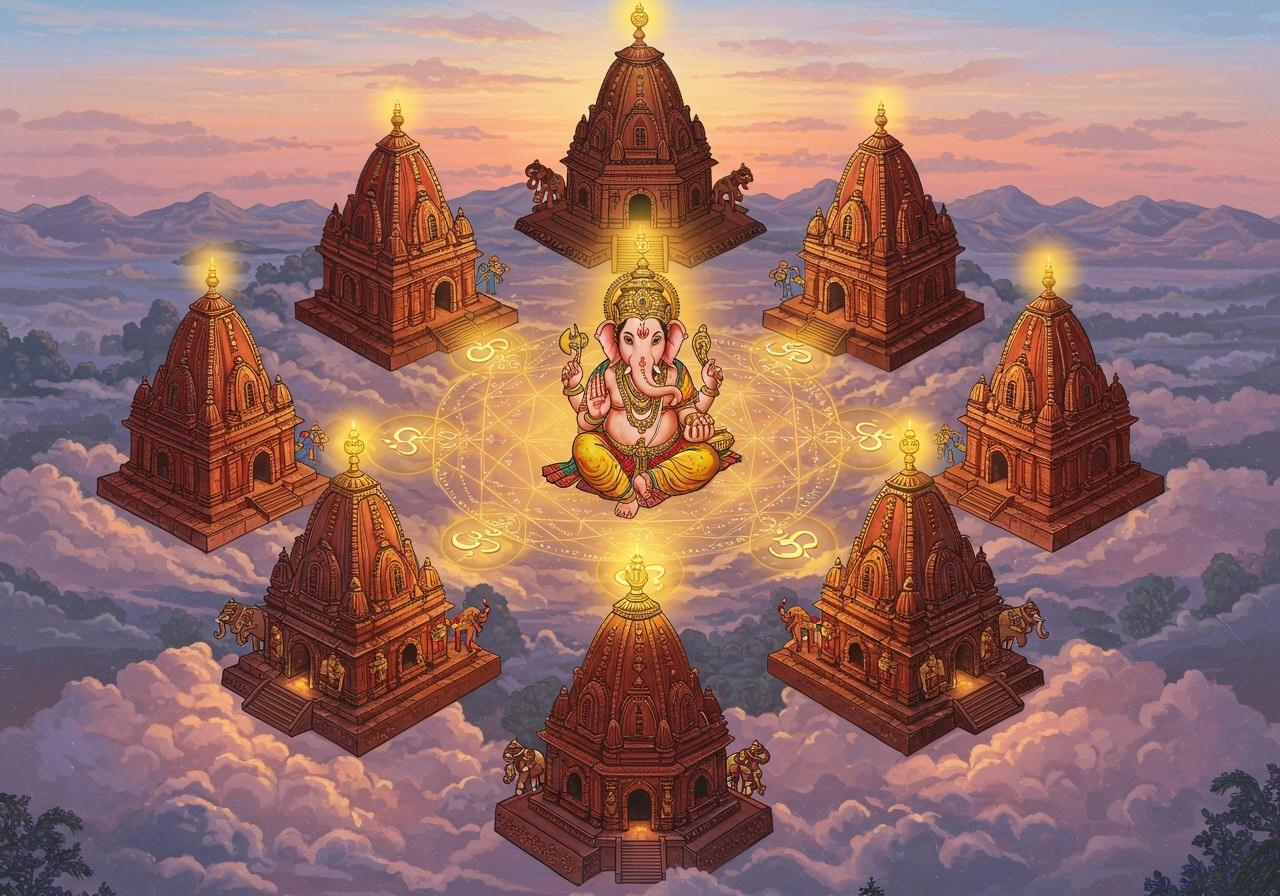
Among the many sacred circuits that devotees undertake, the Ashtavinayaka pilgrimage in Maharashtra holds a unique place. The term Ashtavinayaka translates to “eight Ganeshas,” referring to the eight temples dedicated to Lord Ganesha, the remover of obstacles and the harbinger of wisdom. The Ashtavinayaka Yatra is centred around the city of Pune. The eight temples house eight distinct idols of Ganesha, the Hindu deity of unity, prosperity, learning, and the removal of obstacles. Each of these temples has its legend and history, as distinct from each other as the idols in each temple. The form of each murti of Ganesha and his trunk are distinct from one another. To complete the Ashtavinayaka Yatra, one must revisit the first temple after visiting all eight temples.

Unlike other temple circuits, the Ashtavinayaka pilgrimage is distinctive because each of these eight temples enshrines a self-manifested or Swayambhu idol of Lord Ganesha, believed to have emerged naturally rather than being sculpted by human hands. The Ashtavinayaka temples are located in different parts of Maharashtra, primarily in and around Pune, in the Pune and Raigad districts, and visiting them in a specific sequence is considered highly auspicious.

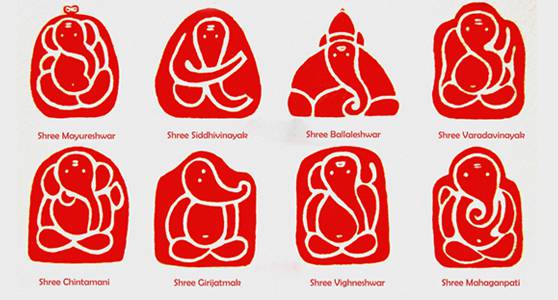
Out of these eight temples, five are in Pune, two are in Raigad, and one is in Ahmednagar or Ahilyanagar District. The pilgrimage takes 3 days to complete and as per scriptures, must be in this specific prescribed order: Mayureshwar Temple, Morgaon, where Lord Ganesha is astride on a peacock and the starting and ending point of the pilgrimage, Siddhivinayak Temple, Siddhatek, a tranquil temple where Lord Vishnu is said to have meditated, Ballaleshwar Temple, Pali, the only Ganesha temple named after a devotee, Ballal, Varadvinayak Temple, Mahad, known for granting boons or varada, Chintamani Temple, Theur, associated with the return of the mythical Chintamani gem, Girijatmaj Temple, Lenyadri, carved into a mountain, and linked to Goddess Parvati, Vighnahar Temple, Ozar, dedicated to the vanquisher of obstacles, and worshipped by Lord Indra, and the Mahaganapati Temple, Ranjangaon, also known as the Great Ganesha, and connected to Shiva’s victory over the demon Tripurasura. The pilgrimage concludes by returning to Morgaon, completing the sacred loop.

It is believed that to complete the pilgrimage, a devotee must visit all eight temples in the prescribed order and then return to the first temple to complete the spiritual circuit. This act symbolises the cycle of life and the divine presence of Lord Ganesha in all stages of human existence.

Each of these temples is associated with a unique form of Ganesha and carries its legend that adds to the richness of the pilgrimage. However, what ties them together is their collective significance as sites of divine energy and devotion.

Several fascinating legends connect the Ashtavinayaka temples, making this pilgrimage more than just a visit to eight separate shrines. Some of the overarching myths associated with the circuit include

The Legend of Sage Gritsamada and Mayureshwar: According to Hindu mythology, Sage Gritsamada was blessed with a divine son, Ganapati, due to his intense devotion. However, a misunderstanding led to the formation of the Ganapatya sect, which exclusively worshipped Lord Ganesha. This sect played a vital role in the establishment of the Ashtavinayaka temples.

Lord Ganesha’s Battle with the Demon Sindhu: A prevalent myth speaks of the demon Sindhu, who had received a boon that he could only be defeated by an incarnation of Shiva and Parvati’s son. To destroy this menace, Ganesha took the form of Mayureshwar and, riding a peacock, vanquished the demon. This legend explains why the Mayureshwar Temple in Morgaon is considered the most important of the eight temples.

The Story of Ballal and the Self-Manifested Idol: At Ballaleshwar Temple in Pali, the legend of a young devotee named Ballal is widely told. A dedicated worshiper of Ganesha, Ballal was punished by his father for excessive devotion. However, moved by his faith, Ganesha himself appeared before Ballal, blessed him, and took residence in Pali, leading to the establishment of the temple.

Ganesha as the Conqueror of Obstacles: The story behind Vighnahar Temple in Ozar speaks of how Ganesha defeated the demon Vighnasura, who caused disruptions in religious practices. Ganesha subdued him but, on the demon’s plea, allowed him to stay, thus earning the title “Vighnahar” (Remover of Obstacles).

The Connection to the Pandavas: The Girijatmaj Temple at Lenyadri, located in a cave, is believed to be where Goddess Parvati meditated to be blessed with a son. It is also said that the Pandavas from the Mahabharata worshipped at this temple during their exile.

The Ashtavinayaka Yatra is not just a spiritual journey but a process of self-discovery and renewal. The circuit follows a clockwise route, believed to harness cosmic energy. Devotees often complete it within 1–2 days, symbolising detachment from worldly distractions. Devotees follow specific rituals and guidelines while undertaking this pilgrimage. Modak, Lord Ganesha’s favourite sweet, is offered at all temples, along with dhurva grass, red hibiscus flowers, and coconut. Devotees continuously chant prayers and the Ganapati Mantra to invoke his blessings. Pilgrims walk around each temple’s inner sanctum, often 3.5 times, echoing the cyclical nature of time. Tying a red thread at Morgaon and removing it at the final temple symbolises the shedding of sins. Many devotees observe fasts or perform special pujas during the pilgrimage and also listen to stories about Ganesha and his leelas, or divine acts, as part of the experience. Pilgrims observe fasting, avoid non-vegetarian food, and practice celibacy during the yatra to purify the mind and body.

The Ashtavinayaka circuit transcends mere temple-hopping; it is a metaphysical journey through Maharashtra’s heartland, blending devotion, mythology, and nature. Each temple’s unique narrative and the collective ritualistic voyage underscore the Hindu ethos of unity in diversity. For centuries, this pilgrimage has drawn kings, saints, and commoners alike, offering solace and strength. As you embark on this article series, each of the eight temples will reveal its distinct history, myths, and grandeur. Together, they form a mosaic of divine grace, making the Ashtavinayaka pilgrimage a truly transformative experience.

The Quest for Perfection

Perfection is often described as flawlessness, completeness, or supreme excellence. This concept has fascinated humanity for centuries, influencing art, science, philosophy, and even daily life. While striving for perfection can inspire greatness, it can lead to unrealistic expectations, anxiety, and dissatisfaction.

What is perfection? Perfection is a multifaceted concept that varies depending on context. In mathematics, it refers to ideal numbers; in ethics, it signifies the optimal quality of being; and in aesthetics, it denotes beauty or flawlessness. Philosophically, perfectionism is tied to developing human nature to its highest potential. However, in practical terms, perfection often remains an elusive ideal, something we aspire to but rarely achieve.

Why are people obsessed with perfection? Perfectionism is deeply rooted in psychological traits and experiences. It often stems from high parental expectations, social pressure, or a desire for control. Disorders such as generalised anxiety disorder (GAD), obsessive-compulsive disorder (OCD), and atelophobia (fear of imperfection) can exacerbate perfectionist tendencies. These mental health factors drive individuals to avoid criticism or failure by striving for unattainable ideals.

Modern culture glorifies perfection through social media, academic competition, and workplace environments. Platforms like Instagram showcase curated lives that create unrealistic comparisons. Similarly, cultures emphasising success foster a relentless pursuit of flawlessness as a measure of worth. For some individuals, perfectionism serves as a coping mechanism for past trauma or feelings of inadequacy. By striving for perfection, they seek control over their lives and validation from others.

Philosophers argue that perfectionism stems from humanity’s intrinsic desire to develop its nature fully. While this aspiration can lead to self-improvement, it often results in self-criticism when individuals fail to meet their idealised standards.

Perfectionism can be both a driving force behind achievement and a liability that hinders personal growth. On the one hand, it motivates individuals to excel; on the other hand, it fosters anxiety, procrastination, and fear of failure.

Positive aspects of perfectionism include encouraging high standards, driving innovation and creativity, and promoting discipline and focus. The negative consequences include chronic stress and burnout, procrastination due to the fear of imperfection, hampering productivity by focusing excessively on minor details, and triggering mental health issues like depression and low self-esteem.

So what should you do when chasing perfection?

Realign Expectations: Recognise that perfection is unattainable. Reframe your goals around meaningful achievements rather than flawless outcomes. The adage “perfect is the enemy of good” highlights how striving for perfection can prevent progress.

Set Realistic Goals: Avoid setting overly ambitious targets that lead to frustration. Break tasks into manageable steps and focus on completion rather than perfection.

Practice Self-Compassion: Treat yourself with kindness when you make mistakes. Self-compassion helps counteract the harsh self-criticism associated with perfectionism.

Embrace Mistakes: Mistakes are opportunities for growth rather than failures. Learning from imperfections fosters resilience and adaptability.

Gain Perspective: Understand what truly matters in life. Grades or achievements may seem critical at one moment but lose significance over time. A broader perspective can help reduce stress related to perfectionist tendencies.

Seek Support: Communicate with loved ones or professionals about your struggles with perfectionism. Therapy can help reframe irrational beliefs and develop healthier coping mechanisms.

The journey toward overcoming perfectionism requires conscious effort and mindfulness. Here are actionable steps:

Challenge Irrational Beliefs: Identify thoughts that fuel your perfectionist mindset and replace them with balanced perspectives.
Take Breaks from Social Media: Limit exposure to curated content that exacerbates feelings of inadequacy.
Adopt “Done Is Better Than Perfect”: Focus on completing tasks rather than perfecting them.
Celebrate Small Wins: Acknowledge progress instead of fixating on flaws.
Engage in Mindfulness Practices: Meditation can help reduce stress and cultivate acceptance.

The quest for perfection is deeply ingrained in human nature but fraught with challenges. While striving for excellence can lead to remarkable achievements, an obsession with flawlessness often results in anxiety, dissatisfaction, and missed growth opportunities. By understanding the roots of perfectionism and adopting strategies such as self-compassion and realistic goal-setting, individuals can find the balance between ambition and contentment. Ultimately, embracing imperfection allows us to lead more fulfilling lives—ones where growth matters more than unattainable ideals.

Sacred Stones, Spaces and Stories: Shakthipeeta Part 25

Nainativu Temple, Manipallavam, Northern Province, Sri Lanka
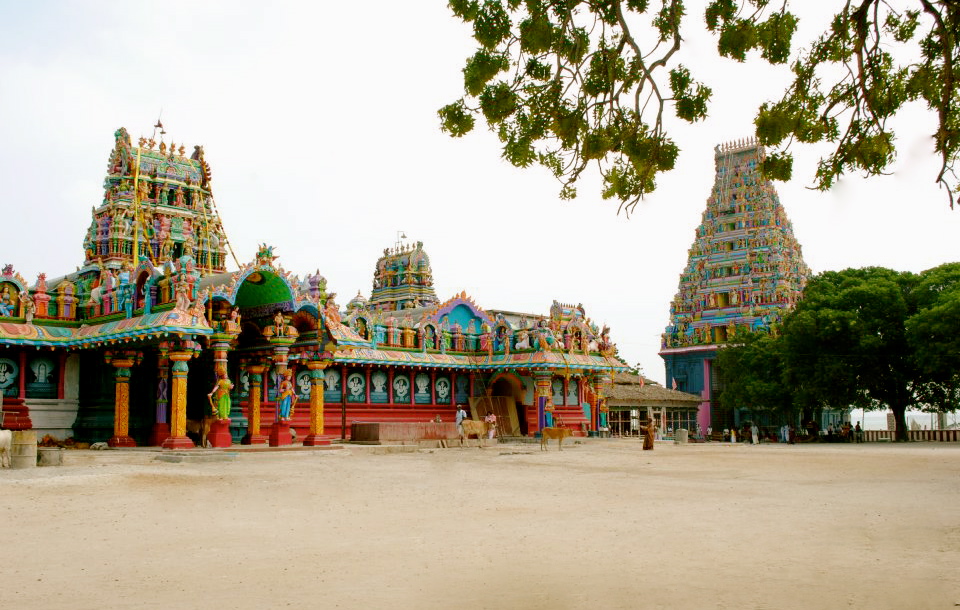
The Nainativu Nagapooshani Amman Temple, located on Nainativu Island, also known as Manipallavam in the Northern Province of Sri Lanka, is one of the most sacred Hindu shrines in the region. Revered as one of the 51 Shakti Peethas, this ancient temple is believed to be the site where the silambu or anklet of Goddess Sati fell. The temple is dedicated to Goddess Nagapooshani Amman, a form of Goddess Parvati, and Lord Nayinaar Swami, a manifestation of Lord Shiva. Nestled amidst the serene waters of the Palk Strait, this temple holds immense historical, mythological, and spiritual significance.

The temple has been mentioned in several ancient texts, including the Tamil epic Manimekalai and the Sri Lankan chronicle Mahavamsa. These texts describe Nainativu as Manipallavam or Nagadeepa, an island inhabited by the Naga people who were serpent worshippers. The temple is believed to have been originally established by Lord Indra to atone for his sins after being cursed by Sage Gautama for seducing his wife Ahalya. Indra consecrated and worshipped an idol of Goddess Bhuvaneswari or Nagapooshani Amman at this site to seek forgiveness. Over time, Nainativu became a prominent centre for serpent worship and Shaktism. The temple flourished under Tamil rulers but faced destruction during Portuguese colonial invasions in 1620. The present structure was rebuilt in 1788 and later renovated after sustaining damage during periods of political unrest in Sri Lanka.

The temple features traditional Dravidian architecture with intricately carved gopurams or towering gateways adorned with vibrant sculptures depicting Hindu deities and mythological scenes. The four-tiered South Gopuram stands out as a masterpiece of craftsmanship. The temple honours its historical connection to serpent worship with shrines dedicated to serpent deities like Sri Nayinaar Swami and idols of five-headed cobras within the sanctum sanctorum. Devotees offer milk and flowers to these serpent idols as part of their prayers.

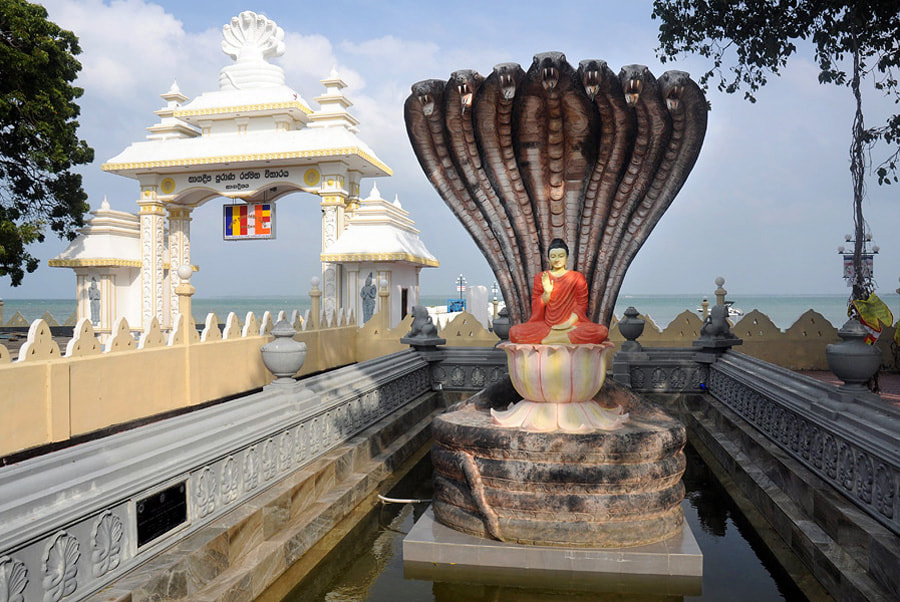
Two rocks near the island — Paambu Sutriya Kal or the rock around which the snake wound itself and Garudan Kal or the rock of the eagle — are linked to a legend involving a cobra carrying a lotus flower for Goddess Bhuvaneswari’s worship while being pursued by Garuda. A Tamil inscription from the 12th century issued by King Parakramabahu I mentions trade regulations for merchants visiting Nainativu and highlights its significance as a port city. Located nearby is the Nagadeepa Buddhist Vihara, emphasising Nainativu’s historical role as a shared sacred space for Hindus and Buddhists.

The temple hosts an annual festival known as Thiruvizha during June-July that lasts for 16 days. It includes processions featuring decorated chariots carrying idols of Maa Nagapooshani Amman and Nayinaar Swami. Devotees participate in cultural performances, music recitals, and community feasts during this grand celebration. Special offerings are made to serpent deities within the temple complex on auspicious days like Naga Panchami. Devotees believe that these rituals bring protection from snake bites and other dangers. Couples seeking marital harmony or fertility visit the temple to seek Nagapooshani Amman’s blessings through special pujas conducted by priests.

According to legend, Lord Indra created this temple to atone for his sins after being cursed by Sage Gautama for seducing his wife Ahalya. Pleased with Indra’s devotion, Maa Bhuvaneswari transformed his curse marks into eyes, earning her the name Indrakshi or Indra-eyed. Another legend tells of a cobra swimming across the sea toward Nainativu with a lotus flower for Maa Bhuvaneswari’s worship while being pursued by Garuda, the eagle mount of Lord Vishnu. A merchant named Maanikan intervened to save the cobra by promising Garuda that he would build a beautiful temple for Bhuvaneswari on Nainativu Island.

The Nainativu Nagapooshani Amman Temple with unique rituals like serpent worship emphasises ancient traditions while preserving spiritual heritage. One can explore Sri Lanka’s rich cultural heritage intertwined with Hindu mythology while visiting this ancient shrine.

Shankari Maha Shaktipeeth, Tricomalee, Sri Lanka
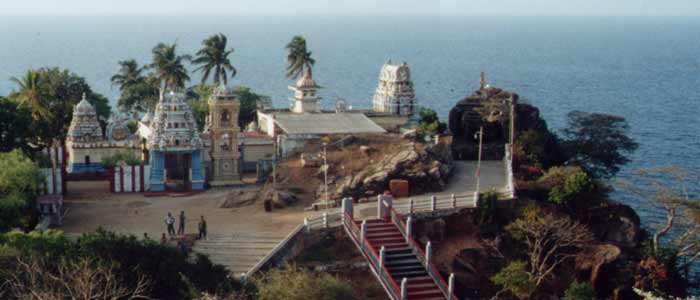
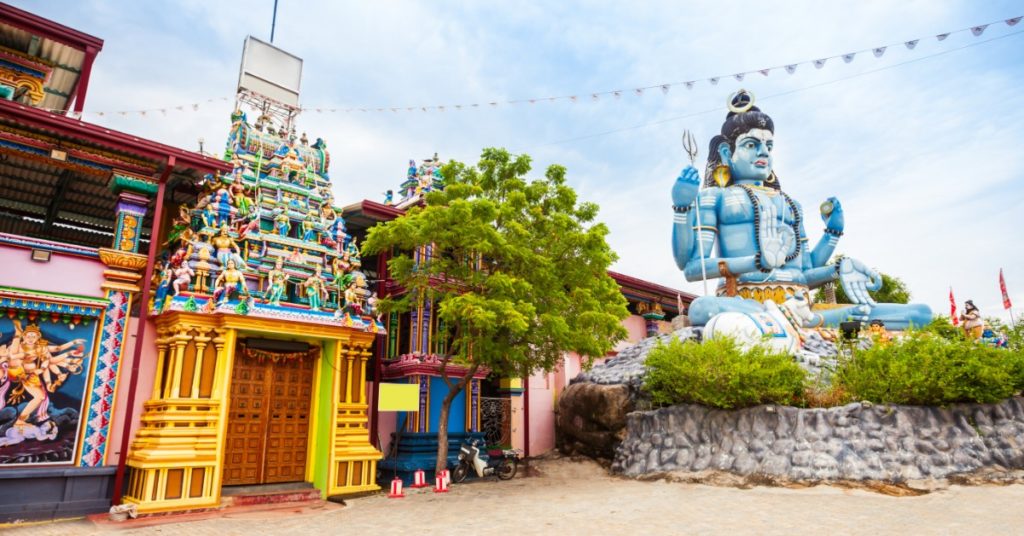
The Shankari Maha Shaktipeeth, located in Trincomalee or Thirukkonamalai on the eastern coast of Sri Lanka is believed to be where the groin or yoni of Goddess Sati fell. The temple is dedicated to Goddess Shankari Devi, a form of Goddess Parvati, and Lord Trikoneshwara Bhairava, a manifestation of Lord Shiva. Perched on a hill overlooking the Indian Ocean, the Shankari Maha Shaktipeeth is not only a spiritual haven but also a site of immense historical and mythological significance.

The temple has been mentioned in several ancient texts, including Adi Shankaracharya’s Ashta Dasha Shakti Peetha Stotram, which lists it as one of the 18 Maha Shakti Peethas. The name Shankari derives from Shankar, another name for Lord Shiva, symbolising the inseparable bond between Shiva and Shakti. Historically, the temple was established over 2,500 years ago and was one of the wealthiest temples in South Asia during its peak.

The temple flourished under Tamil rulers and received patronage from various dynasties, including the Cholas and Pandyas. However, it faced destruction during Portuguese invasions in the 17th century. Despite being rebuilt multiple times, much of its original grandeur has been lost. Today, the temple remains an important spiritual centre for Hindus in Sri Lanka.

The temple is situated on Thirukkonamalai Hill meaning the three-cornered hill, offering panoramic views of the Indian Ocean. This unique location enhances its spiritual ambience. Adjacent to the Shankari shrine is the Trikoneshwara Temple dedicated to Lord Shiva. It is one of four major Shiva temples in Sri Lanka, the others being the Ketheeswaram Temple, the Munneswaram Temple, and the Galle Temple. The temple features traditional Dravidian architecture with intricately carved gopurams or towering gateways adorned with vibrant sculptures depicting Hindu deities and mythological scenes.

According to legend, the Asura King, Ravana, a huge devotee of Lord Shiva, installed three lingas on Thirukkonamalai Hill to honour Lord Shiva after receiving blessings from him. These lingas are believed to protect the island from calamities. The temple has strong ties to Ravana, who was a devout worshipper of Lord Shiva. It is said that Ravana performed penance here to gain boons from Shiva.

Navratri is celebrated with great festivities and the temple becomes crowded during these nine days as pilgrims seek blessings for prosperity and protection. Maha Shivratri is another major festival celebrated here with night-long prayers dedicated to Lord Shiva as Trikoneshwara Bhairava. Devotees offer milk and honey during abhishekam rituals. Couples seeking marital harmony or fertility visit the temple to seek Goddess Shankari Devi’s blessings through special pujas conducted by priests.

According to legend, Ravana performed rigorous penance at Thirukkonamalai Hill to gain boons from Lord Shiva. Impressed by his devotion, Shiva granted him several boons but warned him against arrogance. Ravana later installed three lingas on this hill as a mark of gratitude. Another legend states that Lord Shiva built a magnificent palace for Parvati on this hill after she requested a home away from Mount Kailash. However, Parvati left Lanka after Ravana refused her advice to return Sita to Lord Rama. A mythological tale recounts how Adisesha, the serpent king wrapped himself around Mount Kailash during a battle with Vayu, the wind god. When Vayu broke off three peaks from Kailash, one landed at Thirukkonamalai Hill—making it a sacred ground for both Shiva and Parvati worshippers.

The Shankari Maha Shaktipeeth offers visitors a unique spiritual experience rooted in mythology and devotion.

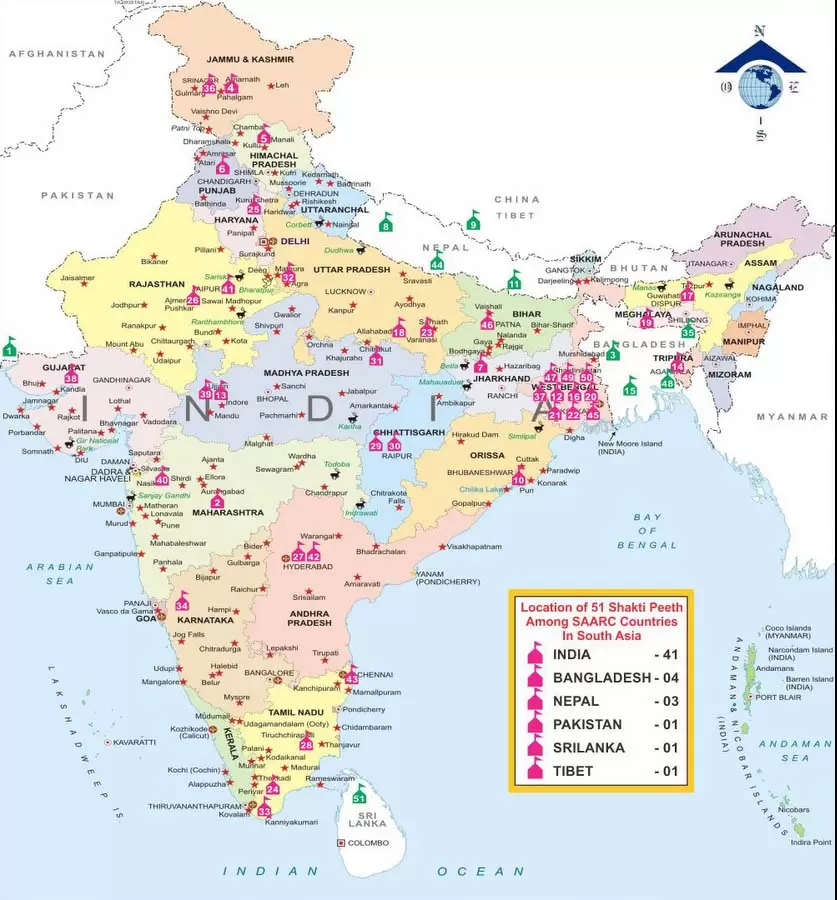
And this brings us to the end of this series on Shakti Peethas. I hope you enjoyed reading about it as much as I enjoyed reading, researching, and writing about the different temples. The journey through the Shakti Peethas has unveiled a tapestry of divine energy, mythology, and devotion that stretches across the Indian subcontinent and beyond. Each site, from the snow-capped heights of Lake Manasarovar and Muktinath in Nepal to the coastal serenity of Nainativu in Sri Lanka, embodies the eternal bond between Shakti and Shiva — a union that transcends geography, culture, and time. These temples are not merely places of worship but living testaments to the enduring power of the Divine Feminine, where the physical remnants of Goddess Sati’s form sanctify the earth and invite devotees to connect with the cosmic force of creation, preservation, and transformation.

The diversity of rituals, legends, and architectural marvels across these shrines reflects the adaptability of spiritual traditions while preserving their core essence. Whether through the Tantric practices of Tarapith, the serpent worship of Nainativu, or the open-air sanctity of Mansarovar, each Shakti Peetha offers a unique pathway to the divine. Yet, they all share a common thread: the belief that these sites are portals to liberation or moksha and spiritual awakening. The Shakti Peethas remind us that divinity is both immanent and transcendent, woven into the fabric of mountains, rivers, and ancient stones, yet alive within the hearts of those who seek it. May this journey inspire reverence for the sacred, curiosity for the mystical, and a deeper connection to the universal energy that binds all beings.