A Geisha’s Journey: My Life as a Kyoto Apprentice – Komomo
This is the story of a contemporary Japanese teenager who, in a search for an identity, became fascinated with the world of geisha, and discovered in herself the will and the commitment to embark on the many years of apprenticeship necessary to become one.
It is also the story of a young Japanese photographer who grew up overseas, and who also was captivated by the traditional lives of these women who choose to dedicate themselves to their art. He began following and documenting the life of teenager Komomo as she studied and grew into her role.
Naoyuki Oginos photographs follow Komomos entire journey, from her first tentative visits after finding the geisha house on the internet through her commitment to the hard schedule of an apprentice, learning arts that go back centuries, all the way to the ceremony where she officially became a geiko, as Kyotos geisha are known and beyond. From the cobbled streets where she walks in her elaborate dress to the inner sanctums of her dressing room, these pages offer a rare look at a unique, living art.
The photographs are accompanied by autobiographical text and captions by Komomo, as she shares her thoughts and emotions, and describes the day-to-day existence of a Kyoto apprentice. It is an illuminating view of seven years in the life of a very special young woman.
A couple of months back, I came across this Japanese term, ‘Ikigai’ which essentially means finding your passion in life and leading your life according to that, in other words, your ‘raison d’être’ and the term really intrigued me. In other words, Ikigai is what makes you get up each morning and jeep going even when the going gets tough.
When I read more about this term, I thought that perhaps this was the missing link in our lives. If we lived a life worth living, if we did something which makes us jump out of bed each morning and looked forward to each new day, then wouldn’t that be the best thing ever? We would never have to work a day in our lives and life will be so much smoother without the usual angst work generates within us.
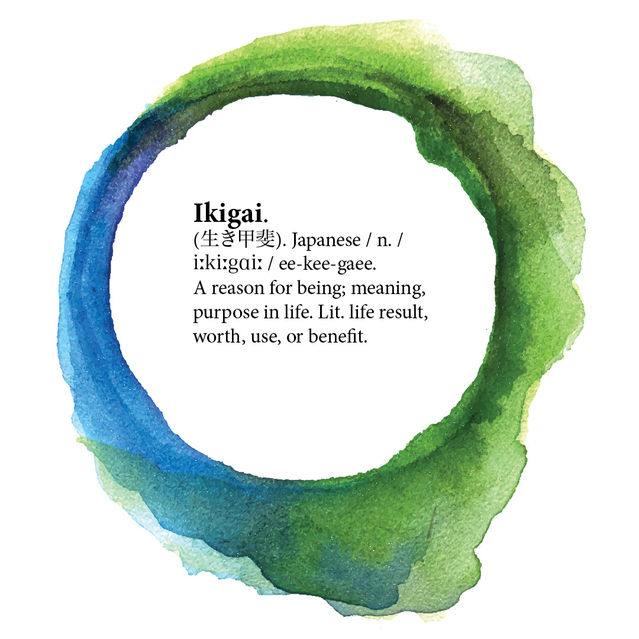
Ikigai which is pronounced as it is spelt, is a Japanese concept which means, “a reason for being”. The word “Ikigai” is usually used to indicate the source of value in one’s life or the things that make one’s life worthwhile. The word translated to English roughly means “thing that you live for” or “the reason for which you wake up in the morning.”
Each individual’s Ikigai is personal to them and specific to their lives, values and beliefs. It reflects the inner self of an individual and expresses that faithfully, while simultaneously creating a mental state in which the individual feels at ease. Activities that allow one to feel Ikigai are never forced on an individual; they are often spontaneous, and always undertaken willingly, giving the individual satisfaction and a sense of meaning to life.
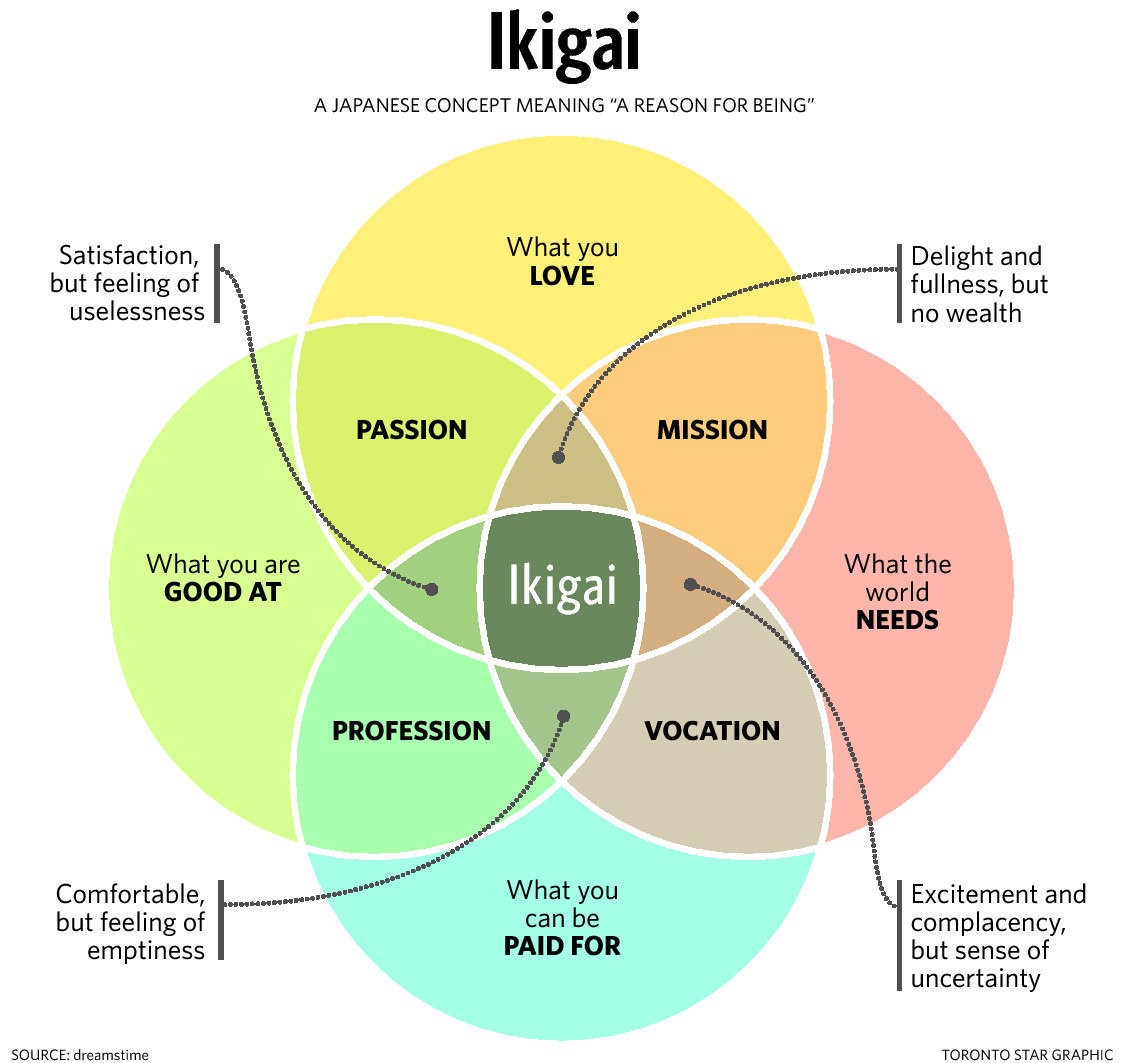
According to best seller author Dan Buettner, Ikigai lies at the cross section between your values, what you like to do and what you are good at. When you are able to figure that out, you have found your personal Ikigai.
So how do you find out your own personal Ikigai? Make four lists – the first one being your passion in life or what you love doing, the second being your mission in this world or what you feel this world needs, the third list being the able to figure what you are good at or your vocation in life and the last list being what you can get paid for doing your vocation which is essentially your profession. The intersection of these four lists will allow you to figure your personal and unique Ikigai.
In their book Ikigai: The Japanese Secret to a Long and Happy Life, Hector Garcia and Francesc Miralles break down the ten rules that can help anyone find their own Ikigai:
Stay active and don’t retire
Leave urgency behind and adopt a slower pace of life
Only eat until you are 80 per cent full
Surround yourself with good friends
Get in shape through daily, gentle exercise
Smile and acknowledge people around you
Reconnect with nature
Give thanks to anything that brightens our day and makes us feel alive.
Live in the moment
Follow your Ikigai
While the concept has been around for centuries now (it originated in the Heian period, sometime during the period 794 to 1185 AD), the majority of us, including the Japanese people haven’t quite figured it out yet.
There have been studies which say that Ikigai promotes a sense of wellbeing which is probably why the Japanese and particularly Okinawians where this concept is said to have originated live the longest. It was statistically proven that presence of Ikigai is correlated with a lower level of stress and an overall feeling of being healthy. The feeling of Ikigai balances out the secretion of neurotransmitters such as dopamine, serotonin and β-endorphin. Some studies demonstrate that a sense of purpose or goal in life or Ikigai is negatively correlated with a need for approval from others and anxiety and studies also found that Ikigai is associated with longevity among Japanese people.
Human beings are born curious. Our insatiable drive to learn, invent, explore, and study deserves to have the same status as every other drive in our lives. So go and channel that curiosity and maybe you will be able to find that sweet spot in your life which is your Ikigai. Once you do, use it every day. Find things to do, simple or complex in your day to day lives which would be an expression of your Ikigai and once you have found and pursued it, you will realise that anything else is just compromise.
I am going to leave you with a Youtube video where Dan Buettner speaks in a Ted-Ed video on how to live to more than a 100 where he also speaks about Ikigai.
A young man arrives in the Ukraine, clutching in his hand a tattered photograph. He is searching for the woman who fifty years ago saved his grandfather from the Nazis.
Unfortunately, however, he is aided in his quest by Alex, a translator with an uncanny ability to mangle English into new forms; a ‘blind’ old man haunted by memories of the war; and an undersexed guide dog named Sammy Davis, Jr, Jr. What they are looking for seems elusive – a truth hidden behind veils of time, language and the horrors of war. What they find turns all their worlds upside down…
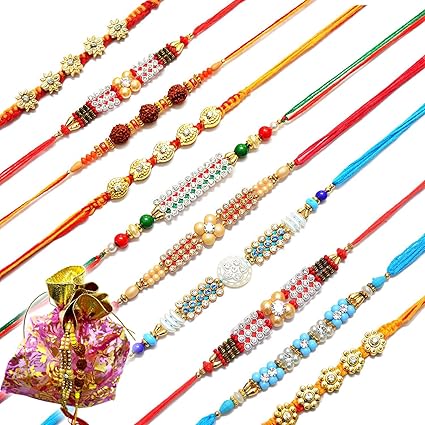
Last week was the festival of Raksha Bandhan which celebrates the love between brothers and sisters. As usual, GG tied the sacred thread or Rakhi on BB’s right wrist. This year, he kept it for 24 hours whereas in previous years it would barely last a few hours or at the very least overnight. He has also promised GG that next year, she gets to choose the rakhi she wants (this year, he insisted on a very simple one, while GG wanted one which was slightly more grand than what BB chose)
This poem is inspired by the love I see between BB & GG every single day. They can’t go a day without seeing and speaking with each other and last year when they went for their camps and overseas learning journeys, you could actually see the other being antsy. I now wonder how they will go through the two years when BB will enlist for his national service in a couple of years time.
Ties that Bind
A sibling’s love is like that anchor It’s a bond that lives on forever They fight, they laugh, but they have each other’s back It’s the world against them, to the very max
There are few relations as close and loving as the one twins share It’s a bond even us parents can’t compare
On the special day for brothers and sisters They reaffirm their love with the sacred thread He promises to love and protect her always She promises to love and be there for him all the days
They are true friends for life, truly entwined Best friends and siblings in the ties that bind
Daughter of Fortune – Isabel Allende, translated by Margaret Sayers Peden
Orphaned at birth, Eliza Sommers is raised in the British colony of Valparaíso, Chile, by the well-intentioned Victorian spinster Miss Rose and her more rigid brother Jeremy. Just as she meets and falls in love with the wildly inappropriate Joaquín Andieta, a lowly clerk who works for Jeremy, gold is discovered in the hills of northern California. By 1849, Chileans of every stripe have fallen prey to feverish dreams of wealth. Joaquín takes off for San Francisco to seek his fortune, and Eliza, pregnant with his child, decides to follow him.
As we follow her spirited heroine on a perilous journey north in the hold of a ship to the rough-and-tumble world of San Francisco and northern California, we enter a world whose newly arrived inhabitants are driven mad by gold fever. A society of single men and prostitutes among whom Eliza moves–with the help of her good friend and savior, the Chinese doctor Tao Chien–California opens the door to a new life of freedom and independence for the young Chilean. Her search for the elusive Joaquín gradually turns into another kind of journey that transforms her over time, and what began as a search for love ends up as the conquest of personal freedom.




 Memories and Such