Meet Me in Venice: A Chinese Immigrant’s Journey from the Far East to the Faraway West – Suzanne Ma
When Ye Pei dreamed of Venice as a girl, she imagined a magical floating city of canals and gondola rides. And she imagined her mother, successful in her new life and eager to embrace the daughter she had never forgotten.
But when Ye Pei arrives in Italy, she learns her mother works on a farm far from the city. Her only connection, a mean-spirited Chinese auntie, puts Ye Pei to work in a small-town cafe. Rather than giving up and returning to China, a determined Ye Pei takes on a grueling schedule, resolving to save enough money to provide her family with a better future.
A groundbreaking work of journalism, Meet Me in Venice provides a personal, intimate account of Chinese individuals in the very act of migration. Suzanne Ma spent years in China and Europe to understand why Chinese people choose to immigrate to nations where they endure hardship, suspicion, manual labor and separation from their loved ones.
Today all eyes are on China and its explosive economic growth. With the rise of the Chinese middle class, Chinese communities around the world are growing in size and prosperity, a development many westerners find unsettling, and even threatening. Following Ye Pei s undaunted path, this inspiring book is an engrossing read for those eager to understand contemporary China and the enormous impact of Chinese emigrants around the world.
The most important thing is to enjoy your life – to be happy – that’s all that matters ~ Audrey Hepburn
Be happy today because today is the International Day of Happiness!
Since 2013, the United Nations has celebrated the International Day of Happiness as a way to recognise the importance of happiness in the lives of people around the world. In 2015, the UN launched the 17 Sustainable Development Goals, which seek to end poverty, reduce inequality, and protect our planet – three key aspects that lead to well-being and happiness.
The world is a rapidly changing place. Among the fastest changing aspects are those relating to how people communicate and interact with each other, whether in their schools and workplaces, their neighbourhoods, or in far-flung parts of the world. In last year’s report, we studied migration as one important source of global change, finding that each country’s life circumstances, including the social context and political institutions were such important sources of happiness that the international ranking of migrant happiness was almost identical to that of the native born. This evidence made a powerful case that the large international differences in life evaluations are driven by the differences in how people connect with each other and with their shared institutions and social norms.
This day was originally conceptualised and founded in 2006 by Jayme Illien, then CEO of the United Nations New World Order project, to advance a new economic system, theory, and philosophy called “happytalism”, which achieves the UN’s global goals and the happiness, wellbeing, and freedom of all life on earth. This came from his belief that the happiness, wellbeing, and freedom of all life on earth is the ultimate purpose of every human being, nation, and society. Illien developed his vision for global happiness as humanity’s ultimate purpose, through a life spent on the frontlines saving orphaned and abandoned children fleeing war, genocide, and extreme poverty, and theorizing about solutions to the human condition, and the great challenges facing humankind, after he himself was abandoned as an orphan, and rescued from a roadside in India in 1980, by missionaries of Mother Teresa, who first named him Adam, and sent him to live in America.
Illien believed that an “International Day of Happiness”, established with, and recognized by, a new UN resolution, with the support of all 193 UN member countries, would provide the essential, unique, and broad-based, wide-ranging democratic support, international credibility, and worldwide legal legitimacy, for a new global day of happiness for humanity, which in turn, would enable future generations to eventually, objectively consider the concept of happytalism as a new economic system to solve to the great challenges facing humanity, thereby placing the fate and future of happytalism directly in the hands of the people and future generations. In 2012, the United Nations General Assembly adopted UN resolution 66 281: International Day of Happiness with the unanimous consensus of all 193 Member States, and the support of then UN Secretary General Ban Ki moon, declaring March 20 as the international day of happiness. Illien chose 20 March for its significance as the March equinox, a universal phenomenon felt simultaneously by all of humankind.
On March 20, 2013, the first ever international day of happiness was celebrated with the launch of UNIDOHappiness, and the “Ten Steps to Global Happiness” campaign theme, which has since become an annual tradition.
The 2020 International Day of Happiness campaign theme is ‘Happiness For All, Forever”. To celebrate, UNIDOHappiness, the UN secretariat for the International Day Of Happiness, is calling on all 7.8 billion people and all 206 nations and territories, to take the “Ten Steps to Global Happiness” challenge and call to action. The ten steps to global happiness are “ten easy steps any individual, organization, or country, can take on the international day of happiness, and throughout happiness week, to celebrate the international day of happiness, while also advancing the happiness, wellbeing, and freedom of all life on earth by 2050, when the United Nations forecasts global population to reach 10 billion”. The first step is “Tell Everyone”, which is designed “spread the word” to increase global awareness about the very existence of the international day of happiness, and the UN’s unanimous recognition of happiness as a human right, as well as happiness as an approach to sustainable economic and human development.
So what are the Ten steps to Global Happiness? The Ten Steps to Global Happiness are ten easy steps any individual, organization, or country can take to celebrate the International Day of Happiness while also advancing the happiness, well-being, and freedom of all life on Earth by 2050, when the United Nations forecasts global population to reach ten billion. As mentioned in the previous paragraph, the first step is to tell everyone to be happy!
Tell Everyone – Tell as many people people as you can about this day which is just eight yeats old. Happiness is an undeniable right of every human being and everyone, regardless of race, language, religion or sexual orientation. So go out and spread the message.
Do What Makes you Happy – Don’t you think happiness is a fundamental human right? I do and so today I am going to do something that makes me happy. I am going to read and and also think happy and positive thoughts today. I plan to spend time with my children as well and have some one on one time with each of them. You too should do what makes you happy today (and not just today, but everyday). Spend time with family, friends and loved ones, engage in what excites you, exercise and get those endorphins alive. In short, be passionate of all that you do, at least today, if not daily!
Give and Spread Happiness to Others – Happiness is contagious. The secret to happiness is giving and spreading happiness to others. Step 3 is to give happiness and spread happiness to others: friends, co-workers, family, or even better, a random person who would never expect it. This is a simple and personal step and when completed by all of us, this step is integral to spreading happiness exponentially and globally.
Host or Celebrate a Happiness Month Event – Because of the World Happiness Day, March is now celebrated as Happiness Month. I think it’s apt because in the northern hemisphere, March is the advent of spring which bring happiness and hope after a dull and depressing winter. An entire month which is dedicated to happiness – as a human right, fundamental human goal, and as a way of life for all. Celebrate this month by hosting an event either within your family or friend circle or you can join an event at the happinessmonth.org website.
Share what makes you Happy – Share what makes you happy on, both offline and online. We all know that happiness is contagious, even if it is virtual. Sharing what makes you happy will inspire others to share their happiness too, and will appear in our happiness feed creating an exponential explosion of all happiness around the world!
Promote the UN Happiness Resolutions – This step is all about sharing the UN Happiness resolutions to spread the word about how 193 UN Member States adopted two UN resolutions recognizing and advancing happiness as a human right, and the need for a new economic system that places happiness at the center of sustainable economic development, and all life!
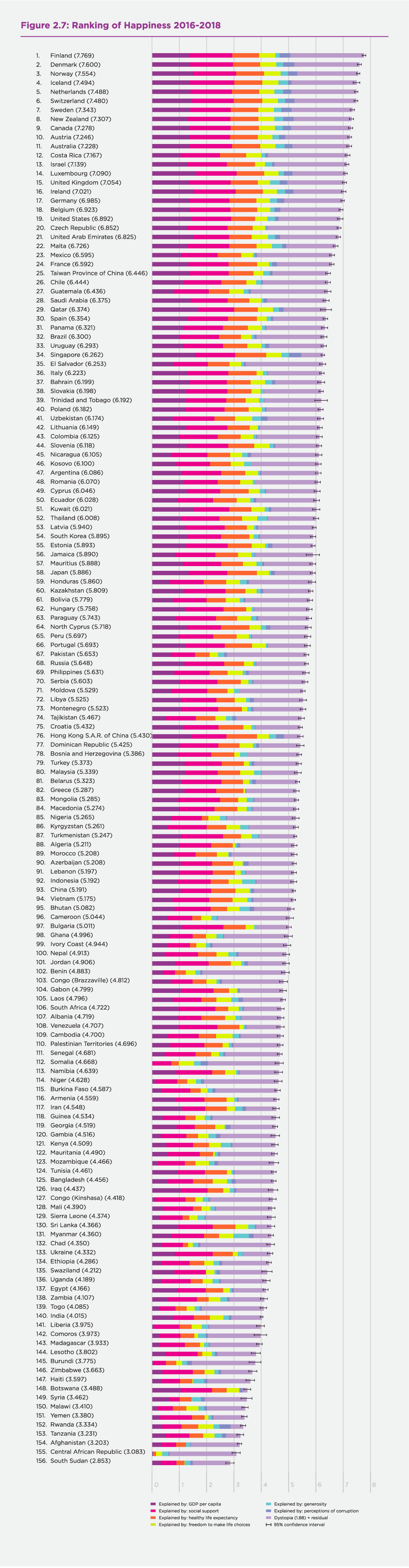
Read and Share the World Happiness Reports – The World Happiness Report is an annual publication of the United Nations Sustainable Development Solutions Network. It contains articles, and rankings of national happiness based on respondent ratings of their own lives, which the report also correlates with various life factors. As of March 2019, Finland was ranked the happiest country in the world twice in a row. The 2018 iteration was released on 20 March and focused on the relation between happiness and migration. According to the 2019 Happiness Report, Finland was the happiest country in the world, with Denmark, Norway, Iceland, and The Netherlands holding the next top positions. My country of birth, India stood at 140 and where I live now, Singapore stood at number 34. The United States was at number 19. To check where you country stood in 2019, click this link. https://en.wikipedia.org/wiki/World_Happiness_Report and to read the World Happiness Reports from 2012, click here https://worldhappiness.report/. The 2020 report should be released sometime later today.
Advance the Global Goals for Sustainable Development – In 2012, the United Nations called for a New Economic Paradigm of Gross Global Happiness. Then, in 2015, the United Nations adopted the Global Goals for Sustainable Development: 17 goals and 169 targets for the world to achieve by 2030, on the path to have ten billion happy people by 2050.
Become a Global Partner and Ambassador – If you are a corporate or a website, you can become a global ambassador and partner by simply downloading and adding the UNIDOHappiness logo https://unidohappiness.org/ to your website. Or you can put the logo on anything like mugs, tee shirts, bags or just about anything to show your solidarity with the global movement to advance happiness as a human right and achieve happiness for all!
Advance and Adopt ‘Happytalism’ – There is a saying “save the best for last” and that is exactly what this last step is all about – the best thing you or anyone can do to celebrate the International Day of Happiness. How? Be happy, complete the Ten Steps to Global Happiness, and advance the happiness of all life on earth.
So what are you going to do to celebration Happiness Day and on a macro level, Happiness Month?
Maya is an accomplished psychiatry resident with a supportive boyfriend, loving family, and bustling New York social life. When her grandmother dies in India, a family squabble over property ignites a curse that drifts across continents and threatens Maya’s life.
Or so her father says – Maya (being a modern woman, an American, and a doctor) doesn’t believe in curses, Brahman, or otherwise. But then a series of calamities befalls her family, her career and relationship both falter, and Maya starts to worry. She hopes a trip back to India with her best friend, Heidi, will enable her to remove the curse, save her family, and put her own life back in order.
Thus begins a journey into Maya’s parallel worlds – New York and an India filled with loving and annoying relatives, vivid colors, and superstitious customs she doesn’t, and does, believe in. But her time in India isn’t just a visit “home” or a chance to explore the strengthening and suffocating bonds of family, it’s also the beginning of a cathartic quest toward forging one identity out of two cultues as Maya learns unexpected lessons about life and love.
After reading about the history and geography of Odisha as well as it’s capital city of Bhubaneshwar, let’s move on to to some of the other cities in the state.
Cuttack The cultural capital of Odisha and the state’s former capital and its second largest city, is known as an ancient pilgrim centre. This place has forts, museums, lakes, and islands for your viewing pleasure. Make sure you check out the local silver handicrafts which Cuttack is famous for.
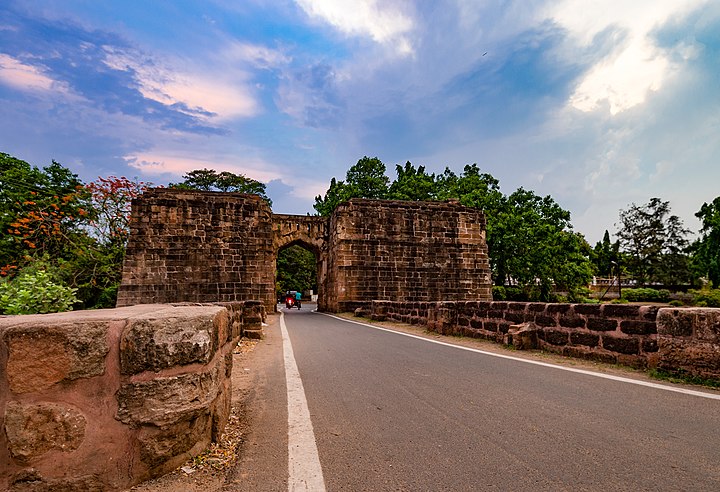
The Barbati Fort is a well known fort with carved gateway. Located around 8 km away from the city on the banks of the river Mahanadi, it is a 14th century fort built covering an area of about 102 acres during the Ganga dynasty. The way the fort has been buit means that it provides a beautiful and spectacular view of the modern Cuttack city. It is the earthen mound of the 9 storeyed palace. The monument was built with fortification to protect from enemy attacks. There is a also a temple dedicated to the Katak Chandi in the fort.
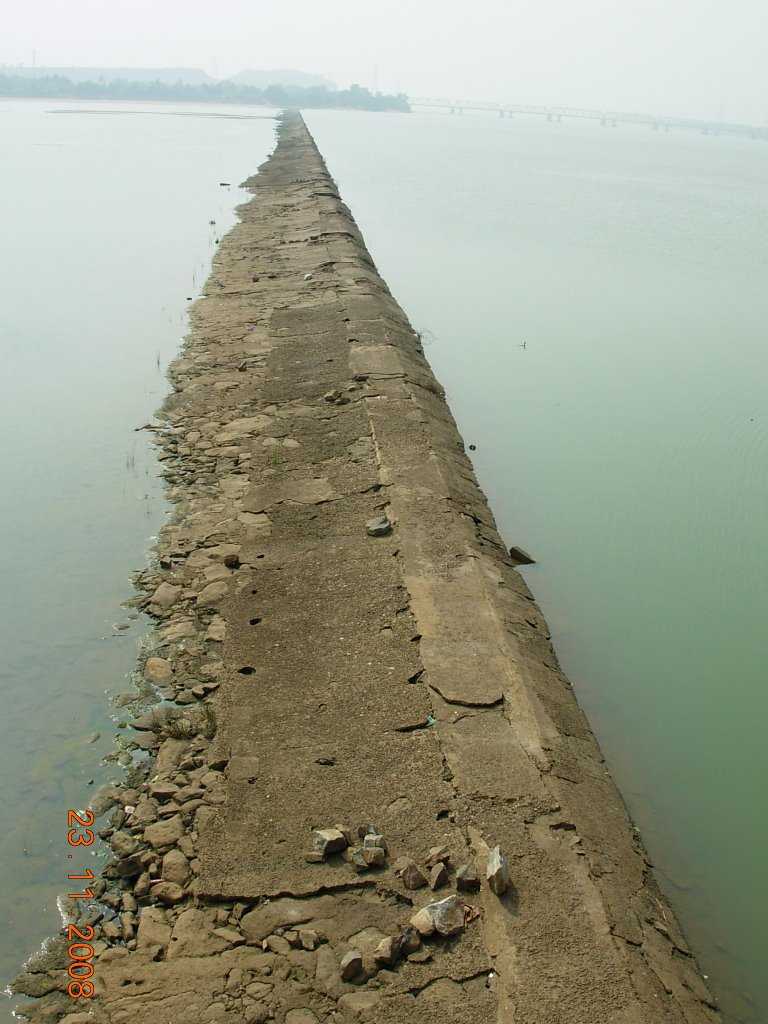
Situated on the banks of Kathjuri River, Stone Revetment is an engineering marvel created in the 11th century. These stone walls are constructed so as to obstruct flood water from entering the city. Remember this was built at a time when there was zero technology as we know today, hence is a brilliant example of the technical skills and logical thinking of the ancient Oriyans.
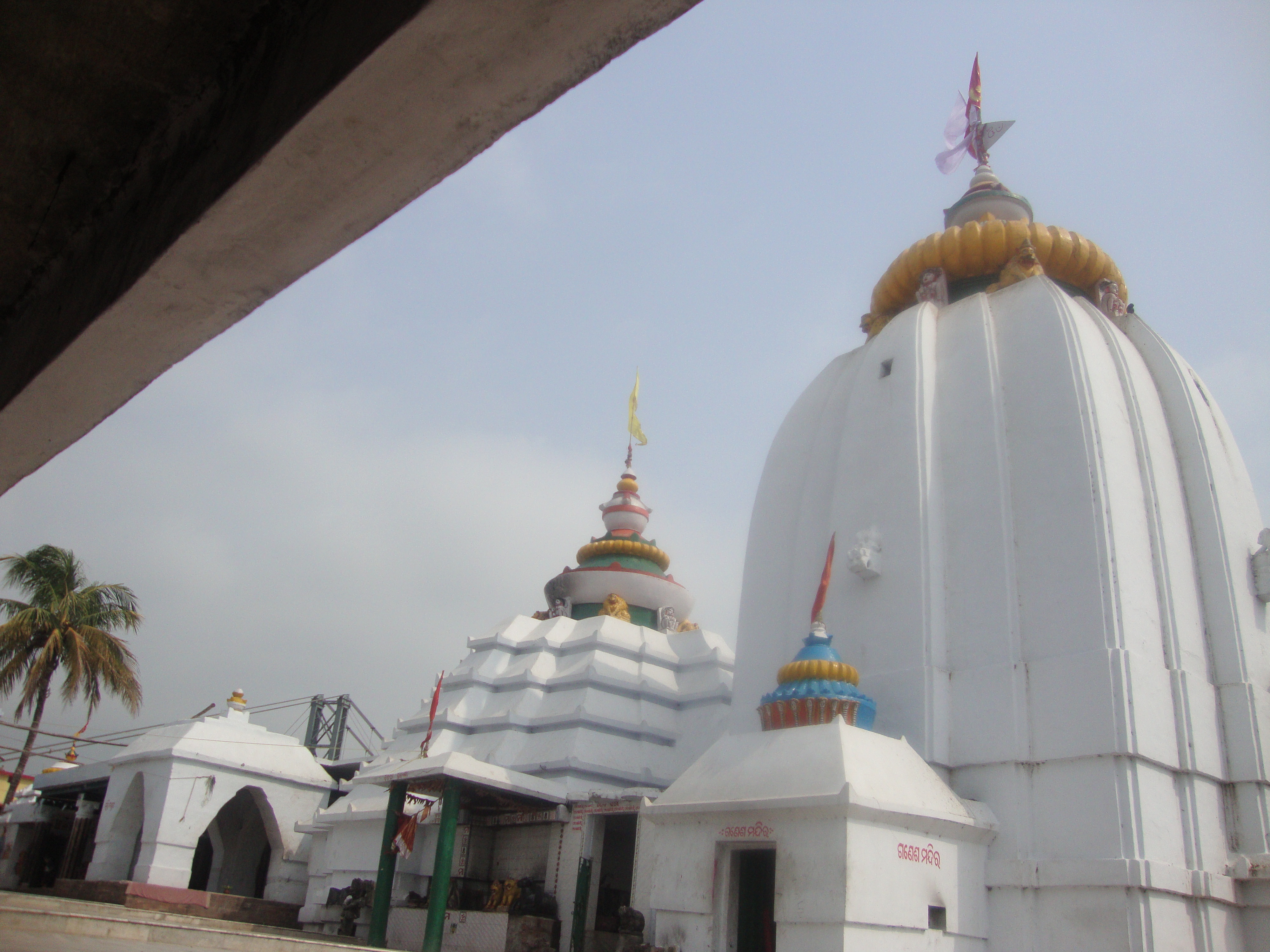
Dedicated to Lord Shiva, the Dhabaleshwar temple is located 37 km away from the main city. It lies on a river island on the river Mahanadi and serves as a popular weekend getaway for locals. This temple, established in 10th century is an important pilgrimage centre and provides a beautiful scenic spot with a serene ambience. You reach this temple from Cuttack using ferries ferries. There is also a foot-over bridge which people can use by paying a nominal fee.
The Odisha State Maritime Museum, overlooking the Mahanadi River, focuses on Odisha’s centuries-old maritime history of boat-building and trade, particularly with Bali, Indonesia. The displays walk you through the Kalingas’ maritime activities, rituals and tools, while the boat shed features river-boat, raft and coracle models from different parts of India. The Jobra workshop gallery introduces the world of sluice gates and boat repair, and an aquarium entertains visitors with marine life from Odisha and the Amazon River.
Rayagada A district with a rich history and distinct culture, Rayagada has, over the years, mingled with the local tribal culture. This district has many historical places to visit and is known for its cuisine, crafts and handmade products. Located in the south-eastern border of the state close to Andhra radish, this area has not been commercialised with tourists so is still underrated and an undiscovered gem. This district offers dense forests, historical monuments, a peek into the lifestyle of tribal populations and authentic food. Rayagada has been inhabited since before the Mauryan empire controlled this region and has been an essential part of most empires due to its abundant natural resources.
An avatar of Goddess Durga, Majhighariani is accepted as the prime, most important deity in this region. The name originates from the placement of Shakti’s temple in the middle of the fourteenth-century Silavansi king Viswanath Dev’s palace and translates to the one seated in the central room. The Maa Majhighariani temple attracts worshippers from all over the state and the country, especially Madhya Pradesh, Andhra Pradesh and Chhattisgarh. The temple is open from 6 am to 1 pm and then reopens again from 4 pm till 9 pm. While entry is free, to arrange a special darshan can cost Rs. 20, or Rs. 100 for the VVIP darshan. Sundays and Wednesdays witness a more massive footfall, while evenings are generally much less crowded. The festival of Chaitra Parva, which falls in April, is the most crucial time of the year for worshippers of Shiva and Majhighariani, which is also the time this temple is the most crowded. Durga Pooja and Shivratri also see an abundant influx of pilgrims. From the Rayagada railway station, it is a short 20 minute drive away.
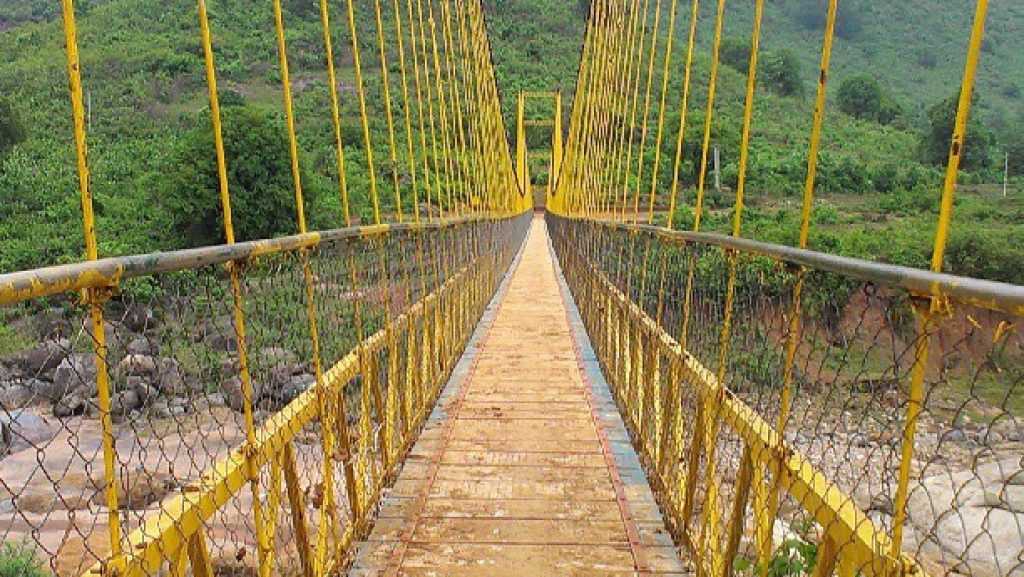
The Hanging bridge in the Chekaguda village is the second of its kind in Orissa. Built in 2012, the 151 meters long suspended bridge has brought about 20,000-odd tribal villagers residing in nine panchayats located at the outskirt of the town, closer to the central city, by bridging the two shores of the Nagavali river. Also called the Jhula Bridge, given its construction, it is accessible only by pedestrians, as no vehicles are allowed to go through it. The Nagavali river has since become a tourist spot, and the bridge a tourist attraction, as families come to enjoy the serene environment of the river, the mountains around the valley, and the relative peace. The bridge is accessible all year round without any entry or crossing fee. The bridge is about 3 kms west of the Rayagada railway station, and it takes about 15 minutes to reach there by road.
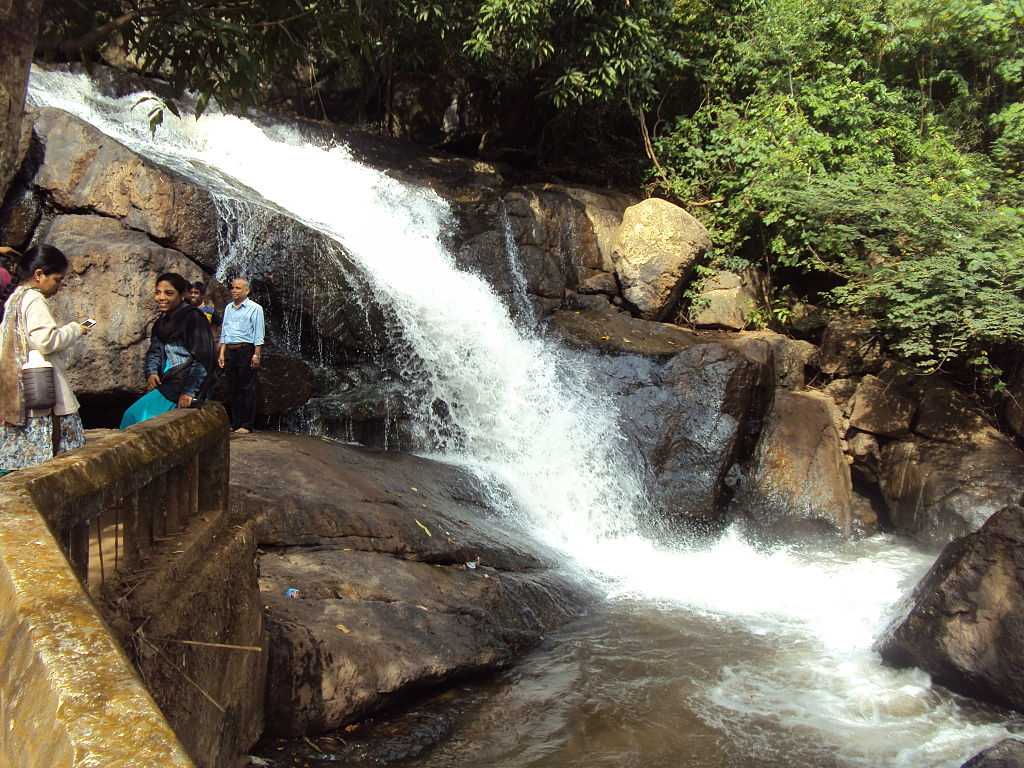
Chatikona is a small tribal village located around 40 kms north of Rayagada. It is surrounded by the Niyamgiri hills and offers tourists wonderful natural beauty complete with lush green foliage and a fantastic waterfall. Chatikona is a Dongria Kondh tribal village, and one can get to see marketplaces full of tribal arts and handicrafts. The Chatikona Falls attracts a large number of tourists and picnickers, and the Shiva temple near it draws pilgrims from all over Odisha, especially during the period of Shivratri, when it can be very crowded. While it is an all-weather destination, it is advised to skip the rainy seasons as well as the Shivratri month to avoid congestion. There is no entry fee to view the falls. Chatikona is rather easily accessible by road and if you want to take the train, the nearest railway station is Bissamcuttack.
A pilgrim and tourist spot which is slightly further away, around 134 km north-east from the main town of Rayagada, Minajhola is a beautiful confluence of nature and religion. It houses a Shiva temple; at the meeting of 3 state rivers: Vamsadhara, Chauladhua, and Phalaphalia, where the idol is in the form of a fish called Minaketan, hence the name. It is a major pilgrim spot, given that Shivratri here is celebrated with much gusto. Due to its natural beauty, Manijhola attracts a lot of tourists also, to see the confluence of rivers, bathe in them, and picnic along the shore. The road to Minajhola is not very friendly and all-weather and the nearest railway station is Rayagada.
Located around 25 kms from the main town of Rayagada, the Laxminarayan Temple was built by the the Indian Metals and Ferro Alloys Ltd., near their factory in Therubali. It was built around 2004 as a place of worship of Vishnu and Laxmi, but also houses Jagannath, Hanuman, Balabhadra, and Shiva idols. Visitors abound from all over, especially more so for Shivratri festivities. A few kilometres further toward Paikapada, one can witness over one lakh Shivling at the Paikapada shrine. These two temples are also crowded during the Jagannath Rath Yatra season that takes place in the humid month of July. The Laxminarayan Temple is usually more crowded on Tuesdays.
Located just 3 kms from Rayagada, Hatipathar is a picnic spot much loved by tourists. It is named so because the Nagavali river flows here through a deep-cut valley, and the two boulders atop these waterfalls look like elephants perched on a hill. October to February are the best time to visit these falls, as temperatures are cooler and rainy season has passed. Surrounded by dense forests, these falls make for the perfect tea-time picnic spots for family and friends.
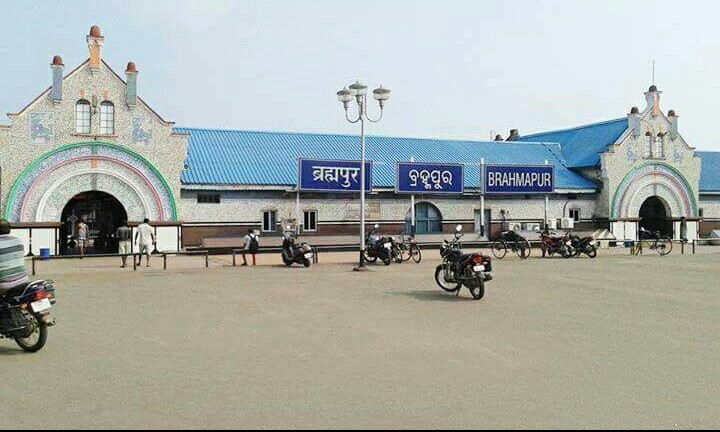
Daringbadi If you are wondering if Odisha has any hill stations, then Daringbadi is the place to go to. Hidden a state famous for beaches and temples, this hill station lies peacefully at an elevation of 3000 feet waiting to be explored. Replete with pine trees, coffee gardens and splendid valleys, Daringbadi is known as the “Kashmir of Odisha”. A place where you can stay in quaint cottages amidst trees and valleys, the weather is inviting – beating the heat in summers and offering snow in the winter. The place does not only have verdant and thick forests, but is also bountiful in flora and fauna. The best part about this hill station is that you can visit this place throughout the year. The nearest railhead is at Brahmapur from where one can take the bus to the city. This town can be visited anytime of the year, though if you want to catch snow, then check the weather reports between December to February and go around this period when snow is predicted. The key attractions here are the Doluri River, Putudi Waterfalls, Dasingbadi waterfalls, Badangia waterfalls and Hill view Park.
Berhampur Also known as Brahmapur, Berhampur close to the eastern coast Brahmapur is known as the home of Lord Brahma and is usually known as the silk city- the city which is famous for the lustrous ikkat silk sarees in different colours and patterns. Bomokei patta, named after the village Bomokei where excellent work out of brass and metal is created also is an attraction to the tourists here. Besides these beautiful handicrafts, handlooms and jewelery this city offers some of the best Papads (popadum), pickles, badis and fruits specially mangoes.
Potagarh fort is also known as “the buried fort” as the length of the wall is somewhere between 18 to 20 feet in height and looks dug. This historic specimen of architecture left with the remains of fort houses and buried tunnel specks, has deep water streams on three sides. This fort is on the the river Rasikulya and the Bay of Bengal. Locals say that the fort is haunted and the story is related to the goddess of the fort attacking the King and the King escaping through the tunnels.
Situated around 30 Km away from the main city the Taratarini temple is recognized to be one of the four major Shakti pitha or centre according to mythological texts of Satyuga. This 6000-year-old temple has historical connections and also finds a mention in the Puranas.
Jeypore Another under-rated town in Odisha, Jeypore which is located in the southern part of the state, is known for offering spellbinding views of rocky outcrops, picturesque waterfalls, and lush green biosphere reserves. Jeypore is the second largest city after Berhampur of South Odisha and locally is pronounced as ‘Joypur’ is the literal meaning of the town is ‘City of Victory’. The highest peak in the state, Deomali, is a popular picnic spot located not very far from Jeypore. This town is home to about 62 affiliated communities such as Gond, Dhruba, Paraja, Koya.
The Gupteswar Temple meaning ‘Hidden God’ is a temple dedicated to Lord Shiva temple beautifully hidden amidst caves set atop a huge limestone hill, around 55 km away from Jeypore. The main attraction at this temple is a gigantic Shiva Linga which is said to increase in size each year. According to mythology, the lingam was first discovered by Lord Rama when he was roaming in the then Dandakaranya forest with wife Sita and brother Laxman, and later worshipped it calling it ‘Gupteswar’. Pilgrims from all over the country come here during the Sravana period, because the yearly Bol Bam yatra is held at this place. Devotees walk to the Gupteshwar during Bol Bam yatra to bath in the maha kund, and then chant near the Shiva Linga. The prime anniversary, Shivratri is celebrated by the locals at Gupteshwar.
Another famous waterfall, the Bagara waterfall is a favourite picnic spot for locals. You walk along the ravines and densely vegetated slopes of the winding hills and then suddenly come across the Bagara waterfall which falls from three different waterfalls, descending from a height of 30 ft. in the River Kolaban and is milky white in colour. It is a heavenly sight, especially when you are here for a picnic. This waterfall is easily accessible from Jeypore and you can take a bus, taxi or autorickshaw to get there.
The 157.5 metres high glittering waterfall that has been formed by the Machhakund River is known as the Duduma Waterfall. The site of the waterfall abounds in dense deciduous type forests and the beautiful topography made all the more beautiful by the gurgling stream. An enormous hydroelectricity project has been built around the falls and as a consequence a township can now be seen in Duduma. Machhakund is also an important place for pilgrimage and is known as ‘Matsya Tirtha’. These falls are located at a distance of 92 km from Koraput town and can be easily reached from both Koraput and Jeypore. The best time to visit the waterfalls around Jeypore is just after the monsoon season when you can see them in full bloom. September to November is therefore the best time to visit the waterfalls since the streams shrink considerably with the coming of winter.
It is said there are ninety-nine Arabic words for love. Bea, an American exchange student, has learned them all: in search of deep feeling, she travels to a Middle Eastern country known to hold the “The Astonishing Text,” an ancient, original manuscript of a famous Arabic love story that is said to move its best readers to tears.
But once in this foreign country, Bea finds that instead of intensely reading Arabic she is entwined in her host family’s complicated lives—as they lock the doors, and whisper anxiously about impending revolution. And suddenly, instead of the ancient love story she sought, it is her daily witness of a contemporary Romeo and Juliet-like romance—between a housemaid and policeman of different cultural and political backgrounds—that astonishes her, changes her and makes her weep.
But as the country drifts toward explosive unrest, Bea wonders how many secrets she can keep, and how long she can fight for a romance that does not belong to her. Ultimately, in a striking twist, Bea’s own story begins to mirror that of “The Astonishing Text” that drew her there in the first place—not in the role of one of the lovers, as she might once have imagined, but as the character who lives to tell the story long after the lovers have gone.













 Memories and Such