I was pondering about what makes us happy the other day and this poem was the result of that rumination. Happiness is that feeling that comes over you when you know life is good and you can’t help but smile. It’s the opposite of sadness. Happiness is a sense of well-being, joy, or contentment. When people are successful, or safe, or lucky, they feel happiness.
What is happiness I ask you? It is the spark from within which lights up your entire being It is that essence that fills up and bring a smile so you want to sing
What is happiness I ask you? It is the joy that springs forth and bubbles Infecting everyone around with that same joy and chortles
What is happiness I ask you? It is seeing that same happiness reflected in others It is looking at someone and wordlessly knowing all the answers
What is happiness I ask you? It is being content and satisfied It is living a life in the present and with pride
What is happiness I ask you? It is being with friends and family It is being loved unconditionally
What is happiness I ask you? It is spreading the same joy and happiness everywhere For happiness is shared, is when you become a happiness billionaire
Oracle Bones: A Journey Between China’s Past and Present – Peter Hessler
A century ago, outsiders saw China as a place where nothing ever changes. Today the country has become one of the most dynamic regions on earth. That sense of time—the contrast between past and present, and the rhythms that emerge in a vast, ever-evolving country—is brilliantly illuminated by Peter Hessler in Oracle Bones, a book that explores the human side of China’s transformation.
Hessler tells the story of modern-day China and its growing links to the Western world as seen through the lives of a handful of ordinary people. In addition to the author, an American writer living in Beijing, the narrative follows Polat, a member of a forgotten ethnic minority, who moves to the United States in search of freedom; William Jefferson Foster, who grew up in an illiterate family and becomes a teacher; Emily, a migrant factory worker in a city without a past; and Chen Mengjia, a scholar of oracle-bone inscriptions, the earliest known writing in East Asia, and a man whose tragic story has been lost since the Cultural Revolution. All are migrants, emigrants, or wanderers who find themselves far from home, their lives dramatically changed by historical forces they are struggling to understand.
Peter Hessler excavates the past and puts a remarkable human face on the history he uncovers. In a narrative that gracefully moves between the ancient and the present, the East and the West, Hessler captures the soul of a country that is undergoing a momentous change before our eyes.
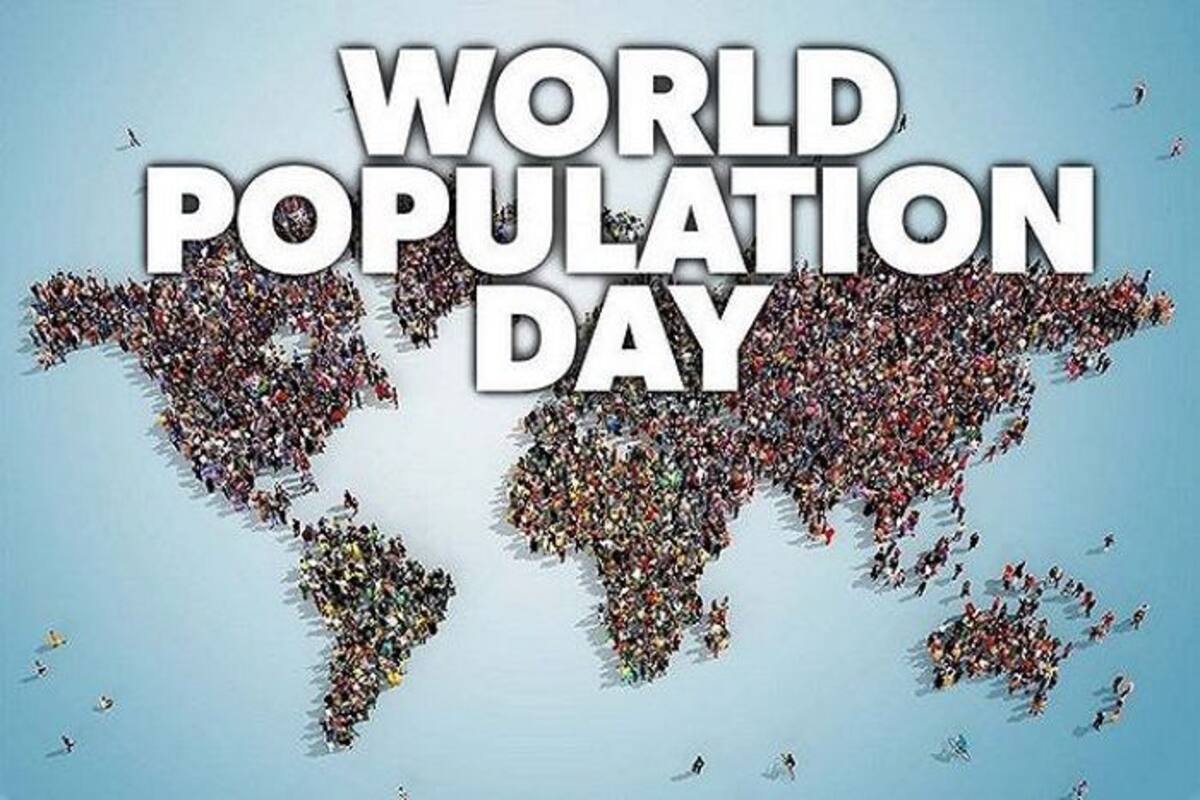
On Sunday the world celebrated the World Population Day. This day, which is observed annually on July 11 to raise awareness of global population issues. Established in 1989, the event was inspired by the public interest in Five Billion Day on July 11, 1987, the approximate date on which the world’s population reached five billion people. The World Population Day aims to increase people’s awareness on various population issues such as the importance of family planning, gender equality, poverty, maternal health and human rights. The suggestion of the day came from Dr. K. C. Zachariah, a senior demographer at the World Bank.
While press interest and general awareness in the global population surges only at the increments of whole billions of people, the world population increases annually by 100 million approximately every 14 months. The world population today is close to 7.9 billion and we add about 220,000 people to our world every single day! So on World Population Day, advocates from around the world call on leaders, policymakers, grassroots organisers, institutions and others to help make reproductive health and rights a reality for all.
It took hundreds of thousands of years for the world population to grow to 1 billion, then in just another 200 years or so, it grew sevenfold. In 2011, the global population reached the 7 billion mark, and today, it stands at about 7.8 billion, and it’s expected to grow to around 8.5 billion in 2030, 9.7 billion in 2050, and 10.9 billion in 2100. This dramatic growth has been driven largely by increasing numbers of people surviving to reproductive age, and has been accompanied by major changes in fertility rates, increasing urbanization and accelerating migration. These trends will have far-reaching implications for generations to come. In addition, the world is seeing high levels of urbanization and accelerating migration. 2007 was the first year in which more people lived in urban areas than in rural areas, and by 2050 about 66 per cent of the world population will be living in cities.
So why is population an important topic? The human race has an enormous impact on this planet. We control and modify the Earth more than any other species. How do we meet the needs of human beings and also preserve Earth’s finite resources, biodiversity, and natural beauty? This is the fundamental question of our time, and the challenge is becoming more critical as we continue to add more people. The world is vastly overpopulated and research conducted by the Global Footprint Network suggests that about 2 to 3 billion people is the number the planet can sustainably support, if everyone consumes the same amount of resources as the average European, which is about 60% the amount of the average American. U.N. experts predict that, unless we change course, world population will continue increasing until after 2100, with a most likely prediction of 10.9 billion people by the year 2100.
Worldwide, the average number of children per family has come down over the last 50 years, from more than 5 per woman to around 2.3, but the current average is still above replacement level, which would be 2.1 children per woman, and the number of women having children is about twice what it was in 1960. There is also huge demographic momentum since over 2/5 of the world’s population is 24 years or younger, either having children now, or poised to have them in the next 10 to 15 years and any changes we make today may not have a visible effect until a generation has passed.
Finally, people are living longer all over the world and will continue to do so, with a resultant slowdown in death rates. Thus, there’s a big imbalance in the birth to death ratio: currently more than 2 births for every 1 death worldwide.
These megatrends have far-reaching implications. They affect economic development, employment, income distribution, poverty and social protections. They also affect efforts to ensure universal access to health care, education, housing, sanitation, water, food and energy. To more sustainably address the needs of individuals, policymakers must understand how many people are living on the planet, where they are, how old they are, and how many people will come after them.
The theme for 2021 is focussed on COVID-19 and its impact specifically on safeguarding the health and rights of women and girls. The COVID-19 crisis has taken a staggering toll on people, communities and economies everywhere. But not everyone is affected equally. Women, who account for the largest share of front-line health workers, for example, are disproportionately exposed to the coronavirus. Supply chains around the world are being disrupted, impacting the availability of contraceptives and heightening the risk of unintended pregnancy. As countries are on lockdown and health systems struggle to cope, sexual and reproductive health services are being sidelined and gender-based violence is on the rise. Recent UNFPA research highlighted that if the lockdown continues for 6 months with major disruptions to health services, then 47 million women in low- and middle-income countries may not be able to access modern contraceptives resulting in 7 million unintended pregnancies. 31 million additional cases of gender-based violence can also be expected. The disruption of UNFPA’s programmes on the ground could result in 2 million cases of female genital mutilation and 13 million child marriages between 2020 and 2030 that could have been averted. Moreover, women disproportionately work in insecure labour markets and are harder hit by the economic impacts of COVID-19. Nearly 60 percent of women worldwide work in the informal economy, at greater risk of falling into poverty. Women’s unpaid care work has increased as a result of school closures and the increased needs of older people. The pandemic is hitting marginalised communities particularly hard, deepening inequalities and threatening to set us back in efforts to leave no one behind. Country responses to COVID-19 everywhere is critical and will determine how fast the world recovers.
So in honour of this day, spread the word anout the dangers of overpopulation and it’s impact on our world. This world, which we will leave to our children and grandchildren should be one that can sustain them and their desendents.
The Girl with Seven Names: A North Korean Defector’s Story – Hyeonseo Lee and David John
As a child growing up in North Korea, Hyeonseo Lee was one of millions trapped by a secretive and brutal totalitarian regime. Her home on the border with China gave her some exposure to the world beyond the confines of the Hermit Kingdom and, as the famine of the 1990s struck, she began to wonder, question and to realise that she had been brainwashed her entire life. Given the repression, poverty and starvation she witnessed surely her country could not be, as she had been told “the best on the planet”?
Aged seventeen, she decided to escape North Korea. She could not have imagined that it would be twelve years before she was reunited with her family.
She could not return, since rumours of her escape were spreading, and she and her family could incur the punishments of the government authorities – involving imprisonment, torture, and possible public execution. Hyeonseo instead remained in China and rapidly learned Chinese in an effort to adapt and survive. Twelve years and two lifetimes later, she would return to the North Korean border in a daring mission to spirit her mother and brother to South Korea, on one of the most arduous, costly and dangerous journeys imaginable.
This is the unique story not only of Hyeonseo’s escape from the darkness into the light, but also of her coming of age, education and the resolve she found to rebuild her life – not once, but twice – first in China, then in South Korea. Strong, brave and eloquent, this memoir is a triumph of her remarkable spirit.
Minicoy, locally known as Maliku in the local language of Divehi, is an island which, along with Viringili, is on Maliku atoll, the southernmost atoll of the archipelago. Divehi is also the national and official language of the Republic of Maldives. The language is a descendant of Elu Prakrit and is closely related to the Sinhala language, but not mutually intelligible with it. However, the Lakhshadweep administration refers to Dhivehi as Mahl due to a misunderstanding on the part of a British civil servant who came to Minicoy in the 1900’s. The official asked a local what his language as and he replied Divehi-bas. When the official looked confused because he had never heard of this language, the the islander said Mahaldeebu as he knew that locals on the subcontinent referred to the kingdom to the south or the Maldives by that name. The civil servant then recorded the language of Minicoy as Mahl.
The ancient name of Maliku was Mahiladu meaning women’s island which is derived from the Elu Prakrit term Mahila du, which literally means woman island. However, the name Maliku is thought to have been derived from the Arab trader’s term for the island, Jazirat al-Maliku or the the island of the king. Minicoy islanders have long settled in the Nicobar Islands across the Bay of Bengal and regularly travelled back to Minicoy. The Andaman and Nicobar Islands had a reputation in the Maldives and Minicoy of being inhabited by cannibals, and so collectively the Andaman and Nicobar groups were called Minikaa-raajje by the Maldive and Minicoy islanders which meant cannibal kingdom. A British official once asked a Minicoy islander what the name of his island was and was told he was Maliku but usually lived in Minikaa-raajje or Nicobar. The official thought Maliku and Minikaa were the same place and recorded the name of this islander’s home as Minikaa which later became anglicised as Minicoy. So because of this cross-cultural misunderstanding, Maliku would forever be called by a name that sounded like cannibal in the local language.
The Maliku Atoll has a lagoon with two entrances in its northern side, Saalu Magu on the northeast and Kandimma Magu on the northwest. Its western side is fringed by a narrow reef and coral rocks awash. The interior of the lagoon is sandy and has some coral patches. The Nine Degree Channel separates Minicoy and the Laccadive Islands. The closest island to Minicoy is Thuraakunu in the Republic of the Maldives. Since 1956, the Indian Government has forbidden the direct travelling between the two islands despite their geographic proximity and ethnographic similarities. Maliku Kandu is the traditional name of the broad channel also called the Eight Degree Channel between Minicoy and Ihavandippulhu or the Haa Alif Atoll in the Maldives. There are remains in an area of the island known as Salliballu dating back from Minicoy’s Buddhist past, about 800 years ago. The most conspicuous archaeological sites are two mounds or large heaps of ruins belonging to a stupa and another related structure. These sites were investigated by the Archaeological Survey of India in the 1980s and excavations yielded few discoveries, for the sites had been much damaged and vandalised previously. Still, a much-damaged large Buddha head was found buried in the area. The name Salliballu originated in the local name for the Christian cross, because the locals say that an inscription with a cross was found there. But it is likely that, coming from a Buddhist site, it was a cross-shaped mandala or visvavajra, like those often found on inscriptions in archaeological remains in the Maldives. Local oral tradition has it that Kamborani and Kohoratukamana, two princesses from the Maldives, came to Maliku. When they arrived, the tivaru, who had been living there before, left the island for Sri Lanka. The Kamborani’s descendants are the bodun or the land and shipowners and the descendants of Kohoratukamana are the niamin or captains. The other status groups are made up of the descendants of their crew.
According to the documented evidence, Minicoy Atoll has been under Indian administrations since the mid 16th century. Until the 16th century, the Laccadives was under the suzerainty of the Kolathiri Raja of Chirakkal in what is today the Indian state of Kerala. With the Portuguese ascendancy in the region, it became necessary for the Kolathiri to transfer sovereignty of the islands to their hereditary admiral, the Ali Raja of Kolathunadu or Cannanore. However, the kings and queens of the Maldives also issued edicts addressed to the subjects in their realm Malikaddu Midhemedhu, meaning between Maliku or Minicoy and Addu. Previously Addu was the southernmost island in the dominions of the Maldive kings and was in the Addu Atoll. A 1696 grant issued under the seal of the King Siri Kula Ran Mani or Sultan Mohamed IV of the Maldives, regarding the building and upkeep of a mosque in Finey at Thiladhummathi atoll in Maldives, referred to him as Malikaddu Midhemedhu ekanuonna mi korhu anikaneh nethee korhu meaning the sole sovereign with no other over what lies between Maliku and Addu.
In 1857, suzerainty over Minicoy transferred from the East India Company to the Indian Empire when Queen Victoria was proclaimed Empress and in 1790, Maliku was surrendered to the Court of Directors of the British East India Company by the Ali Raja Cannanore, Junumabe Ali-Adi Raja Bibi II. The Ali Raja was allowed to administer Maliku in return for a tribute to the East India Company. On 27 July 1795, Junumabe Ali Adi-Raja Bibi’s monopoly over coir trade was abolished and in 1905, under the heavy burden of debts to the Empire, Mohamed Ali-Adi Raja of Cannanore agreed to surrender sovereignty and control over Minicoy, but died before the formal transfer which was finally signed on 9 February 1909 and backdated to 1 July 1905 and Minicoy came under the district of Malabar. After India’s independence, India held a plebiscite in Minicoy in 1956 to determine whether the people of Minicoy wished to join the Indian Union and a referendum was held and because of an absolute majority Minicoy joined the Indian Union. In December 1976, India and the Maldives signed a maritime boundary treaty whereby Minicoy was placed on the Indian side of the boundary.
The cultural traits of Minicoy differ from those of any other island in Lakshadweep. Manners, customs, lifestyle and food are similar to those of the Maldives to the south of Minicoy and Malikubas, officially referred as Mahl by the Lakshadweep administration, a dialect of Dhivehi language, is spoken on the island. Like in other Dhivehi-speaking communities, the right-to-left Tāna script is used for writing. The social structure is anthropologically interesting, being a matrilineal Muslim society where a man will live in either his mother’s or his wife’s house. Property is inalienable and owned by houses or the matrilineal descent groups. Minicoy islanders, like the other Lakshadweep islanders, follow Islam. Thuraakunu in the Maldives is the closest island to Minicoy. Formerly there was direct trade between both, and fishermen from both islands used to visit each other. This exchange continued even after Minicoy became part of India, but since 1956 the Indian government has forbidden these visits between two nations.
Investigator Bank is a submerged bank or sunken atoll located 31 km to the northeast of Minicoy Island in the southern region of the Nine Degree Channel. The bank was named in 1886 after the wooden paddle hydrographic survey vessel HMS Investigator.
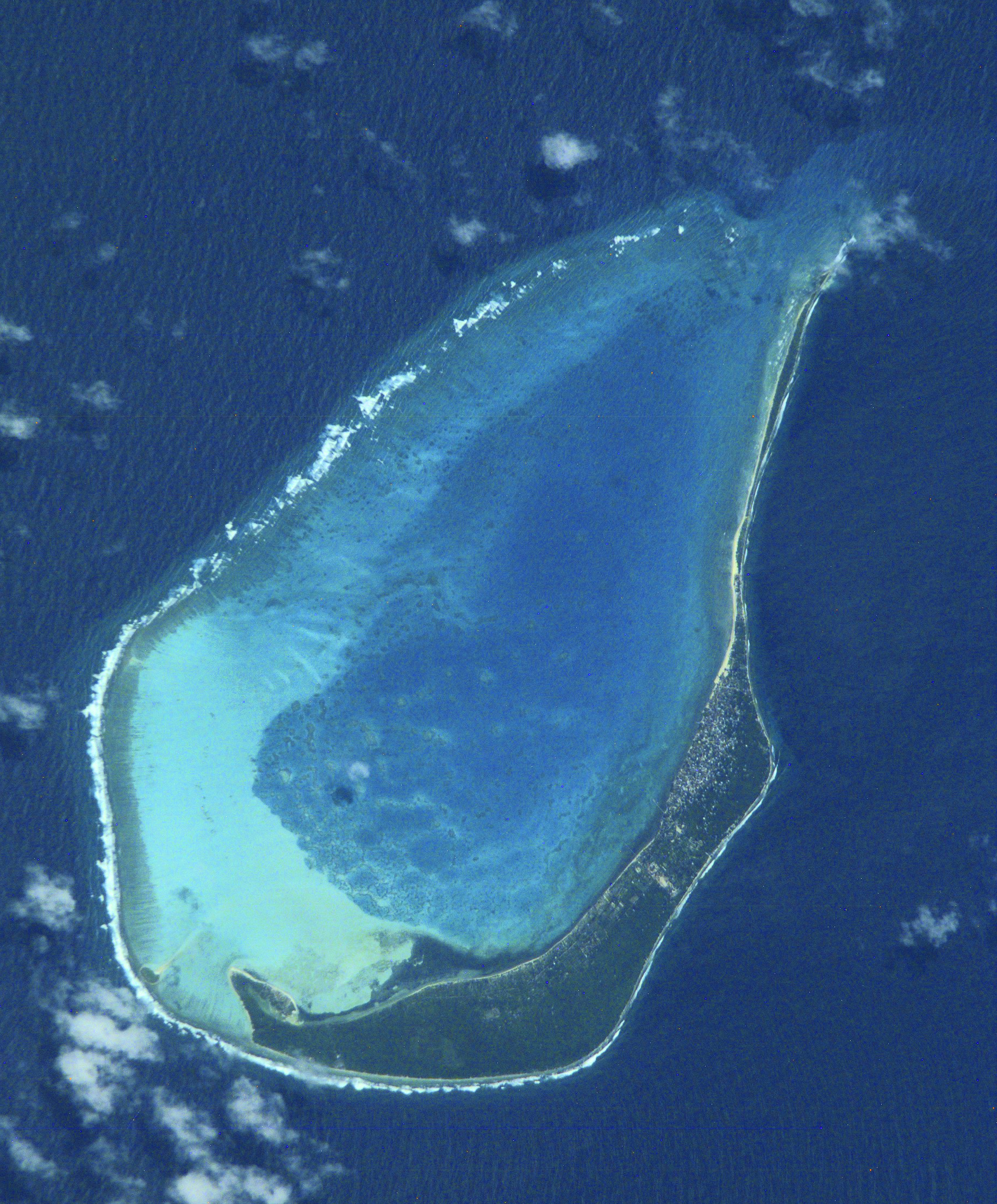
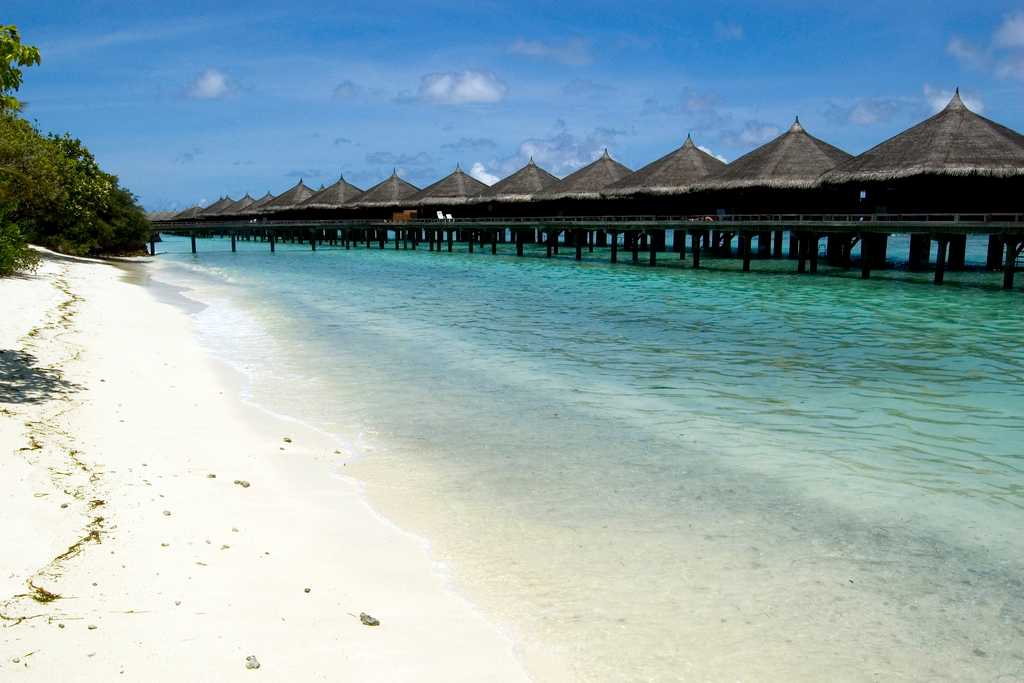
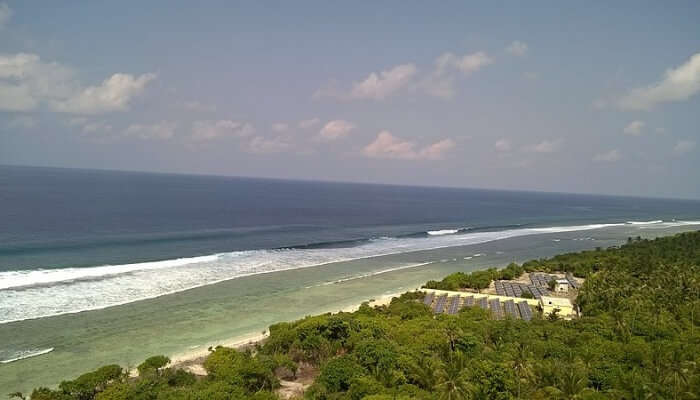
Minicoy is the second largest and the southernmost among the islands of the archipelago and is located 201 km to the south-southwest of Kalpeni, at the southern end of the Nine Degree Channel and 125 km to the north of Thuraakunu, Maldives, at the northern end of the Eight Degree Channel. It is one of the few inhabited islands of the group and is one of the 36 small islets. The small island has a total area of 4.801 sq km and is known for its vibrant coral reefs and quaint white-sand beaches. The atoll contains two islands with the main island located on the eastern and southeastern side of the lagoon, along the reef fringe. Minicoy is almost completely covered with coconut trees and one of the few landmarks of the island is a tall lighthouse built by the British in 1885 which offers jaw dropping views of the island and the sea. Juma Masjid is another attraction which is an old mosque built in the medieval era and houses the rich ancient sculptors that were found on the island. Minicoy has a tropical Savanna climate, with a warm temperature throughout the year. The best season to visit this island is during the winter months from September until May. Foreign nationals are not allowed to visit this island.
On the southern side of the main island lies the uninhabited islet of Viringili, also called the Small Pox Island where formerly the lepers of Minicoy were banished to this island where they lived in abject conditions. Viringili is barely 200 m in length and is fringed with gravel and covered with bushes. A few stunted coconut trees grow in the center of the island which is 0.6 km from Minicoy.
This ends the series on the Lakshwadweep archipelago. Writing this series has made me want to visit, but that’s a thought for another day. I’ll be back soon with a new state to explore in India.








 Memories and Such