In My Hands Today…

Hey, Hun: Sales, Sisterhood, Supremacy, and the Other Lies Behind Multilevel Marketing – Emily Lynn Paulson

She signed up for the sisterhood, free cars, and the promise of a successful business of her own. Instead, she ended up with an addiction, broken friendships, and the rubble of a toppled pyramid . . . scheme.

Hey, Hun: Sales, Sisterhood, Supremacy, and the Other Lies Behind Multilevel Marketing is the eye-opening, funny, and dangerous personal story of author Emily Lynn Paulson rising to the top of the pyramid in the multilevel marketing (MLM) world only to realize that its culture and business practices went beyond a trendy marketing scheme and into the heart of white supremacy in America. A significant polemic on how MLMs operate, Hey, Hun expertly lays out their role in the cultural epidemic of isolation and the cult-like ideologies that course through their trainings, marketing, and one-on-one interactions. Equally entertaining and smart, Paulson’s first-person accounts, acerbic wit, and biting commentary will leave you with a new perspective on those “Hey Hun” messages flooding your inbox.

Short Stories: The Red Rose – A Valentine’s Day Reunion

Eliza sat on the edge of her bed, her fingers tracing the worn pages of her old school yearbook. It was Valentine’s Day, a day that held bittersweet memories of love lost and dreams deferred. As she flipped through the pages, a pressed red rose fluttered to the floor, its vibrant petals a stark contrast against the faded memories of her youth.

Her thoughts drifted back to James, her high school sweetheart, and the tumultuous relationship they shared. Their love had been passionate and intense, a whirlwind of emotions that swept them both off their feet. But with passion came turbulence, and their journey together had been punctuated by countless fights and tearful reconciliations.

Eliza sighed as she recalled the final days of their relationship. It had been a decision born out of necessity—a choice to break free from the cycle of heartache and uncertainty. As she graduated from high school, she made the difficult decision to part ways with James, hoping that time and distance would heal the wounds of their fractured love.

Years passed, and life carried Eliza forward, leaving behind the echoes of her past. She built a career, forged new friendships, and found solace in the rhythm of everyday life. Yet, the memory of James lingered like a faint whisper, a reminder of a love that had once consumed her heart.

On that fateful Valentine’s Day, two decades later, Eliza found herself drawn back to the remnants of her youth. The pressed red rose, a relic of a bygone era, stirred something deep within her soul. With a sense of nostalgia tinged with longing, she decided to embark on a journey to find James, to seek closure or perhaps the possibility of a second chance at love.

With trembling hands, Eliza typed James’s name into the search bar, her heart pounding with anticipation. To her surprise, his profile appeared on the screen, a testament to the passage of time and the interconnectedness of fate. They were both in the same town, separated by mere miles yet worlds apart.

Gathering her courage, Eliza reached out to James, her fingers hesitating over the send button. Would he remember her? Would he be open to reconnecting after all these years? The questions lingered like a lingering fog, obscuring the path ahead.

To her relief, James responded with warmth and sincerity, his words a beacon of hope in the darkness of uncertainty. They agreed to meet for coffee, a tentative step towards reconciliation and rediscovery.

As Eliza entered the quaint café, her heart fluttered with nervous anticipation. Would James still be the same person she remembered from her youth? Would the years have softened the rough edges of their past, paving the way for a new beginning?

Her questions were soon answered as James walked through the door, his smile as bright as the sun on a summer’s day. Time seemed to stand still as they embraced, the years melting away in the warmth of their reunion.

Their conversation flowed effortlessly, each word a bridge connecting their shared past to the present moment. They laughed over shared memories and reminisced about the innocence of their youth. For a brief moment, it felt as if no time had passed at all, and they were once again the young lovers who had dared to dream of forever.

As the afternoon sun dipped below the horizon, Eliza and James found themselves lost in each other’s gaze. It was a moment of clarity, a realization that despite the trials and tribulations of their past, their love had endured, resilient and unwavering.

In the days that followed, Eliza and James embarked on a journey of rediscovery, exploring the depths of their shared history and the possibilities of their future. They laughed, they cried, and they navigated the complexities of love with grace and understanding.

With each passing day, their bond deepened, a testament to the transformative power of forgiveness and redemption. They learned to embrace the imperfections of their past, understanding that it was through their struggles that they had grown stronger, both individually and as a couple.

And so, on a bright and beautiful Valentine’s Day, one year from the day they reunited, Eliza and James stood hand in hand, surrounded by the ones they loved most. It was a day of celebration, the culmination of their journey from heartache to happiness, from separation to unity. And of course, Eliza had a bouquet of red roses, which reminded them both of their long journey to get there.

As they exchanged vows beneath a canopy of blooming roses, their love blossomed like the petals of a flower, vibrant and full of promise. Their hearts beat as one, a testament to the enduring power of love to heal, transform, and bring two souls together in a journey of everlasting devotion.

In that moment, as they sealed their love with a kiss, Eliza and James knew that their story was just beginning. For in the garden of their hearts, the seeds of their love had taken root, destined to bloom and flourish for all eternity. And as they danced beneath the stars, surrounded by the fragrance of roses and the whispers of the wind, they knew that their love would always be their guiding light, illuminating the path ahead with the promise of endless possibilities.

In My Hands Today…

Glossy: Ambition, Beauty, and the Inside Story of Emily Weiss’s Glossier – Marisa Meltzer

Called “one of the most disruptive brands in beauty” by Forbes , Glossier revolutionized the beauty industry with its sophisticated branding and unique approach to influencer marketing, almost-instantly making the company a juggernaut with rabid fans lining up for a chance to buy its coveted products. It also taught a generation of business leaders how to talk to Millennial and Gen Z customers and build a cult following online.

At the center of the story lies Emily Weiss, the elusive former Teen Vogue “superintern” on the reality show The Hills turned Into the Gloss beauty blogger who had the vision, guts, and searing ambition needed to launch Glossier. She cannily turned every experience, every meeting into an opportunity to fuel her own personal success. Together with her expensive, signature style and singular vision for the future of consumerism, she could not be stopped. Just how did a girl from suburban Connecticut with no real job experience work her way into the bathrooms and boudoirs of the most influential names in the world and build that access into a 1.9-billion-dollar business? Is she solely responsible for its success? And why, eight years later, at the height of Glossier mania, did she step down?

In Glossy , journalist and author Marisa Meltzer combines in-depth interviews with former Glossier employees, investors, and Weiss herself to bring you inside the walls of this fascinating and secretive company. From fundraising to product launches and unconventional hiring practices, Meltzer exposes the inner workings of Glossier’s culture, culminating in the story of Weiss herself. The Devil Wears Prada for the Bad Blood generation, Glossy is a gripping portrait of not just one of the most important business leaders of her generation, but also a chronicle of an era.

Total Defence Day

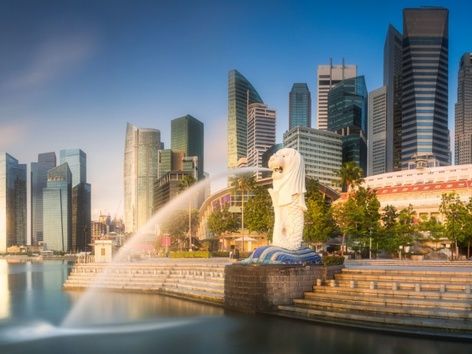
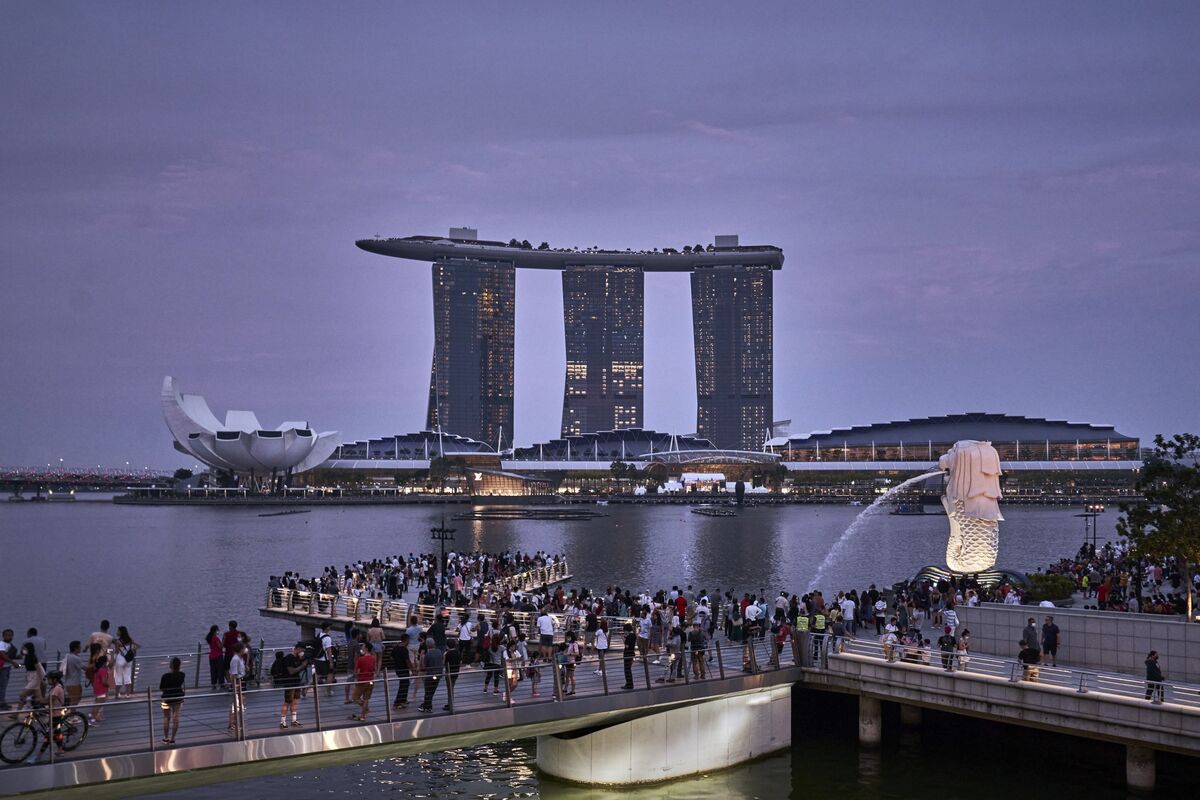
The date was February 15, 1942. After a week of intense fighting, the British colonial administration finally gave in and surrendered to the Japanese invaders. At the Ford Motor Factory, Lieutenant-General Arthur Percival formally surrendered to Japanese General Tomoyoki Yamashita shortly after 6:15 p.m. That day has been commemorated annually since 1984 to remind Singaporeans that every aspect of society contributes to the collective defence of the state.

The strategy behind Total Defence was adopted from the national defence strategies of Sweden and Switzerland. It initially consisted of five key tenets: military, civil, economic, social, and psychological, with the sixth, digital, being introduced in 2019.

The Singapore Government has justified Total Defence on several factors: the island city-state’s small size and marginal population; lack of natural resources; and a racial and religiously diverse population. It states that these factors make Singapore vulnerable to threats such as international terrorism, natural disasters, pandemics and disinformation campaigns that could result in an economic slowdown.

Military Defence: At the heart of Total Defence lies Singapore’s robust military capability—a deterrent against external aggression and a guarantor of national sovereignty. The Singapore defence budget is ranked among the highest in the ASEAN region. Through a policy of deterrence and diplomacy, Singapore maintains a formidable defence force capable of safeguarding its territorial integrity and protecting its people. A capable armed force is seen as a necessity to deter potential aggressors. In addition to two years of national service, the onus is placed on reservist troops to maintain their physical fitness through annual individual physical proficiency tests (IPPT) and in-camp training (ICT). Corporate companies are encouraged to create “pro-NS” policies for reservists, such as training spaces, monetary incentives and flexible working hours, and are recognised at an annual awards ceremony.

Civil Defence: Civil Defence encompasses a range of measures aimed at enhancing preparedness and response capabilities in the face of natural disasters, pandemics, and other emergencies and broadly refers to the activities of the Singapore Police Force and Singapore Civil Defence Force to restore a sense of normalcy during a national crisis with the aid of active civilian participation. Civilians are trained in first aid, urban survival, and the management of blood, water and food resources. Donating blood to national blood banks, volunteering, and being a medical frontline worker are also activities seen as contributing to civil defence.

Economic Defence: Economic resilience forms the bedrock of Singapore’s prosperity and stability and relates to governmental efforts to sustain and develop Singapore’s economy with a policy undertaken by the government for workers to upgrade their skill sets. The Singaporean government also stockpiles essential supplies of food, medication and personal protective equipment, in addition to pursuing secondary supply chains, to offset potential disruptions. The conservation of essential resources, including water, is placed under economic defence. Total Defence underscores the importance of diversification, innovation, and adaptability in navigating the complexities of the global economy. Through prudent fiscal policies, strategic investments, and a skilled workforce, Singapore fortifies its economic defenses against external shocks and disruptions.

Social Defence: A cohesive and resilient society is the linchpin of Singapore’s national identity. Social defence stems from official policies to maintain social cohesion among Singapore’s diverse population through multiculturalism. It emphasises the importance of unity, inclusivity, and social cohesion in fostering a resilient community. From grassroots initiatives to national campaigns promoting racial harmony and social cohesion, Singaporeans stand united in the face of adversity. Improving relations between neighbours is also listed as part of social defence.

Psychological Defence: Psychological defence refers to the Singapore Government’s programme to strengthen “resolve and resilience” amongst its citizens to face unexpected crises; it is also cited as necessary to combat fake news. Psychological Defence instils in Singaporeans a sense of national pride, identity, and purpose—a steadfast commitment to upholding Singapore’s core values and principles. Through education, awareness, and civic engagement, Singapore nurtures a resilient mindset capable of withstanding the psychological challenges of an uncertain world. The government views psychological resilience as the bedrock of a “social compact” and seeks to emulate Finland’s example. Efforts to improve mental health in Singapore are also placed under psychological defence.

Digital Defence: Digital defence refers to efforts to increase awareness of online security threats, including misinformation, cyberattacks and phishing scams. The threat is seen as particularly acute due to the country’s “open and connected” nature and governmental plans to orient the country around a digital economy and the Smart Nation concept. All civil servants are mandated to undergo cybersecurity training, with the government also increasing audits of state infrastructure.

Total Defence Day is a national observance, a time for reflection, remembrance, and reaffirmation of Singapore’s commitment to resilience. Total Defence Day was added to the list of dates for schools to commemorate in 1997 and was commemorated in schools in 1998. On this day, the Singapore Civil Defence Force sounds the Important Message Signal through the island-wide Public Warning System sirens and local radio stations for a minute. At its inception, the siren was sounded at 12:05 pm Singapore Standard Time; this was changed to 6:20 pm in 2015 to mark the actual time of the surrender in 1942. Schools conduct emergency preparedness drills, food and electricity rationing, and may organise tours to government exhibitions. A memorial service has been held annually at the War Memorial Park since 1967 to recognise civilians who lost their lives during the Japanese occupation. 2024 will mark 40 years of commemorating Total Defence Day.

Today, the principles of Total Defence remain as relevant as ever. In an era defined by rapid technological advancement, geopolitical shifts, and global pandemics, the need for resilience, unity, and preparedness has never been greater. Total Defence calls for agility and adaptability in the face of evolving threats and challenges. In an interconnected world, partnerships and alliances are essential in safeguarding the country’s interests and promoting regional stability. Total Defence encourages a culture of innovation, entrepreneurship, and creativity to address emerging threats and opportunities.

Total Defence is more than a strategy; it is a mindset, a way of life, and a testament to the indomitable spirit of a nation united in purpose and resolve. As Singapore navigates the complexities of the 21st century, the principles of Total Defence will continue to guide its journey—a steadfast commitment to safeguarding its sovereignty, prosperity, and future generations.

2024 Week 06 Update

Today’s quote is attributed to English poet and botanist Libby Houston.Her quote suggests that when one’s dreams or aspirations become weary or dormant, they may retreat from the forefront of consciousness. The quote portrays dreams as dynamic entities that can become fatigued or lose momentum over time. Like living beings, dreams can experience periods of vitality and dormancy. The quote symbolises the idea of dreams receding from conscious awareness, perhaps into the subconscious or a hidden realm within the mind. It implies a state of latency or hibernation and suggests a protective mechanism. It implies that dreams may retreat from the forefront of consciousness to preserve themselves, avoiding potential disappointment or disillusionment. Despite their temporary retreat, the quote doesn’t imply that dreams vanish entirely. Instead, they remain latent, awaiting the right conditions or renewed inspiration to resurface and thrive once again. In essence, Libby Houston’s quote acknowledges the ebb and flow of dreams, suggesting that periods of dormancy or retreat can be natural and even beneficial. It encourages patience and trust in the cyclical nature of inspiration, suggesting that dreams may reemerge when the time is right, revitalised and ready to be pursued once more.

Even though it has been one week since we returned from India, I am still tired, but hopefully, this will pass soon and I will be back to normal. Our new office is ready and we will be starting work there physically next week. It’ll be exciting, though I am going to miss working from home on a full-time basis.

BB has been home on a long break for the Lunar New Year festivities and we are happy to have him here. For those celebrating, here’s wishing you a very happy lunar new year and may the year of the wooden dragon bring you and your loved ones abundance, prosperity, and good fortune. Gong Xi Fa Cai!

And on that note, let’s have a positive and wonderful week ahead!