In My Hands Today…

Never Enough: From Barista to Billionaire – Andrew Wilkinson

Andrew Wilkinson, touted as the Warren Buffett of tech, pulls back the curtain on the lives of the ultra-rich in this memoir outlining Wilkinson’s rapid rise from barista to successful entrepreneur.

Readers will get fresh insights into building a successful business and a surprising, first-person account of what it’s actually like to become a billionaire.

By the age of thirty-five, Andrew Wilkinson had built a business worth over a billion dollars, but his path to success was anything but a straight line. Never Enough shares both the lessons Wilkinson has learned as well as the many mistakes made on the road to wealth—some of which cost him money, happiness, and important relationships.

Taking a “no secrets” approach to the story billionaires rarely tell, Wilkinson is unwaveringly honest about some of the unexpected downsides of wealth. Money’s toxic effect on personal relationships, how the lifestyles of the rich and famous aren’t all they’re cracked up to be, and how competition with peers leaves everyone—even billionaires—feeling like they never have enough.

In this rare and deeply honest glimpse into the life of a billionaire, Wilkinson examines not only his journey to nine zeros but also what comes after that pinnacled number—something, as Wilkinson has come to realize, that money can’t buy.

Adulting 101: How to Build a Professional Wardrobe on a Budget

As young adults enter the workforce, one of the first challenges they often face is creating a professional wardrobe that aligns with workplace expectations and fosters confidence, all without breaking the bank. Whether you’re starting your first job, attending interviews, or aiming to present yourself more professionally, the key is striking the right balance between quality and affordability.

Your wardrobe is a reflection of your professionalism, confidence, and readiness for the workplace. Your appearance creates the first impression in interviews, meetings, and daily workplace interactions. A polished and professional wardrobe signals competence and attention to detail. Dressing professionally can enhance your self-esteem, making you feel more confident and capable in professional settings. Many organisations have dress codes, whether formal, business casual, or creative casual. A professional wardrobe helps you align with the workplace environment. Your wardrobe is an investment in your career and personal brand. The way you present yourself can impact how colleagues and supervisors perceive your abilities.

Before building your wardrobe, it’s important to understand your workplace dress code. Formal business attire includes suits, dress shirts, ties, and polished shoes. Typically required in industries like law, finance, or corporate roles. Business casual is a mix of dressy and casual items like button-down shirts, chinos, skirts, blouses, and loafers. Common in tech, marketing, and education sectors. Creative casual attire allows for greater individuality and creative expression. Think neat jeans, casual blazers, dresses, and stylish shoes. Often found in creative industries like design, media, or startups. Some workplaces, like healthcare and hospitality, may require uniforms, reducing the need for extensive personal wardrobe building. Knowing your employer’s dress code ensures your purchases align with expectations while saving you from buying unnecessary items.

A professional wardrobe doesn’t need to be extensive. Start with versatile staples that can be mixed and matched to create multiple outfits.

For women, with tops, staples include button-down shirts in classic white or pastel colours for formal wear, blouses that are feminine and polished options suitable for business casual as well, and neutral sweaters, which are great for layering in colder months. Good options for bottoms can include tailored trousers, which can be paired with blouses or button-downs for a professional look; pencil or midi skirts, which are stylish yet workplace-appropriate options; and dark jeans for creative, casual workplaces. Shift dresses or wrap dresses are comfortable, versatile, and professional. If your climate calls for outerwear, a structured blazer instantly elevates any outfit, while cardigans are softer alternatives for layering. Coming to shoes, flats or loafers are comfortable and polished choices for daily wear while neutral heels with 2-3 inch heels give a professional touch.

For men, dress shirts in white, blue, and pale-coloured shirts work with any suit, and polo shirts are perfect for business casual days. Sweaters in neutral options are good for layering over shirts in colder months. For bottoms, tailored pants in black, navy, or grey are perfect, while chinos are versatile, casual, yet professional. Dark jeans are suitable for creative workplaces. For outerwear, blazers are a must-have for formal and business casual settings, while bomber jackets or cardigans are casual alternatives for layering. On to shoes, Oxford or Derby shoes are perfect for formal business attire, while loafers are great for business casual.

A capsule wardrobe is a collection of essential clothing items that are versatile and timeless. It reduces clutter, makes outfit planning simpler, and helps save money. To build a capsule wardrobe, choose neutral colours and focus on black, navy, gray, beige, and white, as they pair easily with other items. Select multi-functional pieces and prioritise items that can transition from formal to casual settings. Stick to high-quality basics and invest in durable clothing items that withstand wear and tear.

Shop smart. Building a professional wardrobe on a budget requires strategic shopping. Before heading to the store, take inventory of your current wardrobe. Identify items that can be repurposed for workplace outfits. Shop at thrift stores, as thrift stores often carry high-quality professional clothing at significantly reduced prices. Look for timeless pieces like blazers, dress shirts, and trousers. Take advantage of sales and watch for seasonal sales, such as end-of-season or Black Friday, to purchase high-quality items at discounted rates. Buy second-hand online from platforms like Poshmark, Depop, or eBay that offer gently used professional clothing at affordable prices. Invest in quality for key items and spend more on staples like a blazer or dress shoes, as these items are worn frequently and need to last longer. Save money on less frequently used items like accessories. Seek affordable brands and explore budget-friendly brands that offer professional attire.

Maximise your wardrobe by mixing and matching items to create multiple outfits. As an example, for women, pair a pencil skirt with a blouse for formal meetings. Then swap the skirt for tailored trousers and layer a cardigan for business casual. For men, pair navy dress pants with a white shirt and blazer for a presentation. Remove the blazer and add a sweater for a more informal look.

Maintain your wardrobe, as proper care ensures your wardrobe lasts longer. Launder carefully and follow washing instructions to avoid damage or shrinkage. Use delicate cycles for dress shirts or blouses. Invest in repairs. Fix loose buttons, replace worn soles, or tailor items that don’t fit perfectly. Rotate clothing and avoid wearing the same items repeatedly. Rotating clothing prevents excessive wear.

Some additional tips for budget-friendly wardrobe building.

  • Focus on fit: Ill-fitting clothes can ruin a professional look. Invest in tailoring for a polished appearance.
  • Keep it minimal: Stick to essentials rather than purchasing trendy items that will quickly go out of style.
  • Build slowly: There’s no need to buy everything at once. Gradually build your wardrobe by adding new pieces as needed.
  • Accessorise wisely: Accessories like ties, watches, scarves, or necklaces can elevate outfits without significant expense.
  • Swap with friends: Organise clothing swaps with friends or colleagues to refresh your wardrobe without spending money.

Common mistakes to avoid

  • Overbuying: Buying too many items can lead to clutter and waste. Focus on versatile staples.
  • Ignoring quality: Cheap items can wear out quickly. Invest in durable fabrics for frequently worn garments.
  • Prioritising trends over timeless pieces: Trending styles may not align with professional expectations. Stick to classic designs.
  • Forget comfort: Professional clothing should be comfortable, especially for long workdays. Avoid tight or overly restrictive items.

Building a professional wardrobe on a budget is entirely achievable with thoughtful planning and strategic decision-making. By focusing on essentials, shopping smart, and maintaining your clothing properly, you can create a polished and versatile wardrobe that aligns with workplace expectations while saving money.

Remember that your wardrobe is an investment in your personal and professional growth. It reflects your confidence, competence, and commitment to presenting your best self. With these tips, you’ll be able to navigate your career with style and assurance while staying financially savvy.

2025 Week 45 Update

Today’s quote by renowned American meditation teacher, author, and one of the leading figures in bringing Buddhist mindfulness and loving-kindness, or metta, practices to the West, Sharon Salzberg, beautifully captures the heart of mindfulness practice. Salzberg’s teachings blend ancient wisdom with modern psychology, offering practical ways to live with greater awareness and inner peace, and this quote is a reflection of this.

The quote reminds us that our minds often create narratives, like judgments, fears, or interpretations, about what’s happening, rather than staying with the moment itself. These mental stories can distort our reality and cause unnecessary suffering. Mindfulness trains us to observe experiences as they are, without adding layers of commentary. When we recognise that thoughts and emotions are temporary rather than permanent truths about who we are, we gain freedom from being defined by them. This awareness brings clarity, peace, and compassion toward ourselves and others.

This week was a quiet week, though I was super productive. I was able to write more than I expected, and that’s a win for me. GG is busy with school and exams, which start next week, and even though we’re all at home, we barely see her. BB is enjoying his time at home, though he has been meeting people to see what his next path in life is. To me, it felt like things were at a pause, as if something was waiting for us on the other side. Maybe this is just me being delusional, but that’s what it felt like.

Today’s motivation is about finding joy in the small things in life. Joy is a choice you need to make every day. Notice what’s good, even amid chaos and struggle. Celebrate the small wins, and savour the moments of light in your day more fully. Even when life feels heavy, you can still find something to laugh about. Challenges are a part of life, but that doesn’t mean you have to deprive yourself of the experience of joy. You don’t have to wait for things to be perfect to embrace happiness. Joy is here. Light is here. You just have to be open to it.

That’s all I have for you this week. Stay safe, stay positive, and find the joy in life’s little things!

In My Hands Today…

The Proof is in the Plants – Simon Hill

Our health is in crisis and so is our climate.

What if there was a way of eating that may help us live healthier for longer and protect the future of our planet, too?

The good news is that evidence now shows a plant-based diet may offer us exactly that – and straight-talking nutritionist Simon Hill has done the hard work translating the science into actionable advice for everyday life.

Before transitioning to a plant-based diet Simon held many of the common misconceptions. But instead he experienced incredible improvements in his energy levels, digestion, mental clarity and post-workout recovery after making the shift. He’d finally understood the power of food and was determined to find out – and share – the agenda-free truth about the optimum diet for human health.

By undertaking a master’s degree in nutrition, poring over the latest scientific papers and books, and producing hundreds of hours of his internationally successful Plant Proof podcast, Simon has pursued the answers to all the questions he had about fuelling our bodies with more plants. Now, in his first book, he brings it all together into one inspiring and practical guide.

It covers:

– The reasons why we’re all so confused about what to eat

– The evidence showing how a plant-based diet might reduce risks of heart attacks and strokes, type 2 diabetes, cancer and dementia

– The positive impact of plant-based living for the climate and animal welfare

– Common myths about a plant-based diet – and what the real facts are

– How to build a healthy, satisfying plant-based plate, from macronutrients to micronutrients

– Practical tips for making the shift, and much more.

If you want to understand and unlock the many benefits of putting more plants on your plate, this book is for you.

Sacred Stones, Spaces, and Stories: Ashtavinayaka Part 2

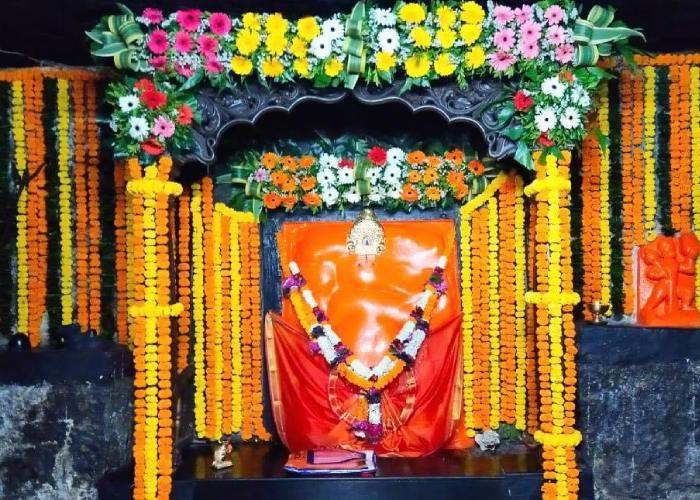
Also known as the Shri Moreshwar Temple, the Shri Mayureshwar Mandir, situated in the tranquil village of Morgaon, approximately 65 km from the Pune district, marks the starting and ending point of the Ashtavinayak circuit.

Morgaon is the foremost centre of worship of the Ganapatya sect, which considers Ganesha as the Supreme Being. A Hindu legend relates the temple to the killing of the demon Sindhura by Ganesha. The exact date of the temple’s construction is unknown, although the Ganapatya saint Moraya Gosavi is known to have been associated with it. The temple flourished due to the patronage of the Peshwa rulers and descendants of Moraya Gosavi.

The village of Morgaon derives its name from the Marathi word for peacock, ‘mor,’ a nod to the region’s once-abundant population of these majestic birds. The temple itself is situated on the banks of the sacred Karha River, and the village is said to be laid out in the shape of a peacock, deepening the connection between the land and its presiding deity, Lord Ganesha in his Mayureshwar, or peacock-riding, form.

The origins of Shri Mayureshwar Mandir trace back to the Bahmani period, with construction believed to have occurred between the 14th and 17th centuries. The temple’s architecture is distinctive, featuring a high stone boundary wall and four minarets at each corner, giving it the appearance of a mosque from a distance, a strategic design choice to protect it during times of political upheaval. The temple flourished under the patronage of the Peshwa rulers, who considered Ganesha their family deity, and the spiritual influence of the Ganapatya saint Moraya Gosavi, who is closely associated with the temple’s history and legacy.

The Shri Moreshwar Temple is a striking blend of Hindu and Islamic architectural influences. There are our entrance gates, with each gate facing a cardinal direction and adorned with an image of Ganesha, representing his manifestations in the four Yugas or ages. The four minarets and 50-foot-tall stone walls were built to safeguard the temple from invaders. Unusually, a large statue of Nandi, Shiva’s sacred bull, stands before the temple entrance, a rare sight in Ganesha temples, explained by a local legend that the Nandi statue was left there after the vehicle transporting it broke down. The sabha-mandapa or assembly hall houses 23 different idols of Ganesha, each depicting a unique form, including the eight avatars described in the Mudgala Purana. The courtyard contains two sacred trees, Shami and Bilva, associated with penance and spiritual significance. Two lamp towers or Deepmalas and a six-foot-tall mouse, Ganesha’s vahana or mount, are prominent features in the courtyard. The sanctum sanctorum, the garbhagriha, enshrines the swayambhu or self-manifested idol Lord of Ganesha as Mayureshwar, depicted with four arms, three eyes, and a trunk turned to the left, seated on a peacock and flanked by his consorts, Siddhi and Buddhi.

The most celebrated legend associated with the temple is the tale of Ganesha’s incarnation as Mayureshwar to vanquish the demon Sindhu. According to the Ganesha Purana, Sindhu was born to Chakrapani and Ugra, and by the grace of the Sun-god, was granted a bowl of amrita, the elixir of immortality. To safeguard it, Sindhu swallowed the bowl, becoming invincible and unleashing terror across the three worlds. The gods, unable to withstand his tyranny, prayed to Ganesha, who incarnated as Mayureshwar, a six-armed, white-complexioned deity riding a peacock. In a fierce battle, Ganesha defeated Sindhu’s army, slew his general Kamalasura, and ultimately cut open Sindhu’s body to empty the amrita bowl, thus killing the demon and restoring cosmic order. After this victory, Ganesha gifted his peacock mount to his brother Kartikeya, cementing his epithet as Mayureshwar or Moreshwar, aka the “Lord of the Peacock.”

Another legend recounts how the creator-god Brahma, preserver-god Vishnu, dissolver-god Shiva, the Divine Mother Devi, and the Sun-god Surya meditated at Morgaon to understand their creator and purpose. Ganesha manifested before them as an Omkara flame, revealing his supremacy and blessing them with divine knowledge.

A further myth tells of Brahma’s penance to cleanse himself of the sin of desiring his daughter, Sarasvati. The sacred Turiya Tirtha river appeared, and Brahma carried its water in his pot to worship Ganesha at Morgaon. When he stumbled and spilt the water, it became the Karha River, which continues to flow by the temple today.

The Ganapatya saint Moraya Gosavi is deeply connected to the temple’s lore. He was a devout worshipper who travelled monthly from Chinchwad to Morgaon on foot to offer prayers. On one occasion, arriving after the temple had closed, the locks miraculously fell away, allowing him to worship Ganesha. His devotion inspired the construction of the Mangalmurti temple at Chinchwad and elevated the status of the Moreshwar temple as a premier centre of Ganapatya worship.

The temple’s daily worship schedule is meticulously observed, offering devotees multiple opportunities to participate in sacred rituals. The ritual bathing and purification of the deity, the Prakshal Puja, is conducted between 5 and 6 am, while the Shodashopachar Puja, the traditional sixteen-step ceremonial worship, happens between 7 am and 12 noon. The five-step worship, the Panchopachar Puja, takes place at 8 pm, while the Samudaik Evening Aarti, which is a communal ritual of lighting the lamp,p happens at 7:30 p,m and the nighttime aarti, the Shej Aarti, is done at 10 pm before the temple’s doors are shut for the day.

Devotees traditionally first worship Nagna Bhairava, then Mayureshwar, and finally Sakshi Vinayaka, who is believed to be the witness to prayers offered at the temple. The people of Morgaon collectively offer food or a thali lunch to visitors during Magh Shuddh Panchami, reflecting the temple’s role as a hub of community and hospitality.

The temple becomes the focal point of grand celebrations during Ganesh Chaturthi, the Bhadrapada Shukla Chaturthi, and Ganesh Jayanti or Magha Shukla Chaturthi. Devotees flock to Morgaon, and a procession arrives from the Mangalmurti temple in Chinchwad, carrying the palkhi or palanquin of Ganesha. Festivities continue for more than a month, culminating on Ashvin Shukla Dashami, with fairs, processions, and communal feasting. The temple also hosts celebrations on Vijayadashami, Shukla Chaturthi, Krishna Chaturthi, and Somavati Amavasya, the new moon coinciding with a Monday.

The main idol is believed to be swayambhu or self-manifested and is said to have been consecrated twice by Brahma, once before and once after being destroyed by the demon Sindhu. Each of the four gates represents a cardinal direction and a life goal: Dharma or righteousness, Artha or wealth, Kama or desire, and Moksha or liberation. The idol is covered with layers of saffron-colored vermillion, which naturally peels off every century, revealing the original image, a phenomenon regarded as miraculous by devotees. The sabha-mandapa houses 23 different forms of Ganesha, including the eight avatars from the Mudgala Purana, making it a living gallery of Ganesha iconography. The presence of the Shami and Bilva trees in the courtyard is tied to legends of penance and spiritual awakening. The juxtaposition of Nandi and the mouse at the temple entrance is unique, blending Shaiva and Ganapatya symbolism.

The Ashtavinayak Yatra, a pilgrimage to eight Ganesha temples around Pune, is considered incomplete unless the devotee both begins and ends the journey at Shri Mayureshwar Mandir. This cyclical pilgrimage reflects the Hindu understanding of spiritual journeys as both linear and circular, with every ending marking a new beginning.

Shri Mayureshwar Mandir in Morgaon is more than a temple; it is a living testament to the enduring power of faith, myth, and community. Its legends, rituals, and architecture encapsulate the essence of Maharashtra’s spiritual heritage, inviting devotees and seekers to embark on a journey that is as much about inner transformation as it is about external pilgrimage.