The other day, when GG, BB and I were speaking, we went on a tangent about how BB who is smarter than his sister falls short when he has to empathise with someone. She is smarter in social situations whereas he is not. This, in turn, led me to find out more about Emotional Intelligence or Emotional Quotient and how it is different from the intellectual intelligence we all know and use as a gauge to check the smartness of someone.
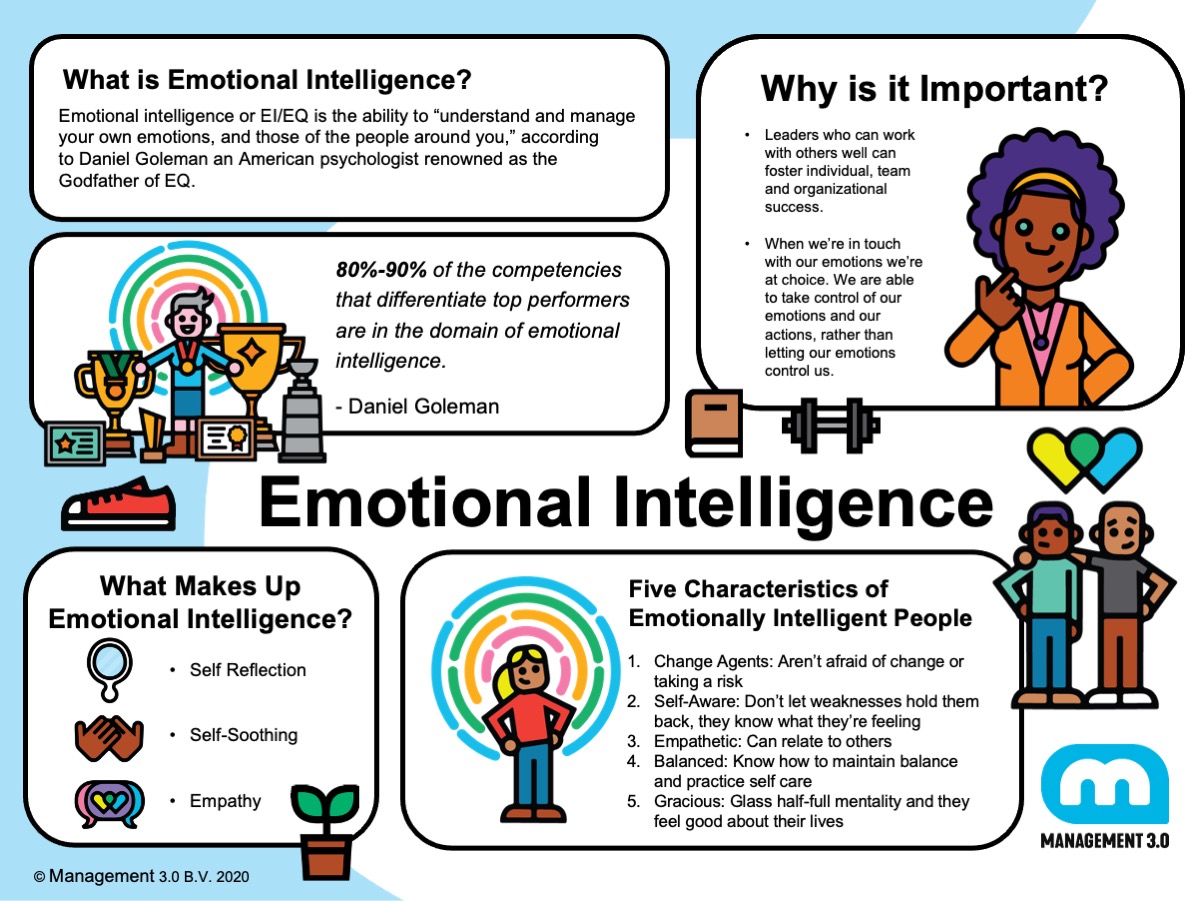
Emotional intelligence or Emotional Quotient is most often defined as the ability to perceive, use, understand, manage, and handle emotions. People with high emotional intelligence can recognise their own emotions and those of others, use emotional information to guide thinking and behaviour, discern between different feelings and label them appropriately, and adjust emotions to adapt to environments. It is also defined as the array of skills and characteristics that drive leadership performance.
Studies have shown that people with a high level of emotional intelligence have greater mental health, job performance, and leadership skills, although no causal relationships have been shown. This kind of intelligence is typically associated with empathy because it involves an individual connecting their personal experiences with those of others.
It is different from the standard intelligence quotient or intellectual intelligence which is a score derived from one of several standardised tests designed to assess an individual’s intelligence. The IQ is used to determine academic abilities and identify individuals with off-the-chart intelligence or mental challenges while the EQ is a better indicator of success in the workplace and is used to identify leaders, good team players, and people who best work by themselves.
Several different assessments have emerged to measure levels of emotional intelligence. Such tests generally fall into one of two types: self-report tests and ability tests. Self-report tests are the most common because they are the easiest to administer and score. On such tests, respondents respond to questions or statements by rating their behaviours. Ability tests, on the other hand, involve having people respond to situations and then assessing their skills. Such tests often require people to demonstrate their abilities, which are then rated by a third party.
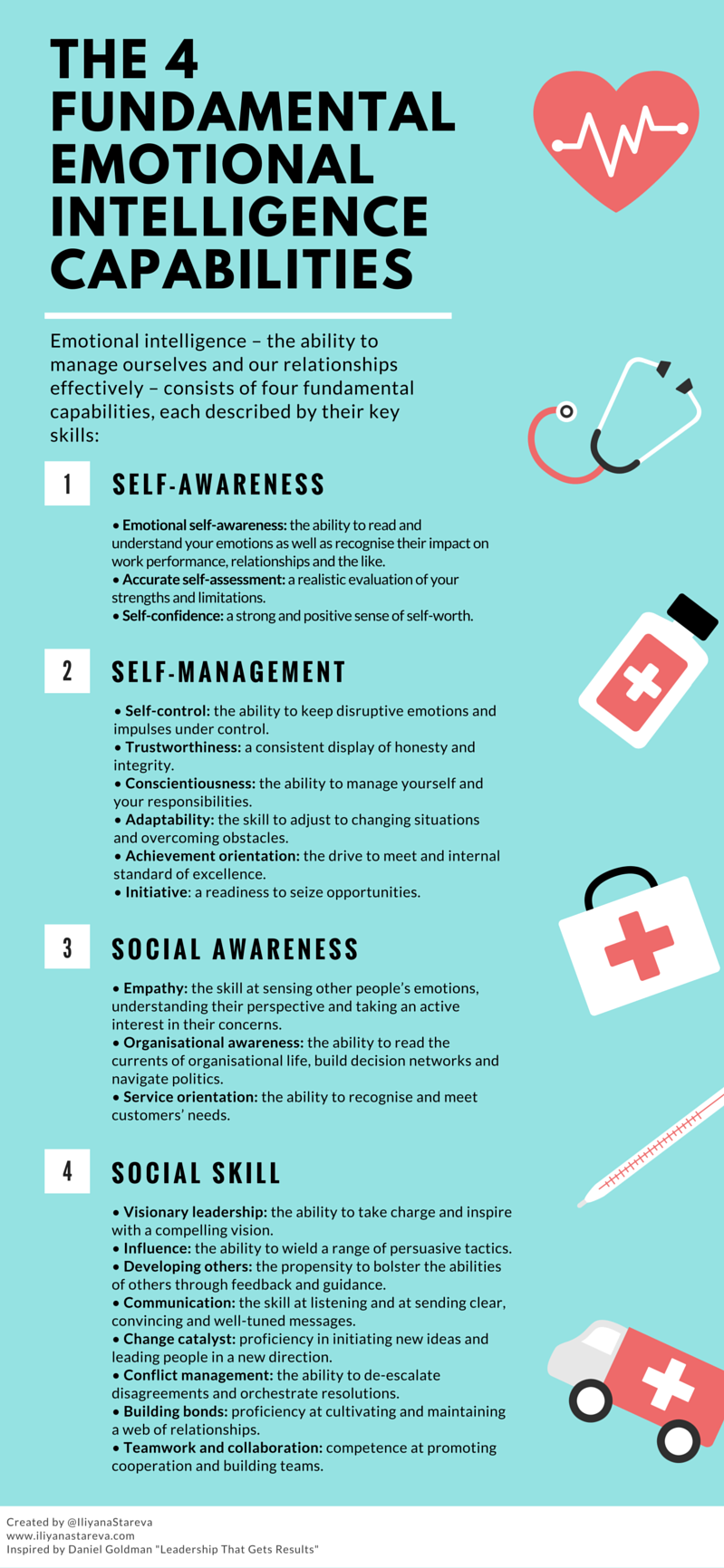
Researchers suggest that there are four different levels of emotional intelligence including emotional perception, the ability to reason using emotions, the ability to understand emotions, and the ability to manage emotions. The first step in understanding emotions is to perceive them accurately. In many cases, this might involve understanding nonverbal signals such as body language and facial expressions. The next step involves using emotions to promote thinking and cognitive activity. Emotions help prioritize what we pay attention to and react to; we respond emotionally to things that garner our attention. The emotions that we perceive can carry a wide variety of meanings. If someone is expressing angry emotions, the observer must interpret the cause of the person’s anger and what it could mean. The ability to manage emotions effectively is a crucial part of emotional intelligence and the highest level. Regulating emotions and responding appropriately as well as responding to the emotions of others are all important aspects of emotional management.
The four branches of this model are arranged by complexity with the more basic processes at the lower levels and the more advanced processes at the higher levels. For example, the lowest levels involve perceiving and expressing emotion, while higher levels require greater conscious involvement and involve regulating emotions.
Having lower emotional intelligence skills can lead to many potential pitfalls that can affect multiple areas of life including work and relationships. People who have fewer emotional skills tend to get in more arguments, have lower quality relationships, and have poor emotional coping skills. But on the flip side, having a very high level of emotional skills can also come with challenges. Research suggests that people with high emotional intelligence may be less creative and innovative, may have a hard time delivering negative feedback for fear of hurting other people’s feelings and those with a high EQ can sometimes manipulate and deceive.
So why is emotional intelligence so important today? Interest in knowing more about emotional intelligence has grown in recent years with programmes improving social and emotional learning becoming popular.
Thinking Before Reacting: Emotionally intelligent people know that emotions can be powerful, but also temporary. When a highly charged emotional event happens, such as becoming angry with a co-worker, the emotionally intelligent response would be to take some time before responding. This allows everyone to calm their emotions and think more rationally about all the factors surrounding the argument.
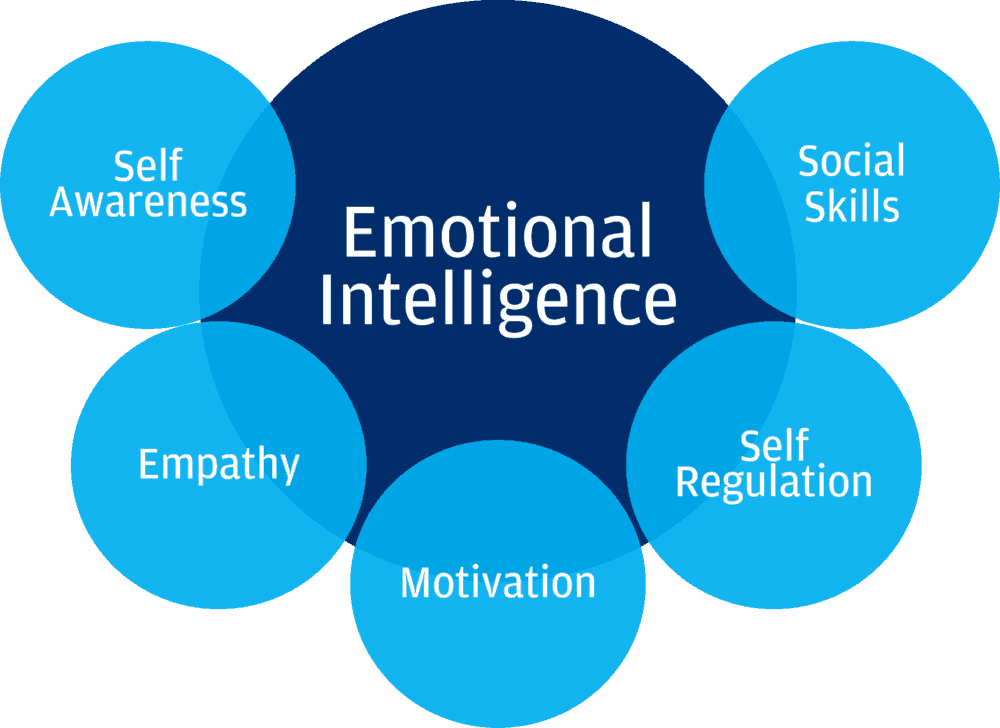
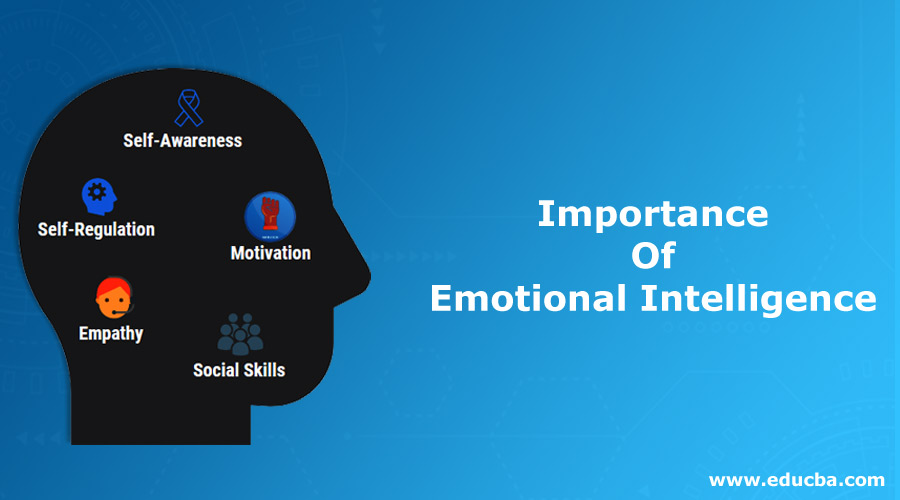
Greater Self-Awareness: Emotionally intelligent people are not only good at thinking about how other people might feel but they are also adept at understanding their feelings. Self-awareness allows people to consider the many different factors that contribute to their emotions. Self-aware individuals can handle and learn from constructive criticism better than those who aren’t.
Empathy for Others: A large part of emotional intelligence is being able to think about and empathise with how other people are feeling. This often involves considering how you would respond if you were in the same situation and respond genuinely to others’ concerns.
Self-regulation: Individuals with high EQ can control themselves. They can decide when to reveal their emotions and when to restrain themselves. Others can be prone to emotional outbursts and have no control whatsoever.
Motivation: Being self-motivated is a trait of emotionally intelligent individuals. Money or prestigious titles are not motivating factors for them. They are not easily disappointed when they face failure. On the contrary, they are driven by an inner ambition to overcome these failures.
People skills: Emotionally intelligent people can easily build rapport and develop trust in people around them. They stay away from power struggles or backstabbing to get ahead and are more liked as well as respected by others around them.
Being emotionally intelligent is important, but what steps can you take to improve your own social and emotional skills? Here are some tips.
Listen: If you want to understand what other people are feeling, the first step is to pay attention. Take the time to listen to what people are trying to tell you, both verbally and non-verbally. Body language can carry a great deal of meaning. When you sense that someone is feeling a certain way, consider the different factors that might be contributing to that emotion.
Empathise: Picking up on emotions is critical, but you also need to be able to put yourself into someone else’s shoes to truly understand their point of view. Practice empathizing with other people. Imagine how you would feel in their situation. Such activities can help you build an emotional understanding of a specific situation as well as develop stronger emotional skills in the long term. Empathy opens the door for mutual respect and understanding between people with differing opinions and situations.
Reflect: The ability to reason with emotions is an important part of emotional intelligence. Consider how your own emotions influence your decisions and behaviours. When you are thinking about how other people respond, assess the role that their emotions play.
Utilise an assertive style of communicating: Assertive communication goes a long way toward earning respect without coming across as too aggressive or too passive. Emotionally intelligent people know how to communicate their opinions and needs directly while still respecting others.
Respond instead of reacting to conflict: During instances of conflict, emotional outbursts and feelings of anger are common. The emotionally intelligent person knows how to stay calm during stressful situations. They don’t make impulsive decisions that can lead to even bigger problems. They understand that in times of conflict the goal is a resolution, and they make a conscious choice to focus on ensuring that their actions and words are in alignment with that.
Utilise active listening skills: In conversations, emotionally intelligent people listen for clarity instead of just waiting for their turn to speak. They make sure they understand what is being said before responding. They also pay attention to the nonverbal details of a conversation. This prevents misunderstandings, allows the listener to respond properly and shows respect for the person they are speaking to.
Practice ways to maintain a positive attitude: A negative attitude easily infects others if a person allows it to. Emotionally intelligent people have an awareness of the moods of those around them and guard their attitude accordingly. They know what they need to do to have a good day and an optimistic outlook.
Practice self-awareness: Emotionally intelligent people are self-aware and intuitive. They are aware of their own emotions and how they can affect those around them. They also pick up on others’ emotions and body language and use that information to enhance their communication skills.
Take critique well: An important part of increasing your emotional intelligence is to be able to take critique. Instead of getting offended or defensive, high EQ people take a few moments to understand where the critique is coming from, how it is affecting others or their performance and how they can constructively resolve any issues.
Leadership skills: Emotionally intelligent people have excellent leadership skills setting high standards for themselves and setting an example for others to follow. They take initiative and have great decision-making and problem-solving skills. This allows for a higher and more productive level of performance in life and at work.
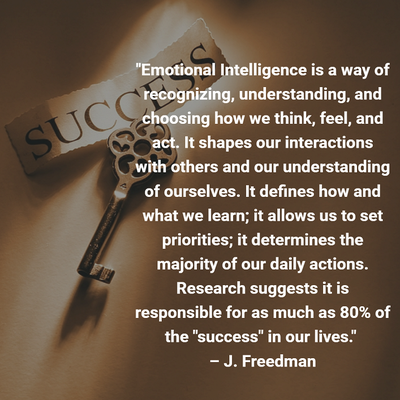
Emotional intelligence is essential for good interpersonal communication. Some experts believe that this ability is more important in determining life success than IQ alone. Fortunately, there are things that you can do to strengthen your own social and emotional intelligence.


/signs-of-low-emotional-intelligence-2795958_FINAL-5bd9d9fec9e77c0026409a53.png)






 Memories and Such