In My Hands Today…

The Same River Twice: A Memoir of Dirtbag Backpackers, Bomb Shelters, and Bad Travel – Pam Mandel

Given the choice, Pam Mandel would say no and stay home. It was getting her nowhere, so she decided to say yes. Yes to hard work and hitch-hiking, to mean boyfriends and dirty travel, to unfolding the map and walking to its edges. Yes to unknown countries, night shifts, language lessons, bad decisions, to anything to make her feel real, visible, alive.

A product of beige California suburbs, Mandel was overlooked and unexceptional. When her father ships her off on a youth group tour of Israel, he inadvertently catapults his seventeen-year-old daughter into a world of angry European backpackers, seize-the-day Israelis, and the fall out of cold war-era politics. Border violence hadn’t been on the birthright tour agenda. But then neither had domestic violence, going broke, getting wasted, getting sick, or getting lost.

With no guidance and no particular plan, utterly unprepared for what lies ahead, Mandel says yes to everything and everyone, embarking on an adventure across three continents and thousands of miles, from a cold water London flat to rural Pakistan, from the Nile River Delta to the snowy peaks of Ladakh and finally, back home to California, determined to shape a life that is truly hers.

An extraordinary memoir of going away and growing up, The Same River Twice follows Mandel’s tangled journey and shows how travel teaches and changes us, even while it helps us become exactly who we have been all along.

Festivals of India: Vaikuntha Ekadashi

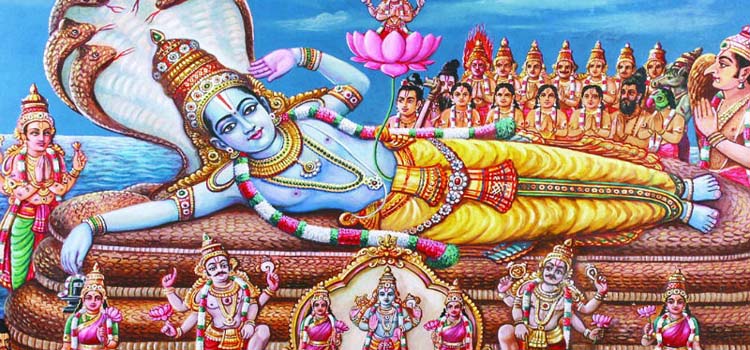
One of those festivals which are rarely celebrated by many, Vaikuntha Ekadashi, which coincides with the Moksada or Putrada Ekadashi is a special Ekadashi that comes mostly once a year, but sometimes twice and is generally associated with Shukla Paksha or the 11th lunar day of the Margashirsha month in the Lunar calendar corresponding to the Dhanur month in the Solar calendar sometime between 16 December of the current year and ending on 13 January of the next year. Vaikuntha, which is paradise, is where there is no lack, or shortage; only abundance.

Ēkadashi which means the eleventh is the eleventh lunar day or tithi of each of the two lunar phases which occur in a Vedic calendar month, the Shukla Pakṣha or the period of the brightening moon also known as the waxing phase and the Kṛiṣhṇa Pakṣha or the period of the fading moon also known as the waning phase, according to the Vedic medical texts of Ayurveda and is mentioned in detail in many original treatises such as the Charaka Samhita and the Susruta Samhita.

In Hinduism or Sanatan Dharma, Ekadashi holds great importance. A favourite tithi of Lord Krishna, his devotees observe upavas or fasts to be closer to him. In Nepal and India, the day is considered a day to cleanse the body, aid repair and rejuvenation and is usually observed by a partial or complete fast. High protein and carbohydrate-containing foods such as beans and grains are not consumed during the fast as it is a day to cleanse the body, instead, only fruits, vegetables and milk products are eaten. This period of abstinence starts from sunrise on the day of the Ekadashi to sunrise of the following day with rice is not eaten at all during this 24-hour period.

Followers of Lord Vishnu or the Vaishnava believe that the gates to the Lord’s inner sanctum or the Vaikunta Dwaram is opened on this day with the Margashirsha Shukla Paksha Ekadashi in the Lunar calendar known as a Mokshada Ekadashi. Vishnu temples all across the world offer special prayers, yagnas, discourses and speeches. Those who follow Lord Shiva or the Shaiva sect observe the day as Trikoti Ekadashi, a day where all the deities in the Hindu pantheon pay obeisance to Lord Shiva at the same time.

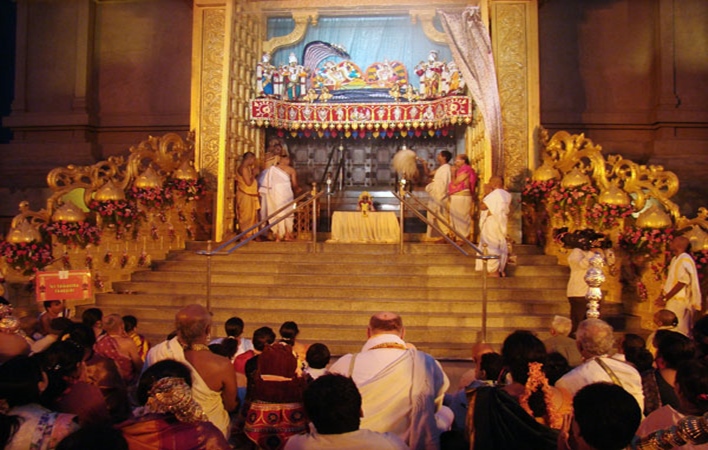
According to the Vishnu Purana, fasting on Vaikuntha Ekadashi is equivalent to fasting on the remaining 23 Ekadashis of the year. However, according to the Vaishnava tradition, fasting is mandatory on all Ekadashis of both the Shukla and Krishna pakshas with fasting on an Ekadashi holier than any other religious observation. Because complete fasting has to be observed on Ekadashi, the meal on the Dwadashi or the 12th day is designed to be wholesome, nutritious, and filling. When observed, it is said to bestow liberation from the cycle of birth and death. On this day, the Vaikuntha Dwaram or the Vaikuntha Vaasal, the Gates of Vaikunta are believed to be kept open. The area encircling the sanctum is referred to as the Vaikuntha Vaasal and devotees throng this doorway to gain entry into the temple, to seek Lord Vishnu.

Legend says that Lord Vishnu opened the gate of his home, Vaikuntham, for two asuras or demons in spite of them being against him. They also asked for the boon that whoever listens to their story and sees the image of Lord Vishnu coming out of the door called Vaikunth Dwar, will reach Vaikunth as well. This is why temples all over India make a door kind of structure on this day for devotees to walk through.

According to the Padma Purana, the Devas, unable to bear the tyranny of Muran, a demon, approached Lord Shiva, who directed them to Lord Vishnu. A battle took place between Lord Vishnu and the demon and Lord Vishnu realised that a new weapon was needed to slay Muran. In order to take a rest and create a new weapon, Lord Vishnu retired to a cave for the Goddess named Haimavati in Badarikashrama. When Muran tried to slay Lord Vishnu, who was sleeping, the female power that emerged from him burned Muran to ashes with her glance. Lord Vishnu, who was pleased, named the goddess Ekadashi and asked her to claim a boon. Ekadashi, instead, beseeched Vishnu that people who observed a fast on that day should be redeemed of their sins and Lord Vishnu thus declared that people who observed a fast on that day and worshipped Ekadashi, would attain Vaikuntha. Thus, came into being the first Ekadashi, which was a Dhanurmasa Shukla Paksha Ekadashi.

The demon Muran stands for the Rajasic and Tamasic qualities in people, attributed to lust, passion, inertia and arrogance. When one conquers these tendencies, one attains the purity of mind or Satva which is indispensable for the attaining of moksha, the liberation or the realisation of the self. For realizing the self as pure awareness, purity of mind is required and fasting helps to keep at bay the tendencies that could be triggered by intake of certain foods. Keeping vigil in the night is symbolic of awareness, or being watchful of the contents of the mind. When the mind is looked at, it becomes still. To abide in the stillness is to attain freedom or peace, acquired through the merging of the mind with the self. This is symbolic of the mind automatically being absorbed in the sight of Vishnu after the arduous fast and vigil. The belief that rice is prohibited, because Muran dwells in it, symbolically signifies that the eating of rice makes one feel heavy and hampers the vigil. This signifies that entertaining negative tendencies could hamper one’s progress towards awareness or consciousness. Observance of the rituals on this auspicious day even without understanding their importance is beneficial. Hence the merit accrued through observing them with piety is believed to be immeasurable. In the Mahabharata, the conversation between Krishna and Arjuna at the beginning of the Kurukshetra War about the Bhagavad Gita is said to have occurred on this day.

At the Sri Ranganathaswamy Temple in Srirangam, the Srirangam Vaikuntha Ekadashi celebrations last 20 days, divided into two parts, the Pagal Pathu or the morning part lasting ten days and the Ira Pathu or the night part comprising the other ten days. Lord Vishnu as Lord Ranganatha Moolavar will bless devotees in Muthangi or armour of Pearls on all 20 days. On the 10th day of Pagal Pathu, which is the day before Vaikuntha Ekadashi, the Utsavar Namperumal will bless devotees in the Mohini Alankaram. Very early on Vaikuntha Ekadashi, the Utsavar Namperumal will bless devotees in the armour of diamonds and gems and is brought to the Thousand-Pillared Hall from the sanctum sanctorum through the northern gate known as the Paramapada Vasal, the gate to Vaikuntha. This gate is opened once a year, only on the Vaikuntha Ekadashi day. It is said that anyone who goes through the Paramapada Vasal will reach Vaikuntha. On the 8th day of Ira Pathu, the Namperumal will bless devotees in a Golden Horse Vahanam in the evening & the Thirumangai Mannan Vedupari Ritual will be held.

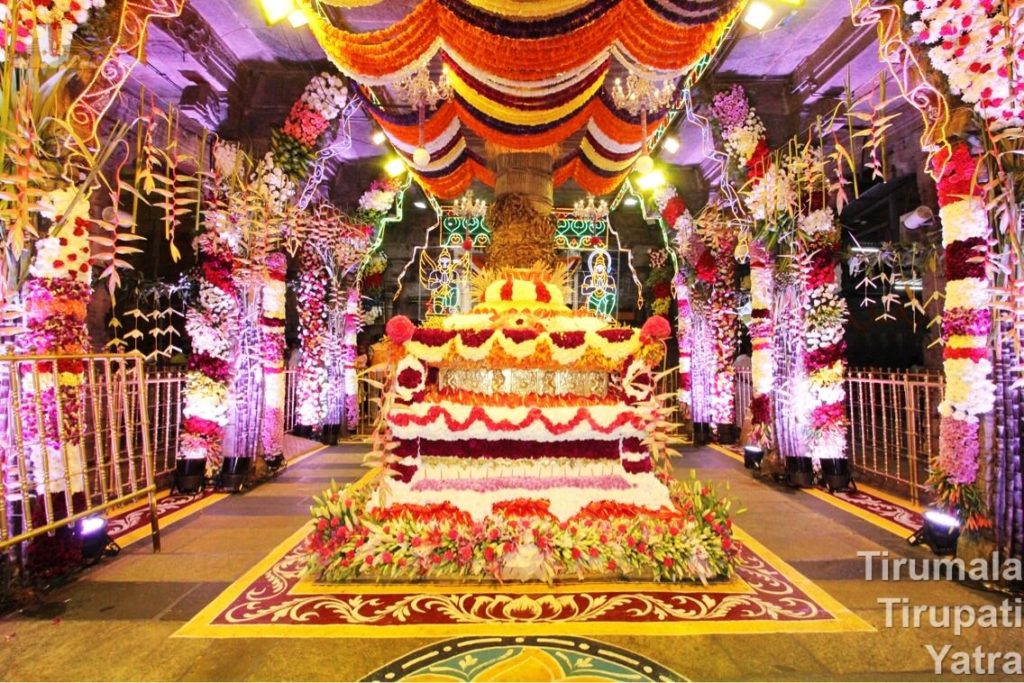
At the seven hills of Tirupati, the Tirumala Venkateswara Temple also has a similar concept to celebrate Mukkoti Ekadashi, as it is known in the region. Tirumala has a special entrance called Vaikuntha Dwaram that encircles the sanctum sanctorum. The dwaram or passage is opened only on Vaikuntha Ekadashi and it is believed that any person who passes through this Vaikuntha Dwaram on this particular day attains salvation. The temple witnesses a heavy inflow of pilgrims and dignitaries for Vaikuntha Ekadashi and all Arjitha sevas are cancelled on this day and only the Sarva Darshanam is allowed on Vaikunta Ekadashi.

On the auspicious day of Vaikuntha Ekadashi, which falls tomorrow, chant the Lord’s name, visit the temple and try and enter the Vaikuntha Dwar at a temple dedicated to Lord Vishnu and keep a fast if that is possible.

In My Hands Today…

Clanlands: Whisky, Warfare, and a Scottish Adventure Like No Other – Sam Heughan and Graham McTavish

From their faithful camper van to boats, kayaks, bicycles, and motorbikes, join stars of Outlander Sam and Graham on a road trip with a difference, as two Scotsmen explore a land of raw beauty, poetry, feuding, music, history, and warfare.

Unlikely friends Sam and Graham begin their journey in the heart of Scotland at Glencoe and travel from there all the way to Inverness and Culloden battlefield, where along the way they experience adventure and a cast of highland characters. In this story of friendship, finding themselves, and whisky, they discover the complexity, rich history and culture of their native country.

Choice Overload Effect

As with many of my writing inspirations, I came across the term Choice Overload in a book I was reading and it intrigued me enough to find out more. And when I did, I knew I had to write this piece and share it with you all.

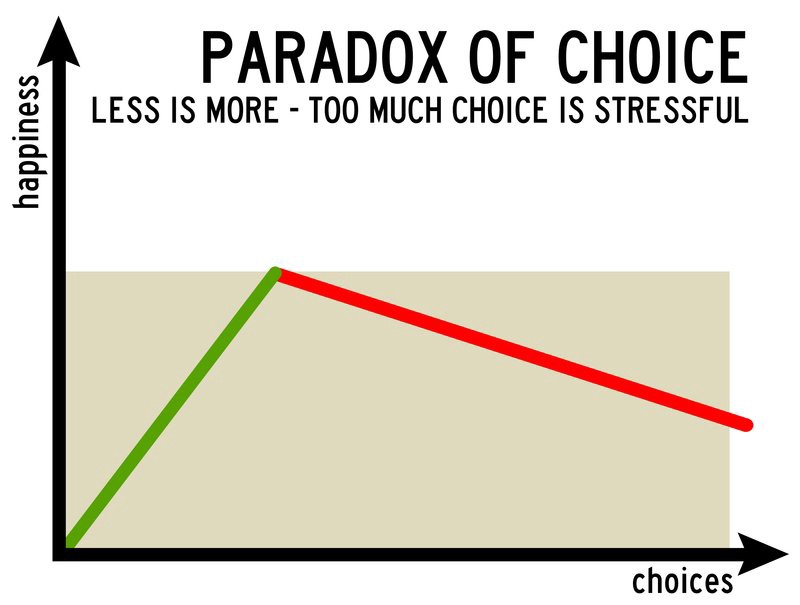
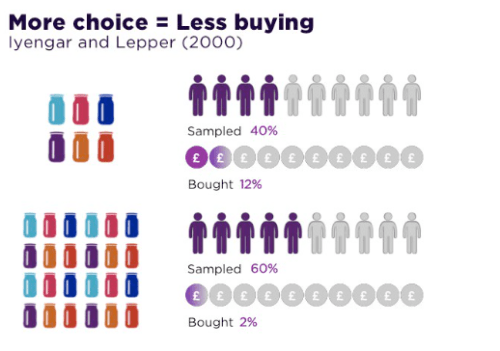
Choice overload or overchoice, choice paralysis or the paradox of choice is a cognitive impairment in which people have a difficult time making a decision when faced with many options. While we tend to assume that more choice is a good thing, in many cases, research has shown that we have a harder time choosing from a larger array of options.

The term was first introduced by Alvin Toffler in his 1970 book, Future Shock, but the phenomenon has come under some criticism due to increased scrutiny of scientific research related to the replication crisis and has not been adequately reproduced by subsequent research, thereby calling into question its validity.

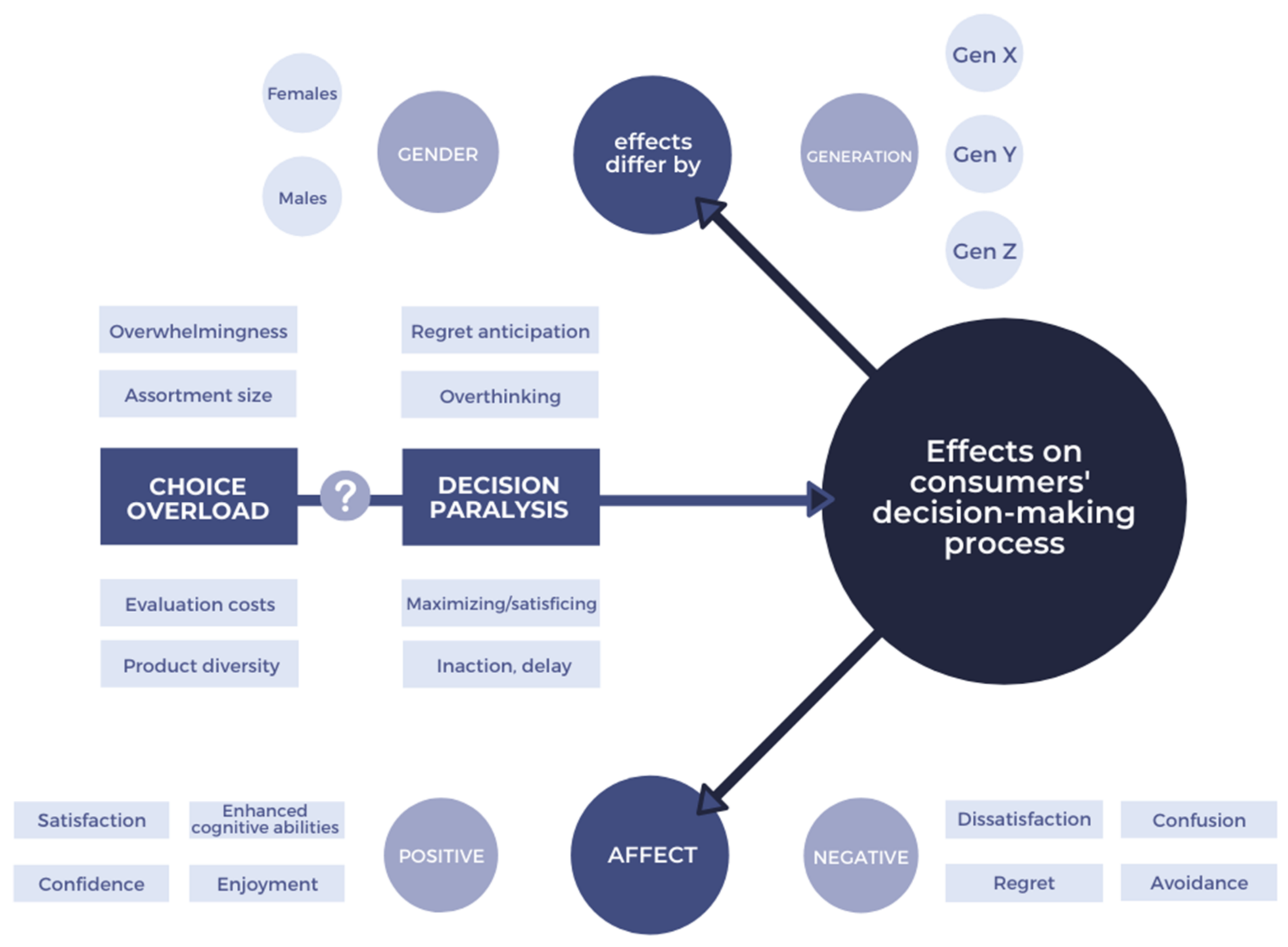
The phenomenon of choice overload or overchoice occurs when many equivalent choices are available and making a decision becomes overwhelming due to the many potential outcomes and risks that may result from making the wrong choice. Having too many approximately equally good options is mentally draining because each option must be weighed against alternatives to select the best one. The satisfaction of choices by many options available can be described by an inverted U model, where having no choice results in very low satisfaction. Initially, more choices lead to more satisfaction, but as the number of choices increases it then peaks and people tend to feel more pressure, confusion, and potentially dissatisfaction with their choice. Although larger choice sets can be initially appealing, smaller choice sets lead to increased satisfaction and reduced regret. Another component of overchoice is the perception of time. Extensive choice sets can seem even more difficult with a limited time constraint. Overchoice has been associated with unhappiness, decision fatigue, going with the default option, as well as choice deferral or avoiding making a decision altogether, such as not buying a product. Choice overload can be counteracted by simplifying choice attributes or the number of available options. However, some studies on consumer products suggest that, paradoxically, the greater choice should be offered in product domains in which people tend to feel ignorant like wine, whereas less choice should be provided in domains in which people tend to feel knowledgeable like soft drinks. Many of the increased options in our lives can be attributed to modern technology as in today’s society we have easy access to more information, products and opportunities.

Choice overload is not a problem in all cases, some preconditions must be met before the effect can take place. First, people making the choice must not have a clear prior preference for an item type or category. When the choice-maker has a preference, the number of options has little impact on the final decision and satisfaction. Second, there must not be a dominant option in the choice set, meaning that all options must be perceived of equivalent quality. One option cannot stand out as being better than the rest. The presence of a superior option and many fewer desirable options will result in a more satisfying decision. Third, there is a negative relationship between choice assortment or quantity and satisfaction only in people less familiar with the choice set. This means that if the person making a choice has expertise in the subject matter, they can more easily sort through the options and not be overwhelmed by the variety.

In his book “The Paradox of Choice,” Schwartz outlines the steps of decision making which start from figuring out goals to evaluating the importance of each goal and moves on to arraying the options according to how well they meet each goal and then evaluating how likely each of the options is to meet the goals and finally to picking the winning option. The problem is, the more options one has, the harder it is to make a comparison across products. If one has to compare an item across 50 dimensions instead of 3, there’s a risk they’re missing out on “the one.” That’s the paradox — having a variety of options is good, it drives customer consideration. But once the number of choices gets too high, a person’s happiness goes down.

Choice overload is reversed when people choose for another person. It was found that overload is context-dependent: choosing from many alternatives by itself is not demotivating, it is not always a case of whether choices differ for the self and others at risk, but rather according to a selective focus on positive and negative information. Evidence shows there is a different regulatory focus for others compared to the self in decision-making. Therefore, there may be substantial implications for a variety of psychological processes about self-other decision-making. Among personal decision-makers, a prevention focus is activated and people are more satisfied with their choices after choosing among a few options compared to many options, i.e. choice overload. However, individuals experience a reverse choice overload effect when acting as proxy decision-makers.

The psychological phenomenon of overchoice can most often be seen in economic applications. Having more choices, such as a vast amount of goods and services available, appears to be appealing initially, but too many choices can make decisions more difficult. A consumer can only process seven items at a time, after that the consumer would have to create a coping strategy to make an informed decision. This can lead to consumers being indecisive, unhappy, and even refraining from making the choice or purchase at all. Alvin Toffler noted that as the choice turns to overchoice, “freedom of more choices” becomes the opposite — the “unfreedom”. Often, a customer decides without sufficiently researching his choices, which may often require days. When confronted with too many choices especially under a time constraint, many people prefer to make no choice at all, even if making a choice would lead to a better outcome.

Too much choice is the cause of mental anguish for some people. Economist Herman Simon theorised those decision-making styles fall into two types. The Satisficers are people who would rather make an “ok decision” than the perfect decision. They’ve spent some time considering their options, but haven’t belaboured the process. They tend to be more satisfied with their choice because they don’t consider all the available information. Satisficers settle for an option that’s “good enough” and move on. Satisficers decide once their criteria are met; when they find the hotel or the pasta sauce that has the qualities they want, they’re satisfied. The Maximizers on the other hand are those who want to make the best possible decision. They can’t choose until they’ve deeply examined every possible option. Research from Swarthmore College found that Maximizers reported significantly less life satisfaction, happiness, optimism, and self-esteem. They also experienced much higher levels of and regret and depression than Satisficers. The more options people have, the more likely they are to be disappointed in their choice. You never feel that you made the best decision because there were too many options to consider.

There are two steps involved in choosing to purchase. First, the consumer selects an assortment. Second, the consumer chooses an option within the assortment. Variety and complexity vary in their importance in carrying out these steps successfully, resulting in the consumer deciding to make a purchase. Variety is the positive aspect of assortment. When selecting an assortment during the perception stage, the first stage of deciding, consumers want more variety. Complexity is the negative aspect of assortment. Complexity is important for the second step in making a choice—when a consumer needs to choose an option from an assortment. When choosing an individual item within an assortment, too much variety increases complexity. This can cause a consumer to delay or opt-out of making a decision.

Images are processed as a whole when making a purchasing decision. This means they require less mental effort to be processed which gives the consumer a sense that the information is being processed faster. Consumers prefer this visual shortcut to process, termed “visual heuristic”, no matter how big the choice set size. Images increase our perceived variety of options. Variety is good when making the first step of choosing an assortment. On the other hand, verbal descriptions are processed in a way that the words that make up a sentence are perceived individually. That is, our minds string words along to develop our understanding. In larger choice sets where there is more variety, perceived complexity decreases when verbal descriptions are used.

Retailers and manufacturers can combat Choice Overload by offering fewer options which may seem counterintuitive in today’s age of personalization with more options needed to be limited to maximize sales. For example, Procter & Gamble found that a decrease in the number of Head & Shoulders varieties resulted in a 10% increase in revenue. They need to make it easy to compare features across products so it becomes easy for customers to choose between non-equal options and frame the use of each.

The choice is a good thing, but when we are faced with too many of them, we get into a sort of analysis paralysis which makes choosing something extremely difficult and we soon start to second guess our choices. When the number of options available is limited, it does take away that complexity we have in making choices, but with the reduction in choices, as consumers, it makes it easy to make a decision and, in the end, it’s this reduction in complexity that will smooth the way.

2022 Week 01 Update

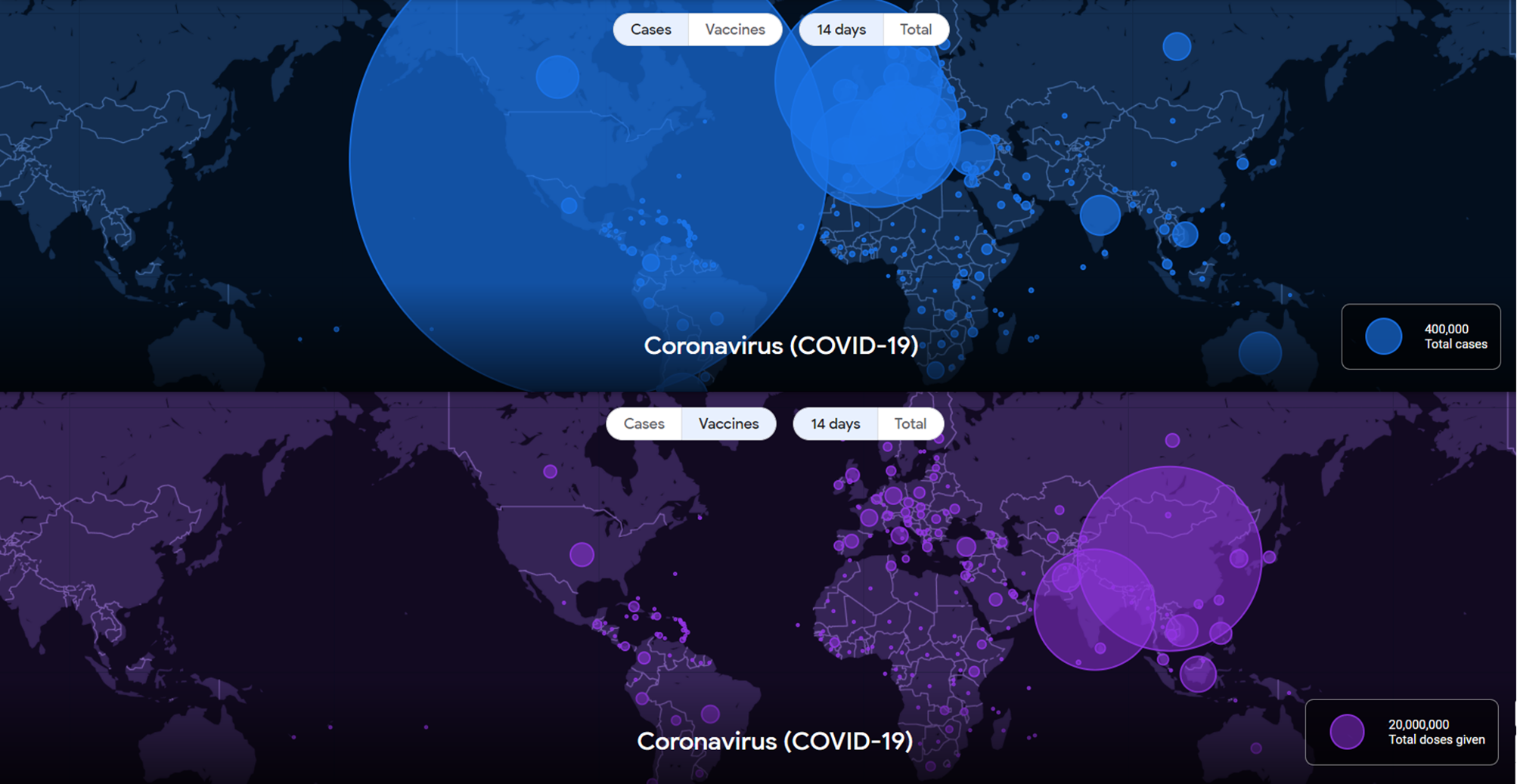
It’s the first weekend of 2022 and the news across the world is not very encouraging. The Omicron variant has been sweeping across the world with almost 3 million new cases reported on a single day on Friday! A new third wave has been infecting across India and this could not come at a worse time for me. I am planning to fly out to India in the next few weeks and things are moving fast. I could technically cancel my trip, but then this would mean my parents will be left to fend for themselves. I can’t in good conscience do that and so I am hoping for the best, but preparing for the worst. I am triple vaccinated and will wear multiple masks throughout the trip and stay at home as much as possible.

The next few weeks are going to be full of trepidation as I plan this trip. I am filled with so many mixed emotions, I don’t know know what my real emotions are. On one hand, I am super excited to finally be able to meet my parents after more than 2 years, but given India’s third wave, this trip is also a scary one. Ah well, I am going to leave it all in the hands of the higher power and just hope and pray I manage to successfully come back home to Singapore.

Our family also suffered a loss this week when our beloved grandmother, my maternal grandmother suddenly passed away. She was in the hospital with a fractured shin when she was found to be positive with COVID-19. But the sad part was that she passed away just hours after being operated upon and discharged from the hospital. Unfortunately, most of us could not make it to the funeral, but I am happy she passed away in the arms of two of her daughters. She was almost 92 and one of the most healthy and active persons I have ever seen. If I am even half as healthy as she was by the time I am 60 or 70, I will consider myself very fortunate.

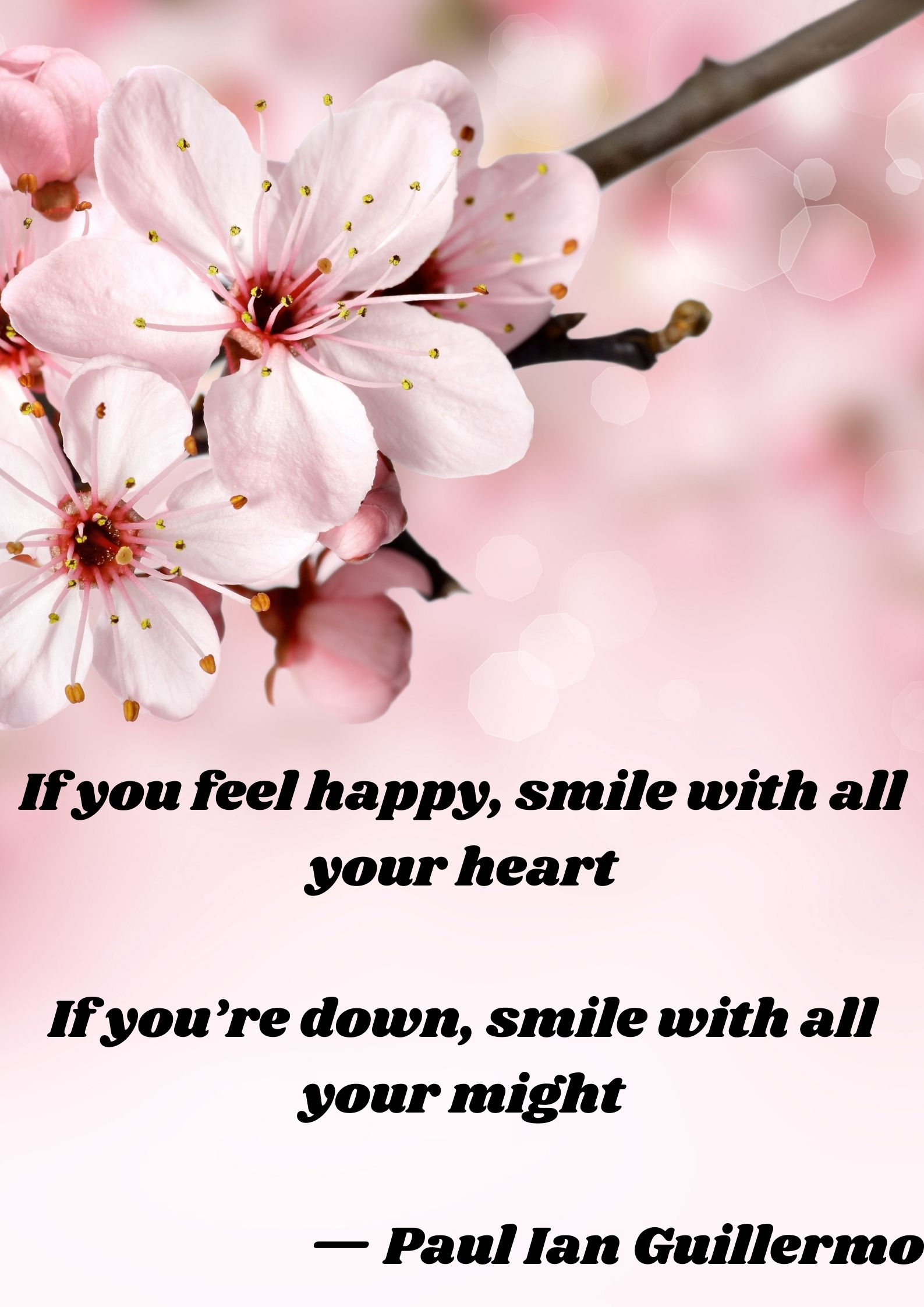
Our quote for today comes to us from Paul Ian Guillermo, which tells us to smile. If we are happy, smile with all our heart and let it spread and when we are sad or down, make sure that we smile, so the sadness can disapparate. As you read this, smile and keep smiling for the rest of the day, wherever you are.