In My Hands Today…

Tamil Tigress – Niromi de Soyza

11034948

Two days before Christmas in 1987, at the age of 17, Niromi de Soyza found herself in an ambush as part of a small platoon of militant Tamil Tigers fighting government forces in the bloody civil war that was to engulf Sri Lanka for decades. With her was her lifelong friend, Ajanthi, also aged 17. Leaving behind them their shocked middle-class families, the teenagers had become part of the Tamil Tigers’ first female contingent.

Equipped with little more than a rifle and a cyanide capsule, Niromi’s group managed to survive on their wits in the jungle, facing not only the perils of war but starvation, illness, and growing internal tensions among the militant Tigers. And then events erupted in ways that she could no longer bear.

How was it that this well-educated, mixed-race, middle-class girl from a respectable family came to be fighting with the Tamil Tigers? Today she lives in Sydney with her husband and children, but Niromi de Soyza is not your ordinary woman and this is her compelling story.
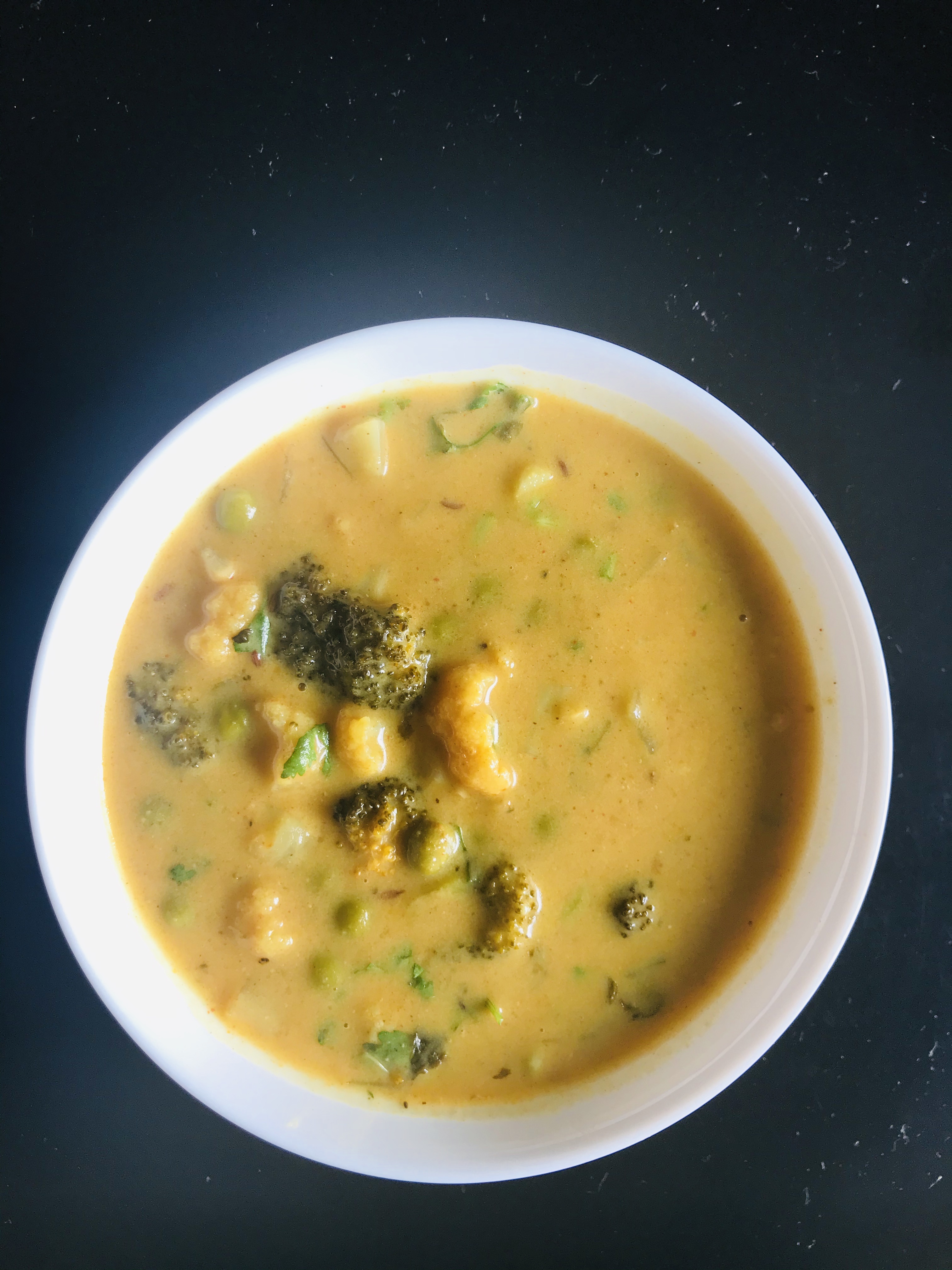
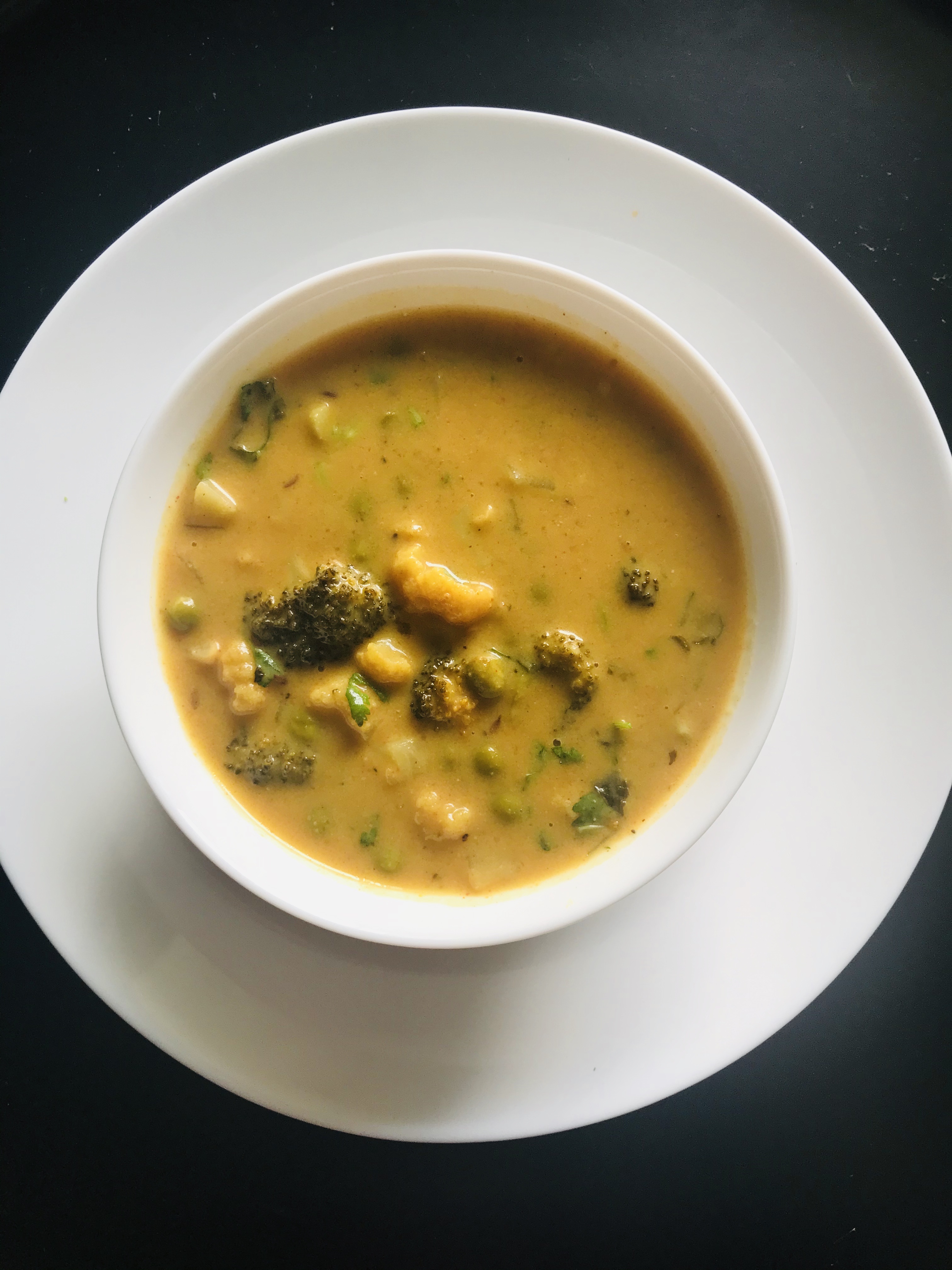
Recipes: Cauliflower and Broccoli Kadhi

Since we could not use onions and garlic in our cooking post Navratri, I had to come up with new recipes so that we eat a variety of foods and at the same time, eat a Jain diet.

While browsing for new recipes, I came across the Jaisalmeri Chana Kadhi recipe which intrigued me. Instead of using black Chana or Chole, I used a combination of Cauliflower, Broccoli and Frozen Green Peas. BB & GG love this combination as a stir fry and this recipe in a chickpea flour and yoghurt gravy was a hit at home and we finished the whole pan that day!

Cauliflower and Broccoli Kadhi

Ingredients:

  • 1 head cauliflower, chopped into bite-sized pieces
  • 1 head broccoli, chopped into bite-sized pieces
  • 1 cup frozen green peas
  • 1.5 cups plain yoghurt, beaten well
  • 3 tbsp besan or chickpea flour
  • 2 tsp ginger and green chilli paste
  • 2 tsp red chilli powder
  • 1/2 tsp turmeric powder
  • 1 tsp coriander powder
  • 1 tsp cumin powder
  • 1/4 tsp asafoetida powder
  • 1 tsp cumin seeds
  • 1/2 tsp garam masala powder
  • 1 tbsp oil
  • 1 tbsp ghee
  • 1 tbsp kasuri methi
  • Salt to taste
  • Coriander leaves to garnish

Method:

  • Wash the vegetables and keep aside.
  • Heat the oil in a pan and when the oil warms up, add half the cumin seeds and let them splutter.
  • Next add 1/8 tsp asafoetida and 1/4 tsp turmeric powder and stir for a couple of seconds.
  • Add the vegetables and stir well. Add 1 tsp each red chilli powder, cumin powder and coriander powder and stir well.
  • Cover and cook till the vegetables are about 75% cooked. Season with salt and remove from the fire.
  • Whisk together the chickpea flour or besan and yoghurt to get a smooth paste. Add the chilli-ginger paste, 1/4 tsp turmeric powder, 1 tsp chilli powder and some salt and whisk together. Make sure there are no lumps from the besan and it is completely smooth. You can also add water as needed to get a pouring consistency batter.
  • In another pan, heat the ghee and add the balance cumin seeds when the ghee warms up. When the cumin seeds crackle, add the balance asafoetida powder and stir.
  • Pour in the chickpea flour yoghurt batter and let it come to a nice rolling boil. Keep stirring and Ensure that the yoghurt does not curdle.
  • Add the cooked vegetables and continue boiling. Check for seasoning add if something does not seem right. Add the garam masala and crush the kasuri methi in your palms and add it to the gravy. Let the gravy thicken slightly and then switch off the flame. Garnish with coriander leaves and serve with rice or any Indian flatbread.

Notes:

  • If you don’t have the chilli ginger paste, you can also use finely chopped ginger and chillies instead
  • You can also use onions in this recipe. Just add it when you heat the ghee and add the cumin seeds and asafoetida and before adding the chickpea yoghurt paste.
  • Instead of these vegetables, you can substitute it with other vegetables or even use black Chana or Kabuli chana.

In My Hands Today…

Sweet Dates in Basra – Jessica Jiji

7605137

Shafiq is a Jewish boy whose brotherhood with his Muslim neighbour Omar proves that religion is no barrier to friendship. Kathmiya Mahmoud is a young Marsh Arab maiden of the age when her family should be arranging her marriage, but instead, they send her to work as a servant in the city of Basra.

In this lost Iraq of the 1940s, a time of rich traditions and converging worlds, Kathmiya meets Shafiq. But in a world where loss of honour is punishable by death, the closeness that grows between Kathmiya and Shafiq becomes dangerous as a doomed love takes root. When British warplanes begin bombing Iraq and the country’s long-simmering tensions explode, the power of an unbreakable boyhood bond and a transcendent love must overcome the deepening fractures of a collapsing society.

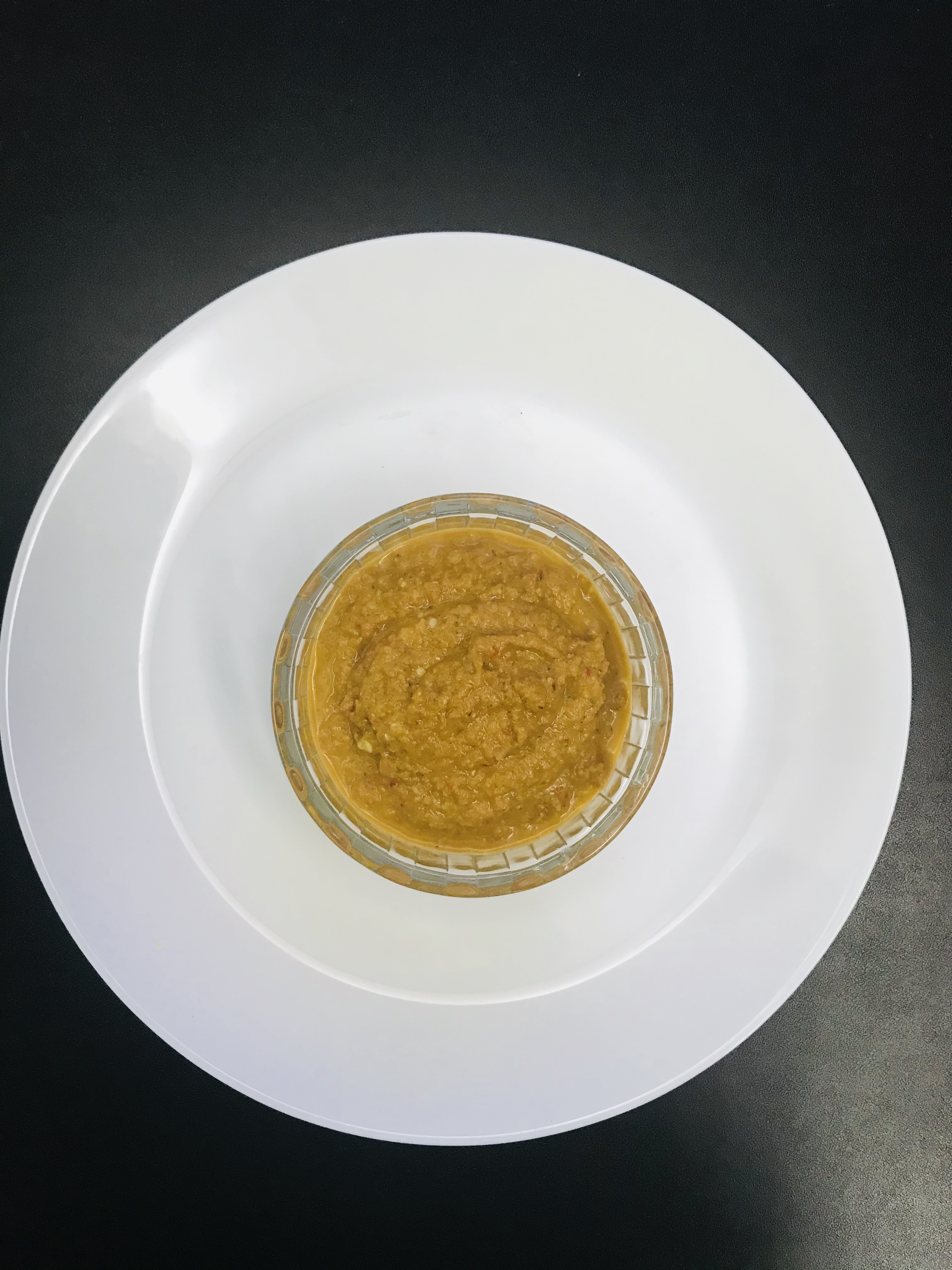
Recipes: No Onion, No Garlic Tomato Peanut Chutney

During Navratri, I don’t use onions and garlic in my cooking. My cooking during those 10 days is more satvic in nature and so it sometimes becomes a challenge to figure out recipes to make which don’t incorporate the two almost essential ingredients in Indian cooking. Though, if I am to be completly honest, tambram cooking generally does not use the two ingredients. But we were getting bored of traditional recipes and so I tried this recipe which was an experiment of sorts. It did come out quite nice and was a good accompaniment to not only idlis and dosais, but also as a substitute to sandwich chutneys.

No Onion, No Garlic Tomato Peanut Chutney

Ingredients:

  • 6-8 medium sized tomatoes, chopped
  • 8-10 curry leaves
  • 5-6 fresh red chillies (you can also use green chillies if you don’t have access to red chillies)
  • 1/2 cup roasted peanuts
  • 2 tbsp tamarind paste
  • 1/4 tsp turmeric powder
  • 1/4 tsp asafoetida powder
  • 1 tsp mustard seeds
  • 2 tbsp chopped coriander leaves
  • 1 tsp oil
  • Salt to taste

Method:

  • Heat oil in a pan and when warm, add the mustard seeds and let them pop.
  • Then add the turmeric powder, asafoetida powder and stir for a couple of seconds.
  • Next, add the curry leaves and red chillies and stir till the chillies start to brown and the curry leaves become crisp.
  • Now add the roasted peanuts and stir well. Then add the chopped tomatoes and some salt and stir well. Keep stirring the tomatoes occasionally until the tomatoes cook and turn mushy.
  • Remove from the flame and cool completely. When cool, blend into a fine paste and serve as an accompaniment to idlis and dosai.

In My Hands Today…

The Sisters of Versailles – Sally Christie

33362126

Goodness, but sisters are a thing to fear.

Set against the lavish backdrop of the French Court in the early years of the 18th century, The Sisters of Versailles is the extraordinary tale of the five Nesle sisters: Louise, Pauline, Diane, Hortense, and Marie-Anne, four of whom became mistresses to King Louis XV. Their scandalous story is stranger than fiction but true in every shocking, amusing, and heartbreaking detail.

Court intriguers are beginning to sense that young King Louis XV, after seven years of marriage, is tiring of his Polish wife. The race is on to find a mistress for the royal bed as various factions put their best foot – and women – forward. The King’s scheming ministers push Louise, the eldest of the aristocratic Nesle sisters, into the arms of the King. Over the following decade, the four sisters:sweet, naive Louise; ambitious Pauline; complacent Diane, and cunning Marie Anne, will conspire, betray, suffer, and triumph in a desperate fight for both love and power.