It has been such a hectic week! We finished week 1 of the O level and today starts hell week for them aka the content heavy week with all matters of subjects – humanities, sciences and even a maths paper!
Our work in the volunteer activity I have been doing for the past month or so is coming to an end and I have really enjoyed my tome there. Met some really interesting people and even though it has been very intense and hectic sessions, the time really passed very fast!
The next few weeks are also going to be busy and I want to finish up my to-do list before we head out for our long awaited holiday
Happy Diwali! May the festival of light bring the light of happiness, joy and prosperity in your lives!
This week marked week 1 of the O level written exams. One week down and three more to go. They mostly had the papers which are common to the entire cohort, which is English and E-Math.
Next week is a content heavy week with humanities and some science papers. The week also has both BB & GG have two exams on some of the days which means they need to be in school by 7 and only end their day around 6!
As for this week’s exams, it was ok in their words. I would say GG seemed more confident compared to her previous outing in a national exam and I am confident that she will do as expected or better. BB says his math papers were good, but as usual, he has made some careless mistakes which can cost him up to almost 5-7 marks each. I wonder if there ever will come a time when he comes out a math exam without making any careless mistakes!
Anyway, our countdown is firmly ticking and before we know it, we will be done with the exams and off on our holiday. Can’t wait!!
Have a great weekend and if you are celebrating the festival, once again a very Happy Diwali to you and your loved ones.
In a suburb outside Cleveland, a community of Indian Americans has settled into lives that straddle the divide between Eastern and Western cultures. For some, America is a bewildering and alienating place where co-workers can’t pronounce your name but will eagerly repeat the Sanskrit phrases from their yoga class.
Harit, a lonely Indian immigrant in his mid-forties, lives with his mother who can no longer function after the death of Harit’s sister, Swati. In a misguided attempt to keep both himself and his mother sane, Harit has taken to dressing up in a sari every night to pass himself off as his sister.
Meanwhile, Ranjana, also an Indian immigrant in her mid-forties, has just seen her only child, Prashant, off to college. Worried that her husband has begun an affair, she seeks solace by writing paranormal romances in secret. When Harit and Ranjana’s paths cross, they begin a strange yet necessary friendship that brings to light their own passions and fears.
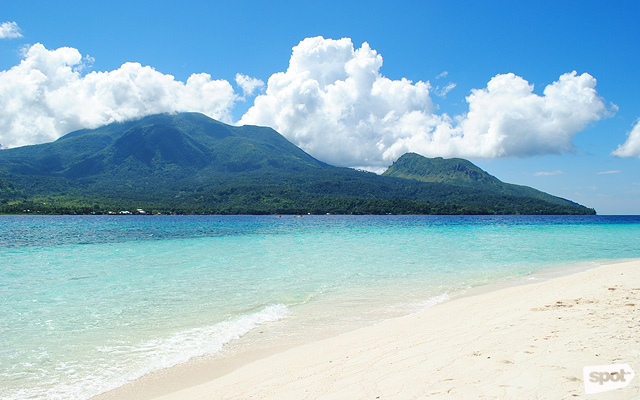
After exploring Luzon and Visayas, we now turn to the conflict ridden southern part of the Philippines called the island of Mindanao. The island of Mindanao, which is the Philippines’ second-largest, is home to a sizeable Muslim population, the skyscraper-clad city of Davao, the highest peak in the Philippines – Mount Apo, at 2,954 meters above sea level – and a lack of development that makes this diverse region perfect for the intrepid traveler. Most governments advise caution anywhere on Mindanao and suggest avoiding several areas. Keen surfers can head to the stunning island of Siargao, off the north coast of Mindanao, where you’ll find the Cloud 9: a world-renowned reef wave known for its thick hollow tubes. It’s because of this that the annual Siargao Cup is held here. Other beautiful islands include Camiguin, with a turquoise lagoon, flour-white sand, colonial ruins, and even a hot spring. The city of Zamboanga, on the peninsula of the same name, has colonial history and – of course – beaches under its belt. Just offshore is the intriguing island of Santa Cruz, famous for its pink sand beach.
Siargao Its short coastline facing the Pacific Ocean has few family-friendly beaches, but that doesn’t stop international travelers from converging on Siargao and its challenging surfing spots. Siargao was “discovered” by the outside world in the 1970s, and has long been a “secret” known only to locals and surfers till very recently. The surfing spot known as Cloud 9 boasts a ferocious reputation, its powerful waves and rocky bottom shredding backsides and egos on a regular basis. The island’s taken a more family-friendly turn as of late, helped along by a hit movie and breathless word-of-mouth. While this 170-square-mile island denies “the next Boracay” title, the new resorts and tours around the island capitalize on other fascinating features such as the Magpupungko tidal pool and the white-sand beaches on outlying islands – Naked Island (actually a sandbar); Guyam Island and Daku Island.
Surigao del Sur Sure, it may not be a household name, but don’t sleep on Surigao del Sur. After all, it is home to two of the most prominent attractions in Mindanao – Tinuy-an Falls and Enchanted River. Plus, it has a burgeoning beach paradise – Britania Islands.
Davao Davao is the main gateway and major metropolis in Mindanao. As the youngest city among the three (Manila, Cebu City and Davao), Davao stands next to a largely unspoiled marine and forest habitat; this access to the mountains and the sea makes Davao one of the Philippines’ top spots for adventure travel. A number of animal reservations also maintain communities of endangered species, and are well worth a visit – the Philippine Eagle Center breeds and maintains a population of Philippine Eagles (Pithecophaga jefferyi), and the privately-owned Monfort Bat Sanctuary on Samal Island maintains a community of fruit bats.
Camiguin Camiguin, aptly labeled as the “Island Born of Fire”, is a fascinating island-province brimming with volcanoes like Mount Uhay, Mount Hibok-Hibok, Mount Vulcan and Mount Mambajao. As a matter of fact, Camiguin holds the record for the island with most number of volcanoes for every square kilometer in the world. But, make no mistake about it – there is more to this small Philippine province than its volcanic riches. After all, it is a secluded destination that boasts a plethora of natural wonders, including refreshing waterfalls, cold and hot springs, and an untouched sand bar. Plus, it has plenty of other intriguing attractions to offer to its visitors as well, including the infamous sunken cemetery, well-preserved ancestral homes and centuries-old churches. And, did we mention that it is the host to the Lanzones festival – one of the most popular, dynamic and anticipated festivals in the Philippines?
Lake Sebu Why should you pay a visit to Lake Sebu? While Lake Sebu is not as famous as Boracay and Palawan, it’s nonetheless a charming and lush destination with a burgeoning tourism industry. One of the most underrated places to visit in the Philippines, Lake Sebu is home to a cluster of striking waterfalls and extremely clean lakes. Not to mention, a visit to this destination will give a taste of the wondrous culture of the Ubo and T’boli tribes.
Iligan Iligan is home to many of the Philippines’ most beautiful waterfalls including Tinago Falls, Maria Cristina Falls, and remote Limunsudan Falls (the highest two-tiered in the Philippines).
Cagayan de Oro Cagayan de Oro, the largest city in Northern Mindanao, is a convenient hub for tourists visiting nearby Bukidnon and Camiguin Island. It’s also the adventure capital of the Philippines! This city is famous for its white water river rafting, river tubing, paragliding, nature parks.
I hope you enjoyed reading about interesting places to visit in the Philippines as much as I loved researching and writing it. This mini series of blog posts has made me sure that this amazing country will soon get a visit from me!
With intense emotion and great literary skill, Farnoosh Moshiri has written one of the most moving novels to come out in years.
The story begins with the arrest of a seventeen-year-old girl in the early days of the fundamentalist revolution in Iran.
Imprisoned because of her brother’s involvement with leftist politics, she is placed in a makeshift jail, a former bathhouse, in which other women are held captive.
With a gripping narrative, Moshiri gives voice to these prisoners, exploring their torment and struggle, but also their courage and humanity, in the face of tyrants.




 Memories and Such