In My Hands Today…

Measure What Matters – John E. Doerr

Measure What Matters is about using Objectives and Key Results (OKRs), a revolutionary approach to goal-setting, to make tough choices in business.

In 1999, legendary venture capitalist John Doerr invested nearly $12 million in a startup that had amazing technology, entrepreneurial energy and sky-high ambitions, but no real business plan. Doerr introduced the founders to OKRs and with them at the foundation of their management, the startup grew from forty employees to more than 70,000 with a market cap exceeding $600 billion. The startup was Google.

Since then Doerr has introduced OKRs to more than fifty companies, helping tech giants and charities exceed all expectations. In the OKR model objectives define what we seek to achieve and key results are how those top­ priority goals will be attained. OKRs focus effort, foster coordination and enhance workplace satisfaction. They surface an organization’s most important work as everyone’s goals from entry-level to CEO are transparent to the entire institution.

In Measure What Matters, Doerr shares a broad range of first-person, behind-the-scenes case studies, with narrators including Bono and Bill Gates, to demonstrate the focus, agility, and explosive growth that OKRs have spurred at so many great organizations.

This book will show you how to collect timely, relevant data to track progress – to measure what matters. It will help any organization or team aim high, move fast, and excel.

In My Hands Today…

Extreme Ownership: How U.S. Navy SEALs Lead and Win – Jocko Willink and Leif Babin

Sent to the most violent battlefield in Iraq, Jocko Willink and Leif Babin’s SEAL task unit faced a seemingly impossible mission: help U.S. forces secure Ramadi, a city deemed “all but lost.” In gripping firsthand accounts of heroism, tragic loss, and hard-won victories in SEAL Team Three’s Task Unit Bruiser, they learned that leadership—at every level—is the most important factor in whether a team succeeds or fails.Willink and Babin returned home from deployment and instituted SEAL leadership training that helped forge the next generation of SEAL leaders. After departing the SEAL Teams, they launched Echelon Front, a company that teaches these same leadership principles to businesses and organizations. From promising startups to Fortune 500 companies, Babin and Willink have helped scores of clients across a broad range of industries build their own high-performance teams and dominate their battlefields.

Now, detailing the mind-set and principles that enable SEAL units to accomplish the most difficult missions in combat, Extreme Ownership shows how to apply them to any team, family or organization. Each chapter focuses on a specific topic such as Cover and Move, Decentralized Command, and Leading Up the Chain, explaining what they are, why they are important, and how to implement them in any leadership environment.

A compelling narrative with powerful instruction and direct application, Extreme Ownership revolutionizes business management and challenges leaders everywhere to fulfill their ultimate purpose: lead and win.

World Book and Copyright Day

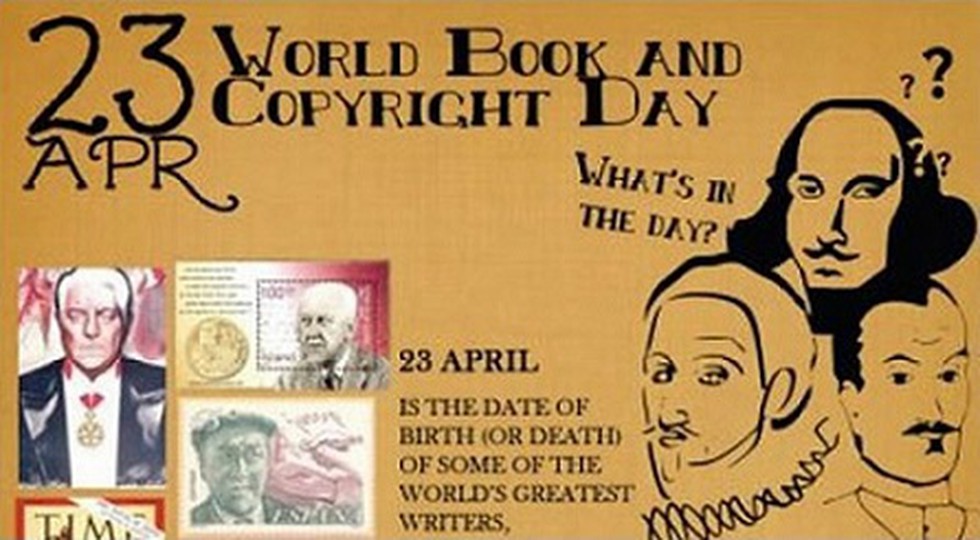
Today is the World Book and Copyright Day also known as World Book Day. I have written previously about this day, so hop there to know more about the history of why this day has been celebrated.

The World Book and Copyright Day is a celebration to promote the enjoyment of books and reading. Each year, on 23 April, celebrations take place all over the world to recognise the scope of books, a link between the past and the future, a bridge between generations and across cultures. On this occasion, UNESCO and the international organizations representing the three major sectors of the book industry – publishers, booksellers and libraries, select the World Book Capital for a year to maintain, through its own initiatives, the impetus of the Day’s celebrations.

The original idea of this day was from the Spanish writer Vicente Clavel Andrés as a way to honour the author Miguel de Cervantes, first on 7 October, his birth anniversary, then on 23 April, his death anniversary. In 1995 at UNESCO’s General Conference held in Paris, it was decided that the World Book and Copyright Day would be celebrated on 23 April, as the date is symbolic in world literature as it is also the anniversary of the death of Miguel de Cervantes, William Shakespeare and Inca Garcilaso de la Vega, as well as that of the birth or death of several other prominent authors.

This year, when many schools and institutes of learning have been shut because of the pandemic caused by COVID-19, reading has become an essential habit, more than ever. As more people spend time at home and limit social gatherings, the power of books should and can be leveraged to combat isolation, reinforce ties between people, expand our horizons, while stimulating our minds and creativity. Books have the unique ability both to entertain and to teach. They are at once a means of exploring realms beyond our personal experience through exposure to different authors, universes and cultures, and a means of accessing the deepest recesses of our inner selves.

Not just during the month of April, but all year round, it is critical to take the time to read on your own or with your children, if they are too young to read on their own. It is a time to celebrate the importance of reading, foster children’s growth as readers and promote a lifelong love of literature and integration into the world of work. Through reading and the celebration of World Book and Copyright Day, we can open ourselves to others despite distances, and we can travel thanks to our imagination, even though leisure travel has stopped more or less across the world.

The 2021 World Book Capital is Tbilisi, Georgia. Cities designated as UNESCO World Book Capital undertake to carry out activities with the aim of encouraging a culture of reading and diffusing its values in all ages and population groups in and out of the national borders. The cities commit to promoting books and fostering reading during a 12 months period between one World Book and Copyright Day and the next.

So please read today if you don’t otherwise read often. If you are a parent with a child too young to read, sit down with them with a favourite book and spend time reading and inculcating the love and joy that comes when you read a good book. For parents with older children, be a good role model and lead by example and show to your children how important reading is. I am going to spend most of today and the weekend with a good book, some nice hot tea or coffee and just read. What about you?

In My Hands Today…

The Lazy Genius Way: Embrace What Matters, Ditch What Doesn’t, and Get Stuff Done – Kendra Adachi

Being a Lazy Genius isn’t about doing more or doing less. It’s about doing what matters to you.

The chorus of “shoulds” is loud. You should enjoy the moment, dream big, have it all, get up before the sun, track your water consumption, go on date nights, and be the best. Or maybe you should ignore what people think, live on dry shampoo, be a negligent PTA mom, have a dirty house, and claim your hot mess like a badge of honor.

It’s so easy to feel overwhelmed by the mixed messages of what it means to live well.

Kendra Adachi, the creator of the Lazy Genius movement, invites you to live well by your own definition and equips you to be a genius about what matters and lazy about what doesn’t. Everything from your morning routine to napping without guilt falls into place with Kendra’s thirteen Lazy Genius principles, including:

  • Decide once
  • Start small
  • Ask the Magic Question
  • Go in the right order
  • Schedule rest

Discover a better way to approach your relationships, work, and piles of mail. Be who you are without the complication of everyone else’s “shoulds.” Do what matters, skip the rest, and be a person again.

In My Hands Today…

Reinventing the Bazaar: A Natural History of Markets – John McMillan

From the wild swings of the stock market to the online auctions of eBay to the unexpected twists of the world’s post-Communist economies, markets have suddenly become quite visible. We now have occasion to ask, “What makes these institutions work? How important are they? How can we improve them?”

Taking us on a lively tour of a world we once took for granted, John McMillan offers examples ranging from a camel trading fair in India to the $20 million per day Aalsmeer flower market in the Netherlands to the global trade in AIDS drugs. Eschewing ideology, he shows us that markets are neither magical nor immoral. Rather, they are powerful if imperfect tools, the best we’ve found for improving our living standards.