My Home State: Maharashtra


Growing up, in Mumbai, May 1st was always celebrated as Maharashtra Day, the day my home state of Maharashtra, of which Mumbai is the capital came into existence. So I thought it is only appropriate that today’s post be all about Maharashtra.
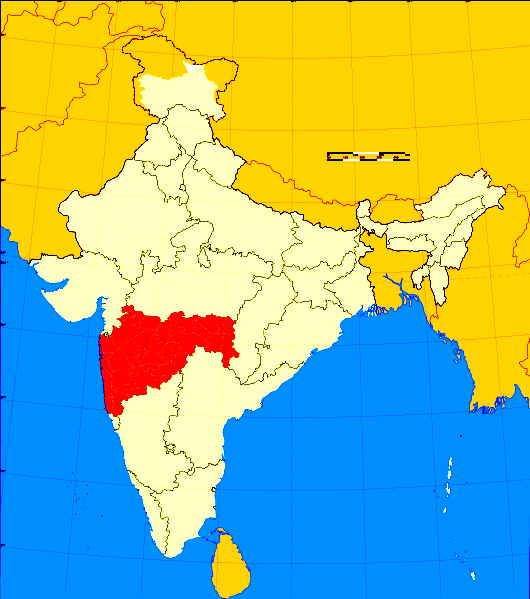
Maharashtra, which means ‘Great State‘ lies in the western part of India with the states of Gujarat and Madhya Pradesh to the north, Chattisgarh to the east, Andhra Pradesh, Karnataka and Goa to the south and the Arabian Sea to the west. Mumbai, the capital city is the country’s financial capital, though some may debate this claim in recent years and the state is also home to Bollywood!

Maharashtra is one of the wealthiest and the most developed states in India, contributing around a quarter of the country’s industrial output and GDP. This is also the second most populous state in India with almost 10% of India’s population in the state. His probably does not take the migrant population into account, so the actual numbers may be a bit higher. This is also the state with the longest road network in the country and the first train service in India and in fact continental Asia ran between Mumbai and Thane (a Mumbai suburb of sorts) on 16 April 1853. The headquarters of Central Railways, Chatrapti Shivaji Terminus aka CST is the busiest railway station in India, serving as a terminal for both long-distance trains and commuter trains of the Mumbai Suburban Railway.
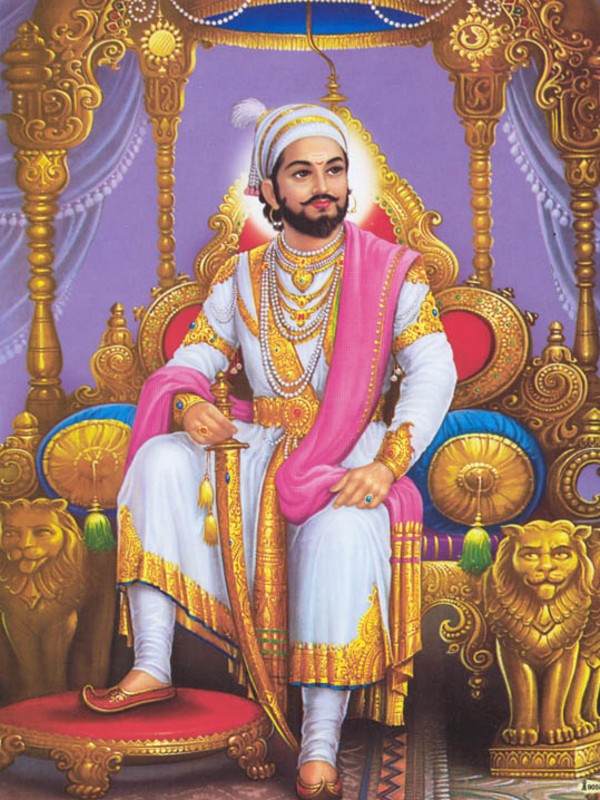
One of the greatest Maratha warriors is Chatrapati Shivaji Maharaj who, along with his father Shahaji Bhosle is credited with the establishment of the independent Maratha Empire which defeated the Mughals conquered large territories in northern and central parts of the Indian subcontinent. The Third Anglo-Maratha war (1817–1818) led to the end of the Maratha Empire and East India Company ruled the country in 1819.

The British governed western Maharashtra as part of the Bombay Presidency, which spanned an area from Karachi in Pakistan to northern Deccan. A number of the Maratha states persisted as princely states, retaining autonomy in return for acknowledging British suzerainty. At the beginning of the 20th century, the struggle for independence took shape, led by nationalist extremists like Bal Gangadhar Tilak and Vinayak Damodar Savarkar and the moderates like Justice Mahadev Govind Ranade, Gopal Krishna Gokhale, Pherozeshah Mehta and Dadabhai Naoroji who were all born in this region.

The ultimatum to the British during the Quit India Movement was given in Mumbai, and culminated in the transfer of power and independence in 1947. After India’s independence, the Deccan States, including Kolhapur were integrated into Bombay State, which was created from the former Bombay Presidency in 1950.

In 1956, the States Reorganisation Act reorganised the Indian states along linguistic lines, and Bombay Presidency State was enlarged by the addition of the predominantly Marathi-speaking regions of Marathwada (Aurangabad Division) from erstwhile Hyderabad state and Vidarbha region from the Central Provinces and Berar. The southernmost part of Bombay State was ceded to Mysore. From 1954–1955 the people of Maharashtra strongly protested against bilingual Bombay state and the Mahagujarat Movement was started, seeking a separate Gujarat state.

Due to the mass protests and 105 deaths, by both linguistic groups, the Union government enacted the Bombay Reorganisation Act on 25 April 1960 which came into effect on 01 May 1960 leading to the formation of the states of Maharashtra and Gujrat by dividing the erstwhile Bombay state.

I can go on and on I guess, but this should be a good starting point for someone who is interested in the state of Maharashtra. One of these days, I’ll do a similar post on Mumbai…
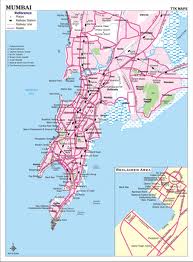
Bombay/Mumbai – what do you call it?

Image from here

Mumbai, India’s commercial capital (debatable now, but I like the ephithet), the city that never sleeps. I found this in my previous blog and thought this was a beautiful tribute to my hometown. This was actually circulated to me by email eons ago and I am not the original author. I do not know who that is, so can’t give credit where it’s due. If you do know the author, please do let me know and I’ll give credit.

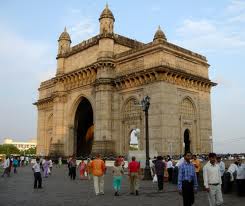
Gateway of India

Image courtesy from this site
Bambai meri jaan….

  • A City where everything is possible, especially the impossible.
  • Where lovers first love and then marry, Where there is place for every Tom, Dick and Harry
  • Where telephone bills make a person ill, Where a person cannot sleep without a pill.
  • Where carbon-dioxide is more than oxygen, Where the road is considered to be a dustbin,
  • Where college canteens are full and classes empty, Where Adam teasing is also making an entry,
  • Where a cycle reaches faster than a car, Where everyone thinks himself to be a star,
  • Where sky scrapers overlook the slum, Where houses collapse as the monsoon comes,
  • Where people first act and then think, Where there is more water in the pen than ink,
  • Where the roads see-saw in monsoon, Where the beggars become rich soon,
  • Where the roads are levelled when the minister arrives,
  • Where college admission means hard cash, Where cement is frequently mixed with ash.
  • This is Mumbai my dear, But don’t fear, just cheer, come to Mumbai every year!

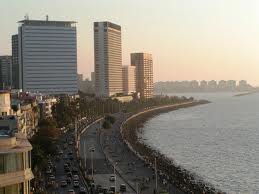
The iconic Marine Drive or Queens Necklace

Picture from here

23 Things that prove you are a Bombayaite 

  1. You say “town ” and expect everyone to know that this means south of Churchgate.
  2. You speak in a dialect of Hindi called ‘Bambaiya Hindi’, which only Bombayites can understand.*
  3. Your door has more than three locks.
  4. Rs 500 worth of groceries fit in one paper bag.
  5. Train timings (9.27, 10.49 etc) are really important events of life.
  6. You spend more time each month traveling than you spend at home.
  7. You call an 8′ x 10′ clustered room a Hall.
  8. You’re paying Rs 10,000 for a 1 room flat, the size of walk-in closet and you think it’s a “steal.”
  9. You have the following sets of friend: school friends, college friends, neighborhood friends, office friends and yes, train friends, a species unique only in Bombay.
  10. Cabbies and bus conductors think you are from Mars if you call the roads by their Indian name, they are more familiar with Warden Road, Peddar  Road, Altamount Road
  11. Stock market quotes are the only other thing besides cricket which you follow passionately.
  12. The first thing that you read in the Times of India is the “Bombay Times” supplement.
  13. You take fashion seriously.
  14. You’re suspicious of strangers who are actually nice to you.
  15. Hookers, beggars and the homeless are invisible.
  16. You compare Bombay to New York’s Manhattan instead of any other cities of India.
  17. The most frequently used part of your car is the horn.
  18. You insist on calling CST as VT, and Sahar and Santacruz airports instead of Chatrapati Shivaji International Airport.
  19. You consider eye contact an act of overt aggression.
  20. Your idea of personal space is no one actually standing on your toes.
  21. Being truly alone makes you nervous.
  22. You love wading through knee deep mucky water in the monsoons, and actually call it ”romantic’.
  23. Only in Bombay , you would get Chinese Dosa and Jain Chicken.

Yearning for school – Part 1

When I wrote about my school going life earlier this week, it made me nostalgic about my school. So this post is dedicated to my alma mater – J.B. Vachha High School. JBV is it was (and is still) called is the short form for the loong formal name of the school. The name which used to be printed on all our school note books for the 12 years that I spent there reads like this – J.B. Vachha High School for Parsi Girls & The Cawasji Jehangir Primary and Infant School. I can’t find the school website so there’s no link to the school, although I did remember checking it out a few years back!

The school badge

I studied in the same school right from Junior KG (or Kindergarten 1) till I completed my Secondary School Certificate or SSC exams. Most of the teachers who taught me, saw me grow from a naughty 4 year old to a mature 15 year old young lady. The school was a purely girls school and except for our Games master and Indian music teachers, all the teachers were also female. While I was growing up, this was the most popular school for girls around the area I lived in (this would mean the Dadar, Wadala, Matunga, Sion areas, but we did get students from other places like Chembur, Parel also). I also remember seeing huge queues of people waiting to get the admission forms for their daughters and this was at a time when school admission was not as difficult as it is today. My mother used to see the queues and say that they didn’t really have to queue up so much – they just went to the school in the morning, got the form and I was called for an interview, which I did well and just like that I was in! In fact my grand parents were against my joining JBV as they wanted me to go to the same school as my dad – this school was literally a hop, skip and jump away from home and more inportantly for them, was a south Indian school and hence to their eyes, had all the right values and attributes. But I am so glad that my parents, and especially my mom stood her ground and put me and later my sis in this school.

What we called the 'New Building'.

Those days, when it was just education all the time, this was one of the very few schools which had a big emphasis on extra curricular activities. From the time we were in third standard till we graduated these were the extra activities we did – embroidery, needlework, library, Indian music/Western music/Dancing (you had to choose one), cookery, gardening, laundry, girl guides/social service. We also did typing and economics as special subjects in the IX and X grades. We also had one period of drill or PE every week and from the VII grade till the X grade, we had to stay back after school once a week for around 90 minutes of games.

Since this is proving to be a loong post, I’ll stop here for Part 1 and do Part 2 another time.

It’s Raining, It’s Pouring…

When it rains in the mornings, just when the students go to school and office drones go to work, the resulting jams are exactly like what happened today. This morning it started to rain around 6 am and by 7 am the jams outside the primary schools near my house needed to be seen to believed! There is a school just next to our building and it took us almost 10 minutes to just get out of the carpark and into the road. Next jam area was the one near GG & BB’s school and by the time I was dropped at my busstop, I was ready to call it a day (not that I need many excuses, if you have read my previous posts)

The initial bus ride was not bad considering the traffic earlier, but there was this hug traffic jam at the Whitley Road exit and then another major snarl near the Clark Quay MRT station and this meant I reached work around 15 minutes later than usual. Luckily I have a Skype meeting with someone around the time I normally leave so can make up the late entry.

During my commute I got thinking about the rains in Mumbai, especially during the time when I was in school. Nowadays it does not rain as much as it used to rain some 20 – 25 years back (Aagh! now I’ve given away my age!). Back then every school year we were guaranteed atleast 2 unscheduled holidays or at the very minimum half days due to heavy rains. These were pre cell phone, pre internet, heck, even pre-computer days and in fact, getting a phone connection used to be something that you had to wait a minimum of a couple of years. So we would be all dressed up and wait for the school bus which would not come. Then some parent would decide to walk/drive down to the school (the school was around a 15 minute walk from our home) and then they would come back and say the magic words – ‘no school’. We kids would love our unscheduled holiday and since it would be raining, we’d get to eat hot pakodas and as a bonus play in the rains….

Unfortunately this stopped when I reached college, since lectures used to take place even if there was one student. But during college and the time I worked, I’ve had many adventures in walking through waist-high water just to get home, being stranded in buses and trains, and seeing the good side of people in such situations.

Many people, especially those who come in from out of the city complain about the coldness of the people in Mumbai. About how neighbours don’t open the doors to neighbours and how they don’t even know who their neighbours are. But times like this, seem to bring out the best in the same people accused of being cold!

Here are some pictures of the rains in Mumbai – please note that these are more recent pictures, magnify these pictures by 10 or more and that was what I experienced, magnify it by 50 and that’s what my parents experienced, magnify it by 100 and that is what my grandparents said they experienced!

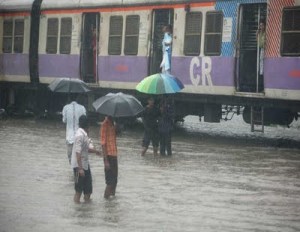
Trains stalled as the tracks are completely waterlogged. People have to just jump down is your train is not at/near a station and hope you don’t have a long walk home…

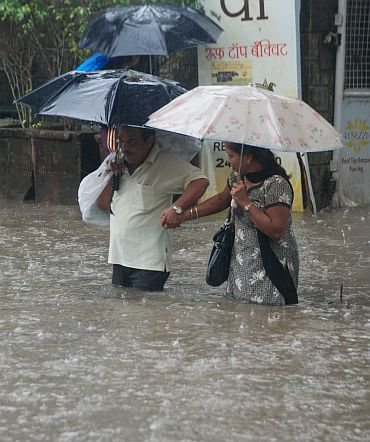
This is something that I have experienced myself…walking in waist-deep water and hoping and praying that some drain is not open near me!

The iconic BEST bus moving through a flooded street somewhere near the Hindmata, Parel area, if my geography of Mumbai still holds up.

We used to play like this at this one place near our home which always gets flooded!

1993 Mumbai Riots and Blasts

The past few days I’ve been reading about the tributes that were paid to the heroes and the people who died in the horrific September 11, 2001 crashes. This made me think of all those people who have been affected by these acts of terrorism perpetuated by terrorists.

What is terrorism? Wikipedia says that although there is no universally agreed, legally binding criminal law definition, the word refers to acts of violence which create fear or terror in the minds of people and which are perpectuated for religious or political or ideological goal and which has no respect for the lives of the ordinary person.

If the above can be taken as a valid definition of terrorism, then there are many incidences which have happened in my home state which adhere to this definition and which the perpetrators would never agree on it being part of something which created terror to the layman or ‘aam janta’.

One of the incidence which for some reason is in my mind happened in December 1992 when the 16th century mosque of Babri Masjid was demolished in the northern Indian city of Ayodhya by Hindu nationalists and fundamentalists. The riots happened in spite of a commitment made the organisers of the rally that preceded it to the Supreme Court of India that the mosque would not be harmed. The justification given for the demolition of the mosque was that the mosque was actually built over the place where the revered Lord Shri Ram was born and that the Mughal King Babur actually had demolished the temple which was there and had constructed a mosque over it. The intercommunal tensions and riots which resulted from this demolition spread quickly to many parts of the country and this was the first time that my generation saw such riots happening in our own backyard in a city which we claimed to be the most secular in the country – Mumbai! This was very quickly followed by the horrific blasts which shook the city in March 1993. How naive we were back then!

When the riots and the blasts happened, I was in my first year of my degree programme and my sister was in class XI. I can’t remember much of the riots as it didn’t affect us directly, but I do remember reading and hearing really bad stories about women raped and killed just because they happened to belong to a different religion and decapacitated heads being found by people and animals. I also have this one image in my head – we were in the terrace of our building and a short distance away is the railway line. There is a break in the buildings and we could see the line clearly. On the other side of the railway line is a shanty area which used to be predominantly Muslim. We saw smoke and fire coming from an area near there. We were scared and I remember parents not letting anyone leave the house for a week or so after that.

A scene from the riot

The blast near the Mumbai Stock Exchange

Within two months however, it was the time of the Mumbai bomb blasts. When we had heard about the blasts in the city, I was back home from college as my classes usually ended before lunch. My sister on the other hand had classes the whole day till about 6 pm. The good thing was that her college was literally a 10 minute walk away from my home. Her other friends were not so lucky since they stayed quite a distance away. All public transport had come to a stop that day and phone lines were also not working. This was the pre-cellphone age and without the MTNL phones, there was no way to keep in touch. Around 4-5 of my sister’s friends came to my place that night. We tried to get in touch with their parents, but without phones it was very difficult to do so. Then around evening, we realised that we could make calls to some people and that started a phone relay across the city. I later learned that many people did the same to get news to friends and family. We called all the people we could get in touch with and left names, numbers and messages for the parents of the girls who were with us. Then they in turn tried the numbers and if they could, passed the message or otherwise did the same. This way through different people, we managed to get the message to the worried parents.

This actually made me realise the intrinsic goodness of people, especially in situations like this. I actually have many such stories, especially from the annual Mumbai rains, but that’s material  for another post.