Growing up in Mumbai

Matunga – for any Tambrahm in Mumbai, especially those of a certain age, the very word evokes the feel of home. Sometimes called ‘Mini Madras’, Matunga in what would be some where in the centre of what is the original city (as opposed to the suburbs) was probably the first place the initial immigrants, young, eager, bright and wide-eyed, came to from Dadar station when their trains from the south arrived in Mumbai all ready to conquer the world, with an introduction to perhaps, if they are lucky, to a relative (distant or otherwise), or maybe someone from the same village they belonged to, or even a relative’s relative!

While I am not sure if this is 100% accurate, from what I’ve heard from my parents and grandparents, most young Tamil Brahmin boys and men started arriving in Mumbai (or Bombay as it was called then) somewhere in the early forties, some years before India would finally throw off the yoke of British dominance and become independent.

Both sets of my grandparents arrived in Bombay somewhere in the early to mid-forties, luckier than most as both my grandfathers had an older brother already settled in the city, in Matunga as it were! If I were to probably measure the distance my paternal and maternal grandparents live away from each other, when they first arrived in the city, it should probably be a maximum of 1 km.

Matunga is the heart of the Tamil Brahmin community in Bombay and as such the roads are filled with the sights and sounds of temple bells and the smells of filter coffee and delicious food!

Temples like Bhajana Samaj, Astika Samaj and Sankara Math, shops like Mysore Concerns, Giri Stores and the row of flower sellers in the road outside the post office along with the vegetable sellers who have carts close-by are all hallmarks of the Tamil Brahmin community in Matunga! Who can forget the Ram Navami and Navaratri celebrations in Bhajana Samaj, the Diwali sweets that always were sold in the hall in Sankara Matt, the banana leaf sold by the vegetable vendors during any major festival, the gaggle of priests, outside the temples, the sound of the temple bells and sugarcane stalks just before Pongal?

When their families grew, both sets of my grandparents moved from their family homes and out of Matunga. But they both didn’t’ pull the umbilical cord too much and move far away. Both of them moved another kilometer away from Matunga in opposite directions actually, and that was where my parents were brought up.

So growing up, we lived in another area which was a fifteen minute walk from Matunga, which was in the periphery of our lives, without actually living there. We used to go to Matunga for literally everything and my mum still goes there atleast two to three times a week for her weekly ‘fix’. This area in Bombay is the lifeline for the community and even today when other mini Matungas have sprung up across the city and suburbs – like Chembur, Chedda Nagar, Bangur Nagar, Mulund, Dombivili, Vashi, etc you can still people who have moved away from Matunga come here on weekends to catch-up with family and friends, eat at childhood haunts and buy essentials which you don’t get anywhere else in the city.

Growing up, there was always this disconnect – we were Tamilians, but without the accent which is usually caricatured in movies and television and always had questions on why we needed to wear a bindi on our forehead or flowers in our hair. In my and my sister’s case, it was compounded by the fact we didn’t go to the school that most of our Brahmin friends and relatives went to (which was a school run by a Tamil trust where the language was taught as a second language)!

Growing up also we were quite insular. I would say this with the benefit of hindsight. Every Tamilan I knew at that point in time was a Brahmin – either from one of the districts of Tamil Nadu or from Palakkad (from Kerala who are called Kerala Iyers or Palakkad Brahmins). Where we stayed, while not in Matunga, was in fact another Tamil conclave, with almost all the 30-40 buildings in the area having a sizeable Tambrahm population each. My building had 19 flats and with the exception of 2-3, every flat was a Tambrahm flat! This was pretty much the case (the percentages being slightly more or less, with some exceptions) for the other buildings in the street I lived in. Even in school, my friends who were Tamil were Brahmins. In fact, coming to Singapore with its vast Tamil population was actually a culture shock to me as I had never seen so many people from so many Tamil communities and the temples were the biggest shock – I had not heard of all the different Gods that were worshipped there (all the temples I visited prior to this were my community temples or the other temples in Mumbai)

Since most of the community emigrated to Bombay around 60-80 years back, the dialect of Tamil, we speak is completely different from what is spoken by the community in places like Chennai and Singapore. Bombay Tambrahms have retained the words and cadence of their speech from all those years while communities in Singapore and Chennai have adopted more of the local language. So the Tamil we speak may actually seem strange to those who don’t speak like this! S used to tell me that they used to be made fun of in school when they spoke Brahmin Tamil, which is why his Tamil sounds more like how it is in movies while mine is the one they make fun of in movies!

Writing this post has made me so nostalgic. I think the next time I go to Mumbai, I will try and capture all the sights and sounds of the city so that every time I miss Mumbai, I have these to see and hear! Also this post has made me realise I need to pen down more about my life, so that GG and BB know what that was like….

Memories: My First Day of School

7367267_orig

I was struggling for something to write today when I came upon this prompt – the first school memory. I have a really rich memory of my first day in school and thought of writing it down before I get real old and forget it!

This is also apt as this India trip, I am going to take my kids down and show them my school, which I have never done before – shame on me right!

In Mumbai, we start school either in Nursery (age 3) or Junior KG at age 4. When I was three years old, my sister was an infant and so I was not sent to school then. However, I remember pestering my family to be sent to school and probably thinking my mum will have some peace with me away for a couple of hours a day, I was sent to the school next to my house for a ear. This school put me in a class one year above my age which worked to my favour later. My father studied in another school which was literally 50 steps away from our home, but my mum was adamant that she wanted to send us to my school, which was a girls school and which other children in my building went. This was against my grand parents wishes who wanted us to go to the school my dad, uncle, aunt and assorted cousins went to, especially as the school was a Tamil school and the school my mum had zoomed on in was a Parsi school! Anyway, my mum got her way and I was soon taken to the school for an interview. I don’t really have any memory about the interview, but according to my parents I aced it and got admission not only in my school, but in another convent girls school nearby. Usually for Junior KG, the children are interviewed with things like name, what is this (insert object), alphabets, numbers etc. Since I had already done a year of this class, it was a breeze for me!

Also, when we were studying, we’d enter the school in kindergarten (Nursery or Jr. KG) and only leave after grade 10 which is the equivalent of the O levels. So most of my classmates have known each other from the time we were 3 or 4 years old, which make for very old friendships!

The first day of school in my memory is noisy! Some of the children came in from the nursery, but most joined with me. I remember a particular friend who cried non-stop for almost a week before she settled down. I also remember my neighbour who was in grade one when I started school would come down during recess to make sure I ate what was in my snack box! I mostly remember my teacher – Mrs S. She was already old at that time, maybe close to retirement (really and not from the perspective of a four year old! She had white hair) but was such a gentle and sweet lady! She made sure all the children learnt their three R’s and was so soft spoken that we still remember her, so so many years later!

School used to be half day for the kindergarten class and we would be dismissed at lunch for the primary and secondary sections and I remember queuing up for the bus, holding the bottom part of the uniform of the girl in front of me!

My school changed the kindergarten or the Infant department as it used to be called uniform some years back. When I was there, everyone, from the littlest infant to the school head girl, all wore the same uniform – the only difference being the shirt collar. In kindergarten and primary, it used to be a peter pan collar while secondary used to be shirt collar. Oh and the Friday uniform too – in my school in term 2 or the term after the Diwali holidays, we wore a special uniform on Fridays. Infant and Primary students used to wear something like a dress or frock and Secondary students wear their school uniform shirt with a white skirt. We didn’t wear it in term 1 as that term coincided with the monsoons in Mumbai and imagine wearing white and getting wet and dirty in the rains!

I am getting real nostalgic about my alma mater while writing this post and am really eager to meet her as well as my friends from school! I am super excited to introduce her to BB, GG and my sister’s kids next week!

I hope you liked reading this post as much as I did writing it!! More from India….

The Night of Terror – An Unforgettable Day!

I woke up, excited and happy on the morning of November 26, 2008. I was going to Mumbai later that evening on a Jet Airways flight, flying with BB & GG alone for the first time since they were born. They were 5 years old and were equally excited to be seeing their grandparents that evening.

Everything changed around 7 am when I got a message from my sister, who was in the States at that point, asking me if I was still going to Mumbai. I had no clue what was happening in Mumbai. I waited impatiently till a decent time to call my parents to find out more, and in the meantime rushed to work as I was supposed to be working half day that day. I went online and was shocked by what I read. Twitter, which was around two years old then had exploded with tweets on the situation!

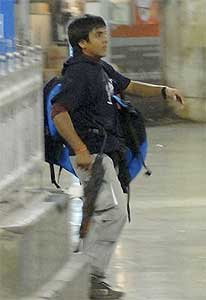
What had happened was that 10 Pakistani members of Lashkar-e-Taiba, an Islamic militant organisation, carried out a series of 12 coordinated shooting and bombing attacks lasting four days across Mumbai. The attacks, which drew widespread global condemnation, began on Wednesday, 26 November and lasted until Saturday, 29 November 2008, killing 164 people and wounding at least 308.

Eight of the attacks occurred in South Mumbai: at Chhatrapati Shivaji Terminus (VT train station), the Oberoi Trident, the Taj Mahal Palace & Tower, (one of the worst places of the killings), Leopold Cafe, Cama Hospital, the Nariman House Jewish community centre, the Metro Cinema, and in a lane behind the Times of India building and St. Xavier’s College. There was also an explosion at Mazagaon, in Mumbai’s port area, and in a taxi at Vile Parle (close to the domestic airport). By the early morning of 28 November, all sites except for the Taj hotel had been secured by Mumbai Police and security forces. On 29 November, India’s National Security Guards (NSG) conducted ‘Operation Black Tornado’ to flush out the remaining attackers; it resulted in the deaths of the last remaining attackers at the Taj hotel and ending all fighting in the attacks.

Ajmal Kasab, the only attacker who was captured alive, later confessed upon interrogation that the attacks were conducted with the support of the Pakistan government’s intelligence agency, the ISI. Kasab was tried and later hanged in Yerwada jail in 2012.

S was on leave that day as he gets more leave than me. I quickly called him and spoke to him. My inlaws were scared of us travelling that evening and asked me to cancel the trip. I was torn – on one hand I didn’t want to risk the trip, on the other hand, I so desperately wanted to go home and meet my parents (I think at that point, it was a year since I had met them). I called the airline office in Singapore and was met with indifference. They seemed not to have any idea of what was happening in their head office city and told me they didn’t have directive from Mumbai (the head quarters of the airline). The flight will take off as scheduled was what I was told. My mother-in-law didn’t want me to travel, but I didn’t listen to her, saying since the flight was scheduled, we’ll go to the airport and decide then. I spent the whole day glued to the internet for any scraps of news that I could get. I told my parents that we are making the trip and to come to the airport to pick us up. Now that was a new problem – due to the trouble, the city was on curfew and there was no one willing to drive them to the airport. Finally around the time we left for the airport, my dad messaged me that they had finally found someone brave enough to drive his taxi to the airport and pick us up. One problem solved, loads more to go…

Praying to the entire pantheon of Gods in Indian Mythology, we left for the airport. We were one of the first ones to check-in. The mood was quite somber. There was a Channel News Asia crew near the check-in counter interviewing passengers brave (or mad) enough to fly to Mumbai. They were looking for Singaporeans against Indians and approached me to ask if I was willing to be interviewed. I did mention that I am not a local, but was told that I spoke like one, so could pass off as one! I was asked if I was scared of going to Mumbai while the shootings were going on and I remember replying that this was very far from the airport, and so the airport area should be safeish (is this even a word?)!

We flew into Mumbai and the airport was very somber and dull! Everyone working the shift was glued to the television screens which were showing live the places where the terrorists had held the hostages. None of the customs officers were really interested in looking at our luggage and we were out in record time. I was so relived to meet my parents and we quickly got into the taxi and drove home. At that point in time (this was before the new flyover which has dramatically shortened travel time from the airport to my home), the normal travel time between the airport to home was 45 – 60 mins. That day, we did the journey in 20 minutes! Once home, I heaved a big sigh of relief and then spent the next few days glued to the television….

This was the most unforgettable day in my life and a flight to remember…..

My Home State: Maharashtra


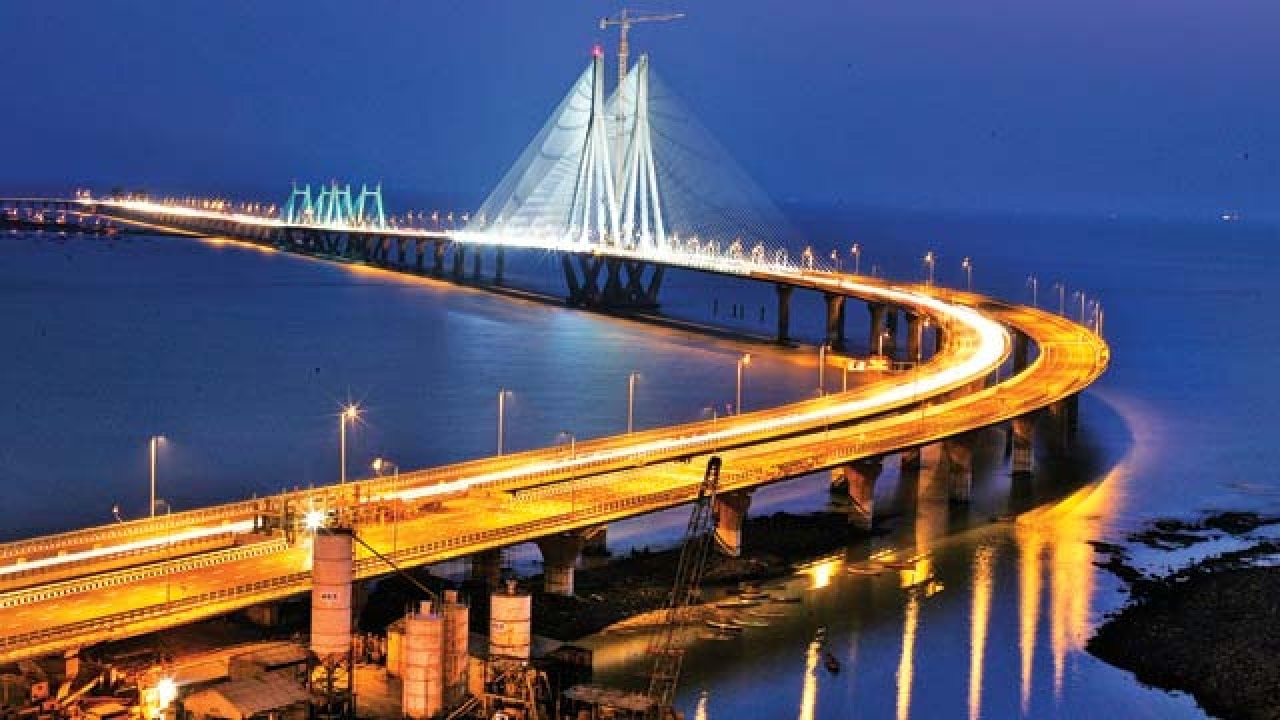
Growing up, in Mumbai, May 1st was always celebrated as Maharashtra Day, the day my home state of Maharashtra, of which Mumbai is the capital came into existence. So I thought it is only appropriate that today’s post be all about Maharashtra.

Maharashtra, which means ‘Great State‘ lies in the western part of India with the states of Gujarat and Madhya Pradesh to the north, Chattisgarh to the east, Andhra Pradesh, Karnataka and Goa to the south and the Arabian Sea to the west. Mumbai, the capital city is the country’s financial capital, though some may debate this claim in recent years and the state is also home to Bollywood!

Maharashtra is one of the wealthiest and the most developed states in India, contributing around a quarter of the country’s industrial output and GDP. This is also the second most populous state in India with almost 10% of India’s population in the state. His probably does not take the migrant population into account, so the actual numbers may be a bit higher. This is also the state with the longest road network in the country and the first train service in India and in fact continental Asia ran between Mumbai and Thane (a Mumbai suburb of sorts) on 16 April 1853. The headquarters of Central Railways, Chatrapti Shivaji Terminus aka CST is the busiest railway station in India, serving as a terminal for both long-distance trains and commuter trains of the Mumbai Suburban Railway.

One of the greatest Maratha warriors is Chatrapati Shivaji Maharaj who, along with his father Shahaji Bhosle is credited with the establishment of the independent Maratha Empire which defeated the Mughals conquered large territories in northern and central parts of the Indian subcontinent. The Third Anglo-Maratha war (1817–1818) led to the end of the Maratha Empire and East India Company ruled the country in 1819.

The British governed western Maharashtra as part of the Bombay Presidency, which spanned an area from Karachi in Pakistan to northern Deccan. A number of the Maratha states persisted as princely states, retaining autonomy in return for acknowledging British suzerainty. At the beginning of the 20th century, the struggle for independence took shape, led by nationalist extremists like Bal Gangadhar Tilak and Vinayak Damodar Savarkar and the moderates like Justice Mahadev Govind Ranade, Gopal Krishna Gokhale, Pherozeshah Mehta and Dadabhai Naoroji who were all born in this region.

The ultimatum to the British during the Quit India Movement was given in Mumbai, and culminated in the transfer of power and independence in 1947. After India’s independence, the Deccan States, including Kolhapur were integrated into Bombay State, which was created from the former Bombay Presidency in 1950.

In 1956, the States Reorganisation Act reorganised the Indian states along linguistic lines, and Bombay Presidency State was enlarged by the addition of the predominantly Marathi-speaking regions of Marathwada (Aurangabad Division) from erstwhile Hyderabad state and Vidarbha region from the Central Provinces and Berar. The southernmost part of Bombay State was ceded to Mysore. From 1954–1955 the people of Maharashtra strongly protested against bilingual Bombay state and the Mahagujarat Movement was started, seeking a separate Gujarat state.

Due to the mass protests and 105 deaths, by both linguistic groups, the Union government enacted the Bombay Reorganisation Act on 25 April 1960 which came into effect on 01 May 1960 leading to the formation of the states of Maharashtra and Gujrat by dividing the erstwhile Bombay state.

I can go on and on I guess, but this should be a good starting point for someone who is interested in the state of Maharashtra. One of these days, I’ll do a similar post on Mumbai…

Bombay/Mumbai – what do you call it?

Image from here

Mumbai, India’s commercial capital (debatable now, but I like the ephithet), the city that never sleeps. I found this in my previous blog and thought this was a beautiful tribute to my hometown. This was actually circulated to me by email eons ago and I am not the original author. I do not know who that is, so can’t give credit where it’s due. If you do know the author, please do let me know and I’ll give credit.

Gateway of India

Image courtesy from this site
Bambai meri jaan….

  • A City where everything is possible, especially the impossible.
  • Where lovers first love and then marry, Where there is place for every Tom, Dick and Harry
  • Where telephone bills make a person ill, Where a person cannot sleep without a pill.
  • Where carbon-dioxide is more than oxygen, Where the road is considered to be a dustbin,
  • Where college canteens are full and classes empty, Where Adam teasing is also making an entry,
  • Where a cycle reaches faster than a car, Where everyone thinks himself to be a star,
  • Where sky scrapers overlook the slum, Where houses collapse as the monsoon comes,
  • Where people first act and then think, Where there is more water in the pen than ink,
  • Where the roads see-saw in monsoon, Where the beggars become rich soon,
  • Where the roads are levelled when the minister arrives,
  • Where college admission means hard cash, Where cement is frequently mixed with ash.
  • This is Mumbai my dear, But don’t fear, just cheer, come to Mumbai every year!

The iconic Marine Drive or Queens Necklace

Picture from here

23 Things that prove you are a Bombayaite 

  1. You say “town ” and expect everyone to know that this means south of Churchgate.
  2. You speak in a dialect of Hindi called ‘Bambaiya Hindi’, which only Bombayites can understand.*
  3. Your door has more than three locks.
  4. Rs 500 worth of groceries fit in one paper bag.
  5. Train timings (9.27, 10.49 etc) are really important events of life.
  6. You spend more time each month traveling than you spend at home.
  7. You call an 8′ x 10′ clustered room a Hall.
  8. You’re paying Rs 10,000 for a 1 room flat, the size of walk-in closet and you think it’s a “steal.”
  9. You have the following sets of friend: school friends, college friends, neighborhood friends, office friends and yes, train friends, a species unique only in Bombay.
  10. Cabbies and bus conductors think you are from Mars if you call the roads by their Indian name, they are more familiar with Warden Road, Peddar  Road, Altamount Road
  11. Stock market quotes are the only other thing besides cricket which you follow passionately.
  12. The first thing that you read in the Times of India is the “Bombay Times” supplement.
  13. You take fashion seriously.
  14. You’re suspicious of strangers who are actually nice to you.
  15. Hookers, beggars and the homeless are invisible.
  16. You compare Bombay to New York’s Manhattan instead of any other cities of India.
  17. The most frequently used part of your car is the horn.
  18. You insist on calling CST as VT, and Sahar and Santacruz airports instead of Chatrapati Shivaji International Airport.
  19. You consider eye contact an act of overt aggression.
  20. Your idea of personal space is no one actually standing on your toes.
  21. Being truly alone makes you nervous.
  22. You love wading through knee deep mucky water in the monsoons, and actually call it ”romantic’.
  23. Only in Bombay , you would get Chinese Dosa and Jain Chicken.