Water: The Driving Force of all Nature

quote-the-wars-of-the-twenty-first-century-will-be-fought-over-water-ismail-serageldin-54-11-05

“The wars of the twenty-first century will be fought over water” – Ismail Serageldin

Water, the one thing which human beings can’t survive without for long. The natural resource which, for centuries we have taken for granted and abused mercilessly and one which is precariously close to depletion if we are not careful.
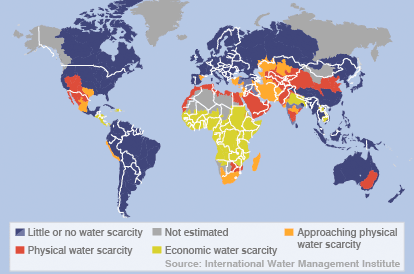
map_showing_global_physical_and_economic_water_scarcity_2006There is a global water crisis going on and challenges to government and non-governmental bodies trying to fix the situation include water scarcity, water pollution, inadequate water supply and the lack of sanitation for billions of people in less developed countries.

Water and related to it, sanitation is an essential human right and so to bring the world’s attention to this dire situation, so that our children and their children have access to a resource which is essential for the survival of the human race, 22 March has been designated as World Water Day.
waterday-logoWorld Water Day is an annual observance day on 22 March to highlight the importance of freshwater. It is also used to advocate for the sustainable management of freshwater resources. World Water Day is celebrated around the world with a variety of events. These can be educational, theatrical, musical or lobbying in nature. The day can also include campaigns to raise money for water projects. The first World Water Day, designated by the United Nations, was commemorated in 1993.

UN-Water selects a theme for each year.The theme for 2018 is “Nature for Water” to encourage people to “look for the answer in nature”. Damaged ecosystems affect the quantity and quality of water available for human consumption. Today, 2.1 billion people live without safe drinking water at home; affecting their health, education and livelihoods. Sustainable Development Goal 6 commits the world to ensure that everyone has access to safe water by 2030, and includes targets for protecting the natural environment and reducing pollution.

The UN World Water Development Report is released each year around World Water Day.

Here in Singapore, most schools celebrate the day by teaching water conservation to the students. For example, some toilets are closed off and students are forced to use a limited number of toilets, or water force is severely curtailed. This is so they get how important water is.

watersavingOn our part, as individuals, we can also take small steps to help conserve water.

  1. Turn off the tap while brushing your teeth. Don’t let all the water go down the drain while you brush! Turn off the tap after you wet your brush, and leave it off until it’s time to rinse.
  2. Turn off the tap while washing your hands. Do you need the water to run while you’re scrubbing your hands? Save a few litres of water and turn the tap off after you wet your hands until you need to rinse.
  3. Fix your leaks. Whether you go DIY or hire a plumber, fixing leaky taps and pipes can mean big water savings.
  4. Take shorter showers. Our shower heads can use as much as 15-20 litres of water per minute. Speed things up in the shower for some serious water savings.
  5. Wash your fruits and vegetables in a pan of water instead of running water from the tap. Collect the water you use while rinsing fruit and vegetables. Use it to water houseplants.

How do you conserve water? Please do comment and share your tips to save water so that we pass on a better earth to our children than what we inherited!


 

Here comes Spring….


On Tuesday, the plane of the Earth’s equator passed through the centre of the Sun’s disk. In other words, this heralded the coming of Spring in the northern hemisphere and autumn in the southern hemisphere. This movement occurs twice a year, in March and September and on these days, it is said the day and night are of equal lengths. During the rest of the year, either day or night lasts a little longer, depending on where you are in the world, because of the Earth’s tilt and this is why it starts getting darker earlier as winter progresses. Living almost on the equator, for us, almost all days are like the equinox and most days we have roughly 12 hours of light, followed by 12 hours of dark.

But the spring equinox or as it’s called in Latin, the Vernal Equinox in the northern hemisphere, traditionally marks the start of spring in many cultures. It’s the time to throw off the covers of winter and look forward to the sun and the green of spring and summer, a time for new beginnings, births and a fresh new start at life.

A number of festivals take place around this time all over the world, dating back to ancient times. Ancient Christianity links the celebration with Easter when Jesus is believed to have died and then been reborn. The link with the vernal equinox is clear as it coincided with pagan celebrations of rebirth and renewal. The Mayan calendar is famed for its spring equinox rituals at the stone-stepped pyramid at Chichen Itza, Mexico. The pyramid, where human sacrifices once took place, is made in a way that a “snake of sunlight” moves down the steps on the day of the equinox.

In Spain, the time around the start of spring has traditionally been the planting season as the ground thaws and the daylight hours become longer so crops can grow. Japan celebrates both equinoxes with national holidays, as the days are seen as a time to worship ancestors.

Indians celebrate the advent of spring with the festival of colours, Holi which signifies good triumphing over evil by the throwing of colour and coloured water over each other.

In Iran, the New Year begins on the day of the equinox and is marked with the festival of Nowruz. The Parsi community has also brought over this festival with them and I did see messages in my school Whatsapp group chat wishing each other Happy Navroz (I went to a school which is operated by a Parsi trust and there were a good significant portion of Parsis in our school, I’ve written in detail about my alma mater previously).

Ireland celebrates St. Patricks Day in the middle of March each year, which is also a spring festival.

Other countries also celebrate the coming of spring in various ways and it’s quite fascinating to read how different we are, yet beneath all the differences we have (of race, language, religion and culture), we are all intrinsically the same! Food for thought right?

I’m going to leave you with these amazing videos and photos I found online. The first is a photo released by the American National Weather Service which showed how the earth looks like on the first day of Spring.

Spring

The short video below is from the National Oceanic and Atmospheric Administration (NOAA) who celebrated the start to spring in the Northern Hemisphere with a stunning view of Earth from sunset to sunrise.


The Joy of Journaling

pexels-photo-256424.jpegThis post has been germinating in my head for a few weeks now and I have finally managed to put my thoughts down.
I’ve kept journals before, mostly physical diaries as a young girl, but then I’ve always had the fear that someone will open it up and read my innermost thoughts, and so after a few years of writing in them, I stopped.

After that, it was done in bits and pieces and I would write when and where I felt like. This blog is also an extension of that compulsion to jot down my thoughts and feelings. Then came social media and everyone started sharing their lives online, be it happiness, sadness or even rants and vents. But because I am a super private person, I find it hard to share on social media like many of my peers do. So most of the stuff I didn’t want to share here, on this blog were bottled up. I have done some writing and tearing it up techniques just to get rid of the feelings, but I have always felt it was not enough.

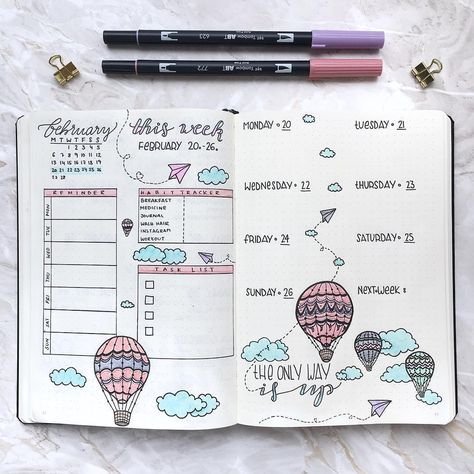
0a1ca130e30e35ae8ae825f85ad82cc9A couple of years back, I came across the idea of the bullet journal and was absolutely intrigued by this concept! Here was something that could document my entire life and I could plan months in advance and would never forget anything that needed to get done! I went and purchased a nice lined notebook and started planning my year (this was sometime in December 2016). Come January 2017, I started using the notebook as my bullet journal.

I lasted less than one month….

The bullet journal was not for me. I am the least creative person I know and can’t even draw a straight line without needing to use a ruler. This was because all the articles and videos I saw about how to effectively use a bullet journal was full of supremely talented and creative ideas which I had zero ideas to implement. I also could not write detailed notes without moving across pages in the book which hampered my journaling efforts a lot. But the deal breaker, at least to me, was the fact that I could not undo any mistakes in my journal. For a person who hates having things crossed out or cancelled, it made me squirmy and brought out all my latent tendencies! So that pretty much ended my bullet journaling journey.

So what next?

While I was using the bullet journal, I had also started using another space to document my daily life. This was nothing more than Google Docs. I started using it from January 2017 and am using it till now (and hopefully for a long time to come) as space where I document what goes on in my life on a day-to-day basis. What I do is very simple, every month is a fresh document and when I finish a year, I pull all the documents for that year into a folder named after the year. The individual files are named Year and month. That’s it. I use it almost every day and there’s no pressure to write long grandmother stories. Some days, it’s just a couple of lines and some days, yes, it’s a detailed description of what I did, ate, met and thought. I have also used it to document the steps I take each day, keep track of my eating and also any habits I am tracking at that particular time. I also love that since it’s on a cloud, I can use the space anywhere I am – where on my mobile device or on a physical computer. I also find it very cathartic when I am able to pen down my innermost thoughts and rants and when I put it down, I find my heart feel lighter and also am able to sleep well at night without having a multitude of thoughts chasing around my head.

I’ve gone a step ahead in 2018. In addition to my monthly Google Docs, I have also started using Google Sheets to track the progress of my habits and other data that I want to track this year. I have created graphs and this lets me see at a glance where I am with respect to those goals.

There are many benefits to keeping a daily diary or journal. It helps you stretch your language as you write every day and this, in turn, lets you challenge yourself with newer words and sentence structure. You are also able to keep track of your goals and lets you know where you are in terms of achieving them and you learn to improve communication skills, both written as well as oral. Also, as I wrote above, writing down your thoughts is cathartic and if you are disturbed either mentally or emotionally, the whole process allows you to make the experience more realistic, which in turns allows you heal faster. Studies have also shown that the emotional release from journaling lowers anxiety, stress, and induces better sleep.

Do you keep a journal or a diary? What has your experience been? Or perhaps you have been inspired to start a journal now? Do comment below and let me know, I’d love to hear from you….


Poem: Her Smile

pexels-photo-421884.jpegHer Smile

She saw me hovering over her
She was tired and sleepy, her eyes unfocused and a blur

She started to get cranky and angry
Her face starting to screw up and shout like a banshee

But then she got a good look at me and her face transformed
That’s when the magic started, the world lit up and warmed

She gave me the most magical gummy smile
One which warmed me from head to toe
And put in a state of glow from which I have yet to recover!