Festivals of India: Tamil New Year

Tomorrow is the first day of year on the Tamil calendar and is set in sync with the solar cycle of the lunisolar Hindu calendar, as the first day of the Tamil month Chithirai. It therefore falls on or about 14 April every year on the Gregorian calendar. The same day is observed by Hindus elsewhere as the traditional new year, but is known by other names such as Vishu in Kerala, and Vaisakhi or Baisakhi in central and northern India. The Tamil calendar follows a 60-year cycle which is also very ancient and is observed by most traditional calendars of India and China. According to popular belief it is related to 5 revolutions of Jupiter around the Sun, and also to 60-year orbit of Nakshatras or stars as mentioned in Surya Siddhanta. The 2020 Tamil New Year is called Saarvari.

The day is observed as a family time and before this day, households clean up the house, prepare a tray with fruits, flowers and auspicious items, light up the family Puja altar and visit their local temples. People wear new clothes and children go to elders to pay their respects and seek their blessings, then the family sits down to a vegetarian feast.

The Tamil New Year follows the spring equinox and generally falls on 14 April of the Gregorian year. The day celebrates the first day of the traditional Tamil calendar and is a public holiday in both Tamil Nadu and Sri Lanka. The same date is observed as the traditional new year by many Hindus in Assam, West Bengal, Kerala, Manipur, Tripura, Bihar, Odisha, Punjab, Uttar Pradesh, Uttarakhand, Himachal Pradesh, Haryana, Rajasthan as well as by Hindus in Nepal and Bangladesh. Several Buddhist communities in Myanmar, Cambodia, Laos, Thailand, and Sinhalese in Sri Lanka also celebrate the same day as their new year, likely an influence of the shared culture between South and Southeast Asia in the 1st millennium. The day is celebrated as Vishu in Kerala, Vaisakhi or Baisakhi in central and north India, Pohela Sankranti in Odisha, Pohela Boishakh in West Bengal, and Bangladesh, Rongali Bihu in Assam, Bikram Samwat or Vaishak Ek in Nepal, Aluth Avuruthu in Sri Lanka as the Sinhalese New Year, Songkran in Thailand, Pi Mai in Laos, Choul Chhnam Khmer in Cambodia and Thingyan in Myanmar

There are several references in early Tamil literature to the April new year. Nakkirar, the Sangam period author of the Neṭunalvāṭai, wrote that the sun travels from Mesha/Chitterai through 11 successive signs of the zodiac. Kūdalūr Kizhaar refers to Mesha Raasi/Chitterai as the commencement of the year in the Puṟanāṉūṟu. The Tolkaapiyam is the oldest surviving Tamil grammar that divides the year into six seasons where Chitterai marks the start of the Ilavenil season or summer. The Silappadikaaram mentions the 12 Raasis or zodiac signs starting with Mesha/Chitterai or roughly Aries as per the western zodiac. The Manimekalai alludes to the Hindu solar calendar as we know it today. Adiyarkunalaar, an early medieval commentator or Urai-asiriyar mentions the twelve months of the Tamil calendar with particular reference to Chitterai. There were subsequent inscriptional references in Pagan, Burma dated to the 11th century and in Sukhothai, Thailand dated to the 14th century to South Indian, often Vaishnavite, courtiers who were tasked with defining the traditional calendar that began in mid-April

On the eve of the New Year or Puthandu, a tray arranged with three fruits (mango, banana and jack fruit), betel leaves and arecanut, gold/silver jewellery, coins/money, flowers and a mirror. This is similar to the Vishu new year festival ceremonial tray in Kerala. According to the Tamil tradition, this festive tray is auspicious as the first sight upon waking on the new year day. Home entrances are decorated elaborately with colored rice powder designs called kolams.

In the temple city of Madurai, the Chitterai Thiruvizha is celebrated in the Meenakshi Temple. A huge exhibition is held, called Chitterai Porutkaatchi. On the day of the Tamil New Year, a big Car Festival is held at Tiruvidaimarudur near Kumbakonam. Festivals are also held at Tiruchirapalli, Kanchipuram and other places.

In Sri Lanka, the Tamils observe the traditional new year in April with the first financial transaction known as the Kai-vishesham. In this transaction children go to elders to pay their respect, and elders give their blessings and gift pocket money to the children in return. The event is also observed with the ‘arpudu’ or the first ploughing of the ground to prepare for the new agricultural cycle. The game of ‘por-thenkai’ or coconut wars between youth is played in villages through the Tamil north and east of the island while cart races are also held. The festive Puthandu season in April is a time for family visits and the renewal of filial bonds. It also coincides with the Sinhalese new year season and so is a time of joy and celebration throughout the island.

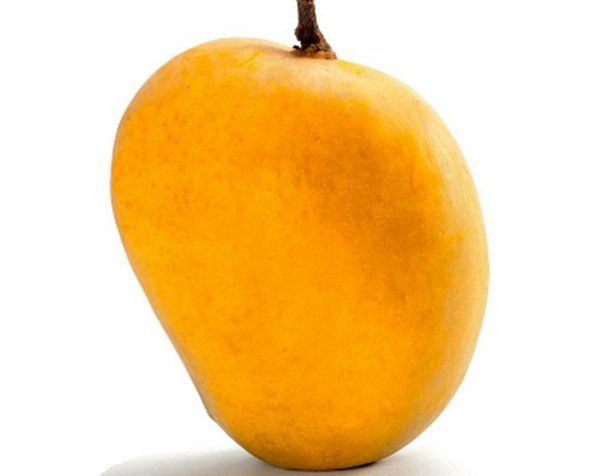
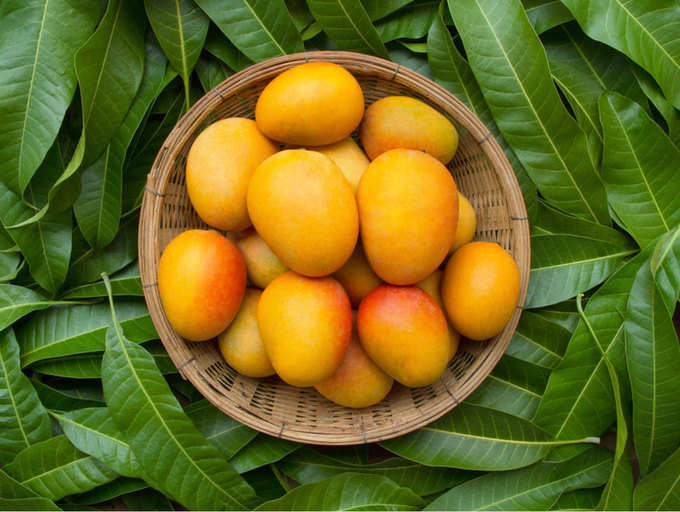
During the festive lunch that day, families eat dishes which are a combination of all flavours – sweet, sour, bitter and pungent. This is usually in the form of a mango pachadi or salad since mangoes would have started to come into season by this time. These traditional recipes combining different flavours are a symbolic reminder that one must expect all flavors of experiences in the coming new year, that no event or episode is wholly sweet or bitter, experiences are transitory and ephemeral, and to make the most from them.

In our temple in Matunga, we also have the head priests of the temple reach the annual Panchangam or calendar or alamanc for the coming year. The priest will also interpret any interesting configurations of the stars and planets and let know know which nakshatras or stars and rashis or zodiac signs would likely to be affected or blessed in the coming year. This is only a very general and cursory reading, but is something my parents look forward to each year. This year, with the country under lockdown, they will not be partaking in this activity.

To everyone celebrating their new year these days, here’s wishing you a very Happy New Year and may the coming year put to rest all the calamities of the old year and bring you and your families happiness and prosperity!

Festivals of India: Hanuman Jayanti

Celebrating the birth of India’s ancient superhero, Hanuman Jayanti is celebrated on different days in different parts of India. In most states of India, the festival is observed either in Chaitra, usually on the day of Chaitra Pournimaa or in Vaishakha, while in a few states like Kerala and Tamil Nadu, it is celebrated in the month Dhanu, also called Margazhi in Tamil. The date of Hanuman Jayanti varies from year to year and across India, various states and communities celebrate it in different times of the year. Communities in South India usually celebrate this festival during the Margazhi month of Moola Nakshathram as that month is believed to be when Hanuman was born. Telangana and Andhra Pradesh, however, celebrate Hanuman Jayanti from Chaitra Purnima to the tenth day of Krishna Paksha in the month of Vaishaka. Maharashtra places the holiday on the full moon day during the month of Chaitra.This year, the festival is celebrated today, the 8th of April, across India, Nepal, Sri Lanka and across the world where his devotees reside.

Also known as Sankatmochan, Dukhbhanjan, Maruti Nandan or Pawanputra, Lord Hanuman is an ardent devotee of Lord Sri Rama and is widely known for his unflinching devotion to Sri Rama. He is said to be able to assume any form at will, wield the mace or gada as well as many other celestial weapons, lift and move mountains, dart through the air, seize the clouds and equally rival Garuda in the swiftness of flight. Hanuman is seen as a symbol of strength and energy and also someone to turn to when a devotee is in difficulty.

Source

On Hanuman Jayati, devotees of Lord Hanuman celebrate him and seek his protection and blessings. They flock to temples to worship him and present religious offerings. In return, The devotees receive Prasad or the holy offering by the temple priests as sweets, flowers, coconuts, tilak, sacred ash and holy water. People also celebrate him on this day by reciting various devotional hyms and prayers like the Hanuman Chalisa and reading holy scriptures like the Ramayana and Mahabharata. Lord Hanuman is said to be the epitome of belief, trust and devotion. On this day, devotees pray to imbibe these qualities in their lives and lead a principled life.

Source

Lord Hanuman was born on the Anjaneri mountain. His mother Anjana was an apsara who was born on earth due to a curse. She was redeemed from this curse on giving birth to a son. The Valmiki Ramayana states that his father Kesari was the son of Brihaspati, he was the King of a place named Sumeru. Anjana performed intense prayers lasting 12 long years to Shiva to get a child. Pleased with their devotion, Shiva granted them the son they sought. Hanuman, in another interpretation, is the incarnation or reflection of Shiva himself.

Hanuman is often called the son of the deity Vayu or the Wind God; several different traditions account for the Vayu’s role in Hanuman’s birth. One story mentioned in Eknath’s Bhavartha Ramayana from the 16th century which states that when Anjana was worshiping Shiva, the King Dasharatha of Ayodhya was also performing the ritual of Putrakama yagna in order to have children. As a result, he received some sacred pudding or payasam to be shared by his three wives, leading to the births of Rama, Lakshmana, Bharata, and Shatrughna. By divine ordinance, a kite snatched a fragment of that pudding and dropped it while flying over the forest where Anjana was engaged in worship. Vayu, the Hindu deity of the wind, delivered the falling pudding to the outstretched hands of Anjana, who consumed it. Hanuman was born to her as a result. Another tradition says that Anjana and her husband Kesari prayed Shiva for a child. By Shiva’s direction, Vayu transferred his male energy to Anjana’s womb. Accordingly, Hanuman is identified as the son of the Vayu

Another story of Hanuman’s origins is derived from the Vishnu Purana and Naradeya Purana. Narada, infatuated with a princess, went to his lord Vishnu, to make him look like Vishnu, so that the princess would garland him at swayamvara or the husband-choosing ceremony. He asked for ‘Hari Mukh’ (Hari is another name of Vishnu, and mukh means face). Vishnu instead bestowed him with the face of a vanara. Unaware of this, Narada went to the princess, who burst into laughter at the sight of his ape-like face before all the king’s court. Narada, unable to bear the humiliation, cursed Vishnu, that Vishnu would one day be dependent upon a vanara. Vishnu replied that what he had done was for Narada’s own good, as he would have undermined his own powers if he were to enter matrimony. Vishnu also noted that Hari has the dual Sanskrit meaning of vanara. Upon hearing this, Narada repented for cursing Vishnu. But Vishnu told him not to repent as the curse would act as a boon, for it would lead to the birth of Hanuman, an avatar of Shiva, without whose help Rama (Vishnu’s avatar) could not kill Ravana.

Lord Hanuman is best known for his role in the epic poem and sacred text the Ramayana, which tells the story of the divine Prince Rama. Rama was sent into exile unjustly by his stepmother, Kaikeyi. While in exile, Rama’s wife, Sita, is abducted by the demon Ravana. Much of the epic poem is devoted to Rama’s determined quest to rescue Sita from Ravana. Rama successfully recovers Sita and kills Ravana with the help of the vanara or his monkey army. Rama and Sita return to the kingdom of Ayodhya and usher in a golden age of humanity. Rama, the titular character of the Ramayana, is identified as an incarnation, or avatara, of the god Vishnu.

Source

Hanuman plays a central role in the Ramayana, and his stories are nearly always tied to those of Prince Rama, also called Lord Ram. Even before Hanuman’s birth, it was predicted that he would be a devotee of Lord Ram. After he was born, Hanuman was a trouble maker who, among other feats of mischief, tried to grab the sun from the sky. In response, powerful sages cursed Hanuman and made him forget his magic powers. Hanuman became a loyal servant to Rama and a commander of Rama’s legions of monkeys. The memory of his powers was restored to Hanuman by Jambavan, the king of the bears, and as a result, Hanuman made a giant leap across the strait that lies between India and Sri Lanka, called the Palk Strait today, to steal the medicinal herbs necessary to heal the wounded in Rama’s army. When Hanuman struggled to identify the herbs, he picked up the entire mountain and brought that back to India. Before Hanuman left Sri Lanka, his tail was set on fire. Hanuman, however, used this fire to burn Sri Lanka to the ground.

Hanuman is held up as the embodiment of loyalty and devotion and these admirable traits are recognized year round at temples dedicated to Hanuman and given special attention during Hanuman Jayanti. During Hanuman Jayanti, Hindus take an early morning holy bath and either attend temples dedicated to Hanuman or perform puja at home if they have their own shrine dedicated to Hanuman. The Hanuman Chalisa is read in order to conquer evil spirits and provide mental peace to those reading and listening. People apply red powder to their foreheads in an echo of how Hanuman covered his whole body in sindoor to ensure Rama’s immortality. There is an interesting legend to why Hanuman covered his body with Sindoor. As per the legend, when Lord Hanuman found Sri Sita applying sindhūr to her forehead, He questioned her and she replied that doing so would ensure a long life for her husband, Lord Sri Rama. Lord Hanuman then proceeded to smear his entire body with sindhūr, thus ensuring Lord Sri Rama’s immortality.

Hanuman is also celebrated as a symbol of devotion, strength, magical powers and energy and also as the 11th Rudra avatara of the great god Shiva. Many devotees pray to Hanuman to be blessed with bravery, intelligence and loyalty like that which Hanuman displayed.

Hanuman is a popular god among Hindus, and his temples are often filled with monkeys who know that humans cannot harm them so long as they are on temple grounds. Hindus, however, are not the only ones who recognize Hanuman. Hanuman also appears in Buddhism, Sikhism and Jainism as well as in Indian pop culture.

Hanuman has been honored for millennia, and that fact has not changed in the modern age. Thousands still flock to his temples and wear sindoor in recognition of his devotion to Rama. Hanuman himself would likely be pleased with this. There is, after all, something perfect about the determined loyalty of Hindus to the god who was known for his faithfulness.

Here’s the divine voice of the late singer M.S. Subbalakshmi reciting the Hanuman Chalisa to end this blog post!

World Health Day

The word ‘health’ comes from the old English ‘hale’ which means ‘whole’ or ‘complete’. The World Health Organisation or WHO has given an international definition of health: “Health is a state of complete physical, mental and social well-being and not merely the absence of disease or infirmity.”

Tomorrow, April 07 marks the celebration of World Health Day. A global health awareness day, this day, held to mark the founding of the World Health Organisation is celebrated every year and is aimed to create awareness of a specific health theme to highlight a priority area of concern for the WHO. On this day, the WHO organizes international, regional and local events on the Day related to a particular theme. World Health Day is acknowledged by various governments and non-governmental organizations with interests in public health issues, who also organize activities and highlight their support in media reports, such as the Global Health Council. The World Health Day is one of eight official global health campaigns marked by WHO, along with World Tuberculosis Day, World Immunization Week, World Malaria Day, World No Tobacco Day, World AIDS Day, World Blood Donor Day, and World Hepatitis Day. Over the past 50 years this has brought to light important health issues such as mental health, maternal and child care, and climate change. The celebration is marked by activities which extend beyond the day itself and serves as an opportunity to focus worldwide attention on these important aspects of global health.

Why is health important? The way the body works depends on a person’s health. The body is designed to deal with everyday obstacles in order to be able to live life to the full, but poor health makes these everyday obstacles become larger and more difficult to overcome. For some the odds of leading a healthy life are stacked against them from the start. Health is important to everything a person does. Poor health affects people differently.

Health is also often thought of in terms of illnesses which endanger it like AIDs, Malaria and Tuberculosis – three of the most devastating diseases and today we could probably include Covid-19 which is has been the deadliest disease our generation has seen which has now been called a pandemic as it has extended over pretty much all continents with the exception of Antartica. The world we live in is a world that is increasingly interconnected and though this brings many benefits it also brings responsibility. Health is a shared responsibility, which means ensuring equal access to essential healthcare and collective action to health threats in different countries to look after those that are sick and to stop deseases from spreading.

The theme for the 2020 edition is a focus on health support staff with the theme being “Support Nurses and Midwives”. World Health Day 2020 will shine a light on the vital role played by nurses and midwives in providing health care around the world, and call for a strengthening of the nursing and midwifery workforce. There was supposed to be “dawn to dusk” advocacy events held around the world to mark World Health Day, but given the conditions we now live in and with health workers globally being streteched thin, I doubt if this is possible. There was supposed to be the launch of the first ever State of the World’s Nursing Report 2020, a report which will provide a global picture of the nursing workforce and support evidence-based planning to optimise the contributions of this workforce to improve health and wellbeing for all. This report will provide a global picture of the nursing workforce and support evidence-based planning to optimize the contributions of this workforce to improve health and wellbeing for all and to make meaningful progress toward UHC and the SDGs. The report will set the agenda for data collection, policy dialogue, research and advocacy, and investment in the health workforce for generations to come. A similar report on the Midwifery workforce will be launched in 2021.

The WHO has also designated 2020 as the Year of the Nurse and the Midwife and the 2020 theme follows this. Nurses and midwives play a vital role in providing health services. These are the people who devote their lives to caring for mothers and children; giving lifesaving immunizations and health advice; looking after older people and generally meeting everyday essential health needs. They are often, the first and only point of care in their communities. The world needs 9 million more nurses and midwives if it is to achieve universal health coverage by 2030. This is why 2020 has been designated the year of the nurse and midwife.

Educating nurses and midwives to international standards makes economic sense. It saves resources by reducing the need for costly and unnecessary interventions and increases quality of care and health for all. Strengthening nursing and midwifery – and ensuring that nurses and midwives are enabled to work to their full potential – is one of the most important things countries can do to achieve universal health coverage and improve health globally. This is especially true in times of epidemics as we are in now. By developing nursing and midwifery, countries can achieve the triple impact of improving health, promoting gender equality and supporting economic growth. Strengthening nursing and midwifery will have the additional benefits of promoting gender equity (SDG5), contributing to economic development (SDG8) and supporting other Sustainable Development Goals.

The goals for World Health Day 2020 include triggering a wave of public appreciation for the work of nurses and midwives and the part they play in delivering health care; raise the profile of nurses and midwives within the health workforce and catalyse support and investment in nurses and midwives.

Tomorrow, please remember to thank all healthcare workers in your country. They are risking their lives on a daily basis and in many countries don’t have access to proper preventive personal equipment just so they can save our lives!

The healthcare workers are the superheros of our times!

World Autism Awareness Day

Yesterday, 02 April was the World Autism Awareness Day worldwide and this day has been commemorated since 2008 to raise awareness about people with Autism Spectrum Disorder (ASD) throughout the world. This day brings individual autism organizations together all around the world to aid in things like research, diagnoses, treatment, and acceptance for those affected by this developmental disorder.

Someone in my family recently had their toddler diagnosed with ASD and so this topic is something that is quite close to my heart. When I started researching on this topic, I realised that World Autism Day was close, hence this blog post to showcase and bring more awareness to this developmental disorder.

So what actually is Autism Spectrum Disorder or ASD? Autism is a lifelong, developmental disability that affects how a person perceives the world, communicates with and relates to other people, and how they experience the world around them. The spectrum refers to a range of conditions which are characterised by some degree of impaired social behaviour, communication and language and a narrow range of interests and activities that are both unique to the individual and carried our repetitively. Autistic people see, hear and feel the world differently to other people. If you are autistic, you are autistic for life; autism is not an illness or disease and cannot be ‘cured’. Often people feel being autistic is a fundamental aspect of their identity. ASDs begin in childhood and tend to persist into adolescence and adulthood. In most cases the conditions are apparent during the first 5 years of life.

Autism is a spectrum condition. All autistic people share certain difficulties, but being autistic will affect them in different ways. Some autistic people also have learning disabilities, mental health issues or other conditions, meaning people need different levels of support. All people on the autism spectrum learn and develop. With the right sort of support, all can be helped to live a more fulfilling life of their own choosing.

Individuals with ASD often present other co-occurring conditions, including epilepsy, depression, anxiety and attention deficit hyperactivity disorder (ADHD). The level of intellectual functioning in individuals with ASDs is extremely variable, extending from profound impairment to superior levels.

Autism is actually more common than we think. In 2018, the CDC determined that approximately 1 in 59 children is diagnosed with an ASD. It is estimated that worldwide one in 160 children has an ASD, though it may be reported lower in many less developed countries. Autism hits boys harder than girls with 1 in 37 boys and 1 in 151 girls diagnosed with an ASD. Boys are four times more likely to be diagnosed with autism than girls. And most children are still being diagnosed after age 4, though autism can be reliably diagnosed as early as age 2. 31% of children with ASD have an intellectual disability with an intelligence quotient or IQ of below 70, 25% are in the borderline IQ range of between 71-85 and 44% have IQ scores in the average to above average range of more than 85. Autism does not discriminate and affects all ethnic and socioeconomic groups, though minority groups tend to be diagnosed later and less often. If you suspect a child is autistic, please reach out to their healthcare provider as it has been proven that early intervention affords the best opportunity to support healthy development and deliver benefits across the lifespan. Also you can’t detect or even predict autism.

Studies over the last 50 years have shown the prevelance of ASD to be increasing globally. There are many possible explanations for this apparent increase, including improved awareness, expansion of diagnostic criteria, better diagnostic tools and improved reporting.

So what makes someone on the spectrum? Research indicates there are probably many factors which make a child likely to have an ASD including genetic and the environment. If the child is born to older parents, the child is at a higher risk to be on the autisim spectrum. Parents who have a child with ASD have a 2 to 18 percent chance of having a second child who is also affected. Studies have also shown that among identical twins, if one child has autism, the other will be affected about 36 to 95 percent of the time. In non-identical twins, if one child has autism, then the other is affected about 31 percent of the time. Researchers have done extensive research over the last two decades on the link between childhood vaccinations and autism. The results of this research are clear: Vaccines do not cause autism. So please people, if you are on the fence on this, please do your research and do vaccinate your child for the health of them and the community you live in.

Autistic people see the world differently compared to you and me. Some autistic people say the world feels overwhelming and this can cause them considerable anxiety. In particular, understanding and relating to other people, and taking part in everyday family, school, work and social life, can be harder. Other people appear to know, intuitively, how to communicate and interact with each other, yet can also struggle to build rapport with autistic people. Autistic people may wonder why they are ‘different’ and feel their social differences mean people don’t understand them. Autistic people often do not ‘look’ disabled. Some parents of autistic children say that other people simply think their child is naughty, while adults find that they are misunderstood.

The world can seem a very unpredictable and confusing place to autistic people, who often prefer to have a daily routine so that they know what is going to happen every day. They may want to always travel the same way to and from school or work, or eat exactly the same food for breakfast. The use of rules can also be important. It may be difficult for an autistic person to take a different approach to something once they have been taught the ‘right’ way to do it. People on the autism spectrum may not be comfortable with the idea of change, but may be able to cope better if they can prepare for changes in advance.

Many autistic people have intense and highly-focused interests, often from a fairly young age. These can change over time or be lifelong, and can be anything from art or music, to trains or computers. An interest may sometimes be unusual. One autistic person loved collecting rubbish, for example. With encouragement, the person developed an interest in recycling and the environment. Many channel their interest into studying, paid work, volunteering, or other meaningful occupation. Autistic people often report that the pursuit of such interests is fundamental to their wellbeing and happiness.

Autistic people may also experience over- or under-sensitivity to sounds, touch, tastes, smells, light, colours, temperatures or pain. For example, they may find certain background sounds, which other people ignore or block out, unbearably loud or distracting. This can cause anxiety or even physical pain. Or they may be fascinated by lights or spinning objects.

Early diagnosis and intervention can improve learning, communication and social skills, as well as underlying brain development. Intervention during early childhood is important to promote the optimal development and well-being of people with an ASD. Applied behavior analysis (ABA) and therapies based on its principles are the most researched and commonly used behavioral interventions for autism. Many children affected by autism also benefit from other interventions such as speech and occupational therapy. Developmental regression, or loss of skills, such as language and social interests, affects around 1 in 5 children who will go on to be diagnosed with autism and typically occurs between ages 1 and 3.

It is important that, once identified, children with an ASD and their families are offered relevant information, services, referrals, and practical support according to their individual needs. There is no known cure for ASD. Evidence-based psychosocial interventions, however, such as behavioural treatment and skills training programmes for parents and other caregivers, can reduce difficulties in communication and social behaviour, with a positive impact on the person’s well-being and quality of life.

The health-care needs of people with ASD are complex and require a range of integrated services, including health promotion, care, rehabilitation services, and collaboration with other sectors such as education, employment and social care. Interventions for people with ASD and other developmental disorders need to be accompanied by broader actions for making their physical, social, and attitudinal environments more accessible, inclusive and supportive.

Parenting an autistic child is not without challenges. An estimated one-third of people with autism are nonverbal. 31% of children with ASD have an intellectual disability with significant challenges in daily function. Nearly half of those with autism wander or bolt from safety while nearly two-thirds of children with autism between the ages of 6 and 15 have been bullied. Nearly 28 percent of 8-year-olds with ASD have self-injurious behaviors. Head banging, arm biting and skin scratching are among the most common. Drowning remains a leading cause of death for children with autism and accounts for approximately 90 percent of deaths associated with wandering or bolting by those age 14 and younger.

Parents also find that those with ASD also have other medical and mental health issues as autism
can affect the whole body. Attention Deficient Hyperactivity Disorder (ADHD) affects an estimated 30 to 61 percent of children with autism and more than half of children with autism have one or more chronic sleep problems. Anxiety disorders affect an estimated 11 to 40 percent of children and teens on the autism spectrum. Depression affects an estimated 7% of children and 26% of adults with autism while children with autism are nearly eight times more likely to suffer from one or more chronic gastrointestinal disorders than are other children. As many as one-third of people with autism have epilepsy (seizure disorder). Studies suggest that schizophrenia affects between 4 and 35 percent of adults with autism. By contrast, schizophrenia affects an estimated 1.1 percent of the general population. It’s not just in childhood, autism-associated health problems extend across the life span – from young children to senior citizens. Nearly a third (32 percent) of 2 to 5 year olds with autism are overweight and 16 percent are obese. By contrast, less than a quarter (23 percent) of 2 to 5 year olds in the general population are overweight and only 10 percent are medically obese.

ASD also has a social and economic impact. ASDs may significantly limit the capacity of an individual to conduct daily activities and participate in society. ASDs often negatively influence the person’s educational and social attainments as well as employment opportunities. While some individuals with ASD are able to live independently, others have severe disabilities and require life-long care and support. This imposes a significant emotional and economic burden on people with these disorders and their families. Caring for children with a severe form of the condition may be demanding, especially where access to services and support are inadequate. Therefore the empowerment of caregivers is increasingly being recognized as a critical component of care for children with ASD.

Other than a social and economic impact, those with an ASD and their parents and caregivers also suffer from backlash in society. They are often subject to stigma and discrimination in all areas of their lives, including sometimes an unjust deprivation of health care, education and opportunities to engage and participate in their communities. People with ASD have the same health problems that affect the general population. Furthermore, they may have specific health-care needs related to ASD or other co-occurring conditions. They may be more vulnerable to developing chronic noncommunicable conditions because of behavioural risk factors such as physical inactivity and poor dietary preferences, and are at greater risk of violence, injury and abuse. Those with ASD have higher rates of unmet health-care needs compared with the general population. They are also more vulnerable during humanitarian emergencies. A common barrier is created by health-care providers’ inadequate knowledge of ASD and misconceptions.

The theme for the day in 2020 draws attention to issues of concern related to the transition to adulthood, such as the importance of participation in youth culture and the community self-determination and decision-making, access to post-secondary education and employment, and independent living. Becoming an adult is typically equated with becoming a full and equal participant in the social, economic and political life of one’s community. However, the transition to adulthood remains a significant challenge for persons with autism because of the lack of opportunities and support devoted to this phase of their life. As a result, the completion of high school, when education and other supported services provided by some governments tend to cease, has often been likened to “falling off a cliff”.

Wear blue today to support and raise awareness for this developmental disorder. Use social media to promote awareness and talk to the people around you and let them know how they can support those who are on the spectrum within their communities. These individuals, especially the children and young adults deserve your support so they too can become contributing members of our society.

April Fools’ Day

Today is the first of April and traditionally the day when people prank each other. I used to fall for the silly pranks my classmates in school used to do when we were much younger. I guess I was too trusting in nature and believed what was in front of me.

Also known as All Fools’ Day, the pranking done on April 1 is an annual custom on consisting of practical jokes and hoaxes. The player of the joke or hoax often exposes their action later by shouting “April fools” at the recipient. The recipients of these actions are called April fools. Mass media can be involved in these pranks, which may be revealed as such the following day. Although popular since the 19th century, the day is not a public holiday in any country. The only exception is Odessa in Ukraine, where the first of April is an official city holiday. Aside from April Fools’ Day, the custom of setting aside a day for the playing of harmless pranks upon one’s neighbour has historically been relatively common in the world.

While the origins of this day are obscure, some historians speculate that April Fools’ Day dates back to 1582, when France switched from the Julian calendar to the Gregorian calendar, as called for by the Council of Trent in 1563. People who were slow to get the news or failed to recognize that the start of the new year had moved to January 1 and continued to celebrate it during the last week of March through April 1 became the butt of jokes and hoaxes. Some writers in French literature suggest that April Fools’ originated because in the Middle Ages, New Year’s Day was celebrated on March 25 in most European towns, with a holiday that in some areas of France, specifically, ended on April 1 and those who celebrated New Year’s Eve on January 1 made fun of those who celebrated on other dates by the invention of April Fools’ Day. The use of January 1 as New Year’s Day became common in France only in the mid-16th century and the date was not adopted officially until 1564, by the Edict of Roussillon. The pranks in France included having paper fish placed on their backs and being referred to as “poisson d’avril” (April fish), said to symbolize a young, easily caught fish and a gullible person.In the Netherlands, the origin of April Fools’ Day is often attributed to the Dutch victory in 1572 at Brielle, where the Spanish Duke Álvarez de Toledo was defeated.

Historians have also linked April Fools’ Day to festivals such as Hilaria, which was celebrated in ancient Rome at the end of March and involved people dressing up in disguises. There’s also speculation that April Fools’ Day was tied to the vernal equinox, or first day of spring in the Northern Hemisphere, when Mother Nature fooled people with changing, unpredictable weather.

In 1686, John Aubrey referred to the celebration as “Fooles holy day”, the first British reference. On April 1, 1698, several people were tricked into going to the Tower of London to “see the Lions washed”. April Fools’ Day spread throughout Britain during the 18th century. In Scotland, the tradition became a two-day event, starting with “hunting the gowk,” in which people were sent on phony errands (gowk is a word for cuckoo bird, a symbol for fool) and followed by Tailie Day, which involved pranks played on people’s derrieres, such as pinning fake tails or “kick me” signs on them.

In modern times, people have gone to great lengths to create elaborate April Fools’ Day hoaxes. Newspapers, radio and TV stations and Web sites have participated in the April 1 tradition of reporting outrageous fictional claims that have fooled their audiences. Some of the more interesting and perhaps well thoughtout pranks which fooled the public include the BBC prank in 1957, where they reported that Swiss farmers were experiencing a record spaghetti crop and showed footage of people harvesting noodles from trees; numerous viewers were fooled. In 1985, Sports Illustrated tricked many of its readers when it ran a made-up article about a rookie pitcher named Sidd Finch who could throw a fastball over 168 miles per hour. In 1996, Taco Bell, the fast-food restaurant chain, duped people when it announced it had agreed to purchase Philadelphia’s Liberty Bell and intended to rename it the Taco Liberty Bell. In 1998, after Burger King advertised a “Left-Handed Whopper,” scores of clueless customers requested the fake sandwich. In 2008, the BBC reported on a newly discovered colony of flying penguins. An elaborate video segment was even produced, featuring Terry Jones walking with the penguins in Antarctica, and following their flight to the Amazon rainforest which fooled thousands of viewers. For a more comprehensive list of April Fool pranks, here’s a link on Wikipedia.

So did you prank a family member or friend? I would love to hear how you pranked someone or were a victim of someone’s prank in the comments below.