One child, one teacher, one book and one pen can change the world! ~ Malala Yousafzai
Education is a basic human right! It transforms lives and is a great social leveler.
Education is a human right, a public good and a public responsibility. Education to essential to reduce inequalities and improve health, to achieve gender equality and eliminate child marriage, to protect our planet’s resources, fight hate speech, xenophobia and intolerance, and to nurture global citizenship. Yet, there are at least 250 million children, adolescents and youth are out of school, most of them girls with yet millions more who attend school are not mastering the basics. This is a violation of their human right to education and the world cannot afford a generation of children and young people who lack the skills they need to compete in the 21st century economy, nor can we afford to leave behind half of humanity.
In 2018, the United Nations General Assembly proclaimed 24 January as the International Day of Education, in celebration of the role of education for peace and development. Without inclusive and equitable quality education and lifelong opportunities for all, countries will not succeed in achieving gender equality and breaking the cycle of poverty that is leaving millions of children, youth and adults behind.
Today, 258 million children and youth still do not attend school; 617 million children and adolescents cannot read and do basic math; less than 40% of girls in sub-Saharan Africa complete lower secondary school and some four million children and youth refugees are out of school. Their right to education is being violated and it is unacceptable. Education transforms lives and is at the heart of UNESCO’s mission to build peace, eradicate poverty and drive sustainable development.
The right to education is enshrined in article 26 of the Universal Declaration of Human Rights which calls for free and compulsory elementary education. The Convention on the Rights of the Child, adopted in 1989, goes further to stipulate that countries shall make higher education accessible to all. When it adopted the 2030 Agenda for Sustainable Development in September 2015, the international community recognized that education is essential for the success of all 17 of its goals. Sustainable Development Goal 4, in particular, aims to “ensure inclusive and equitable quality education and promote lifelong learning opportunities for all” by 2030.
This year is the third International Day of Education which took place yesterdat and will be marked today with the theme ‘Recover and Revitalize Education for the COVID-19 Generation’. Now is the time to power education by stepping up collaboration and international solidarity to place education and lifelong learning at the centre of the recovery. The theme has three main segments: learning heroe, innovations, and financing.
So today, in honour of the International Day of Education, if there is a child near you who are not yet in school, please ensure that they get their basic universal right and get an education!
In junior college (grades 11 and 12 to those who don’t follow the British system), I had a subject called Logic. This was a completely new subject for everyone and not everyone was enamoured by it. But I loved it and loved it so much that at one point in time, I wanted to major in it. Then I learnt that Logic was part of a Philosophy major and so Logic and I parted ways because I had decided on two majors I had to choose to become my major. So when I heard that yesterday was World Logic Day, I could not help but write about this subject, which was once a favourite.
The ability to think is one of the most defining features of humankind. In different cultures, the definition of humanity is associated with concepts such as consciousness, knowledge and reason. According to the classic western tradition, human beings are defined as “rational” or “logical animals”. Logic, as the investigation on the principles of reasoning, has been studied by many civilizations throughout history and, since its earliest formulations, logic has played an important role in the development of philosophy and the sciences. World Logic Day intends to bring the intellectual history, conceptual significance and practical implications of logic to the attention of interdisciplinary science communities and the broader public
In the twenty-first century – indeed, now more than ever – the discipline of logic is a particularly timely one, utterly vital to our societies and economies. Computer science and information and communications technology, for example, are rooted in logical and algorithmic reasoning. Despite its undeniable relevance to the development of knowledge, sciences and technologies, there is little public awareness on the importance of logic. The proclamation of World Logic Day by UNESCO, in association with the International Council for Philosophy and Human Sciences (CIPSH), intends to bring the intellectual history, conceptual significance and practical implications of logic to the attention of interdisciplinary science communities and the broader public.
World Logic Day was initiated to encourage the development of logical research, to foster and strengthen interactions between people having interest for logic, to make better known logic among researchers of all fields on location as well as to make the work of logicians on location better known and lastly to develop, promote and make better known logic in the world. So why was January 14 selected as World Logic Day? This date is the date of the death of Kurt Gödel and the date of birth of Alfred Tarski, two of the most prominent logicians of the twentieth century. Other than this, according to the Julian calendar, which was the calendar promoted by Julius Cæsar, in use from 45 B.C. to 1582 A.D. and still in use in some locations, January 14 was considered to be New Year’s Day, hence an apt day to start the new year with logic and rationale.
A dynamic and global annual celebration of World Logic Day aims at fostering international cooperation, promoting the development of logic, in both research and teaching, supporting the activities of associations, universities and other institutions involved with logic, and enhancing public understanding of logic and its implications for science, technology and innovation. Furthermore, the celebration of World Logic Day can also contribute to the promotion of a culture of peace, dialogue and mutual understanding, based on the advancement of education and science. The Day was first commemorated in 2019 and this year’s celebrations are the third time the world will celebrate World Logic Day. Academic, logicians, philosophers and mathematicians worldwide would have celebrated this day yesterday and if you have not yet done so, you can still do it today!
Like most of the poetry I write, this too came by unbidden while I was writing my reflections for 2020 and resolutions for 2021. While I have made my new year resolutions, we are still living in an uncertian world and I for one, am hopeful that 2021 will be a much better year for all of us.
Out with the old, in with the new Isnt that how we greet a new year anew?
2021 stretches before us, like a blank piece of paper A new beginning, a chance to get our act together Resolutions are made and promises sworn as we cheer Learning from past mistakes, we vow to do better this year
2020 was a tough year for sure as we all know We’ve still not come out of the woods, the process will be long and slow But the end of the year did bring some good news Maybe this will chase off the year-end blues
My hope for 2021 is just this wish, small but true May all your dreams come true, find hope and peace in all that you do May the year be the one where you shine like a star Win that war inside yourself, be a superstar
My wish for 2021 is that our world goes back to a semblance of normal We are able to meet our loved ones and life again becomes dull Here’s wishing you all loads of happiness, peace and much more Happy New Year and peace and joy more than you have ever known before!
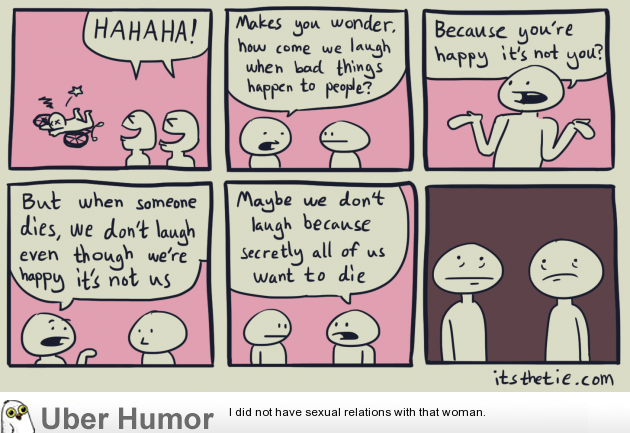
The Japanese have a saying: “The misfortune of others tastes like honey.” The philosopher Arthur Schopenhauer called schadenfreude “an infallible sign of a thoroughly bad heart and profound moral worthlessness”, the worst trait in human nature.
We all feel happy when our favourite team wins and gloat at the other team. In an India-Pakistan cricket match, when India wins, you usually get to hear and see crackers burst with loats of gloating and I am sure it is pretty much the same on the other side when India loses a match.
There is a word for this feeling – a German word, schadenfreude which literally translates to harm-joy and is the experience of pleasure, joy, or self-satisfaction that comes from learning of or witnessing the troubles, failures, or humiliation of another. Schadenfreude is a complex emotion where, rather than feeling sympathy, one takes pleasure from watching someone’s misfortune. This emotion is displayed more in children than adults, but adults also experience schadenfreude, although generally we are able to conceal it.
I read about this word and was absolutely fascinated by it. So I decided to read up more about and the meaning behind the word.
As human beings, we know how to enjoy failures. Enjoying other people’s misfortunes might sound simple – a mere glint of malice, a flick of spite. But look closer and you’ll glimpse some of the most hidden yet important parts of our lives. We feel a sense of glee at someone’s incompetence, a self-righteous satisfaction when hypocrites are exposed and the inner triumph of seeing a rival falter. Sometimes it is easy to share our delight, but far harder to acknowledge are those spasms of relief which accompany the bad news of our successful friends and relatives. They come involuntarily, these confusing bursts of pleasure, swirled through with shame. And they worry us – not just because we fear that our lack of compassion says something terrible about us – because they point so clearly to our envy and inferiority, and how we clutch at the disappointments of others in order to feel better about our own.
Researchers have found that there are three driving forces behind schadenfreude: aggression, rivalry, and social justice. Self-esteem has a negative relationship with the frequency and intensity of schadenfreude experienced by an individual; individuals with less self-esteem tend to experience schadenfreude more frequently and intensely. The reverse also holds true—those with higher self-esteem experience schadenfreude less frequently or with less emotional intensity. It is hypothesised that this inverse relationship is mediated through the human psychological inclination to define and protect their self – and in-group identity or self-conception.
Specifically, for someone with high self-esteem, seeing another person fail may still bring them a small, but effectively negligible surge of confidence because the observer’s high self-esteem significantly lowers the threat they believe the visibly-failing human poses to their status or identity. Since this confident individual perceives that, regardless of circumstances, the successes and failures of the other person will have little impact on their own status or well-being, they have very little emotional investment in how the other person fares, be it positive or negative. Conversely, for someone with low self-esteem, someone who is more successful poses a threat to their sense of self, and seeing this mighty person fall can be a source of comfort because they perceive a relative improvement in their internal or in-group standing.
Aggression-based schadenfreude primarily involves group identity. The joy of observing the suffering of others comes from the observer’s feeling that the other’s failure represents an improvement or validation of their own group’s (in-group) status in relation to external (out-groups) groups. This is, essentially, schadenfreude based on group versus group status. Rivalry-based schadenfreude is individualistic and related to interpersonal competition and arises from a desire to stand out from and out-perform one’s peers. This is schadenfreude based on another person’s misfortune eliciting pleasure because the observer now feels better about their personal identity and self-worth, instead of their group identity. Justice-based schadenfreude comes from seeing that behavior seen as immoral or bad is punished. It is the pleasure associated with seeing a bad person being harmed or receiving retribution and schadenfreude is experienced because it makes people feel that fairness has been restored for a previously un-punished wrong.
Today schadenfreude is all around us. It’s there in the way we do and view politics, how we treat celebrities, in online fail videos. Today it is probably easily felt and shared compared to earlier times. Most of us have a sense of unease while experiencing schadenfreude, but we squash it down firmly while enjoying yet another article or video about the failure of someone else, and if it is someone we don’t know, like a politician or celebrity, it somehow makes it ok. And if the suffering is because of something they said or did and is a comeuppance, it makes us feel justified as if they deserved whatever happened to them. But what about when we misjudge people? Those are the times our schadenfreude leaves feeling ackward and slightly upset at ourselves.
There has been an explosion of research. Before 2000, barely any academic articles were published with the word schadenfreude in their title, but now even a cursory search throws up hundreds, from neuroscience to philosophy to management studies. What is driving all this interest? No doubt it is partly motivated by our attempts to understand life in the internet age, where sniggering at other people, once often socially inappropriate, now comes with less risk. But could it also be that we are becoming more empathic? The capacity to attune ourselves to other people’s suffering is highly prized today, and rightly so. Putting ourselves in another’s shoes impacts on our ability to lead others, to parent, to be a decent partner and friend. And the more important empathy becomes, the more obnoxious schadenfreude seems. Schadenfreude has been called empathy’s shadow, casting the two as fundamentally incompatible. According to psychologist Simon Baron-Cohen, psychopaths are not only detached from other people’s suffering but even enjoy it. Yet schadenfreude has its benefits – a quick win which alleviates inferiority or envy; a way of bonding over the failure of a smug colleague. But it is also a testament to our capacity for emotional flexibility, our ability to hold apparently contradictory thoughts and feelings in mind simultaneously.
Living in an age of schadenfreude, we fear that this emotion can lead us astray and we really need to think with a different perspective about what this much-maligned emotion does for us, and what it tells us about our relationships with ourselves and each other.
Exquisite, evocative and judgemental, schadenfreude is an inherent flaw in the human psyche, but it is a flaw we all must face up to and learn to live with if we truly want to understand life in the modern world.
I have been feeling this at least since June/July of last year. The days seem to be flying past. I would wake up one morning on a Monday and the next thing I know it’s Friday! The week has zipped past me without really realising it. I used to think it was just me, but on speaking with family and friends, I realised quite a few of them also felt the same. Here we are in the new year and time still seems not to stop. And in the midst of the pandemic when most of us are stuck at home, we would expect time to not pass as fast as it would during a normal time. Instead of time slowing down, it seems to be moving at wrap speed. I decided to see if this is a phenomenon and if this is scientifically true.
Time as a concept is fixed, there is a fixed number of hours in a day and day morphes into the night at a fixed time each day and is constantly moving and changing. What happens now is different from what happens in the next minute. Simply put, this minute you are reading this paragraph, but within the next sixty seconds or slightly later, you will reach the next paragraph and time has shifted.
But it has also been proven that time passes faster at the top of a mountain as opposed to at sea level. The difference is small but can be measured with precision timepieces that can be bought today for a few thousand dollars. This slowing down can be detected between levels just a few centimetres apart: a clock placed on the floor runs a little more slowly than one on a table.
Einstein understood this slowing down of time a century before we had clocks precise enough to measure it. He imagined that the sun and the Earth each modified the space and time that surrounded them, just as a body immersed in water displaces the water around it. This modification of the structure of time influences in turn the movement of bodies, causing them to “fall” towards each other.
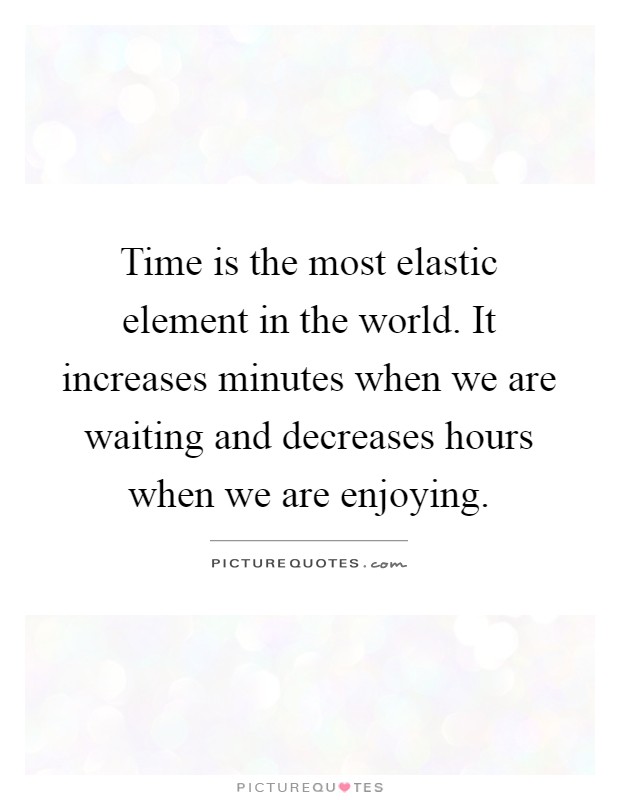
But how does this explain why sometimes time is elastic, why sometimes time moves fast and other times it is as slow as molasses? Why when we are having a bad day, or eagerly awaiting something that will happen tomorrow, a day can feel as long as a year and when you are having fun or are on a holiday, an entire week can pass before you know it and it’s time to go back to our mundane life? This is probably what is the elasticity of time.
While researching this piece, I realised I am not the first to realise this and speak about it. While this has not yet been fully researched, some people feel that it is because we create our own subjective experience of time in our minds and it doesn’t always match up with what we read on the clock or the calendar. A 20-minute lunch with a friend goes by in a flash, while a 20-minute wait for a delayed train can feel interminable, yet in reality of course the duration is identical.
We estimate the passing of time in two ways, either prospectively by how fast is time passing right now or retrospectively by how fast did last week or the last year go by. When we are stuck at home, either in a lockdown or because we are told to work or study from home for the time being, we are stuck with those with whom we live and there are many who are isolated from family and friends and we have the long days to fill up. While work takes a big chunk of our time, we have also found other ways to pass time for when we are not working. We do that by rediscovering our hobbies, watching content online or on television, speaking with family and friends and other ways to fill those hours which we would have otherwise used for socialising. But inevitably, the days start to look and feel a little similar. Weekdays and weekends blend together and we find it hard to distinguish between them and there are many days when I have woken up and it has taken me some time to think about what day it is.
This blurring of days who all look the same leads us to create fewer new memories, which is crucial to our sense of time perception. When each day is either the same or similar to the previous one and the one before that, we fail to distinguish between them. Memories are one of the ways that we judge how much time has passed and so when days look similar or even identical, it just feels like one long day and with nothing to really distinguish between our weekdays and weekends, months go by before we have something new to add to our memory bank. It’s like when we go on a holiday to a new place, time seems to zip by there because everything is new, and when we get home and look back, because there are so many memories of the holiday, it feels like we’ve been away longer that we actually did.
During times like the pandemic, it’s the opposite that happens. Now, if we get to the end of the week and look back, because we have hardly any new memories made, time seems to disappear. It’s a less extreme version of the experience some people have while in prison or when they’re ill. Time passes painfully slowly and they long for it to be over, but when it is and they look back, time can feel as though it has contracted. Of course some of us have found ourselves busier than ever during this period, juggling the technological challenges of working from home with the new job of home-schooling children. So even though we may be busier than ever, we spend all our time at home and this means we don’t have many memories which are not associated with another place or location and this makes us feel that time has just zipped by. Dozens of Zoom calls from the same surroundings can start to merge into one compared with memories of real life where we see people in different places.
Our perception of time in the future has also altered. Pre-pandemic, we thought of the near future when we would take holidays plan for or other events in our lives. But today, we either look to the far future when all this is over or to the immediate future, perhaps planning on what to cook for lunch the next day. Once the pandemic is over, will we look back and see it as one chunk of time or will we be able to distinguish the various months of 2020? I do remember the time in January when Singapore reported its first case. This was just after we went for S’ cousin’s engagement over in Johor Bahru in Malaysia. That was the last time we went out anywhere significantly other than for errands and that day stands out in stark contrast to the rest of the year.
So what do you think of your time during this pandemic? Did time zip past you or was it slow as molasses? Do comment and let me know.








 Memories and Such