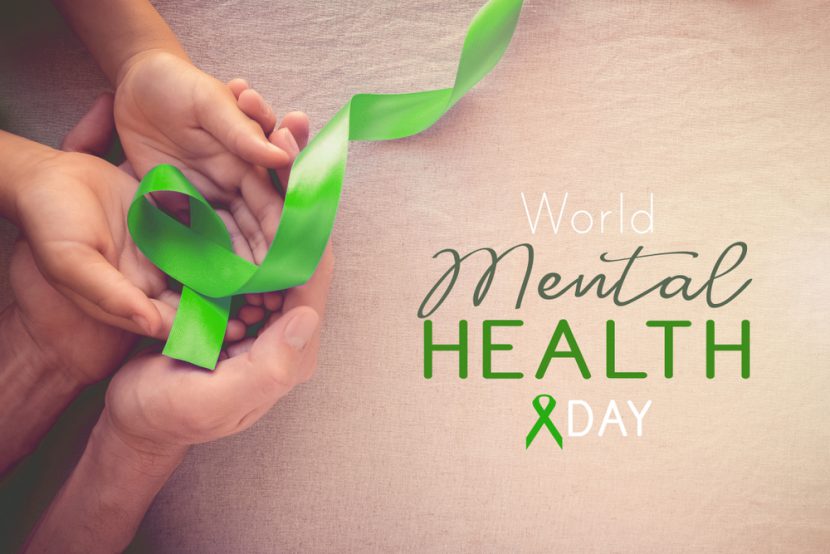
World Mental Health Day

Mental health is essential to our overall well-being and as important as physical health. When we feel mentally well, we can work productively, enjoy our free time, and contribute actively to our communities. Tomorrow is commemorated as World Mental Health Day to put a spotlight on what mental illness is and how it can affect large portions of society.

Today, more than ever before mental health has come front and centre of people’s conscious. Because of the pandemic that’s hit our world, there are many, due to various reasons, who have reached the end of their teather, mentally and physically. Physical symptoms are very visible and treatable, but what about mental symptoms? Mental illnesses are the silent killers of our century and is one of the most neglected areas of public health.

Close to 1 billion people are living with a mental disorder, 3 million people die every year from the harmful use of alcohol and one person dies every 40 seconds by suicide. And now, billions of people around the world have been affected by the COVID-19 pandemic, which is having a further impact on people’s mental health. Yet, relatively few people around the world have access to quality mental health services. In low- and middle-income countries, more than 75% of people with mental, neurological and substance use disorders receive no treatment for their condition at all. Furthermore, stigma, discrimination, punitive legislation and human rights abuses are still widespread.

The limited access to quality, affordable mental health care in the world before the pandemic, and particularly in humanitarian emergencies and conflict settings, has been further diminished due to COVID-19 as the pandemic has disrupted health services around the world. Primary causes have been infection and the risk of infection in long-stay facilities such as care homes and psychiatric institutions; barriers to meeting people face-to-face; mental health staff being infected with the virus; and the closing of mental health facilities to convert them into care facilities for people with COVID-19. The current worldwide pandemic arose against an already dire mental health landscape that saw mental health conditions on the rise across the globe. About 450 million people live with mental disorders that are among the leading causes of ill-health and disability worldwide according to the WHO World Health Report of 2001. One person in every four will be affected by a mental disorder at some stage of their lives while mental, neurological and substance use disorders exact a high toll on health outcomes, accounting for 13% of the total global burden of disease according to a WHO report from 2012. The World Health Organization in 2018 stated that every 40 seconds someone dies by suicide. Annually, this represents over 800 000 people that die by suicide, which is more than people dying by war and homicide put together. For every suicide, there are many more people who attempt suicide every year. A prior suicide attempt is the single most important risk factor for suicide in the general population. Suicide is the second leading cause of death among 15 to 29-year-olds while 79% of global suicides occur in low- and middle-income countries. Every suicide is a tragedy that affects families, communities and entire countries and has long-lasting and devastating effects on the people left behind.

The World Economic Forum in 2018 noted that mental health disorders are on the rise in every country in the world and could cost the global economy up to $16 trillion between 2010 and 2030 if a collective failure to respond is not addressed. We are faced with an international mental health crisis and have been forewarned over the past two decades of this imminent catastrophe. This has been compounded by the need for psychosocial support and mental health interventions during this trying time. This bleak picture necessitates that we ensure that mental health is prioritised now more than ever before.

So this year’s World Mental Health Day’s message is a call for the world to come together and begin to readdress this inequality in the treatment of mental health. According to the World Health Organisation, unless the world makes a serious commitment to scale up investments in mental health now, the health, social and economic consequences will be far-reaching.

Countries are estimated to spend, on an average, only around 2% of their total healthcare budgets on mental health and  international development assistance for mental health has never exceeded 1% of all development assistance for health. This is despite the fact that for every US$ 1 invested in scaled-up treatment for common mental disorders such as depression and anxiety, there is a return of US$ 5 in improved health and productivity.

Because of the global pandemic, this year’s World Mental Health Day event will be online and the WHO will host a global online advocacy event on mental health. You can click on WHO’s social media pages to follow the event.

If you or someone you know are stressed and need resources to keep mentally healthy and reduce stress, here’s a link where you can find many resources to help you. In cases of mental distress, the first step is to talk to someone you trust. If you feel you need it, seek help from a professional.

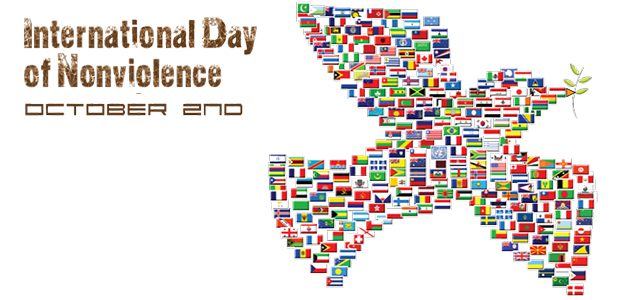
International Day of Non Violence

Source

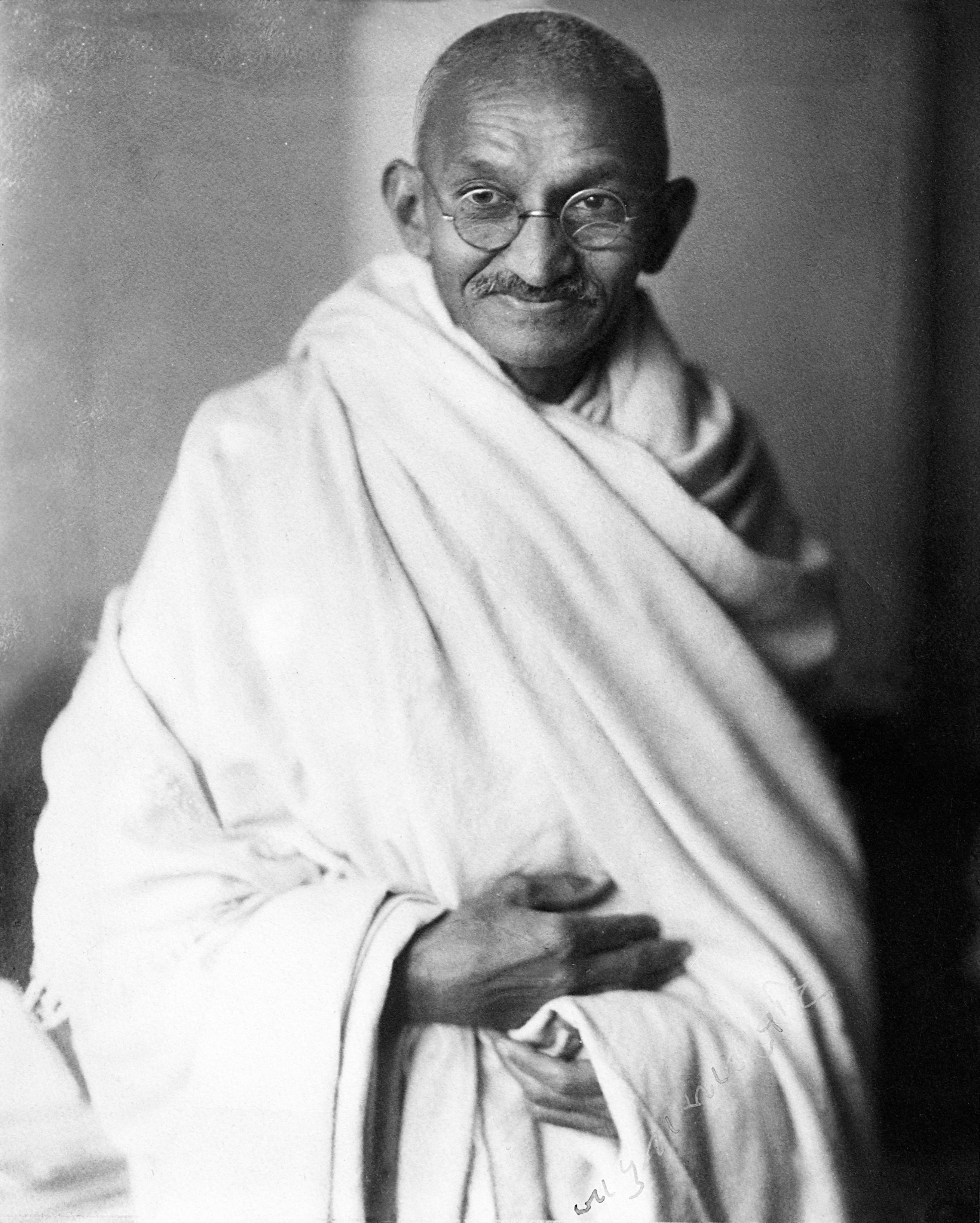
In honour of the man who probably showed the world what non violence can achieve, 02 October, the birth anniversary of Mohandas Karamchand Gandhi, who led the non violent uprising leading to India’s independence, has been declared the International Day of Non Violence by the United Nations on 15 June 2007.

According to the resolution which established the commemoration, the International Day is an occasion to “disseminate the message of non-violence, including through education and public awareness”. The resolution reaffirms “the universal relevance of the principle of non-violence” and the desire “to secure a culture of peace, tolerance, understanding and non-violence”.

The principle of non-violence, also known as non-violent resistance, rejects the use of physical violence in order to achieve social or political change. Often described as “the politics of ordinary people”, this form of social struggle has been adopted by mass populations all over the world in campaigns for social justice.

Professor Gene Sharp, a leading scholar on non-violent resistance, uses the following definition in his publication, The Politics of Nonviolent Action: “Nonviolent action is a technique by which people who reject passivity and submission, and who see struggle as essential, can wage their conflict without violence. Nonviolent action is not an attempt to avoid or ignore conflict. It is one response to the problem of how to act effectively in politics, especially how to wield powers effectively.”

While non-violence is frequently used as a synonym for pacifism, since the mid-twentieth century the term non-violence has been adopted by many movements for social change which do not focus on opposition to war.

One key tenet of the theory of non-violence is that the power of rulers depends on the consent of the population, and non-violence therefore seeks to undermine such power through withdrawal of the consent and cooperation of the populace.

There are three main categories of non-violence action: protest and persuasion, including marches and vigils; non-cooperation; and non-violent intervention, such as blockades and occupations.

Why is such a day important for us to commemorate? Days like these raise awareness because the term, “non-violence,” has been used so often in the last century that its meaning has taken on new forms. Often believed to be a synonym for pacifism, which it can be, it’s also been adopted by groups around the world to be a force for social change, rather than strictly opposition to war. Non-violence is a proven method for social change because the term “Non-violence” is a broad umbrella term under which there are several categories. Non-violent actions include protests, marches and vigils, which were successfully employed in the 1960s to bring about social changes in America. Non-cooperation and non-violent intervention, such as blockades and sit-ins, were also successfully used in America to demonstrate further inequalities. All of these efforts led to the peaceful spread of ideas. And lastly world over there are plenty of conflicts to solve as globalisation has given us a more productive global economy but it’s also led to more complex issues that need solving. To help keep these problems from escalating to violence, spreading the ideas and success stories of nonviolence will be crucial.

Mohandas Karamchand Gandhi, known in India as Mahatma Gandhi and the Father of the Nation was a was a lawyer, an anti-colonial nationalist, and political ethicist, who employed nonviolent resistance to lead the successful campaign for India’s independence from British rule, and in turn inspired movements for civil rights and freedom across the world. The honorific Mahatma which in Sanskrit means a great soul, first applied to him in 1914 in South Africa, is now used throughout the world.

Born and raised in a Hindu family in coastal Gujarat, western India, Gandhi trained in law at the Inner Temple, London, and was called to the bar at age 22 in June 1891. After two uncertain years in India, where he was unable to start a successful law practice, he moved to South Africa in 1893 to represent an Indian merchant in a lawsuit. He went on to stay for 21 years. It was in South Africa that Gandhi raised a family, and first employed nonviolent resistance in a campaign for civil rights. In 1915, aged 45, he returned to India. He set about organising peasants, farmers, and urban labourers to protest against excessive land-tax and discrimination. Assuming leadership of the Indian National Congress in 1921, Gandhi led nationwide campaigns for easing poverty, expanding women’s rights, building religious and ethnic amity, ending untouchability, and above all for achieving Swaraj or self-rule. The same year Gandhi adopted the Indian loincloth, or short dhoti and, in the winter, a shawl, both woven with yarn hand-spun on a traditional Indian spinning wheel, or charkha, as a mark of identification with India’s rural poor. Thereafter, he lived modestly in a self-sufficient residential community, ate simple vegetarian food, and undertook long fasts as a means of self-purification and political protest. Bringing anti-colonial nationalism to the common Indians, Gandhi led them in challenging the British-imposed salt tax with the 400 km Dandi Salt March in 1930, and later in calling for the British to Quit India in 1942. He was imprisoned for many years, upon many occasions, in both South Africa and India.

After independence as many displaced Hindus, Muslims, and Sikhs made their way to their new lands, religious violence broke out, especially in the Punjab and Bengal. Eschewing the official celebration of independence in Delhi, Gandhi visited the affected areas, attempting to provide solace. In the months following, he undertook several fasts unto death to stop religious violence. The last of these, undertaken on 12 January 1948 when he was 78, also had the indirect goal of pressuring India to pay out some cash assets owed to Pakistan. Some Indians thought Gandhi was too accommodating. Among them was Nathuram Godse, a Hindu nationalist, who assassinated Gandhi on 30 January 1948 by firing three bullets into his chest.

In fact, in India, his birth anniversary which falls on 02 October is one of the three mandated national holidays in India. In a country with a multi religious population, public holidays which are usually holidays for festivals are mandated mostly by the state government and at work, a lot is left to individual companies to decide on holidays based on their workforce. Gandhi Jayanti, as his birth anniversary is called, is one of mandated holiday, irrespective of what other holiday you get, along with Independence Day on 15 August and Republic Day on 26 January.

I, for one, believe violence is over-rated. While I don’t want to get into any arguments, I personally believe that the money spent on shoring up their military, sometimes up to almost 10-15% of their GDP (depending on which report you want to use) could be used for the betterment of their citizens by providing more aid to the more vulnerable portions of their society, providing those without access to food, education and healthcare to what they lack and so much more. But this is an argument or a blog post for another day.

International Equal Pay Day

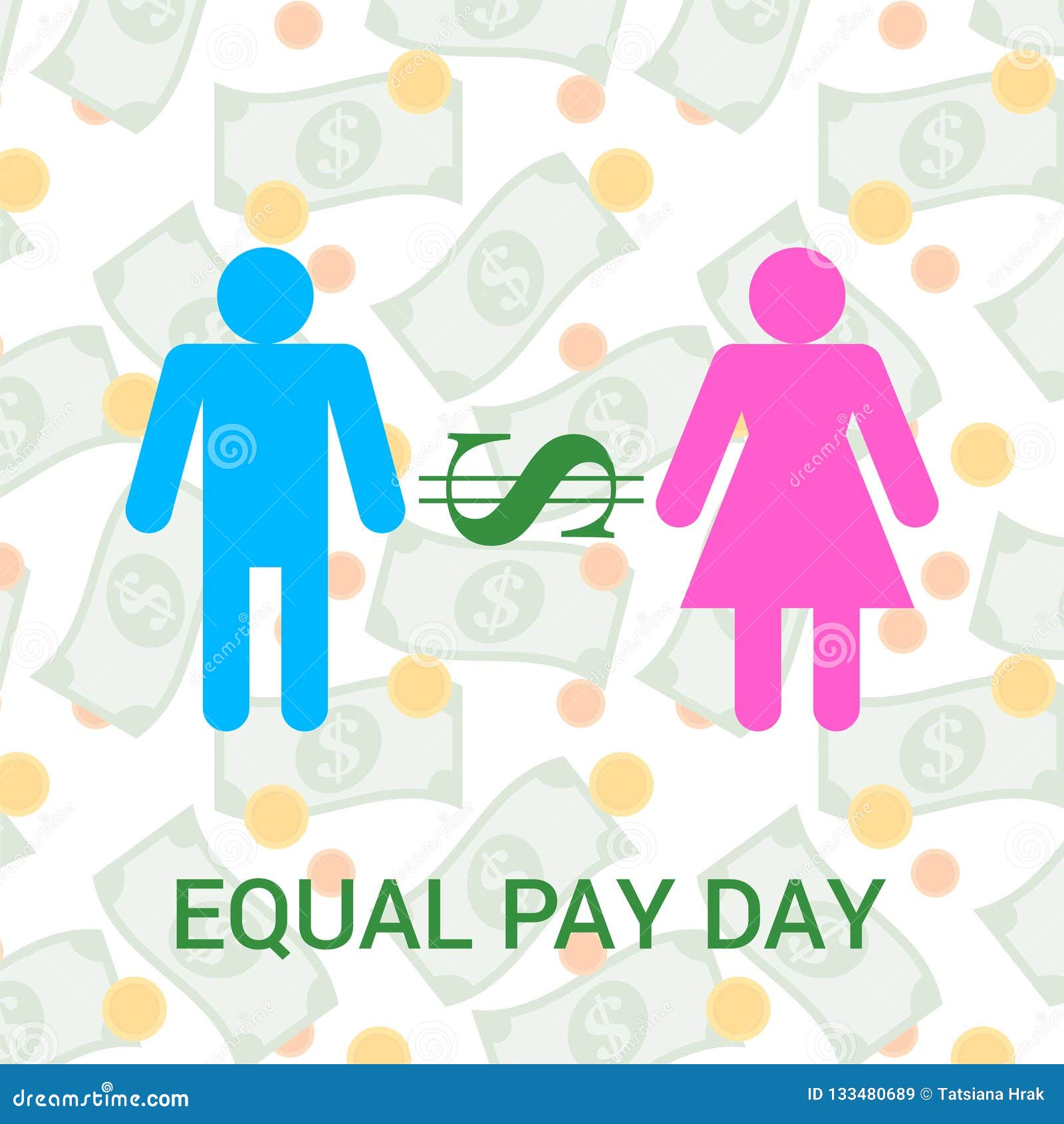
Today is the International Equal Pay Day. World over, irrespective of where women work, they always earn less than a man in the same position. This is something I have always rallied about why a man should earn more than a woman when both are doing what is essentially the same thing.

Across all regions, women are paid less than men, with the gender pay gap estimated at 23 per cent globally. Gender equality and the empowerment of women and girls continues to be held back owing to the persistence of historical and structural unequal power relations between women and men, poverty and inequalities and disadvantages in access to resources and opportunities that limit women’s and girls’ capabilities. Progress on narrowing that gap has been slow. Women earn 77 cents for every dollar men earn for work of equal value – with an even wider wage gap for women with children. At the current rate of progress, the World Economic Forum predicts that it will take another 217 years before the gender pay gap finally closes. While equal pay for men and women has been widely endorsed, applying it in practice has been difficult. Women are concentrated in lower-paid, lower-skill work with greater job insecurity and under-represented in decision-making roles and women carry out at least two and a half times more unpaid household and care work than men.

Recognising this to be something the world needs to take note of, this year for the first time, the United Nations has declared today, that is September 18 to be the International Equal Pay Day.

This day calls attention to the severe gender pay gap and the reasons for this gap are manifold and intertwined. The major causes of a pay gap between men and women include factors like women’s work being undervalued, the lack of women in certain sectors like perhaps construction and STEM subject fields, women still face a glass ceiling when moving up the career ladder, women working part-time more often than men, women interrupting their careers more frequently due to family-related breaks, and of course the widespread prevelance of gender stereotypes. Cultural bias, societal assumptions and a lack of progress in workplace design all contribute to the gender pay gap.

So why does this pay gap exist between the genders?

There are many reasons for this. At the heart of which is the assumption that senior roles can’t be done by women who can’t spend a lot of time at work which women who have to work at home too can’t do. And women who are in senior positions have not had the gender pay gap reduced in over almost half a century. But today with the world working from home and showing it can be done and effectively too lets us know that women can manage a home and a senior position, so that’s one excuse which can be thrown away.

Another reason for this pay gap could be attributed to the maternity leave that women of certain years take. Though it is illegal to ask this question in many countries, there are many Asian countries in which hiring managers do and will ask women who are in their twenties and thirties this question and not only does this discriminate hiring practices, it also enables hiring managers to offer women a lower starting pay as compared to a man with the same qualifications and career trajectory. Unfortunately, even if women try to return to work after having a child, they often face what is known as the “motherhood penalty”. As most workplaces still don’t offer much flexibility for mothers, they are often forced to take on lower-paying and less demanding jobs. However, even if they are able to find a job that suits them, mothers are much less likely to get an interview compared to fathers and childless women. What’s more, while women are penalised for having children, men are rewarded, with research from the University of Massachusetts finding fathers are more likely to be hired than childless men and tend to be paid more.

The third reason is that there is perceived wisdom that women choose low-paid occupations like that of teachers and nurses because they offer more flexibility, or are more family-friendly. Again, the perception that it is a choice to prioritise children over paid work, rather than being due to a lack of viable alternatives, positions the gender pay gap as a fact of life, and releases employers from responsibility for changing it.

Another reason is that although a study by Harvard Business Review found that women actually rank more highly than men in 12 out of the top 16 leadership qualities – including problem solving, communication skills and innovativeness – women are consistently overlooked by employers, who still tend to view men as being more competent.

And not only are women being short-changed when it comes to hiring decisions and negotiating salaries – we’re also receiving less in performance bonuses. An Australian study by Mercer found that men were receiving up to 35 per cent more in performance bonuses than women, despite receiving the same performance rating.

In some more developed countries like South Korea the gap is as much as 33% while other developed countries don’t fare well either with countries like Germany has a 22% income gap and the United Kingdom has 20%, Switzerland has 17%. On the other hand, less developed countries seem to have lower gender income gaps, with countries like Pakistan and Vietnam having a gap of almost 11%, Colombia with a gap of 0.3% and countries in southeast Asia like Thailand and Malaysia having a negative gap, meaning here women tend to earn more than men with women earning more than men by about 2.25% in Malaysia and 21.5% in Thailand.

So what can be done to bridge this income and pay gap between men and women? Economists say one thing hiring managers could do is share salary information during the hiring itself and not make sharing of your pay an unwritten offence in a organisation. The more information that is available, the easier it will be able to know what a man gets for the same role and women can be in a better position to negotiate salaries.

When both parents share in the household chores, it makes it easier for mums to be able to spend more time at work and is able to climb the career ladder. So if the mother is the one who is always called by school and child care about her child and is expected to drop everything to get there, then her career is bound to suffer. When both parents are equally responsible, then both will have a career trajectory. This is something cultural and will take some time before men step up, though many men are staunch defenders of a woman’s right to a successful career.

Women should be encouraged to work in occupations which are not traditionally female-centric like nursing and teaching. Yes, today more and more women are joining occupations not traditionally female, but there is still work to be done for more representation in sectors like construction and STEM related fields. I also believe that women should seek out and search for mentors in their fields of study and work who can guide them so they can achieve the success they deserve.

Source: United Nations

This gender pay gap is something all of us, women and men have to work on to ensure that our children and grandchildren get paid fairly for the work they do. Nobody should be penalised just because of their gender and everyone should have access to equal pay for the work they do. Let’s all work together for this!

Poem: The Mumbai Monsoon

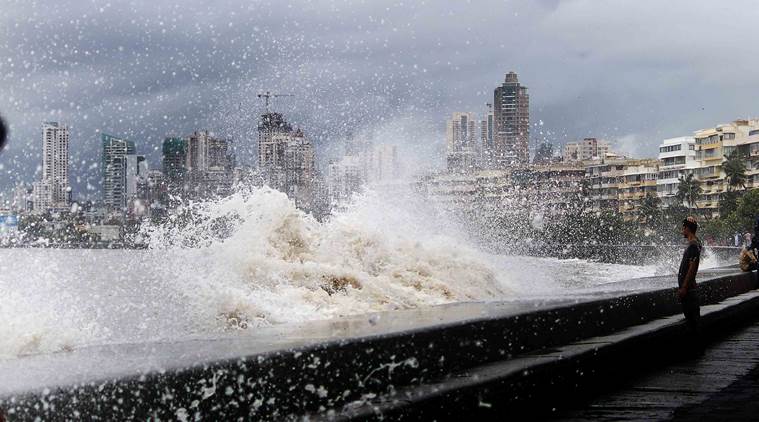
The rains are nothing new to Singapore, and these days we have rains most afternoons, but because the sewage and rain canal systems are good, there is hardly any flooding here. But it’s a completely different ball game in Mumbai where each Monsoon means wading through sometimes waist-deep water and having the transportation system crippled for a few days till the waters recede. But there is a magic in the rains and I used to love the monsoon. I loved having it rain when I come back home from college because it meant I could walk home from the bus-stop without opening my umbrella and get wet in the rain, but conversely hated this when I went to school or work because it meant staying in wet clothes all day. The rains have been slashing Mumbai in the past month or so and when I saw the visuals of wet roads and some waterlogged areas, this poem came about unbidden. This poem is a relfection of how the monsoon used to be when I lived in India, so it may be different now.

The Mumbai Monsoon

When June makes it way, newspapers hold sway
Everyone has their own theory on when the monsoon will come and play
The MRF prediction is hotly debated, Kerala and then Goa’s rains are long awaited

When the sky starts to darken, the mood shift is palpable
Everyone looks upwards in an occurance that is annual

With hope and a prayer in their heart,
They pray the rain God will do his part
Shower the city with just enough rain
So the streets don’t flood, causing people pain

But flooding is inevitable, the price Mumbaikars pay
For a system built ages ago, in a city then known as Bombay
But the spirit of the city during times like this magnify manifold
It’s only during a crisis, when you see people’s heart of gold

But the monsoon in Mumbai is something really special
To see the waves buffet the Gateway and Marine Drive
To get wet in the rains, to revel in the pure water that is sometimes harsh, sometimes gentle
This is a time when your soul comes alive

I really miss the Mumbai monsoon and maybe those years
When life was more carefree and simple, without the stress which interferes
But life moves on and I hope to experience the monsoon once more
To live that life of that carefree child and young adult, without any worry and chore!

Festivals of India: Avani Avittam and Raksha Bandhan

Source

Today is the festival of Avani Avittam and Raksha Bandhan. Both are festivals which are male centric festivals and which come on the same day each year. I have written about both festivals previously so will not go into the details here. I have always wondered why two diverse festivals – one celebrated in North India and the other mostly in South India, which are possibly the only festivals in the respective cultures which are a celebration of the male gender fall on the same day. Recently I had a ephipany. In both these festivals, the star of the show, if we can call it that, are threads that bind us to our loved ones, to our traditions and to our roots.

During Avani Avittam, which typically falls on the full moon day of the Shravan month, male Brahmin men and boys who have had their thread ceremony done, reaffirm their faith as a twice born and by changing their sacred thread, they symbolically throw away their sins of the previous year and start the year on a clean slate.

The festival is one of the most auspicious festivals for Brahmins and the day is an important one for those who follow the Yajurveda as on this day they start reading Yajur Veda, which they continue to read for the next six months. It is believed that on Avani Avittam, Lord Vishnu has reincarnation himself as Lord Hayagriya, who is seen as the symbol of wealth and knowledge. On this day, God Vishnu who is worshiped as the high deity power actually restored the Vedas to Brahma.

There is a story behind these sacred threads. Lord Brahma, the creator was filled with pride for knowing the entire Veda. Lord Vishnu to crush his pride created two demons Madhu and Kaitabha to steal Vedas from him. Brahma then not being able to save Vedas, he asked Vishnu to help him restore it. Lord Vishnu took the form of Hayagriva and restored the Vedas and supressed the pride of Brahma. Hence, Hayagriva incarnation is associated with knowledge and wisdom.This day is celebrated as Upakarma(Beginning)  also called as Hayagriva utpatti. Restoration of Vedas is known as a mark of new beginning and hence Upakarama is celebrated.This day is also referred as Hayagriva Jayanti.

The sacred thread comprises of three strands, joined by a knot known as Brahmagranthi or the knot of Brahma. The three strands symbolise the Hindu trinity – Shiva, Vishnu and Brahma. There are other interpretations which represent many of the other triads like Mahasaraswati, Mahalakshmi and Mahakali; or the three tendencies known as sattva or harmony, rajas or passion and tamas or chaos. You could also interpret the three strands as the link between the past, present and the future or the three states of wakefulness, dream and deep sleep. Some even say that it represents the three dimensions known as heaven or swarga, earth or martyaloka and the nether regions or patala. The sacred thread is also a kind of an indication to the marital status of the wearer. An unmarried man will wear one thread of three stands, a married man will wear two and a married man who has had his first child will wear three. In the old days, when most men did not wear a upper garment, this was the indicator people had about their marital status and if they had any children.

This year, the ceremony of changing the sacred thread was done online at our home. S and BB woke up early and after completing their morning prayers, sat down in front of the laptop where they joined others across the island on a video platform where the resident priest chanted the mantras and went through the ceremony with them. We also received the new sacred thread by post last week after signing up and paying for the ceremony online.

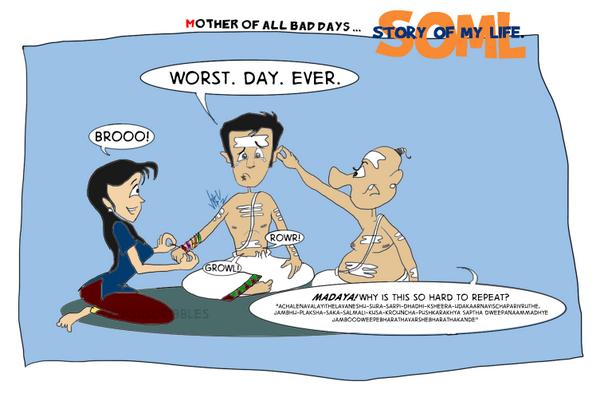
BB had to rush for school, so GG quickly tied her thread of love on his wrist before he headed out of the house.

These are the threads that tie us to our roots and our traditions. I call these ceremonies and functions our anchors because without them, we are left floundering and rootless. Especially in today’s world which is so uncertain and vague, it is good to hold on to traditions that are special to you. Your lineage, irrespective of where you come from, goes back at least a few hundred years, if not millennia, so be proud of who you are and where you come from, so you can show your children and your grandchildren where they can go to.

Happy Raksha Bandhan and Avani Avittam to everyone celebrating these festivals.