Recipes: Dal Bukhara

Some time back, I saw a reel about Dal Bukhara and I was intrigued by the recipe. So I made it. Dal Bukhari is a rich, creamy lentil dish that originated at the Bukhara restaurant in ITC Maurya Hotel, New Delhi. The dish was created by Chef Madan Jaiswal at the Bukhara restaurant in the 1970s. It quickly gained popularity and was associated with many accolades. Dal Bukhara is considered a more refined version of the well-known Dal Makhani.

Chef Jaiswal introduced Dal Bukhara when the Bukhara restaurant opened at the ITC Maurya Hotel in 1978. While coming up with Dal Bukhara, Chef Jaiswal focused on using only whole black gram or urad dal, without the kidney beans used in Dal Makhani. He emphasised slow-cooking the dal, sometimes overnight, to develop deep flavours, using minimal ingredients but incorporating generous amounts of butter and cream. 
Dal Bukhara

Ingredients:

  • 1.5 cups whole black gram or urad dal
  • 3 medium to large tomatoes, pureed
  • 2 tsp ginger-garlic paste
  • 1 tsp or more Kashmiri red chilli powder
  • ½ tsp garam masala
  • 6-7 tbsp butter, preferably white, but normal butter will also do
  • 7-8 tbsp light cream or 3-4 tbsp heavy whipping cream
  • Salt to taste
  • Water for cooking

Method:

  • Soak the black gram overnight.
  • Pressure cook the soaked lentils with 4.5-5 cups of water until soft.
  • Add the cooked lentils, tomato puree, ginger-garlic paste, and red chilli powder in a heavy-bottomed pan.
  • Simmer the dal on low heat for about 1-1.5 hours, stirring occasionally to prevent sticking.
  • Add butter and cream gradually during the cooking process.
  • Season with salt and garam masala towards the end of cooking.
  • The final consistency should be thick and creamy, not runny.
  • Serve hot, garnished with a dollop of cream or butter, with naan, tandoori roti, or jeera rice.

Notes:

  • As a last stage, before serving, you can also smoke the dal using the dhungar method for an authentic charcoal flavour.
  • Traditionally, Dal Bukhara is slow-cooked overnight on charcoal ovens in restaurants, which gives it its distinctive taste and texture.
  • Slow cooking and generous use of butter and cream are the key to achieving authentic flavour at home.
In My Hands Today…

Ultra-Processed People: The Science Behind Food That Isn’t Food – Chris van Tulleken

It’s not you; it’s the food.

We have entered a new age of eating. For the first time in human history, most of our calories come from an entirely novel set of substances called Ultra-Processed Food. There’s a long, formal scientific definition, but it can be boiled down to this: if it’s wrapped in plastic and has at least one ingredient that you wouldn’t find in your kitchen, it’s UPF.

These products are specifically engineered to behave as addictive substances, driving excess consumption. They are now linked to the leading cause of early death globally and the number one cause of environmental destruction. Yet almost all our staple foods are ultra-processed. UPF is our food culture and for many people, it is the only available and affordable food.

In this book, Chris van Tulleken, father, scientist, doctor, and award-winning BBC broadcaster, marshals the latest evidence to show how governments, scientists, and doctors have allowed transnational food companies to create a pandemic of diet-related disease. The solutions don’t lie in willpower, personal responsibility, or exercise. You’ll find no diet plan in this book, but join Chris as he undertakes a powerful self-experiment that made headlines around the world: under the supervision of colleagues at University College London, he spent a month eating a diet of 80 percent UPF, typical for many children and adults in the United States. While his body became the subject of scientific scrutiny, he spoke to the world’s leading experts from academia, agriculture, and, most importantly, the food industry itself. But more than teaching him about the experience of the food, the diet switched off Chris’s own addiction to UPF.

In a fast-paced and eye-opening narrative, he explores the origins, science, and economics of UPF to reveal its catastrophic impact on our bodies and the planet. And he proposes real solutions for doctors, for policy makers, and for all of us who have to eat. A book that won’t only upend the way you shop and eat, Ultra-Processed People will open your eyes to the need for action on a global scale.

Poem: Pillow Thoughts

When my head hits the pillow at night,
And darkness surrounds me, a blanket of night.
My mind starts to wander, thoughts swirling around,
Echoing loudly, without any sound.

The day’s events replay in my head,
The things I should’ve done, the words I should’ve said.
Regrets and worries, they creep in with ease,
Robbing me of sleep, denying me peace.

But amidst the chaos, a glimmer of light,
Memories surface, bringing comfort and might.
Moments of laughter, of love and of cheer,
Reminding me that joy is always near.

I think of my loved ones, their faces so dear,
And know that their presence will always be here.
Their support and their kindness, a strength I can’t deny,
Helping me face each day, helping me try.

So when my head hits the pillow at night,
And the world seems to fade, a canvas of white.
I’ll embrace the stillness, the quiet so sweet,
And let my heart and mind finally meet.

For in this moment, when all else is still,
I find the answers, the peace, and the will.
To face the next day, with courage and grace,
Knowing that tomorrow is a brand new place.

In My Hands Today…

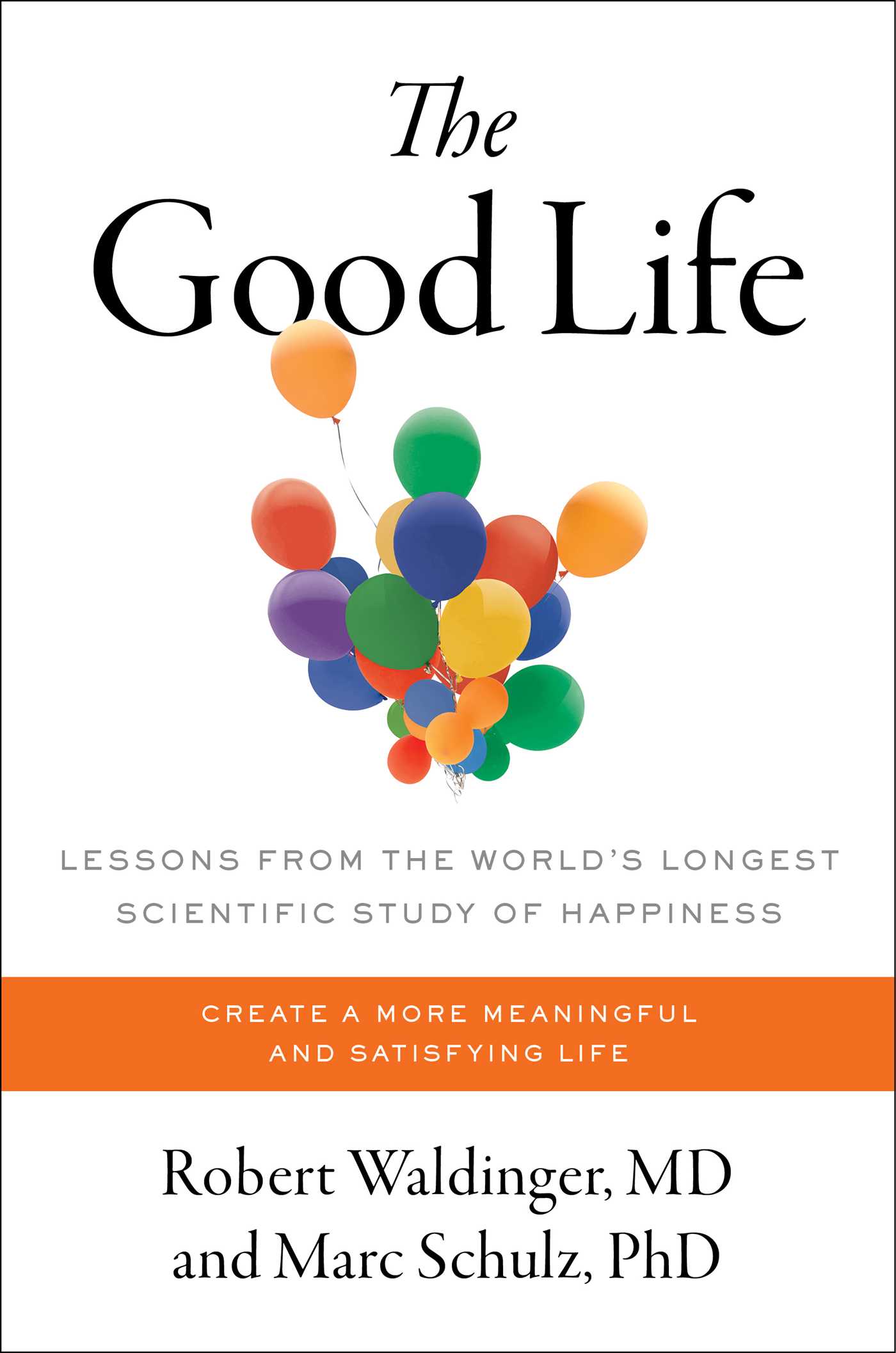
The Good Life: Lessons from the World’s Longest Scientific Study of Happiness – Robert Waldinger, Marc Schulz

What makes for a happy life, a fulfilling life? A good life? In their “captivating” ( The Wall Street Journal) book, the directors of the Harvard Study of Adult Development, the longest scientific study of happiness ever conducted, show that the answer to these questions may be closer than you realize.

What makes a life fulfilling and meaningful? The simple but surprising answer relationships. The stronger our relationships, the more likely we are to live happy, satisfying, and healthier lives. In fact, the Harvard Study of Adult Development reveals that the strength of our connections with others can predict the health of both our bodies and our brains as we go through life.

The invaluable insights in this book emerge from the revealing personal stories of hundreds of participants in the Harvard Study as they were followed year after year for their entire adult lives, and this wisdom was bolstered by research findings from many other studies. Relationships in all their forms—friendships, romantic partnerships, families, coworkers, tennis partners, book club members, Bible study groups—all contribute to a happier, healthier life. And as The Good Life shows us, it’s never too late to strengthen the relationships you already have, and never too late to build new ones. The Good Life provides examples of how to do this.

Dr. Waldinger’s TED Talk about the Harvard Study, “What Makes a Good Life,” has been viewed more than 42 million times and is one of the ten most-watched TED talks ever.