In the bustling city of Lahore, Pakistan, Amina Khan grew up in a modest household, deeply influenced by her mother, a dedicated schoolteacher. From an early age, Amina learned the value of education and the importance of fighting for one’s rights. Her mother’s stories of struggle and perseverance instilled in her a desire to make a difference.
Despite societal pressures to conform to traditional roles, Amina pursued her studies with determination. She earned a degree in sociology from the University of Punjab, where her passion for women’s rights blossomed. It was during her university years that she first participated in the Aurat March, an annual event advocating for gender equality. This experience opened her eyes to the systemic issues faced by women across Pakistan; issues that were often silenced or ignored.
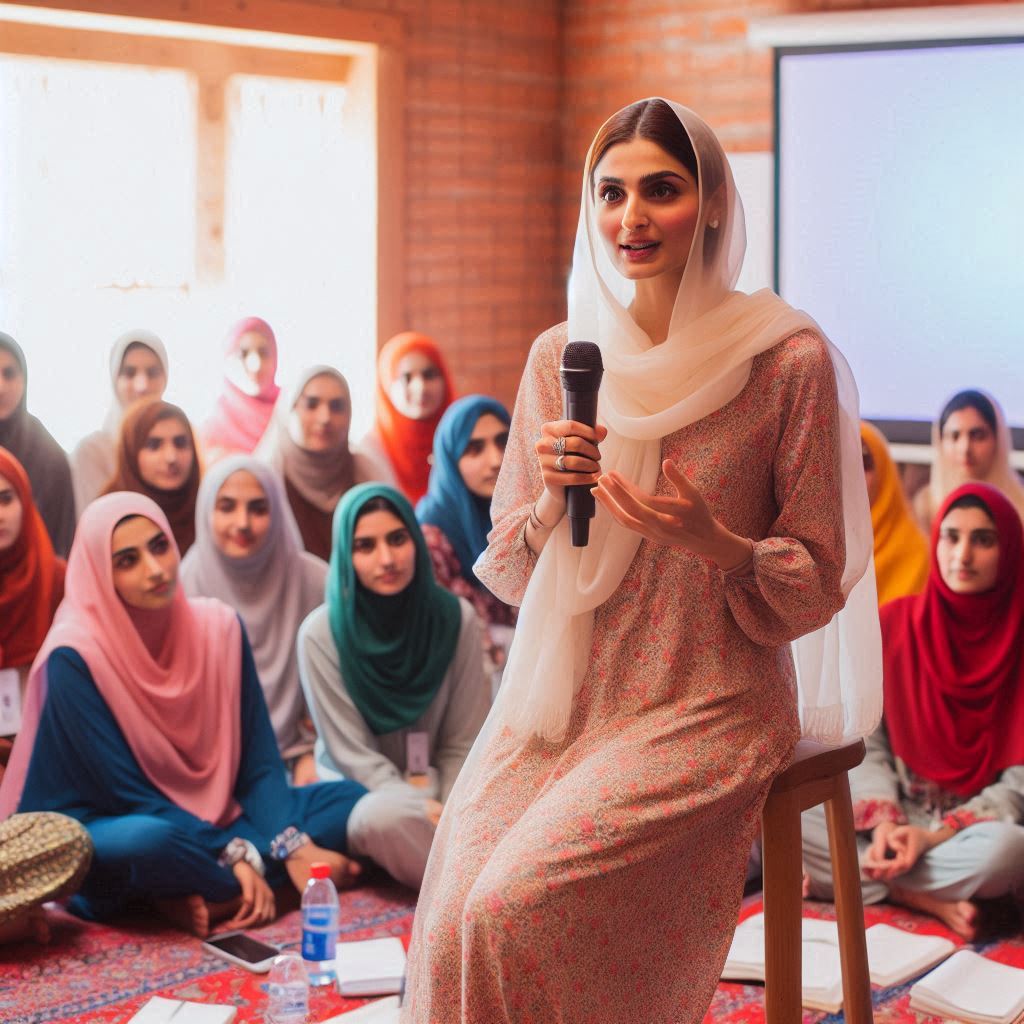
One fateful day, while volunteering at a local women’s shelter, Amina met Fatima, a victim of domestic violence. Fatima’s harrowing story of abuse and resilience struck a chord with Amina. Inspired by Fatima’s bravery in seeking help, Amina decided to take action. She organised workshops at the shelter focusing on legal rights, self-defence, and mental health support for women like Fatima. As word spread about these workshops, more women began to attend—not just to learn but also to share their stories. The shelter transformed into a safe haven where women could reclaim their narratives and find strength in the community.
Amina’s initiative quickly gained traction. She began speaking at community events, sharing her vision for women’s empowerment. Her passion resonated with many, and soon she found herself leading a grassroots movement in Lahore. However, not everyone welcomed her efforts. Traditionalists viewed her activism as a threat to societal norms.
During a heated community meeting, an elder accused her of “spreading Western values.” Undeterred, Amina responded with grace: “Empowerment does not mean abandoning our culture; it means enriching it by ensuring every woman has the right to choose her path.” This moment marked a turning point for Amina. Her words sparked discussions among community members about adapting cultural practices to promote equality rather than suppress it.
Despite her growing influence, Amina faced significant personal challenges. Balancing activism with familial expectations weighed heavily on her shoulders. Her father often questioned her choices, fearing that her public persona would bring shame to their family.
In one poignant conversation, he expressed his concerns: “Amina, this path is fraught with danger. You risk everything for these women, who may never appreciate your efforts.” Amina listened but remained resolute. She understood that change required sacrifice and that true empowerment often came at a personal cost.
Recognising the need for broader support networks, Amina initiated partnerships with universities and businesses to create mentorship programs for young women entering the workforce. She believed that economic independence was crucial for women’s empowerment.
Through these programs, young women learned essential skills such as coding, entrepreneurship, and financial literacy. The initiative attracted attention from local media, further amplifying Amina’s message. During one mentorship session at a local tech hub, Amina met Sara, a talented coder who had faced discrimination in her job search due to her gender. Inspired by Sara’s resilience and talent, Amina encouraged her to apply for tech competitions aimed at women.
Sara’s success in securing a scholarship for an international coding boot camp became a symbol of hope within their community—a testament that with support and guidance, women could excel in fields traditionally dominated by men.
As Amina’s movement gained momentum, backlash intensified. Threatening messages began appearing on social media aimed at silencing her voice. During one particularly tense week leading up to International Women’s Day, she received anonymous threats warning her to stop her activism or face dire consequences.
Instead of retreating in fear, Amina organised a rally to coincide with International Women’s Day—a celebration of achievements and a call to action against ongoing struggles faced by women in Pakistan. On the day of the rally, thousands gathered despite threats from extremist groups attempting to intimidate participants. The atmosphere was electric as speakers shared their stories of resilience and hope.
“We will not be silenced,” Amina declared from the stage. “Our voices are our strength!”
The rally garnered national attention and sparked discussions about women’s rights across various platforms.
In recognition of her work, Amina received an award from an international human rights organisation for her contributions to women’s empowerment in Pakistan. This acknowledgement brought new opportunities; she was invited to speak at conferences around the world about grassroots movements and the importance of local solutions in addressing global issues. However, she remained grounded in her mission: empowering women within her community first and foremost.
Years later, as Amina looked back on her journey during an anniversary celebration of the Aurat March in Lahore, she reflected on how far they had come together as a community. More people were discussing women’s rights openly and local governments began implementing policies aimed at protecting women’s rights. Many women who attended her workshops started their initiatives or entered leadership roles within their communities. Amina recognised that while challenges such as systemic misogyny and economic disparities remained, her work had planted seeds of change that would continue to grow long after she was gone.
Amina Khan’s story is one of resilience against adversity, a testament to what can be achieved when individuals dare to challenge societal norms in pursuit of justice and equality. In Pakistan today, as more women like Amina rise up against oppression and advocate for their rights, they embody the spirit of empowerment that is crucial for building a more equitable society. Through education, advocacy, and unwavering determination, these women are reshaping their destinies and inspiring future generations to continue the fight for gender equality in a fight that transcends borders and resonates globally on International Women’s Day and beyond.
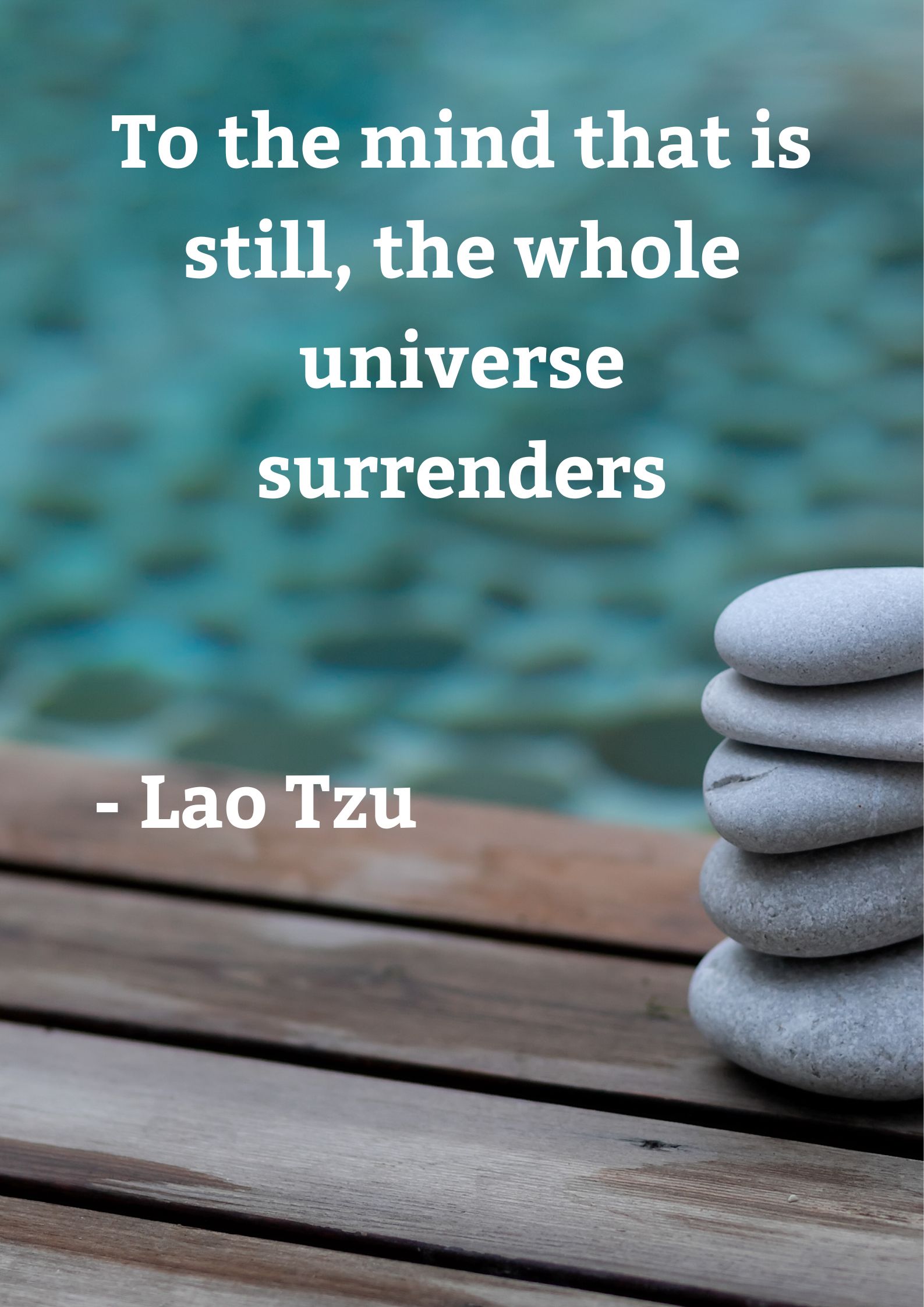
This week’s quote is attributed to the ancient Chinese philosopher, poet, and founder of Taoism, Lao Tzu. Tao, or Laozi, is best known for his classic work, the Tao Te Ching, a foundational text that explores themes of harmony, balance, humility, and effortless action, or wu wei. Lao Tzu’s quote conveys the power of inner peace and stillness in unlocking a deeper understanding of life and the universe. It suggests that when the mind is free from distractions, worries, and unnecessary thoughts, it gains a sense of clarity and alignment with the natural order of things.
A still mind is calm, unshaken by external chaos, and free from excessive attachment to desires and fears. In today’s fast-paced world, people are consumed by stress, ambition, and endless distractions. This mental restlessness creates resistance and struggle, making it difficult to see things clearly or make wise decisions. However, when one cultivates inner stillness, through meditation, mindfulness, or simply being present, they become more receptive to wisdom, insight, and the natural flow of life.
Instead of fighting against circumstances or forcing outcomes, a still mind allows things to unfold naturally. Just as a calm lake reflects the sky without distortion, a peaceful mind perceives reality more clearly, making it easier to respond with wisdom rather than impulsively. Lao Tzu’s philosophy is deeply rooted in Taoism, which emphasises harmony with nature, effortless action, and the balance of opposites. This quote encourages individuals to let go of resistance and align themselves with the natural rhythm of life. In practical terms, this quote teaches us that patience, mindfulness, and acceptance bring greater success and fulfillment than constant striving or worry. Whether in personal relationships, careers, or challenges, those who cultivate inner calm often find that solutions appear effortlessly, and life unfolds with greater ease. Lao Tzu’s message is a reminder that peace and clarity come not from controlling the world, but from mastering one’s mind. When we achieve this, life begins to work in our favor, and we move through the world with wisdom, ease, and grace.
This week has been a mixed bag, with some productive days and some days when all I wanted to do was laze in bed. But that’s the circle of life where one has ups and downs. BB is busy with his work and has now started seriously thinking about what he wants to do after his national service. GG is very busy with school and her studies.
That’s all from me this week. Have a wonderful week and stay positive!
Anatomy of a Breakthrough: How to Get Unstuck When It Matters Most – Adam Alter
Almost everyone feels stuck in some way. Whether you’re muddling through a midlife crisis, wrestling writer’s block, trapped in a thankless job, or trying to remedy a fraying friendship, the resulting emotion is usually a mix of anxiety, uncertainty, fear, anger, and numbness. But it doesn’t have to be this way. Anatomy of a Breakthrough is the roadmap we all need to escape our inertia and flourish in the face of friction.
Adam Alter has spent the past two decades studying how people become stuck and how they free themselves to thrive. Here he reveals the formula he and other researchers have uncovered. The solution rests on a process that he calls a friction audit—a systematic procedure that uncovers why a person or organization is stuck, and then suggests a path to progress. The friction audit states that people and organizations get unstuck when they overcome three sources of HEART (unhelpful emotions); HEAD (unhelpful patterns of thought); and HABIT (unhelpful behaviors).
Despite the ubiquity of friction, there are many great “unstickers” hidden in plain sight among us and Alter shines a light on some exceptional stories to share their valuable lessons with us. He tells us about the sub-elite swimmer who unstuck himself twice to win two Olympic gold medals, the actor who faced countless rejections before gaining worldwide fame, the renowned painter who became paralyzed and had to relearn to paint with a brush strapped to his wrist, and Alter’s own story of getting unstuck from a college degree that made him deeply unhappy.
Artfully weaving together scientific studies, anecdotes, and interviews, Alter teaches us that getting stuck is a feature rather than a glitch on the road to thriving, but with the right tweaks and corrections we can reach even our loftiest targets.
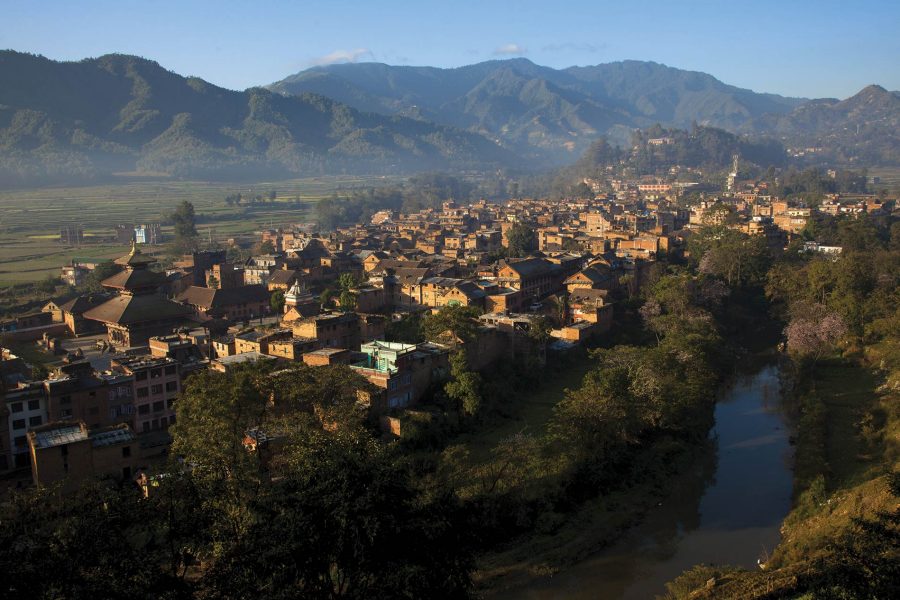
Panauti Listed as a UNESCO tentative site since 1996, Panauti lies 33 km southeast of Kathmandu and is a leftover reminiscence of a time long bygone. The word ‘Panauti in Hindi means unlucky, and for some unknown reason, it sits perfectly well with the historical background of this medieval city. At one glance, the town of Panauti is a melancholic chock-a-block of wooden houses, public halls, temples and shops, all nestled together resembling the shape of a fish in the laps of Himalayan greenery. Though still dotted with enough places worth mentioning, there is a feeling of decay spread all across the once prosperous town.
On the north-east of the town lies the peak of Goraknath Hill at 2000 ft, from where a breathtaking panoramic view of the town can be seen. There are occasional courtyards or public squares as well, but one will not see a throng of tourists loitering around in this town.
Panauti was originally a small state given by King Bhupatindra Malla as dowry to his sister. The town has a population of under 15,000 people and a few prominent sites, such as the Indreswor temple and Panauti or Layaku Durbar square found in the town centre. At the end of the 13th century, Panauti was integrated into the unified kingdom of Nepal, along with Kathmandu, Patan, and Bhaktapur, all former capital cities of the Kathmandu valley. Panauti was a trading hub along the ancient Salt Trade route between Tibet and India. The recorded history of Panauti goes back to the first century AD. However, with the end of the Salt trade in the 1950s and the construction of the Arniko Highway in the 1960s bypassing the town, Panauti went into an economic rut. Panauti, consists of a variety of Buddhist and Hindu religious monuments, and is considered to be one of the area’s most important medieval sites. Panauti is also steeped in culture and tradition. Visitors will often find colorful stones, petals and other items that are laid out on the pavement to welcome everyone with great hospitality.
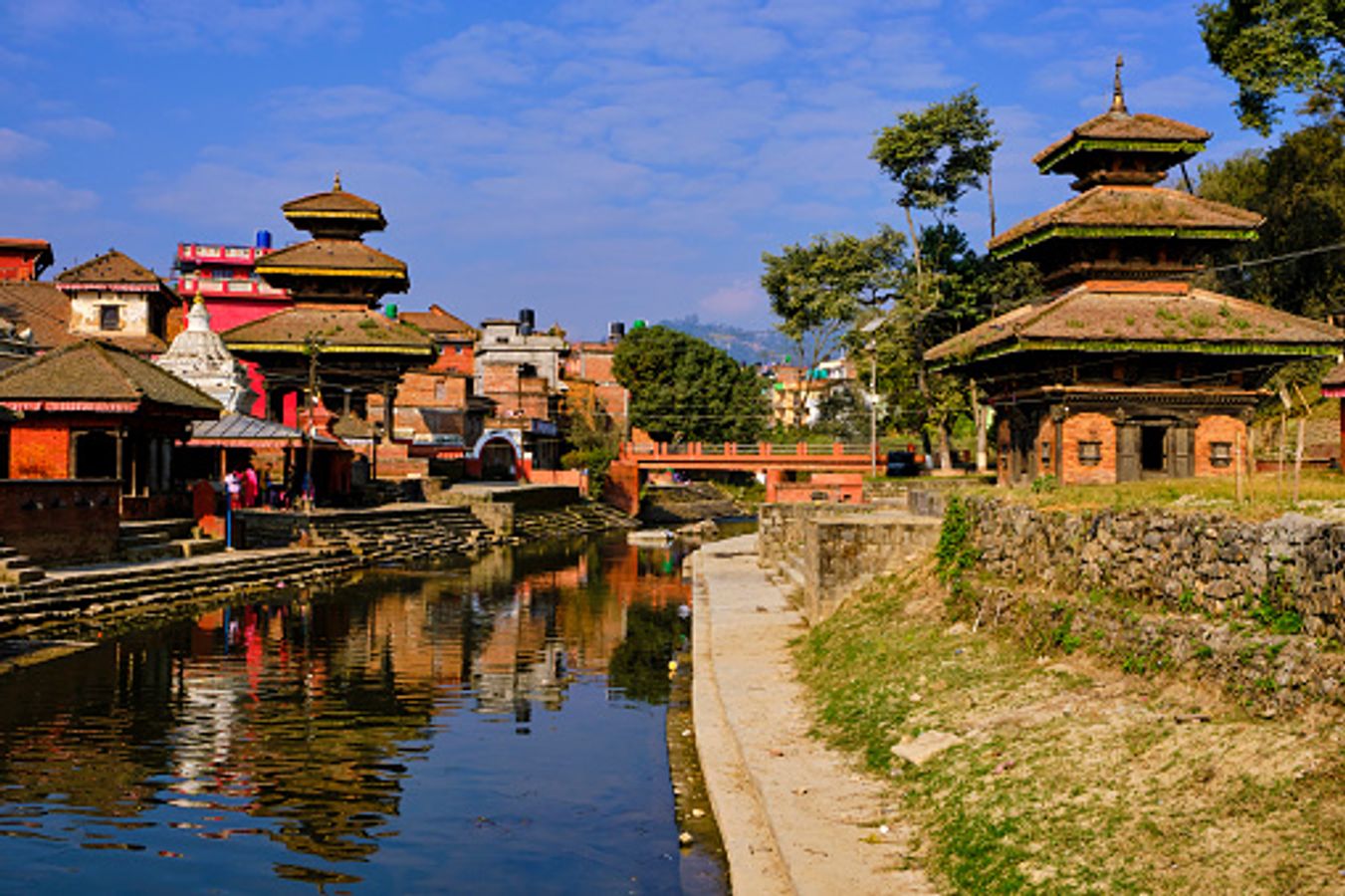
Panauti, situated at the confluence of the two rivers Rosi and Punyamati, has been regarded as an important religious site since very early times. In Nepali society, such rivers are considered to be sacred. A visit or just an ablution to such places enables the visitor to be freed from many sins and anxieties, as it is believed to be sacred. It is also believed that at Panauti, in addition to the two rivers, a third river Lilawati also converges making it again a tri-junction called Triveni. However, the last one is said to be visible only to the seers and intellectuals. On account of this, during every festival, a great number of devotees from all across the country pour here for a holy ablution and to pay homage to the nearby Indreshwor Mahadev Temple and other holy sites located here. The site is also regarded as Prayagtirtha of Nepal. It has been debated that Panauti was founded by Ananda Malla (1274-1310AD), others believe that there is a golden scripture dated 1385, which is located within the Indreshwar temple stating that King Harisingh Dev founded the town. Although Panauti was founded independently, as time went under the influence of Bhaktapur, increased and later it became part of Bhaktapur up until the 18th century. In 1763, King Prithvi Narayan Shah annexed Panauti to the larger and greater Nepal.
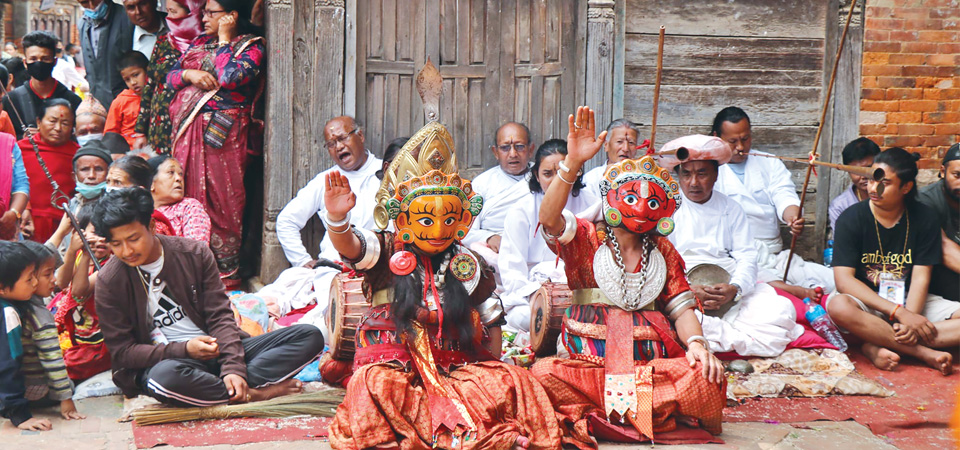
The main ethnic culture of Panauti is of the Newaris, which is spread over the bigger cities of Bhaktapur, Patan and Kathmandu. Their traditions and centuries old, and one of the most popular ones is the masked dance in devotion to multiple gods and goddesses. The earliest one is the Harisiddhi dance, done for the goddess Shakti. Another one is Nava Durga dance, whose preparations begin as early as June, by burning the old masks and throwing them into the holy river. These dances are part of the age-old culture of Panauti and are performed religiously, amidst a crowd of interested onlookers, in the Durbar Square of the town and other parts of the Kathmandu Valley area as well.
The Harisiddhi dance is considered to be the oldest traditional dance in Nepal. This dance was initiated about 2,400 years ago by King Vikramaditya. It is said to use the language of gods and speech of the spirits. As a result of discontinuity, it disappeared, and King Amar Malla was the first to re-initiate the dance. However, the tradition again vanished and was finally revived by King Pratap Malla. It was said that Raja Vikramaditya went to Ujjain, and brought the image of three Shaktis, or attributes, named Harisiddhi, placed her near Nil Tara from this, and this is how the village of Harisiddhi originated. The Raja then under the direction of the Goddess brought all the gods Nepal to that place with great ceremonies and dramatic and vocal instrumental music. It is well known that there is no dramatic performances to that of Harisiddhi.
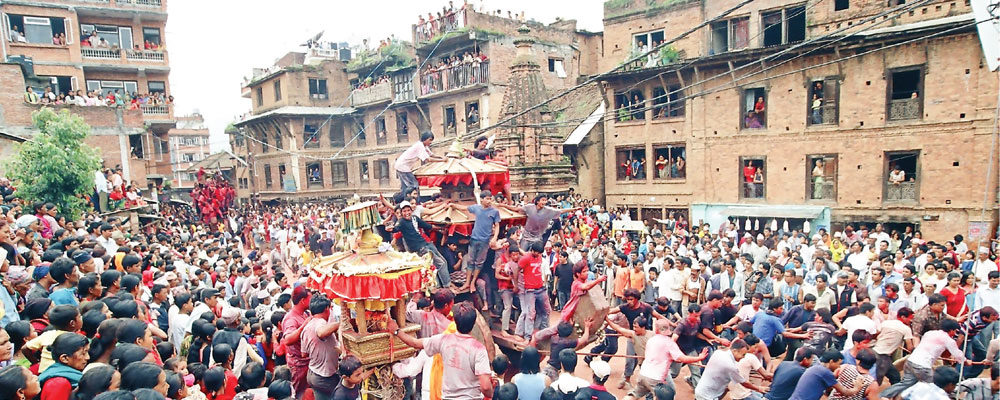
Panauti Jatra is known as the chariot festival, which takes place every year in Panauti, at the end of the monsoon. The Jatra festival usually begins on the tenth day of the bright fortnight during the month of Jestha, in May or June. The Jatra is usually celebrated for three days, as everyone becomes busy for the preparation of celebrating the festival, known as Duin-chha-nya-ye-ke-guis, which is usually held in the evening. This event is one of the major cultural attractions of the Panauti Jatra. During this festival, images of the gods from the town’s temples are placed in a chariot and displayed around the city. The pulling of the chariot begins from the town’s old Durbar Square. A team consisting of a priest, a woman, and a porter crosses the bridge over the Punyamati River to worship the gods. This crossing over the Punyamati River is a yearly event and signifies the tradition from many years before. The following day of festival is called Mu-jatra, which means the main festival. On this day, many of the residents of Panauti will sacrifice male goats or ducks to the Gods, and many other will simply make an offering of food. The sixth day is the full moon day, which is also known as Panauti Punhi. This day is the most favorable day for visiting the river and cleaning your body.
Panauti is situated at the confluence of two main rivers, Rosi and Punyamati which has been regarded as an important religious site. In Nepali society, it is also believed that rivers are sacred places and such a visit allows man to cleanse his body and be freed from sins and anxieties. It is believed that there is also a third invisible river, the Lilawati creating a tri-junction and is historically known to have remarkably enhanced Nepal’s religious sanctity and popularity especially in Panuati. Due to the convergence of these three rivers, on festive occasions, large numbers of people from around the world come to this holy place to pay their respects, as well as visiting the Indreswor temple and other holy sites located in Panuati. The confluence of these three rivers is an important pilgrimage site where every 12 years, a month-long fair is held known as the Makar Mela. During this celebration, hundred and thousands of devotees visit Panauti to cleanse themselves in this sacred water.
The Namobuddha festival is a revered Buddhist festival, also celebrated with equal fervour by the Hindus, commemorates the great Prince Mahasatwo, who was born in Panauti and sacrificed his mortal body to feed a starving tiger and her little cubs. The festival is held city-wide, but mainly at the Namobuddha Monastery in the fringes of Panauti.
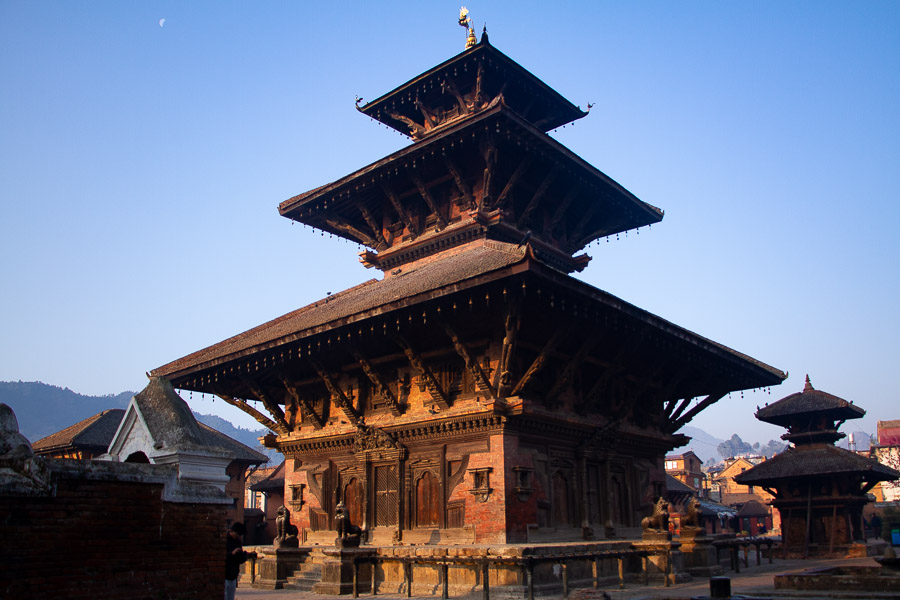
The Indreshwar Mahadev Temple is one of the largest and tallest pagoda style temples in Nepal. It was originally built over a lingam in 1294, making it the oldest surviving temple of Nepal. The roof struts embellishing the two lower stories of the temple are distinct Nepalese woodcarving and architecture. The upper section of the temple is hung with pots and pans, offerings from young married couples hoping for a happy and prosperous family life. The temple is in good condition and survived the 2015 earthquake. It is from this temple that the mystical third river of Panauti starts from leading to the Brahmayani temple across from the Tri Beni Ghats. The Indreshwar temple is kept in a very well maintained, walled in, compound which is managed by the Panauti Museum.
The non-existent, invisible part of this trident, the Lilawati River, is said to have originated from the Indreshwar Temple, located in Durbar Square. While the bottom two floors are adorned with intricate wood carvings, native to any Nepalese shrine, the top floor has endless bunches of hanging pots and pans – offerings from newly-wed couples hoping for a happy and everlasting marriage. Dedicated to Lord Shiva, the temple reflects the true essence of Newari culture and architecture in its three wooden storeys. Newars are the original descendants of the mountainous country, and their ancestors are said to have been there since civilisation started in the Kathmandu Valley.
Holding a close resemblance to the Buddhist Pagoda, but worshipping a Hindu god in its shrine, the age-old temple is a perfect embodiment of what the culture of Nepal looks like. Though scholars have dated the Indreshwar Temple back to the very late 13th century, it still stands tall and magnificent and is perhaps the most popular site in Panauti.
Other than the shrine itself, there is also a museum, a king’s palace and some other excavated brick and mortar structures scattered all across the Durbar Square, and there are some more still hidden under the earth somewhere, waiting to be dug out and explored. There is an entry fee of INR 300 for the entire place.
Other than this temple, there is also the king’s palace in Panauti’s Durbar Square, which has yet to be excavated to a larger extent in order to reveal more about Panauti. Nevertheless, there are many artifacts and remnants such as stone taps, bricks, water wells and coins found among some of the excavated sections of the palace.
The trekking route from Panauti to the colourful fluttering flags of Namo Buddha can be a charming addition to a Panauti trip. Located at 1750 metres above mean sea level, the uphill walk to the monastery takes not more than 45 minutes to one hour, depending on the speed and how many times one stops. Hikers get to see vast expanses of lush green paddy if they are travelling just before the harvest season otherwise, the sights one sees is that of farmers toiling in the fields.
Daman One of Nepal’s most beautiful tourist destinations, Daman lies on the Tribhuvan Highway, about 77 km southwest of Kathmandu, about halfway to Hetauda, at an elevation of 2,322 m. The town has some of the greatest views of the Himalayas, extending on a good day from Dhaulagiri in the west to Mount Everest in the east. Daman also has the Everest Panorama Resort, which includes a helipad. During winter, snowfall occurs in the hills, augmenting the beauty of the place. The Risheshor Mahadev Temple is where it is said was where Lord Shiva rested when he was mourning and lamenting, carrying dead body of his beloved wife Satidevi. Being so thirsty he just hit the big rock with his weapon, the trisula, and water came out. Even today, one can see the water flowing in between the big rocks. The main festival occurs in Fagu Purnima and Thulo Ekadashi. There is a beautiful botanical garden in Daman which is one of the biggest and oldest botanical garden in Nepal. Different varieties of Rhododendron are available here.
With many picnic spots for outings, Daman can be visited just as a one-day trip or one can stay a few days. More than 90% of the people living in Daman are dependent on agriculture and rest of them on hotel business and other. Every season has its own appeal in Daman. The springs have red rhododendrons spread all-over the mountains and in the botanical gardens as well. Autumns bring in the clearest sky of the year and perfect view of the mountains. Summers are pleasantly warm and ideal for all the hiking and biking trails. Winters in Daman are quite magical, with bone-chilling cold and snowfall – a perfect setting for Christmas. Daman is often seen as a weekend getaway with the town especially during major festivities like Diwali and Christmas. The best thing to do in Daman is to explore the town. There are multiple hiking routes, and one can find newer routes.
For the lovers of everything green, the Mountain Botanical Gardens is a must-visit place in Daman. The lawn of the garden is very well-curated and beautifully maintained. The forested area has a great collection of flora – one that you do not possibly expect in a place so secluded. During springtime, the botanical gardens get decked up in ravishing red blooms of the rhododendron – Himalaya’s most exotic blossom.
The Shree Rikheshwar Mahadev Temple is a shrine situated atop Daman, dedicated to the Hindu God of Destruction, Lord Shiva. The local people consider this temple to be very sacred and awakened, which means their wishes get granted once it is spoken to the lingam here. A common practice in Shivalinga temples is to whisper the prayers and wishes into the ear of the Nandi bull that sits guarding the sanctum. The road leading up to the Rikheshwar Mahadev Temple is even more interesting. Visitors need to hike for a short distance of 1 km on a trail covered with dense green woods.
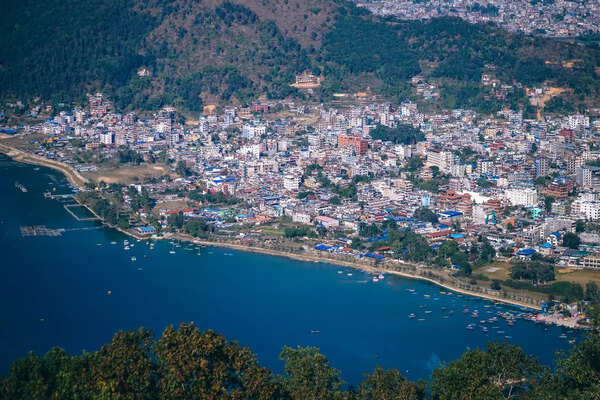
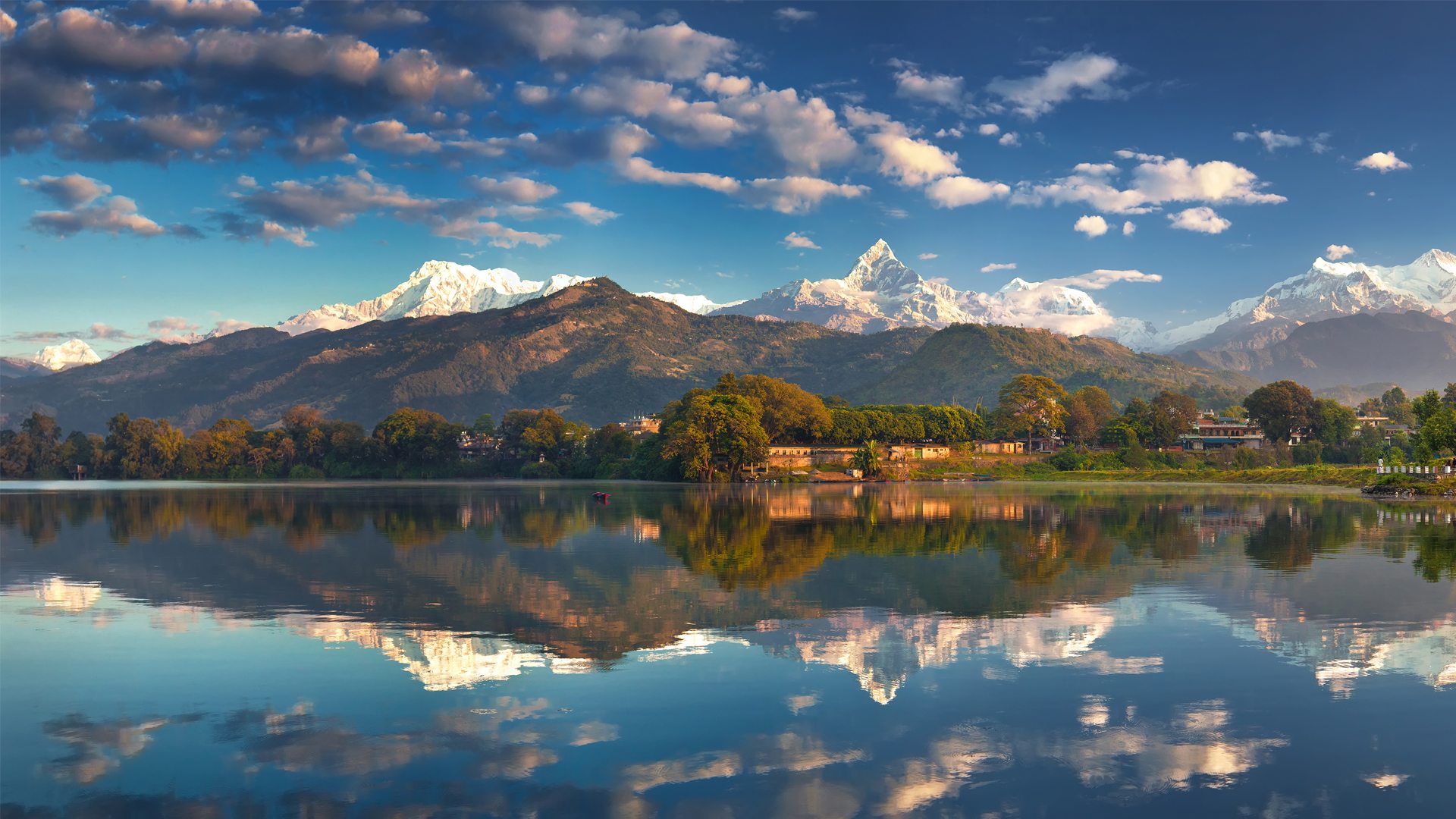
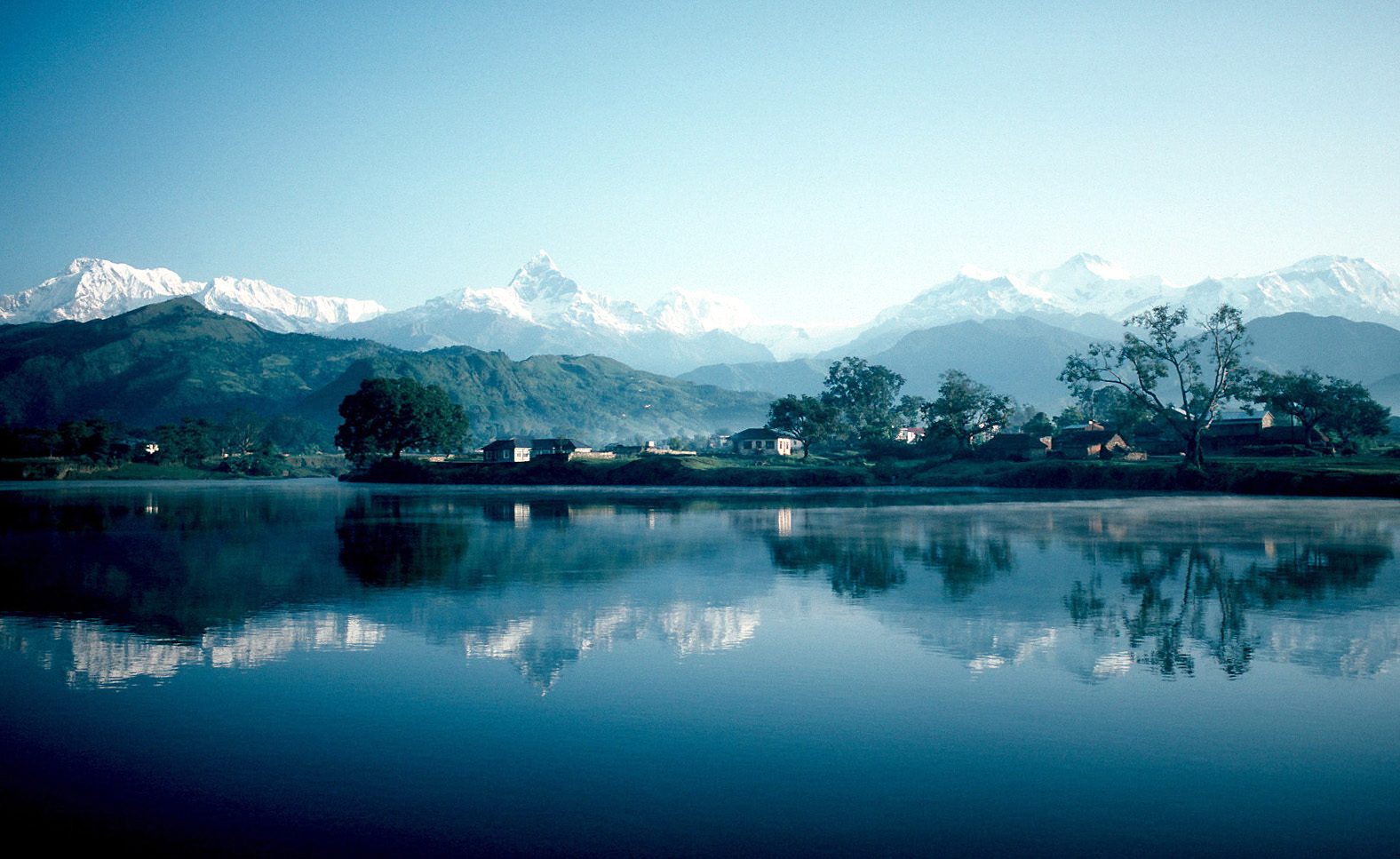
Pokahra Located in central Nepal, Pokhara serves as the capital of the Gandaki province and is known as Nepal’s tourism capital. It is the second most populous city after Kathmandu and the country’s largest metropolitan city in terms of area. The city also serves as the headquarters of the Kaski district. Pokhara is located 200 km west of Kathmandu on the shore of Lake Phewa, and sits at an average elevation of approximately 822 m above sea level. The Annapurna Range, with three out of the ten highest peaks in the world: Dhaulagiri, Annapurna I, and Manaslu, is within 24–56 km aerial range from the valley. In 2024, Pokhara was declared as the tourism capital of Nepal, being a base for trekkers undertaking the Annapurna Circuit through the Annapurna Conservation Area region of the Annapurna ranges in the Himalayas. The city is also home to many of the elite Gurkha soldiers. The Nepali word Pokhari means a pond, and Pokhara is a variant of Pokhari as the city has numerous ponds.
Pokhara lies on an important old trading route between China and India. In the 17th century, it was part of the Kingdom of Kaski which was one of the Chaubisi Rajya or 24 kingdoms of Nepal, ruled by a branch of the Shah dynasty. In 1786, Prithvi Narayan Shah, the last ruler of the Gorkha Kingdom and first monarch of the Kingdom of Nepal, added Pokhara to his kingdom.
The first settlement of the valley is theorised to have taken place when the first King of Kaski, Kulamandan Shah Khad, also called Bichitra Khan and Jagati Khan, made Batulechaur in the northern side of the valley his winter capital during the mid 14th century. The people settled here included Parajuli Brahmins, who were asked to look after the Bindhyabasini temple and were given some land in that locality as Birta. Dhobi Gauda was the first market center developed in Pokhara valley before the last King of Kaski brought sixteen families of Newars from Kathmandu to develop the present-day market in the 1770s. Prior to that people were settled in the peripheral hills. Pokhara was envisioned as a commercial centre by the King of Kaski in the mid 18th century when Newars of Bhaktapur migrated to Pokhara, upon being invited by the king, and settled near main business locations such as Bindhyabasini temple, Nalakomukh and Bhairab Tole. Most of Pokhara, at the time, was largely inhabited by Khas, Gurungs, Magars and Thakuris. Today the Khas, Gurung or Tamu and Magar form the dominant community of Pokhara. There is also a sizeable Newari population in the city. Batulechaur in the far north of Pokhara is home to the Gandharvas or Gaaineys who are the tribe of musicians.
From 1959 to 1962, approximately 300,000 exiles entered Nepal from neighboring Tibet following its annexation by China. Most of the Tibetan exiles then sought asylum in Dharamshala and other Tibetan exile communities in India. According to UNHCR, since 1989, approximately 2500 Tibetans cross the border into Nepal each year, many of whom arrive in Pokhara typically as a transit to Tibetan exile communities in India. About 50,000–60,000 Tibetan exiles reside in Nepal, and approximately 20,000 of the exiled Tibetans live in one of the 12 consolidated camps, eight in Kathmandu and four in and around Pokhara.
Until the end of the 1960s, the town was only accessible by foot and it was considered even more a mystical place than Kathmandu. The first road was completed in 1968 after which tourism set in and the city grew rapidly. The area along the Phewa lake, called Lakeside, has developed into one of the major tourism hubs of Nepal.
Due to the high population density and the frequency of natural disasters, western Nepal is considered one of the most disaster-prone regions in the world. Pokhara is considered particularly vulnerable to earthquakes and floods because the Seti Gandaki River flows through the city.
Pokhara lies in the northwestern corner of the Pokhara Valley, which is a widening of the Seti Gandaki valley. In this region, the mountains rise very quickly, and within 30 km, the elevation rises from 1,000 to 7,500 m. As a result of this sharp rise in altitude the area of Pokhara has one of the highest precipitation rates in the country. The Seti Gandaki is the main river flowing through the city with the river and its tributaries creating several gorges and canyons in and around Pokhara that give intriguingly long sections of terrace features to the city and surrounding areas. These long sections of terraces are interrupted by gorges that are hundreds of metres deep. The Seti gorge runs through Pokhara from north to south and then west to east; at places, these gorges are only a few metres wide. In the north and south, the canyons are wider.
In the south, the city borders Phewa Tal or Phewa Lake at an elevation of about 800 m above sea level, while north of Pokhara, the village of Lumle at 1,740 m touches the base of the Annapurna mountain range. Pokhara, the city of lakes, is the second-largest city of Nepal after Kathmandu. Three 8,000-m peaks: Dhaulagiri, Annapurna, and Manaslu, can be seen from the city while the Machhapuchchhre or fishtail with an elevation of 6,993 m is the closest to the city.
Since the 1990s, Pokhara has experienced rapid urbanisation with a result that service-sector industries have increasingly contributed to the local economy overtaking the traditional agriculture. Tourism, service sector and manufacturing contributes approximately 58% to the economy, remittances about 20% and agriculture nearly 16%.
We will be continuing learning more about this amazing city in the next part…
Pixel Flesh: How Toxic Beauty Culture Harms Women – Ellen Atlanta
We live in a new age of beauty. With advancements in cosmetic surgery, walk-in treatments, augmented-reality face filters, photo-editing apps, and exposure to more images than ever, we have the ability to craft the image we want everyone to see. We pinch, pull, squeeze, tweeze, smooth, and slice ourselves beyond recognition. But is modern beauty culture truly empowering? Are we really in control?
In Pixel Flesh, Ellen Atlanta holds a mirror up to our modern beauty ideal and the pressure to present a perfect image, to live in an age of constant comparison and curated feeds. She weaves in her personal story with others’ to reconfigure our obsession with the cult of beauty and to explore the reality of living in a world of paradoxes: We know our standards are unhealthy, but following them helps us succeed. We resent social media but continue to scroll. We know digital beauty is artificial, yet we strive for it.
From Love Island to lip filler, “blackfishing” to the “beauty tax,” Pixel Flesh exposes what young women face under a dominant industry. Nuanced, unflinching, and razor sharp, it unmasks the absurdities of the standards we suddenly find ourselves upholding and acts as a rallying cry and a refusal to suffer in silence.