Have you ever thought about making a new life abroad?
It was while holding aloft a not altogether pleasant-smelling mackerel that the decision was made. The March rain hammered on the rotting tin roof high above the market stall, where I had spent the last six months pushing out dubious trays of marine life at three for a fiver. After a two-week holiday in Tenerife, one of Spain’s Canary Islands, Joy and I vowed that a life in fish giblets was not going to be our destiny and a life in the sun, was.
A complete lack of catering experience, zero business acumen and the sum of our vastly wealth barely reaching waist level of a ceramic pig did little to deter our enthusiasm. “Where do we sign?” we replied. And then the whole silly, sunny saga began…” Joe Cawley
When Joe and his girlfriend Joy decide to trade in their life on a cold Lancashire fish market to run a bar in the Tenerife sunshine, they anticipate a paradise of sea, sand and siestas. Little did they expect their foreign fantasy to turn out to be about as exotic as a wet Monday morning.
Amidst a host of eccentric locals, homesickness and the occasional cockroach infestation, pint-pulling novices Joe and Joy struggle with the expat culture and learn that, although the skies might be bluer, the grass is definitely not always greener.
An hilarious travelogue exposing the wild and wacky characters of an expat community in a familiar holiday destination, More Ketchup than Salsa is full of humor and is a must-read travel memoir for anybody who has ever dreamed about moving abroad, finding a job overseas or even momentarily flirted with the idea of ‘doing a Shirley Valentine’ in these trying economic times.
As I grow older, I have little time for BS from people. And when I came across some sarcastic humour on Pinterest, I knew I had to share it here. So read and enjoy as you move into the weekend!
Aurangzeb Alamgir who reigned between 1658 and 1707 was the sixth Mughal emperor, who is widely reviled in India today.
Hindu hater, murderer and religious zealot are just a handful of the modern caricatures of this maligned ruler. While many continue to accept the storyline peddled by colonial-era thinkers—that Aurangzeb, a Muslim, was a Hindu-loathing bigot—there is an untold side to him as a man who strove to be a just, worthy Indian king.
In this bold and captivating biography, Audrey Truschke enters the public debate with a fresh look at the controversial Mughal emperor.
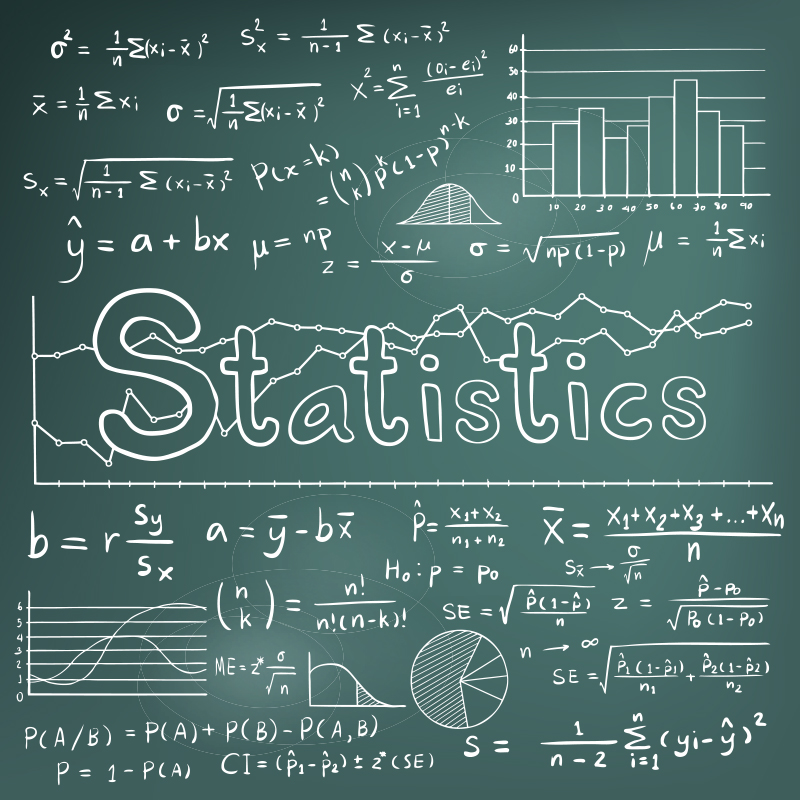
Statistics is the discipline that concerns the collection, organization, analysis, interpretation, and presentation of data. In applying statistics to a scientific, industrial, or social problem, it is conventional, to begin with, a statistical population or a statistical model to be studied. Populations can be diverse groups of people or objects such as “all people living in a country” or “every atom composing a crystal”. Statistics deals with every aspect of data, including the planning of data collection in terms of the design of surveys and experiments. When census data cannot be collected, statisticians collect data by developing specific experiment designs and survey samples. Representative sampling assures that inferences and conclusions can reasonably extend from the sample to the population as a whole. An experimental study involves taking measurements of the system under study, manipulating the system, and then taking additional measurements using the same procedure to determine if the manipulation has modified the values of the measurements. In contrast, an observational study does not involve experimental manipulation.
Two main statistical methods are used in data analysis: descriptive statistics, which summarize data from a sample using indexes such as the mean or standard deviation, and inferential statistics, which conclude data that are subject to random variation like observational errors and sampling variation. Descriptive statistics are most often concerned with two sets of properties of a distribution like a sample or a population. The central tendency or location seeks to characterise the distribution’s central or typical value, while dispersion or variability characterises the extent to which members of the distribution depart from its centre and each other. Inferences in mathematical statistics are made under the framework of probability theory, which deals with the analysis of random phenomena.
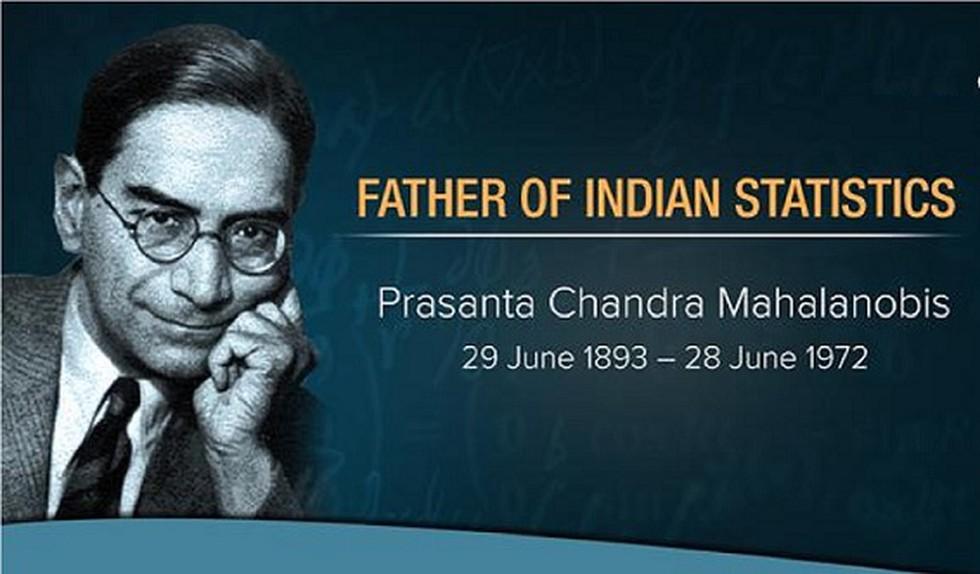
Celebrated every five years, World Statistics Day is an international day to celebrate statistics created by the United Nations Statistical Commission and was first celebrated on 20 October 2010. The day is celebrated in more than 103 countries worldwide, including 51 African countries that jointly celebrate African Statistics Day annually on 18 November. India celebrates its statistics day on 29 June, the birthday of the statistician Prasanta Chandra Mahalanobis.
Statistics are fundamental for evidence-based policymaking. Current, reliable, timely and trusted data help us to understand the changing world in which we live and to drive the transformations that are needed, leaving no one behind. The coronavirus pandemic has further elevated the importance of data to save lives and recover better. Applying statistics to larger groups of data gives a general overview of issues, including scientific, industrial, or social problems.
World Statistics Day is an opportunity to recognise statisticians worldwide who work to provide reliable data, adhere to the Fundamental Principles of Official Statistics, and build more resilient and insightful data ecosystems. The day aims to show that good data and statistics are indispensable for informed decision-making by all actors in society.
Statistics are important to make sure everyone is counted, especially the poorest and vulnerable so that each child’s birth gets does not go unregistered and no incidence of disease, no matter how remote the location, shall remain unrecorded. Local statistics ensure that every child has access to education and so global statistics are needed to monitor the overall effects of climate change.
In India, National Statistics Day is celebrated annually on June 29 which is the birth anniversary of the late Professor Prasanta Chandra Mahalanobis to mark his contribution in the fields of statistics and economic planning. A noted Indian scientist and applied statistician, Professor Prasanta Chandra Mahalanobis introduced the Mahalanobis distance, a statistical measure, and random sampling. He was also one of the members of the first Planning Commission of India and played a key role in shaping the first 5-year plan. He was also instrumental in designing the way surveys are conducted today and introduced the concept of pilot surveys and advocated the importance of sampling methods. Professor Mahalanobis also established the National Statistical Institute (ISI) in 1950, which also housed a Statistical Laboratory.
National Statistics Day Day is celebrated to create public awareness, especially in the younger generation who can for drawing inspiration from him about the role and importance of statistics in socio-economic planning and policy formulation. The day is celebrated by holding seminars, discussions, and competitions to highlight the importance of official statistics in national development. National Statistics Day has a theme every year and the theme for Statistics Day 2022 was Data for Sustainable Development.
Move Along, Please: Land’s End to John O’Groats by Local Bus – Mark Mason
At 10.41am on a Tuesday morning in September, Mark Mason boards the number 1A bus at Land’s End in Cornwall. Forty-six buses and eleven days later he disembarks at John O’Groats in Scotland. Move Along Please is his account of that gruelling 1100-mile odyssey; a paint-by-bus-numbers portrait of Britain.
Along the way he visits everywhere from the village where the internet enters Britain to the urban sprawl of Birmingham (inspiration for the Two Towers in Lord of the Rings). He samples staples of the British diet from curry to the deep-fried Mars Bar, and uncovers countless fascinating facts about his native land – did you know, for example, that Crewe Alexandra football club is named after the wife of Edward VII, that Loch Ness could hold the water from all the lakes in England and Wales, or that there is a village which rejoices in the name Tongue End?
Set against the backdrop of 2000 years of history and with a full supporting cast drawn from that most unusual of species, the Great British Public, this is the unmissable story of a man rediscovering his nation in all its idiosyncratic glory.