After Bhopal, we move westward to the largest and most populous city in the state, Indore. Located on the southern edge of Malwa Plateau, Indore is a tier 2 city very densely populated. The city traces its roots to its 16th century founding as a trading hub between the Deccan and Delhi. The city and its surroundings came under Maratha Empire on 18 May 1724 after Peshwa Baji Rao I assumed the full control of Malwa. During the days of the British Raj, Indore State was a 19 Gun Salute princely state which is a rare high rank ruled by the Maratha Holkar dynasty, until they acceded to the Union of India. Indore served as the capital of the Madhya Bharat from 1950 until 1956. It has been ranked as India’s cleanest city four years in a row as per the Swachh Survekshan for the years 2017, 2018, 2019 and 2020.
Gupta inscriptions name Indore as ‘Indrapura’. It is believe that the city is named after its Indreshwar Mahadev Temple, where Indra is the presiding deity. It is believed that Indra meditated in this place and led sage Swami Indrapuri to establish the temple. Later, Tukoji Rao Holkar renovated the temple. Gupta Empire inscriptions on copper plate inscriptions dated 146 Gupta era or 465 AD mention Indore as the city of Indrapura. These are also some of the earliest mentions of Indore where the city is mentioned as ‘Indrapura’. Indrapura was then known for its sun temple, where around 464-65 AD, the Gupta king Skandagupta had made an endowment for the permanent maintenance of the city’s sun temple. The temple was constructed by two merchants of the city – Achalavarman and Bhṛikuṇṭhasiṁha.
In 1733, the Peshwa assumed the full control of Malwa, and appointed his commander Malhar Rao Holkar as the Governor of the province and on 29 July 1732, Bajirao Peshwa-I granted Holkar State by merging 28 and one-half parganas to Malhar Rao Holkar, the founding ruler of Holkar dynasty. His daughter-in-law Ahilyabai Holkar moved the state’s capital to Maheshwar in 1767, but Indore remained an important commercial and military centre. In 1818, the Holkars were defeated by the British during the Third Anglo-Maratha War, in the Battle of Mahidpur by virtue of which the capital was again moved from Maheshwar to Indore. A residency with British resident was established at Indore, but Holkars continued to rule Indore State as a princely state mainly due to efforts of their Dewan Tatya Jog. During that time, Indore was established the headquarters of British Central Agency. Ujjain was originally the commercial centre of Malwa. But the British administrators such as John Malcolm decided to promote Indore as an alternative to Ujjain, because the merchants of Ujjain had supported anti-British elements. In 1906 electric supply was started in the city, fire brigade was established in 1909 and in 1918, first master-plan of city was made by noted architect and town planner, Patrick Geddes. During the period of Maharaja Tukoji Rao Holkar II who ruled between 1852 and 1886, efforts were made for the planned development and industrial development of Indore. With the introduction of Railways in 1875, the business in Indore flourished during the reigns of Maharaja Shivaji Rao Holkar, Maharaja Tukoji Rao Holkar III and Maharaja Yeshwant Rao Holkar.
After India’s independence in 1947, Holkar State, along with a number of neighboring princely states, acceded to the Indian Union. In 1948, with the formation of Madhya Bharat, Indore became the summer capital of the new state. On 1 November 1956, when Madhya Bharat was renamed and merged into Madhya Pradesh, the state capital was shifted to Bhopal. Today, Indore has been transformed from a traditional commercial urban center into the modern dynamic commercial capital of the state.
So let’s go and see what delights await us in Indore.
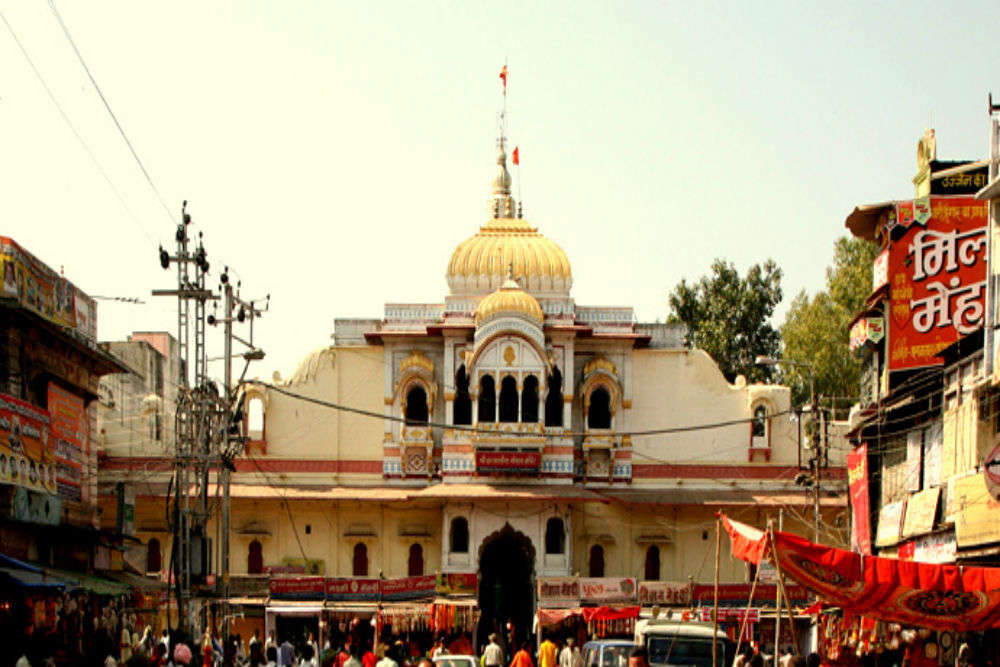
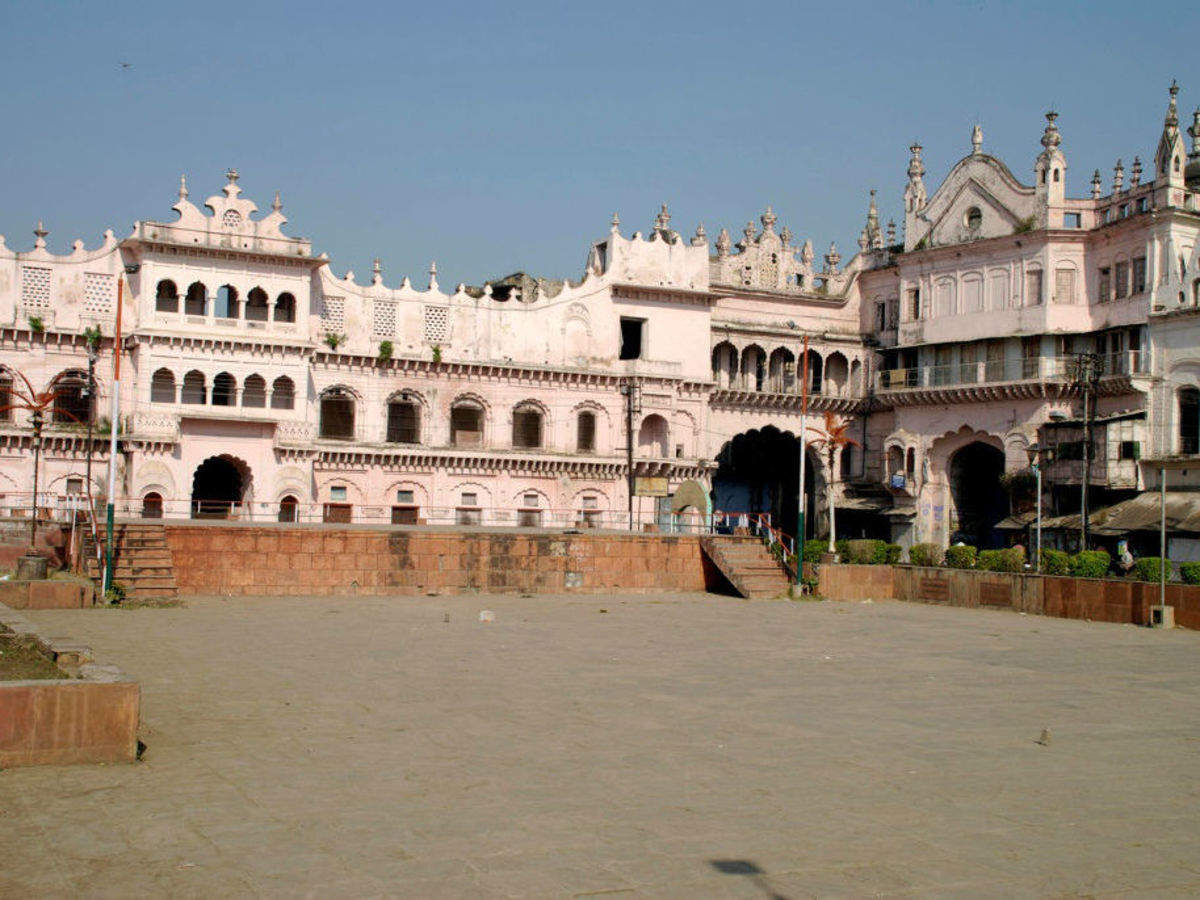
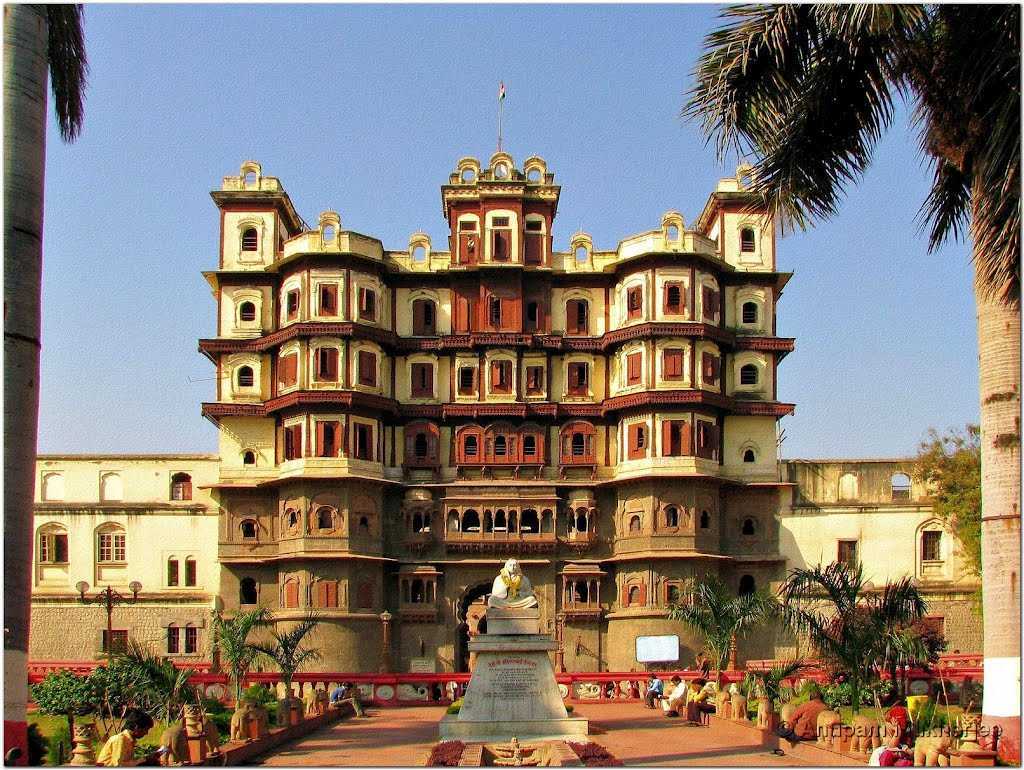
Rajwada: Located near the famous Kajuri Market, the Rajwada is a magnificent and historical palace built in a blend of the Maratha, Mughal and French style of architecture. When viewed from the southern side, the structure looks Mughal; while from the eastern side, it looks European. The palace was constructed by the Malhar Rao Holkar in 1747. A seven-storied structure located near the Chhatris, the Rajwada serves as an excellent example of royal grandeur and architectural skills. Nestled between the crowded streets of the Kajuri Bazar and facing the main square of the city, the Rajwada palace also faces a well-maintained garden that houses a statue of Queen Ahilya Bai, an artificial waterfall and some beautiful fountains. The Rajwada Palace was constructed in 1747 A.D. by the founder of Holkar Dynasty, Malhar Rao Holkar. The palace was once the centre of all the trading activities in the city. The Rani Ahilya throne, Ganesha Hall and Darbar Hall have been constructed in the French fashion. The Rajwada has been burnt three times since its construction. Now, only the front part of the original structure remains. The palace has recently been renovated, which has managed to bring back glory to an extent. In the rear part of the palace, a beautiful garden has been created, containing fountains, an artificial waterfall and some magnificent pieces of 11th-century sculpture. A splendid sound and light show takes place at the Rajwada Palace from Tuesdays to Sundays, at 6:30 pm and is a must watch for those who wish to know more about the palace and unravel its mysteries. While the lower three floors are made of stone and have been painted in dark brown colour, the upper floors have been constructed using wood. The windows of the palace have been outlined and give an impression to the onlooker that several eyes are looking right back at the street. The current building is rectangular, with circular bastions on all four corners. The palace also houses the office of the Joint Director of Archaeology and a Souvenir Shop, which is managed by the Archaeology Department of the State. The Rajwada is open to the public from 10 am to 5 pm and the entry fee for Indians is INR 10 while foreign visitors need to pay INR 250. If you plan on photography inside the the palace, you need to pay INR 25 for a still camera and INR 100 if you need to film inside.
Lal Bagh Palace: The residence of the Holkar rulers, the Lal Bagh Palace is sprawling and is spread over an area of 28 acres. An example of architectural magnificence, this palace once contained one of the best rose gardens in the country. Situated on the banks of the river Khan, about 32 km away from the city centre, the construction for the Lal Bagh palace begun during the reign of Tukoji Rao Holkar in 1886 and was completed 35 years later by his successor Tukoji Rao Holkar in 1921. Today the palace is a museum with some of the most exquisite artifacts from the Maratha Empire and Holkar dynasty, as well as a rare coin collection, dating back to the Mughal period. The interiors of this palace are rich with Italian marble columns, grand chandeliers, rich Persian carpets, murals on the ceiling, Belgium stained glass windows, Greek mythological reliefs, Italian style wall paintings, stuffed leopards, and tigers, amongst others. The palace is closed on Mondays and on other days it is open for visitors between 10 am and 5 pm.
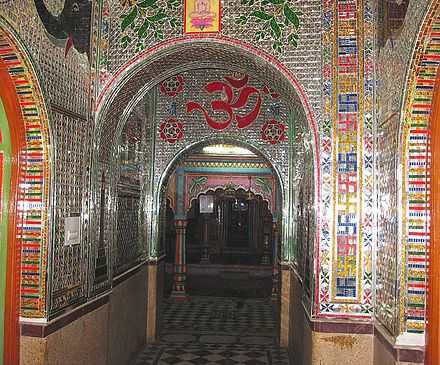
Kanch Mandir: Made entirely out of glass, the Kanch Mandir or Glass Temple is a Jain temple which exhibits exquisite artwork on glass panels depicting the various aspects of Jainism. Close to the Rajwada, the temple, though not very big, is completely made out of Belgian stained glass and mirrors, from the floor to the ceiling, including walls and stairs. The dazzling domed ceiling displays intricate designs crafted from glass pieces. Its grandeur is enhanced manifold when it is lit up with lights and candles on certain Jain festivals like Mahavir Jayanti. The temple is open from 5 am to 12noon and then again between 4 to 8 pm every day.
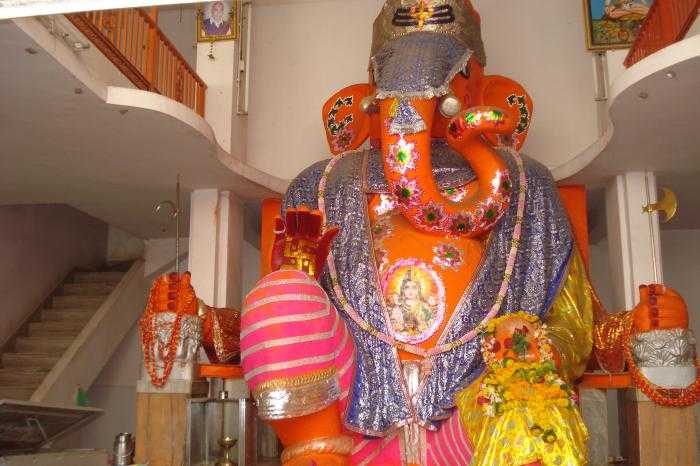
Bada Ganpati: Literally meaning Big Ganesh, the Bada Ganpati temple earns its name due to the size of Lord Ganesha’s idol which is at a height of about 25 feet from crown to foot and is said to be one of the largest idols of the Lord in the world. The statue is made of a peculiar mixture of limestone, jaggery, bricks and sacred soil and water from the major pilgrim places in the country. There are conflicting accounts of how the temple came into existence. Established in the year 1875 by Shri Dadich, the construction of Bada Ganpati Temple was brought about by the family members of the Holkar dynasty, especially Queen Ahilya Bai Holkar. The temple is open twice a day: once in the morning between 5 am and 12 noon and then again in the evening between 4 to 8 pm.
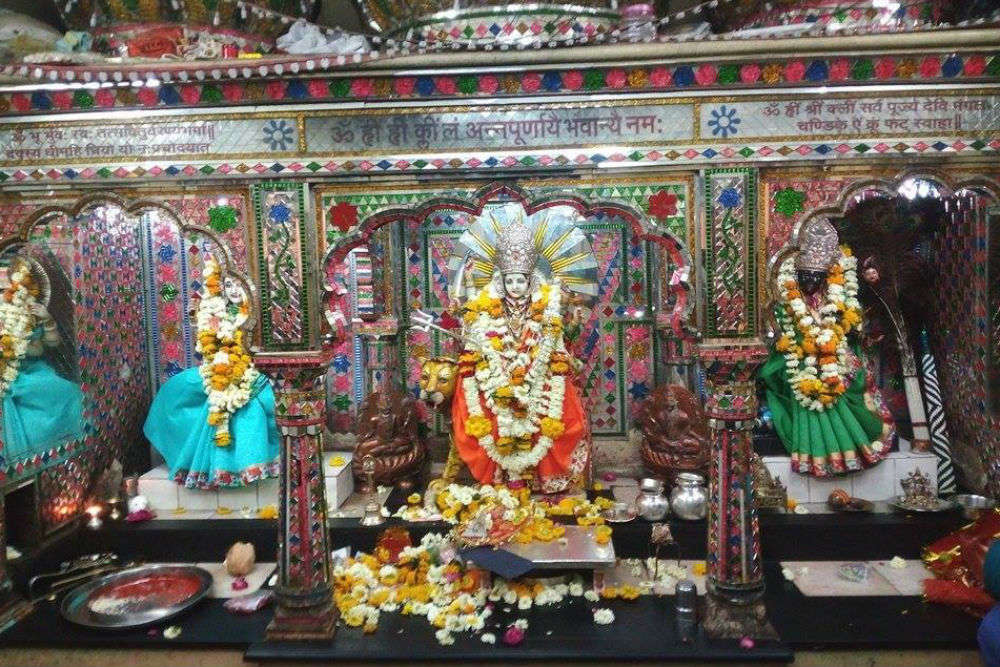
Annapurna Temple: Dedicated to the Goddess of food and the kitchen, the Annapurna temple also also houses the shrines of Lord Shiva, Lord Hanuman and Lord Kalabhairava. The entrance of the temple is adorned with four-life size statues of elephants. A rare depiction of the four vedas in the Vedhshala is another reason to visit the temple and spend some peaceful moments in the presence of divinity.
Khajrana Temple: The Khajrana Ganesh temple is one of the most powerful shrines of the Lord Ganesha. It was built by Rani Ahilyabai Holkar to safeguard the idol of Lord Ganesha from Aurangzeb. The temple has since grown from being housed in a small hut to a big temple with large inner and outer sanctums.
Gommat Giri: A pilgrimage site for those professing the Jain faith, Gomatgiri is located at just a 10-minute drive from the airport. A 21 feet statue of Gomateshwar which is a replica of the gigantic statue of Bahubali at Shravanabelagola is a major attraction. The statue of Gomateshwar is situated on a hill. Apart from this, there are also 24 temples, each representing the 24 Tirthankaras of Jainism.
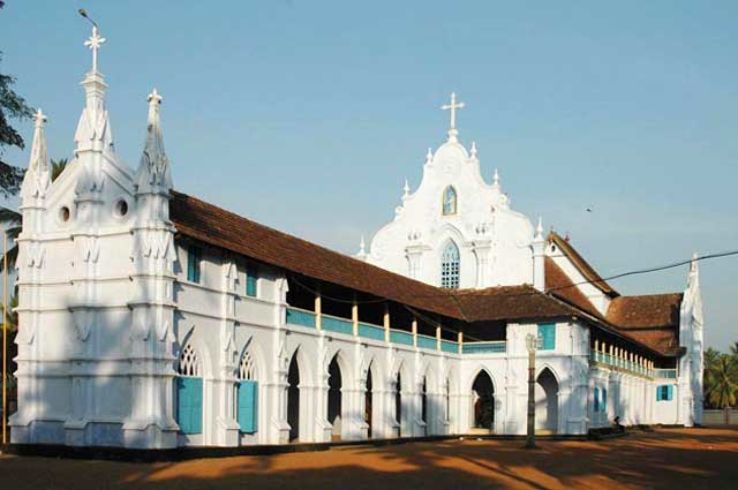
Indore White Church: A colonial British-era church, the Indore White Church is testimony to awe-striking European architecture, with the entire structure being made of milk white stone and marble. The church comes into its own during Christmas time when it is decorated and is a sight to see then.
Museums in Indore: A small unique museum dedicated to the study of wild life and reptiles, the Kanha Museum also has artefacts related to the past and the history of Indore. The Royal Museum of Indore is a tiny museum famous for housing a collection of thrones, photographs and weapons etc. Most of these artefacts belong to the 19th century which was under the rule of Serfoji II. Exhibiting artefacts dating as far back to the prehistoric era, as well as recent findings from the modern era, the Central Museum of Indore is a history buff’s paradise. The museum also houses mythological carvings, coins from different ages, arms of various eras and sculptures dating back to the 11th century. Be sure to check the rare dried botanical creatures on display too. This museum is open from 10 am to 5 pm.
Meghdoot Garden: Also known as Meghdoot Upavan, Meghdoot Gardens is one of the oldest gardens in Indore. Luxuriously dense landscapes with different shades of green make the perfect environment to relax and rejuvenate. The park is dotted with beautiful misty fountains and also has a special children’s play area. The garden is open from 8 am to 10 pm and the entrance fee for Indians is INR 10 while foreigners will pay INR 200. Children below the age of 7 can enter without paying any entrance fee.
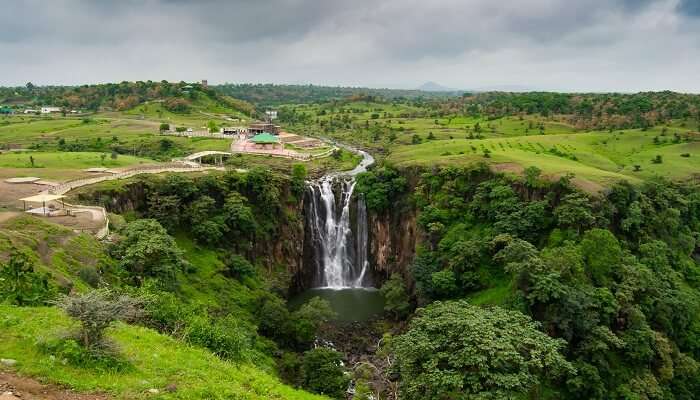
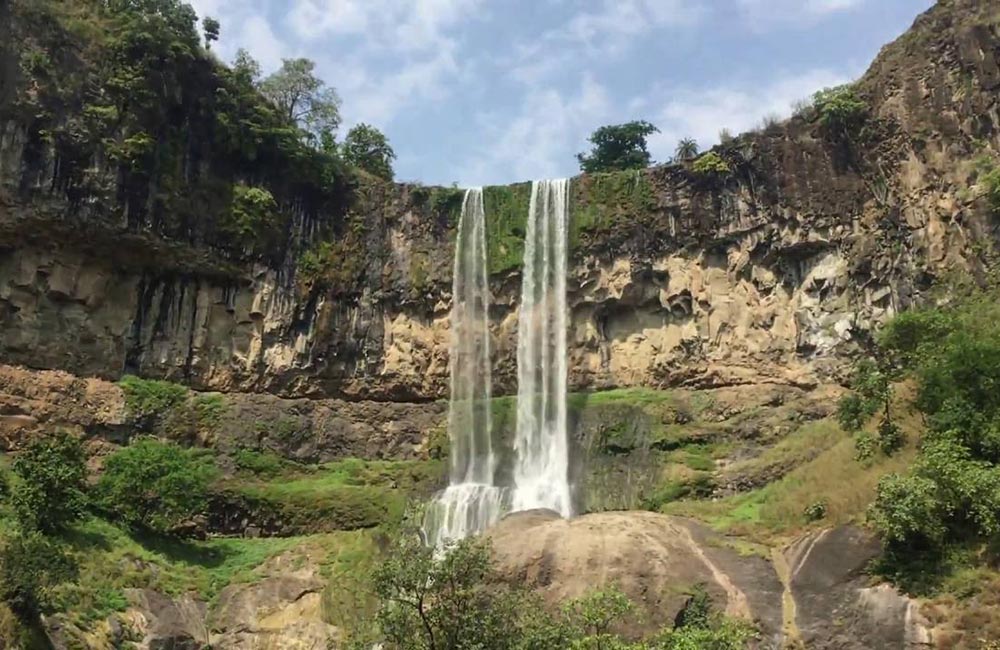
Waterfalls around Indore: Plummeting from a height of 300 meters, the Patalpani Waterfall is the most scenic photo stop in Indore. These falls lie about 30 km south from the centre of the city and are enveloped by refreshing mist and dense verdure making them the favourite local picnic spot. The monsoons swell the falls and may make it risky for close encounters causing accidents. It is best to maintain cautious distance from the waterfall during the rains. The breathtaking sight of water falling from a height is always thrilling, and Mohadi Falls, which lie about 29 km south of the city centre is the perfect spot where you would take your family to visit for a picnic. Located 25 kilometres south of the city, the Tincha Falls are one of the most popular waterfalls in the region. The milky white cascade is located in the Tincha village, also where the falls derive their name from. The roaring plunge of water at a height of 300 feet is a rain fed waterfall and is primarily a monsoon destination. Surrounded by lush green vegetation on all sides and an exhilarating experience in itself, the falls attract visitors, especially during the monsoon months. The falls are also a canyon, nuzzled in between valleys and there is a small pond near the foot of the falls, with the juxposition of the stillness of the pond against the roaring descent of water a sight not to be missed.
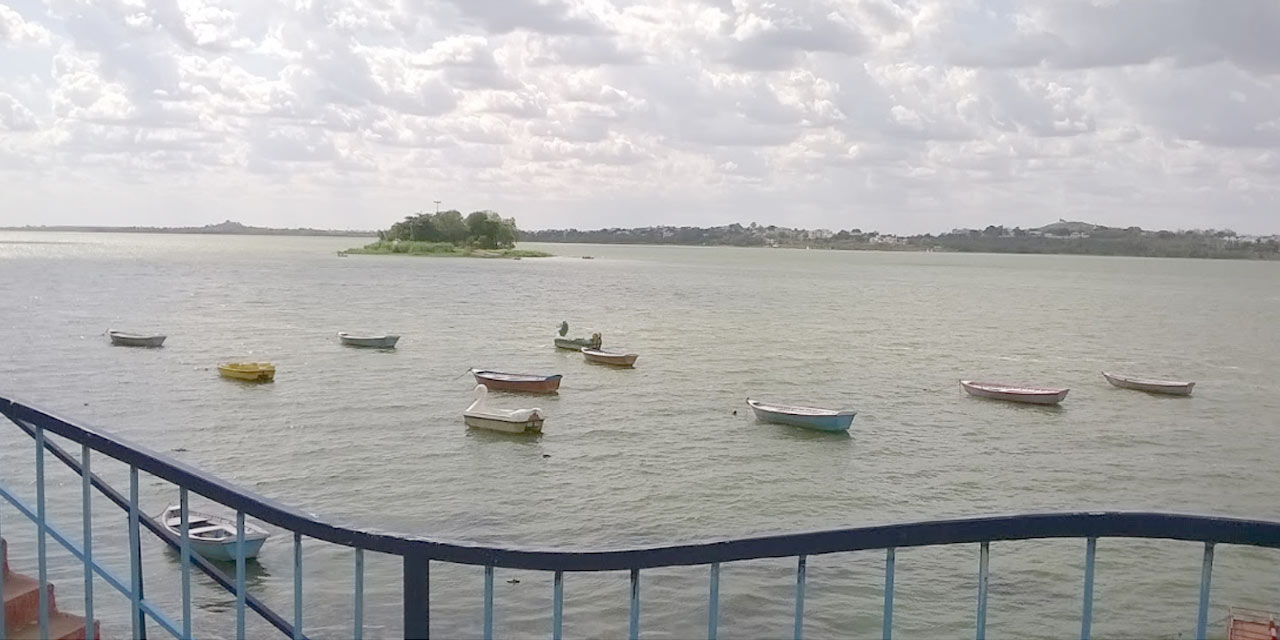
Pipliyapala Regional Park: Spread over an area of a whopping 122 acres and housing a ginormous 80-acre lake, the Pipliyapala Regional Park is an absolute treat for adults and children alike. Engage in some fun-filled activities like pedal-boating and motor-boating and witness the magical allure of the Mist and Musical Fountain, French Gardens, Labyrinths, Artist Village, etc. Be sure to try the savoury delicacies available at the Fast Food Zone. Open from 11 am to 9 pm, the entry fee for the park is INR 25 per person for Indians and INR 10 for children.
Ralamandal Wildlife Sanctuary: The oldest sanctuary in Madhya Pradesh, the Ralamandal Wildlife Sanctuary packs a treat for wildlife and avifauna enthusiasts alike. The River Narmada, which is 150 million years older than River Ganga, runs through the sanctuary. Home to deer, wild hare, tigers and an umpteen variety of birds, you can access the sanctuary from 9 am to 6:30 pm. Entrance fee to the sanctuary is INR 5 per person.
Now that we have done visiting Indore, let’s travel 55 kms north to the holy city of Ujjain.
Ujjain is the fifth largest city in Madhya Pradesh and a famous Hindu pilgrimage centre with the Kumbh Mela held here every 12 years. The famous temple of Mahakaleshwar Jyotirlinga is also located in this city. An ancient city situated on the eastern bank of the Kshipra River, Ujjain was the most prominent city on the Malwa plateau of central India for much of its history. It emerged as the political centre of central India around 600 BCE. It was the capital of the ancient Avanti kingdom, one of the sixteen mahajanapadas. It remained an important political, commercial and cultural centre of central India until the early 19th century, when the British administrators decided to develop Indore as an alternative to it. Ujjain continues to be an important place of pilgrimage for Shaivites, Vaishnavites and followers of Shakta. Ujjain is one among the five places in India where the Jantar Mantar is located. Ujjain is also known as Greenwich of India or navel of earth because it is located where tropic of cancer and zero meridian of longitude intersects.Even today for astronomic calculations Ujjain’s time which is 29 min behind the Indian Standard Time is considered to be the best.
Excavations at Kayatha which lies around 26 km from Ujjain have revealed chalcolithic agricultural settlements dating to around 2000 BCE. According to scientists, Avanti, whose capital was Ujjain, was one of the earliest outposts in central India and showed signs of early urbanisation around 700 BCE. Around 600 BCE, Ujjain emerged as the political, commercial and cultural centre of Malwa plateau. The ancient walled city of Ujjain was located around the Garh Kalika hill on the bank of river Kshipra, in the present-day suburban areas of the Ujjain city. According to the Puranic texts, a branch of the legendary Haihaya dynasty ruled over Ujjain. In the 4th century BCE, the Mauryan emperor Chandragupta annexed Avanti to his empire. From the Mauryan period, northern black polished ware, copper coins, terracotta ring wells and ivory seals with Brahmi text have been excavated at Ujjain which emerged as an important commercial centre, partially because it lay on the trade route connecting north India to the Deccan, starting from Mathura. It also emerged as an important center for intellectual learning among Jain, Buddhist and Hindu traditions. After the Mauryans, Ujjain was controlled by a number of empires and dynasties, including local dynasties, the Shungas, the Western Satraps, the Satavahanas, and the Guptas. Ujjain was an important city and first capital of the powerul Gurjara-Pratihara dynasty. In 1235 CE, Iltutmish of Delhi Sultanate plundered the city, and destroyed its temples. With the decline of the Paramara kingdom, Ujjain ultimately came under the Islamic rule, like other parts of north-central India. The city continued to be an important city of central India. As late as during the times of the Mughals, their vassal Jai Singh II constructed a Jantar Mantar in the city.
During the 18th century, the city briefly became the capital of Scindia state of the Maratha confederacy, when Ranoji Scindia established his capital at Ujjain in 1731. Madhadji Shinde constructed a grand palace with a hundred rooms around which the Maratha sardars constructed their own mansions. Ruined and destroyed temples were restored and newer ones were built. But his successors moved to Gwalior, where they ruled the Gwalior State in the latter half of the 18th century. The struggle of supremacy between the Holkars of Indore and Scindias (who ruled Ujjain) led to rivalry between the merchants of the two cities. After both Holkars and Scindias accepted the British suzerainty, the British colonial administrators decided to develop Indore as an alternative to Ujjain, because the merchants of Ujjain had supported certain anti-British people. After India’s independence, Ujjain became a part of the Madhya Bharat state. In 1956 Madhya Bharat was fused into the State of Madhya Pradesh. Since Ujjain is a holy city for Hindus, the temples are the stars of this city.
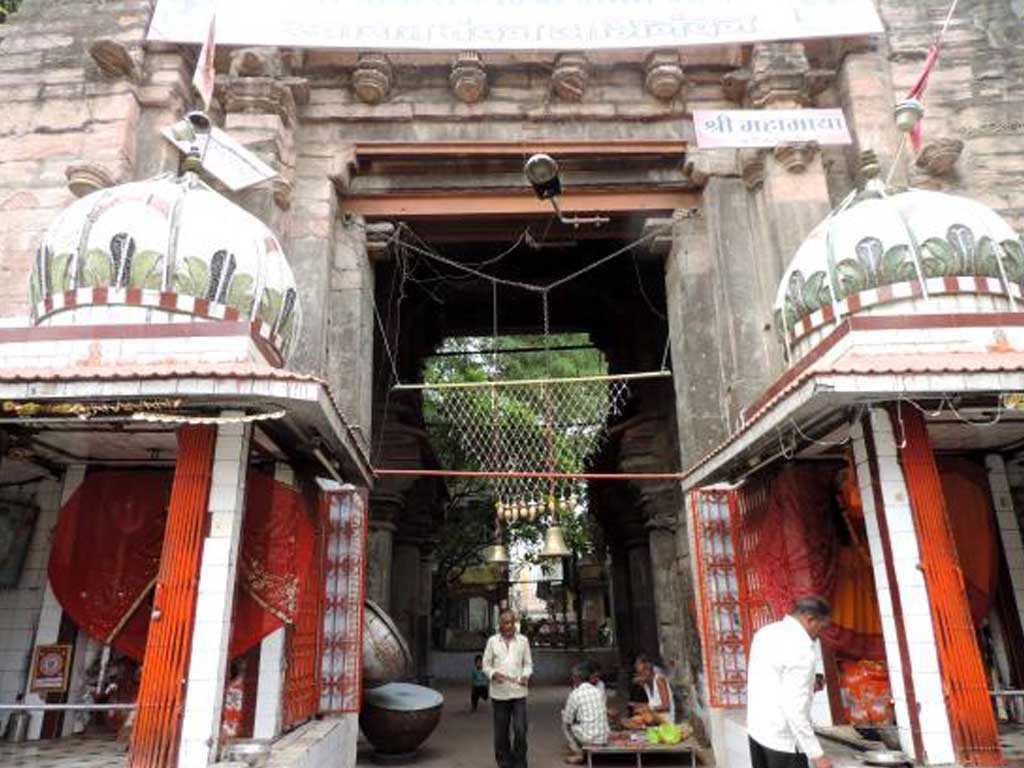
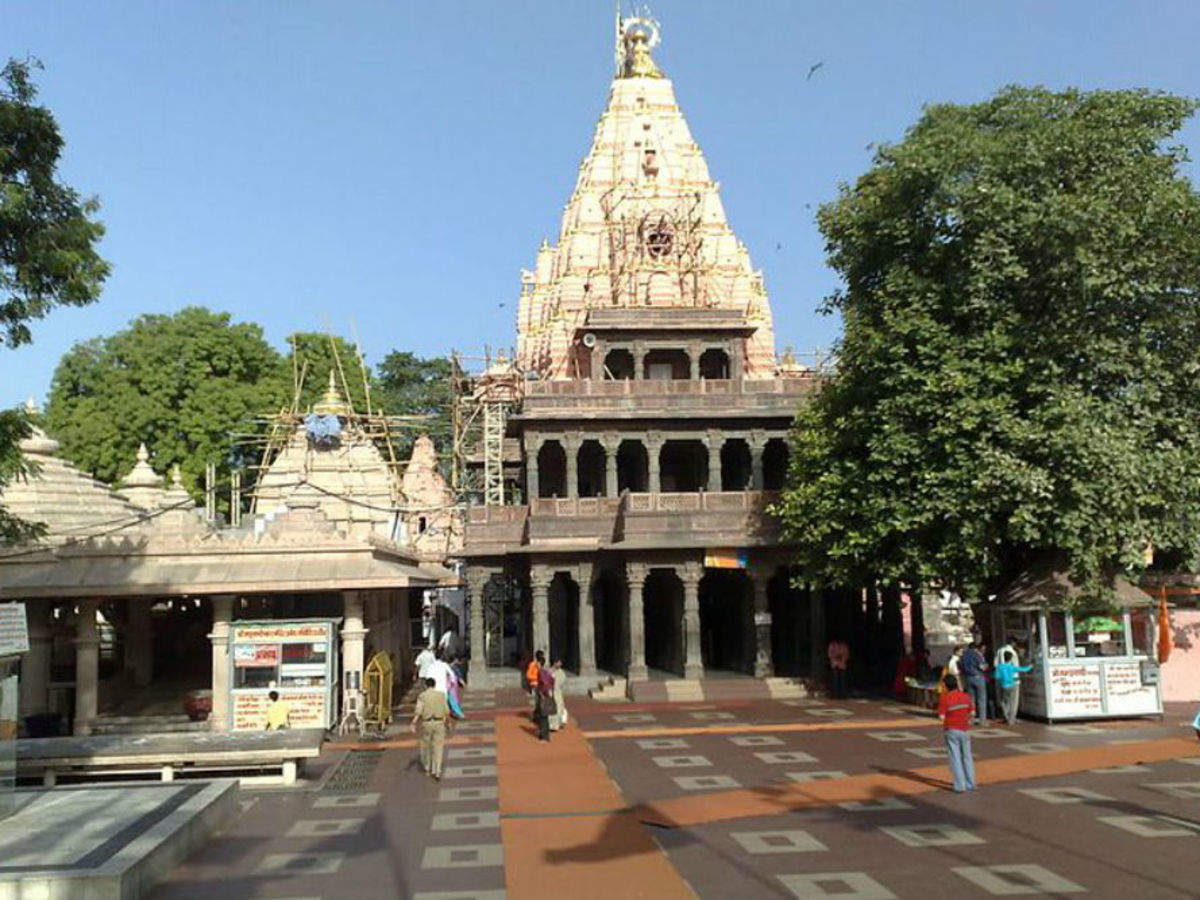
Mahakaleshwar Temple: One of the 12 Jyotirlingas in India, the Mahakaleshwar Temple is dedicated to Lord Shiva and it is said the Mahakal lingam at this temple is believed to be Swayambhu or self-manifesting, obtaining currents of Shakti or power from within itself. Mahakaleshwar is also one of the 18 Maha Shakti Peethas in India. Another interesting thing about the temple and what makes the temple one of the most revered Jyotirlingas in India is the fact that the Mahakaleshwar idol is Dakshina Mukhi, which means it is facing south, unlike all the other Jyotirlingas. The Bhasma-Aarti of Mahakaleshwar Temple is hugely popular amongst the devotees. The temple complex has a spacious courtyard which is influenced by Maratha, Bhumija and Chalukya styles of design and has impressive lingam sculptures of Mahakaleshwar. It also has the inscriptions of Omkaresvara and Nagachandresvara and images of Ganesha, Kartikeya and Parvati. The temple, which is spread over five levels, sees a huge throng of devotees during the Maha Shivaratri festival. The temple Pooja timings from the months of Chaitra to Ashwin which translate to around mid March to mid Octoberr are the morning Pooja from 7 to 7:30 am, the midday Pooja from 10 to 10:30 am, the evening Pooja from 5 to 5:30 pm and the Aarti Shri Mahakal from 7 to 7:30 pm. During these months, the temple closes at 11 pm. In the months of Kartik to Falgun which according to the Gregorian calendar roughly corresponds to mid October to mid March, the morning Pooja is from 7:30 to 8 am, the midday Pooja is from 10:30 to 11 am, the evening Pooja is from 5:30 to 6:00 pm, the Aarti Shri Mahakal from 7:30 to 8 pm and the temple closes at 11 pm. The daily Bhasma Aarti is done at 4 am. There is no entry fee, but you need to pay INR 250 for a VIP darshan. Though there is no dress code for a normal darshan, please be mindful of religious sentiments and not wear scanty clothes. If you are planning to do a Jalaabhishek, men need to be attired in a dhoti and shawl which can be purchased in the shops outside the temple or you can rent them at the temple. Women are expected to wear a saree.
Kal Bhairava Temple: Bhairav is a fierce manifestation of Lord Shiva, and Kal Bhairava is the most important among the eight Bhairavas. If ancient scriptures are to be believed, the Kal Bhairav temple is said to be related with the Tantra cult, a secret religious sect who thrived upon black magic. There is a Shivalinga in this temple which during Mahashivratri attracts thousands of visitors. The temple is open from 5 am to 7 pm all days of the week.
Ram Mandir Ghat: One of the four locations in India which host the Kumbh Mela once every 12 years, the Ram Mandir Ghat is considered to be one of the oldest bathing Ghats in connection with the Kumbh celebrations. Millions of people throng this place during the mega Kumbh festival as it is believed that a dip here can wash off all you sins. Watching the sunset from the Ram Mandir Ghat is one of the most enchanting scenes you’ll experience.
Harsiddhi Temple: Boasting of an idol of Annapurna painted in dark red colour between the idols of Mahasaraswati and Mahalaxmi, the Harsiddhi Temple was almost in an irreparable condition, until the Marathas decided to repair it and the reason why you can see a touch of Maratha architecture in the temple. The temple is open from 5 am to 7 am every day of the week.
Kaliadeh Palace: Situated on an island based in the Shipra River, and constructed in 1458, this palace holds immense religious significance. The Palace is flanked on both sides by the waters of the rivers and you can see how well the man-made tanks and channels have been constructed. It was said that Emperor Akbar and Jehangir visited this gorgeous monument which is reflected in the two Persian inscriptions that are found in one of the corridors of the palace. It was broken down during the reign of the Pindaris, but Madhavrao Scindia restored it.
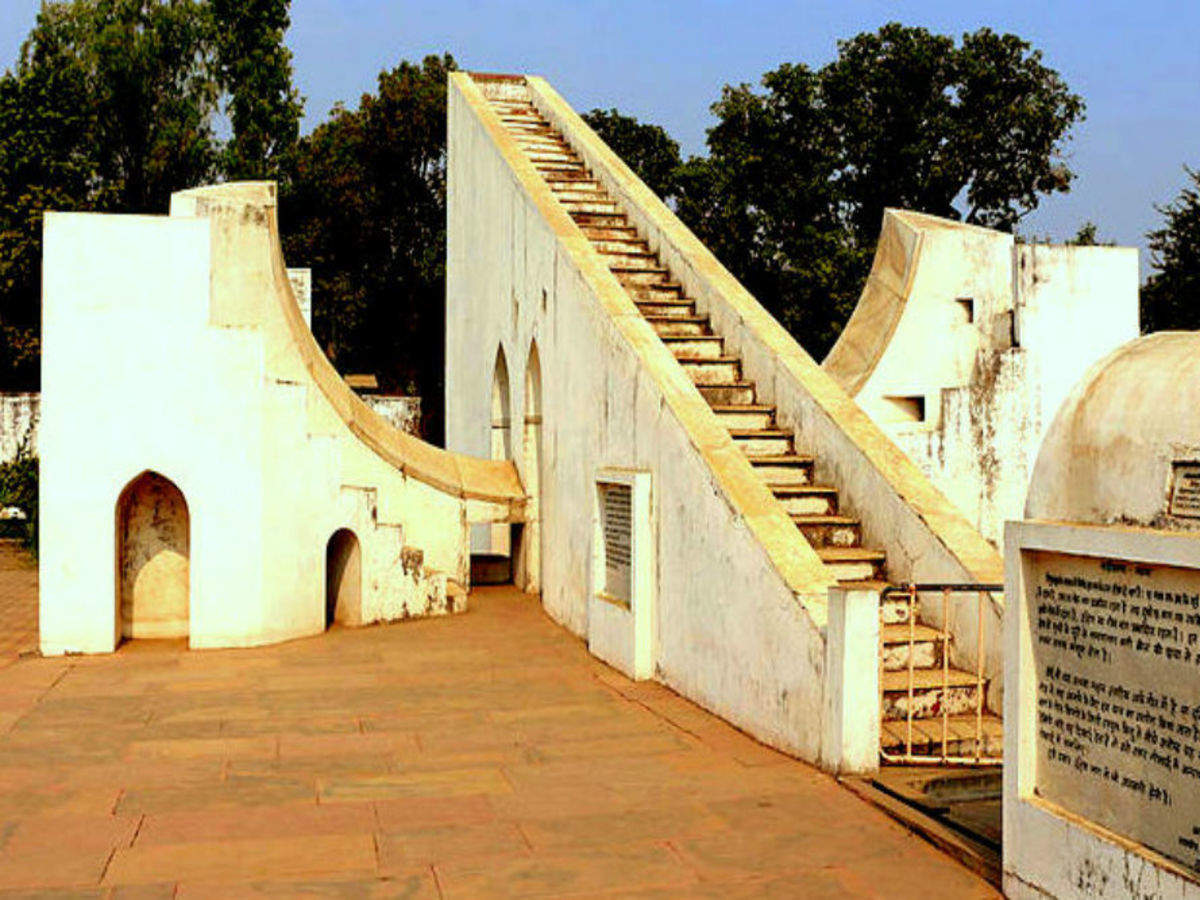
Jantar Mantar: Also known as the Vedh Shala Observatory, the Jantar Mantar, established in the 17th century is the oldest to be constructed among the group of five observatories viz. Jaipur, Delhi, Ujjain, Mathura, and Varanasi. Maharaja Jai Singh constructed it in 1719 to help Hindu scholars and astrologers with their research and studies. Visiting the place would make you learn about the ways by which time, revolutions, and position of celestial bodies were calculated in the bygone age. The studies of motions and orbits constituted here have bought it the name of ‘Yantra Mahal’. It has different yantras such as Samrat Yantra, Sun Dial, Niyati Chakra, etc. The primary purpose behind the construction of Jantar Mantar was to illustrate and compile the data collected by astronomical calculations, the results of which helped in the study of the movement of sun, planets and their moons. Moreover, the observatory in Ujjain is the only observatory where astronomical research is still carried out. Several data including the study of planetary motions get published every year. The Jantar Mantar is open every day between 7 am to 7 pm. Entry fees for Indians above the age of 15 is INR 40 per person while foreigners need to pay INR 200 per person. A camera will incur a cost of INR 50 while an audio guide will set you back by INR 50.
Chaubis Khamba Temple: Dating back to the 9th or 10th century, the Chaubis Khamba Temple is a historical wonder. The entrance showcases the images of guardian goddesses of the Temple – Mahalaya and Mahamaya with their names inscribed on the footsteps of the temple. The temple is open from 5 am to 7 pm every day.
Mangalnath Temple: Considered as the birth place of planet Mars, the Mangalnath Temple is visited by hundreds of devotees daily to get rid of dark energies and stubborn life problems. You can also seek the blessings of Mahadeva here, the guardian deity of the city.
Gopal Mandir: A majestic marble towered structure at the centre of the market square, the Gopal Mandir is famous for the beautiful Krishna idol it houses. The idol is a whopping 2 feet tall, rests on a silver-plated altar and is entirely cloaked in silver and gold jewellery. Also, the infamous door stolen by Ghazni from the Somnath temple has now been installed here.
After Ujjain, let’s quickly head to Alampur, a short 20 km drive south of Ujjain on the way to Indore.
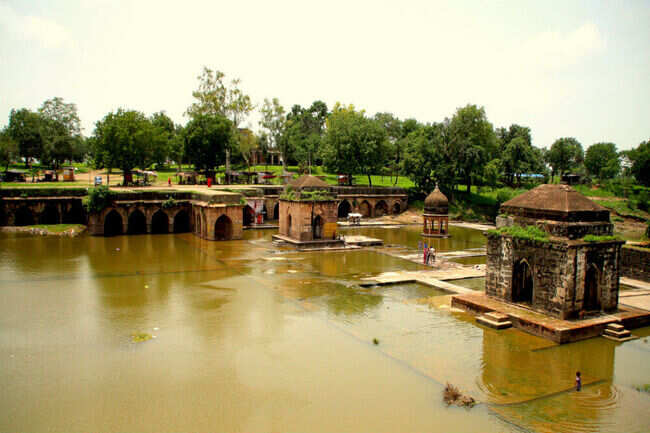
A historical town, Alampur is named after Alam Shah Pavar who was the governor of province. No one knows about the origin of the Alampur fortress but based on it’s architecture, it is assumed to have been built around the 14th or 15th centuries. The town is famous for the chhatri of Malhar Rao Holkar and a Fortress at Alampu. A chhatri is a dome-shaped pavilion which originated as a canopy above tombs and served as a decorative element.
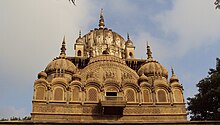
Malhar Rao’s Chhatri was built by Maharani Ahilya Bai Holkar in 1766 and is marked by beautiful carvings. Built on the pattern of the chhatris of Holkar rulers at Indore, the chhatri is famous for its outstanding carving of floral and leaf patterns. The first storey of the chhatri is a pillared hall decorated with fascinating paintings. This canopy is located on the left side of the entrance of Alampur. Carvings filled with colors are on the roof of the encompassing path and vines are carved on the walls of sanctorum inspired by Iranian Style. Carvings are also there on the balcony of the sanctorum with sun on the middle of north, east and south while a tortoise on the west balcony. The sanctorum also has windows all around. The wall on the left side of canopy has statues of the ruling family with five panels of such.
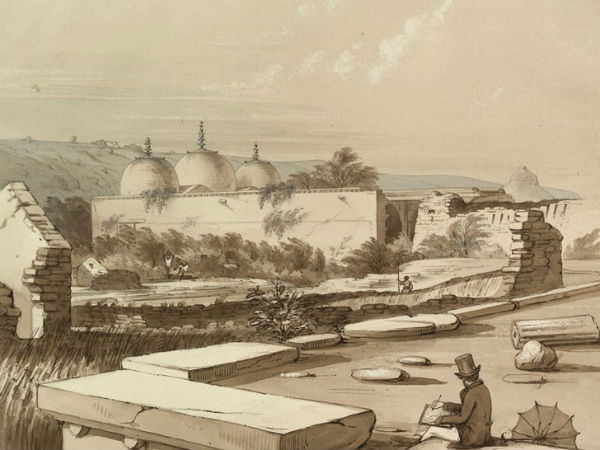
The origin of the Alampur Fort is shrouded in mystery today but based on its architecture, it can be safely assumed to have been built in the 14th or 15th century. There are two entrance one at East and other one at North, however the door at the east was the main entrance of the fortress and it seems that door at the north was built later. The ramparts of the fortress are damaged now, but it can be supposed that the fortress was very strong in the past. The Shala Bhavan inside the fortress which looks similar to the main receiving hall has cracks in many places. Today, a trust office is located in the second building which is in good condition and possibly was the residence of the governor of the province. A shrine and a Shiv temple are situated just in front of this building.
Other historical temples and monuments in Alampur include the Harihareshwar or Badi Mata temple, Batuk, Malharimarthand, Surya, Renuka, Ram Hanuman Temples, Shriram Temple, Laxmi Narayan Temple, Maruti Temple, Narsinh Temple, Khanderao Martand Temple and the memorial of Malhar Rao.
Let’s contine and travel about 142 km south to the town of Maheshwar





_1509030987t.jpg)