Sacred Stones, Spaces and Stories: Shakthipeeta Part 13

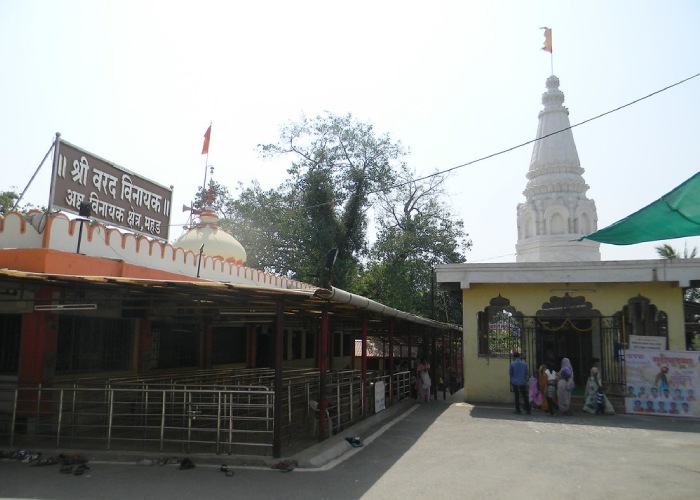
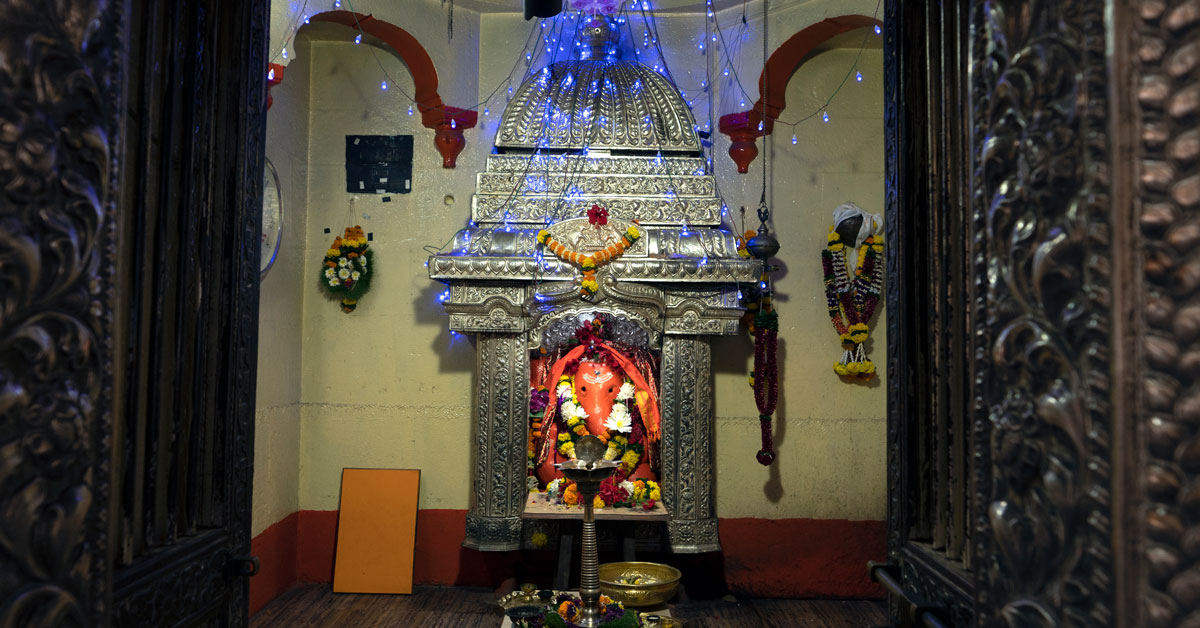
Bhagavathy Temple, Kanyakumari, Tamil Nadu
Nestled at the southernmost tip of mainland India, the Bhagavathy Amman Temple in Kanyakumari is dedicated to Goddess Kanya Kumari. Historical records and legends suggest that the temple’s roots may reach back to the early Sangam period between 300 BC and 300 CE.

The temple is believed to be over 3000 years old, with its original sanctum possibly dating back to this era. Over the centuries, the temple has undergone numerous renovations and expansions by various ruling dynasties. The Pandyas are credited with the initial construction, while subsequent contributions and enhancements were made by the Cholas, the Vijayanagara Empire, and the Travancore royalty. Sage Parashurama, the sixth avatar of Lord Vishnu, is said to have performed the consecration of the temple and installed the main idol of Devi Bhagavathy. This blue stone image, facing east, is believed to have been consecrated by the sage himself.

According to tradition, it is believed that the right shoulder and the area around the spine of Goddess Sati here. The Shakti Peetha here is known as Sarvani, and the temple is often referred to as the Sarvani Shaktipeeth. The presence of Kundalini Shakti in the region is attributed to the falling of these parts of Sati’s body. At the Bhagavathy Amman Temple, the goddess is worshipped as Devi Kanya Kumari, an incarnation of Parvati, the divine consort of Shiva. The name Kanyakumari itself is significant, with Kanya meaning Virgin and Kumari meaning Girl. The Bhairava, the fierce manifestation of Lord Shiva who accompanies the goddess at each Shakti Peetha, is known here as Nimish.

The temple showcases the magnificent Dravidian style of architecture, characterised by its impressive gopuram or gateway tower, intricate carvings, and grand mandapams or pillared halls. Situated at the confluence of three great water bodies: the Indian Ocean, Arabian Sea, and the Bay of Bengal, the temple offers a unique spiritual and geographical setting. Perhaps the most famous feature of the temple is the diamond nose ring worn by the goddess. This nose ring is believed to be so dazzling that it once caused a merchant ship to crash on nearby rocks, mistaking its sparkle for a lighthouse beacon.

Due to the incident with the nose ring, the eastern door of the temple is kept permanently closed, only to be opened on special occasions like Chitra Pournami. The temple complex houses several other shrines dedicated to various deities including Lord Surya Deva, Lord Ganesha, Lord Ayyappa, Goddess Bala Sundari, and Goddess Vijaya Sundari. An ancient well within the temple premises is believed to be connected to its Shakti Peetha status.

Every day, sacred texts are read from 8 to 9:30 am, organised by the temple trust. Women gather daily in the afternoon to sing devotional songs. Every evening, there is a recitation of the Devi Purana, followed by storytelling and kirtana. Puja is performed in the morning, with aarti conducted both in the morning and evening.

Navratri is celebrated with great fervour. Daily mantras are recited by learned Brahmins, and women perform havan on Ashtami, the eighth day. The Vaisakha Festival is a significant celebration at the temple. On Chitra Pournami, the eastern door of the temple is opened, a rare occurrence. The best time to visit the temple is believed to be during the Brahma Muhurta, from 4:30 to 5:30 am.

According to Hindu mythology, the demon Banasura gained a blessing that he could only be killed by a virgin girl. To eliminate this threat, Goddess Parasakthi took the form of Kumari, a virgin girl. The goddess eventually defeated Banasura. Saint Narada and Lord Parasurama then requested the goddess to exist on earth until the end of Kaliyuga, which she accepted. Another popular legend tells of how Goddess Kanya Kumari was set to marry Lord Shiva. However, on the wedding day, as Lord Shiva was on his way from Suchindram, Narada assumed the form of a rooster and crowed prematurely. Hearing this, Shiva believed he had missed the auspicious hour and returned, leaving Kanya Kumari unwed. It is said that when the devastating tsunami struck the region in 2004, the Bhagavathy Amman Temple was one of the few structures that escaped destruction, believed to be due to the divine protection of the goddess.

The Bhagavathy Amman Temple is a living link to India’s rich spiritual traditions, inviting all who visit to experience the divine presence of the Mother Goddess in her manifestation as Kanya Kumari.

Shuchi Temple, Suchindrum, Tamil Nadu
Nestled in the southernmost district of Kanyakumari in Tamil Nadu, the Shuchi Temple in Suchindrum is dedicated to the trinity of Shiva, Vishnu, and Brahma. The exact date of the temple’s establishment remains uncertain, but historical records and legends suggest that the temple’s roots may reach back over 3000 years. The temple is said to have been built by Parashurama, the sixth avatar of Lord Vishnu.

Over the centuries, the temple has undergone numerous renovations and expansions by various ruling dynasties. The earliest lithic records of Suchindram belong to the 9th century. The present masonry structure was built during the Chola dynasty in the 9th century, while later expansions are attributed to Thirumalai Nayak and the Travancore Maharajas. The temple’s construction took place over an extended period of at least six hundred years, with parts of the temple dating back to the late 8th century, while others are from the 15th century. Until Kanyakumari became part of Tamil Nadu, the Suchindram Temple was under the administration of the Travancore Kings.

According to tradition, it is believed that the upper teeth of Goddess Sati fell here. The Shakti Peetha here is known as Shuchi, and the goddess is worshipped as Maa Narayani, wife of Narayan. Suchindrum is the location where Lord Indra achieved Suchi or purification. At the Shuchi Temple, Lord Shiva is worshipped as Sangharor Samhara or the destroyer. The Bhairava, the fierce manifestation of Lord Shiva who accompanies the goddess at each Shakti Peetha, is known here as Samhara Bhairava. He is present in a nearby village, and in Suchindram, he is locally called Sthanu Shiva.

What makes this temple truly unique is the presence of Sri Sthanumalayan, a representation of the combined forces of Shiva, Vishnu, and Brahma. The name Sthanumalayan is derived from Thanu representing Lord Shiva, Mal representing Lord Vishnu, and Ayan representing Lord Brahma. This unified representation is rare in Hindu temples and makes the Shuchi Temple particularly special.

The temple showcases the magnificent Dravidian style of architecture, characterised by its impressive gopuram or gateway tower, intricate carvings, and grand mandapams. The Thousand Pillared Hall is a magnificent hall featuring precisely carved pillars, each telling different stories through their sculptures. The hall serves as an excellent example of Dravidian architecture and artistic excellence. The temple is famous for its musical pillars, a unique architectural feature. There is a huge beautiful idol of Nandi the bull made from a single stone in front of the temple. The temple complex houses several other shrines dedicated to various deities including Lord Surya Deva, Lord Ganesha, Lord Ayyappa, Goddess Bala Sundari, and Goddess Vijaya Sundar. The tallest is the eastern tower, with 11 stories and a height of 44 m.

The temple follows a strict schedule of six daily pujas: Ushakalam at dawn, Kalasanthi in the morning, Uchikalam at noon, Sayarakshai in the evening, Irandam Kalam at night, and Ardha Jamam at midnight. The various festivals celebrated in the temple include Margazhi Thiruvadhirai in December-January, Thai Pongal in January, Panguni Uthiram in March-April, Chithirai festival in April-May, Navaratri celebrated with twice a year, Shivaratri, Suchindram maargali festival and Rath Yatra, Avani in August, and Masi festival in March.

According to the Sthalapurana, Indra suffered a curse from sage Gowthama when he stealthily cast amorous glances at Ahalya, the wife of Gowthama. Unable to bear the mortification brought about by the curse, Indra sought immediate redemption. He came to Gnana Aranya, as this place was then called, and offered worship to Lord Shiva. Relieving Indra of his curse, Lord Shiva granted his wish that the place where he attained purification should henceforth be called Suchindrum.

Another story tells that the Trimurti: Brahma, Vishnu, and Shiva, cajoled by their divine consorts, came down to Earth to test the chastity of Anusuya, wife of sage Athri at Gnana Aranya. The Gods, for this misadventure, had to suffer a curse from the Rishipatni and undergo the purification process before they could be restored to their former glory. One of the legends of Suchindram is related to the chastity of Anasuya, wife of Sage Atri. The legend says that the trimurtis appeared in front of Anasuya as begging brahmins. When she was about to serve them, they imposed a condition that they would eat only if she served them naked. Through the power of her chastity, she converted the three Gods into babies and suckled them.

As you stand in the temple courtyard, surrounded by centuries of devotion and the echoes of ancient rituals, you can’t help but feel a connection to the spiritual heritage that has shaped this land for millennia. The Shuchi Temple, with its blend of myth, history, and living faith, continues to be a powerful force, inviting all who visit to partake in its timeless spiritual journey.

In My Hands Today…

Alexandria: The City that Changed the World – Islam Issa

A city drawn in sand.

Inspired by the tales of Homer and his own ambitions of empire, Alexander the Great sketched the idea of a city onto the sparsely populated Egyptian coastline. He did not live to see Alexandria built, but his vision of a sparkling metropolis that celebrated learning and diversity was swiftly realised and still stands today.

Situated on the cusp of Africa, Europe and Asia, great civilisations met in Alexandria. Together, Greeks and Egyptians, Romans and Jews created a global knowledge capital of enormous influence: the inventive collaboration of its citizens shaped modern philosophy, science, religion and more. In pitched battles, later empires, from the Arabs and Ottomans to the French and British, laid claim to the city but its independent spirit endures.

In this sweeping biography of the great city, Islam Issa takes us on a journey across millennia, rich in big ideas, brutal tragedies and distinctive characters, from Cleopatra to Napoleon. From its humble origins to dizzy heights and present-day strife, Alexandria tells the gripping story of a city that has shaped our modern world.
Genres
History
Nonfiction
Egypt
Ancient History
World History
Africa
Cities

Recipes: Mixed Vegetable Moong Dal Pulao

A couple of months back, while doomscrolling, I came across a similar recipe and knew I had to try it. Last week, I finally had a chance to make this. Combining the goodness of whole moong dal and mixed vegetables, this pulao is wholesome, flavourful and protein-packed and is ideal for a school or office lunchbox.

Sprouted moong dal is often referred to as a superfood due to its exceptional nutritional profile. It is rich in nutrients as it contains essential vitamins like A, B, C, and E, as well as minerals like iron, potassium, magnesium, and zinc, as well as being high in protein and dietary fibre. Sprouting enhances enzyme activity, making it easier to digest compared to regular legumes. The high fibre content promotes gut health by preventing constipation. It is rich in potassium and magnesium, which help regulate blood pressure and antioxidants that reduce oxidative stress and inflammation linked to heart disease. Because of its low glycemic index, glucose is slowly released into the bloodstream, and thus it is beneficial for diabetics due to its ability to stabilise blood sugar levels. The high protein and fibre content promotes satiety and prevents overeating. Sprouted moong dal contains vitamin C and antioxidants that strengthen immune defenses while its antioxidants help combat free radicals that cause skin aging.

Mixed Vegetable Moong Dal Pulao

Ingredients:

  • 1 cup Basmati rice, washed and soaked for 30 minutes
  • 1 cup whole moong dal, soaked for 6-8 hours. Bonus points if the dal starts to sprout
  • 1 cup chopped mixed vegetables (I used carrots, peas and corn)
  • 1 medium-sized onion, sliced
  • 1 tsp ginger-green chilli paste
  • 2 tbsp finely chopped fresh coriander leaves
  • 10-12 cashew nuts
  • 1 bay leaf
  • 1-inch piece of cinnamon stick
  • 4-5 cloves
  • 4-5 cardamom pods
  • 1 tsp cumin seeds
  • Salt to taste
  • 2 tbsp ghee 
  • 2 cups water

Method:

  • If using whole green moong beans, soak them overnight or for 6-8 hours. Drain and leave them in a damp cloth for a day to sprout. Rinse the sprouts before use. If you are unable to sprout, just use the soaked and drained moong beans.
  • Soak the rice for 30 minutes
  • Heat ghee in a heavy-bottomed pan or pressure cooker.
  • Fry the cashew nuts until light brown and keep aside.
  • Add cumin seeds, bay leaf, cinnamon stick, cloves, and cardamom pods in the same ghee. Sauté until aromatic.
  • Add sliced onions and sauté until golden brown.
  • Stir in the ginger-green chilli paste and cook for a minute.
  • Add chopped mixed vegetables. Cook for 2-3 minutes
  • Add in the mixed vegetables and moong dal. Sauté for another minute.
  • Drain the soaked rice and add it to the pan. Gently mix with the vegetables.
  • Season with salt as needed.
  • If using a rice cooker, add the rice, moong dal, and vegetables to the rice cooker. Add in the fried cashew nuts and mix well. Now add in the 2 cups of water and cook until done. Let the pulao sit in the rice cooker for a while, then open and lightly fluff with a fork. 
  • If cooking it on the stove, pour in water and bring it to a boil. Cover with a lid and cook on low heat until the rice is done. Alternatively, you can pressure cook for one whistle. Let the pulao rest for a few minutes after cooking.
  • Garnish with fresh coriander leaves and serve hot with a raita of your choice.

In My Hands Today…

Knife: Meditations After an Attempted Murder – Salman Rushdie

From internationally renowned writer and Booker Prize winner Salman Rushdie, a searing, deeply personal account of enduring—and surviving—an attempt on his life thirty years after the fatwa that was ordered against him

On the morning of August 12, 2022, Salman Rushdie was standing onstage at the Chautauqua Institution, preparing to give a lecture on the importance of keeping writers safe from harm, when a man in black—black clothes, black mask—rushed down the aisle toward him, wielding a knife. His first thought: So it’s you. Here you are.

What followed was a horrific act of violence that shook the literary world and beyond. Now, for the first time, and in unforgettable detail, Rushdie relives the traumatic events of that day and its aftermath, as well as his journey toward physical recovery and the healing that was made possible by the love and support of his wife, Eliza, his family, his army of doctors and physical therapists, and his community of readers worldwide.

Knife is Rushdie at the peak of his powers, writing with urgency, with gravity, with unflinching honesty. It is also a deeply moving reminder of literature’s capacity to make sense of the unthinkable, an intimate and life-affirming meditation on life, loss, love, art—and finding the strength to stand up again.

Family Footprints: An Unforgettable Italian Adventure – Part 1

It’s been a couple of months since I came back from my epic spring trip. So, it’s high time I wrote a trip report, and that’s what this, along with a few more posts, will be all about.

To recap, six of us cousins and sisters planned on a trip together this spring. We’d been planning this trip for a long time, and it finally came together in May. How are we related? We’re all first cousins, our mums are sisters, and we’ve been quite close all our lives. When we were younger, because of the age gap, maybe we could not be as close as we wanted to, but as adults, we have maintained a closeness and know all the highs and lows of each other’s lives.

My home for the 13 odd hours to London

The Planning
After going back and forth on locations, we finally zeroed in on Italy. Mainly because it checked all boxes, including being vegetarian and vegan-friendly. Our base would be London, where two of my cousins lived, and the others would travel to Europe. We flew in from North America and Asia. Once the location was decided, I decided to spend some days before the trip in London. I decided to travel about five days before we were supposed to fly out to continental Europe, and I was the first to arrive.

I flew Singapore’s flagship airline, Singapore Airlines. My options were nonstop flights to London or transiting in the Middle East. I decided to go the nonstop route since it was a 13-hour flight, and this would be my first long-haul flight, and I don’t do very well during flights. Even on flights to India, after about two hours, I start getting impatient and just want to land. So I rationalised that a nonstop flight would be faster, hence, it would be easier on me. Next came the choice of the airline. My choices were Singapore Airlines, which, at the time I booked my tickets, had four daily flights to Singapore, British Airways, which had two daily flights and Qantas Airlines, which had one daily flight, all flying into London Heathrow. I think Singapore Airlines also had one flight to London Gatwick, but since Heathrow was closer to my sister’s house, I didn’t look at this option. I next looked at ticket prices and all three airlines had similar prices, within $100-150 of each other. Since I have been a KrisFlyer member, and this trip would give me miles, it was a no-brainer for me to choose SIA. I booked a day flight out to London, which meant I took the flight that left Singapore around 9 am and landed in London around 3:45 pm, local time. My return flight was a late evening flight which left London at 8:30 pm, landing in Singapore the next day around 5 pm. This meant I reached London late enough that I don’t crash with jetlag and can sleep after an early dinner to be able to sightsee the next day, and the return flight meant I had almost the entire day after landing from Italy to spend more time with my sisters.

I also offered to plan the itinerary of the trip. The cousin I was staying with is an intrepid traveller, and between her practical know-how and my planning skills, we were able to plan the trip. We decided to go to three cities, Rome, Florence and Venice. We stayed in Rome for three nights, spent two nights in Florence and stayed overnight in Venice. All travel between Italian cities was conducted using their high-speed trains. We flew out of London Gatwick to Rome and from Venice into London Heathrow.

My almost 14-hour flight from Singapore to London Heathrow was uneventful. The aircraft was an A380, which meant about 500 people across multiple classes were flying together on two levels. I had booked the cheapest ticket, which came with 25 kg of checked-in baggage and 7 kg of carry-on luggage. While booking the ticket, I wanted to book the exit row seat, which came in at SGD 150 per seat per leg, but was dissuaded by my sister, who said this would open up during check-in. She was wrong. A month or so after I booked my ticket, those seats were snapped up, and I regretted not purchasing them when I could. Since I was a solo passenger and maybe because of my frequent flyer membership, I got an aisle seat (thank god) next to a lovely couple who were travelling from New Zealand to London. So at least I was able to move around during the flight. Since my flight was a day flight and we were flying west, chasing the sun, I felt the flight was boring!

I had pre-loaded my phone and tablet with entertainment and books, and also used the in-flight entertainment system, but as I mentioned earlier, I get bored easily onboard. So the walking around really helped. I could not sleep because I was well-rested and also excited, though I think I did take a couple of small naps during the flight.

Buckingham Palace

London
We landed in London on time, and immigration was a breeze. Singapore citizens need an ETA or Electronic Travel Authorisation instead of a visa, which I had gotten a week before my trip. I needed to download the UK ETA app on my phone and apply for the ETA by scanning my passport’s biometrics into it. It cost about GBP 16 or SGD 30, and approval came in less than five minutes after the application. The ETA is valid for two years, and I can stay in the UK for tourism purposes for six months at a time. So, because I had the ETA, all I needed to do was scan my passport at border control, and I was officially in the UK!

My sister picked me up from the airport, and after meeting her family, we went for a walk around 8 pm, and the sun was still shining! I laboured on till dinner and bedtime because I wanted to be fresh for the next day, my first day in London. I had about 2.5 days to explore London, after which the others would land and our trip would officially begin.

On my first full day in London, we left the house early and headed to Hyde Park. My sister lives on the outer edge of zone 1, walking distance from a tube station, so that was our mode of transport. After walking across Hyde Park, I checked out the Serpentine lake and saw Kensington Palace from outside, and then sat for a while in Kensington Gardens before walking out of the park.

Serpentine Lake at Hyde Park

Our next stop was the Victoria & Albert Museum. This museum has been on my visit list for years. When I was in my late teens or early twenties, the V&A Museum had a travelling show they took to many cities around the world, including Mumbai. I think this was to celebrate a milestone year in the museum’s history. I went to the museum twice, once alone and once with my sister, and this cousin and her sister. I was entranced and knew whenever I go to London, I had to visit the museum. And to my good fortune, my sister also enjoys museums and just the week before she had gotten membership to the V&A. This meant, in addition to the free exhibits, we could also check out their special exhibit, which was an exhibit showcasing Cartier’s jewellery over the years, which was out of the world.

After spending a few delightful hours at the museum, we went back to Hyde Park because my sister had to run some errands. We then walked to Buckingham Palace and saw it from the outside. Then walked across St James’ Park, where we spent some time admiring the views and then home. I had walked more than 23,000 steps and was feeling jet lagged at this point.

Tower of London

On the next day, we left home bright and early to go and visit the Tower of London. I had prebooked a slot for us for 9:30 am. The Tower of London is phenomenal. If there is only one attraction you want to pay for in London, it should be this. Rising on the north bank of the Thames, the Tower of London began in 1078 when William the Conqueror ordered the White Tower, a stark stone keep meant to cow newly conquered Londoners and guard the capital. Over nine tumultuous centuries, it expanded into a concentric fortress, royal palace, menagerie, mint, and, most famously, a high-security prison. Its walls echo with tales of intrigue and tragedy: Anne Boleyn’s final walk, Guy Fawkes’s interrogation, and the mysterious disappearance of the “Princes in the Tower.” The Tower is a UNESCO World Heritage Site today and one of Britain’s most popular museums and tourist attractions.

I wanted to see the crown jewels and especially the Koh-i-Noor diamond, but to be honest, the diamond felt a bit underwhelming to me. Maybe because of the diamond’s history, I expected it to be much more, but it didn’t speak to me like I thought it would. We also joined a Yeoman Warder’s tour, but because of the crowd, we couldn’t hear much, so left the tour less than 10 minutes after joining it.

Tower Bridge

After the Tower of London, we walked to the Tower Bridge and took some photos before our next destination, a quaint church close to the Tower Bridge called St Dubstan of the East. Set within the ruins of a Wren church, St Dunstan in the East Church Garden is a green oasis with benches and a fountain with greenery draping the historic walls. The church was originally built around 1100, a new south aisle was added in 1391 and it was repaired in 1631. It was severely damaged in 1666 by the Great Fire of London. The Church was again severely damaged in the Blitz of 1941. Wren’s tower and steeple survived the bombing. During the reorganisation of the Anglican Church after World War II, it was decided not to rebuild St Dunstan’s. In 1967, the City of London decided to turn the remains into a public garden, which opened in 1970. When we were there, it was lunchtime and we found many office workers having lunch there. I wish there were someplace like this when I worked full-time, so I could also have a breather during lunch in cool and sylvan surroundings.

St Dunstan of the East

Our next destination was a place that was GG’s wish, Leadenhall Market. A huge Harry Potter fan, Leadenhall Market is where the first film of the series, Harry Potter and the Philosopher’s Stone, was partly filmed. Leadenhall Market was used to represent the area of London leading to the popular wizarding pub The Leaky Cauldron and was the inspiration for the magical shopping street Diagon Alley. It’s a charming, airy market in the heart of the city with shops, boutiques and restaurants with stunning architecture dating back to the 14th century.

City of London from Sky Garden

We were hungry at this point, and our next stop was perfect for lunch. We went to London’s highest public garden, the Sky Garden, to take in 360-degree views of the city’s iconic skyline as well as have lunch at one of the restaurants in the space. Access to the Sky Garden is free of charge, but spaces are limited and visits must be booked in advance. Here we were joined by others in the family, and it was lovely to see all the sights in the city centre with the Thames flowing past, and then have a yummy lunch.

Post lunch, we wandered across the London Bridge and walked to Borough Market. This is one of the largest and oldest food markets in London, with a market on the site dating back to at least the 12th century. The present buildings were built in the 1850s, and today the market mainly sells speciality foods to the general public. After having some dessert here, we hopped into the tube to Greenwich to take an uber for an exciting trip.

The financial district from the Uber Boat

At Greenwich, we walked down to the pier to take an Uber boat down the Thames. The only option available at that point was a boat to the Westminster Pier, so we hopped into that. It was a nice way to see London by the river, and I enjoyed the trip, soaking in the sights that I would otherwise not see. The trip took about 30-40 minutes, and we were able to pay using the same cards that we used on the tube and bus. After disembarking from the boat, we wandered around Westminster and then took the tube home.

St Paul’s Cathedral

On my third day in London, the first thing we did was to return to the airport to pick up my sister. After she came home and freshened up, we went out. Our destination was the St Paul’s Cathedral. Dominating the skyline with its gleaming dome, St Paul’s Cathedral is the masterpiece Sir Christopher Wren raised after the Great Fire of 1666, and was completed in 1710. Outside, its soaring 365-ft silhouette draws the eye, while inside, a serene Baroque nave draws the eye up to a coffered dome inspired by St Peter’s in Rome. Whisper along the interior of the Whispering Gallery to test the acoustics, then climb to the Golden Gallery for panoramic views of the Thames, the Shard and Tower Bridge. In the crypt, Admiral Nelson, the Duke of Wellington and Sir Winston Churchill lie. The cathedral hosted the funerals of Diana’s maternal grandmother, state services after the Blitz, and the wedding of Prince Charles and Lady Diana in 1981. The stairs going up are a killer to the knees, but the views from the top are spectacular.

After lunch at a Greek restaurant, my first time, we took the tube to Covent Garden, walked around the theatre district a bit, and then went to Europe’s largest shopping centre, Westfield, for some retail therapy and dinner. And that was pretty much the end of my London sojourn.

The Theatre District, somewhere near Covent Garden

The next day was spent travelling to both London Heathrow and Gatwick to pick up the last two who landed almost at the same time. So we had a mini road trip before our big trip. In the evening, we all trooped to the last sister’s place, who lived a bit further away, but closer to Gatwick which was from where we were supposed to board our flight to Rome. After a scrumptious dinner, we woke up early on flight day. The taxi to drop us at the airport was supposed to pick us up at 5:30 am, so we had an early start.

The next three parts will be all about our Italian adventure, so keep watching this space!