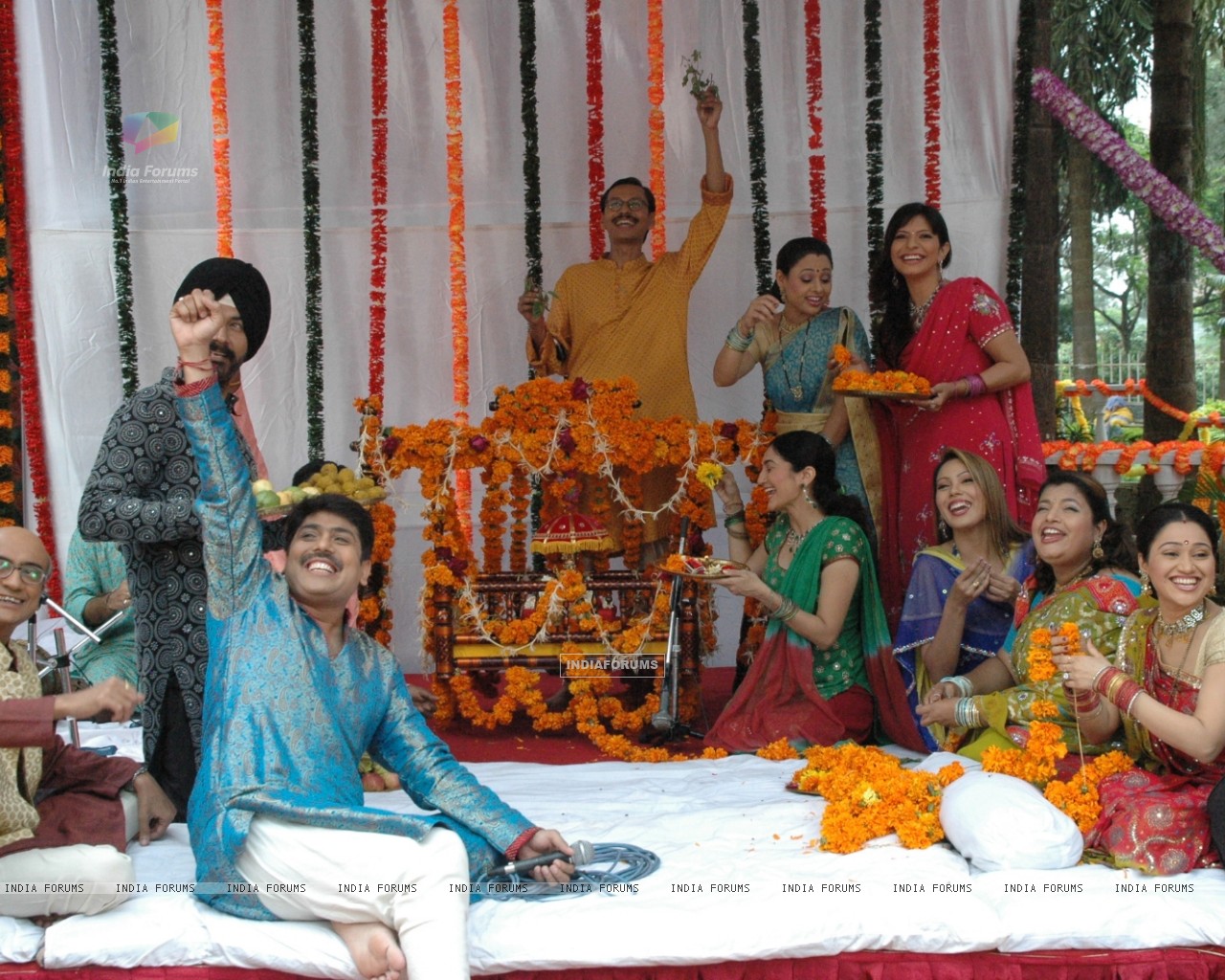
![]() The festival season in India continues with Sri Krishna Jayanthi or Janmashtami tomorrow. This is the day Lord Krishna, the eight avatar of Lord Vishnu, was supposed to have been born. Also known as Gokulashtami or Sree Jayanthi, this festival is celebrated across the country, but more so in what is known as Braj Bhoomi or the regions where Lord Krishna grew up and became a young man, mostly in Northern India (present day Uttar Pradesh) and where Lord Krishna established his kingdom of Dwarka (in present day Gujarat).
The festival season in India continues with Sri Krishna Jayanthi or Janmashtami tomorrow. This is the day Lord Krishna, the eight avatar of Lord Vishnu, was supposed to have been born. Also known as Gokulashtami or Sree Jayanthi, this festival is celebrated across the country, but more so in what is known as Braj Bhoomi or the regions where Lord Krishna grew up and became a young man, mostly in Northern India (present day Uttar Pradesh) and where Lord Krishna established his kingdom of Dwarka (in present day Gujarat).
 Krishna was the eighth son of Devaki and Vasudeva. Based on scriptural details and astrological calculations, the date of Krishna’s birth, known as Janmashtami, is 18 July 3228 BCE and he lived until 18 February 3102 BCE. Krishna belonged to the Vrishni clan of Yadavas from Mathura, and was the eighth son born to the princess Devaki and her husband Vasudeva.
Mathura (in present day Mathura district, Uttar Pradesh) was the capital of the Yadavas, to which Krishna’s parents Vasudeva and Devaki belonged. King Kansa, Devaki’s brother, had ascended the throne by imprisoning his father, King Ugrasena. Afraid of a prophecy that predicted his death at the hands of Devaki’s eighth son, Kansa had the couple locked in a prison cell. After Kansa killed the first six children, and Devaki’s apparent miscarriage of the seventh (which was actually a secret transfer of the infant to Rohini as Balarama), Krishna was born.
Following the birth, Vishnu ordered Vasudeva to take Krishna to Gokul to Nanda and Yashoda, w here he could live safely, away from his Uncle Kansa. Vasudeva took Krishna with him and crossed the Yamuna to reach Gokul. There, everyone was asleep; so he quietly kept him there and returned with Yashoda’s daughter. Kansa, thinking her to be Devki’s eight child, threw her on a stone. But she rose into the air and transformed into Yogmaya (who is Vishnu’s helper) and warned Kansa about his death. Then, she disappeared. Krishna grew up in Gokul with his brother, Balram. He then returned to Mathura and killed Kansa with the help of Balram.
Most people fast the night before Krishna’s birth and also place small cradles in the room to signify his birth, breaking their fast after midnight, the time when Lord Krishna was supposed to have been born.
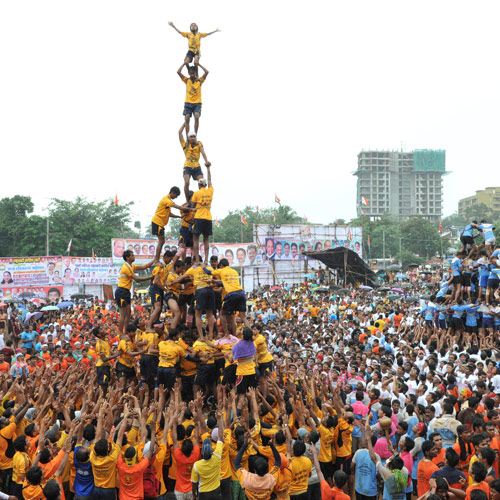
 In most of Maharastra, the festival is celebrated with the breaking of dahi handis which are pots of yoghurt tied high above the ground. Groups of young men (mostly) and women called Govindas go around the city and when they spy on the dahi handis, they form human pyramids and the person at the top of the pyramid attempts to break the handi. If successful, they win the prize money which would be inside the handi (or be given the prize by the organisers of the handi).
In South India, especially in the community I belong to, Sree Jayanthi is usually celebrated in the evening of the day Lord Krishna was supposed to be born. Kolams or decorative patterns made of rice flour are drawn outside the house and little footprints depicting Lord Krishna as a baby entering the house from the doorstep to the Puja room are made. In homes where there are little kids or toddlers, the feet of these toddlers are dipped in the kolam paste and they are made to walk across the house from the door to the pooja room. We did this for a couple of years when BB & GG were young. Since the young Krishna loved butter, this would be a major part of the offering. Other offerings include sweet and salty seedai (round balls made of flour).