
Every year, dictionaries and language authorities take up the mantle of word sleuths, scouring the linguistic landscape for the term that best captures the zeitgeist of the past twelve months. These words of the year transcend mere dictionary definitions, acting as cultural barometers and reflecting our anxieties, aspirations, and the shifting sands of our collective consciousness.
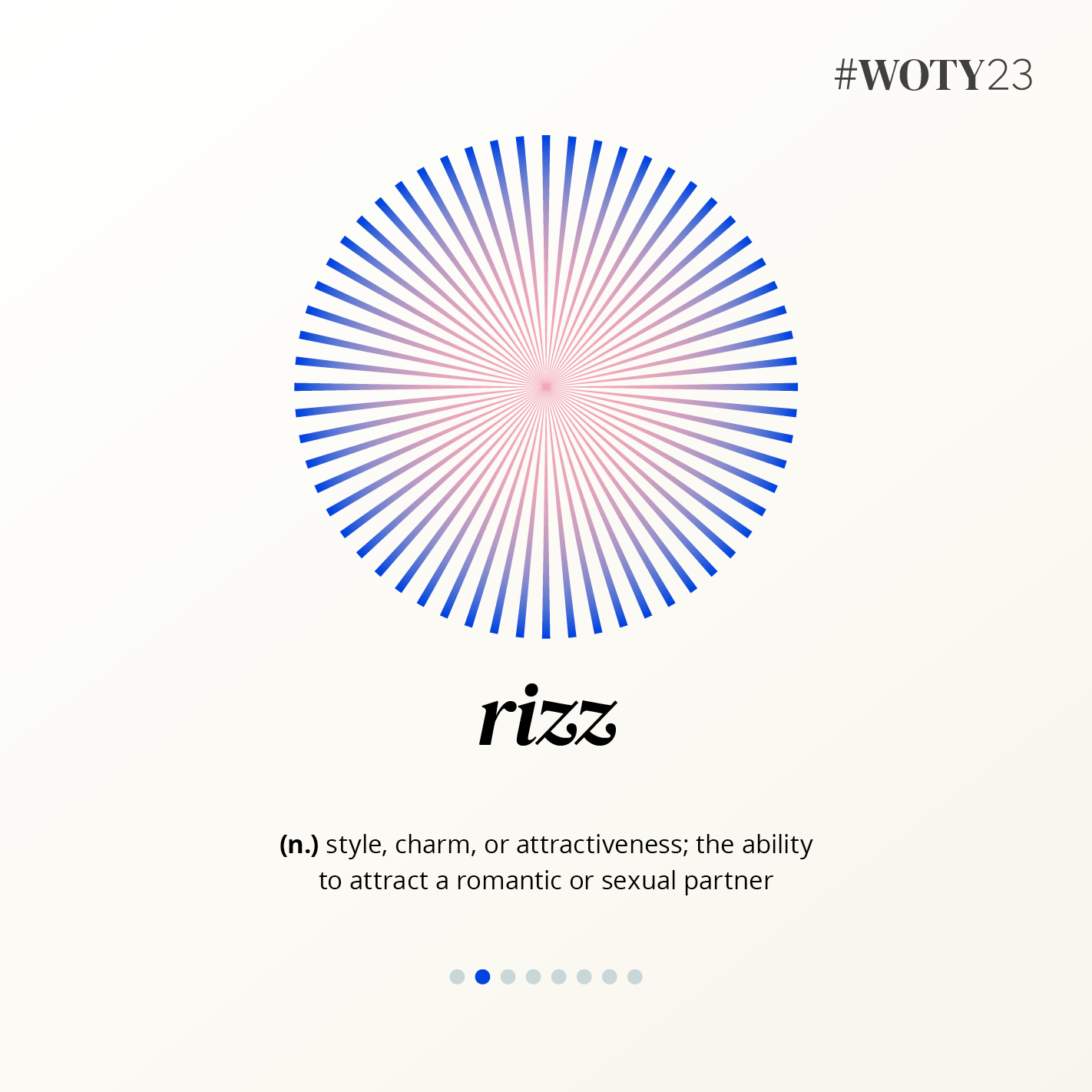
Oxford Dictionary
The Oxford Dictionary, the venerable custodian of the English language, crowned “rizz” its 2023 Word of the Year. Born in the effervescent realm of online slang, “rizz” defies easy definition. It encompasses charm, charisma, and an almost magnetic ability to attract and impress. Think smooth moves, witty repartee, and the undeniable swagger that makes hearts flutter and heads turn.
“Rizz” isn’t just a word; it’s a cultural phenomenon. Its meteoric rise reflects the growing influence of internet slang and the democratization of language itself. It’s a testament to the power of Gen Z to carve their linguistic niche, one meme and TikTok video at a time.

Dictionary.com
Across the pond, Dictionary.com chose “hallucinate” as its word of the year. But fear not, no mass psychosis is upon us! This “hallucinate” refers not to the clinical variety but to the ever-blurring lines between reality and the increasingly sophisticated simulations crafted by artificial intelligence.
From deepfakes that make anyone say anything to the hyper-curated realities of social media, “hallucinate” captures the unsettling yet seductive power of technology to bend and reshape our perception of the world. It’s a cautionary tale in the age of digital illusion, urging us to remain discerning travellers within the labyrinthine landscapes of the virtual.
Merriam-Webster
For Merriam-Webster, the quest for authenticity reigned supreme. In a world awash in filters and facades, “authentic” emerged as the word that resonated most deeply. It’s a yearning for genuineness, for connection beyond the carefully constructed personas we present online and offline.
“Authentic” reflects a growing societal desire for transparency, for experiences and relationships that ring true. It’s a pushback against the tide of artifice, a call to embrace our vulnerabilities and celebrate the unique tapestry of our narratives.
Collins Dictionary
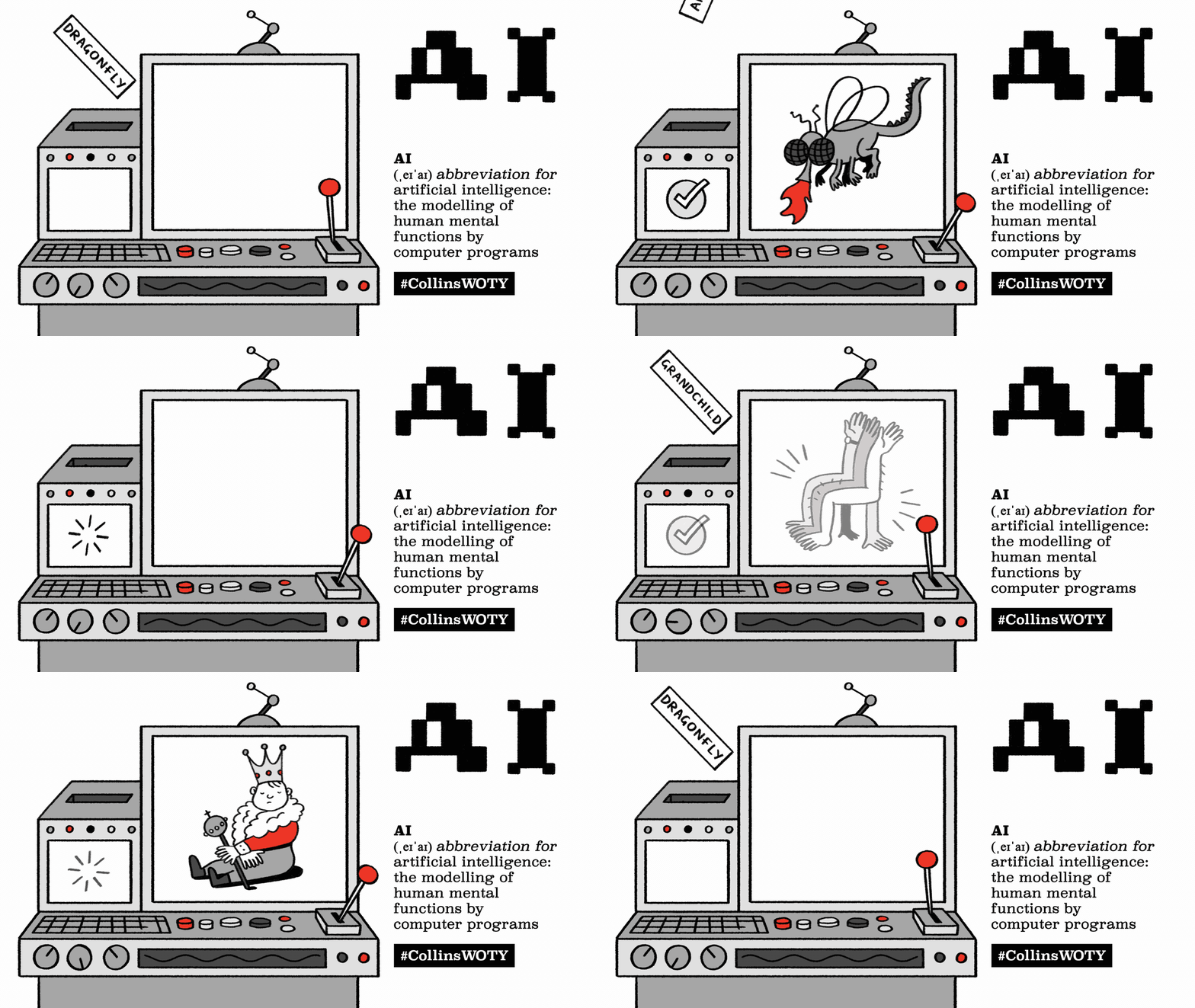
Collins Dictionary has crowned “AI,” the ubiquitous acronym for artificial intelligence, as its Word of the Year for 2023. This potent choice reflects the undeniable pervasiveness of AI in every corner of our lives, from healthcare to art, entertainment to ethics.
From self-driving cars navigating city streets to language models like myself parsing your questions, AI has become the invisible hand shaping our reality in profound and often unsettling ways. Choosing “AI” as the Word of the Year isn’t just a recognition of its technological prowess, but a call to examine its ever-expanding role in our society and, crucially, to define the future we want AI to forge for us.

Cambridge Dictionary
Cambridge has also chosen “Hallucinate” as its word of the year. The surge of interest in this word has been prompted by an abundance of tools being released for public use, all of which depend on large language models. With this new technology comes a new language. Many existing words, such as hallucinate, have adopted additional AI-related meanings this year as well.
The Cambridge Dictionary team chose hallucinate as its Word of the Year 2023 as it recognized that the new meaning gets to the heart of why people are talking about AI. Generative AI is a powerful tool but one we’re all still learning how to interact with safely and effectively. This means being aware of both its potential strengths and its current weaknesses.
While 2023 threw its fair share of curveballs, the diverse tapestry of ‘Words of the Year’ also whispers a story of resilience, innovation, and a search for meaning. As we step into the unknown of 2024, let these words serve as a compass, guiding us towards authenticity, connection, and perhaps a sprinkle of digital rizz along the way. So, which ‘Word of the Year’ resonates most with you?




 Memories and Such